If you're driving an electric vehicle and a battery warning light illuminates on the dashboard, it's natural to feel a spike of concern. Unlike a gas car's check-engine light, which can mean anything from a loose fuel cap to a failing catalytic converter, an EV battery warning carries the weight of a potential high-voltage traction battery issue — the single most expensive component in the vehicle. But before you spiral into worst-case scenarios, it helps to understand exactly what that light means, what might trigger it, and how modern EV battery systems are engineered for longevity.
This guide breaks down the causes of a battery light on dash while driving an EV, explains the underlying chemistry and degradation science, and gives you the data you need to monitor and maximize your battery's lifespan — whether you're driving a Tesla Model 3, Hyundai Ioniq 5, Ford Mustang Mach-E, or any other current-production BEV.
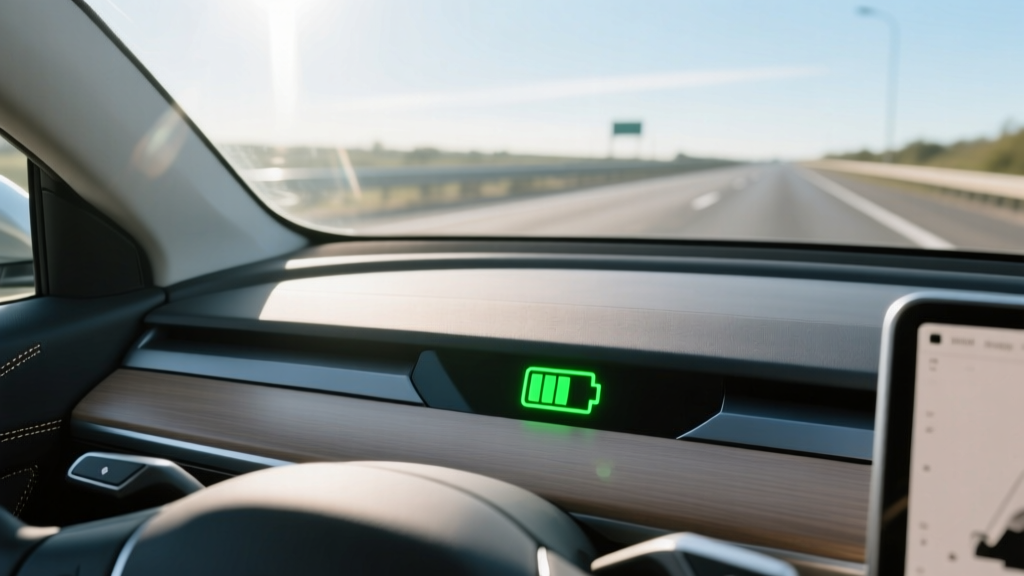
What the Battery Light on Dash While Driving Actually Means
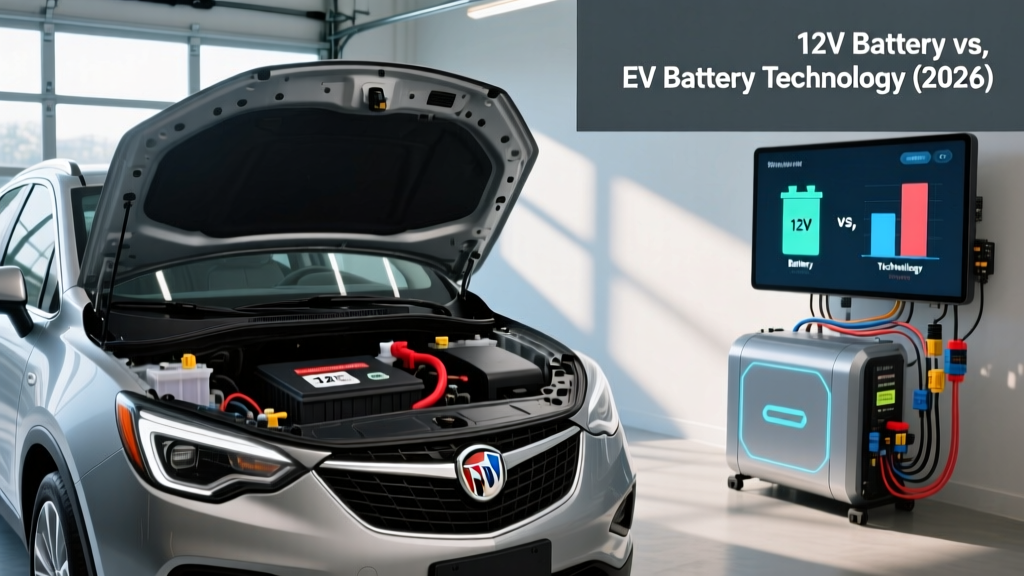
First, a critical distinction: every EV has two batteries. The high-voltage traction battery (typically 60–100+ kWh) powers the electric motor(s) and determines your range. The 12-volt auxiliary battery (usually a small lead-acid or lithium unit) powers the vehicle's computers, lights, door locks, and infotainment system — just like in a conventional car.
When a battery warning light appears on your dash while driving, the first question is: which battery?
- 12V auxiliary battery warning: Often shown as a standard battery icon (same as a gas car). This means the DC-DC converter isn't properly charging the 12V system, or the 12V battery itself is failing. This is the more common cause and is generally inexpensive to fix ($150–$400 for a replacement 12V battery).
- High-voltage traction battery warning: Typically displayed as a distinct icon or text message (e.g., "EV System Warning," "Battery Fault," "Check EV System"), often accompanied by reduced power output, limited charging speed, or a forced reduction in state of charge. This indicates the Battery Management System (BMS) has detected an anomaly in the main pack — a cell imbalance, temperature fault, coolant issue, or insulation fault.
If the warning is related to the traction battery, the vehicle will usually enter a protective "limp mode" — limiting speed and power to prevent further damage. Pull over safely, power the vehicle down, and consult your owner's manual or contact your dealer. Do not ignore this warning.
If the warning is the 12V system, the car may continue driving normally for a time, but you risk a dead 12V battery that could prevent the vehicle from starting (even though the main battery is fully charged). Schedule service promptly.
EV Battery Chemistry: LFP vs. NMC/NCA Explained
Understanding what's inside your traction battery helps contextualize why warnings occur and how different chemistries age. As of 2026, virtually all consumer EVs use one of two lithium-ion chemistries:
| Attribute | LFP (Lithium Iron Phosphate) | NMC / NCA (Nickel Manganese Cobalt / Nickel Cobalt Aluminum) |
|---|---|---|
| Energy Density | Lower (~150–180 Wh/kg cell-level) | Higher (~220–300 Wh/kg cell-level) |
| Typical Range Impact | Shorter range for same pack weight/size | Longer range for same pack weight/size |
| Cycle Life | 3,000–5,000+ full cycles | 1,000–2,500 full cycles |
| Degradation Rate | Slower, more linear | Faster initially, then plateaus |
| Recommended Daily SoC | 100% is fine (LFP tolerates full charge well) | 80% for daily; 100% only for trips |
| Cold-Weather Performance | More range loss in cold (~35–40% at 20°F) | Better cold performance (~25–30% loss at 20°F) |
| Thermal Stability / Safety | Excellent — less prone to thermal runaway | Good, but requires more robust BMS management |
| Cost | Lower ($/kWh) — no cobalt or nickel | Higher — commodity-priced nickel and cobalt |
| Common In (2026 Models) | Tesla Model 3/Y RWD, Ford Mustang Mach-E Select, Rivian Standard packs, many Chinese-market EVs | Tesla Long Range, Hyundai Ioniq 5/6, Kia EV6/EV9, Ford Extended Range, most luxury EVs |
Which is better? It depends on your use case. If you prioritize maximum range per charge, drive in cold climates, or want a premium long-range vehicle, NMC/NCA remains the standard. If you prioritize battery longevity, plan to keep the car 10+ years, charge daily to 100%, and can accept slightly less range, LFP is arguably the superior ownership choice. Neither chemistry is inherently "better" — they serve different buyer priorities.
How Long Do EV Batteries Last? Real Degradation Data
The most persistent EV fear is that the battery will "die" prematurely, requiring a costly replacement. The data tells a more reassuring story.
Typical Degradation Curves (Based on Fleet & Owner Data):
- Year 1 / 15,000 mi: ~2–4% capacity loss (initial "break-in" degradation)
- Year 3 / 45,000 mi: ~5–8% total loss
- Year 5 / 75,000 mi: ~7–11% total loss
- Year 8 / 120,000 mi: ~10–15% total loss
- Year 10 / 150,000 mi: ~12–18% total loss
These figures are aggregated from owner-reported data on platforms like Recurrent Auto, fleet operators, and manufacturer disclosures. Individual results vary based on climate, charging habits, and chemistry. According to Recurrent Auto's 2025 fleet analysis, the median EV retains approximately 90% of original capacity after 5 years of typical use.
A few important nuances:
- Degradation is non-linear. Most batteries lose capacity quickly in the first year or two, then the rate slows significantly. A battery at 92% State of Health (SoH) after year two may only drop to 88% by year five.
- "End of life" for an EV battery doesn't mean zero range. The industry standard defines end-of-life as 70–80% of original capacity. At 80% SoH, a 300-mile EPA range vehicle still delivers ~240 miles — still highly usable for most drivers.
- Catastrophic failure is rare. Outright battery failure (not gradual degradation) is uncommon and typically occurs within the warranty period if it happens at all. Most traction batteries outlive the vehicle they're installed in.
Factors That Accelerate (or Slow) Battery Degradation
Not all miles are created equal when it comes to battery wear. Here's what the science — and real-world fleet data — tells us about the biggest factors:
What Hurts Battery Longevity:
- Frequent DC fast charging above 150 kW: Occasional fast charging is fine, but daily reliance on 250–350 kW chargers generates sustained high heat, accelerating cell wear. Tesla's own data suggests frequent Supercharging can add ~1–2% additional degradation over 100,000 miles vs. primarily Level 2 home charging.
- Regularly charging to 100% (NMC/NCA): Holding an NMC or NCA battery at full state of charge stresses the cathode. For daily use, 80% is the recommended ceiling.
- Deep discharges below 10% SoC: Letting the battery sit at very low SoC for extended periods can cause copper dissolution in the anode. Try not to store the car below 20%.
- Extreme heat exposure: Sustained ambient temperatures above 95°F (35°C), especially combined with high SoC and fast charging, are the single worst combination for lithium-ion longevity. Vehicles in Phoenix or Houston may degrade 2–4% faster over 5 years than identical vehicles in Seattle.
- Aggressive driving / high sustained power draw: Repeated hard acceleration generates internal cell heat. Occasional spirited driving is fine; constant track-style use is not.
What Helps Battery Longevity:
- Level 2 home charging (7–11 kW): The gentlest, most battery-friendly way to charge daily.
- Keeping SoC between 20–80% (NMC/NCA) or charging to 100% regularly (LFP): Follow the chemistry-appropriate guidance.
- Preconditioning the battery before fast charging: Most modern EVs do this automatically when you navigate to a charger. It brings the pack to optimal temperature, reducing stress.
- Parking in shade or garages during hot months: Reduces passive thermal load on the pack.
- Using the vehicle regularly: Lithium-ion batteries prefer regular use over long-term storage. A car driven 30 miles daily will often age better than one sitting for weeks at 100% SoC.
Battery Warranty Coverage: What's Protected and for How Long
Federal law mandates that EV batteries carry a minimum warranty of 8 years or 100,000 miles (whichever comes first) in most states, and 10 years or 150,000 miles in California Air Resources Board (CARB) states, which include California, New York, Massachusetts, and several others. Most manufacturers meet or exceed these minimums.
| Manufacturer / Model | Warranty Period | Capacity Retention Threshold | Notes |
|---|---|---|---|
| Tesla Model 3/Y (LFP RWD) | 8 yr / 100,000 mi | 70% | Long Range/Performance: 8 yr / 120,000 mi |
| Hyundai Ioniq 5 / Ioniq 6 | 10 yr / 100,000 mi | 70% | Among the longest coverage in the segment |
| Ford Mustang Mach-E | 8 yr / 100,000 mi | 70% | Covers battery components & capacity loss |
| Kia EV6 / EV9 | 10 yr / 100,000 mi | 70% | Same generous terms as Hyundai |
| Chevrolet Equinox EV / Blazer EV | 8 yr / 100,000 mi | 60% (Blazer) / 70% (Equinox) | Verify specific model-year terms with dealer |
| Rivian R1T / R1S | 8 yr / 175,000 mi | 70% | Higher mileage cap reflects truck use case |
| BMW i4 / i5 / iX | 8 yr / 80,000 mi | 70% | Lower mileage cap than many competitors |
Key warranty details to understand:
- The warranty covers capacity degradation below the stated threshold (typically 70%), not just outright failure. If your battery drops to 68% SoH at 60,000 miles, you're covered.
- Manufacturers measure SoH using their proprietary diagnostic tools. You may need a dealer visit to validate a claim.
- Warranty does not cover damage from accidents, flooding, or unauthorized modifications.
- In CARB states, the longer 10-year/150,000-mile warranty applies regardless of where the car was purchased, as long as it's registered in a CARB state.
How Much Does It Cost to Replace an EV Battery?
If your battery degrades beyond the warranty threshold — or suffers damage not covered — replacement is a real cost. However, context matters: the vast majority of EV batteries never need replacement during the vehicle's useful life. Outright replacement typically occurs only after 150,000+ miles, if at all.
| Vehicle / Pack Size | Battery Capacity | Estimated Replacement Cost | When Typically Needed |
|---|---|---|---|
| Tesla Model 3 RWD (LFP) | ~60 kWh | $8,000 – $12,000 | 200,000+ mi (if ever) |
| Hyundai Ioniq 5 (NMC) | 77.4 kWh | $12,000 – $18,000 | 180,000+ mi (if ever) |
| Ford F-150 Lightning Ext. Range | ~131 kWh | $20,000 – $30,000 | 200,000+ mi (if ever) |
| Chevrolet Silverado EV | ~200 kWh | $28,000 – $40,000 | 200,000+ mi (if ever) |
| Nissan Leaf (40 kWh pack) | 40 kWh | $6,500 – $9,000 | 100,000+ mi (older chemistry) |
Important cost context:
- Battery pack prices have fallen from over $1,200/kWh in 2010 to approximately $110–$130/kWh at the cell level in 2026, per BloombergNEF data. Pack-level replacement costs include labor, diagnostics, and dealer markup.
- Many replacements involve module-level repair rather than full pack replacement. A technician can swap individual faulty modules for $1,500–$4,000 rather than replacing the entire pack.
- Third-party and refurbished packs are emerging as lower-cost options for out-of-warranty vehicles, typically 30–50% less than OEM new packs.
- Most EVs are scrapped or traded in before the battery needs replacement. According to data from fueleconomy.gov and industry analyses, fewer than 2% of EVs have required traction battery replacements as of 2025.
How to Monitor Your EV's Battery Health (SoH)
State of Health (SoH) is the percentage of original capacity your battery currently holds. A new battery is 100% SoH; a battery that held 75 kWh when new but now holds 67.5 kWh is at 90% SoH. Here's how to check it:
- In-vehicle displays: Some EVs (notably Tesla, BMW iX, and recent Hyundai/Kia models) show battery health or degradation data in the service menu or energy app. Tesla's "Battery Health" feature, rolled out broadly in 2024, shows estimated current range vs. original range as a proxy for SoH.
- Manufacturer apps: Many OEM apps (FordPass, myHyundai, myChevrolet) include battery health indicators or allow you to request a diagnostic report.
- OBD-II dongles and third-party apps: Tools like OBDeleven, LeafSpy (Nissan Leaf), or Scan My Tesla can read BMS data directly, including individual cell voltages, pack capacity, and SoH percentage. These require a compatible OBD-II adapter ($30–$80) and a smartphone app.
- Dealer diagnostics: A service center can run a full battery health report. Request this during routine service visits, especially as you approach the warranty mileage threshold.
- Recurrent Auto / Geotab: Some fleet and owner-data platforms offer free or low-cost SoH tracking by connecting to your vehicle's telematics data.
Best practice: Check your SoH at least twice a year and before/after extreme seasons. Track the trend, not a single reading — BMS estimates can fluctuate slightly based on temperature and recent charge cycles.
What to Do When the Battery Light Comes On While Driving
Here's a practical decision tree for when a battery-related warning illuminates:
- Identify the warning. Is it a generic battery icon (likely 12V) or a specific EV system warning (traction battery)? Check the exact message in your instrument cluster or touchscreen.
- Assess vehicle behavior. Has power been reduced? Is charging speed limited? Is the car in limp mode? These indicate a traction battery issue.
- If 12V warning: Continue driving to your destination, but schedule a 12V battery test and replacement if needed. Avoid leaving the car unplugged overnight until resolved.
- If traction battery warning: Reduce speed, avoid hard acceleration, and drive to the nearest safe stop. Power the vehicle off, wait 60 seconds, and restart. If the warning persists, contact roadside assistance or your dealer. Do not attempt to fast-charge with an active traction battery fault.
- Document everything. Photograph the warning message, note the mileage, SoC, and ambient temperature. This data is valuable for warranty claims.
Emerging Battery Technology: What's Next
While current LFP and NMC chemistries are mature and reliable, the next generation of battery technology is in active development. Here's a realistic, forward-looking assessment:
- Solid-state batteries: Promising 30–50% higher energy density and faster charging with improved safety. Toyota, Samsung SDI, and QuantumScape have announced pilot production, but commercial availability in consumer EVs is expected no earlier than 2028–2030, with meaningful volume likely post-2030. Current prototypes face manufacturing scalability and cost challenges.
- Silicon-dominant anodes: Companies like Sila Nanotechnologies and Group14 are replacing graphite anodes with silicon composites, boosting energy density by 15–25%. Early commercial deployments are appearing in premium vehicles (e.g., Mercedes-Benz G-Class EV), with broader adoption expected by 2027–2028.
- Sodium-ion batteries: Lower-cost alternative to lithium for budget and city EVs. CATL has begun production for Chinese-market vehicles; US-market availability is not yet announced. Energy density is ~30% lower than LFP, limiting use to shorter-range applications.
- Improved LFP variants: Manufacturers are developing "LFP+" formulations with modestly improved energy density and cold-weather performance, expected to appear in 2027–2028 model-year vehicles.
None of these technologies are currently available in 2026 production vehicles at scale. If you're buying an EV today, LFP and NMC are proven, well-understood chemistries with strong track records.
Frequently Asked Questions
Can I still drive my EV if a battery light comes on?
It depends on the type of warning. A 12V auxiliary battery light usually allows continued driving, but you should get the 12V system checked within a day or two. A high-voltage traction battery warning often triggers reduced power or limp mode — drive cautiously to a safe stop and contact your dealer. Never ignore a traction battery fault.
How long do EV batteries last in years and miles?
Most modern EV traction batteries are designed to last 15–20 years or 200,000+ miles before degrading to 70–80% of original capacity. Real-world fleet data from Recurrent Auto and Geotab shows median capacity retention of approximately 88–92% at 100,000 miles for 2020–2025 model-year vehicles. Catastrophic failure before 150,000 miles is rare.
How much does it cost to replace an EV battery in 2026?
Full traction battery replacement costs range from approximately $6,500 for a small pack (Nissan Leaf 40 kWh) to $30,000–$40,000 for large packs (Ford F-150 Lightning, Chevrolet Silverado EV). However, the vast majority of EV batteries never need replacement during the vehicle's life. Module-level repairs ($1,500–$4,000) are also an option for isolated cell failures.
What does the EV battery warranty actually cover?
Federal minimum is 8 years / 100,000 miles (10 years / 150,000 miles in CARB states). Coverage includes capacity degradation below a stated threshold (typically 70% of original capacity), manufacturing defects, and component failures. It does not cover damage from accidents, misuse, or unauthorized modifications. Check your specific owner's manual for exact terms.
LFP vs NMC — which battery chemistry should I choose?
Choose LFP if you prioritize maximum cycle life, plan to charge to 100% daily, want lower cost, and can accept slightly less range and more cold-weather range loss. Choose NMC/NCA if you need maximum range, drive frequently in cold climates, or want the longest single-charge trips. Both chemistries are reliable and well-supported in 2026.
Does fast charging damage my EV battery?
Occasional DC fast charging is perfectly fine and accounted for in battery design. However, exclusive reliance on high-power DC fast charging (150+ kW) can add 1–3% additional degradation over 100,000 miles compared to primarily Level 2 charging. Best practice: use Level 2 at home for daily charging, and reserve DC fast charging for road trips.
How do I check my EV battery's State of Health?
Check via your vehicle's in-dash battery health display (if equipped), the manufacturer's mobile app, an OBD-II diagnostic tool with EV-compatible software (e.g., LeafSpy, Scan My Tesla, OBDeleven), or by requesting a battery health report from your dealer during service. Monitor the trend over time rather than reacting to a single reading.
If you're seeing a battery light on dash while driving, the most important step is identifying whether it's a 12V or traction battery warning. In either case, modern EV batteries are engineered for remarkable longevity — with proper care, most will outlast the vehicle itself. Monitor your SoH, follow chemistry-appropriate charging habits, and lean on your warranty if degradation exceeds the threshold. The data is clear: EV batteries are far more durable than the early fear-mongering suggested.