If you've ever seen a battery icon illuminate on your dashboard and felt a spike of panic, you're not alone. For EV owners, that warning light carries different implications than it does in a gasoline car — and understanding the distinction between your EV's 12-volt auxiliary battery and its high-voltage traction battery is the first step toward diagnosing the issue correctly.
This guide unpacks exactly what that battery light means in an electric vehicle, then goes deeper into the traction battery itself: chemistry options, real-world degradation data, warranty coverage, replacement costs, and how to monitor and maximize your pack's lifespan.
What Does the Battery Light on a Car Mean in an EV?
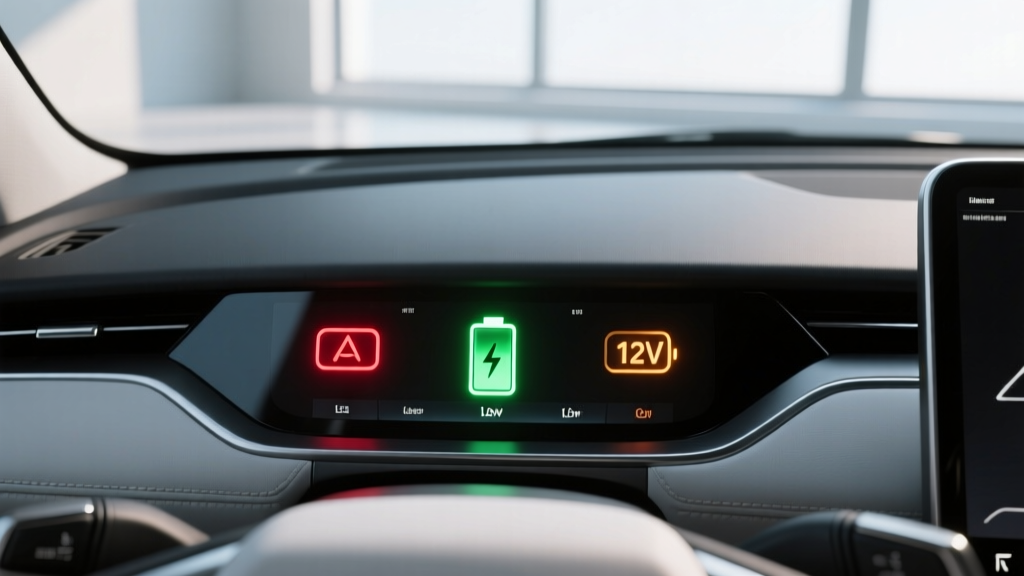
In a conventional car, the battery warning light almost always refers to the 12V starting battery or the alternator that charges it. In an EV, the situation is split:
- 12V auxiliary battery warning: Your EV still has a small 12V lead-acid or lithium-ion battery that powers accessories, infotainment, door locks, and the computers that manage the high-voltage system. If this battery is failing, the dashboard light typically looks identical to the one in a gas car — a simple battery icon. A dead 12V battery can prevent the car from "starting" (i.e., closing the high-voltage contactors), even if the main traction pack is fully charged.
- High-voltage traction battery warning: This is the large lithium-ion pack (typically 50–120 kWh) that actually drives the wheels. Warnings for this system are usually distinct — often a yellow or red icon showing a battery with an exclamation mark, a "Check EV System" message, or a turtle-mode indicator signaling reduced power output. These warnings can indicate thermal issues, cell-imbalance faults, coolant leaks, or a degradation concern flagged by the battery management system (BMS).
The critical distinction: A 12V battery failure is a relatively inexpensive fix ($150–$400 for parts). A traction battery fault is covered under the federally mandated warranty (more on that below) but, out of warranty, represents the single most expensive component in the vehicle.
EV Battery Chemistry: LFP vs. NMC vs. NCA
Not all EV batteries are the same. The two dominant chemistries in 2026 model-year EVs are LFP (lithium iron phosphate) and NMC/NCA (nickel manganese cobalt / nickel cobalt aluminum). Your chemistry affects energy density, longevity, cold-weather behavior, and cost.
| Attribute | LFP (LiFePO₄) | NMC / NCA |
|---|---|---|
| Energy Density | Lower (~160–180 Wh/kg cell-level) | Higher (~220–300 Wh/kg cell-level) |
| Cycle Life | 3,000–5,000+ cycles to 80% SoH | 1,000–2,500 cycles to 80% SoH |
| Cold Performance | More range loss below 32°F; slower charge acceptance | Better low-temp discharge; preconditioning helps |
| Recommended SoC for Daily Use | 100% OK (manufacturer-approved) | 80% recommended for daily; 100% for trips only |
| Cost per kWh | Lower ($100–$130/kWh pack-level, 2025–2026) | Higher ($130–$170/kWh pack-level, 2025–2026) |
| Safety / Thermal Stability | Higher thermal runaway threshold | Good, but requires more active cooling |
| Common In 2026 Models | Tesla Model 3/Y RWD, Ford Mustang Mach-E Select, BYD, Rivian Standard | Tesla Long Range, Hyundai Ioniq 5/6, BMW iX, GM Ultium-based models |
Which is better? It depends on your use case. LFP is the pragmatic choice for commuters and high-mileage drivers who want maximum cycle life and don't mind slightly lower range. NMC/NCA suits drivers who need maximum range per charge, frequently drive in cold climates, or tow. Neither is universally superior — the trade-off is longevity and cost vs. energy density and cold-weather capability.
How Long Do EV Batteries Last? Degradation Data
The most common question from prospective EV buyers: "Will I need a new battery?" The data says probably not during typical ownership.
Based on aggregated fleet data from sources including fueleconomy.gov, manufacturer reports, and third-party testing by organizations like Recurrent Auto, here's what real-world degradation looks like:
- Year 1 / 15,000 miles: ~2–3% capacity loss (initial "break-in" degradation)
- Year 3 / 45,000 miles: ~5–8% total loss
- Year 5 / 75,000 miles: ~8–12% total loss
- Year 8 / 120,000 miles: ~10–15% total loss
- Year 10 / 150,000 miles: ~12–18% total loss (varies significantly by climate and charging habits)
LFP packs typically show slower degradation, often retaining 90%+ capacity at 100,000 miles when charged to 100% regularly.
The key insight: degradation is non-linear. Most capacity loss occurs in the first 20,000–30,000 miles, then the curve flattens considerably. A well-maintained pack should deliver 150,000–200,000+ miles before reaching 70–80% of original capacity.
What Does the EV Battery Warranty Cover?
U.S. federal law mandates that EV manufacturers warrant the high-voltage traction battery for a minimum of 8 years / 100,000 miles (10 years / 150,000 miles in California Air Resources Board states including CA, CO, CT, ME, MA, NJ, NY, OR, RI, VT, WA). This is in addition to the standard bumper-to-bumper and powertrain warranties.
| Manufacturer | Warranty Period | Capacity Retention Threshold | Notes |
|---|---|---|---|
| Tesla (Model 3/Y RWD – LFP) | 8 yr / 120,000 mi | 70% | Higher mileage threshold for LFP trims |
| Tesla (Model 3/Y LR, Model S/X) | 8 yr / 120,000 mi (S/X: 150,000 mi) | 70% | NMC/NCA packs |
| Hyundai / Kia | 10 yr / 100,000 mi | 70% | Among the longest coverage periods |
| GM (Ultium-based) | 8 yr / 100,000 mi | 70% | Module-level replacement supported |
| Ford | 8 yr / 100,000 mi | 70% | Covers battery and hybrid/EV components |
| Rivian | 8 yr / 175,000 mi | 70% | Highest mileage threshold in segment |
| BMW | 8 yr / 100,000 mi | 70% | Transferable to subsequent owners |
What triggers a warranty claim? If your battery's State of Health (SoH) drops below the stated threshold (typically 70% of original capacity) within the warranty period, the manufacturer must repair or replace the pack — or individual modules, if the design supports it — at no cost to you. This covers degradation; it does not cover damage from accidents, flooding, or unauthorized modifications.
For the latest federal warranty and tax credit requirements, refer to the IRS clean vehicle credit page, which outlines how battery sourcing and warranty standards intersect with §30D eligibility.
How Much Does an EV Battery Cost to Replace?
Out-of-warranty traction battery replacement is expensive, but it's important to contextualize: the vast majority of EV batteries outlast their warranty periods with meaningful capacity remaining. Full replacements are rare before 150,000+ miles.
| Vehicle / Pack Size | Battery Capacity | Estimated Replacement Cost (Parts + Labor) | Typical Replacement Timeline |
|---|---|---|---|
| Tesla Model 3 RWD | ~60 kWh (LFP) | $8,000–$12,000 | Rarely before 200,000 mi |
| Tesla Model Y Long Range | ~75 kWh (NMC) | $12,000–$16,000 | Rarely before 180,000 mi |
| Hyundai Ioniq 5 | 77.4 kWh (NMC) | $14,000–$18,000 | Rarely before 170,000 mi |
| Ford F-150 Lightning Extended | 131 kWh (NMC) | $20,000–$30,000 | Rarely before 150,000 mi |
| Chevrolet Equinox EV | ~85 kWh (NMC Ultium) | $12,000–$16,000 | Rarely before 170,000 mi |
| Rivian R1T / R1S (Max Pack) | 149 kWh (NMC) | $22,000–$32,000 | Rarely before 175,000 mi |
Key context: These are worst-case, out-of-warranty figures. Most owners will never pay them. Battery prices continue to decline (~8–12% annually at the pack level through 2025–2026), and many manufacturers now support module-level replacement — swapping only the degraded modules rather than the entire pack, cutting costs by 40–60%. Additionally, the growing EV salvage and refurbishment market is beginning to offer certified pre-owned packs at lower prices.
Factors That Affect EV Battery Life
Your battery's lifespan isn't fixed — it's heavily influenced by how you charge, drive, and store the vehicle. Here are the primary factors, ranked by impact:
- Extreme temperatures: Sustained exposure to heat (above 95°F ambient, especially with a full charge) accelerates chemical degradation more than any other single factor. Cold weather temporarily reduces range and charge acceptance but causes less permanent damage. Active thermal management (liquid cooling/heating) significantly mitigates both.
- State of Charge habits: For NMC/NCA packs, routinely charging to 100% and letting the car sit for days accelerates degradation. The 20–80% daily window remains the gold standard. LFP packs are more tolerant of 100% SoC — most manufacturers actually recommend periodic 100% charges for LFP to help the BMS calibrate cell balancing.
- DC fast-charging frequency: Exclusive reliance on DC fast charging (150–350 kW) generates sustained heat and high C-rates that stress cells. Occasional fast charging on road trips is fine; daily fast charging without Level 2 topping-off can add 1–3% extra degradation over 100,000 miles. Modern BMS systems and preconditioning routines have reduced this gap significantly.
- Depth of discharge: Frequently draining the pack below 10% before recharging adds cumulative stress. Try to plug in before the SoC drops below 15–20%.
- Calendar aging: Even a parked EV battery degrades over time. Storing at ~50% SoC in a cool, shaded environment minimizes calendar aging. Expect ~1–2% loss per year even with zero mileage.
How to Check and Maximize Battery Health (SoH)
State of Health (SoH) is the percentage of your battery's original usable capacity that remains available. A new pack is 100% SoH; at 70%, you've lost 30% of original range.
How to Check SoH
- In-car diagnostics: Many 2026 EVs now include a battery health readout in the settings menu. Tesla provides a "Battery Health" percentage under Service mode. Hyundai/Kia models display SoH in the EV settings submenu. GM's Ultium vehicles show estimated range relative to original via the Energy app.
- OBD-II tools: Third-party apps like LeafSpy (Nissan), ABRP (A Better Route Planner) with OBD dongles, and ScanMyTesla can pull detailed cell-voltage data, internal resistance, and SoH percentages from the BMS.
- Dealer diagnostic: Any authorized service center can run a full battery health report, often required for warranty claims.
- Manual estimation: Track your actual range at 100% SoC over time and compare it to the original EPA-rated range. If your 310-mile EPA-rated EV now shows 265 miles at full charge under similar conditions, your SoH is approximately 85%.
- ☑ Set daily charge limit to 80% (NMC/NCA) or 100% (LFP, per manufacturer guidance)
- ☑ Use Level 2 home charging as your primary method; reserve DC fast charging for road trips
- ☑ Enable battery preconditioning when navigating to a fast charger (most EVs do this automatically)
- ☑ Avoid leaving the car at 100% SoC for more than a few hours, especially in hot weather
- ☑ Park in shade or a garage during summer; use a block heater or plugged-in preconditioning in extreme cold
- ☑ Don't let SoC sit below 10% for extended periods
- ☑ Check tire pressure monthly — underinflated tires increase rolling resistance and battery load
- ☑ Monitor SoH annually via in-car diagnostics or OBD tool
Emerging Battery Tech: Solid-State and Silicon Anodes
The next frontier in EV batteries is already in development, but realistic timelines matter.
Solid-state batteries replace the liquid electrolyte with a solid material (ceramic, sulfide, or polymer), promising higher energy density (potentially 400–500 Wh/kg at the cell level), faster charging, and improved safety. Toyota, Samsung SDI, and QuantumScape are among the companies targeting limited production vehicles by 2027–2029. However, manufacturing scale-up and cost reduction remain significant hurdles. Expect solid-state packs to debut in premium/low-volume models first, with mainstream availability not before 2030–2032.
Silicon-dominant anodes (replacing or supplementing graphite) are closer to reality. Companies like Sila Nanotechnologies and Group14 are already supplying silicon-carbon anode materials that boost energy density by 15–25% without the manufacturing challenges of solid-state. Expect these to appear in 2026–2028 model-year vehicles as incremental improvements to existing NMC cells.
Sodium-ion batteries are emerging as a low-cost alternative for entry-level EVs and fleet vehicles, with CATL and BYD beginning production in 2025–2026. They offer lower energy density than LFP but significantly lower material costs and better cold performance than early prototypes suggested.
All of these are forward-looking technologies. Current NMC and LFP chemistries, properly maintained, remain the practical standard for 2026 EV buyers.
Frequently Asked Questions
What does the battery light on a car mean if I drive an EV?
It depends on which battery system the light refers to. A standard battery icon usually indicates a 12V auxiliary battery issue — the small battery that powers electronics, not the main traction pack. A distinct EV-specific warning (often with an exclamation mark or "Check EV System" text) points to the high-voltage traction battery. Consult your owner's manual for the exact symbol your vehicle uses, and have any traction-battery warning diagnosed by a qualified EV technician immediately.
Can a dead 12V battery prevent my EV from starting?
Yes. The 12V battery powers the vehicle's computers and the contactors that connect the high-voltage pack to the drivetrain. If the 12V battery is dead, the car cannot close those contactors, and the EV will not start — even with a fully charged traction battery. Many EVs include a 12V battery maintenance mode or can be jump-started via the 12V terminals (consult your manual). Some 2026 models, including newer Tesla and Rivian vehicles, have switched to lithium-ion 12V batteries that last longer and are less prone to sudden failure.
How long do EV batteries last in real-world driving?
Most liquid-cooled EV batteries retain 80–88% of original capacity after 100,000 miles and 85–90% of original range at 150,000 miles. LFP packs often exceed these figures. Real-world data from Recurrent Auto and fleet operators suggests the average EV battery will deliver 180,000–250,000 miles of useful service before capacity drops to a level that meaningfully impacts daily usability (typically below 70% SoH).
Is it worth buying an extended battery warranty?
For most buyers, the federally mandated 8-year/100,000-mile warranty (longer in CARB states) is sufficient. Extended warranties may make sense if you plan to keep the vehicle beyond 100,000 miles, live in an extreme-heat climate, or drive a model with a historically higher degradation rate. Compare the extended warranty cost ($1,500–$3,500) against the declining trend in battery replacement costs before deciding.
Does fast charging damage my EV battery?
Occasional DC fast charging has a negligible impact on battery life. However, exclusive reliance on fast charging — especially at peak rates above 200 kW in hot weather — can add 1–3% additional degradation over 100,000 miles compared to primarily Level 2 charging. Modern BMS systems, preconditioning routines, and charge-curve tapering (where the car reduces charge rate above 80% SoC to protect cells) have minimized this gap. For daily use, Level 2 home charging remains the gold standard for battery longevity.
LFP vs. NMC — which battery should I choose?
Choose LFP if you prioritize maximum cycle life, lower cost, and plan to charge to 100% regularly (ideal for commuters and high-mileage drivers in moderate climates). Choose NMC/NCA if you need maximum range per charge, frequently drive in cold weather, tow, or take regular road trips where energy density matters. Both chemistries are proven and reliable — the "right" choice depends on your driving patterns and climate.
For the latest EV battery data, safety ratings, and efficiency figures, consult fueleconomy.gov and your vehicle manufacturer's official specifications. Battery warranty terms and tax credit eligibility are subject to change — verify current rules at irs.gov before making a purchase decision.