When the Battery Light Indicator Appears in Your EV: Don't Confuse the 12V With the Traction Pack
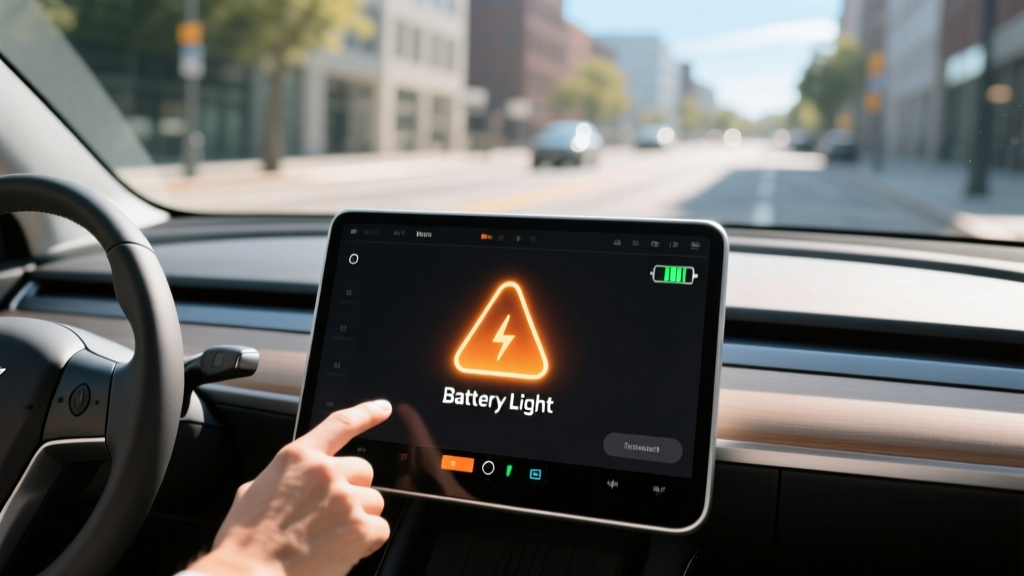
Seeing a battery light indicator in your car can trigger immediate concern — especially when you're driving an electric vehicle with a $10,000+ high-voltage traction battery underneath the floor. But before you panic, it's critical to understand what that warning actually refers to. In most EVs, a generic battery-shaped dashboard light indicates a problem with the 12-volt auxiliary battery, not the main traction battery that powers the motor. The traction battery has its own dedicated warning system, usually displayed as a specific message on the instrument cluster or center screen (e.g., "Traction Battery Fault," "Battery System Warning," or "Reduce Power").
This guide covers everything EV owners and shoppers need to know about traction battery health: how long these packs actually last, what degradation looks like in real data, how LFP and NMC chemistries compare, what the warranty covers, and what it costs if you ever need a replacement. Whether you're responding to a warning light or proactively researching before purchase, the numbers below reflect current 2026 model-year data and real-world ownership records.
How Long Do EV Traction Batteries Last? Real Degradation Data
The short answer: modern EV traction batteries are engineered to outlast the useful life of the vehicle itself. But "outlast" doesn't mean zero degradation. Every lithium-ion pack loses some capacity over time and charge cycles. What matters is the rate of that loss and when it becomes practically noticeable.
Based on aggregated fleet data and long-term owner reports through 2025–2026, here's what degradation typically looks like across popular EV platforms:
- Tesla Model 3/Y (NMC/NCA): ~5% capacity loss at 50,000 miles, ~8–10% at 100,000 miles, ~10–12% at 150,000 miles. Source: Tesla Impact Reports and independent fleet analysis.
- Chevrolet Bolt EV/EUV (NMC): ~5–7% loss at 60,000 miles, ~10–12% at 100,000 miles. LG Chem packs have shown consistent curves.
- Hyundai Ioniq 5 / Kia EV6 (NMC): ~4–6% loss at 50,000 miles based on early long-term reports. Thermal management system appears effective.
- Tesla Model 3 RWD (LFP): ~2–4% loss at 50,000 miles. LFP chemistry shows notably slower degradation in early data.
- Ford Mustang Mach-E (NMC): ~5–8% loss at 60,000 miles based on owner-reported data.
- Nissan LEAF (NMC, passive cooling): Historically higher degradation — 10–15% at 60,000 miles in hot climates due to lack of active liquid cooling. Newer models (2018+) improved but still lag liquid-cooled competitors.
Most current-generation EVs with active liquid thermal management systems are projected to retain 80–90% of original capacity at 150,000 miles. That means a vehicle with an EPA-rated 300-mile range when new would still deliver roughly 240–270 miles at that mileage — still highly usable for daily driving and road trips.
LFP vs. NMC/NCA: Which Battery Chemistry Is Better?
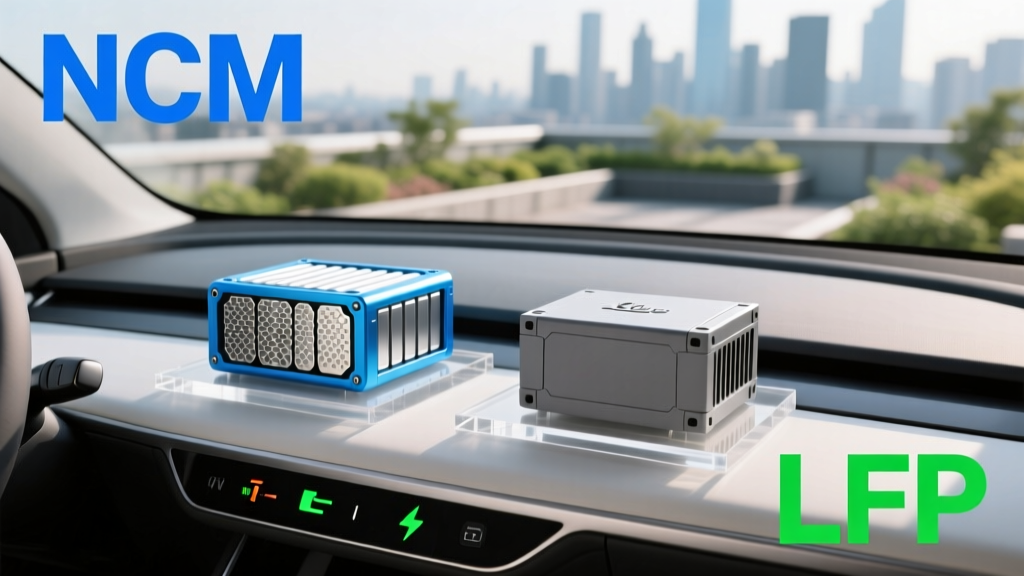
The two dominant lithium-ion chemistries in 2026 EVs are LFP (Lithium Iron Phosphate) and NMC/NCA (Nickel Manganese Cobalt / Nickel Cobalt Aluminum). Each has distinct trade-offs that affect range, longevity, cost, and cold-weather behavior.
| Attribute | LFP (Lithium Iron Phosphate) | NMC / NCA (Nickel-based) |
|---|---|---|
| Energy Density | Lower (~160–180 Wh/kg cell-level) | Higher (~220–280 Wh/kg cell-level) |
| Real-World Range Impact | Same vehicle = ~10–15% less range vs NMC equivalent | Enables longest-range variants |
| Cycle Life | 3,000–5,000+ cycles to 80% SoH | 1,000–2,000 cycles to 80% SoH |
| Calendar Life | Excellent; slower degradation at high SoC | Good; prefers 20–80% SoC for longevity |
| Cold Performance | Weaker below 32°F; more range loss in winter | Better cold-weather discharge capability |
| Fast-Charging Tolerance | Good; can charge to 100% regularly without harm | Frequent 100% charges accelerate wear |
| Cost | Lower; no cobalt or nickel | Higher; commodity-sensitive pricing |
| Typical Vehicles (2026) | Tesla Model 3 RWD, Model Y RWD, Ford Mustang Mach-E Select (some trims) | Tesla Long Range/Performance, Hyundai Ioniq 5, Kia EV6, BMW iX, most AWD/LR trims |
| Best For | Daily commuters, high-mileage drivers, warm climates, budget-conscious buyers | Long-range needs, cold climates, towing, performance trims |
The bottom line: If you drive less than 40 miles per day and live in a moderate climate, an LFP-equipped EV will likely deliver a longer useful battery life at a lower purchase price. If you need maximum range, regularly drive in sub-freezing temperatures, or tow, NMC/NCA remains the better fit. Neither chemistry is "bad" — they serve different use cases.
What Does the EV Battery Warranty Actually Cover?
Federal law in the United States mandates that EV traction batteries carry a minimum warranty of 8 years or 100,000 miles (whichever comes first). In California and states that follow CARB (California Air Resources Board) standards, the requirement extends to 10 years or 150,000 miles. Most manufacturers meet or exceed these minimums.
| Manufacturer | Warranty Period | Capacity Retention Threshold | Notes |
|---|---|---|---|
| Tesla (Model 3/Y RWD, LFP) | 8 yr / 100,000 mi | 70% | Standard range models |
| Tesla (Model 3/Y LR/Perf, S/X) | 8 yr / 120,000 mi | 70% | Long Range and Performance |
| Hyundai / Kia | 10 yr / 100,000 mi | 70% | Among the longest coverage periods |
| Ford (Mach-E, F-150 Lightning) | 8 yr / 100,000 mi | 70% | Components covered separately |
| Chevrolet (Bolt, Equinox EV, Blazer EV) | 8 yr / 100,000 mi | 60% (Bolt) / 70% (newer) | Check specific model-year terms |
| BMW (i4, iX, i7) | 8 yr / 100,000 mi | 70% | Includes battery management system |
| Volkswagen (ID.4) | 8 yr / 100,000 mi | 70% | Covers net capacity below threshold |
| Rivian (R1T, R1S) | 8 yr / 175,000 mi | 70% | Higher mileage cap than most competitors |
Critical detail: The warranty threshold matters enormously. A 70% retention threshold means the manufacturer will only repair or replace the battery if its usable capacity drops below 70% of its original value within the warranty period. If your 84 kWh pack degrades to 60 kWh (71.4%), it technically still passes warranty — even though you've lost 24 kWh of range. A few percentage points of threshold difference can mean 10–20 miles of range in practice.
Warranties typically cover defects in materials and workmanship, as well as abnormal degradation below the stated threshold. They generally do not cover damage from accidents, flooding, improper modifications, or use of non-approved charging equipment. Always check your specific owner's manual for exclusions.
EV Battery Replacement Cost: What to Expect and When
The fear of a $20,000 battery replacement is the single biggest barrier to EV adoption for many shoppers. Let's put that fear in context with actual numbers.
| Vehicle | Battery Size (kWh) | Estimated Replacement Cost (Parts + Labor) | Notes |
|---|---|---|---|
| Tesla Model 3 (LFP, Standard Range) | ~60 kWh | $10,000–$14,000 | LFP packs cheaper; module-level repair sometimes possible |
| Tesla Model Y (NMC, Long Range) | ~75 kWh | $13,000–$18,000 | Structural pack; full replacement more likely |
| Hyundai Ioniq 5 | ~77.4 kWh | $14,000–$19,000 | E-GMP platform; module replacement may be available |
| Ford Mustang Mach-E (Extended Range) | ~91 kWh | $16,000–$22,000 | Larger pack drives higher cost |
| Ford F-150 Lightning (Extended Range) | ~131 kWh | $22,000–$32,000 | Largest consumer EV pack currently sold |
| Chevrolet Bolt EV | ~65 kWh | $12,000–$16,000 | Older platform; costs declining |
| BMW iX xDrive50 | ~111.5 kWh | $20,000–$28,000 | Premium brand labor rates add cost |
When is replacement actually needed? In practice, the vast majority of EV batteries are never replaced during the vehicle's usable life. Data from fueleconomy.gov and long-term fleet studies show that less than 2–3% of EVs require a full traction battery replacement, and most of those cases involve manufacturing defects caught under warranty — not wear-out.
The scenarios where out-of-warranty replacement becomes a real consideration:
- High-mileage vehicles (200,000+ miles) where capacity has dropped below 70% and the owner wants to keep driving
- Physical damage from road debris, accidents, or flooding
- Early-generation EVs with passive cooling (e.g., 2011–2017 Nissan LEAF) that experienced accelerated degradation
For the overwhelming majority of buyers purchasing a 2024–2026 EV with liquid thermal management, the battery will retain 80%+ capacity at 150,000 miles and likely remain functional well past 200,000 miles — by which point most vehicles have been retired for other reasons.
Factors That Affect EV Battery Longevity
Not all miles are created equal when it comes to battery wear. Several factors influence how quickly your traction battery degrades, and understanding them lets you maximize pack life.
- Limit DC fast charging to road trips. Occasional DCFC is fine, but daily use of 150+ kW chargers accelerates degradation. For daily needs, Level 2 (7–11 kW) home charging is ideal.
- Keep state of charge between 20–80% for NMC/NCA. Regularly charging to 100% and leaving the car sitting at full SoC stresses nickel-based cells. LFP owners: you can (and should) charge to 100% regularly — LFP needs full charges for accurate SoC calibration.
- Use preconditioning before fast charging. Most EVs warm or cool the battery to optimal temperature before a DCFC session. Enable navigation to the charger so the car can precondition automatically — this reduces charge time and cell stress.
- Avoid extreme SoC in extreme temperatures. Don't leave an EV sitting at 100% SoC in 100°F+ heat or at very low SoC in sub-zero cold for extended periods (days/weeks).
- Drive smoothly. Repeated hard acceleration and high-speed driving generate more heat in the battery, increasing wear over time. Regenerative braking settings at moderate levels reduce heat vs. aggressive one-pedal modes in stop-and-go traffic.
- Keep firmware updated. Manufacturers regularly release battery management system (BMS) updates that optimize charge profiles, thermal management, and cell balancing. These OTA updates can measurably slow degradation.
The fast-charging question deserves nuance. A 2024 study by Recurrent Auto analyzing over 12,000 EVs found that vehicles that DC fast-charged more than 90% of the time showed only marginally higher degradation (~2–3% more loss at 80,000 miles) compared to those that primarily used Level 2 charging. Modern BMS and thermal management systems are remarkably effective at managing charge-session heat. That said, there's no reason to DCFC daily if Level 2 home charging is available — the marginal wear adds up over hundreds of cycles.
Cold weather impact: Below 32°F, lithium-ion cells experience increased internal resistance, which reduces both range and charge acceptance. At 0°F, expect 20–30% range reduction (not degradation — this is temporary and recovers when temperatures rise). LFP chemistry is more affected by cold than NMC, which is worth factoring in if you live in northern climates.
How to Check and Monitor Your EV Battery Health (State of Health)
State of Health (SoH) is the metric that tells you how much usable capacity your battery retains compared to when it was new. A new battery has 100% SoH; one that's degraded by 10% sits at 90% SoH. Here's how to monitor it:
Built-In Vehicle Displays
Some EVs display battery health directly. Tesla owners can access battery health estimates through the service menu or by contacting Tesla support. Hyundai/Kia vehicles with the latest infotainment systems include a battery health indicator under the EV menu. BMW's iDrive system shows SoH in the vehicle status screens.
Third-Party Apps and OBD-II Tools
For vehicles that don't surface SoH natively, OBD-II dongles paired with apps like LeafSpy (Nissan LEAF), Scan My Tesla, or ABRP (A Better Route Planner) with connected OBD adapters can read detailed battery data including individual cell voltages, pack temperature, and estimated SoH. These tools read the same CAN-bus data the manufacturer's service department uses.
Manual Range Tracking
The simplest method: track your real-world range over time. Charge to a consistent SoC (e.g., 80%), note the displayed range, and compare it to what the same SoC showed when the car was new. If your 80% charge used to show 250 miles and now shows 230 miles, you're looking at roughly 8% degradation. This method isn't perfectly precise (temperature and driving style affect displayed range estimates), but it's directionally useful over months of tracking.
Dealer/Service Center Diagnostics
Any authorized service center can run a full battery health diagnostic. If you're approaching a warranty claim (SoH dropping below 70% within the warranty period), this is the route to take. The dealer will generate a battery health report that serves as documentation for a warranty replacement if needed.
What That Dashboard Battery Warning Light Actually Means
Returning to the original concern: when a battery-related warning illuminates in your EV, the specific message and icon matter. Here's a practical breakdown of what different warnings typically indicate:
- Generic battery icon (looks like a car battery with +/- terminals): Almost always the 12V auxiliary battery. Your EV may not start (power on) if the 12V is dead, even though the traction battery is full. Replace the 12V battery — typically a Group 47 or H5 AGM battery costing $200–$400 installed.
- "Traction Battery Fault" or "High Voltage Battery Warning": This is the serious one. It indicates the BMS has detected an anomaly in the main pack — possible cell imbalance, temperature excursion, insulation fault, or contactor issue. Safely pull over, power down, and contact roadside assistance or your dealer. Do not continue driving.
- "Reduce Power" or "Power Limited" warning: The BMS is restricting power output to protect the battery. Common causes include extreme battery temperature (very hot or very cold), low SoC, or a detected fault. Often resolves when conditions normalize (battery warms up or you charge).
- "Battery Heater" or "Battery Conditioning" indicator: This is informational, not a warning. The vehicle is actively warming the battery for optimal performance or to prepare for a scheduled fast-charge session.
- "Charge Battery Now" or low-SoC warning: The traction battery is approaching 0% SoC. Find a charger immediately — running the battery completely flat can cause damage and may require a dealer reset to restore functionality.
For official safety guidance on dashboard warning indicators, consult the National Highway Traffic Safety Administration (NHTSA) or your vehicle's owner's manual.
Emerging Battery Technology: What's Next (and When)
The battery landscape is evolving rapidly, but it's important to separate announced research from production-ready technology available at a dealership today.
Solid-State Batteries
Solid-state cells replace the liquid electrolyte with a solid material (ceramic, sulfide, or polymer), promising higher energy density (~350–500 Wh/kg at cell level), faster charging, and improved safety (no flammable electrolyte). Toyota, Samsung SDI, and QuantumScape are leading development. Toyota has announced solid-state battery production for 2027–2028 in limited models, targeting 750+ km (WLTP) range and 10-minute 10–80% charging. However, initial production volumes will be extremely small and likely limited to premium models in Japan. Broad consumer availability is realistically a 2030+ proposition.
Silicon Anode Batteries
Companies like Sila Nanotechnologies and Group14 are developing silicon-dominant anodes that can boost energy density by 20–40% over current graphite anodes. Mercedes-Benz has announced a partnership with Sila for the upcoming G-Class electric SUV, expected in the 2028–2029 timeframe. These cells are closer to production than solid-state but still face cost and cycle-life challenges at scale.
Sodium-Ion Batteries
CATL and BYD are producing sodium-ion cells for lower-cost, shorter-range EVs (primarily in China). Sodium-ion offers lower energy density than LFP but eliminates lithium entirely, reducing cost and supply-chain risk. US-market availability remains uncertain and likely limited to budget segments if it arrives.
Frequently Asked Questions
How long do EV batteries last in years and miles?
Most modern EV traction batteries (2022+ models with active liquid thermal management) are projected to retain 80–90% of original capacity at 150,000 miles and remain functional past 200,000 miles. In years, that translates to 15–20+ years for the average driver covering 10,000–15,000 miles annually. The battery will almost certainly outlast the rest of the vehicle.
How much does it cost to replace an EV battery?
Full traction battery replacement costs range from approximately $10,000 for smaller packs (Tesla Model 3 LFP, ~60 kWh) to $30,000+ for the largest packs (F-150 Lightning Extended Range, ~131 kWh). However, fewer than 3% of EVs ever require out-of-warranty replacement, and most replacements are covered under the 8-year/100,000-mile minimum warranty. For current IRS rules on whether battery replacement qualifies for any tax incentives, consult irs.gov.
What does the EV battery warranty cover?
Federal law mandates a minimum 8-year/100,000-mile warranty (10 years/150,000 miles in CARB states) covering defects and abnormal degradation below a stated capacity threshold — typically 70% of original capacity. Coverage includes the battery pack, modules, and battery management system. It does not cover physical damage from accidents, flooding, or unauthorized modifications.
How do I check my EV battery's State of Health?
Methods include built-in vehicle displays (Tesla, Hyundai, BMW), OBD-II diagnostic tools with apps like LeafSpy or Scan My Tesla, manual range tracking at consistent SoC levels over time, and dealer-run battery health diagnostics. The dealer diagnostic is the most authoritative and is required for warranty claims.
LFP vs NMC — which battery chemistry is better for me?
Choose LFP if you prioritize longevity (3,000–5,000+ cycles), lower cost, and don't need maximum range or cold-weather performance. LFP is ideal for daily commuting in moderate climates. Choose NMC/NCA if you need the longest possible range, regularly drive in freezing temperatures, or tow — these chemistries offer higher energy density and better cold-weather discharge. Both chemistries in 2026 vehicles will likely outlast the car with proper care.
Is a battery light on my EV dashboard always a serious problem?
Not always. A generic battery icon usually indicates a 12V auxiliary battery issue — common and inexpensive to fix. However, any warning specifically mentioning "traction battery," "high voltage," or "reduce power" related to the main pack should be treated seriously. Pull over safely and contact your dealer or roadside assistance.