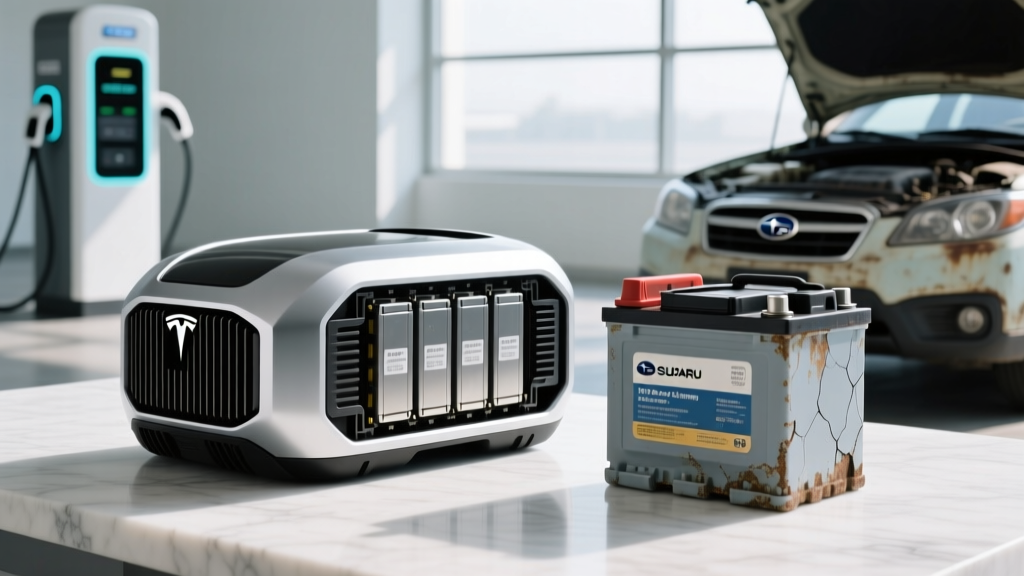
If you've ever owned a 2012 Subaru Outback, you already know the drill on its 12V lead-acid battery: it lasts roughly 3–5 years, costs $150–$250 to replace at any auto parts store, and you swap it without a second thought. That 2012 Subaru Outback battery — a Group 35 or Group 24F flooded or AGM unit — is a maintenance item, not a capital expense.
But when EV shoppers ask about the high-voltage traction battery, the anxiety is real. Will it die in five years? Will a replacement bankrupt me? The short answer, backed by over a decade of fleet data, is that modern EV batteries routinely outlast the vehicles they power. Here's the data-driven breakdown of chemistry, degradation, warranties, replacement costs, and how to maximize longevity.
The 2012 Subaru Outback Battery: A Baseline for Comparison
To put EV battery longevity in perspective, let's anchor on what many drivers already know. The 12V battery in a 2012 Subaru Outback (2.5i or 3.6R) is a conventional lead-acid or AGM unit that powers the starter, lights, infotainment, and ECU. Typical lifespan: 3–5 years in moderate climates, sometimes less in extreme heat. Replacement cost: $130–$280 depending on brand and chemistry.
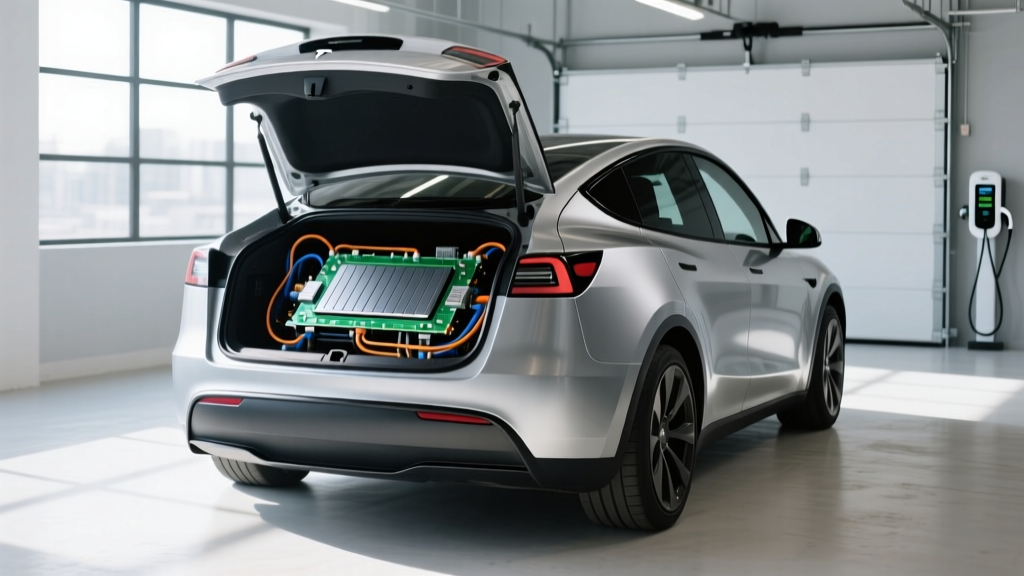
EVs also carry a 12V auxiliary battery for the same low-voltage systems, and it follows the same replacement cycle. But the traction battery — the high-voltage pack that stores energy for propulsion — is an entirely different class of component. It's measured in kilowatt-hours (kWh) of energy capacity, not cold-cranking amps, and it's engineered for a service life measured in hundreds of thousands of miles.
LFP vs. NMC/NCA: Which Chemistry Powers Your EV?
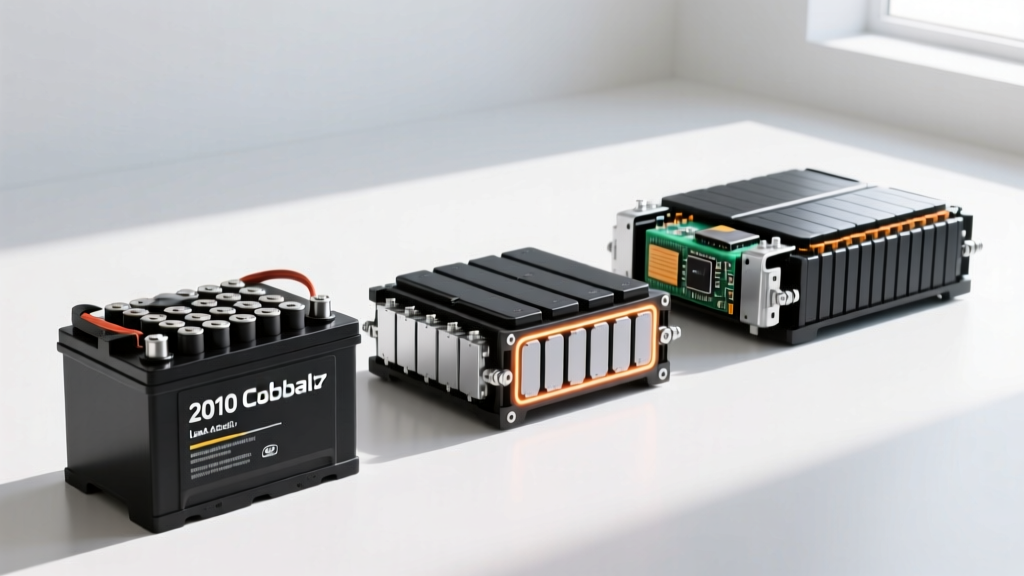
Not all EV batteries are built the same. The two dominant lithium-ion chemistries in 2026 are LFP (lithium iron phosphate) and NMC/NCA (nickel manganese cobalt / nickel cobalt aluminum). Each has distinct trade-offs that affect range, longevity, cost, and cold-weather performance.
| Attribute | LFP (LiFePO4) | NMC / NCA |
|---|---|---|
| Energy density | ~160–180 Wh/kg (lower) | ~230–300 Wh/kg (higher) |
| Cycle life | 3,000–5,000+ cycles | 1,000–2,000 cycles |
| Calendar lifespan | 15–20+ years typical | 10–15 years typical |
| Cold-weather performance | Weaker below 32°F; slower charging | Better low-temp discharge and charge acceptance |
| Optimal daily SoC | 100% OK (no degradation penalty) | 80% recommended for daily use |
| Cost per kWh (pack-level) | ~$80–$100 | ~$110–$140 |
| Common in (2026 models) | Tesla Model 3/Y RWD, Ford Mustang Mach-E Select, BYD, Rivian Standard | Tesla Long Range, Hyundai Ioniq 5/6, Kia EV6/EV9, BMW iX, Lucid Air |
| Cobalt/nickel content | None (cobalt-free) | Contains cobalt and/or nickel |
Bottom line: LFP wins on cycle life and cost — ideal for daily commuters who charge to 100% regularly. NMC/NCA wins on energy density and cold-weather performance — better for long-range and AWD models where packing more kWh into a smaller space matters. Neither chemistry is universally "better"; it depends on your driving pattern and climate.
How Long Do EV Batteries Actually Last? Degradation Data
The question every EV buyer asks: How long do EV batteries last? The answer, based on fleet data and long-term owner reports, is far longer than most expect.
Typical EV Battery Degradation Curve (NMC chemistry, average use):
- Year 1 / 15,000 mi: ~2–3% capacity loss (initial formation loss)
- Year 3 / 45,000 mi: ~5–7% total loss
- Year 5 / 75,000 mi: ~8–10% total loss
- Year 8 / 120,000 mi: ~10–14% total loss
- Year 10 / 150,000 mi: ~12–18% total loss
- Year 15 / 200,000+ mi: ~18–25% total loss (varies widely by use pattern)
Sources: Geotab fleet data (6,300+ EVs), Recurrent Auto battery health reports, Tesla Impact Reports.
For LFP packs, the curve is even flatter. Tesla's 2025 Impact Report noted that Model 3/Y LFP batteries retained approximately 92% capacity at 100,000 miles, with degradation stabilizing after the first 20,000 miles. Geotab's analysis of over 6,300 vehicles found average annual degradation of roughly 1.8% per year across all chemistries — meaning the average EV retains about 82% of original capacity after 10 years.
For context, a 2012 Subaru Outback's engine might need a $4,000–$6,000 replacement or major service (head gasket, timing chain) by 150,000 miles. An EV's traction battery at the same mileage still has 80%+ of its original range — enough to remain the vehicle's primary power source for years to come.
What Does the EV Battery Warranty Cover?
Federal law in the United States mandates a minimum EV battery warranty of 8 years / 100,000 miles (whichever comes first). In California Air Resources Board (CARB) states, that extends to 10 years / 150,000 miles. Most manufacturers exceed the minimum.
| Manufacturer | Warranty Term | Capacity Retention Threshold | Notes |
|---|---|---|---|
| Tesla (Model 3/Y) | 8 yr / 120,000 mi (LR) or 100,000 mi (RWD) | 70% of original capacity | LFP (RWD) and NMC (LR) covered identically |
| Hyundai / Kia | 10 yr / 100,000 mi | 70% (Hyundai) / 70% (Kia) | Among the longest calendar terms |
| Ford (Mach-E, F-150 Lightning) | 8 yr / 100,000 mi | 70% of original capacity | Transferable to second owner |
| Rivian | 8 yr / 175,000 mi | 70% of original capacity | Highest mileage threshold among mainstream OEMs |
| GM (Ultium platform) | 8 yr / 100,000 mi | 70% of original capacity | Covers Bolt EV/EUV, Blazer EV, Silverado EV |
| BMW | 8 yr / 100,000 mi | 70% of original capacity | Includes i4, iX, i7 |
What triggers a warranty claim? If your battery's State of Health (SoH) drops below the threshold (typically 70%) within the warranty period, the manufacturer must repair or replace it at no cost. In practice, very few owners ever hit this threshold during the warranty window. Data from Recurrent Auto shows that warranty claims account for less than 2% of EVs on the road — and most of those are early manufacturing defects, not gradual degradation.
How Much Does an EV Battery Cost to Replace?
This is the single biggest fear for prospective EV buyers. Here are the real numbers for out-of-warranty replacement in 2026:
| Vehicle | Battery Size (usable kWh) | Chemistry | Replacement Cost (parts + labor) |
|---|---|---|---|
| Tesla Model 3 RWD | 57.5 kWh | LFP | $10,000–$13,000 |
| Tesla Model Y Long Range | 75 kWh | NMC | $13,000–$16,000 |
| Hyundai Ioniq 5 (Long Range) | 77.4 kWh | NMC | $14,000–$18,000 |
| Ford Mustang Mach-E (Extended Range) | 91 kWh | NMC | $16,000–$21,000 |
| Chevrolet Bolt EV | 65 kWh | NMC | $9,000–$14,000 (post-recall revised pack) |
| Rivian R1T (Large Pack) | 128 kWh | NMC | $20,000–$26,000 |
| Ford F-150 Lightning (Extended Range) | 131 kWh | NMC | $22,000–$28,000 |
Critical context: These costs are comparable to a major engine or transmission replacement on a gas vehicle — which also runs $4,000–$8,000+ for conventional cars and far more for luxury models. The key difference is that EV batteries rarely need replacement during the vehicle's useful life. According to data compiled by Consumer Reports and the U.S. Department of Energy, the majority of EV batteries will retain sufficient capacity to serve the vehicle for 200,000+ miles before dropping to levels that owners find unacceptable.
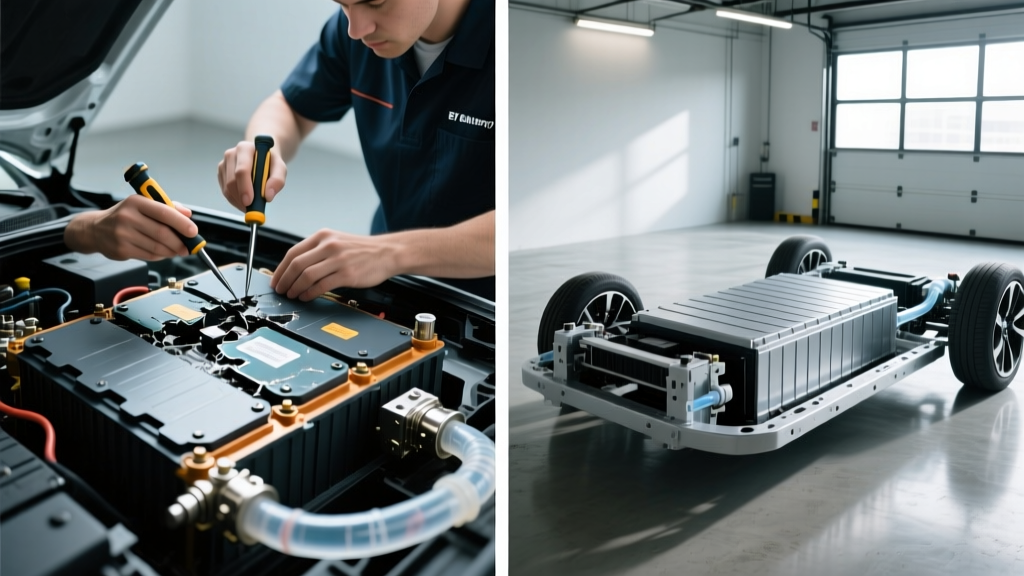
Also worth noting: module-level repairs are increasingly common. Rather than replacing the entire pack, specialized EV shops can replace individual degraded modules for $2,000–$5,000, extending the pack's life at a fraction of the full-replacement cost.
Factors That Affect EV Battery Life — and How to Maximize It
Battery degradation isn't random. It's driven by specific, controllable factors. Here's what the data shows:
Battery Longevity Checklist:
- State of Charge habits: For NMC/NCA packs, keep daily SoC between 20–80%. Charge to 100% only when needed for long trips. LFP packs can be charged to 100% daily without penalty — in fact, Tesla recommends periodic 100% charges for LFP to recalibrate the BMS.
- DC fast charging frequency: Occasional DC fast charging (50–250 kW) has minimal impact. Daily exclusive use of DCFC accelerates degradation by roughly 1–3% over the battery's life vs. primarily Level 2 home charging, per Geotab data. Use Level 2 (7–11.5 kW) for daily charging when possible.
- Extreme temperatures: Sustained exposure to ambient temperatures above 95°F accelerates calendar degradation. In cold climates, preconditioning the battery before fast charging protects it and improves charge speed. Garage parking helps in both extremes.
- Deep discharge avoidance: Letting the pack sit at 0% SoC for extended periods causes copper dissolution in the anode. If storing the vehicle, leave it at ~50% SoC.
- Software updates: OEM battery management system (BMS) updates often refine thermal management and charge algorithms. Keep your vehicle's software current.
How to Check Your EV Battery's State of Health (SoH)
State of Health (SoH) is the metric that tells you how much capacity your battery retains compared to when it was new. A new battery is 100% SoH; at 70% SoH, you've lost 30% of your original range.
How to check SoH:
- In-vehicle display: Many 2026 EVs (Tesla, Hyundai/Kia, BMW) include a battery health indicator in the settings menu or service screen. Tesla's service mode shows estimated range at 100% SoC vs. original EPA range — a practical proxy for SoH.
- OBD-II diagnostic apps: Tools like OBDeleven, LeafSpy (for Nissan Leaf), and manufacturer-specific apps read the BMS directly and report SoH as a percentage. A basic OBD-II Bluetooth adapter costs $30–$60.
- Dealer/service center: Any authorized EV service center can run a full battery health diagnostic. Request this during routine service visits or before purchasing a used EV.
- Third-party reports: Services like Recurrent provide battery health scores based on connected vehicle data, often integrated into used-EV listings on platforms like Carvana and CarGurus.
When to be concerned: If your SoH drops more than 3% per year after the first year, or if you notice sudden range drops (which may indicate a faulty module rather than normal degradation), schedule a diagnostic. Under the 8-year/100,000-mile federal warranty, any drop below 70% SoH is covered.
What's Next? Solid-State and Silicon-Anode Batteries
The next frontier in EV battery technology includes solid-state batteries (replacing the liquid electrolyte with a solid conductor) and silicon-anode cells (replacing graphite anodes with silicon to boost energy density). Here's the realistic timeline as of 2026:
- Silicon-anode batteries: Already in limited production. GM's Ultium platform uses a small percentage of silicon in the anode. Companies like Sila Nanotechnologies and Group14 are scaling production. Expect wider adoption in 2027–2029 model-year vehicles, offering ~10–20% energy density improvement.
- Solid-state batteries: Toyota has announced production intent for 2027–2028, targeting ~750 km (466 mi) range and 10-minute fast charging. Samsung SDI, QuantumScape, and Solid Power are also in advanced testing. However, mass-market availability at competitive pricing is realistically 2029–2032. Early implementations will likely appear in premium models first.
- Sodium-ion batteries: CATL and BYD have begun production of sodium-ion cells for lower-cost, shorter-range EVs in China. U.S. availability remains uncertain but could emerge in budget segments by 2028.
These technologies are promising but remain announced/preliminary. Current LFP and NMC batteries are mature, well-understood, and backed by extensive real-world data — making them a safe bet for 2026 buyers.
EV Traction Battery vs. 2012 Subaru Outback Battery: The Bottom Line
The 12V battery in a 2012 Subaru Outback is a $200 consumable you replace every few years. The high-voltage traction battery in a modern EV is a $10,000–$28,000 component that, in practice, most owners will never need to replace. It's engineered to outlast 200,000 miles with 75–85% of its original capacity intact, backed by warranties that cover you for at least 8 years or 100,000 miles.
If you're cross-shopping from a gas vehicle like the Outback, the honest ownership math is this: you'll spend $0 on battery maintenance during typical ownership, save $8,000–$12,000 on fuel over 100,000 miles (at 2026 energy prices), and eliminate oil changes, spark plugs, and transmission fluid. The battery isn't the liability many fear — it's the component most likely to still be working fine when you sell the car.
Frequently Asked Questions
How long do EV batteries last in years and miles?
Based on fleet data from Geotab and Recurrent Auto, the average EV battery retains approximately 82% of its original capacity after 10 years and 150,000 miles. Many packs exceed 200,000 miles before reaching the 70% SoH threshold that triggers a warranty claim. LFP chemistry packs tend to last even longer, with some fleet data showing 90%+ retention at 150,000 miles.
How much does an EV battery cost to replace out of warranty?
Full pack replacement ranges from approximately $9,000 for a Chevrolet Bolt EV to $28,000 for a Ford F-150 Lightning Extended Range pack, including labor. However, most batteries never require full replacement during the vehicle's useful life. Module-level repairs ($2,000–$5,000) are increasingly available as a cost-effective alternative.
What does the federal EV battery warranty cover?
Federal law mandates a minimum 8-year / 100,000-mile warranty on EV traction batteries (10 years / 150,000 miles in CARB states). Coverage applies if the battery's State of Health drops below the manufacturer's threshold — typically 70% of original capacity. The warranty covers parts, labor, and diagnostics at no cost to the owner. It is separate from the general vehicle warranty and typically transferable to a second owner.
How do I check and maximize my EV battery's health?
Check SoH through your vehicle's service menu, an OBD-II diagnostic app, or a dealer service visit. To maximize longevity: keep NMC/NCA packs between 20–80% SoC for daily use (LFP can go to 100%), rely primarily on Level 2 home charging, precondition the battery in cold weather, avoid prolonged storage at 0% or 100% SoC, and keep vehicle software updated for the latest BMS refinements.
LFP vs. NMC — which battery chemistry is better for me?
Choose LFP if you want maximum cycle life, lower cost, and the ability to charge to 100% daily — ideal for commuters with home charging in moderate climates. Choose NMC/NCA if you need maximum range per charge, better cold-weather performance, or are buying a long-range/AWD model. Neither is universally superior; the right choice depends on your driving pattern, climate, and budget.
Is the 12V battery in an EV the same as a 2012 Subaru Outback battery?
Yes, in concept. EVs still carry a 12V auxiliary battery (often lithium-ion in newer models, but sometimes lead-acid) to power lights, infotainment, door locks, and control modules. It follows a similar 3–5 year replacement cycle and is a routine maintenance item — completely separate from the high-voltage traction battery that powers the drivetrain.