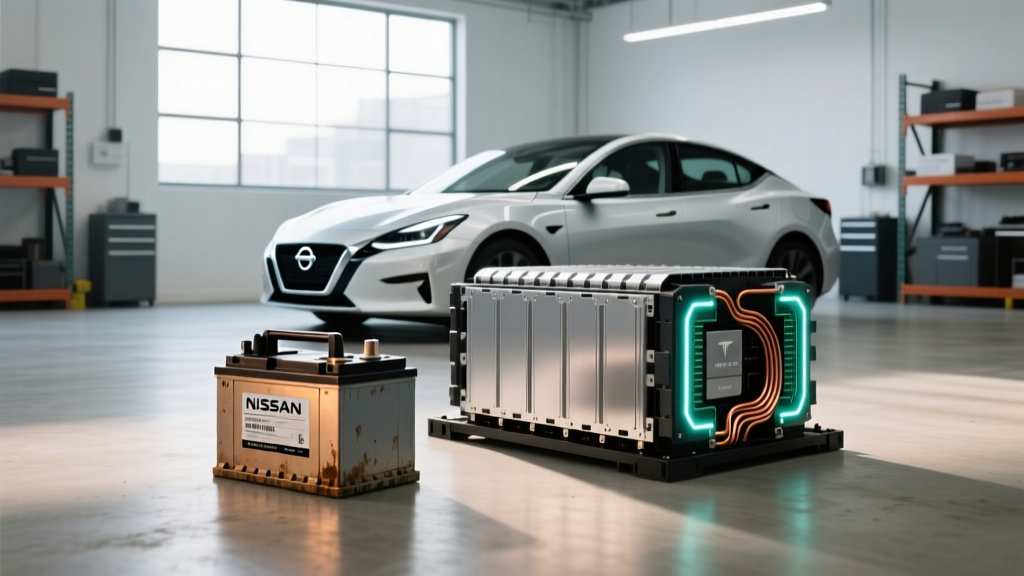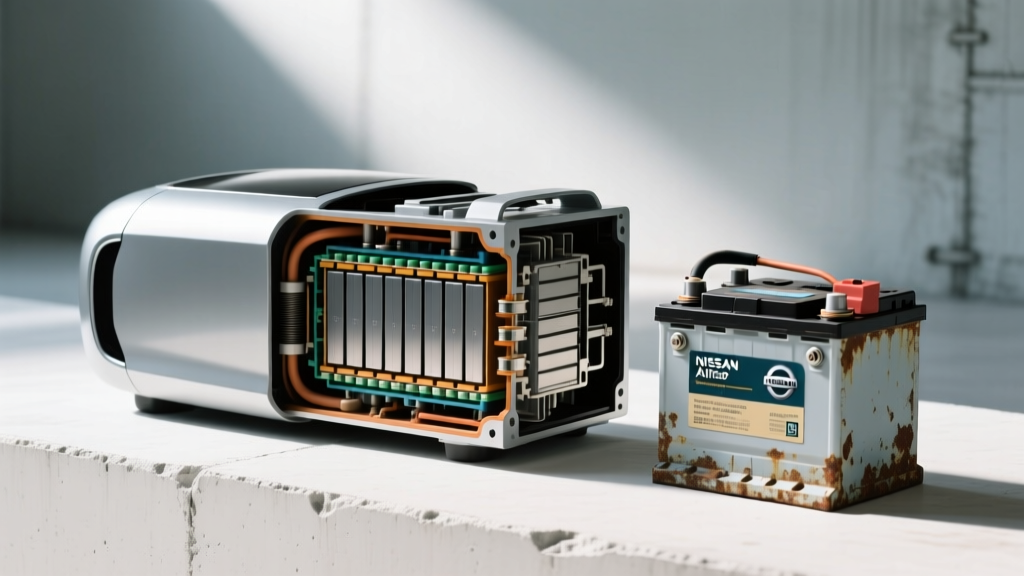
If you've ever replaced the 12V lead-acid battery in a 2010 Nissan Altima, you know the drill: $150–$220 at an auto parts store, a 15-minute swap in the driveway, and a new battery every 3–5 years. It's one of the most routine ownership tasks in the gas-car world. But when shoppers research EVs, they often project that same replacement-cycle anxiety onto the high-voltage traction battery — the large lithium-ion pack that actually propels an electric vehicle. The two are fundamentally different components with vastly different lifespans, costs, and engineering.
This guide breaks down exactly how modern EV batteries are built, how they degrade, what warranties cover, and what replacement actually costs — using real data from manufacturers, the EPA, and long-term fleet studies. We'll also clarify why comparing an EV traction battery to a 2010 Nissan Altima battery is a useful thought exercise in ownership-cost planning, even though the engineering is worlds apart.
Traction Battery vs. 12V Auxiliary: Clearing Up the Confusion
Every EV on the road in 2026 still carries a small 12V auxiliary battery — functionally similar to the one in a 2010 Nissan Altima — that powers lights, infotainment, door locks, and the computers that manage the high-voltage system. That 12V battery is a maintenance item, typically an AGM or lithium-iron-phosphate (LiFePO4) unit costing $100–$300 to replace every 4–6 years.
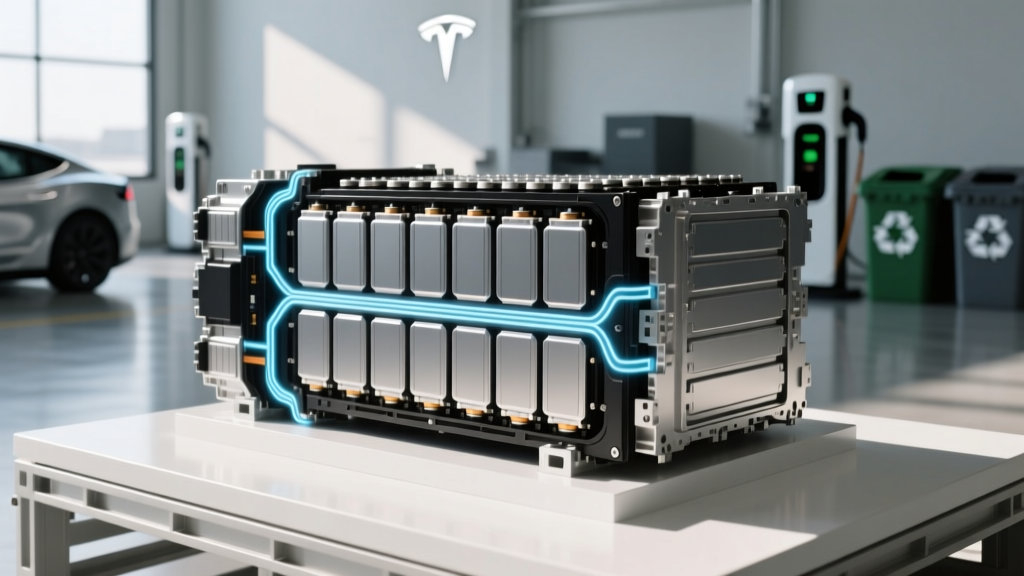
The high-voltage traction battery is an entirely different system. It's a 40–120+ kWh lithium-ion pack operating at 400V (or 800V in vehicles like the Hyundai Ioniq 5 and Kia EV6) that stores the energy to drive the electric motor. This is the component buyers worry about — and the one this guide focuses on exclusively.
Battery Chemistry: LFP vs. NMC vs. NCA Explained
Not all EV batteries use the same chemistry. The two dominant cathode types in 2026 are LFP (lithium iron phosphate) and NMC/NCA (nickel manganese cobalt / nickel cobalt aluminum). Your choice of chemistry affects range, longevity, cold-weather performance, and price.
| Attribute | LFP (LiFePO4) | NMC / NCA |
|---|---|---|
| Energy Density | Lower (~160–180 Wh/kg cell-level) | Higher (~220–300 Wh/kg cell-level) |
| Cycle Life | 3,000–5,000+ cycles to 80% SoH | 1,000–2,000 cycles to 80% SoH |
| Cold Performance | More range loss below freezing (~35–40%) | Better cold retention (~25–30% loss) |
| Cost (per kWh) | Lower (~$80–100/kWh pack-level) | Higher (~$110–140/kWh pack-level) |
| Recommended SoC Range | Can charge to 100% regularly | Best kept 20–80% for daily use |
| Thermal Stability | Excellent — very low thermal runaway risk | Good — requires more active thermal management |
| Common 2026 Vehicles | Tesla Model 3/Y RWD, Ford Mustang Mach-E Select (LFP option), BYD models | Tesla Model 3/Y Long Range, Hyundai Ioniq 5/6, Kia EV6/EV9, BMW iX, Rivian |
Which is better? There's no single winner. LFP is the durability and cost champion — ideal for daily commuters who can charge at home and don't need maximum range. NMC/NCA is the range and performance leader — better for road-trippers, cold-climate drivers, and anyone who needs every mile of EPA-rated range. Tesla, Ford, and others now offer LFP in base trims specifically to lower entry price and extend battery life.
How Long Do EV Batteries Actually Last? Real Degradation Data
The fear that EV batteries need frequent replacement is one of the most persistent myths in the transition to electric. Long-term data tells a different story.
- Tesla Model 3/Y (NMC, 2018–2022): Average ~8% capacity loss at 100,000 miles, per Tesla's 2024 Impact Report and third-party fleet data from Recurrent Auto.
- Chevrolet Bolt EV/EUV (NMC, 2017–2023): ~6–10% loss at 80,000–100,000 miles; some early 2017 models affected by the LG cell recall (replaced under warranty).
- Nissan LEAF (LMO/NMC, 2011–2026): Early passive-cooled 24 kWh packs (2011–2015) showed 20–30% loss by 80,000 miles in hot climates. The 2018+ LEAF with active thermal management and 40/62 kWh packs shows ~10–12% loss at 80,000 miles.
- Hyundai/Kia E-GMP platform (Ioniq 5, EV6, NMC, 2022–2026): Early fleet data suggests ~4–6% loss at 50,000 miles with 800V architecture and robust thermal management.
- LFP packs (Tesla Model 3 RWD, 2021–2026): Recurrent Auto data shows ~3–5% loss at 60,000 miles, with a flatter degradation curve than NMC.
Sources: Recurrent Auto, Tesla Impact Report, fueleconomy.gov
The pattern is clear: modern liquid-cooled EV batteries lose roughly 1–2% capacity per year under normal use, with a steeper initial drop in the first year (calendar aging) followed by a long, gradual linear decline. Most packs will retain 70–85% of original capacity at 150,000 miles — well within the warranty threshold.
Compare this to the 2010 Nissan Altima's lead-acid 12V battery, which is typically dead within 3–5 years regardless of driving habits. The EV traction battery is engineered as a lifetime component, not a consumable.
What Does the Battery Warranty Actually Cover?
Federal law mandates a minimum EV battery warranty of 8 years / 100,000 miles (10 years / 150,000 miles in California and states that follow CARB emissions rules). But the details matter — specifically, the capacity retention threshold that triggers a warranty claim.
| Manufacturer | Warranty Term | Capacity Threshold | Notes |
|---|---|---|---|
| Tesla | 8 yr / 100,000 mi (Model 3 RWD); 8 yr / 120,000 mi (LR/Perf) | 70% retention | Transferable to subsequent owners |
| Hyundai / Kia | 10 yr / 100,000 mi | 70% retention | Among the longest terms in the industry |
| Ford | 8 yr / 100,000 mi | 70% retention | Covers battery and hybrid/EV components |
| GM (Chevrolet, Cadillac) | 8 yr / 100,000 mi | 60% retention (Bolt); 70% (Ultium platform) | Ultium packs use modular design for partial replacement |
| BMW | 8 yr / 100,000 mi | 70% retention | Covers defective battery modules individually |
| Rivian | 8 yr / 175,000 mi | 70% retention | Highest mileage threshold among major OEMs |
What triggers a claim: If your battery's State of Health (SoH) drops below the stated threshold (usually 70%) within the warranty period, the manufacturer will repair or replace the pack — often by swapping defective modules rather than the entire unit. This is a defects-and-capacity warranty, not a guarantee against all degradation.
What's NOT covered: Damage from accidents, flooding, improper modifications, or using non-approved charging equipment. Normal gradual degradation above the threshold is expected and not warrantable.
EV Battery Replacement Cost: What You'll Actually Pay (and When)
If your battery fails outside warranty — or you're buying a used EV with a degraded pack — replacement cost is the big question. Here's the reality for 2026:
| Vehicle / Pack Size | Battery Capacity | Full Pack Cost (Parts + Labor) | Module-Level Repair |
|---|---|---|---|
| Tesla Model 3 RWD (LFP) | ~60 kWh | $8,000–$12,000 | $2,000–$4,000 per module section |
| Tesla Model Y Long Range (NMC) | ~75 kWh | $12,000–$16,000 | $3,000–$5,000 per module section |
| Hyundai Ioniq 5 (NMC) | 77.4 kWh | $11,000–$15,000 | $2,500–$4,500 per module |
| Ford F-150 Lightning Extended | ~131 kWh | $18,000–$25,000+ | $4,000–$7,000 per module |
| Chevrolet Bolt EV (NMC) | 65 kWh | $9,000–$14,000 | $2,000–$3,500 per module |
| BMW iX xDrive50 (NMC) | ~105 kWh | $16,000–$22,000 | $3,500–$6,000 per module |
When is replacement typically needed? For the vast majority of owners, it isn't. Based on current degradation curves, a modern liquid-cooled EV battery will retain 70–80% capacity at 200,000 miles. Most vehicles are scrapped, traded, or retired before the battery needs replacement. The cars that do need out-of-warranty replacements are typically high-mileage fleet vehicles, early-generation models with poor thermal management (like the 2011–2015 Nissan LEAF), or vehicles that suffered physical damage.
For context: if you spent $180 every 4 years on a 2010 Nissan Altima battery over 16 years, you'd spend ~$720 total. An EV traction battery might never need replacement in that same timeframe — but if it does, the single-event cost is 10–20x higher. The trade-off is that the EV battery isn't a scheduled maintenance item; it's a rare contingency.
Factors That Accelerate (or Slow) Battery Degradation
Battery longevity isn't random — it's heavily influenced by how you charge, drive, and store the vehicle. Here are the biggest factors, ranked by impact:
- Avoid sustained 100% SoC (NMC/NCA only): Daily charging to 80% is the sweet spot. LFP packs can and should be charged to 100% regularly — Tesla and Ford recommend this for LFP to maintain cell-balancing accuracy.
- Minimize DC fast charging when possible: Frequent 150+ kW DC sessions generate heat stress. Use Level 2 home charging as your daily routine; save DC fast charging for road trips. Data from Recurrent Auto shows vehicles that DC fast charge >90% of the time degrade ~1–2% faster over 100,000 miles than those primarily using Level 2.
- Don't let SoC sit at 0% or 100% for extended periods: If storing the vehicle for weeks, aim for 50% SoC. Both extremes accelerate calendar aging.
- Precondition the battery before fast charging: Most EVs do this automatically when you navigate to a charger. Preconditioning warms or cools the pack to the optimal ~35–40°C for fast charging, reducing stress and improving charge speed.
- Extreme heat is worse than extreme cold for longevity: Sustained battery temperatures above 40°C (104°F) accelerate chemical degradation. Cold temperatures reduce range temporarily but don't cause permanent damage. Garage parking in hot climates helps significantly.
- Use the vehicle's built-in charge limit settings: Nearly every 2026 EV lets you set a max daily charge level (e.g., 80%). Use it.
How to Check and Monitor Battery State of Health (SoH)
Unlike a 2010 Nissan Altima battery — where you find out it's dead when the car won't start — EV batteries provide continuous health data. Here's how to monitor yours:
In-Vehicle Displays
Most EVs show estimated range and energy consumption on the dash, but few display a direct SoH percentage. Tesla's service menu (accessible via the software screen in recent updates) shows battery health. Hyundai/Kia models display a battery health indicator in the EV settings menu. The Chevrolet Bolt shows a "battery capacity" readout in the diagnostic menu.
OBD-II Diagnostic Apps
Third-party tools like LeafSpy (Nissan LEAF), Scan My Tesla, and Car Scanner ELM OBD2 can read the battery management system (BMS) directly, showing SoH percentage, cell voltage variance, and pack temperature. These are the most accurate consumer-accessible methods.
Manufacturer and Third-Party Reports
Services like Recurrent Auto provide battery health reports that compare your pack's degradation to the fleet average for your specific model and year. Some dealerships can pull a detailed SoH report during service visits. Tesla provides battery health data in the vehicle's service history when requested.
Range as a Proxy
Track your actual miles per kWh over time. If your 2022 Model 3 Long Range (EPA 333 mi) consistently delivers 280 miles at 100% charge in moderate weather (vs. ~300 when new), that's roughly a 7–10% degradation indicator. This is imprecise — weather, tire pressure, and driving style affect it — but useful as a trend line.
Emerging Battery Tech: Solid-State and Silicon Anodes
Next-generation battery technologies are in active development, but it's important to separate lab announcements from production reality:
Solid-state batteries replace the liquid electrolyte with a solid material, promising higher energy density (potentially 400+ Wh/kg), faster charging, and improved safety. Toyota has announced a solid-state EV for 2027–2028 with a claimed 750 km (~466 mi) range, and Samsung SDI is targeting 2027 for mass production. However, manufacturing scale-up and cost reduction remain significant hurdles. These are not available in any production vehicle as of 2026.
Silicon anode technology replaces graphite anodes with silicon-dominant materials, increasing energy density by 20–40%. Companies like Sila Nanotechnologies and Group14 are supplying silicon anode materials to automakers, with Mercedes-Benz's G-Class EV (2025) using a silicon-anode pack from Sila. Expect incremental adoption through 2027–2029 as costs decline.
Sodium-ion batteries are entering the market for lower-cost, shorter-range EVs, particularly from Chinese manufacturers like BYD and CATL. These trade energy density for dramatically lower material costs and excellent cold performance, but they're not expected in US-market vehicles before 2027–2028 at the earliest.
Frequently Asked Questions
How long do EV batteries last in years and miles?
Modern liquid-cooled EV batteries (2020–2026 models) are engineered for 15–20 years or 150,000–200,000+ miles before dropping to 70% of original capacity. Real-world fleet data from Recurrent Auto shows most packs retaining 85–92% capacity at 100,000 miles. Early-generation EVs with passive cooling (2011–2015 Nissan LEAF) degraded faster, which is why modern thermal management matters.
How much does an EV battery cost to replace?
Full pack replacement ranges from roughly $8,000 for a ~60 kWh pack (Tesla Model 3 RWD) to $25,000+ for a ~131 kWh pack (Ford F-150 Lightning Extended Range), including labor. However, many repairs can be done at the module level for $2,000–$7,000 rather than replacing the entire pack. Most EV batteries never need replacement during the vehicle's useful life.
What does the EV battery warranty cover?
Federal minimum is 8 years / 100,000 miles (10/150,000 in CARB states). Most manufacturers guarantee 70% capacity retention. If SoH drops below the threshold within the term, the OEM repairs or replaces the pack at no cost. This covers manufacturing defects and abnormal degradation, not accident damage or misuse.
How do I check and maximize my EV battery health?
Monitor SoH via in-vehicle menus, OBD-II apps (LeafSpy, Scan My Tesla), or services like Recurrent Auto. To maximize life: charge NMC/NCA to 80% daily (100% for LFP), minimize frequent DC fast charging, precondition before fast charging, avoid storing at 0% or 100% SoC, and park in shade or a garage in hot climates.
LFP vs. NMC — which chemistry is better for me?
Choose LFP if you prioritize longevity, lower cost, and can charge at home daily (you'll charge to 100% regularly). Choose NMC/NCA if you need maximum range, live in a cold climate, or frequently road-trip. LFP is ideal for commuters; NMC is ideal for range-maximizers and cold-weather drivers.
Is an EV battery like the 2010 Nissan Altima battery — something I'll replace regularly?
No. The 2010 Nissan Altima's 12V lead-acid battery is a $180 consumable replaced every 3–5 years. An EV traction battery is a $8,000–$25,000 engineered system designed to last the life of the car. The replacement-cycle mental model from gas cars does not apply to modern EV battery packs.