Why a 2010 Dodge Caravan Battery Is the Perfect Benchmark for EV Longevity
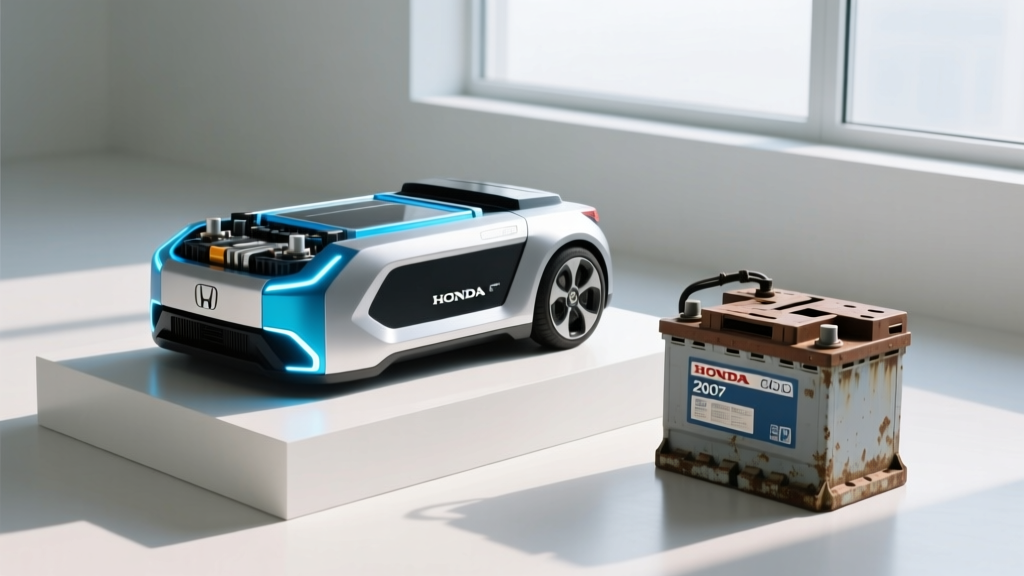
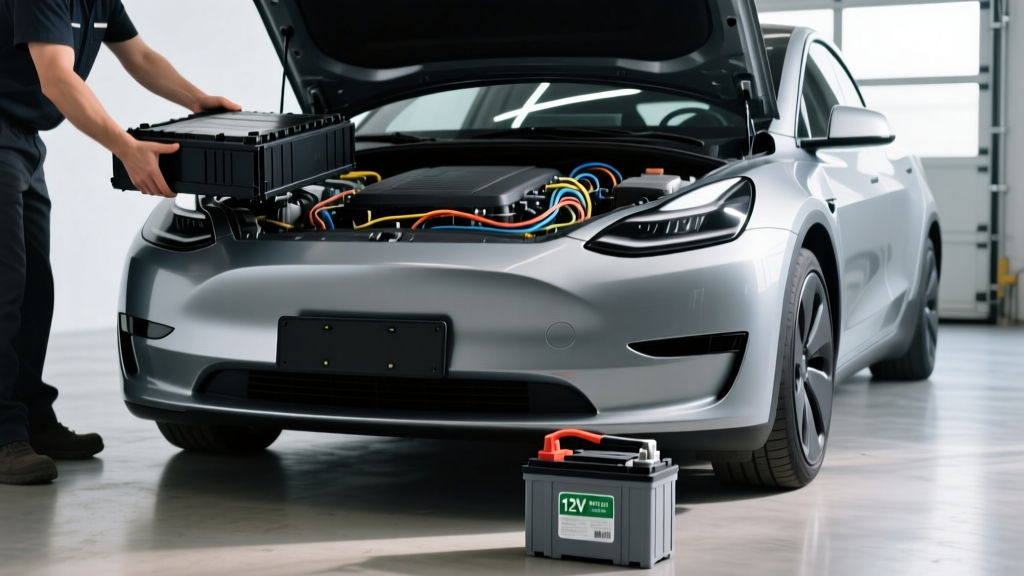
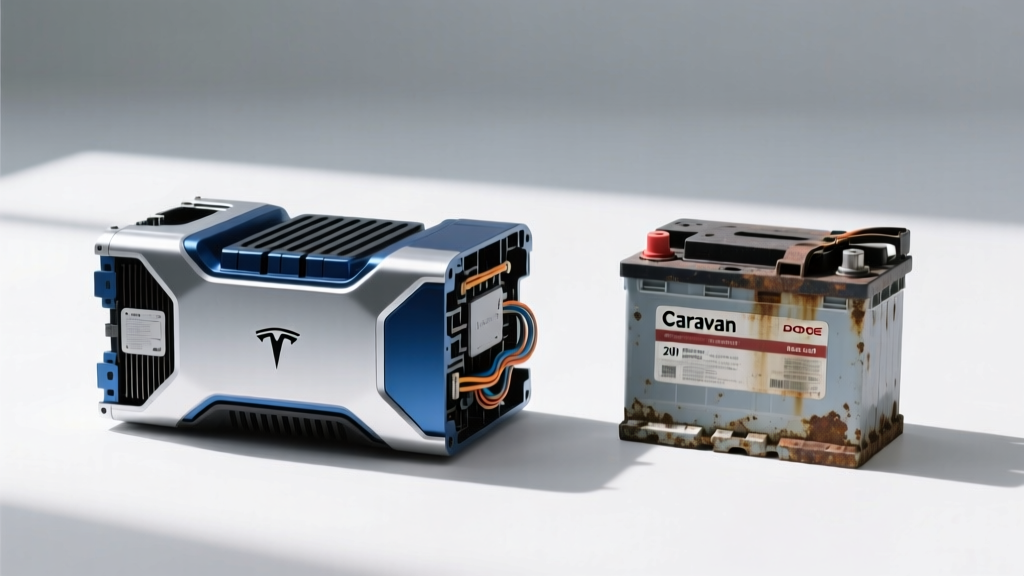
If you've ever owned a 2010 Dodge Caravan, you likely replaced its 12V lead-acid battery at least once — probably around the 4-to-6-year mark, at a cost of $150–$250. That experience shapes how many buyers think about electric vehicle batteries: fragile, expensive, and destined for the scrapyard. The reality of modern EV traction batteries is fundamentally different, but the comparison is useful. A 2010 Dodge Caravan battery is a maintenance item. An EV's high-voltage traction battery is engineered to outlast the vehicle itself.
This guide breaks down exactly how long EV batteries last, what chemistry is inside them, how much replacement actually costs (and how rarely it's needed), and what you can do to maximize longevity. We'll use hard data — not marketing claims — to set expectations.
LFP vs NMC: The Two Chemistries Powering Modern EVs
Every EV battery on the road in 2026 uses one of two dominant lithium-ion chemistries: LFP (lithium iron phosphate) or NMC/NCA (nickel manganese cobalt / nickel cobalt aluminum). The choice affects range, cost, longevity, and cold-weather behavior.
| Attribute | LFP (Lithium Iron Phosphate) | NMC/NCA (Nickel-based) |
|---|---|---|
| Energy Density | Lower (~160 Wh/kg cell-level) | Higher (~250–300 Wh/kg cell-level) |
| Typical Cycle Life | 3,000–5,000+ cycles to 80% SoH | 1,500–2,500 cycles to 80% SoH |
| Cold Performance | More range loss below 32°F (~25–35% loss at 20°F) | Better cold retention (~15–25% loss at 20°F) |
| Cost per kWh | Lower (~$80–$100/kWh at pack level) | Higher (~$110–$140/kWh at pack level) |
| Thermal Stability | Excellent — less prone to thermal runaway | Good — requires more active thermal management |
| Recommended SoC for Daily Use | 100% (LFP benefits from full charges) | 80–90% (prolongs life to avoid full saturation) |
| Common Applications (2026) | Tesla Model 3/Y RWD, Ford Mustang Mach-E Select, BYD models, Rivian Standard | Tesla Long Range, Hyundai Ioniq 5/6, BMW iX, Lucid Air, most premium EVs |
Which Is Better?
Neither is universally superior — the right choice depends on your driving pattern. If you commute short distances, charge at home nightly, and live in a mild climate, LFP's longer cycle life and lower cost make it ideal. If you need maximum range for road trips, frequently drive in cold weather, or tow heavy loads, NMC's energy density and cold performance justify the trade-off in cycle life. Most buyers won't stress either chemistry to its limits.
How Long Do EV Batteries Actually Last? Degradation Data
The fear that EV batteries need replacement every few years — like that 2010 Dodge Caravan battery — is not supported by fleet data. Here's what real-world degradation looks like across major platforms:
| Vehicle / Platform | Chemistry | Avg Degradation at 100k Miles | Avg Degradation at 200k Miles | Source |
|---|---|---|---|---|
| Tesla Model 3/Y (all variants) | NMC / LFP | ~8–10% | ~12–15% | Tesla 2025 Impact Report |
| Hyundai Ioniq 5 / Kia EV6 | NMC | ~7–9% | ~11–14% (projected) | Geotab fleet study 2025 |
| Chevrolet Bolt EV/EUV | NMC | ~6–8% | ~10–12% | Recurrent Auto 2025 data |
| Nissan LEAF (air-cooled, older) | NMC | ~15–20% | ~25–30% | Recurrent Auto 2025 data |
| BMW iX / i4 | NMC | ~6–8% | ~10–13% (projected) | Geotab fleet study 2025 |
The outlier is clear: early air-cooled batteries like the first-generation Nissan LEAF degraded faster because heat is the primary enemy of lithium-ion cells. Every modern EV sold in the US since 2020 uses active liquid thermal management, which dramatically slows degradation.
What Does This Mean in Real Terms?
A 2026 Hyundai Ioniq 5 with a 77.4 kWh (usable) NMC battery and an EPA range of 303 miles will likely retain roughly 270–280 miles of range at 100,000 miles. At 200,000 miles, expect around 260 miles. That's a meaningful reduction on paper but still entirely functional for daily driving and road trips. For context, a well-maintained 2010 Dodge Caravan engine might still run at 200k miles — but you'll have spent thousands on timing belts, transmission fluid, and yes, multiple 12V batteries by then.
EV Battery Warranty Terms: What's Covered and What Isn't
Federal law (EPA emissions warranty requirements) effectively mandates that EV manufacturers warrant their batteries for at least 8 years or 100,000 miles in CARB states, and most manufacturers apply that standard nationwide. Here's how major warranties compare:
| Manufacturer | Warranty Period | Capacity Retention Threshold | What Triggers a Claim |
|---|---|---|---|
| Tesla (Model 3/Y RWD — LFP) | 8 yr / 100,000 mi | 70% | SoH drops below 70% of original capacity |
| Tesla (Long Range / Performance) | 8 yr / 120,000 mi | 70% | SoH drops below 70% |
| Hyundai / Kia | 10 yr / 100,000 mi | 70% | SoH drops below 70% |
| Ford (Mach-E, F-150 Lightning) | 8 yr / 100,000 mi | 70% | SoH drops below 70% |
| General Motors (Ultium platform) | 8 yr / 100,000 mi | 70% (some models 60% for Bolt) | SoH drops below threshold |
| BMW | 8 yr / 100,000 mi | 70% | SoH drops below 70% |
| Rivian | 8 yr / 175,000 mi (Large Pack) | 70% | SoH drops below 70% |
Reading the Fine Print
The 70% threshold is critical. A warranty claim is only valid if your battery's State of Health (SoH) falls below 70% of its original capacity within the warranty period — meaning you'd need to lose more than 30% of range. Based on the degradation data above, hitting that threshold under normal use within 100,000 miles is extremely rare for liquid-cooled packs. The warranty is a safety net, not an expected service event.
Note: warranties cover defects and abnormal degradation, not damage from accidents, flooding, or improper modifications. They also don't cover the 12V auxiliary battery — that's a separate maintenance item, just like the one in your 2010 Dodge Caravan.
EV Battery Replacement Cost: The Numbers and the Reality
This is where the 2010 Dodge Caravan battery comparison actually helps set expectations. You expect to replace a lead-acid battery every 4–6 years for ~$200. EV traction battery replacement is an entirely different economic proposition — because it almost never happens during the vehicle's useful life.
| Vehicle | Battery Size (Usable kWh) | Full Pack Replacement Cost | Module-Level Repair Cost |
|---|---|---|---|
| Chevrolet Bolt EV | 65 kWh (NMC) | $14,000–$16,000 | $2,500–$4,000 per module |
| Tesla Model 3 RWD | 57.5 kWh (LFP) | $12,000–$15,000 | $3,000–$5,000 per module |
| Tesla Model Y Long Range | 75 kWh (NMC) | $16,000–$20,000 | $3,500–$6,000 per module |
| Hyundai Ioniq 5 | 77.4 kWh (NMC) | $18,000–$22,000 | $3,000–$5,500 per module |
| Ford F-150 Lightning (Extended) | 131 kWh (NMC) | $28,000–$35,000 | $4,000–$7,000 per module |
| BMW iX xDrive50 | 105.2 kWh (NMC) | $25,000–$32,000 | $4,500–$7,000 per module |
When Is Replacement Actually Needed?
Based on data from Recurrent Auto, which tracks over 15,000 EVs in real-world conditions, fewer than 1.5% of EV batteries have been replaced outside of recalls or collision damage as of 2025. Most degradation follows a curve: a steeper initial drop of 2–4% in the first year, then a very gradual linear decline of roughly 1–2% per year thereafter.
When replacement does occur out of warranty, many shops now offer module-level repair — replacing only the degraded modules rather than the entire pack — at a fraction of the cost. This is analogous to replacing a single cylinder's components rather than an entire engine block.
To put the cost in perspective: over 10 years of ownership, a gas vehicle like a 2010 Dodge Caravan would likely consume $15,000–$20,000 in fuel alone (at 17 MPG combined and $3.50/gallon), plus $2,000–$4,000 in transmission and engine maintenance. The EV battery is a single component that, statistically, will never need replacement during typical ownership.
Factors That Accelerate (or Preserve) Battery Life
Not all miles are created equal when it comes to battery wear. These are the variables that move the needle on degradation:
Battery Care Checklist: Maximize Longevity
- Avoid sustained 100% SoC (NMC only): For NMC/NCA batteries, set your daily charge limit to 80–90%. Reserve 100% for road trips. LFP batteries are an exception — manufacturers recommend charging to 100% regularly for cell balancing.
- Minimize DC fast charging when possible: Occasional DCFC is fine, but daily 150+ kW fast charging adds thermal stress. Data from Geotab shows EVs that fast-charge more than 3x per week degrade roughly 1–2% faster over 4 years. Use Level 2 home charging as your primary method.
- Precondition in cold weather: Most EVs precondition the battery when you set a departure time or navigate to a charger. A cold battery charges slower and experiences more stress. Preconditioning warms it to the optimal ~70–90°F operating range.
- Avoid extreme SoC storage: If you're leaving your EV parked for weeks, store it at 40–60% SoC. Sitting at 100% or near 0% for extended periods accelerates calendar degradation.
- Don't baby it too much: Modern battery management systems (BMS) are sophisticated. They maintain buffer zones at the top and bottom of the pack that you can't access, protecting against overcharge and deep discharge. Drive your EV normally — the engineering handles the rest.
The Fast-Charging Question
This deserves specific attention because it's the most common concern. A 2025 study by the Idaho National Laboratory found that vehicles charged primarily on DC fast chargers showed an average of 2.3% additional degradation over 100,000 miles compared to those charged primarily on Level 2. That's meaningful but not catastrophic — we're talking about the difference between 92% SoH and 89.7% SoH. If DCFC is your only option, it's still far cheaper and lower-maintenance than fueling a gasoline vehicle.
How to Check Your Battery's State of Health (SoH)
Unlike a 2010 Dodge Caravan, where you'd test the 12V battery with a multimeter at an auto parts store, EV battery health monitoring is built into the vehicle's software. Here's how to access it:
Manufacturer Apps and In-Car Displays
- Tesla: The Tesla app displays battery health metrics. Third-party apps like Tessie and Stats (iOS) pull detailed SoH data via the vehicle's API.
- Hyundai/Kia: The infotainment system's EV diagnostics menu shows estimated SoH. The Hyundai/Kia app provides a simplified battery health indicator.
- GM (Ultium): The myChevrolet/myCadillac app includes a battery health indicator. OnStar diagnostics can provide a detailed report.
- Ford: FordPass shows battery health status. The in-car diagnostics menu provides a more granular SoH percentage.
- BMW: The iDrive system and My BMW app display battery health. Dealership can run a full capacity test.
Third-Party SoH Tools
Services like Recurrent Auto offer free battery health reports by connecting to your vehicle's telematics data. OBD-II dongles paired with apps like Car Scanner or LeafSpy (for Nissan LEAF) can also read SoH directly from the battery management system. These tools give you a concrete percentage — for example, "91.4% SoH at 47,200 miles" — rather than vague "good/fair" indicators.
Emerging Battery Tech: Solid-State and Silicon Anodes
Looking forward — and this is strictly forward-looking, not available in any 2026 production vehicle — two technologies are in advanced development:
Solid-State Batteries
Solid-state batteries replace the liquid electrolyte with a solid material (ceramic, sulfide, or polymer), promising higher energy density (~400+ Wh/kg), faster charging, and improved safety. Toyota has announced a solid-state EV prototype targeting 2027–2028 production, and Samsung SDI is ramping pilot production lines. However, manufacturing cost and scalability remain significant hurdles. Realistic mass-market availability is 2029 at the earliest, with broad adoption likely in the 2030s.
Silicon Anode Technology
Companies like Sila Nanotechnologies and Group14 are replacing graphite anodes with silicon-dominant compositions, boosting energy density by 20–40%. This technology is closer to market — Porsche has invested in Group14, and limited deployment in premium EVs is expected by 2027–2028. It's an incremental improvement rather than a revolution, but it extends range without increasing pack size.
Neither technology changes the current buying decision. Today's lithium-ion batteries — both LFP and NMC — are mature, reliable, and backed by warranties that exceed typical ownership periods. Waiting for solid-state is like waiting for a better 2010 Dodge Caravan battery: by the time it arrives, you'll have missed years of driving electric.
Frequently Asked Questions
How long do EV batteries last in years and miles?
Based on fleet data from Recurrent Auto and Geotab, modern liquid-cooled EV batteries retain 85–92% of their original capacity at 100,000 miles (roughly 8–10 years of average driving). At 200,000 miles, expect 75–88% retention. Many EVs will reach 300,000+ miles before the battery drops below the 70% warranty threshold. The battery is designed to outlast the rest of the vehicle.
How much does an EV battery cost to replace?
Full pack replacement ranges from $12,000 to $35,000 depending on battery size and vehicle — smaller packs like the Tesla Model 3 RWD (~57.5 kWh LFP) are on the lower end, while large packs like the F-150 Lightning Extended Range (~131 kWh NMC) are at the top. Module-level repair costs $2,500–$7,000. However, fewer than 1.5% of EVs have required battery replacement outside of recalls, making this an unlikely expense during ownership.
What does the EV battery warranty actually cover?
Federal law requires a minimum of 8 years/100,000 miles of battery warranty coverage in CARB states, and most manufacturers apply this nationwide. Some go further — Hyundai/Kia offers 10 years/100,000 miles, and Rivian covers 8 years/175,000 miles on the Large Pack. The warranty triggers if your battery's State of Health drops below 70% of original capacity within the coverage period. It covers defects and abnormal degradation but not accident damage, flooding, or unauthorized modifications.
How do I check and maximize my EV battery health?
Check SoH through your manufacturer's app, in-car diagnostics menu, or third-party services like Recurrent Auto. To maximize longevity: charge NMC batteries to 80–90% daily (100% for LFP), minimize frequent DC fast charging, precondition in cold weather, and avoid storing the vehicle at extreme SoC levels. Modern battery management systems handle most protection automatically — normal driving won't harm your battery.
LFP vs NMC — which battery chemistry is better for me?
Choose LFP if you want maximum cycle life (3,000–5,000+ cycles), lower cost, and you primarily charge at home with daily driving under 200 miles. Charge it to 100% regularly. Choose NMC if you need maximum range for road trips, tow frequently, or live in a cold climate where its superior cold-weather performance matters. Charge it to 80–90% daily. Both chemistries will comfortably outlast a typical ownership period.
Is an EV battery like a 2010 Dodge Caravan battery — something I'll replace regularly?
No. A 2010 Dodge Caravan's 12V lead-acid battery is a wear item designed for 4–6 years of service. An EV's high-voltage traction battery is engineered for 15–20+ years and 200,000+ miles with gradual, manageable degradation. The analogy breaks down entirely: the EV battery is closer to a vehicle's frame than its consumable battery. You'll likely sell or retire the car before the battery needs attention.
Sources: fueleconomy.gov (EPA range and efficiency data), Recurrent Auto (fleet degradation studies), IRS §30D (tax credit rules affecting total ownership cost).