Why a 2010 Chevy Traverse Battery Search Leads to EV Battery Questions
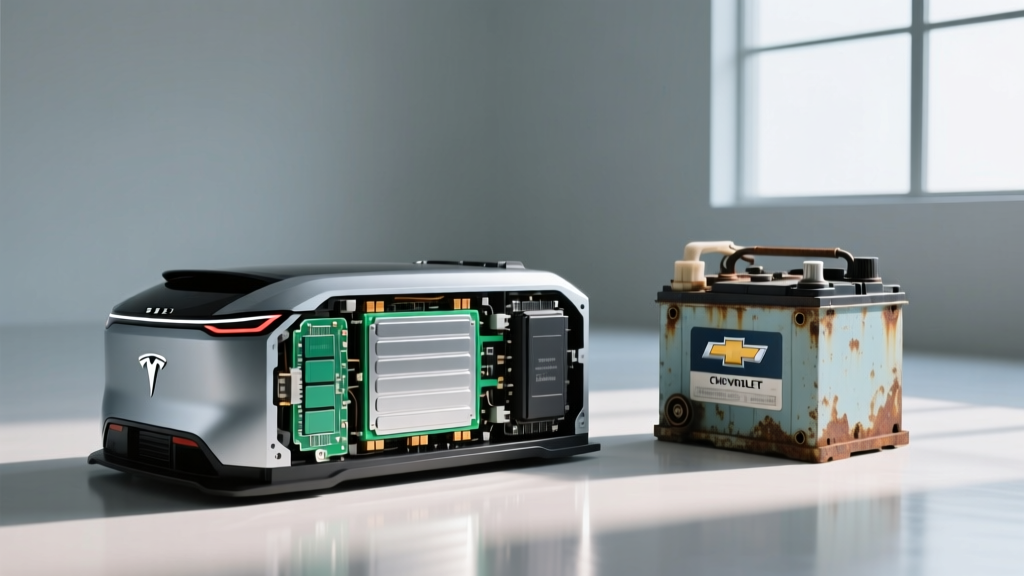
If you've ever searched for a battery 2010 Chevy Traverse, you were likely dealing with a dead 12-volt lead-acid starter battery — a $150 to $220 part that typically lasts 3 to 5 years before sulfation and cold-cranking-amp loss force a replacement. That's a routine auto-parts counter transaction.
But if you're considering an electric vehicle in 2026, the word "battery" takes on a very different meaning. The high-voltage traction battery in a modern EV is a 60 to 120+ kWh lithium-ion pack that costs between $8,000 and $22,000 to replace, is engineered to last 15 to 20 years, and comes with a federally mandated 8-year/100,000-mile warranty. Understanding the gap between a conventional 12V battery and an EV traction battery is essential for anyone weighing the long-term economics of going electric.
This guide covers exactly how long EV batteries last, what degradation looks like in real data, how warranties protect you, what replacement actually costs, and how LFP and NMC chemistries differ — so you can make a spec-driven decision rather than a fear-driven one.
LFP vs. NMC/NCA: Which Battery Chemistry Is Right for You?
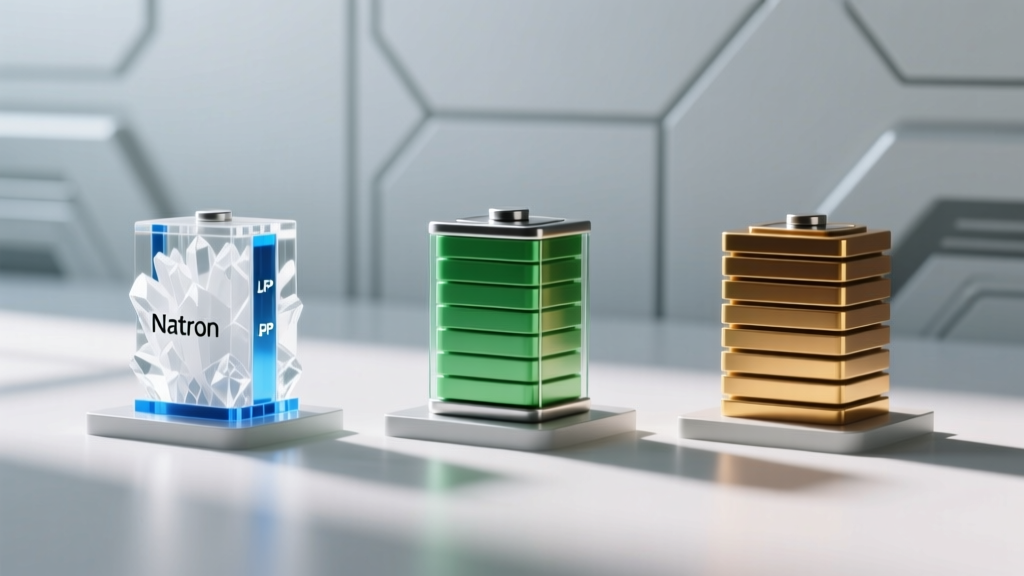
Not all EV batteries are built the same. The two dominant lithium-ion chemistries in 2026 are LFP (lithium iron phosphate) and NMC/NCA (nickel manganese cobalt / nickel cobalt aluminum). Each has distinct trade-offs that affect range, longevity, cold-weather behavior, and price.
| Attribute | LFP (Lithium Iron Phosphate) | NMC / NCA (Nickel-based) |
|---|---|---|
| Energy Density | Lower (~160–180 Wh/kg cell-level) | Higher (~220–260 Wh/kg cell-level) |
| Typical EV Range | 200–310 mi (EPA), limited by weight/volume | 250–400+ mi (EPA) |
| Cycle Life | 3,000–5,000+ full cycles | 1,000–2,000 full cycles |
| Calendar Lifespan | 15–20+ years projected | 12–18 years projected |
| Cold-Weather Performance | Greater range loss below 32°F (25–35% loss) | Moderate range loss below 32°F (15–25% loss) |
| Recommended Charge Habit | Can charge to 100% daily; benefits from periodic full charges for BMS calibration | Best kept 20–80% daily; 100% only for trips |
| Fast-Charging Tolerance | Better thermal stability; handles repeated DCFC well | More stress from frequent DCFC; benefits from preconditioning |
| Cost (per kWh, pack-level) | ~$90–$110/kWh | ~$120–$145/kWh |
| Cobalt Content | Zero cobalt — lower supply-chain risk | Contains cobalt — sourcing/ethical concerns |
| Notable 2026 Vehicles | Tesla Model 3/Y RWD, Ford Mustang Mach-E Select, BYD models | Tesla Long Range, Hyundai Ioniq 5/6, Rivian R1S/R1T, BMW iX |
The practical takeaway: LFP is the durability and value champion — it will likely outlast the vehicle itself and tolerates daily 100% charging. NMC/NCA is the range and performance pick, giving you more miles per kilogram of battery, but it demands more careful charging habits and costs more per kWh. For a commuter who charges at home nightly, LFP is often the smarter long-term play. For road-trippers who need 320+ miles of EPA range, NMC remains the better fit.
How Long Do EV Batteries Actually Last? Real Degradation Data
The most persistent myth in EV ownership is that batteries "wear out like phone batteries" and need replacing every few years. The data tells a fundamentally different story.
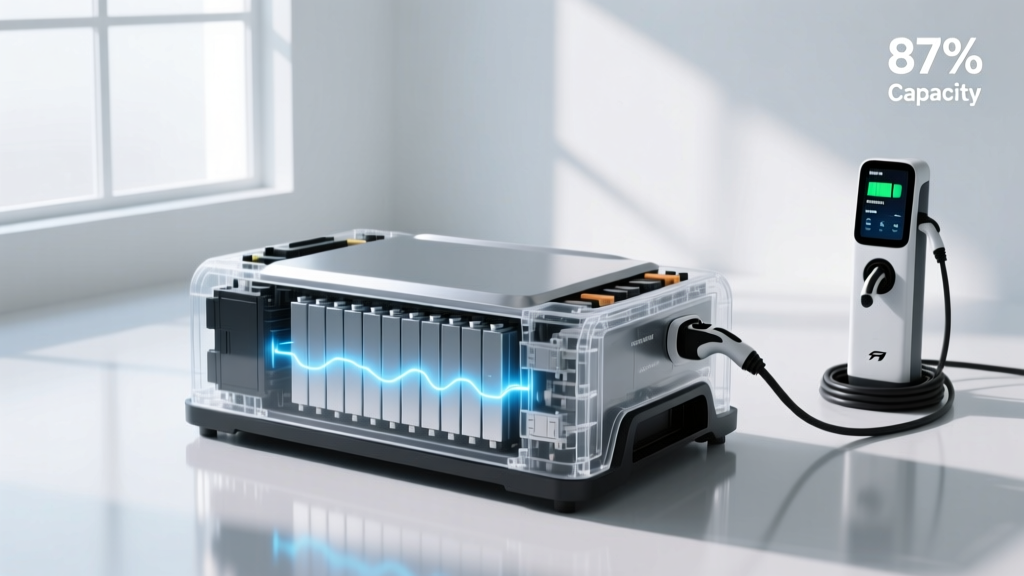
- Tesla fleet data (2024 Impact Report): Model 3/Y batteries retain approximately 85% of original capacity after 200,000 miles — roughly 15% degradation over what is the average lifetime mileage of a US vehicle.
- Geotab analysis of 10,000+ EVs (2025 update): Average annual degradation across all brands is 1.8% per year, meaning after 10 years the average pack retains ~82% capacity.
- Nissan Leaf (passive cooling, older-gen NMC): Higher degradation observed — 15–25% loss over 8–10 years, primarily due to lack of active thermal management. This is why modern EVs universally use liquid cooling.
- Taxi/ride-share Tesla Model 3 (high-mileage LFP): Multiple documented cases of LFP packs reaching 300,000+ miles with 80–85% capacity retention, validating LFP's superior cycle life.
To put this in perspective: a 2010 Chevy Traverse's original 12V battery likely died by 2015, was replaced, and that replacement also died by 2020. The EV traction battery, by contrast, is engineered as a lifetime component — not a consumable. Most EV batteries will retain 75–85% of their original capacity at the 15-year mark, still providing 200+ miles of range from a pack originally rated for 270–320 miles.
What Degradation Feels Like as an Owner
A 310-mile EPA-range EV with a 78 kWh NMC battery will see roughly:
- Year 1: ~305 miles (1–2% initial formation loss)
- Year 5: ~280 miles (~10% cumulative loss)
- Year 10: ~255 miles (~18% cumulative loss)
- Year 15: ~235 miles (~24% cumulative loss — still very usable)
Real-world highway range in cold weather (30°F) will be ~20–30% lower than these figures regardless of battery age, so a 15-year-old pack in January highway driving might deliver 165–185 miles. That's reduced, but far from "dead."
EV Battery Warranty Terms: What's Covered and What Isn't
Federal law (under EPA/CARB emissions-related component rules and manufacturer commitments) mandates that EV batteries carry a minimum warranty of 8 years or 100,000 miles, whichever comes first. California Air Resources Board (CARB) states extend this to 10 years/150,000 miles. Most major automakers exceed the minimum.
| Manufacturer | Warranty Period | Capacity Threshold | Chemistry |
|---|---|---|---|
| Tesla (Model 3/Y LWD) | 8 yr / 100,000 mi | 70% retention | LFP |
| Tesla (Model 3/Y LR) | 8 yr / 120,000 mi | 70% retention | NMC |
| Hyundai / Kia | 10 yr / 100,000 mi | 70% retention | NMC |
| Ford (Mach-E, F-150 Lightning) | 8 yr / 100,000 mi | 70% retention | NMC / LFP |
| Rivian (R1S/R1T) | 8 yr / 175,000 mi | 70% retention | NMC (Samsung SDI) |
| GM (Ultium-based) | 8 yr / 100,000 mi | 70% retention (60% Bolt EUV) | NMC (Ultium) |
| BMW (iX, i4) | 8 yr / 100,000 mi | 70% retention | NMC |
What the warranty covers: If your battery's usable capacity falls below the stated threshold (typically 70% of original) within the warranty period, the manufacturer will repair or replace the pack at no cost. Some manufacturers replace individual modules rather than the entire pack, which is faster and less wasteful.
What the warranty does NOT cover: Damage from accidents, flooding, improper modifications, or aftermarket charging equipment that causes electrical faults. Normal degradation above the threshold (e.g., losing 25% over 12 years) is also not a warranty claim — it's expected behavior.
For context, the EPA's fueleconomy.gov site provides model-by-model efficiency and range data, while warranty specifics are published on each manufacturer's official site.
EV Battery Replacement Cost: What You'll Actually Pay
Here's the question that generates the most anxiety — and the most misinformation. Yes, an out-of-warranty EV battery replacement is expensive. But it's also extremely rare during a vehicle's normal service life.
| Vehicle / Pack Size | Chemistry | Full Pack Replacement | Module Repair (if available) |
|---|---|---|---|
| Tesla Model 3 RWD (~60 kWh LFP) | LFP | $10,000–$13,000 | $2,500–$4,000 per module section |
| Tesla Model Y LR (~78 kWh NMC) | NMC | $13,000–$16,000 | $3,000–$5,000 per module section |
| Hyundai Ioniq 5 (~77.4 kWh NMC) | NMC | $14,000–$18,000 | $3,500–$5,500 per module |
| Ford F-150 Lightning Ext. Range (~131 kWh) | NMC | $20,000–$28,000 | $4,000–$7,000 per module |
| Rivian R1T Max Pack (~149 kWh) | NMC | $22,000–$30,000 | $5,000–$8,000 per module |
| Chevy Bolt EV/EUV (~65 kWh NMC) | NMC | $14,000–$16,000 | $3,000–$4,500 per module |
When is replacement actually needed? Almost never during the first 10–15 years. The vast majority of EV batteries are still functional (above 70% capacity) at 200,000 miles. Full pack replacements are typically only performed after catastrophic damage (collision, flood) or extreme outlier degradation. Module-level repairs — replacing a single faulty cell group — are far more common and far less expensive.
Compare this to a 2010 Chevy Traverse: over 15 years and 180,000 miles, you'd likely spend $1,200–$1,800 on three or four 12V battery replacements, plus $2,000–$4,000 on a transmission rebuild and $800–$1,500 on catalytic converter work. The EV's "expensive" battery often costs less in total than the cumulative powertrain maintenance of an aging ICE vehicle.
Factors That Accelerate (or Preserve) Battery Life
EV battery degradation isn't random — it's driven by specific, controllable factors. Here's what the data shows:
- Daily charge limit (NMC): Set to 80%. Only charge to 100% when you're leaving for a road trip within 24 hours.
- Daily charge limit (LFP): Charge to 100% at least once per week — LFP chemistry benefits from full-charge BMS calibration, and 100% storage causes minimal stress.
- Avoid prolonged low SoC: Don't leave any EV sitting below 10% for days. If storing for weeks, leave it at ~50%.
- Minimize DC fast charging when possible: Occasional DCFC is fine; daily DCFC without preconditioning accelerates NMC degradation by ~1–2% additional per year. Use Level 2 (7–11.5 kW) at home as your primary charging method.
- Precondition before fast charging: Most modern EVs do this automatically when you navigate to a charger. Preconditioning warms the pack to 30–40°C, enabling faster charging with less lithium plating risk.
- Park in shade/garage in extreme heat: Sustained battery temperatures above 104°F (40°C) accelerate calendar degradation. A garage in Phoenix summer is worth ~2–3% additional capacity retention over 10 years.
- Don't obsess over regen settings: Aggressive regen in cold weather (below 20°F) can cause lithium plating on NMC cells. Most EVs automatically reduce regen strength when the pack is cold — let the car manage this.
Fast-Charging Impact in Numbers
A 2024 study by Geotab analyzing over 10,000 electric vehicles found that vehicles using DC fast charging more than 3 times per month showed an average additional 0.5–1.0% annual degradation compared to vehicles that primarily used Level 2 charging. This is measurable but modest — going from 1.8% to 2.5% annual loss still means 80%+ capacity at year 12.
How to Monitor Your EV Battery Health (State of Health)
State of Health (SoH) is the metric that tells you what percentage of your battery's original capacity remains usable. Here's how to check it:
Method 1: In-Vehicle Displays
Some EVs show SoH directly. Tesla's service menu (accessed via the software screen) displays battery health percentage. Hyundai/Kia models show a battery health indicator in the EV settings menu. Rivian displays SoH in the vehicle settings under "Battery."
Method 2: Third-Party Apps via OBD-II
Apps like Scan My Tesla, Leaf Spy (for Nissan), and ABRP (A Better Route Planner) with OBD-II dongles can read real-time battery data including SoH, cell voltage variance, and pack temperature. This is the most granular method available to consumers.
Method 3: Manual Calculation
Charge to 100% (LFP) or your normal limit (NMC at 80%), note the displayed range, and compare it to the original EPA rating adjusted for your charge level. If your 310-mile EPA car shows 265 miles at 100% after 4 years, your SoH is approximately 85%. This method isn't perfectly precise (temperature and driving style affect displayed range), but it gives a useful trend line.
Method 4: Pre-Purchase Inspection
For used EVs, services like Recurrent Auto and some dealerships offer battery health reports. A certified pre-owned EV should include a documented SoH reading. If a seller won't provide one, that's a yellow flag.
Emerging Battery Tech: Solid-State and Silicon Anodes
The next generation of EV battery technology is in active development, but timelines matter. Here's what's realistic as of 2026:
Solid-state batteries: Toyota, Samsung SDI, and QuantumScape are the leading developers. Toyota has announced a solid-state pack targeting 750 km (~466 miles) of range with 10-minute fast charging, but production has been pushed to 2027–2028 at the earliest, initially in limited-run vehicles in Japan. Samsung SDI targets 2027 for sample production. QuantumScape's solid-state cells are in validation with Volkswagen's PowerCo division, with commercial availability not expected before 2028–2029.
Solid-state technology promises higher energy density (~400+ Wh/kg at cell level), faster charging without lithium-plating risk, and improved safety (no liquid electrolyte = no thermal runaway). However, manufacturing scale-up remains the unsolved challenge. Expect solid-state to appear in premium/limited vehicles first, with mainstream availability not before 2030.
Silicon-dominant anodes: Companies like Sila Nanotechnologies and Group14 Technologies are replacing graphite anodes with silicon-based composites, boosting energy density by 20–40%. Mercedes-Benz's G-Class EV (2025) uses silicon-anode cells from Sila. This technology is already in limited production and will expand through 2026–2028 as manufacturing scales. It's an incremental improvement to existing NMC chemistry, not a full replacement.
Sodium-ion batteries: CATL and BYD are producing sodium-ion packs for lower-cost, shorter-range EVs (150–250 miles). These eliminate lithium entirely, reducing cost and supply-chain risk, but have lower energy density (~140 Wh/kg). Expect sodium-ion in budget EVs and city cars by 2027–2028, primarily in Chinese-market vehicles initially.
Frequently Asked Questions
How long do EV batteries last in years and miles?
Modern liquid-cooled EV batteries (2020 and newer) typically last 15 to 20 years or 200,000+ miles before degrading below 70% capacity. Fleet data from Tesla and Geotab shows average degradation of 1.5–2.0% per year, meaning a 310-mile EV would still have ~250 miles of range at year 12. LFP batteries specifically show even slower degradation, with documented cases exceeding 300,000 miles with 80%+ retention.
How much does an EV battery cost to replace?
Full pack replacement ranges from $10,000 for a 60 kWh LFP pack (Tesla Model 3 RWD) to $28,000–$30,000 for a 149 kWh NMC pack (Rivian R1T Max Pack). However, full replacements are extraordinarily rare — most issues are resolved through module-level repair at $2,500–$8,000. Under warranty (8 years/100,000 miles minimum), any capacity loss below 70% is covered at no cost to the owner.
What does the EV battery warranty actually cover?
Every EV battery sold in the US carries at minimum an 8-year/100,000-mile warranty guaranteeing 70% capacity retention (70% of original usable kWh). If your battery falls below that threshold within the warranty period, the manufacturer repairs or replaces it for free. Hyundai/Kia and some others extend to 10 years/100,000 miles. The warranty does not cover collision damage, flood damage, or modifications to the battery system.
How do I check and maximize my EV battery health?
Check State of Health (SoH) through your vehicle's built-in battery health display, an OBD-II app like Scan My Tesla or Leaf Spy, or by comparing your full-charge displayed range to the original EPA rating. To maximize lifespan: charge NMC to 80% daily (100% only for trips), charge LFP to 100% at least weekly, avoid leaving the car below 10% SoC for extended periods, use Level 2 home charging as your primary method, and precondition before DC fast charging.
LFP vs NMC — which battery chemistry is better and why?
Neither is universally "better" — it depends on your use case. LFP wins on longevity (3,000–5,000 cycles vs. 1,000–2,000), cost (~$90–110/kWh vs. $120–145/kWh), and charging convenience (safe to charge to 100% daily). NMC wins on range (higher energy density means 250–400+ miles in a practical pack size) and cold-weather performance (15–25% range loss vs. 25–35% for LFP below freezing). For daily commuters who charge at home, LFP is typically the smarter choice. For frequent long-distance drivers who need maximum range, NMC is preferable.
Is the 12V battery in an EV the same as the traction battery?
No. Every EV has a small 12V auxiliary battery (similar to the one in a 2010 Chevy Traverse) that powers the lights, infotainment, door locks, and onboard computers. This battery typically lasts 3–5 years and costs $150–$300 to replace. The traction battery is the large high-voltage lithium-ion pack (60–150+ kWh) that stores energy for driving. When people discuss "EV battery replacement cost," they mean the traction battery — not the 12V auxiliary.
Will my EV battery need replacing before I sell the car?
Statistically, almost certainly not. The average American keeps a vehicle for 8.4 years and drives 14,000 miles per year (US DOT data). That's ~118,000 miles over the ownership period — well within the warranty window, and far below the mileage where significant degradation occurs. EV batteries are designed to outlast the vehicle's economic life, much like a gas car's engine block.
Sources: EPA fueleconomy.gov, IRS §30D Clean Vehicle Credit guidelines, Geotab EV Battery Health study, Tesla 2024 Impact Report. Battery pricing reflects 2026 industry estimates and may vary by region and service provider. Always confirm warranty terms with your specific manufacturer.