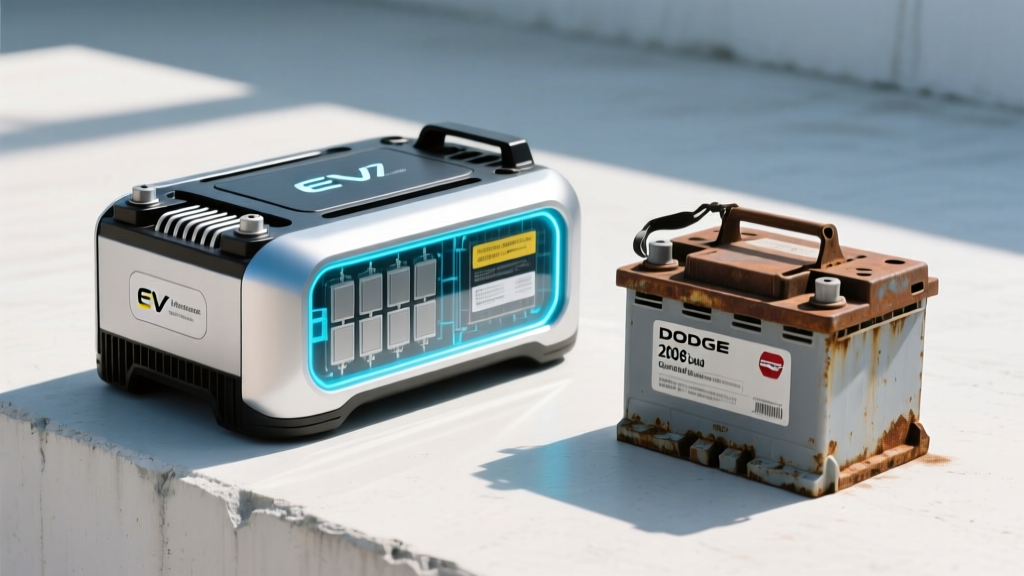
If you owned a 2008 Dodge Grand Caravan, you probably replaced its 12V lead-acid battery at least twice—maybe three times—over its lifespan. That $150-$200 swap every 3-5 years was a fact of ownership. Fast-forward to today's electric vehicles, and the conversation shifts dramatically: the high-voltage traction battery in a modern EV costs thousands to replace, but real-world data shows most will outlast the vehicles they power.
This guide breaks down exactly how long EV batteries last, what chemistry is inside them, what warranties actually cover, and what you'll pay if the worst happens. We'll also address why searching for a 2008 Dodge Grand Caravan battery today yields completely different results than researching a 2026 EV battery pack—and what that tells us about the trajectory of battery technology.
The 18-Year Gap: Lead-Acid vs Lithium-Ion Reality
The 2008 Dodge Grand Caravan shipped with a standard 12V lead-acid battery rated around 730 cold-cranking amps (CCA). Its job: start a 3.8L V6 engine. Typical lifespan was 3-5 years before sulfation, plate degradation, or cold-weather failure forced replacement. Over an 18-year vehicle life, that's 3-5 battery swaps, totaling roughly $600-$1,000 in batteries alone.
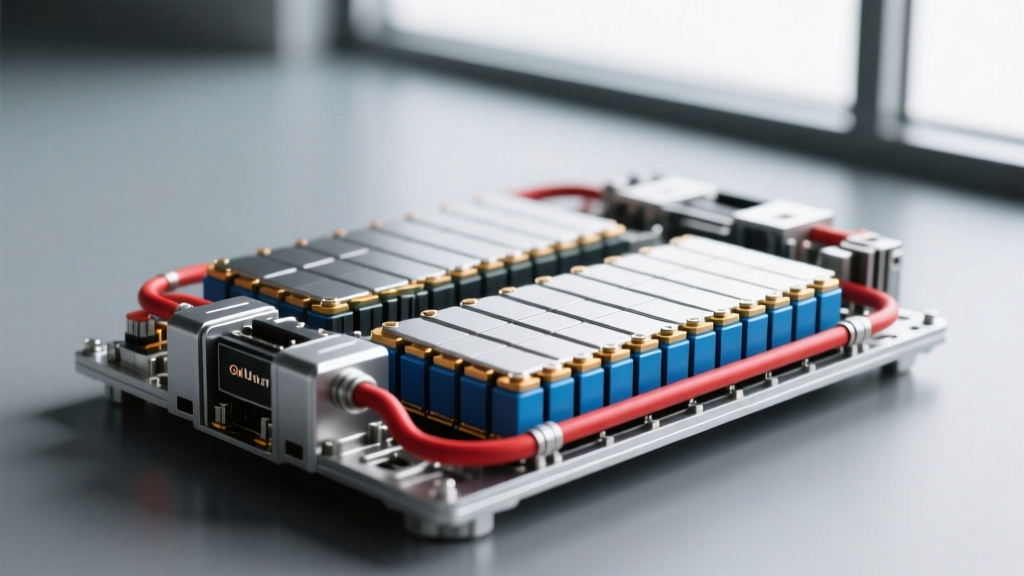
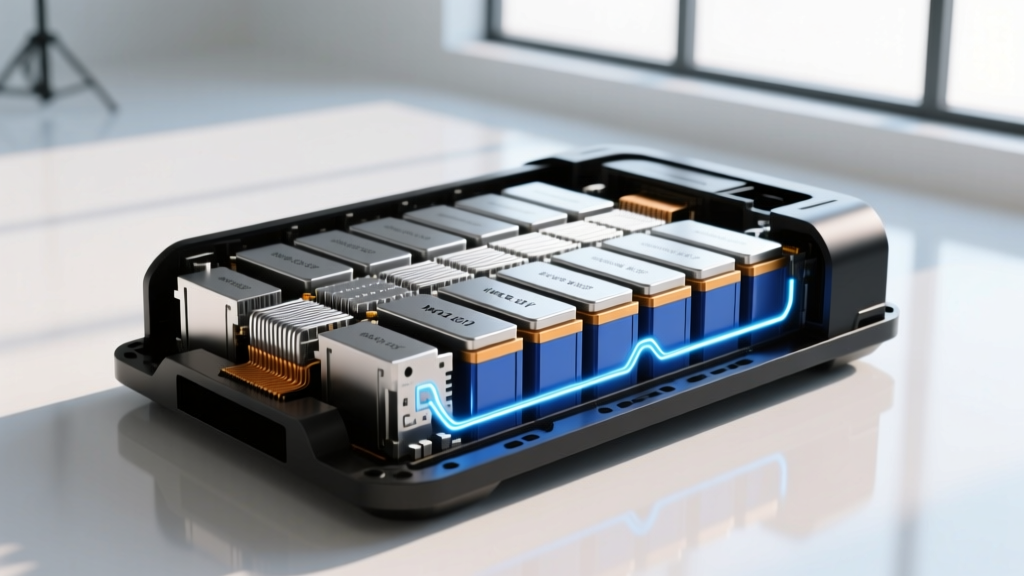
A modern EV traction battery is a fundamentally different machine. It doesn't crank an engine—it stores 60-100+ kWh of energy (depending on the vehicle) to propel a 4,000-5,500 lb vehicle for 250-400 miles. Instead of lead plates and sulfuric acid, it uses lithium-ion cells with nickel-manganese-cobalt (NMC) or lithium iron phosphate (LFP) cathodes. And instead of lasting 3-5 years, the data shows these packs routinely exceed 150,000-200,000 miles before reaching 70% of original capacity.
LFP vs NMC: The Chemistry Decision That Defines Your Battery
Every EV sold in 2026 uses one of two dominant lithium-ion cathode chemistries. Understanding the difference is the single most important factor in predicting how your battery will age.
| Attribute | LFP (Lithium Iron Phosphate) | NMC (Nickel Manganese Cobalt) |
|---|---|---|
| Energy Density | Lower (~160 Wh/kg cell-level) | Higher (~220-260 Wh/kg cell-level) |
| Typical Cycle Life | 3,000-5,000+ cycles to 80% SoH | 1,500-2,500 cycles to 80% SoH |
| Cold-Weather Performance | Greater range loss in freezing temps (15-30% at 20°F) | Better cold performance (10-20% loss at 20°F) |
| Thermal Stability | Excellent — no thermal runaway risk in normal use | Good — requires active thermal management |
| Cost (per kWh) | Lower (~$80-100/kWh pack-level in 2026) | Higher (~$110-140/kWh pack-level in 2026) |
| Charging to 100% Daily | Recommended — LFP prefers full SoC | Not recommended — accelerates degradation above 80% |
| Common in (2026 models) | Tesla Model 3 RWD, Model Y RWD, Ford Mustang Mach-E Select (base), many Chinese-market EVs | Tesla Long Range, Hyundai Ioniq 5/6, Chevy Equinox EV, Rivian, most long-range trims |
| Critical Minerals | No cobalt or nickel — simpler supply chain | Requires cobalt and nickel — supply chain complexity |
The verdict: LFP wins on longevity and cost; NMC wins on energy density and cold-weather range. If you plan to keep a vehicle 10+ years and charge at home daily, LFP's superior cycle life is a significant advantage. If you need maximum range per charge and live in a cold climate, NMC's density matters more.
Real Degradation Data: What the Numbers Actually Show
Unlike the 2008 Dodge Grand Caravan's battery—which failed suddenly and catastrophically—EV traction batteries degrade gradually. You won't wake up to a dead pack. Instead, you'll notice your 310-mile EPA range slowly becoming 295, then 280, over years of driving.
Here's what the field data tells us about typical degradation curves:
- Year 1 / 15,000 mi: ~2-4% capacity loss (initial formation loss)
- Year 3 / 45,000 mi: ~5-8% total loss
- Year 5 / 75,000 mi: ~8-12% total loss
- Year 8 / 120,000 mi: ~12-18% total loss
- Year 10+ / 150,000+ mi: ~15-22% total loss
Sources: Geotab fleet data (6,300+ EVs), Recurrent Auto battery health reports. LFP packs typically show 2-5% less degradation at equivalent mileage.
The degradation curve is not linear. Most capacity loss happens in the first 1-2 years (the "formation" period), then the rate slows significantly. This is the opposite of what most buyers fear—they expect accelerating decline, but the data shows a flattening curve.
According to Recurrent Auto's analysis of over 15,000 EVs, the average EV battery retains approximately 90% of its original capacity after 100,000 miles. Only about 1.5% of EV batteries have been replaced outside of recalls or warranty claims—a figure dramatically lower than early EV skeptics predicted.
What the Battery Warranty Actually Covers
Federal law mandates that EV battery warranties cover a minimum of 8 years / 100,000 miles (10 years / 150,000 miles in California Air Resources Board states). But the details matter enormously—and they're far more generous than what your 2008 Grand Caravan's battery ever came with.
| Manufacturer | Warranty Period | Capacity Threshold | Notes |
|---|---|---|---|
| Tesla | 8 yr / 120,000 mi (LR) | 70% retention | RWD models: 8 yr / 100,000 mi |
| Hyundai / Kia | 10 yr / 100,000 mi | 70% retention | Among the longest coverage periods |
| GM (Chevy/Cadillac) | 8 yr / 100,000 mi | 70% retention (60% on Bolt) | Ultium platform standard |
| Ford | 8 yr / 100,000 mi | 70% retention | Covers battery + hybrid/PHEV components |
| Rivian | 8 yr / 175,000 mi | 70% retention | Highest mileage threshold in the market |
| BMW | 8 yr / 100,000 mi | 70% retention | Covers modules individually where possible |
What triggers a warranty claim: If your battery's State of Health (SoH) drops below the stated threshold (typically 70% of original capacity) within the warranty period, the manufacturer must repair or replace the pack at no cost. In practice, most replacements involve swapping individual modules rather than the entire pack—reducing both cost and downtime.
What's NOT covered: Damage from accidents, flooding, improper modifications, or using the vehicle as a stationary power source beyond manufacturer-approved V2H/V2L functions. Normal degradation above the threshold is also excluded—your battery losing 15% over 8 years is expected behavior, not a defect.
Replacement Costs: The Numbers Behind the Headlines
This is where fear-mongering runs rampant. Yes, a full EV battery replacement is expensive. But context matters: most EV batteries never need replacement during the vehicle's useful life, and when they do, costs have dropped dramatically since the early 2010s.
| Vehicle Class / Battery Size | Approx. Pack Cost (2026) | Labor + Install | Total Estimated |
|---|---|---|---|
| Compact EV (50-60 kWh, e.g., Chevy Bolt, Nissan Leaf) | $6,000 - $9,000 | $1,500 - $2,500 | $7,500 - $11,500 |
| Mid-size EV (75-85 kWh, e.g., Tesla Model 3/Y, Ioniq 5) | $9,000 - $14,000 | $2,000 - $3,000 | $11,000 - $17,000 |
| Large EV / Truck (100-135 kWh, e.g., F-150 Lightning, Rivian R1T) | $14,000 - $22,000 | $2,500 - $4,000 | $16,500 - $26,000 |
| LFP packs (any size) | 20-30% less than NMC equivalent | Similar labor | Lower total due to cheaper chemistry |
Compare this to the lifetime battery cost of that 2008 Dodge Grand Caravan: roughly $600-$1,000 in 12V batteries over 18 years, plus thousands in fuel. An EV battery replacement is a larger single expense, but it typically happens once—or never—over the vehicle's life. Meanwhile, the fuel savings of an EV over 150,000 miles (at $3.50/gallon gas vs. $0.15/kWh electricity) often exceeds $10,000-$15,000, effectively offsetting a worst-case battery replacement.
Also worth noting: the third-party EV battery repair industry is growing. Specialist shops can now diagnose and replace individual modules within a pack for $2,000-$5,000—far less than a full pack swap. As packs age out of warranty, this will become the standard repair path.
Five Factors That Accelerate (or Slow) Battery Degradation
Not all EV batteries age equally. Your habits matter—and unlike a lead-acid battery that simply dies, lithium-ion degradation is a slow process you can actively manage.
- Charge to 80% daily (NMC): Keeping State of Charge between 20-80% reduces stress on NMC cathodes. Most EVs let you set a charge limit in the app.
- Charge to 100% freely (LFP): LFP chemistry benefits from periodic full charges to recalibrate the BMS. Follow your manufacturer's specific guidance.
- Use Level 2 (home) charging as your primary method: Slow, steady 7-11 kW charging generates far less heat than DC fast charging.
- Precondition the battery before DC fast charging: Most EVs do this automatically when you navigate to a charger. A warm battery (65-85°F) accepts charge faster and with less degradation.
- Park in shade or a garage during extreme heat: Sustained battery temperatures above 95°F accelerate calendar degradation, even when not driving.
- Drive it regularly: Lithium-ion cells prefer moderate cycling over sitting idle at high or low SoC for months.
- Exclusive DC fast charging: Vehicles that primarily use 150+ kW DC fast chargers show 2-5% more degradation at 100,000 miles compared to Level 2 primary charging (Geotab data).
- Routinely draining below 10% SoC: Deep discharges stress the anode and can cause lithium plating.
- Leaving an NMC pack at 100% SoC for days: High voltage + time = accelerated electrolyte decomposition. Charge to 100% only when you'll drive soon.
- Ignoring extreme cold: Charging a frozen battery (below 32°F) without preconditioning can cause permanent lithium plating on the anode.
- Aftermarket modifications to charging systems: Non-OEM charging equipment or software tweaks can void your battery warranty.
Monitoring Your Battery's State of Health (SoH)
Unlike the 2008 Grand Caravan's battery—where you only knew it was failing when the engine wouldn't crank—modern EVs give you real-time visibility into battery health.
Built-in methods:
- Vehicle infotainment / app: Tesla, Hyundai, Ford, and others display estimated range that adjusts based on actual battery capacity. A persistent drop in max range at 100% SoC indicates degradation.
- OBD-II diagnostic tools: Devices like the OBDLink SX paired with apps such as Leaf Spy (Nissan Leaf), TeslaFi, or ABRP (A Better Route Planner) can read the battery management system's SoH percentage directly.
- Dealer diagnostic reports: Most manufacturers can pull a detailed battery health report during service visits, showing individual module voltage balance and total capacity retention.
What to watch for: If your SoH drops more than 2-3% in a single year after the initial break-in period, or if individual cell groups show significant voltage imbalance, schedule a diagnostic visit. These can be early signs of a failing module that's still under warranty.
For used-EV buyers: Always request a battery health report before purchase. Services like Recurrent Auto and some dealer networks provide independent SoH verification. A used EV at 85% SoH with 60,000 miles is generally a solid buy; one at 75% SoH with the same mileage warrants scrutiny.
What's Coming: Solid-State and Silicon Anode Batteries
If you're researching batteries today, you've likely seen headlines about solid-state batteries promising 600-mile range and 10-minute charging. Here's the realistic timeline as of 2026:
Silicon anode batteries are the nearer-term upgrade. Companies like Sila Nanotechnologies and Group14 are already supplying silicon-dominant anode materials to manufacturers. These increase energy density by 15-25% over current graphite anodes. Expect to see them in production vehicles starting in 2027-2028 model years, with meaningful availability by 2029-2030.
Solid-state batteries replace the liquid electrolyte with a solid ceramic, sulfide, or polymer layer. The theoretical benefits are enormous: 2-3x energy density, faster charging, no fire risk. Toyota has announced limited solid-state production for 2027-2028, but these will be low-volume, high-cost deployments in premium models. Widespread, affordable solid-state EVs are realistically a 2030-2032 prospect.
What this means for today's buyers: Don't delay a purchase waiting for solid-state. Current NMC and LFP batteries are mature, well-warrantied, and proven to last 150,000-200,000+ miles. By the time solid-state reaches mainstream pricing, your current EV will likely be nearing the end of its useful life anyway.
Frequently Asked Questions
How long do EV batteries last in years and miles?
Based on fleet data from Geotab and Recurrent Auto, the average EV battery retains 85-90% of its original capacity at 100,000 miles and 78-85% at 150,000 miles. In practical terms, most EV batteries will provide usable service for 15-20 years before degradation reduces range enough to warrant replacement. LFP chemistry packs tend to outlast NMC by a measurable margin at equivalent mileage.
How much does it cost to replace an EV battery?
A full traction battery replacement in 2026 ranges from approximately $7,500 for a compact EV (50-60 kWh) to $26,000 for a large truck battery (130+ kWh), including labor. However, most replacements never happen—the battery outlasts the vehicle. When repairs are needed, module-level fixes ($2,000-$5,000) are increasingly available through third-party specialists.
What does the EV battery warranty cover?
Federal law requires a minimum 8-year/100,000-mile warranty (10/150,000 in CARB states) covering the battery if capacity drops below a stated threshold—usually 70% of original capacity. This covers manufacturing defects and abnormal degradation. It does not cover accident damage, improper use, or normal gradual loss above the threshold. Some manufacturers like Rivian extend to 8 years/175,000 miles.
How do I check and maximize my EV battery health?
Monitor State of Health through your vehicle's app, OBD-II diagnostic tools, or dealer service reports. Maximize longevity by charging primarily on Level 2 at home, limiting NMC packs to 80% daily SoC, preconditioning before DC fast charging, avoiding extreme heat exposure, and not routinely draining below 10%. LFP owners can charge to 100% more freely.
LFP vs NMC — which battery chemistry is better?
Neither is universally better—it depends on your priorities. Choose LFP if you want maximum cycle life (3,000-5,000+ cycles), lower cost, and plan to keep the vehicle 10+ years with daily home charging. Choose NMC if you need maximum range per charge (higher energy density), live in a cold climate (better low-temperature performance), or frequently road-trip. Both chemistries are proven to exceed 150,000 miles with proper care.
Why is searching for a "2008 Dodge Grand Caravan battery" so different from EV battery research?
The 2008 Grand Caravan uses a conventional 12V lead-acid battery that costs $120-$200, lasts 3-5 years, and is a commodity replacement part available at any auto store. An EV traction battery is a $7,500-$26,000 lithium-ion pack designed to last 15-20 years, covered by an 8-10 year federal warranty, and monitored in real-time by a battery management system. The comparison illustrates how fundamentally different EV ownership is from the ICE vehicle paradigm—the battery is no longer a consumable, it's a structural component of the vehicle.
Sources: Geotab EV Battery Degradation Study, Recurrent Auto Battery Health Data, EPA Fuel Economy. Pricing and warranty terms reflect 2026 model-year data and are subject to change. Consult your manufacturer's warranty documentation for exact terms.