Why a 2008 F-150 Battery Search Leads Straight to EV Battery Questions
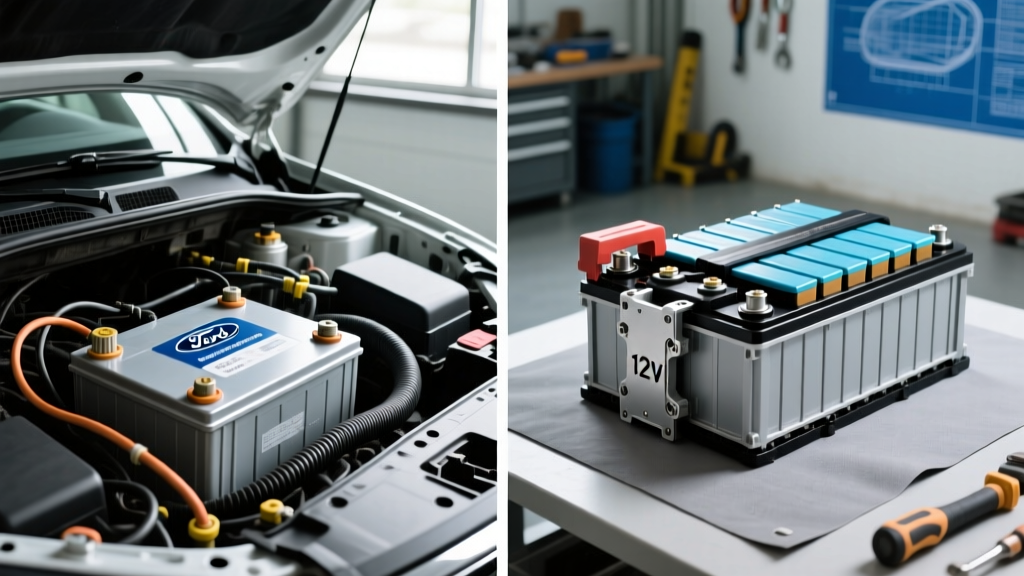
If you've ever replaced the 12-volt lead-acid battery in a 2008 Ford F-150, you know the drill: $150-$250 at an auto parts store, swap it in the driveway, and you're good for another 3-5 years. That simple maintenance rhythm is exactly what many truck shoppers worry about losing when they consider going electric. The high-voltage traction battery in a modern EV like the Ford F-150 Lightning is a fundamentally different component — larger, more complex, and far more expensive — but also engineered to last dramatically longer than anyone expects.
This guide breaks down everything current and prospective EV owners need to know about battery longevity, chemistry trade-offs, degradation realities, warranty coverage, and replacement economics. Whether you're cross-shopping a used gas truck with a dying 2008 F-150 battery against a new F-150 Lightning, or evaluating any EV's long-term ownership costs, the data below will give you concrete numbers to work with.
LFP vs NMC/NCA: The Chemistry Decision That Shapes Your Battery's Life
Not all EV batteries are built the same. The two dominant lithium-ion chemistries in 2026 passenger vehicles are LFP (lithium iron phosphate) and NMC/NCA (nickel manganese cobalt / nickel cobalt aluminum). The choice between them affects range, longevity, cold-weather behavior, and price.
| Attribute | LFP (Lithium Iron Phosphate) | NMC / NCA (Nickel-Based) |
|---|---|---|
| Energy Density | Lower (~160-180 Wh/kg cell-level) | Higher (~220-300 Wh/kg cell-level) |
| Typical Cycle Life | 3,000-5,000+ cycles to 80% SoH | 1,000-2,000 cycles to 80% SoH |
| Cold-Weather Performance | Reduced — greater range loss below 32°F | Better low-temp discharge, less range penalty |
| Cost per kWh | Lower — no cobalt or nickel | Higher — commodity-linked critical minerals |
| Recommended Charging Habit | Can charge to 100% daily without harm | Best kept 20-80% daily; 100% for trips only |
| Thermal Stability | Excellent — lower thermal runaway risk | Good, but requires more active thermal management |
| Common 2026 Applications | Tesla Model 3/Y RWD, Ford F-150 Lightning Standard Range, BYD models | Tesla Long Range, Hyundai Ioniq 5/6, Rivian R1T, Ford Lightning Extended Range |
Which is better? It depends on your use case. LFP wins on longevity and cost — ideal for daily commuters who charge at home and don't need maximum range. NMC wins on energy density and cold performance — better for road-trippers, cold-climate drivers, and vehicles where packing maximum kWh into limited space matters. Ford offers both in the F-150 Lightning: the Standard Range pack uses LFP (~98 kWh usable), while the Extended Range uses NMC (~131 kWh usable).
How Long Do EV Batteries Actually Last? Degradation Data by the Numbers
The fear that EV batteries need replacing every few years — like that 2008 F-150 battery you swapped twice before selling the truck — doesn't match the data. Modern liquid-cooled battery packs are engineered for the life of the vehicle.
Typical EV Battery Degradation Curve
Based on aggregated fleet data from sources including Geotab's long-term EV battery study and manufacturer reports:
| Vehicle Age / Mileage | Average Capacity Retained (SoH) | Notes |
|---|---|---|
| Year 1 / 15,000 mi | ~95-97% | Initial calibration drop; most noticeable early loss |
| Year 3 / 45,000 mi | ~91-94% | Degradation curve flattens significantly after year 1 |
| Year 5 / 75,000 mi | ~88-92% | Still well above warranty threshold for most packs |
| Year 8 / 100,000 mi | ~85-90% | Typical warranty period end; most packs retain >80% |
| Year 10 / 150,000 mi | ~80-87% | NMC packs may approach 80%; LFP packs often still >85% |
| Year 15 / 200,000 mi | ~75-83% | Projected; limited real-world data at this age for modern packs |
Note: These are fleet averages. Individual results vary based on climate, charging habits, and chemistry. Tesla's 2025 Impact Report showed Model 3/Y packs retaining ~88% capacity at 200,000 miles on average.
The key insight: degradation is non-linear. Most capacity loss occurs in the first 12-18 months (roughly 3-5%), then the curve flattens to roughly 1-1.5% per year under normal use. A 2026 F-150 Lightning Extended Range with 131 kWh usable that degrades to 85% after 8 years still holds ~111 kWh — enough for roughly 260+ miles of real-world range, down from the EPA-rated 320 miles.
What Does the EV Battery Warranty Cover? Terms Across Major Brands
Federal regulations require EV manufacturers to warranty the battery for a minimum of 8 years / 100,000 miles in most states, and 10 years / 150,000 miles in CARB-adopting states (California, New York, and others). But the details matter — particularly the capacity retention threshold.
| Manufacturer / Model | Warranty Period | Capacity Threshold | Coverage Notes |
|---|---|---|---|
| Ford F-150 Lightning | 8 yr / 100,000 mi | 70% retention | Covers battery and electric powertrain components |
| Tesla Model 3 / Model Y (LFP) | 8 yr / 100,000 mi | 70% retention | Long Range/Performance: 8 yr / 120,000 mi |
| Hyundai Ioniq 5 / Ioniq 6 | 10 yr / 100,000 mi | 70% retention | Among the longest calendar coverage in the US market |
| Rivian R1T / R1S | 8 yr / 175,000 mi | 70% retention | Higher mileage cap reflects truck/adventure use case |
| Chevrolet Silverado EV / Blazer EV | 8 yr / 100,000 mi | 60% retention | Lower threshold than most competitors — read fine print |
| Kia EV6 / EV9 | 10 yr / 100,000 mi | 70% retention | Matches Hyundai's extended calendar coverage |
What the warranty covers: Defects in materials or workmanship, and capacity loss below the stated threshold under normal use. It does not cover damage from accidents, flooding, improper modifications, or using non-approved charging equipment. If your pack drops below 70% within the warranty window, the manufacturer will repair or replace it — typically with a refurbished pack, not necessarily a brand-new one.
What it doesn't cover: Gradual degradation above the threshold. A pack at 72% capacity at year 9 is functioning within spec, even though you've lost 28% of your original range. This is why the threshold number matters as much as the time/mileage limit.
EV Battery Replacement Cost: What You'd Actually Pay
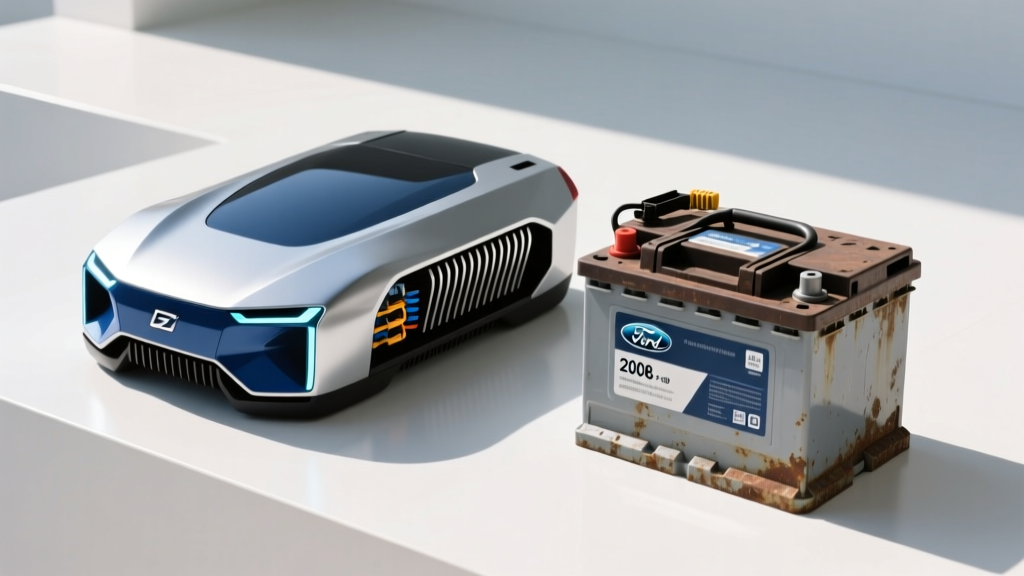
This is the question that keeps potential EV buyers up at night — and it's where the comparison to a 2008 F-150 battery replacement gets stark. A lead-acid 12V battery for a 2008 F-150 runs $150-$250. A high-voltage EV traction battery is a five-figure component. But context is critical: the vast majority of EV batteries never need full replacement during the vehicle's useful life.
| Vehicle / Pack Size | Battery Capacity (Usable) | Estimated Replacement Cost | Typical Replacement Trigger |
|---|---|---|---|
| Tesla Model 3 RWD (LFP) | ~60 kWh | $10,000 - $14,000 | Rare before 200k+ miles; module-level repair often possible |
| Ford F-150 Lightning Std Range (LFP) | ~98 kWh | $15,000 - $22,000 | Out of warranty, high-mileage fleet use |
| Ford F-150 Lightning Ext Range (NMC) | ~131 kWh | $20,000 - $28,000 | Largest consumer pack on market; cost reflects size |
| Hyundai Ioniq 5 | ~77.4 kWh | $12,000 - $18,000 | Covered under 10-yr warranty in most cases |
| Rivian R1T (Large Pack) | ~128.9 kWh | $18,000 - $25,000 | Module-replaceable architecture may reduce cost |
| Chevrolet Bolt EV (older gen) | ~65 kWh | $14,000 - $16,000 | Recall replacements were covered; out-of-pocket is rare |
When is replacement typically needed? For most liquid-cooled packs from 2020 onward, full replacement before 150,000-200,000 miles is uncommon. Many early Nissan Leaf models (which used passive air cooling) saw significant degradation at 60,000-80,000 miles — a cautionary tale that drove the industry toward active thermal management. Modern LFP packs in particular are projected to outlast 300,000 miles before falling below 70% capacity.
Module-level repair: Many packs (Tesla, Rivian, some GM Ultium configurations) allow individual module replacement rather than a full pack swap. A single failed module might cost $2,000-$5,000 to replace rather than $20,000+ for the entire pack. This is an evolving area — ask about module serviceability when shopping.
Factors That Accelerate (or Preserve) Battery Health
Battery degradation isn't purely a function of time. How you charge, drive, and store your EV has measurable impact on long-term State of Health (SoH).
Battery Care Best Practices
- Avoid frequent DC fast charging above 150 kW: Occasional road-trip fast charging is fine, but daily reliance on 250-350 kW chargers generates sustained heat that accelerates degradation. Level 2 home charging (7-19 kW) is gentler on the pack.
- Manage State of Charge (SoC) extremes: For NMC packs, keep daily charging between 20-80%. LFP packs tolerate 100% daily charging well — in fact, periodic 100% charges help LFP's battery management system (BMS) recalibrate cell balancing.
- Precondition before fast charging: Most modern EVs precondition the battery when you navigate to a DC fast charger. This warms the pack to optimal temperature (~95-105°F) for accepting charge. Skipping preconditioning (e.g., plugging in at a random charger without navigation routing) means slower charging and more stress on cold cells.
- Minimize prolonged storage at 100% or 0%: If leaving your EV for a week or more, set the charge limit to ~50%. Sitting at full charge accelerates electrolyte decomposition; sitting empty risks cell voltage dropping below safe minimums.
- Extreme heat is worse than extreme cold for long-term health: Cold reduces range temporarily (recoverable). Sustained high ambient temperatures (above 95°F for weeks, common in Arizona/Texas) cause permanent chemical degradation. Garage parking and thermal management systems help.
- Use regenerative braking moderately: Aggressive regen that frequently pushes high current back into the pack at low SoC adds stress. Most EVs let you adjust regen intensity — moderate settings are easier on the battery.
How to Check and Monitor Your EV's Battery State of Health
Unlike the 12V battery in a 2008 F-150 — where you'd need a multimeter or a load tester at an auto parts store — EV battery health monitoring is largely built into the vehicle's software.
In-Vehicle and App-Based Monitoring
Most 2026 EVs display battery health information through the infotainment system or companion app:
- Tesla: The mobile app shows estimated range at 100% charge, which you can compare to the original EPA figure. Third-party tools like TeslaFi or Stats for Tesla calculate SoH percentage by comparing current max capacity to original rated capacity.
- Ford (Pass app): Shows estimated range and charging history. Ford dealerships can run a diagnostic that reports pack SoH as a percentage — request this during any service visit.
- Hyundai/Kia (Bluelink/Kia Connect): Battery health diagnostics available through the app and dealership OBD-II scans.
- OBD-II scanners: Third-party tools like OBD2 scanners with EV-capable software (e.g., OBDeleven, Carista) can read BMS data including cell voltage variance, pack temperature, and SoH estimates on many models.
What SoH Numbers Mean for You
A State of Health reading of 92% at 50,000 miles is normal and healthy. If you see SoH dropping faster than ~2% per year after the first year, it's worth having the dealer check for a defective module or cooling system issue. Consistent cell voltage variance above 0.2V between modules can indicate an imbalance that the BMS should be correcting — if it isn't, a warranty claim may be warranted.
What's Coming Next: Solid-State, Silicon Anode, and Beyond
The battery technology landscape is evolving, but it's important to separate what's available now from what's still in development. Here's a realistic 2026 assessment:
Solid-State Batteries
Solid-state batteries replace the liquid electrolyte with a solid material, promising higher energy density (potentially 400-500 Wh/kg), faster charging, and improved safety. Status in 2026: Toyota has announced limited solid-state production for select models beginning in 2027-2028, initially in low volumes and likely in Japan-market vehicles first. Samsung SDI and QuantumScape are in pilot production, but no mass-market US vehicle currently offers solid-state cells. Expect meaningful availability in the 2029-2032 timeframe for mainstream models.
Silicon Anode Technology
Replacing graphite anodes with silicon can increase energy density by 20-40%. Companies like Sila Nanotechnologies and Group14 Technologies are supplying silicon-dominant anode materials to battery cell manufacturers. Status in 2026: Some cells with partial silicon anodes are already in production (e.g., in certain GM Ultium cells and Mercedes EQXX-derived packs). Expect broader adoption across 2027-2029 model-year vehicles. This is an incremental improvement, not a revolution — but it meaningfully extends range per kWh of pack weight.
Sodium-Ion Batteries
Sodium-ion chemistry eliminates lithium entirely, using cheaper, more abundant materials. Status in 2026: CATL and BYD are producing sodium-ion cells for Chinese-market vehicles and energy storage. Energy density remains too low (~120-150 Wh/kg) for long-range US vehicles, but sodium-ion may appear in entry-level urban EVs and stationary storage within 2-3 years.
All forward-looking technologies above are marked as announced or in development. None are currently available in US-market consumer vehicles as of early 2026.
Frequently Asked Questions
How long do EV batteries last in years and miles?
Modern liquid-cooled EV batteries (2020 and later) are designed to last 15-20 years or 150,000-200,000+ miles before degrading below 80% of original capacity. LFP chemistry packs often exceed 200,000 miles while retaining 80%+ SoH. This is a dramatic improvement over early EVs like the 2011-2017 Nissan Leaf, which lacked active thermal management and saw faster degradation.
How much does an EV battery cost to replace in 2026?
Full pack replacement costs range from roughly $10,000 for a smaller pack (Tesla Model 3 RWD, ~60 kWh) to $20,000-$28,000 for a large truck pack (F-150 Lightning Extended Range, ~131 kWh). However, most packs never need full replacement during the vehicle's life. Module-level repairs, when possible, cost $2,000-$5,000. Federal and manufacturer warranties cover defects and premature degradation for 8-10 years / 100,000-175,000 miles.
What does the EV battery warranty actually cover?
EV battery warranties cover defects in materials and workmanship, plus capacity loss below a stated threshold (typically 70% retention) within the warranty period (usually 8 years/100,000 miles, with some brands offering 10 years). They do not cover damage from accidents, misuse, or unauthorized modifications. Read the specific terms — Chevrolet's 60% threshold, for example, is less protective than Ford or Hyundai's 70%.
How do I check my EV battery's health at home?
Monitor your vehicle's estimated range at 100% charge via the dashboard or companion app and compare it to the original EPA-rated range. A persistent drop beyond normal seasonal variation (cold weather reduces range temporarily) may indicate degradation. For more precise data, use an EV-capable OBD-II scanner to read BMS State of Health data, or request a battery health report from your dealer during service visits.
LFP vs NMC — which battery chemistry should I choose?
Choose LFP if: you charge at home daily, want maximum cycle life (3,000-5,000+ cycles), prefer lower cost, and don't need the longest possible range or frequent cold-weather driving. Choose NMC/NCA if: you need maximum range per charge, regularly drive in sub-freezing temperatures, take frequent road trips requiring fast charging, or need the lightest possible pack for a given capacity. Neither is universally "better" — the right choice depends on your driving patterns and climate.
Does fast charging damage my EV battery?
Occasional DC fast charging (road trips, a few times per month) has minimal measurable impact on modern liquid-cooled packs. Daily reliance on high-power DC fast charging (250+ kW) does accelerate degradation slightly due to sustained heat generation. For daily charging, Level 2 home charging at 7-19 kW is the gentler, more cost-effective option. Preconditioning the battery before fast charging — which most EVs do automatically when you navigate to a charger — reduces stress significantly.
Is an EV battery replacement comparable to replacing a 2008 F-150 battery?
No. A 2008 F-150 uses a 12V lead-acid starting battery costing $150-$250, replaced every 3-5 years as routine maintenance. An EV's high-voltage traction battery is a $10,000-$28,000 component designed to last the vehicle's lifetime. However, EVs also have a separate 12V auxiliary battery (similar to the F-150's) that powers electronics and needs replacement every 4-6 years for $200-$400. These are distinct systems — don't confuse the two.
Sources: EPA Fuel Economy for official range ratings; manufacturer warranty documentation via Ford.com and Tesla.com; Geotab EV Battery Health Study for fleet degradation data.