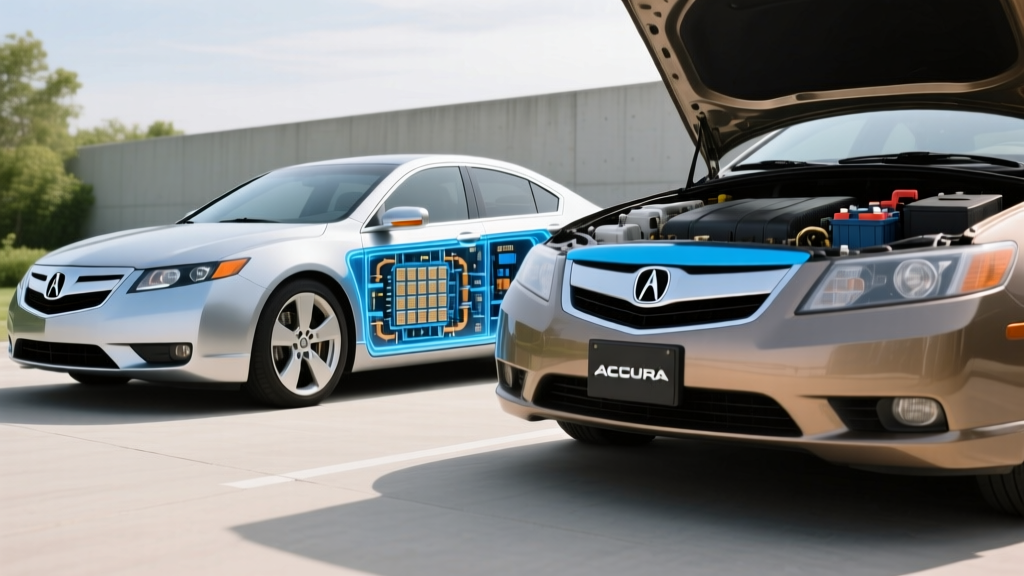
If you've ever owned a 2008 Acura TL, you know the drill: every 3–5 years, that underhood 12V lead-acid battery dies, and you're handing $150–$220 to an auto parts store. It's one of the most routine maintenance items in any gas car. But when EV skeptics raise battery replacement fears, they're often picturing that same cycle — a big, expensive battery that needs swapping like the 2008 Acura TL battery you swapped twice before selling the car.
The reality of modern EV traction batteries is fundamentally different. These high-voltage lithium-ion packs are engineered to outlast the vehicle itself in most cases. This guide breaks down exactly how long they last, what degrades them, what warranties actually cover, and what replacement costs look like in 2026 — with real data, not marketing claims.
Two Completely Different Batteries: Traction Pack vs. 12V Auxiliary
Before diving into chemistry and degradation curves, let's eliminate the most common confusion. Every EV on the road has two batteries:
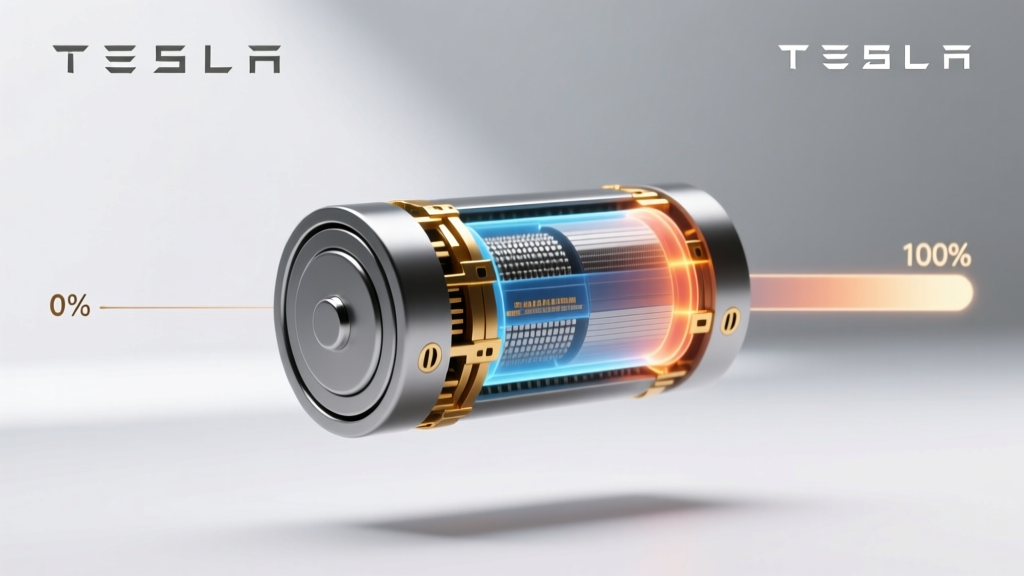
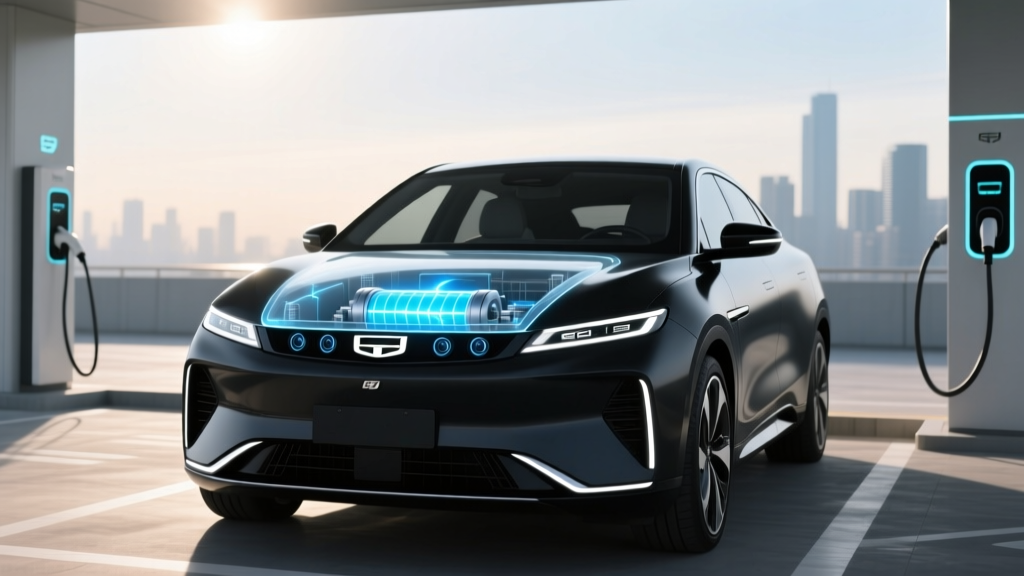
- High-voltage traction battery: The large lithium-ion pack (typically 50–120 kWh) that powers the electric motor(s) and determines your range. This is what people mean when they say "EV battery."
- 12V auxiliary battery: A small lead-acid or lithium 12V battery that runs lights, infotainment, door locks, and computers — essentially the same role as the 2008 Acura TL battery. It's inexpensive ($100–$250) and occasionally needs replacement, just like any car.
This guide focuses entirely on the traction battery. If your EV's 12V dies, it's a minor annoyance, not a financial crisis. The traction battery is the one buyers worry about — and the one we'll dissect with real numbers.
LFP vs. NMC: The Chemistry Trade-Off That Matters Most
Not all EV batteries are the same. The two dominant chemistries in 2026 are Lithium Iron Phosphate (LFP) and Nickel Manganese Cobalt (NMC), with some Tesla and Panasonic packs using the closely related NCA (Nickel Cobalt Aluminum) variant. The chemistry choice affects your range, longevity, cold-weather performance, and price.
| Attribute | LFP (Lithium Iron Phosphate) | NMC / NCA (Nickel-based) |
|---|---|---|
| Energy Density | Lower (~150–180 Wh/kg cell-level) | Higher (~220–300 Wh/kg cell-level) |
| Cycle Life | 3,000–5,000+ cycles to 80% SoH | 1,000–2,500 cycles to 80% SoH |
| Cold-Weather Performance | More range loss below 32°F; slower charge acceptance | Better low-temp performance; preconditioning helps significantly |
| Cost per kWh | Lower ($80–$110/kWh pack-level, 2026 est.) | Higher ($110–$145/kWh pack-level, 2026 est.) |
| Charging to 100% Daily | Recommended — LFP benefits from full SoC calibration | Generally advised to stay 20–80% for daily use |
| Common In (2026 Models) | Tesla Model 3/Y RWD, Ford Mustang Mach-E Select, BYD models | Tesla Long Range, Hyundai Ioniq 5/6, Rivian, GM Ultium vehicles |
| Cobalt/Supply Chain | No cobalt or nickel — simpler, more ethical sourcing | Contains cobalt/nickel — subject to critical-mineral sourcing rules |
Which is better? Neither is universally superior. If you prioritize maximum range in a single charge and live in a cold climate, NMC/NCA is the stronger pick. If you want the longest possible calendar life, lower cost, and don't mind slightly less range, LFP is the durability champion. Tesla's shift to LFP in standard-range models reflects this calculus — these packs can endure more charge cycles over their lifetime.
How Long Do EV Batteries Actually Last? Real Degradation Data
This is the question every prospective EV buyer asks, and the answer is better than most expect. Unlike the 2008 Acura TL battery that degraded predictably every few years, modern traction packs are liquid-cooled, actively managed, and engineered for 15–20+ years of service.
Here's what the data shows across major platforms:
Observed Degradation by Platform (Aggregated Fleet Data)
- Tesla Model 3/Y (NMC, 2018–2023): ~5–7% capacity loss at 100,000 miles; ~10–12% at 200,000 miles. (Source: Tesla Impact Reports, Recurrent Auto fleet data)
- Chevrolet Bolt EV/EUV (NMC, 2017–2023): ~6–8% loss at 100,000 miles. Earlier 2017–2019 models had a recall-related replacement program; post-recall packs show strong retention.
- Nissan Leaf (passive air-cooled, 2011–2025): Historically higher degradation — 15–25% loss at 100,000 miles on older air-cooled packs. The 62 kWh Leaf Plus with improved thermal management performs notably better (~10% at 80k miles).
- Hyundai/Kia E-GMP platform (Ioniq 5, EV6): Early fleet data shows ~3–5% loss at 60,000 miles, tracking well for long-term retention.
- LFP-equipped Tesla Model 3 RWD: Minimal degradation reported in early fleet samples — some owners showing <3% loss at 50,000 miles, though long-term (150k+) data is still maturing.
The takeaway: Most modern liquid-cooled EV batteries lose roughly 1–2% capacity per year under normal use. By year 10 or 150,000 miles, expect 85–92% of original capacity — not a catastrophic failure. According to Recurrent Auto's fleet analysis, only about 1.5% of EVs in their study needed a full battery replacement outside of warranty recalls.
What Does the Battery Warranty Actually Cover?
Federal law in the US mandates that EV batteries carry a minimum warranty of 8 years / 100,000 miles (10 years / 150,000 miles in California and states adopting CARB standards). But the details matter — specifically, the capacity retention threshold.
| Manufacturer | Warranty Term | Capacity Threshold | Notes |
|---|---|---|---|
| Tesla (Model 3/Y RWD, LFP) | 8 yr / 100,000 mi | 70% retention | Long Range/Performance: 8 yr / 120,000 mi |
| Hyundai / Kia (E-GMP) | 10 yr / 100,000 mi | 70% retention | Among the longest terms in the industry |
| GM (Ultium — Equinox EV, Blazer EV, Silverado EV) | 8 yr / 100,000 mi | 70% retention (60% for commercial) | Modular pack design may allow partial replacement |
| Ford (Mustang Mach-E, F-150 Lightning) | 8 yr / 100,000 mi | 70% retention | LFP packs on Select trim; NMC on GT/Extended |
| Rivian (R1T, R1S) | 8 yr / 175,000 mi | 70% retention | Higher mileage cap reflects truck use-case |
| Volkswagen (ID.4) | 8 yr / 100,000 mi | 70% retention | Standard across MEB platform |
What "70% retention" means: If your 80 kWh battery drops below 56 kWh of usable capacity within the warranty period, the manufacturer must repair or replace it at no cost. In practice, hitting that threshold under normal use is rare — most packs sit well above 80% capacity at the 8-year mark. The warranty protects against defects and abnormal degradation, not the gradual 1–2%/year loss that's considered normal wear.
EV Battery Replacement Cost: What You'd Actually Pay
If your battery degrades beyond the warranty threshold — or if it's damaged in a collision — replacement costs are significant but declining. Here's a realistic breakdown for 2026:
| Vehicle / Pack Size | Battery Cost (Parts) | Labor | Total Estimate |
|---|---|---|---|
| Tesla Model 3 RWD (~60 kWh LFP) | $6,000–$9,000 | $1,500–$2,500 | $7,500–$11,500 |
| Tesla Model Y Long Range (~75 kWh NMC) | $10,000–$14,000 | $1,500–$2,500 | $11,500–$16,500 |
| Hyundai Ioniq 5 (~77 kWh NMC) | $9,000–$13,000 | $1,500–$3,000 | $10,500–$16,000 |
| Ford F-150 Lightning Extended (~131 kWh NMC) | $18,000–$25,000 | $2,000–$4,000 | $20,000–$29,000 |
| Chevrolet Equinox EV (~85 kWh Ultium) | $8,500–$12,000 | $1,500–$2,500 | $10,000–$14,500 |
| Rivian R1T Max Pack (~149 kWh NMC) | $20,000–$28,000 | $2,500–$4,000 | $22,500–$32,000 |
Context that matters: These are worst-case, out-of-warranty numbers. The vast majority of EV owners will never pay them. According to data from fueleconomy.gov and fleet studies, most EV batteries are still functional at 200,000+ miles — meaning they outlive the rest of the vehicle (suspension, interior, body). The comparison to a 2008 Acura TL battery is instructive: you'd spend $150–$220 every 3–5 years on that car's 12V battery, totaling $600–$1,100 over a 15-year ownership span. An EV's traction battery, in most cases, costs $0 in replacement over the same period.
Also worth noting: some manufacturers (GM's Ultium platform, certain Tesla structural packs) are moving toward modular designs where individual battery modules can be replaced rather than the entire pack — potentially cutting replacement costs by 60–70% if only a few modules degrade abnormally.
What Actually Degrades an EV Battery (And What Doesn't)
EV batteries don't die from use the way you might expect. They degrade from stress. Here are the factors that genuinely accelerate capacity loss, ranked by impact:
High-Impact Factors
- Sustained high State of Charge (SoC): Storing an NMC battery at 100% for days or weeks accelerates degradation. Daily charging to 80% is optimal for NMC. (LFP is the exception — regular 100% charges are recommended for BMS calibration.)
- Extreme heat exposure: Prolonged ambient temperatures above 95°F, especially combined with high SoC, stress lithium-ion cells. Liquid cooling mitigates this substantially, but parking in shade or a garage helps.
- Frequent DC fast charging at high rates: Regular use of 150+ kW DC fast chargers (especially without battery preconditioning) adds cumulative stress. Occasional road-trip fast charging is fine — daily fast charging accelerates degradation by an estimated 1–3% over the pack's life versus Level 2 home charging.
Moderate-Impact Factors
- Deep discharges to 0%: Letting the battery sit at or near 0% SoC for extended periods can cause copper dissolution in cells. Keep it above 10% when parked for long durations.
- Cold-weather fast charging without preconditioning: Charging a cold battery at high power can cause lithium plating on the anode. Most modern EVs (Tesla, Hyundai E-GMP, GM Ultium) automatically precondition the battery when you navigate to a charger — use this feature.
Low-Impact / Myth Factors
- Total mileage alone: A battery driven 200,000 gentle miles may have less degradation than one driven 80,000 hard miles with daily fast charging and 100% storage.
- Regenerative braking: Regen does not meaningfully harm battery life. The charge rates involved are well within cell specifications.
How to Check Your Battery's State of Health (SoH)
State of Health (SoH) is the percentage of original capacity your battery still holds. A new battery is 100% SoH; a battery that held 80 kWh when new and now holds 72 kWh is at 90% SoH. Here's how to monitor it:
- In-vehicle displays: Tesla offers a battery health estimate in the service menu (Software → Service Mode → Battery Health). Hyundai/Kia provides SoH readings via the infotainment diagnostics screen or dealer scan tool.
- OBD-II dongles + apps: Devices like the OBDLink SX paired with apps such as EV Bat Life or Car Scanner can pull SoH data from the BMS (Battery Management System) on most EVs.
- Dealer diagnostics: Any authorized service center can run a full battery health report. Request this during routine service visits or before purchasing a used EV.
- Third-party services: Companies like Recurrent Auto offer battery health reports for used-EV buyers, analyzing telematics data to estimate SoH and projected degradation.
When to check: At purchase (new or used), annually thereafter, and before any road trip where you need to know your exact real-world range. If SoH drops more than 3–4% in a single year, it's worth investigating with a dealer — that could indicate a defective module.
What's Next: Solid-State and Silicon-Anode Batteries
The battery technology landscape is evolving rapidly, but it's critical to separate laboratory announcements from showroom reality.
Solid-state batteries replace the liquid electrolyte with a solid material, promising higher energy density (potentially 400+ Wh/kg at the cell level), faster charging, and improved safety. Toyota has announced a solid-state battery targeting 2027–2028 production, initially in limited volumes for the Lexus lineup. Nissan and Samsung SDI have similar timelines. However, manufacturing scale-up remains the primary bottleneck — these cells are extraordinarily difficult to produce at automotive volumes and costs. No mass-market EV on sale in 2026 uses a solid-state battery.
Silicon-anode batteries (sometimes called silicon-dominant anodes) are closer to reality. Companies like Sila Nanotechnologies and Group14 Technologies are supplying silicon-enhanced anode materials that boost energy density by 15–25% over conventional graphite anodes. The 2026 Mercedes-Benz G-Class EV (G580 EQ) uses a silicon-anode battery from Sila, and GM has announced silicon-anode adoption in upcoming Ultium cells. This is real, shipping technology — but currently limited to premium applications due to cost.
Sodium-ion batteries are emerging as a low-cost alternative for entry-level EVs. CATL has begun production, and these packs cost significantly less than LFP — but with lower energy density (~120–150 Wh/kg), they're best suited for city cars and short-range applications. Expect to see them in budget EVs from Chinese manufacturers by 2027–2028, with US availability uncertain.
Frequently Asked Questions
How long do EV batteries last compared to a gas car battery like the 2008 Acura TL battery?
A gas car's 12V battery (like the one in a 2008 Acura TL) typically lasts 3–5 years before needing replacement. An EV's high-voltage traction battery is designed to last 15–20+ years or 200,000+ miles with 70–90% of original capacity remaining. They're fundamentally different components with different engineering goals — the traction battery is built for the life of the vehicle.
How much does an EV battery cost to replace in 2026?
Out-of-warranty replacement costs range from roughly $7,500 for a smaller pack (Tesla Model 3 RWD, ~60 kWh) to $29,000+ for a large truck pack (F-150 Lightning Extended, ~131 kWh). However, most EV owners never pay this — batteries overwhelmingly last beyond the warranty period, and warranty coverage handles abnormal degradation. The IRS §30D tax credit does not cover battery replacement, but some state incentive programs offer assistance.
What does the EV battery warranty actually cover?
Federally mandated minimum: 8 years / 100,000 miles (10/150k in CARB states). The warranty covers capacity loss below a threshold (typically 70% of original) and manufacturing defects. It does not cover damage from accidents, modifications, or improper charging equipment. Normal gradual degradation (1–2% per year) is considered expected wear and isn't covered unless it crosses the threshold.
How do I maximize my EV battery's lifespan?
For NMC/NCA packs: charge to 80% daily, avoid leaving the car at 100% SoC for extended periods, use Level 2 home charging as your primary method, precondition before DC fast charging, and avoid letting SoC drop below 10% for long storage. For LFP packs: charge to 100% regularly (Tesla and Ford recommend at least weekly) for accurate BMS calibration. Both chemistries benefit from garage parking in extreme heat.
Is LFP or NMC better for my situation?
Choose LFP if: you want maximum cycle life and longevity, you primarily drive in moderate climates, you don't need the absolute longest single-charge range, and you want lower cost. Choose NMC/NCA if: you need maximum range per charge, you regularly drive in cold climates, or you frequently take long road trips where energy density matters. Both chemistries will comfortably outlast 150,000 miles with proper care.
Can I still drive my EV if the battery degrades to 70% capacity?
Absolutely. A battery at 70% SoH is fully functional — it just has 30% less range than when new. A vehicle that originally delivered 300 miles of EPA range would deliver ~210 miles at 70% SoH, which is still practical for most daily driving. The warranty threshold isn't a "failure point" — it's the level at which the manufacturer will intervene to restore capacity.
The bottom line: the 2008 Acura TL battery was a wear item you replaced as routinely as wiper blades. A modern EV traction battery is an engineered system designed to outlast the car around it. With proper care — mostly just sensible charging habits and using preconditioning — the data overwhelmingly shows these packs deliver 15–20 years of reliable service. The replacement-cost fears that circulate online are based on worst-case scenarios that fewer than 2% of owners ever face.