Why a 2007 Scion tC Battery Keeps Coming Up in EV Conversations
If you've ever searched for a 2007 Scion tC battery replacement, you know the drill: a 12V lead-acid Group 24F or 35 battery that costs around $130–$180 and lasts roughly 3–5 years before sulfation, heat damage, or simple age kills it. That short lifespan and low cost sit in stark contrast to the high-voltage traction batteries powering today's electric vehicles — batteries that routinely last 150,000+ miles, carry 8-to-10-year warranties, and cost thousands to replace.
This comparison isn't random. Many EV shoppers come from older ICE vehicles like the Scion tC, and the mental model of "battery = consumable you replace every few years" follows them into the EV world. It shouldn't. An EV's traction battery is fundamentally different from the 12V starter battery in any gas car — including the 2007 Scion tC. Understanding that difference, along with real degradation data, chemistry trade-offs, and warranty coverage, is essential before you sign a purchase agreement.
Let's walk through everything you need to know about EV battery longevity, cost, and care — with hard numbers, not marketing claims.
EV Traction Battery vs. 12V Auxiliary: Know the Difference
Every EV actually has two batteries:
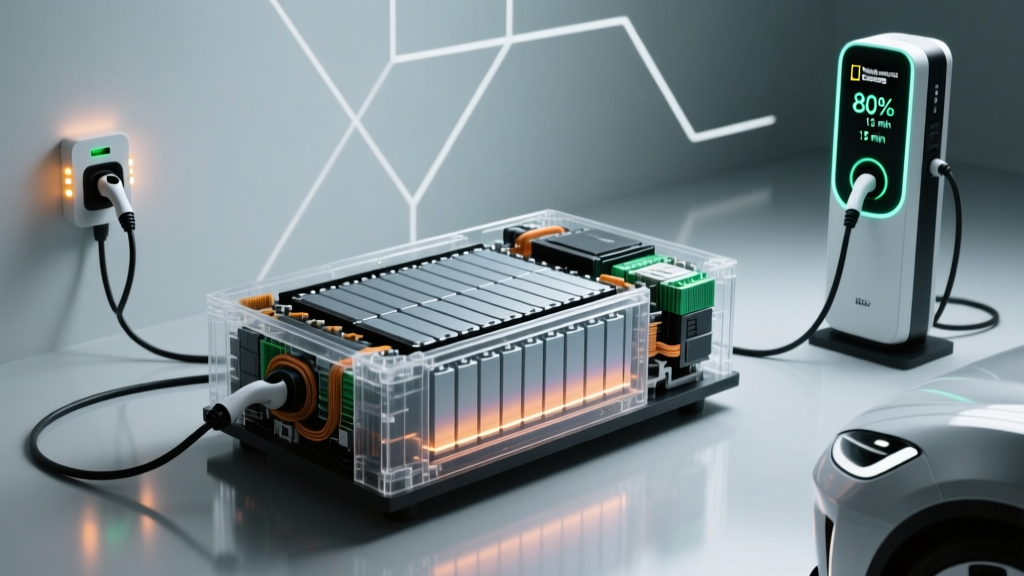
- High-voltage traction battery (400V or 800V architecture): This is the large lithium-ion pack that stores energy (measured in kWh) and powers the electric motor(s). Capacities range from roughly 50 kWh in compact EVs to 130+ kWh in heavy-duty trucks. This is the battery we're analyzing in this guide.
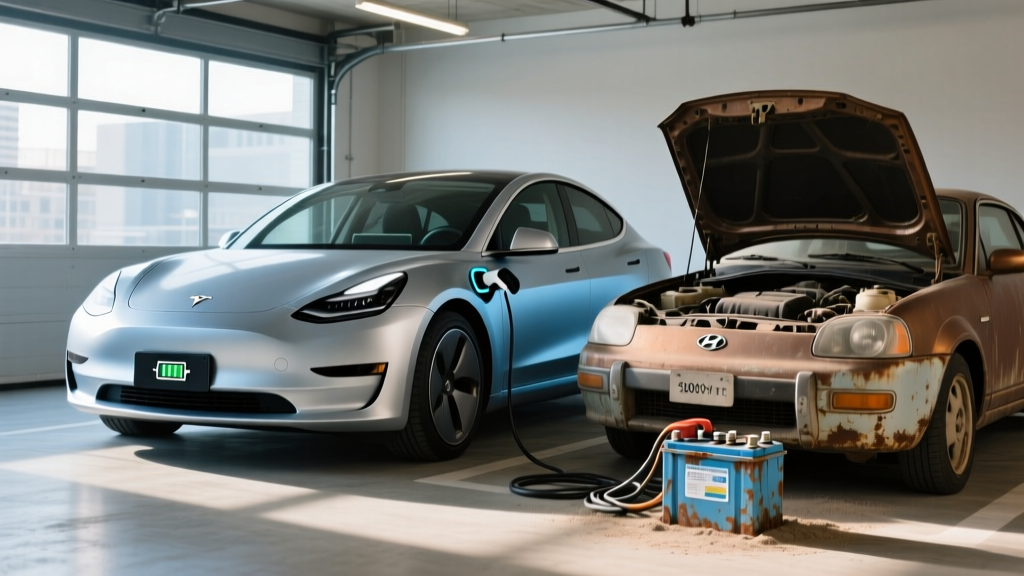
- 12V auxiliary battery: A small lead-acid or lithium-iron-phosphate battery that runs lights, infotainment, door locks, and control modules. This is the same type of battery you'd find in a 2007 Scion tC — and yes, it still needs replacement every 3–5 years in an EV, just like any other car.
When people express concern about "EV battery replacement cost," they're almost always talking about the traction battery. The 12V system is a minor maintenance item, not a financial risk.
LFP vs. NMC/NCA: Which Battery Chemistry Should You Choose?
Modern EV traction batteries use one of two dominant lithium-ion chemistries, each with distinct trade-offs. Your choice of chemistry affects range, longevity, charging behavior, and cold-weather performance.
| Attribute | LFP (Lithium Iron Phosphate) | NMC/NCA (Nickel Manganese Cobalt / Nickel Cobalt Aluminum) |
|---|---|---|
| Energy Density | Lower (~160–180 Wh/kg cell-level) | Higher (~220–300 Wh/kg cell-level) |
| Typical Cycle Life | 3,000–5,000+ cycles to 80% SoH | 1,000–2,000 cycles to 80% SoH |
| Cold Performance | Weaker below 32°F; slower charging, more range loss | Better low-temp performance; less winter range penalty |
| Cost (per kWh) | Lower — no cobalt or nickel | Higher — commodity-sensitive metals |
| SoC Recommendation | Can charge to 100% daily without harm | Best kept at 80% daily; 100% for trips only |
| Thermal Stability | Excellent — very low thermal runaway risk | Good, but requires more active thermal management |
| Common In (2026 Models) | Tesla Model 3/Y RWD, BYD, Rivian Standard, base Ford F-150 Lightning | Tesla Long Range, Hyundai Ioniq 5/6, BMW iX, Lucid, Porsche Taycan |
The practical takeaway: If you prioritize maximum range per charge and live in a cold climate, NMC/NCA is the stronger fit. If you want a battery that will likely outlast the car itself, plan to charge at home nightly to 100%, and don't need 350+ miles of range, LFP is the longevity champion. Tesla's shift to LFP in its standard-range models reflects this calculus — the chemistry is cheaper and lasts longer, even if it sacrifices some range and winter efficiency.
Real-World Degradation: What the Data Actually Shows
EV batteries don't suddenly fail. They gradually lose capacity — the same way a phone battery holds less charge after two years. The key metric is State of Health (SoH), expressed as a percentage of original capacity. A new EV battery starts at 100% SoH.
Here's what large-scale fleet data reveals about typical degradation curves:
Typical EV Battery Degradation Timeline (Fleet-Averaged Data):
- Year 1 / ~15,000 miles: 2–4% capacity loss (initial formation loss)
- Year 3 / ~45,000 miles: 5–8% total loss
- Year 5 / ~75,000 miles: 8–12% total loss
- Year 8 / ~120,000 miles: 10–16% total loss
- Year 10 / ~150,000 miles: 12–20% total loss
Sources: Geotab fleet study (6,300+ EVs), Recurrent Auto battery data.
Several models have demonstrated outlier longevity. Tesla Model S/X batteries from 2013–2018 have documented cases of retaining 85–90% SoH past 150,000 miles. Chevrolet Bolt owners frequently report 90%+ SoH at 80,000 miles. The Hyundai Ioniq 5's NMC pack, with its robust thermal management, has shown degradation rates of roughly 1.5–2% per year in temperate climates.
Compare this to the 2007 Scion tC's 12V battery, which is functionally dead (unable to hold sufficient cranking amps) within 3–5 years and 30,000–50,000 miles. The EV traction battery operates on an entirely different timescale.
Battery Warranty: What Manufacturers Actually Guarantee
Federal law mandates a minimum 8-year / 100,000-mile warranty on EV battery packs (in CARB states like California, it's 10 years / 150,000 miles). Most manufacturers exceed this baseline. The critical detail is the capacity retention threshold — the SoH level below which the manufacturer must repair or replace the pack.
| Manufacturer | Warranty Period | Mileage Limit | Capacity Threshold |
|---|---|---|---|
| Tesla (Model 3/Y) | 8 years | 100,000–120,000 mi | 70% SoH |
| Hyundai / Kia | 10 years | 100,000 mi | 70% SoH |
| Ford (F-150 Lightning, Mustang Mach-E) | 8 years | 100,000 mi | 70% SoH |
| GM (Ultium platform) | 8 years | 100,000 mi | 70% SoH |
| Rivian | 8 years | 175,000 mi (R1T/R1S) | 70% SoH |
| BMW | 8 years | 100,000 mi | 70% SoH |
| Volkswagen (ID.4) | 8 years | 100,000 mi | 70% SoH |
If your battery drops below 70% capacity within the warranty window, the manufacturer replaces or refurbishes it at no cost. In practice, very few packs breach this threshold under normal use — which is why manufacturers can afford to offer it.
Source: fueleconomy.gov for EV incentive and warranty reference data; individual manufacturer spec pages for exact terms.
Replacement Cost: The Number Everyone Asks About
Out-of-warranty traction battery replacement is expensive — but it's also rare. Most EV batteries outlast the vehicle's useful life or are replaced under warranty. That said, here's the current cost landscape for 2026:
| Vehicle | Battery Size (kWh) | Estimated Replacement Cost | Notes |
|---|---|---|---|
| Tesla Model 3 (LFP) | ~60 kWh | $8,000–$12,000 | Module-level repair often possible for less |
| Tesla Model Y (NMC) | ~75 kWh | $12,000–$16,000 | Structural pack complicates partial repair |
| Hyundai Ioniq 5 | 77.4 kWh | $11,000–$15,000 | Module replacement available |
| Ford F-150 Lightning (Extended) | ~131 kWh | $20,000–$30,000 | Largest consumer pack on market |
| Chevrolet Equinox EV | ~85 kWh | $10,000–$14,000 | Ultium modular architecture |
| BMW iX xDrive50 | ~111.5 kWh | $18,000–$25,000 | Premium segment; labor-intensive |
| Nissan LEAF (40 kWh) | 40 kWh | $6,500–$9,000 | Passive cooling; older chemistry |
For context, a 2007 Scion tC battery replacement runs about $130–$180 for the part. An EV traction battery is 50–150x more expensive — but it's designed to last 10–20x longer. The cost-per-year-of-service is often comparable or even favorable to the EV side.
It's also worth noting that module-level repair is increasingly available. Rather than replacing the entire pack, technicians can swap individual degraded modules for $2,000–$5,000 in many cases. As the EV fleet ages, a robust aftermarket and refurbishment ecosystem is developing, which will continue to drive costs down.
Factors That Accelerate (or Slow) Battery Degradation
Not all EV batteries age equally. Your habits and environment significantly influence how quickly capacity declines.
Battery Care Best Practices
- Avoid daily DC fast charging. Occasional road-trip fast charging is fine, but daily reliance on 150+ kW DCFC stresses cells through heat and high C-rates. Level 2 home charging (7–11 kW) is gentler and extends pack life.
- Manage State of Charge (SoC) range. For NMC/NCA batteries, set your daily charge limit to 80% and only charge to 100% before long trips. LFP batteries are an exception — manufacturers recommend charging to 100% regularly for cell-balancing accuracy.
- Minimize extreme-temperature exposure. Parking in a garage (even unheated) in winter and in shade during summer reduces thermal stress. Batteries degrade fastest when stored at high SoH in high heat (above 95°F) or cycled hard in deep cold (below 20°F) without preconditioning.
- Use battery preconditioning. Most EVs (Tesla, Hyundai, Ford, Rivian) precondition the battery when you navigate to a DC fast charger. This warms the cells to optimal charging temperature (~77–95°F), enabling faster charging and reducing lithium plating risk. Always use the built-in nav to a charger to trigger this.
- Don't let the battery sit at 0% or 100% for extended periods. If storing the EV for weeks, set SoC to roughly 50% — the chemistry's most stable resting point.
- Drive moderately in extreme cold. Hard acceleration on a cold battery (below 40°F) without preconditioning increases internal resistance and can cause micro-damage over time.
Monitoring Your Battery's State of Health
You don't have to guess how your battery is aging. Multiple tools provide SoH data:
- In-vehicle displays: Tesla shows battery health in the Service menu (on newer software versions). Hyundai/Kia provides a battery health check through the dealer diagnostic tool. Some BMW models display SoH through the iDrive service menu.
- OBD-II apps: Tools like LeafSpy (Nissan LEAF), OBDeleven (VW/Audi), and Scan My Tesla read real-time battery management system (BMS) data, including SoH, cell voltage spread, and cycle count.
- Dealer diagnostics: Any authorized service center can pull a full battery health report during routine service. Request this if you're approaching warranty mileage thresholds.
- Third-party services: Companies like Recurrent Auto offer free battery health monitoring that connects to your vehicle's telematics and provides degradation reports with fleet comparisons.
For used-EV buyers, an SoH check is as critical as a pre-purchase inspection on a gas car. A 2020 Model 3 showing 93% SoH at 45,000 miles tells you the pack is aging normally; one at 82% SoH suggests heavy fast-charging use or possible module issues.
What's Next: Solid-State, Silicon Anode, and Beyond
Several next-generation battery technologies are in development, but none are available in production consumer EVs as of 2026:
- Solid-state batteries: These replace the liquid electrolyte with a solid material, promising higher energy density (potentially 400+ Wh/kg), faster charging, and improved safety. Toyota has announced a solid-state EV target for 2027–2028, but production volumes and pricing remain unconfirmed. Nissan and Samsung SDI are on similar timelines. Realistically, solid-state batteries will debut in limited, premium models before reaching mainstream pricing — likely not before 2029–2030 at scale.
- Silicon-dominant anodes: Companies like Sila Nanotechnologies and Group14 are replacing graphite anodes with silicon composites, boosting energy density by 20–40%. These are beginning to appear in limited applications (Porsche has tested them) but face cycle-life challenges that must be solved for mass adoption.
- Sodium-ion batteries: Cheaper than lithium, with no critical-mineral supply constraints, but lower energy density (~120–160 Wh/kg). CATL and BYD are deploying sodium-ion packs in Chinese-market city EVs. U.S. availability is not expected before 2028+.
These are genuine advances, but they are forward-looking. If you're buying an EV in 2026, you're choosing between LFP and NMC/NCA — both proven, well-understood chemistries with extensive real-world track records.
Frequently Asked Questions
How long do EV batteries last in years and miles?
Most modern EV traction batteries are designed to last 15–20 years or 150,000–200,000+ miles before degrading below 70–80% of original capacity. Fleet data from Geotab and Recurrent shows average annual degradation of 1.5–2.5% for liquid-cooled packs. Many early Tesla Model S vehicles still operate on their original battery packs past 200,000 miles. The battery will almost certainly outlast the car's body, suspension, and interior.
How much does an EV battery cost to replace?
Full traction battery replacement ranges from roughly $6,500 for a Nissan LEAF 40 kWh pack to $25,000–$30,000 for a large pack like the Ford F-150 Lightning Extended Range (131 kWh). Most mainstream EVs (Tesla Model 3/Y, Hyundai Ioniq 5, Chevrolet Equinox EV) fall in the $8,000–$16,000 range. However, full replacement is rare — module-level repair often costs $2,000–$5,000. The vast majority of EVs never need an out-of-warranty battery replacement.
What does the EV battery warranty cover?
Federal law requires a minimum 8-year / 100,000-mile warranty on EV batteries (10 years / 150,000 miles in CARB states). The warranty covers defects and capacity loss below a specified threshold — typically 70% of original capacity. If your battery falls below that threshold within the warranty period, the manufacturer must repair or replace it at no cost. This does not cover damage from accidents, flooding, or unauthorized modifications.
How do I check and maximize my EV battery health?
Check SoH through your vehicle's service menu, an OBD-II diagnostic app, a dealer health report, or a third-party service like Recurrent. To maximize longevity: charge primarily on Level 2 at home, limit NMC/NCA daily SoC to 80%, avoid unnecessary DC fast charging, precondition before fast charging, park in temperature-moderate environments when possible, and don't store the vehicle at 0% or 100% SoC for extended periods.
LFP vs. NMC — which battery chemistry is better?
Neither is universally better; they serve different priorities. LFP wins on cycle life (3,000–5,000+ cycles), cost, thermal safety, and the convenience of daily 100% charging. NMC/NCA wins on energy density (more range in a smaller, lighter pack), cold-weather performance, and fast-charging speed. If you drive moderate daily distances, charge at home, and live in a mild climate, LFP is the longevity pick. If you need 300+ miles of range, frequently road-trip in winter, or tow, NMC/NCA is the practical choice.
How does an EV battery compare to a 2007 Scion tC battery in cost over time?
A 2007 Scion tC 12V battery costs ~$150 and lasts 3–5 years. Over 15 years of ownership, you'd replace it 3–5 times, spending $450–$750. An EV traction battery costs $8,000–$16,000 but is designed to last the vehicle's entire life — typically 15–20 years. On a cost-per-year basis, the EV battery ($500–$1,000/year amortized) is in the same range as the 12V battery ($100–$150/year), but the EV battery powers the entire vehicle while the 12V only starts the engine and runs accessories. The EV battery also comes with an 8–10 year warranty that the Scion's 12V battery never had.