Why a 2006 F-150 Battery Search Leads to EV Battery Questions
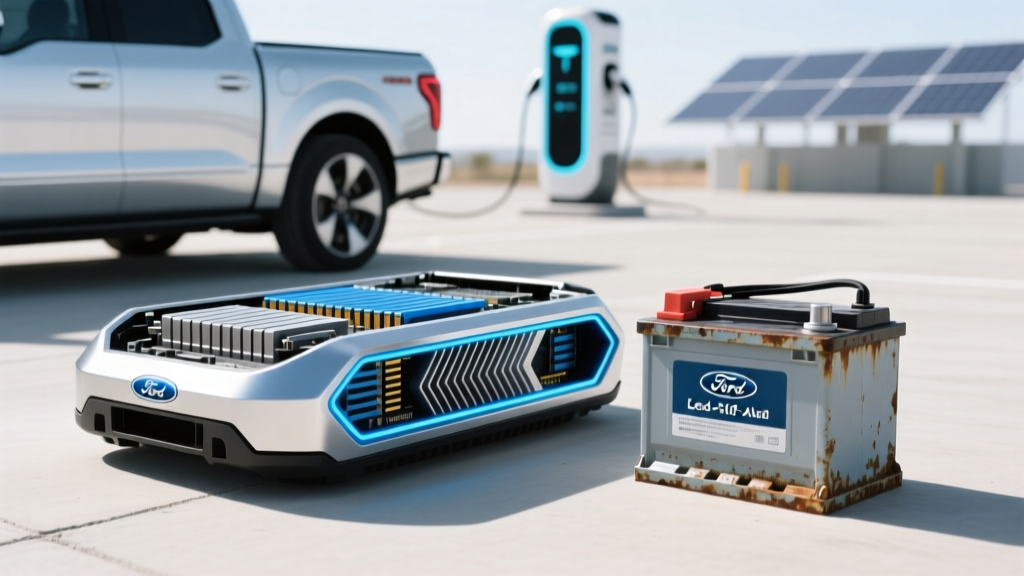
If you've ever replaced the 12V lead-acid battery in a 2006 Ford F-150, you know the drill: $150-$220 at an auto parts store, a 10-minute swap in your driveway, and a typical lifespan of 3-5 years. That battery — a Group 65 flooded lead-acid unit — is a completely different animal from the high-voltage lithium-ion traction battery powering a 2026 Ford F-150 Lightning or any modern battery-electric vehicle (BEV).
Yet the confusion is real. Every month, hundreds of truck owners search for "2006 F150 battery" and land in a world of EV battery questions: How long do EV batteries actually last? What happens when they degrade? Is a $15,000 replacement really in my future?
This guide bridges that gap. We'll cover the chemistry, degradation data, warranty protections, replacement costs, and care practices for modern EV traction batteries — the kind powering the F-150 Lightning, Chevy Silverado EV, Rivian R1T, and Tesla Cybertruck — while clarifying exactly how they differ from the simple 12V battery your 2006 F-150 uses.
The Chemistry Inside: LFP vs. NMC/NCA Explained
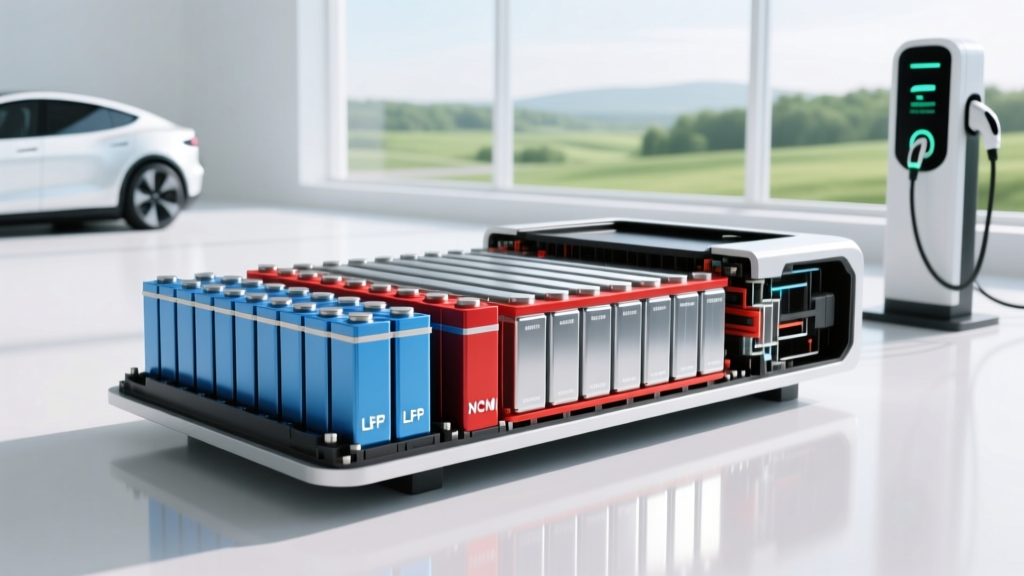
Modern EV traction batteries use lithium-ion cells, but not all lithium-ion is the same. Two dominant chemistries power today's electric trucks and cars, and the choice between them affects range, longevity, cold-weather performance, and price.
| Attribute | LFP (Lithium Iron Phosphate) | NMC/NCA (Nickel Manganese Cobalt / Nickel Cobalt Aluminum) |
|---|---|---|
| Energy Density | Lower (~160-180 Wh/kg cell-level) | Higher (~220-280 Wh/kg cell-level) |
| Cycle Life | 3,000-5,000+ cycles to 80% capacity | 1,000-2,000 cycles to 80% capacity |
| Cold-Weather Performance | Weaker; slower charging below 32°F, ~15-20% range loss at 20°F | Better low-temp performance; ~10-15% range loss at 20°F with heat pump |
| Cost | ~15-25% cheaper per kWh (no cobalt or nickel) | Higher raw-material cost due to cobalt/nickel |
| State of Charge (SoC) Tolerance | Can charge to 100% daily without accelerated degradation | Best kept between 20-80% for daily use; 100% only for trips |
| Common 2026 Applications | Tesla Model 3/Y RWD, Ford F-150 Lightning Standard Range, base Chevy Equinox EV | F-150 Lightning Extended Range, Rivian R1T, Tesla Long Range/Performance, GMC Sierra EV |
| Safety / Thermal Stability | Excellent; higher thermal runaway threshold | Good with advanced BMS, but lower thermal runaway margin |
The takeaway: If you prioritize longevity and plan to keep your truck 10+ years, LFP's cycle-life advantage is significant. If you need maximum range per charge and frequently tow or drive in cold climates, NMC/NCA's energy density and cold performance edge matters more. Neither is universally "better" — it depends on your use case.
How Long Do EV Batteries Actually Last? Real Degradation Data
The most common fear among EV-curious truck buyers: the battery will die at 100,000 miles and cost a fortune to replace. The data tells a different story.
Observed Degradation Patterns (Fleet & Owner Data):
- Year 1 / 15,000 mi: ~2-4% capacity loss (initial formation loss, steepest part of the curve)
- Year 3 / 45,000 mi: ~5-8% total loss from new
- Year 5 / 75,000 mi: ~8-12% total loss
- Year 8 / 120,000 mi: ~10-15% total loss (median across major OEMs)
- Year 10 / 150,000 mi: ~12-18% total loss for NMC; ~8-12% for LFP in moderate climates
Sources: Recurrent Auto fleet data, Tesla Impact Reports, Geotab longitudinal study of 6,300+ EVs.
To put this in truck terms: a 2026 F-150 Lightning Extended Range with an EPA-estimated 320 miles of range and an NMC pack would likely show ~280-290 miles of real-world range at 100,000 miles — still entirely usable for daily driving and most towing scenarios.
Compare that to your 2006 F-150's lead-acid battery, which delivers roughly 3-5 years of cranking-amp service before sulfation or plate degradation kills it. The lithium-ion traction battery in a modern EV is engineered for 15-20 years of service in most cases — it will very likely outlast the vehicle's body and interior.
Battery Warranty Terms: What's Actually Covered
Federal law mandates a minimum 8-year / 100,000-mile warranty on EV battery packs for emissions-related compliance, and most automakers meet or exceed this baseline. Here's what the major electric-truck warranties look like for 2026 models:
| Vehicle | Warranty Period | Mileage Cap | Capacity Retention Threshold |
|---|---|---|---|
| Ford F-150 Lightning | 8 years | 100,000 miles | 70% of original capacity |
| Chevrolet Silverado EV | 8 years | 100,000 miles | 70% of original capacity |
| Rivian R1T | 8 years | 175,000 miles | 70% of original capacity |
| Tesla Cybertruck | 8 years | 120,000 miles | 70% of original capacity |
| GMC Sierra EV | 8 years | 100,000 miles | 70% of original capacity |
What this means in practice: If your F-150 Lightning's battery drops below 70% usable capacity within 8 years or 100,000 miles (whichever comes first), Ford will repair or replace the pack at no cost. Given the degradation data above, hitting that threshold under normal use is statistically unlikely — most packs retain 85-90% at the warranty boundary.
The warranty covers defects and abnormal degradation. It does not cover damage from accidents, flooding, or aftermarket modifications to the battery system. Always check your specific owner's manual for exclusions.
EV Battery Replacement Cost: The Numbers and the Reality
This is where the 2006 F-150 battery comparison becomes stark. That Group 65 lead-acid battery costs $150-$220 at AutoZone. An EV traction battery replacement is a fundamentally different scale of expense — but also a fundamentally different likelihood of needing one.
| Vehicle / Pack Size | Battery Capacity (kWh) | Estimated Replacement Cost (Parts + Labor) | Typical Replacement Timeline |
|---|---|---|---|
| Tesla Model 3 RWD (LFP) | ~60 kWh | $12,000 - $16,000 | Rarely before 200,000+ mi |
| Ford F-150 Lightning Std. Range (LFP) | ~98 kWh usable | $18,000 - $25,000 | Rarely before 200,000+ mi |
| Ford F-150 Lightning Ext. Range (NMC) | ~131 kWh usable | $22,000 - $32,000 | Rarely before 200,000+ mi |
| Rivian R1T (Large Pack, NMC) | ~128 kWh usable | $20,000 - $28,000 | Rarely before 200,000+ mi |
| Chevy Silverado EV (Ultium, NMC) | ~200 kWh (max pack) | $30,000 - $42,000 | Rarely before 200,000+ mi |
The critical context most alarmist headlines omit: Out-of-warranty battery replacements are rare. According to Recurrent's analysis of over 15,000 EVs, fewer than 1.5% of EVs have required a battery replacement outside of warranty recalls. Most EV batteries are designed to outlast the vehicle's economic life. You're far more likely to replace the suspension, interior components, or the 12V auxiliary battery (yes, EVs still have one — it runs the lights, infotainment, and computers) before the traction pack fails catastrophically.
Also worth noting: battery costs per kWh have dropped from ~$1,200/kWh in 2010 to roughly $120-$140/kWh at the pack level in 2025-2026, per BloombergNEF. That trend continues, meaning a replacement in 2035 will cost meaningfully less than today's estimates.
Factors That Accelerate (or Preserve) Battery Life
Not all miles are created equal when it comes to battery wear. Here's what actually moves the needle on degradation:
Practices That Maximize Battery Longevity
- Keep SoC between 20-80% for daily driving (NMC/NCA packs). LFP packs are the exception — charge to 100% at least weekly so the BMS can calibrate cell balancing.
- Use Level 2 home charging as your primary method. Slow, steady charging generates less heat and stress than repeated DC fast charging.
- Limit DC fast charging to road trips — occasional use is fine, but daily 150+ kW sessions accelerate degradation by an estimated 1-3% over the pack's life compared to Level 2-only charging.
- Precondition the battery before fast charging in cold weather. Most EVs do this automatically when you navigate to a charger; it warms the cells to ~70-90°F for optimal charge acceptance and reduced lithium plating risk.
- Avoid prolonged storage at 100% SoC or 0% SoC. If storing for weeks, target ~50% SoC.
- Park in shade or a garage during extreme heat. Sustained battery temperatures above 95°F accelerate chemical degradation. Thermal management systems help, but they can't fully overcome ambient soak.
Practices That Accelerate Degradation
- Daily DC fast charging to 100%
- Regularly draining below 10% SoC
- Leaving the vehicle at 100% SoC in hot weather for days
- Aggressive track use or sustained high-speed towing in extreme heat without cooldown periods
- Aftermarket modifications that bypass the OEM battery management system (BMS)
Monitoring Battery Health: How to Check State of Health (SoH)
State of Health (SoH) is the percentage of your battery's original usable capacity that remains available. A new pack is 100% SoH; a pack that has degraded to hold only 85% of its original energy is at 85% SoH.
How to check it:
- In-vehicle displays: Most 2026 EVs show estimated range and energy consumption, but few display a direct SoH percentage on the dash. Tesla's service mode and some Rivian/ Hyundai diagnostic menus expose this data.
- OEM apps: FordPass, myChevrolet, and the Tesla app provide battery health summaries. Ford's app, for instance, shows a "Battery Health" screen with a pass/fail indicator and estimated remaining capacity percentage.
- Third-party tools: Services like Recurrent (free for owners) provide detailed SoH tracking by comparing your actual range and charging data against fleet averages. OBD-II dongles paired with apps like EV Health or LeafSpy (for Nissan) can pull BMS data directly.
- Dealer diagnostics: Any authorized service center can run a full battery health report, typically showing per-module voltage variance, internal resistance, and overall capacity retention. Request this if you're buying a used EV.
What's Coming Next: Solid-State and Silicon-Anode Batteries
If you're researching EV batteries, you've likely seen headlines about solid-state batteries promising 600-mile range and 10-minute charging. Here's the grounded, 2026 reality:
Solid-state batteries replace the liquid electrolyte in current lithium-ion cells with a solid material (ceramic, sulfide, or polymer). The potential benefits are real: higher energy density (~400-500 Wh/kg at the cell level), faster charging, improved safety, and longer cycle life. Toyota, Nissan, and Samsung SDI have all announced pilot production lines, and Toyota has committed to limited solid-state EV production by 2027-2028.
However, manufacturing yield, cost, and scalability remain unsolved challenges at volume. Expect solid-state packs to debut in premium/low-volume models first, with mainstream truck applications likely not arriving before 2030-2032.
Silicon-anode batteries (used in limited form by companies like Sila Nanotechnologies and Group14) offer a nearer-term improvement. By replacing graphite anodes with silicon-dominant materials, energy density increases ~15-25% without a full chemistry overhaul. The 2026 Mercedes G-Class 580e and select upcoming models already incorporate silicon-anode cells. Expect broader adoption across trucks and SUVs by 2027-2029.
Neither technology is available in any production EV truck as of 2026. Today's LFP and NMC packs remain the proven, warrantied, and cost-effective choice — and they're more than adequate for 15+ years of service.
Frequently Asked Questions
How long do EV batteries last in years and miles?
Based on fleet data from Recurrent Auto and Geotab, the median EV battery retains 85-90% of its original capacity at 8 years / 100,000 miles. Most packs are engineered for 15-20 years of usable service before degradation makes them impractical for daily driving. LFP chemistry packs typically last longer than NMC in cycle count, though real-world longevity also depends heavily on climate, charging habits, and thermal management.
How much does an EV battery cost to replace?
Out-of-warranty replacement costs range from roughly $12,000 for a smaller pack (e.g., Tesla Model 3 RWD, ~60 kWh) to $30,000-$42,000 for a large truck pack (e.g., Chevy Silverado EV 200 kWh Ultium). However, fewer than 1.5% of EVs have required out-of-warranty battery replacement according to industry fleet data. Most EV batteries outlast the vehicle itself, and costs per kWh continue to decline year over year.
What does the EV battery warranty cover?
Federal law requires a minimum 8-year / 100,000-mile battery warranty. Most automakers guarantee the pack will retain at least 70% of its original usable capacity during that period. If it falls below that threshold, the manufacturer repairs or replaces the battery at no cost. Warranties cover defects and abnormal degradation but typically exclude accident damage, flooding, and unauthorized modifications. Check your owner's manual or the manufacturer's warranty guide for specifics.
How do I check and maximize my EV battery health?
Check SoH through your OEM app (FordPass, Tesla app, myChevrolet), third-party services like Recurrent, or a dealer diagnostic scan. To maximize longevity: charge NMC packs to 80% daily (100% for LFP), use Level 2 home charging as your primary method, limit DC fast charging to road trips, precondition before fast charging in cold weather, avoid storing at 100% or 0% SoC, and park in shade during extreme heat.
LFP vs. NMC — which battery chemistry is better for a truck?
Neither is universally superior. LFP offers longer cycle life (3,000-5,000+ cycles), lower cost, better thermal safety, and the convenience of daily 100% charging — making it ideal for daily drivers who want maximum longevity. NMC/NCA delivers higher energy density (more range in the same physical space), better cold-weather performance, and stronger sustained power for towing — making it the choice for long-range and heavy-duty truck use. If you tow frequently or live in a cold climate, NMC edges ahead. If you commute daily and plan to keep the truck 10+ years, LFP's durability advantage is compelling.
Is the 12V battery in an EV the same as in my 2006 F-150?
Functionally, yes — EVs still carry a 12V auxiliary battery to power the computers, lights, door locks, and infotainment system. In some 2026 models, this is a traditional lead-acid unit similar to your 2006 F-150's Group 65 battery; in others (including recent Teslas and the Rivian R1T), it's been replaced by a small 12V lithium-iron-phosphate unit that lasts longer and weighs less. Either way, it's a separate, inexpensive, easily replaceable component — not the high-voltage traction battery that powers the motors.