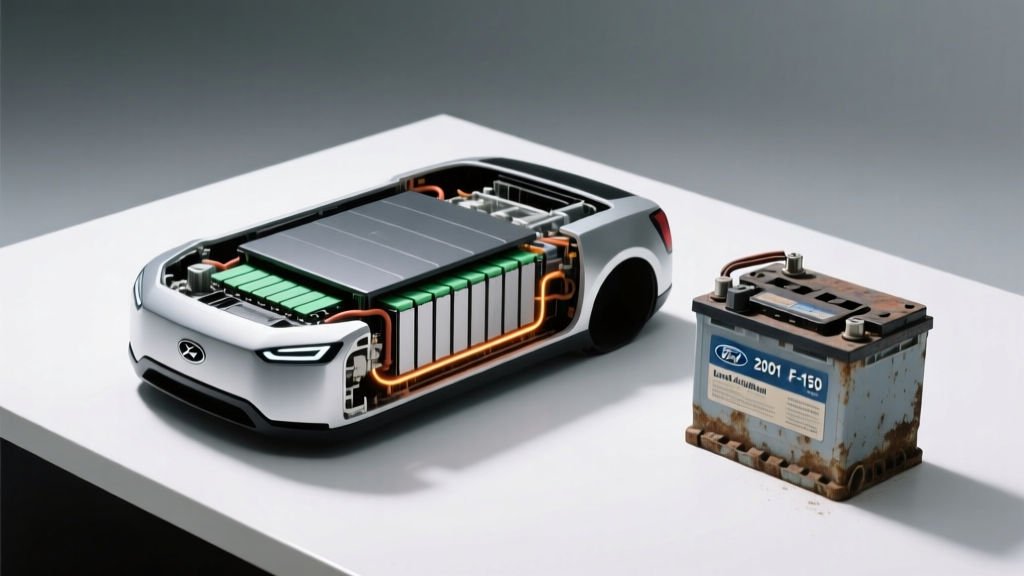
If you've ever replaced the 12V lead-acid battery in a 2001 Ford F-150, you know the drill: $120-$180 at an auto parts store, a few wrench turns, and you're back on the road for another 3-5 years. That simple, affordable swap is the mental anchor many buyers bring to the electric-vehicle conversation — and it's exactly why "EV battery replacement cost" remains one of the most searched anxieties in automotive.
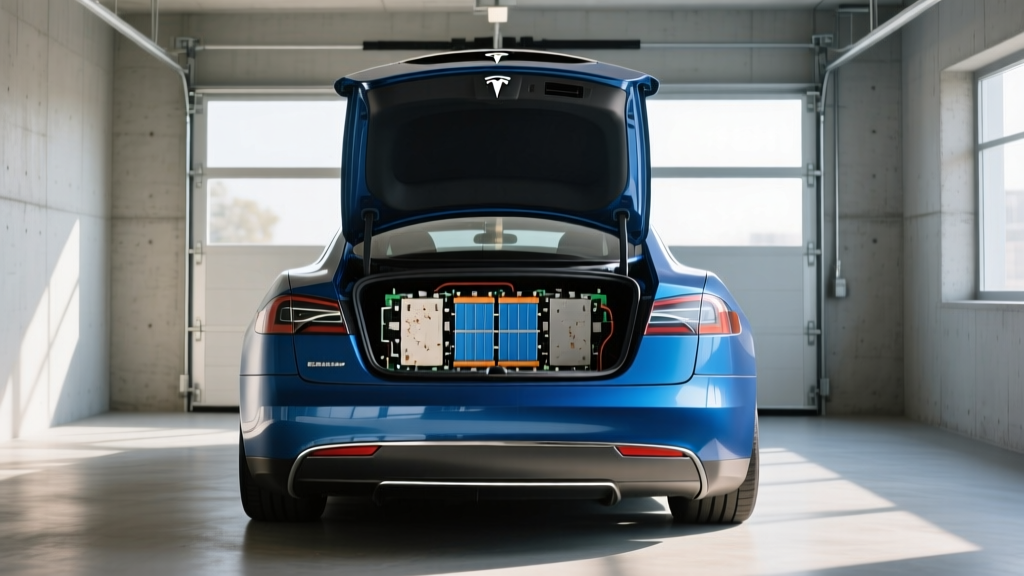
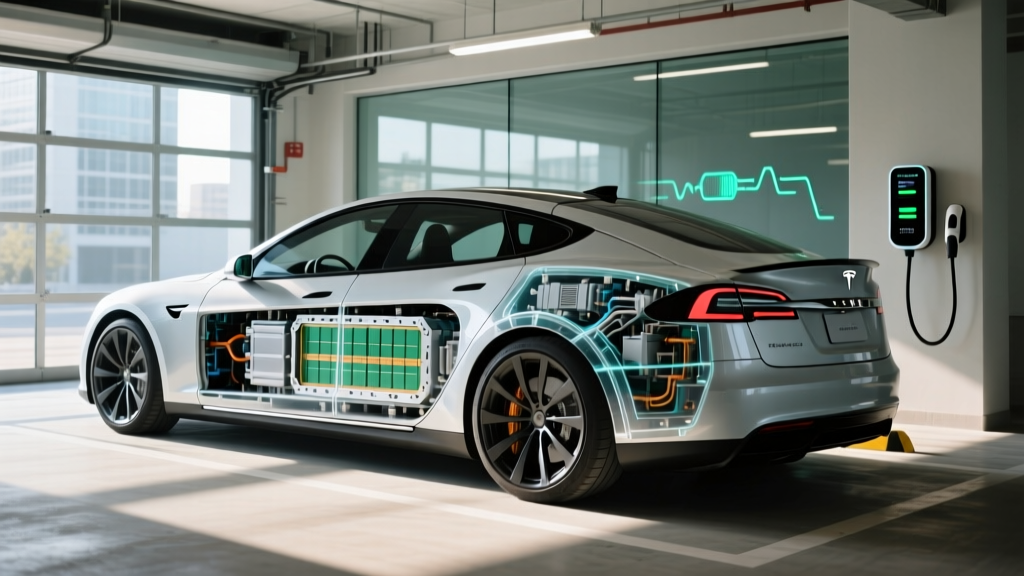
The high-voltage traction battery powering an EV is a fundamentally different animal from the 2001 F-150 battery under the hood of a gasoline truck. It's larger, far more expensive, chemically complex, and designed to last the lifetime of the vehicle rather than a single warranty cycle. Understanding the real data on degradation, cost, chemistry, and care is essential before you sign a purchase agreement.
This guide breaks down everything current and prospective EV owners need to know about traction battery longevity in 2026 — with hard numbers, not marketing promises.
How Long Do EV Batteries Actually Last?
The short answer: most modern EV traction batteries will outlast the useful life of the vehicle they're installed in. But "outlast" doesn't mean "zero degradation." Lithium-ion batteries lose capacity over time and charge cycles, just like a smartphone — the question is how much, and how fast.
Real-world fleet data from sources like Recurrent Auto and manufacturer telematics show that the average EV battery retains roughly 85-92% of its original capacity after 100,000 miles (approximately 7-8 years of average US driving). Early-generation packs from 2011-2015 (think first-gen Nissan Leaf with passive air cooling) degraded far faster — some losing 20-30% in five years. Modern liquid-cooled packs with advanced thermal management have largely solved that problem.
- Year 1 / 15,000 mi: ~2-4% loss (initial "break-in" drop)
- Year 3 / 45,000 mi: ~5-8% total loss
- Year 5 / 75,000 mi: ~8-12% total loss
- Year 8 / 120,000 mi: ~12-18% total loss
- Year 10+ / 150,000+ mi: ~15-25% total loss (varies heavily by chemistry and climate)
Sources: Recurrent Auto fleet data, Geotab battery health studies. Individual results vary by climate, charging habits, and chemistry.
The key insight: degradation is non-linear. Most capacity loss happens in the first 12-24 months, then the curve flattens considerably. A battery that has lost 8% in three years is not on track to lose 24% in nine years — it will likely retain 80-85% at the decade mark.
LFP vs NMC: Which Battery Chemistry Is Better?
Not all EV batteries are built the same. The two dominant chemistries in 2026 passenger EVs are NMC (Nickel Manganese Cobalt, sometimes NCA — Nickel Cobalt Aluminum) and LFP (Lithium Iron Phosphate). The chemistry inside your pack dictates range, longevity, cold-weather behavior, and even how you should charge at home.
| Attribute | LFP (Lithium Iron Phosphate) | NMC / NCA |
|---|---|---|
| Energy Density | Lower (~160-180 Wh/kg cell-level) — heavier pack for same kWh | Higher (~220-260 Wh/kg) — lighter, more range per pound |
| Cycle Life | 3,000-5,000+ cycles to 80% capacity | 1,000-2,000 cycles to 80% capacity |
| Cold-Weather Performance | Weaker — more range loss below 32°F, slower cold charging | Better low-temp performance and charge acceptance |
| Cost | Lower — no cobalt or nickel, cheaper raw materials | Higher — cobalt/nickel price exposure |
| Optimal Daily Charge | 100% OK — manufacturers recommend periodic full charges for BMS calibration | 80% recommended for daily use; 100% for trips only |
| Common In (2026) | Tesla Model 3/Y RWD, Ford Mustang Mach-E Select, BYD, Rivian Standard | Tesla Long Range, Hyundai Ioniq 5/6, GM Ultium vehicles, Porsche Taycan |
Bottom line: If maximum range and cold-weather driving are priorities, NMC/NCA is the stronger pick. If you plan to own the vehicle for 10+ years, drive moderate daily miles, and want the lowest degradation risk, LFP's superior cycle life and lower cost make it compelling. Neither is universally "better" — it depends on your ownership horizon and climate.
What Does the EV Battery Warranty Actually Cover?
Federal law mandates that all EV traction batteries carry a minimum warranty of 8 years or 100,000 miles (whichever comes first). In California Air Resources Board (CARB) states — which include California, Colorado, Connecticut, Maine, Maryland, Massachusetts, New Jersey, New York, Oregon, Rhode Island, Vermont, Virginia, and Washington — that extends to 10 years or 150,000 miles.
| Manufacturer | Coverage Period | Capacity Threshold |
|---|---|---|
| Tesla | 8 yr / 120,000 mi (Model 3/Y LR); 8 yr / 100,000 mi (RWD) | 70% retention |
| Hyundai / Kia | 10 yr / 100,000 mi | 70% retention |
| GM (Ultium) | 8 yr / 100,000 mi | 70% retention (60% on some commercial) |
| Ford | 8 yr / 100,000 mi | 70% retention |
| Rivian | 8 yr / 175,000 mi (Max pack) | 70% retention |
| BMW | 8 yr / 100,000 mi | 70% retention |
The critical detail most buyers miss: the warranty doesn't guarantee zero degradation. It guarantees the battery won't fall below the stated threshold (typically 70% of original capacity). A battery at 72% capacity at year 7 is functioning within warranty spec — even though you've lost over a quarter of your original range. Also, warranties cover defects and abnormal degradation, not damage from accidents, flooding, or improper modifications.
How Much Does an EV Battery Replacement Cost?
This is where the comparison to a 2001 F-150 battery becomes stark. A replacement 12V Group 65 lead-acid battery for that truck runs $130-$180. An EV traction battery replacement is a five-figure event — but context matters enormously.
| Vehicle / Pack Size | Battery (Parts) | Labor | Total Estimate |
|---|---|---|---|
| Tesla Model 3 RWD (~57 kWh LFP) | $8,000 - $12,000 | $1,500 - $2,500 | $10,000 - $14,500 |
| Hyundai Ioniq 5 (~77 kWh NMC) | $12,000 - $16,000 | $2,000 - $3,000 | $14,000 - $19,000 |
| Ford F-150 Lightning (~131 kWh Ext. Range) | $18,000 - $25,000 | $2,500 - $4,000 | $20,500 - $29,000 |
| Chevrolet Silverado EV (~200 kWh) | $25,000 - $35,000 | $3,000 - $5,000 | $28,000 - $40,000 |
Important context: Catastrophic battery failure requiring full replacement is rare. Data from Geotab's fleet study of over 10,000 EVs shows that fewer than 1-2% of EV batteries require replacement outside of collision damage. Most degradation is gradual. Additionally, module-level repair is increasingly possible — a technician can replace individual degraded modules within a pack for $2,000-$5,000 rather than swapping the entire assembly. As the EV fleet ages, the aftermarket for refurbished and remanufactured packs is growing, which will bring costs down through the late 2020s.
That truck's $150 battery needs replacing every 3-5 years. Over 20 years and 200,000 miles, you'd buy 4-6 replacement 12V batteries — roughly $600-$1,100 total. An EV traction battery may never need replacement at all during equivalent ownership, and if it does, it's covered by warranty for the first 8-10 years. The sticker shock is real, but the probability-weighted cost is lower than most buyers assume.
What Factors Accelerate Battery Degradation?
Not all miles and charge cycles are created equal. The following habits and conditions measurably speed up capacity loss:
- Frequent DC fast charging above 150 kW: Occasional road-trip fast charging is fine, but daily reliance on 250-350 kW chargers generates sustained high heat inside cells. Studies show packs that fast-charge more than 3x per week degrade 1-3% faster over 5 years than those primarily Level 2 charged.
- Sustained high State of Charge (SoC): Leaving an NMC battery at 100% for days or weeks accelerates electrolyte decomposition. This is why manufacturers recommend 80% daily limits for NMC. (LFP is more tolerant of 100% storage.)
- Deep discharge cycles: Regularly driving the battery below 10% SoC stresses cells. Try to keep the pack between 20-80% for NMC, 10-100% for LFP.
- Extreme heat exposure: Ambient temperatures above 95°F, especially combined with fast charging or high-load driving, are the single biggest degradation accelerant. Liquid-cooled packs mitigate this, but parking in shade or a garage in Phoenix or Houston measurably helps.
- Extreme cold charging without preconditioning: Charging a cold battery (below 32°F) at high power causes lithium plating on the anode — permanent damage. Always use your vehicle's battery preconditioning feature before fast charging in winter.
- High-mileage, high-C-rate driving: Repeated hard acceleration and sustained high-speed driving (80+ mph) generates internal heat. Track days and towing at max capacity daily will age a pack faster than commuting.
- ☐ Set daily charge limit to 80% (NMC) or 100% (LFP)
- ☐ Use Level 2 home charging as your primary method
- ☐ Limit DC fast charging to road trips when possible
- ☐ Enable battery preconditioning before winter fast charging
- ☐ Park in shade or a garage during hot months
- ☐ Avoid letting SoC sit below 10% for extended periods
- ☐ If storing the vehicle for 30+ days, leave SoC at ~50%
- ☐ Install a timed charger to avoid NMC sitting at 100% overnight
How Do I Check My EV Battery's State of Health?
State of Health (SoH) is the percentage of original capacity your battery can currently hold. A brand-new pack is 100% SoH; one that can hold 85 kWh of its original 100 kWh is at 85% SoH. Monitoring this number is the EV equivalent of checking your engine's compression — it tells you the real condition of the most expensive component in your vehicle.
Here's how to check it:
- In-vehicle display: Most modern EVs (Tesla, Hyundai/Kia, BMW, Rivian, GM Ultium vehicles) show battery health or usable capacity in the settings or energy menu. Tesla displays it as a percentage in the Service menu. Hyundai shows estimated range at 100% SoC, which you can compare to the original EPA figure.
- OBD-II dongle + app: Third-party tools like OBDLink MX+ paired with apps such as EV Battery Health or LeafSpy (for Nissan) can read the BMS (Battery Management System) directly and report SoH, cell voltage variance, and pack temperature. This is the most accurate consumer-accessible method.
- Dealer diagnostic: Any authorized service center can pull a full battery health report. Request this during routine service or before purchasing a used EV.
- Manual calculation: Charge to 100%, note the displayed kWh added (from your charger's app or the car's energy screen), and compare to the pack's original usable capacity. If your 77 kWh Ioniq 5 only accepts 67 kWh from 5% to 100%, you're at roughly 87% SoH (accounting for the 5% buffer).
For used-EV buyers: always check SoH before purchase. A 2022 model at 92% SoH with 35,000 miles is in excellent shape. The same model at 83% SoH may indicate heavy fast-charging use or hot-climate storage — and gives you negotiating leverage.
What's Next? Solid-State and Silicon-Anode Batteries
If you're reading this in 2026, you've likely seen headlines about solid-state batteries promising 600-mile range, 10-minute charging, and zero degradation. Here's the reality check:
Solid-state batteries replace the liquid electrolyte in current lithium-ion cells with a solid material (ceramic, sulfide, or polymer). The theoretical advantages are enormous: higher energy density (potentially 400-500 Wh/kg at the cell level), faster charging without lithium plating risk, improved safety (no flammable electrolyte), and longer cycle life. Toyota, Samsung SDI, and QuantumScape are the most vocal developers.
However, as of mid-2026, solid-state packs remain in limited pilot production. Toyota has announced solid-state-equipped vehicles for 2027-2028 in Japan, but US-market availability at scale is realistically a 2029-2031 timeline. Manufacturing yield, cost per kWh (currently 3-5x that of liquid lithium-ion), and supply-chain buildout are the primary bottlenecks.
Silicon-anode batteries are closer to market. Companies like Sila Nanotechnologies and Group14 are supplying silicon-dominant anode materials to manufacturers including Mercedes-Benz (for the G-Class EV) and Panasonic. Silicon anodes can store roughly 20-40% more energy per gram than graphite, translating to meaningful range gains without changing the pack's physical size. Expect silicon-anode cells to appear in production vehicles starting in 2026-2027, initially in premium models, with mainstream adoption by 2028-2029.
- 2026-2027: Silicon-anode cells in limited premium production (Mercedes, Porsche)
- 2027-2028: First solid-state vehicles in Japan/Korea markets (Toyota, Samsung SDI)
- 2028-2030: Silicon-anode goes mainstream; solid-state pilot programs in US/EU
- 2030-2032: Solid-state at scale — if cost and manufacturing challenges are solved
These are industry estimates based on announced timelines. Delays are common in battery manufacturing scale-up.
For buyers today: don't wait for solid-state. Current lithium-ion technology (especially LFP) is mature, well-understood, and backed by robust warranties. The vehicles available now will serve most owners well through the 2030s.
Frequently Asked Questions
How long do EV batteries last in years and miles?
Most modern liquid-cooled EV batteries retain 80-90% of original capacity at 150,000 miles or 10 years. Catastrophic failure is rare (under 2% of packs). With proper care, the battery will likely outlast the rest of the vehicle's components.
How much does it cost to replace an EV battery?
Out-of-warranty replacement ranges from roughly $10,000 for a smaller pack (Tesla Model 3 RWD, ~57 kWh) to $28,000-$40,000 for large truck packs (Silverado EV, ~200 kWh). However, fewer than 2% of EV batteries ever require full replacement outside of accident damage. Module-level repairs cost $2,000-$5,000.
What does the EV battery warranty cover?
Federal minimum is 8 years/100,000 miles (10/150,000 in CARB states). The warranty guarantees the battery will retain at least 70% of its original capacity. It covers defects and abnormal degradation but not accident damage, flooding, or aftermarket modifications.
Is LFP better than NMC for battery longevity?
For pure cycle life and calendar life, yes — LFP cells can endure 3,000-5,000+ charge cycles compared to 1,000-2,000 for NMC. LFP also tolerates 100% daily charging better. However, NMC offers higher energy density (more range in a lighter pack) and better cold-weather performance. Choose LFP for maximum longevity and lower cost; choose NMC for maximum range and winter driving.
How do I check my EV's battery health?
Use the vehicle's built-in battery health display (available in most 2020+ EVs), an OBD-II scanner with an EV battery app (like LeafSpy or EV Battery Health), or request a diagnostic report from a dealer. Compare the current usable kWh or range at 100% SoC to the original EPA-rated figures.
Does fast charging damage my EV battery?
Occasional DC fast charging (road trips, 1-2x per week) has minimal impact on modern liquid-cooled packs. Daily fast charging at 150+ kW can accelerate degradation by 1-3% over 5 years compared to Level 2 home charging. Use Level 2 as your primary method and reserve DC fast charging for when you need it.
Sources: Recurrent Auto Battery Degradation Study, Geotab EV Battery Health Report, fueleconomy.gov. Warranty terms verified against manufacturer specifications as of 2026. Always confirm current warranty details with your dealer.