If you've ever searched for a 2013 Chevy Impala battery, you're likely dealing with a simple 12-volt lead-acid replacement — a $150–$250 swap at any auto parts store. But as millions of drivers transition to electric vehicles, the battery conversation shifts dramatically. An EV's high-voltage traction battery is the single most expensive component in the vehicle, and understanding its chemistry, lifespan, degradation behavior, and replacement economics is essential for any current or prospective EV owner.
This guide breaks down everything you need to know about modern EV traction batteries in 2026 — from LFP vs. NMC chemistry trade-offs to real-world degradation data, warranty coverage, and emerging technologies on the horizon. We'll also clarify the critical difference between the 12V auxiliary battery (yes, your EV still has one, and yes, it can die just like that 2013 Impala battery) and the high-voltage pack that actually propels the car.
The 12V vs. Traction Battery Distinction: Why It Matters
Every EV sold today — from the Tesla Model 3 to the Ford F-150 Lightning — carries two batteries:
- 12V auxiliary battery: Powers lights, infotainment, door locks, and control computers. Typically a small lead-acid or lithium-iron-phosphate (LiFePO4) unit. Replacement cost: $150–$400. Lifespan: 3–6 years. This is functionally identical to the battery you'd replace in a 2013 Chevy Impala.
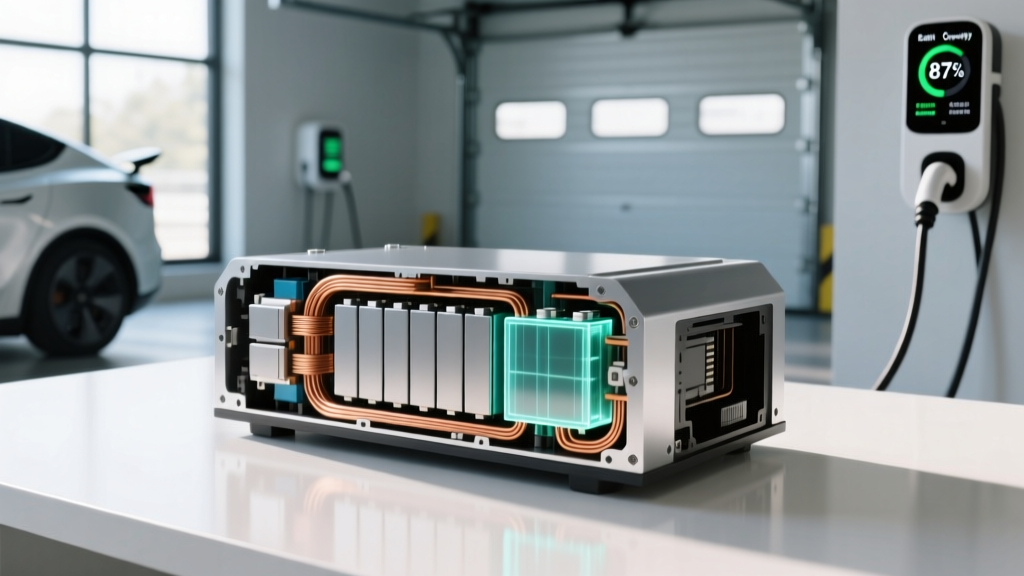
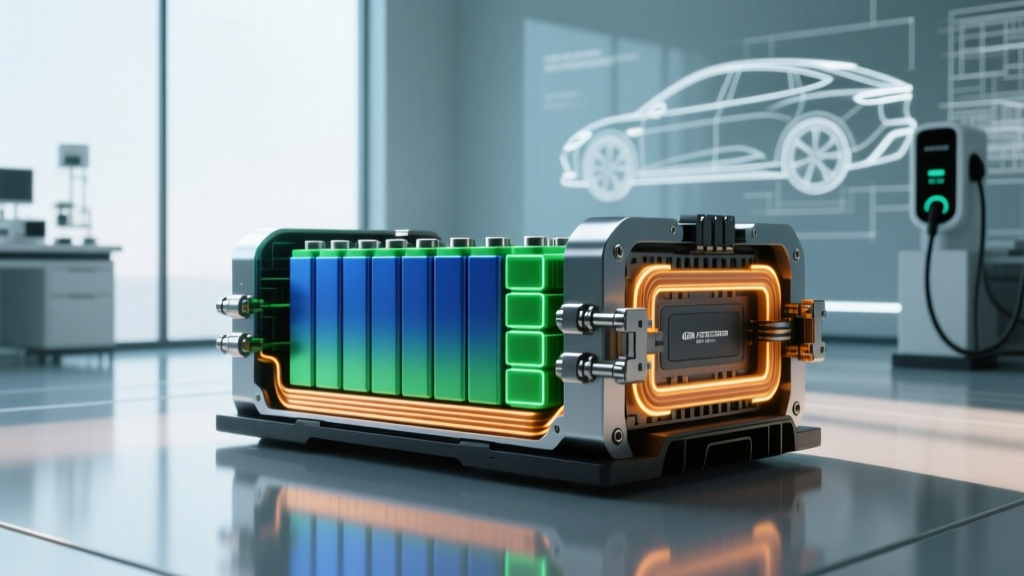
- High-voltage traction battery: The large lithium-ion pack (typically 50–130+ kWh) that drives the electric motor(s). Replacement cost: $5,000–$25,000+. Lifespan: designed for 150,000–300,000+ miles with gradual capacity loss.
When we discuss "EV battery life" in this guide, we're referring exclusively to the traction battery. If your EV won't start or the dashboard is dark, check the 12V system first — it's the most common battery-related failure point and the one most analogous to a conventional car battery replacement.
LFP vs. NMC/NCA: Choosing Your Battery Chemistry
The two dominant lithium-ion chemistries in 2026 EVs are LFP (Lithium Iron Phosphate) and NMC/NCA (Nickel Manganese Cobalt / Nickel Cobalt Aluminum). Each has distinct trade-offs that affect range, longevity, charging behavior, and cost.
| Attribute | LFP (Lithium Iron Phosphate) | NMC / NCA (Nickel-based) |
|---|---|---|
| Energy Density | Lower (~160–180 Wh/kg cell-level) | Higher (~220–300 Wh/kg cell-level) |
| Cycle Life | 3,000–5,000+ cycles | 1,000–2,000 cycles |
| Cold-Weather Performance | Moderate — greater range loss below freezing | Better low-temperature discharge capability |
| Charging to 100% | Recommended regularly (helps BMS calibration) | Best kept at 80% daily; 100% for trips only |
| Thermal Stability | Excellent — lower thermal runaway risk | Good — requires more active thermal management |
| Cost (per kWh) | Lower — no cobalt or nickel | Higher — commodity-sensitive materials |
| Typical Applications | Tesla Model 3/Y RWD, standard-range models | Long-range, performance, and luxury EVs |
The practical takeaway: If you want maximum range per charge and don't mind managing state of charge, NMC/NCA delivers. If you prioritize longevity, lower cost, and the simplicity of charging to 100% daily, LFP is the stronger choice — especially for commuters who can charge at home. Tesla's shift to LFP in standard-range Model 3 and Model Y vehicles, and Ford's adoption of LFP in the Mustang Mach-E Select, reflect this industry-wide recognition of LFP's durability advantages.
How Long Do EV Batteries Actually Last?
The short answer: far longer than most buyers expect. Data aggregated from fleet operators, manufacturer reports, and owner tracking shows that modern EV batteries lose capacity gradually — they rarely "fail" catastrophically.
Real-World Degradation Data
Based on data from Recurrent Auto, which tracks over 15,000 EVs in real-world conditions, and manufacturer-reported figures:
- Year 1–2 (0–30,000 mi): 2–5% capacity loss. This initial drop is normal as the battery stabilizes chemically.
- Year 3–5 (30,000–75,000 mi): Degradation slows to roughly 1–2% per year. Most EVs retain 90–95% of original capacity.
- Year 6–8 (75,000–120,000 mi): Gradual taper continues. Expect 85–92% retained capacity for liquid-cooled packs.
- Year 10+ (150,000+ mi): Many NMC packs retain 80–88%; LFP packs often retain 90%+ based on cycle-life projections.
Tesla's 2025 Impact Report stated that Model 3/Y batteries retain approximately 85% capacity at 200,000 miles. Hyundai/Kia's 8-year/100,000-mile warranty guarantees 70% retention — but real-world data consistently shows packs performing well above that floor.
A critical nuance: range loss is not linear. A 10% capacity reduction on a 320-mile EPA-rated EV still leaves ~288 miles — more than adequate for 95% of daily driving patterns. The psychological impact of watching the range number drop often exceeds the practical impact.
What Does the Battery Warranty Actually Cover?
Federal law mandates a minimum 8-year/100,000-mile warranty on EV traction batteries (extended to 10 years/150,000 miles in California and states adopting CARB standards). But the details vary significantly between manufacturers.
| Manufacturer | Warranty Period | Capacity Threshold | Notes |
|---|---|---|---|
| Tesla (Model 3/Y LFP) | 8 yr / 100,000 mi | 70% retention | LFP packs expected to exceed threshold significantly |
| Tesla (Model S/X) | 8 yr / 150,000 mi | 70% retention | Longer mileage coverage for premium models |
| Hyundai / Kia | 10 yr / 100,000 mi | 70% retention | Among the longest duration warranties |
| Ford (Mach-E, F-150 Lightning) | 8 yr / 100,000 mi | 70% retention | Covers battery components and capacity |
| GM (Ultium platform) | 8 yr / 100,000 mi | 70% retention | Modular pack design may reduce replacement cost |
| BMW / Mercedes-Benz | 8 yr / 100,000 mi | 70% retention | Premium EVs follow industry-standard terms |
Key warranty details buyers often miss:
- The warranty covers capacity degradation below the threshold, not just catastrophic failure. If your 80 kWh pack drops below 56 kWh (70%) within the warranty period, the manufacturer must repair or replace it.
- Warranty replacement may involve a refurbished or remanufactured pack, not necessarily brand-new — but it must meet the retention threshold.
- Some manufacturers (notably Tesla) prorate labor costs in certain scenarios; read the fine print.
- Damage from accidents, flooding, or unauthorized modifications voids coverage.
EV Battery Replacement Costs: The Real Numbers
Out-of-warranty traction battery replacement remains expensive — but the context matters. Most EV batteries outlast the vehicle's economic life, and replacement costs have been declining steadily.
| Vehicle / Pack Size | Battery Chemistry | Replacement Cost (Parts + Labor) | Typical Replacement Trigger |
|---|---|---|---|
| Tesla Model 3 RWD (~60 kWh) | LFP | $8,000–$12,000 | Rare before 250,000+ mi |
| Tesla Model Y LR (~75 kWh) | NMC | $12,000–$16,000 | Rare before 200,000 mi |
| Hyundai Ioniq 5 (~77 kWh) | NMC | $10,000–$14,000 | Rare before 200,000 mi |
| Ford F-150 Lightning Ext. (~131 kWh) | NMC | $20,000–$25,000+ | Large pack = higher cost; modular repair may reduce |
| Chevy Bolt EV (~65 kWh) | NMC | $9,000–$14,000 | Post-recall packs show improved longevity |
| BMW i4 (~81 kWh) | NMC | $15,000–$20,000 | Premium brand labor rates increase total |
When is replacement actually needed? In practice, full pack replacement is uncommon before 200,000 miles. More frequently, individual modules or cells within the pack can be serviced — particularly on modular architectures like GM's Ultium platform — reducing costs to $2,000–$6,000 for partial repairs. The era of the $30,000 battery swap is largely behind us for mainstream models.
For context, compare this to the lifetime fuel cost of a comparable ICE vehicle. At 25 MPG and $3.50/gallon, a gas car burns $14,000 in fuel over 100,000 miles. An EV's "fuel" (electricity) for the same distance costs roughly $3,500–$5,000 depending on local rates — a $9,000–$10,500 savings that substantially offsets even a worst-case battery replacement scenario.
Factors That Accelerate (or Slow) Battery Degradation
Not all miles are equal when it comes to battery wear. The following factors have the most significant measurable impact on traction battery longevity:
Battery Care Checklist: Maximize Your Pack's Life
- Daily charging limit: Set to 80% for NMC/NCA packs; 100% is fine for LFP. Use your vehicle's scheduled charging or charge-limit feature.
- Avoid DC fast charging as daily routine: Occasional use is fine, but daily 150+ kW sessions accelerate degradation by an estimated 1–3% over 100,000 miles compared to Level 2 charging (fueleconomy.gov).
- Minimize extreme state of charge storage: Don't leave an NMC pack at 100% or below 10% for days at a time. Aim for 40–60% if storing for weeks.
- Precondition in cold weather: Use your EV's preconditioning feature while plugged in. This warms the battery before driving and before DC fast charging, reducing lithium plating risk.
- Avoid frequent deep discharges: Running to 0% occasionally won't destroy the pack, but making it habitual increases stress on the cells.
- Park in shade or a garage when possible: Sustained high ambient temperatures (95°F+) accelerate chemical degradation. Thermal management systems help, but they can't fully offset prolonged heat exposure when parked unplugged.
The Fast-Charging Question
DC fast charging generates significant heat, and heat is the primary enemy of lithium-ion longevity. A study by the Idaho National Laboratory found that vehicles charged exclusively with DC fast charging showed approximately 5–8% more degradation over 50,000 miles compared to vehicles charged primarily on Level 2. That's meaningful but not catastrophic — it's the difference between retaining 92% vs. 87% capacity.
Modern battery management systems (BMS) actively manage charge rates, tapering speed as the pack heats up and as state of charge climbs above 80%. This charge curve taper is why you'll see a "peak 250 kW" rating that averages closer to 100–130 kW over a full 10–80% session. The taper protects the battery — it's a feature, not a limitation.
How to Check Your EV Battery's State of Health
State of Health (SoH) is the percentage of your battery's current maximum capacity relative to its original capacity when new. Monitoring SoH helps you track degradation and plan for any warranty claims.
Methods for Checking SoH
- In-vehicle display: Many EVs (Hyundai Ioniq 5/6, Kia EV6, BMW i4/iX) show a battery health percentage in the settings menu. Tesla does not natively display SoH, though the "Battery Health" test was added in 2024 software updates for some models.
- OBD-II dongle + app: Tools like OBDLink SX paired with apps such as Leaf Spy (Nissan Leaf) or Scan My Tesla can read detailed battery metrics including SoH, cell voltage variance, and pack temperature.
- Third-party services: Companies like Recurrent Auto provide free battery health reports by connecting to your vehicle's telematics data (with your permission). These reports compare your degradation to a fleet of identical vehicles.
- Dealer diagnostic: A service center can run a full battery diagnostic, typically during scheduled maintenance. Request a printout showing SoH percentage and individual module balance.
What's acceptable? If your SoH drops below 75% within the warranty period, contact the manufacturer — you may be approaching the warranty threshold. Below 70%, you're likely eligible for a warranty repair or replacement. Above 85% after 100,000 miles, your pack is performing well within normal parameters.
Emerging Battery Technologies: What's Realistic for 2027–2030
Several next-generation battery technologies are in advanced development. Here's where they stand as of 2026 — with realistic timelines, not marketing promises:
- Solid-state batteries: Toyota has announced limited production in select 2027–2028 models, claiming 750+ km (WLTP) range and 10-minute fast charging. Samsung SDI and QuantumScape are also advancing solid-state cells. However, mass-market availability at competitive pricing remains a 2029–2030+ proposition. Current solid-state prototypes face manufacturing scale and cost challenges.
- Silicon-dominant anodes: Companies like Sila Nanotechnologies and Group14 are supplying silicon-carbon anode materials to manufacturers including Mercedes-Benz (announced for the G-Class EV). Silicon anodes can increase energy density by 20–40% over graphite, but cycle-life durability at scale is still being validated. Expect broader adoption in 2027–2028 model-year premium vehicles.
- Sodium-ion batteries: CATL and BYD have begun producing sodium-ion cells for lower-cost, shorter-range EVs in China. Energy density is significantly lower than LFP (~120–140 Wh/kg), making these suitable primarily for city cars and micro-EVs. US-market availability is not expected before 2028.
- LFP improvements: CATL's second-generation LFP cells (2025–2026) achieve ~190 Wh/kg — narrowing the gap with NMC while retaining LFP's cycle-life advantages. This is the most impactful near-term advancement for mainstream EVs.
The honest assessment: None of these technologies will render today's EV batteries obsolete overnight. Lithium-ion (both LFP and NMC) will remain the dominant chemistry through at least 2030. If you're buying an EV in 2026, current battery technology is mature, well-understood, and backed by substantial real-world durability data. Waiting for solid-state is a bit like waiting for the next iPhone — there's always something better on the horizon, but what's available now works well.
Frequently Asked Questions
How long do EV batteries last in years and miles?
Modern liquid-cooled EV traction batteries are designed to last 15–20 years or 200,000–300,000+ miles before degrading to 70–80% of original capacity. LFP chemistry packs generally outlast NMC in cycle count, though NMC offers higher energy density. Catastrophic failure (complete, sudden battery death) is extremely rare; capacity loss is gradual and linear.
How much does an EV battery cost to replace?
Full pack replacement costs range from approximately $8,000 for a standard-range Tesla Model 3 (LFP, ~60 kWh) to $25,000+ for a large-pack vehicle like the Ford F-150 Lightning Extended Range (~131 kWh). However, full replacements are uncommon — most packs outlast the vehicle's economic life, and modular repairs can cost $2,000–$6,000 for individual module replacement on supported architectures.
What does the EV battery warranty cover?
Federal law requires a minimum 8-year/100,000-mile warranty (10 yr/150,000 mi in CARB states). Coverage includes capacity loss below a specified threshold (typically 70% of original capacity) and defects in materials or workmanship. The warranty covers repair or replacement of the pack to restore it above the threshold. It does not cover damage from accidents, misuse, or unauthorized modifications.
How do I check and maximize my EV battery health?
Check State of Health (SoH) through your vehicle's settings menu, an OBD-II diagnostic app, or a third-party service like Recurrent Auto. To maximize longevity: charge NMC packs to 80% daily (100% is fine for LFP), minimize exclusive reliance on DC fast charging, precondition the battery in cold weather, avoid prolonged storage at extreme states of charge, and park in temperature-moderate environments when possible.
LFP vs. NMC — which battery chemistry is better?
Neither is universally "better" — they serve different priorities. LFP offers superior cycle life (3,000–5,000 cycles vs. 1,000–2,000), lower cost, better thermal stability, and the convenience of daily 100% charging. NMC delivers higher energy density (more range in a smaller, lighter pack) and better cold-weather performance. Choose LFP for commuting and daily driving where you charge at home; choose NMC if you need maximum range for frequent long-distance travel.
Is my EV's 12V battery the same as a 2013 Chevy Impala battery?
Functionally, yes. Your EV's 12V auxiliary battery serves the same purpose as the one in a 2013 Chevy Impala — it powers accessories, lights, and control electronics. Many EVs use a standard Group 47 or Group 48 lead-acid battery, though some newer models use a small 12V LFP unit. If your EV's screens won't turn on or doors won't unlock, the 12V battery is the likely culprit, and replacement is as straightforward as it would be in a conventional vehicle.