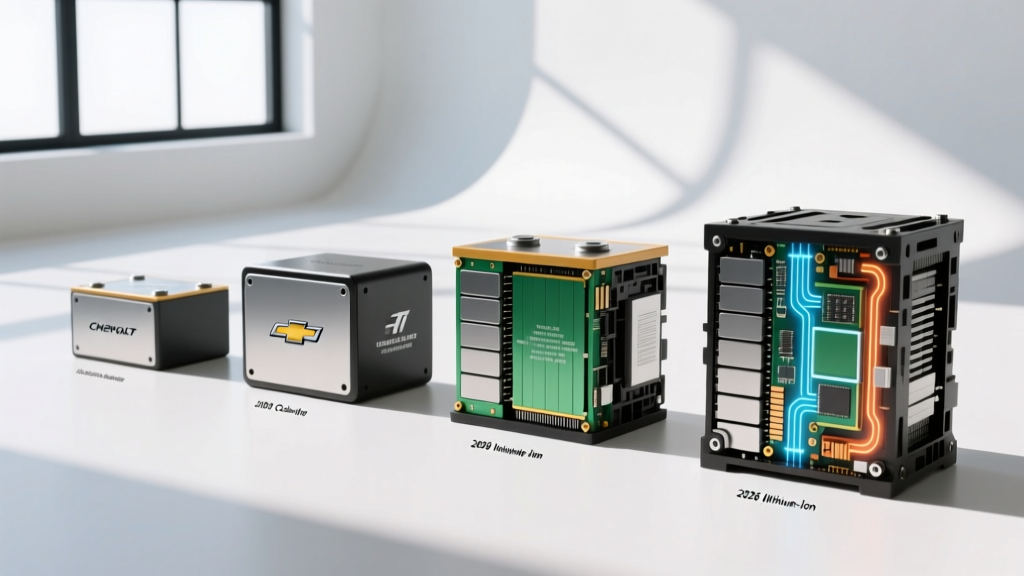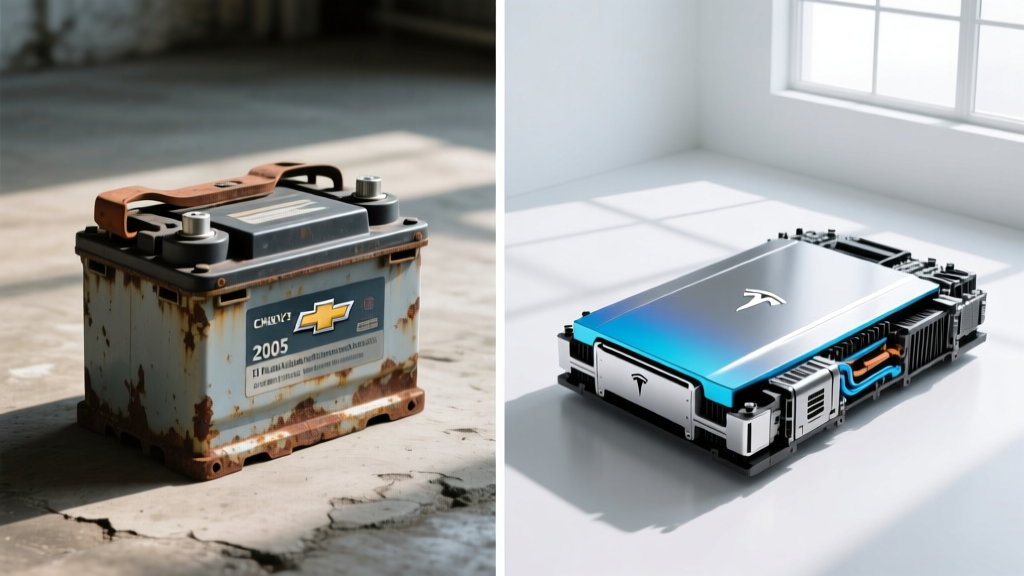
If you've ever replaced a 2005 Chevy Trailblazer battery, you know the drill: a $150–$250 lead-acid 12V unit, swapped in a parking lot in fifteen minutes. The transition to electric vehicles introduces a fundamentally different component — the high-voltage traction battery — and with it, a new set of questions about longevity, replacement cost, and chemistry trade-offs. This guide breaks down exactly what modern EV batteries deliver, what they cost when they eventually need service, and how to maximize their lifespan.
Key distinction: Every EV also has a 12V auxiliary battery (like your Trailblazer's) that powers lights, infotainment, and computers. This guide focuses exclusively on the high-voltage traction battery — the large pack (typically 60–130 kWh) that propels the vehicle and represents the single most expensive component in an EV.
How Long Do EV Batteries Actually Last?
Modern lithium-ion traction batteries are engineered to outlast the vehicles they power. Real-world degradation data from fleet operators, manufacturer warranty claims, and independent testing consistently shows that most EV batteries retain 85–95% of original capacity after 100,000 miles, and many remain functional well past 200,000 miles.
Recurrent, a battery analytics firm tracking over 15,000 EVs in real-world conditions, reports that the median Tesla Model 3 battery retains approximately 90% capacity at 100,000 miles. Nissan Leaf packs (which use passive air cooling rather than active liquid thermal management) show faster degradation in hot climates, with some 2013–2017 models dropping to 75–80% capacity by 80,000 miles — an outlier that drove the industry toward liquid-cooled designs.
Calendar aging also matters. Even a garage-kept EV with low mileage will see gradual capacity loss over time. Typical calendar degradation runs 1–2% per year for NMC chemistries and somewhat less for LFP, meaning a 10-year-old EV might show 10–15% total loss even with moderate mileage.
Real-World Degradation Data Points
| Vehicle / Pack | Mileage | Avg. Capacity Retained | Source / Notes |
|---|---|---|---|
| Tesla Model 3 (NMC, liquid-cooled) | 100,000 mi | ~90% | Recurrent fleet data |
| Chevrolet Bolt EV (NMC, liquid-cooled) | 80,000 mi | ~92% | Owner surveys, CleanTechnica |
| Nissan Leaf 30 kWh (passive air-cooled) | 60,000 mi | ~78–84% | Recurrent, hot-climate cohorts |
| Hyundai Ioniq 5 (NMC, liquid-cooled) | 50,000 mi | ~95% | Early owner data (2022+ models) |
| Tesla Model S 85 kWh (early NCA) | 150,000 mi | ~82–87% | Tesla fleet telemetry reports |
The takeaway: liquid-cooled packs from 2018 onward have proven remarkably durable. The catastrophic battery failures that dominated early EV headlines have largely been engineered out through better thermal management, improved cell chemistry, and more sophisticated battery management systems (BMS).
LFP vs NMC vs NCA: Chemistry Trade-Offs Explained
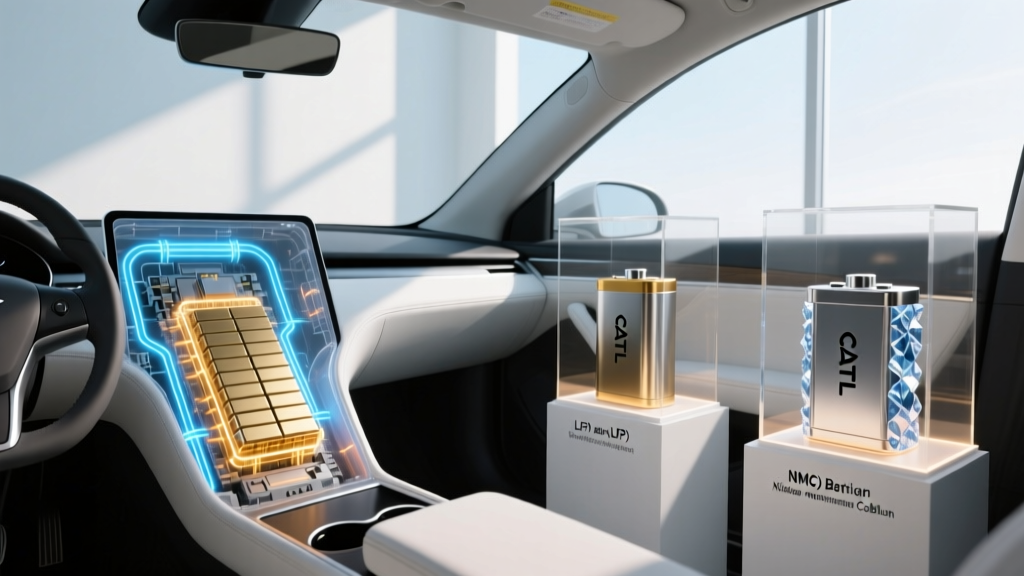
Not all EV batteries are built from the same materials. The two dominant cathode chemistries in 2026 are LFP (lithium iron phosphate) and NMC/NCA (nickel manganese cobalt / nickel cobalt aluminum). Each has distinct strengths that make it better suited to different use cases.
| Attribute | LFP (LiFePO₄) | NMC / NCA |
|---|---|---|
| Energy density | Lower (~160 Wh/kg cell-level) | Higher (~250–300 Wh/kg cell-level) |
| Cycle life | 3,000–5,000+ cycles | 1,000–2,000 cycles |
| Cold-weather performance | Weaker — greater range loss below 32°F | Better low-temp discharge capability |
| Cost per kWh | Lower (no cobalt or nickel) | Higher (commodity metals exposure) |
| SoC tolerance | Can be charged to 100% daily without harm | Best kept 20–80% for longevity |
| Thermal stability | Excellent — highly resistant to thermal runaway | Good — requires robust BMS and cooling |
| Typical applications | Tesla Model 3 RWD, Ford Mustang Mach-E Select (LFP option), BYD models | Long-range / performance trims, most luxury EVs |
Which is better? It depends on your priorities. If you want maximum range in a single charge and don't mind managing state of charge carefully, NMC/NCA delivers higher energy density. If you prioritize longevity, lower cost, and the simplicity of charging to 100% daily, LFP is the stronger choice — especially for commuters and high-mileage drivers. The trade-off is that LFP packs are heavier for the same kWh capacity, and they lose more range in freezing temperatures.
What Does the EV Battery Warranty Cover?
Federal law mandates a minimum EV battery warranty of 8 years / 100,000 miles (10 years / 150,000 miles in California Air Resources Board states). Most manufacturers meet or exceed this floor, and warranties cover capacity loss below a defined threshold — typically 70% of original capacity.
| Manufacturer | Warranty Period | Capacity Threshold | Notes |
|---|---|---|---|
| Tesla (Model 3/Y RWD — LFP) | 8 yr / 100,000 mi | 70% | Long Range/Performance: 8 yr / 120,000 mi |
| Hyundai / Kia | 10 yr / 100,000 mi | 70% | Among the longest coverage in the industry |
| Ford (Mach-E, F-150 Lightning) | 8 yr / 100,000 mi | 70% | Covers battery and hybrid/electric components |
| General Motors (Ultium platform) | 8 yr / 100,000 mi | 70% | Modular pack allows section replacement |
| BMW (iX, i4) | 8 yr / 100,000 mi | 70% | Optional extended coverage available |
| Rivian | 8 yr / 175,000 mi | 70% | Higher mileage cap reflects truck/SUV positioning |
What's covered: Defects in materials or workmanship, and capacity loss below the stated threshold under normal use. What's typically excluded: Damage from accidents, flooding, improper modifications, or use outside manufacturer guidelines (e.g., repeated 100% charges on NMC packs contrary to manual recommendations). Always read the specific warranty booklet for your model.
For context on federal incentive rules that interact with battery sourcing, the IRS §30D clean vehicle credit includes battery component and critical mineral sourcing requirements that affect which EVs qualify for up to $7,500 — a factor worth checking before purchase.
EV Battery Replacement Costs: What to Expect
Out-of-warranty battery replacement remains the single largest potential expense in EV ownership. However, the probability of needing a full pack replacement within the first 10–15 years is low for modern liquid-cooled vehicles. When replacement is needed — typically due to a manufacturing defect, physical damage, or extreme degradation on older air-cooled models — costs vary dramatically by pack size and design.
| Vehicle | Pack Size | Estimated Replacement Cost (2026) | Notes |
|---|---|---|---|
| Nissan Leaf (40 kWh) | 40 kWh | $6,500–$9,000 | Older air-cooled packs; refurbished options available |
| Chevrolet Bolt EV (65 kWh) | 65 kWh | $9,000–$14,000 | GM recall replaced many packs at no cost |
| Tesla Model 3 (LFP, ~60 kWh) | 60 kWh | $10,000–$13,000 | LFP packs less commonly replaced due to longevity |
| Tesla Model S/X (100 kWh) | 100 kWh | $15,000–$22,000 | Refurbished packs available for ~$12,000–$15,000 |
| Ford F-150 Lightning (Extended Range, 131 kWh) | 131 kWh | $20,000–$28,000 | Largest consumer packs; modular repair may reduce cost |
| Hyundai Ioniq 5 (77.4 kWh) | 77.4 kWh | $11,000–$16,000 | E-GMP platform supports module-level service |
Costs include the battery pack and labor but can vary by region, dealership vs. independent shop, and whether OEM-new or refurbished/remanufactured packs are used. The trend is downward: battery pack prices fell from over $1,000/kWh in 2010 to approximately $115–$130/kWh at the cell level by late 2025, according to BloombergNEF. Pack-level costs (including housing, BMS, cooling) remain higher, but continued declines are expected.
When is replacement typically needed? For most 2020+ liquid-cooled EVs, the answer is "probably never during original ownership." The vehicles most likely to need replacement are older air-cooled models (early Nissan Leafs, first-gen Fiat 500e) or vehicles with physical battery damage from road debris or collisions.
Factors That Affect EV Battery Life
While modern packs are robust, owner behavior and environmental conditions influence how quickly capacity degrades. Understanding these factors lets you optimize for longevity.
Battery Care Checklist
- Limit DC fast charging frequency. Occasional road-trip fast charging is fine, but daily reliance on 150+ kW DCFC accelerates degradation. Use Level 2 home charging as your primary method.
- Manage state of charge (SoC). For NMC/NCA packs, set your charge limit to 80% for daily use. LFP packs can (and should) be charged to 100% regularly to help the BMS calibrate cell balance.
- Avoid prolonged storage at extremes. Don't leave your EV sitting at 100% SoC or below 10% SoC for weeks. If storing, aim for 40–60% SoC.
- Precondition in extreme temperatures. Use your EV's preconditioning feature before fast charging in cold weather. This warms the battery to its optimal charging temperature (~70–95°F), protecting cells and improving charge speed.
- Park in shade or a garage when possible. Sustained exposure to 100°F+ ambient heat accelerates calendar degradation, especially in vehicles without active thermal management while parked.
- Keep firmware updated. Manufacturers periodically release BMS updates that optimize charging curves and thermal strategies.
The single most impactful habit is avoiding daily 100% charges on NMC/NCA vehicles. Tesla's own data shows that vehicles routinely charged to 100% degrade noticeably faster than those held to 80–90%. LFP owners can skip this concern — their chemistry tolerates full charges without measurable harm.
How to Check and Monitor Battery Health (SoH)
State of Health (SoH) is the percentage of original capacity your battery currently holds. A new pack starts at 100% SoH; at 70% SoH, you've lost 30% of your original range. Monitoring SoH helps you plan for the future and identify abnormal degradation early.
Built-in Methods
- Tesla: The Service menu (accessible via the car's touchscreen) displays estimated battery health. Third-party apps like Tessie or TeslaFi log detailed SoH estimates over time using energy-in/energy-out calculations.
- Hyundai/Kia: The EV menu in the instrument cluster or infotainment system shows battery health percentage on newer models (2022+).
- General Motors (Ultium): The myChevrolet/myCadillac app provides battery health status, and dealerships can run a full diagnostic.
- BMW: The iDrive system includes a battery health indicator; dealerships provide a certified SoH report on request.
Third-Party and DIY Methods
- OBD-II dongles + apps: Tools like the OBDLink MX+ paired with apps such as Leaf Spy (Nissan Leaf), ABRP (A Better Route Planner), or Car Scanner can read battery health parameters from the BMS.
- Manual calculation: Fully charge to a known SoC, drive a measured distance, note energy consumed, and compare against original pack capacity. Repeated measurements over time reveal degradation trends.
- Dealership diagnostics: Most manufacturers can perform a standardized battery health check, often free during warranty service visits. Request one if you're approaching a warranty mileage threshold and suspect abnormal loss.
Emerging Battery Technology: What's Next
The battery landscape continues to evolve. While today's lithium-ion packs are mature and reliable, several next-generation technologies are in development:
Solid-state batteries replace the liquid electrolyte with a solid material, promising higher energy density (potentially 400+ Wh/kg at the cell level), faster charging, and improved safety. Toyota, Samsung SDI, and QuantumScape are leading development. Toyota has announced solid-state prototypes targeting 2027–2028 production, but mass-market availability at competitive pricing is realistically a 2029–2032 proposition. Current prototypes face challenges with cycle life, manufacturing cost, and interfacial resistance.
Silicon-dominant anodes (from companies like Sila Nanotechnologies and Group14) increase energy density by replacing graphite anodes with silicon composites. Mercedes-Benz's EQG (G-Class EV) is expected to be among the first production vehicles using silicon-anode cells. This technology is closer to market than solid-state, with initial production applications appearing in 2025–2027.
Sodium-ion batteries use abundant, low-cost sodium instead of lithium. CATL has begun production of sodium-ion cells for lower-range urban EVs in China. Energy density is significantly lower than lithium-ion, limiting sodium-ion to budget city cars and stationary storage for the foreseeable future.
For buyers in 2026, today's LFP and NMC packs represent proven, well-understood technology with strong longevity records. There is no practical reason to delay a purchase waiting for solid-state — current batteries will serve most owners well for the life of the vehicle.
EV Battery FAQ
How long do EV batteries last in years and miles?
Most modern liquid-cooled EV batteries (2018+) retain 85–95% capacity at 100,000 miles and are designed to function for 15–20 years or 200,000+ miles before reaching 70% capacity. Early air-cooled packs (pre-2018 Nissan Leaf) degraded faster, especially in hot climates.
How much does an EV battery cost to replace?
Out-of-warranty replacement costs range from approximately $6,500 for a 40 kWh Nissan Leaf pack to $20,000–$28,000 for a 131 kWh Ford F-150 Lightning Extended Range pack. Most mid-size EVs (60–80 kWh) fall in the $10,000–$16,000 range. Refurbished packs can reduce cost by 20–40%.
What does the EV battery warranty cover?
Federal minimum is 8 years / 100,000 miles (10/150,000 in CARB states). Warranties cover defects and capacity loss below ~70% of original capacity. Exclusions typically include accident damage, improper modifications, and failure to follow manufacturer charging guidelines.
How do I check my EV battery's State of Health?
Many EVs display SoH in the infotainment system or companion app. Third-party OBD-II tools (Leaf Spy, Car Scanner) can read BMS data directly. Dealerships can run certified health checks. For Tesla, apps like Tessie track SoH over time using energy data.
LFP vs NMC — which battery chemistry is better?
LFP offers longer cycle life (3,000–5,000+ cycles), lower cost, better thermal safety, and tolerance for daily 100% charges — ideal for commuters and high-mileage drivers. NMC/NCA delivers higher energy density (more range per pound) and better cold-weather performance — ideal for long-range and performance applications. Neither is universally "better"; the right choice depends on your driving patterns and climate.
Does fast charging damage my EV battery?
Occasional DC fast charging (road trips, occasional top-ups) has minimal impact. Daily reliance on high-power DCFC (150+ kW) does accelerate degradation compared to Level 2 charging. Modern BMS systems manage heat and taper charge rates to protect cells, but Level 2 home charging remains the gentlest method for daily use.
Is an EV battery like the 12V battery in my old gas car?
No. Your 2005 Chevy Trailblazer battery was a 12V lead-acid unit costing $150–$250 and lasting 3–5 years. An EV traction battery is a high-voltage lithium-ion pack (400V–800V, 60–130 kWh) costing $10,000–$28,000 and designed to last 15–20 years. EVs also have a separate 12V auxiliary battery for accessories, which is similar to a conventional car battery and may need replacement every 4–6 years.
For authoritative efficiency and range data on any specific EV model, consult fueleconomy.gov, the EPA's official source for MPGe ratings, range estimates, and energy consumption figures. For the latest warranty and incentive details, check the manufacturer's spec page and IRS clean vehicle credit guidance.