How Long Do EV Batteries Actually Last?
The single biggest fear for first-time EV buyers isn't range or charging speed — it's the battery. Specifically: how long will it last, what happens when it degrades, and could a replacement cost more than the car is worth?
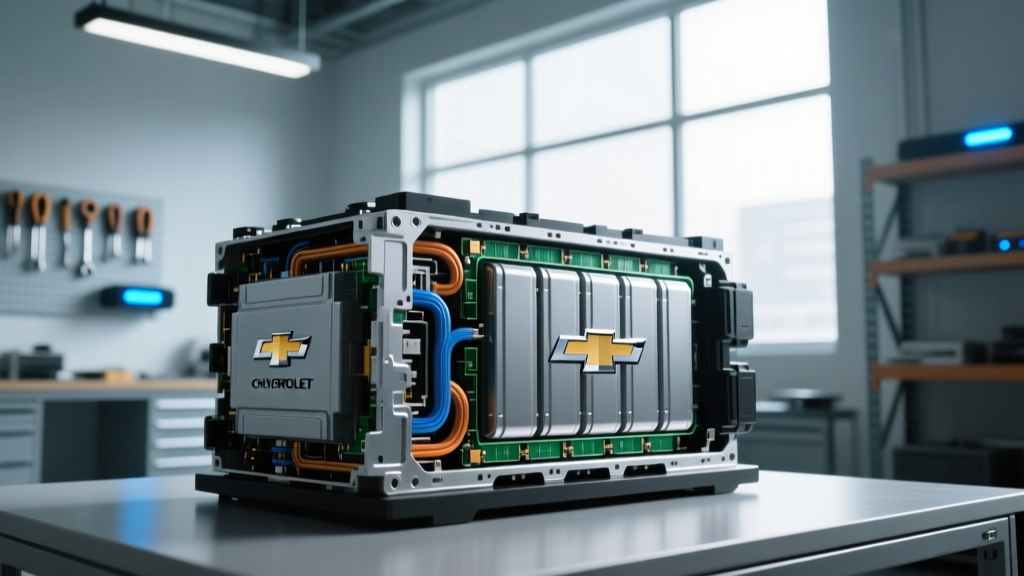
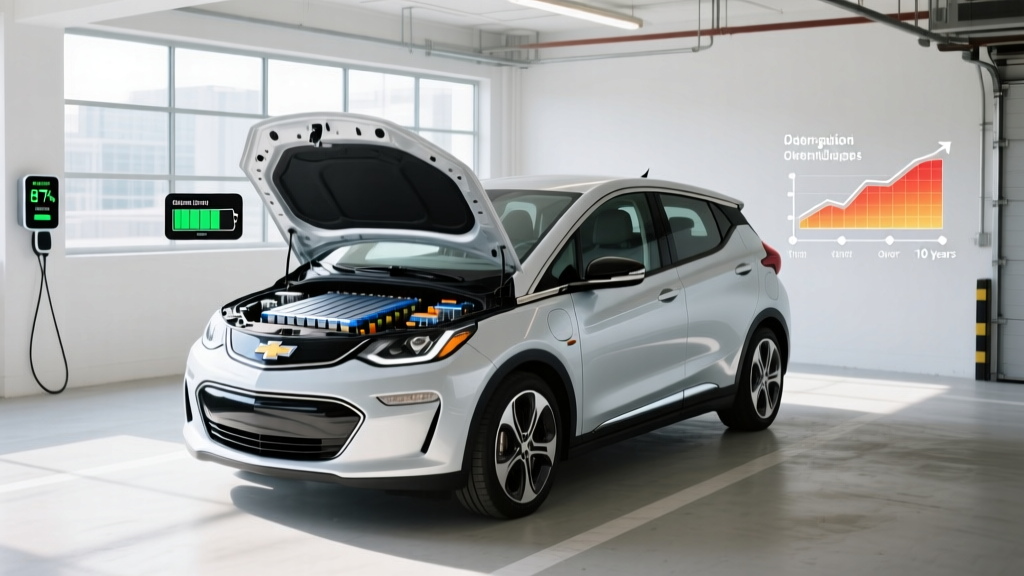
The data is reassuring. Most modern EV traction batteries (the high-voltage pack that powers the drivetrain, not the 12V auxiliary battery that runs accessories) are engineered to outlast the vehicle itself. Real-world fleet data from Tesla, Hyundai/Kia, and independent testing labs show that the average lithium-ion EV battery retains 85–92% of its original capacity after 100,000 miles, depending on chemistry and usage patterns.
To put that in perspective: the average American driver covers roughly 13,500 miles per year according to the Federal Highway Administration. That means most EV batteries will still hold 85%+ of their original capacity at the 7–8 year mark — well within the federally mandated warranty period.
If you've been searching for something like "1 battery place NY" or local EV battery service centers, you're not alone — but the reality is that full battery replacements remain rare. The vast majority of EV owners will sell or trade their vehicle long before the traction battery needs replacement. When issues do arise, they're more often individual module or cell failures that a qualified high-voltage technician can address without replacing the entire pack.
LFP vs NMC/NCA: Which Battery Chemistry Is Right for You?
Not all EV batteries are created equal. The two dominant chemistries in 2026 are LFP (Lithium Iron Phosphate) and NMC/NCA (Nickel Manganese Cobalt / Nickel Cobalt Aluminum). Each has distinct trade-offs that affect range, longevity, charging behavior, and cost.
| Attribute | LFP (Lithium Iron Phosphate) | NMC / NCA (Nickel-based) |
|---|---|---|
| Energy Density | Lower (~160–180 Wh/kg cell-level) | Higher (~220–300 Wh/kg cell-level) |
| Cycle Life | 3,000–5,000+ cycles to 80% SoH | 1,000–2,000 cycles to 80% SoH |
| Cold-Weather Performance | Moderate — greater range loss below freezing | Better low-temp discharge capability |
| Cost per kWh | Lower — no cobalt or nickel | Higher — commodity metal exposure |
| Charging to 100% Daily | Recommended (flat voltage curve requires it for BMS accuracy) | Not recommended for daily use (accelerates degradation) |
| Thermal Stability | Excellent — inherently resistant to thermal runaway | Good — requires more robust thermal management |
| Typical Applications (2026) | Tesla Model 3/Y RWD, Ford Mustang Mach-E Select (LFP trims), BYD models, Rivian Standard | Tesla Long Range/Performance, Hyundai Ioniq 5/6, Kia EV6/EV9, GM Ultium-based vehicles |
Which is better? It depends on your use case. If you commute daily, charge at home, and want maximum cycle life with lower cost, LFP is the pragmatic choice. If you need maximum range per charge, frequently road-trip, or live in a cold climate where winter range loss compounds, NMC/NCA delivers better energy density and cold-weather performance.
One critical behavioral difference: LFP batteries have a very flat voltage discharge curve, which means the Battery Management System (BMS) struggles to estimate State of Charge accurately unless you periodically charge to 100%. Most manufacturers recommend charging LFP packs to 100% at least once per week. NMC/NCA packs, by contrast, degrade faster when held at 100% — daily charging to 80% is the recommended practice.
Battery Degradation: What the Real Data Shows
Battery degradation is not linear. Most EV batteries experience a steeper capacity drop in the first 1–2 years (roughly 2–5%), then settle into a very gradual, nearly linear decline for the remainder of their life. This pattern is consistent across chemistries, though the magnitude differs.
Typical Degradation Curves by Chemistry
| Milestone | LFP Pack Retention | NMC/NCA Pack Retention | Source Context |
|---|---|---|---|
| Year 1 / ~15,000 mi | 96–98% | 94–97% | Early formation losses |
| Year 3 / ~45,000 mi | 93–96% | 90–94% | Steady-state decline |
| Year 5 / ~75,000 mi | 90–94% | 87–92% | Approaching mid-life |
| Year 8 / ~120,000 mi | 86–92% | 82–89% | Within warranty period |
| Year 10 / ~150,000 mi | 83–90% | 78–86% | Post-warranty for most |
Note: Figures are aggregated from fleet data published by Geotab, Recurrent Auto, and manufacturer warranty thresholds. Individual results vary based on climate, charging habits, and thermal management system quality.
A key insight that most buyers miss: a battery at 85% State of Health still provides substantial range. Consider a vehicle with an EPA-rated 310-mile range when new. At 85% SoH, that's still ~263 miles — more than adequate for the vast majority of daily driving and even most road trips with a single charge stop.
What the Battery Warranty Actually Covers
Federal law mandates that EV battery warranties cover a minimum of 8 years / 100,000 miles (whichever comes first). In California and states that have adopted CARB (California Air Resources Board) emissions standards, the requirement extends to 10 years / 150,000 miles. Most manufacturers meet or exceed these minimums.
2026 Battery Warranty Comparison by Manufacturer
| Manufacturer | Warranty Period | Capacity Retention Threshold | Notes |
|---|---|---|---|
| Tesla (Model 3/Y RWD — LFP) | 8 yr / 100,000 mi | 70% | LFP packs historically exceed threshold by wide margin |
| Tesla (Model 3/Y LR/Perf — NMC) | 8 yr / 120,000 mi | 70% | Higher mileage cap on Long Range |
| Hyundai / Kia (E-GMP platform) | 10 yr / 100,000 mi | 70% | Among the longest coverage periods |
| GM (Ultium-based: Equinox EV, Blazer EV, Silverado EV) | 8 yr / 100,000 mi | 70% | Some fleet/commercial trims may differ |
| Ford (Mustang Mach-E, F-150 Lightning) | 8 yr / 100,000 mi | 70% | LFP trims on Mach-E Select available |
| Rivian (R1T, R1S) | 8 yr / 175,000 mi | 70% | Highest mileage threshold in segment |
| BMW (i4, iX, i7) | 8 yr / 100,000 mi | 70% | Modular pack design allows partial replacement |
The critical detail is the capacity retention threshold. Most warranties guarantee that the battery will retain at least 70% of its original usable capacity during the warranty period. If your 82 kWh (usable) battery drops below ~57.4 kWh of usable capacity within the warranty window, the manufacturer is obligated to repair or replace it — typically by swapping in a refurbished pack that meets the threshold, not necessarily a brand-new one.
Warranties cover defects and abnormal degradation. They generally do not cover damage from accidents, flooding, modifications, or use outside manufacturer guidelines (e.g., repeated 100% charging on NMC without preconditioning). Read your specific warranty booklet — the exclusions section matters.
How Much Does an EV Battery Replacement Cost?
This is the question that generates the most anxiety — and the most misinformation. Let's ground it in actual numbers.
EV Battery Replacement Cost Ranges (2026)
| Vehicle Category | Battery Size (usable kWh) | Full Pack Replacement (Parts + Labor) | Module-Level Repair |
|---|---|---|---|
| Compact EV (e.g., Chevy Bolt EV/EUV) | 60–65 kWh | $8,000 – $12,000 | $1,500 – $3,500 |
| Midsize sedan/crossover (e.g., Tesla Model 3, Hyundai Ioniq 5) | 72–84 kWh | $10,000 – $16,000 | $2,000 – $5,000 |
| Large SUV/truck (e.g., F-150 Lightning, Rivian R1T, GMC Sierra EV) | 100–200+ kWh | $15,000 – $28,000+ | $3,000 – $7,000 |
| Luxury EV (e.g., BMW iX, Mercedes EQS, Lucid Air) | 90–118 kWh | $14,000 – $25,000+ | $3,000 – $6,000 |
Several important context points:
- Most owners never pay this. Battery failures within the warranty period are covered. Out-of-warranty full replacements are uncommon because most batteries retain 80%+ capacity even at 150,000+ miles.
- Module-level repair is increasingly standard. Modern packs are composed of individually replaceable modules. If 2 of 16 modules fail, a qualified high-voltage shop can replace just those modules for a fraction of a full-pack cost. This is where searching for a qualified EV battery service center — whether in New York or elsewhere — becomes relevant.
- Prices continue to fall. Battery pack prices have dropped from over $1,000/kWh in 2010 to roughly $110–$140/kWh at the cell level in 2026, per BloombergNEF data. Full-pack replacement costs will continue declining as the supply of refurbished and second-life packs grows.
- Refurbished packs are a viable option. Independent EV service centers and some OEMs offer refurbished battery packs at 40–60% of new-pack cost, which is often the most economical path for an out-of-warranty vehicle.
Factors That Accelerate (or Preserve) Battery Life
Your daily habits have a measurable impact on long-term battery health. Here's what the data supports:
Battery Longevity Best Practices
- Avoid sustained 100% State of Charge (NMC/NCA): Charge to 80% for daily use; reserve 100% for road trips. LFP owners: follow manufacturer guidance — most recommend periodic 100% charges for BMS calibration.
- Minimize DC fast charging frequency: Occasional DCFC is fine, but daily 150–350 kW fast charging accelerates degradation by an estimated 1–3% over 5 years compared to Level 2 home charging. The heat generated at high C-rates stresses cells.
- Precondition before fast charging: Most modern EVs do this automatically when you navigate to a charger. Preconditioning warms the battery to its optimal charging temperature (~25–35°C), reducing lithium plating risk and improving charge speed.
- Avoid extreme State of Charge in extreme temperatures: Don't leave the car sitting at 100% SoC in summer heat or below 10% SoC in sub-zero cold for extended periods. The combination of temperature extremes and high/low SoC accelerates calendar degradation.
- Use Level 2 home charging as your primary method: A 240V Level 2 charger at 7–11 kW is the sweet spot for battery health — slow enough to minimize heat, fast enough for overnight replenishment.
- Keep the vehicle plugged in during extreme cold: The thermal management system will maintain the battery at a safe temperature using grid power rather than draining the pack.
How to Check and Monitor Battery Health (State of Health)
State of Health (SoH) is the percentage of original battery capacity that remains usable. Monitoring it helps you track degradation, plan for warranty claims, and maximize resale value.
Method 1: Built-In Vehicle Displays
Some manufacturers include a battery health indicator in the infotainment or instrument cluster. Tesla does not natively display SoH percentage, but you can estimate it by comparing your current range at 100% charge to the original EPA rating. Hyundai/Kia's infotainment system on E-GMP vehicles includes a battery health readout in the EV settings menu. GM's Ultium-based vehicles provide battery health data through the myBrand app.
Method 2: OBD-II Diagnostic Tools
Third-party OBD-II adapters paired with apps like Car Scanner, LeafSpy (Nissan Leaf), or Scan My Tesla can read the BMS-reported SoH directly. This is the most accurate consumer-accessible method. Expect to spend $30–$60 on a compatible adapter.
Method 3: Dealer or Independent EV Service Center
A dealership or qualified high-voltage service center can perform a full battery health diagnostic, often for $50–$150. This is recommended before purchasing a used EV or if you suspect abnormal degradation. If you're looking for an EV battery diagnostic specialist — whether in the New York area or any metro — seek shops certified for high-voltage systems with manufacturer diagnostic access.
Method 4: Third-Party Battery Health Reports
Services like Recurrent offer battery health reports that compare your vehicle's degradation to a database of similar vehicles, providing a percentile ranking. Some used-EV marketplaces now include these reports in listings.
Emerging Battery Technology: Solid-State and Silicon Anodes
The next generation of EV batteries is in active development, but it's critical to separate announced timelines from showroom reality.
Solid-state batteries replace the liquid electrolyte with a solid material (ceramic, sulfide, or polymer), promising higher energy density (~400–500 Wh/kg cell-level), faster charging, and improved safety. Toyota has announced limited production of solid-state-equipped vehicles for 2027–2028, initially in low volumes and likely in Japan-first models. Samsung SDI, QuantumScape, and Solid Power are also targeting late-2020s production. Realistically, widespread solid-state adoption in affordable, high-volume US-market EVs is a 2029–2032 proposition.
Silicon anode technology is closer to market. By replacing some or all of the graphite anode with silicon, manufacturers can increase energy density by 20–40% without changing the cathode chemistry. Sila Nanotechnologies and Group14 Technologies are supplying silicon anode materials to battery manufacturers, with initial production vehicles expected in the 2026–2028 timeframe. This is an incremental improvement rather than a revolution, but it meaningfully extends range without increasing pack weight.
Sodium-ion batteries are emerging as a low-cost alternative for shorter-range, budget-oriented EVs. CATL has begun production, and several Chinese-market vehicles already use sodium-ion packs. US-market adoption is likely in the 2027–2029 window, primarily in fleet and urban commuter vehicles where 150–200 miles of range is sufficient.
None of these technologies are available in production vehicles you can buy in the US today. If a purchase decision is on your horizon within the next 1–2 years, current-generation LFP and NMC/NCA packs are mature, well-warrantied, and proven in millions of vehicles on the road.
Frequently Asked Questions
How long do EV batteries last in years and miles?
Most modern EV batteries are designed to retain 70–85% of their original capacity after 100,000–150,000 miles (roughly 8–12 years of average driving). LFP chemistries typically outlast NMC/NCA in cycle life. Many batteries remain functional well beyond 200,000 miles, albeit with reduced range.
How much does it cost to replace an EV battery?
Full pack replacements range from roughly $8,000 for smaller packs (60–65 kWh) to $25,000+ for large truck/luxury packs (100–200+ kWh). However, most replacements involve individual modules ($1,500–$7,000) rather than full packs, and most failures within 8 years / 100,000 miles are covered under warranty.
What does the EV battery warranty cover?
Federal law requires a minimum of 8 years / 100,000 miles of battery coverage (10 years / 150,000 miles in CARB states). The warranty guarantees the battery will retain at least 70% of its original usable capacity. Defects and abnormal degradation are covered; damage from accidents, modifications, or misuse typically is not.
How do I check my EV's battery health?
You can estimate SoH by comparing current 100%-charge range to the original EPA rating, use an OBD-II adapter with an app like Car Scanner or Scan My Tesla, visit a dealer or EV-specialist service center for a diagnostic, or use a third-party service like Recurrent for a comparative health report.
LFP vs NMC — which battery chemistry should I choose?
Choose LFP if you prioritize longevity (3,000–5,000+ cycle life), lower cost, and daily home charging — and don't mind slightly lower range and greater cold-weather range loss. Choose NMC/NCA if you need maximum range, better cold-weather performance, and frequent road-trip capability. Both chemistries are proven and well-warrantied in 2026 model-year vehicles.
Does fast charging damage my EV battery?
Occasional DC fast charging has minimal impact. Daily DCFC use can accelerate degradation by an estimated 1–3% over 5 years compared to exclusive Level 2 charging. Modern thermal management systems mitigate much of this, but Level 2 home charging remains the healthiest primary charging method.
Should I be worried about my EV battery dying in cold weather?
Cold weather temporarily reduces range (typically 15–30% loss at 20°F, more below 0°F) due to increased internal resistance and cabin heating demand. This is not permanent degradation — range recovers when temperatures rise. Preconditioning the battery while plugged in minimizes cold-weather losses and protects long-term health.
Sources: EPA fueleconomy.gov, manufacturer warranty documentation, IRS §30D clean vehicle credit guidelines, Geotab fleet battery health data, Recurrent Auto degradation studies.