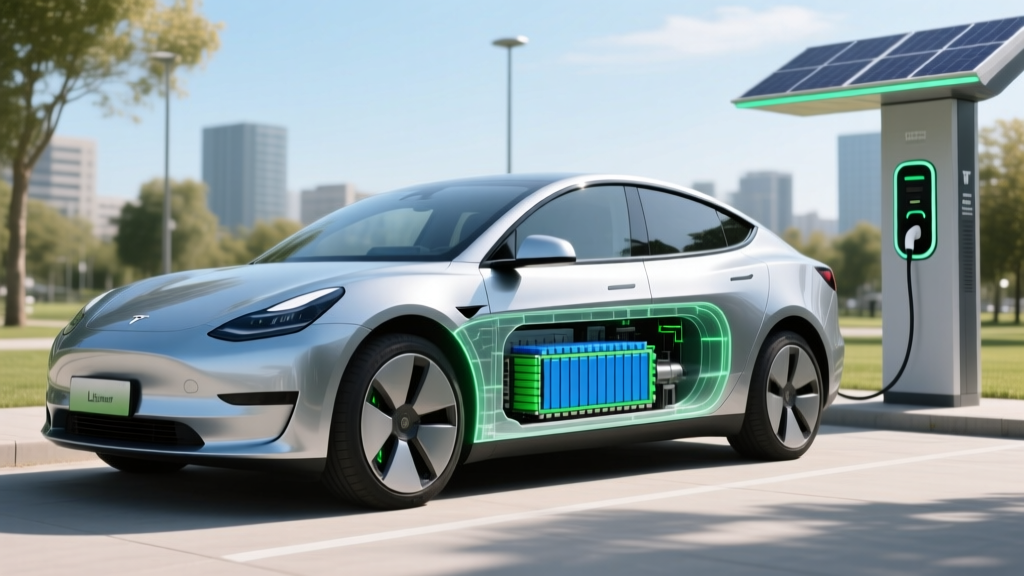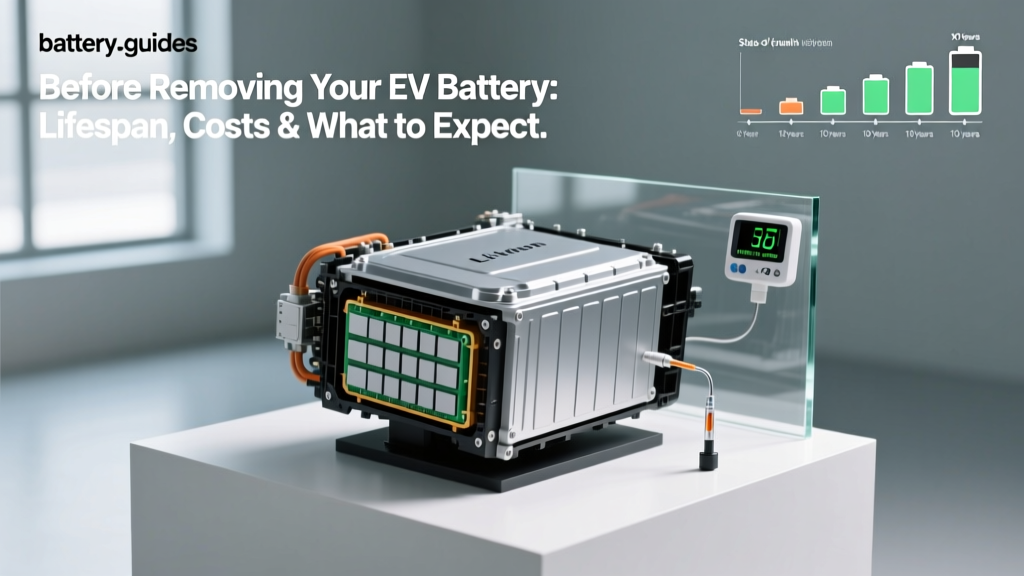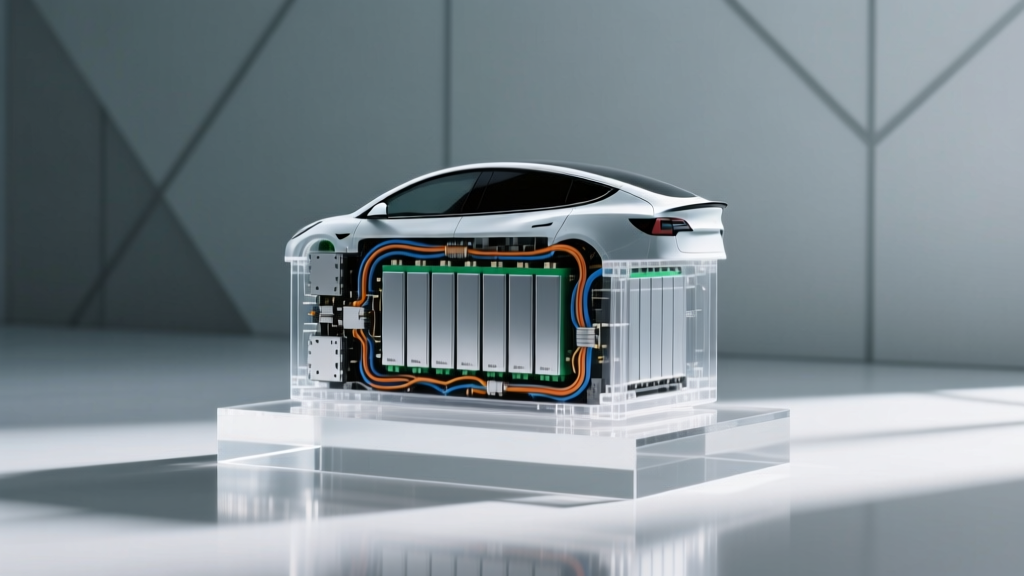
If you're researching electric vehicles, one question almost always surfaces: what happens when the battery wears out? The high-voltage traction battery is the single most expensive component in any EV, and its longevity directly determines the vehicle's usable life and resale value. The good news, backed by a decade of real-world data, is that modern EV batteries are lasting far longer than early skeptics predicted — routinely outlasting the cars they power.
This guide breaks down exactly how long EV batteries last, what degrades them, how much a replacement actually costs, and how the way you charge your car's battery day-to-day can add or subtract years of useful life. We'll also compare the two dominant chemistries — LFP and NMC/NCA — so you can pick the pack that matches your driving habits.
How Long Do EV Batteries Actually Last?
The short answer: most modern lithium-ion traction batteries will deliver 15 to 20 years of service before reaching the industry-standard 70% capacity-retention threshold. In mileage terms, that translates to roughly 150,000 to 200,000 miles for the average driver covering 12,000–15,000 miles per year.
Data from fueleconomy.gov and long-term fleet studies by Recurrent Auto show that the average EV battery loses approximately 5–8% of its original capacity in the first two years (the "initial drop" phase), then degrades at a much slower, nearly linear rate of about 1–2% per year thereafter. Tesla's 2023 Impact Report noted that its Model S and Model X batteries retained roughly 88% of original capacity after 150,000 miles — and those vehicles use older NCA chemistry.
- Year 1–2: 5–8% capacity loss (initial formation)
- Year 3–5: Additional 3–5% loss (~1–1.5%/year)
- Year 6–10: Additional 5–8% loss (~1–1.5%/year)
- Year 10+: Gradual taper; most packs still above 75% SoH at 200,000 miles
Source: Recurrent Auto fleet data (2024), Tesla Impact Report 2023. Individual results vary by chemistry, climate, and charging habits.
Critically, "end of life" for an EV battery doesn't mean the car stops running. A battery at 70% state of health (SoH) still functions — it simply offers reduced range. A vehicle originally rated at 300 miles of EPA range would deliver roughly 210 miles at that threshold, which remains practical for most daily driving.
LFP vs. NMC/NCA: Which Battery Chemistry Is Right for You?
The two dominant cathode chemistries in today's EVs are lithium iron phosphate (LFP) and nickel manganese cobalt (NMC) or nickel cobalt aluminum (NCA). Each has distinct trade-offs that affect range, longevity, cost, and cold-weather behavior.
| Attribute | LFP (Lithium Iron Phosphate) | NMC / NCA |
|---|---|---|
| Energy Density | Lower (~160 Wh/kg cell-level) | Higher (~230–260 Wh/kg cell-level) |
| Cycle Life | 3,000–5,000+ cycles to 80% SoH | 1,000–2,000 cycles to 80% SoH |
| Cold-Weather Performance | More range loss in freezing temps (~35–40% reduction) | Better cold performance (~25–30% reduction) |
| Recommended Daily SoC | Can charge to 100% daily without harm | Best kept at 80% daily; 100% for trips only |
| Cost | Lower (no cobalt or nickel) | Higher (cobalt/nickel commodity exposure) |
| Thermal Stability | Excellent — very low thermal runaway risk | Good with active thermal management |
| Common In | Tesla Model 3/Y RWD, Ford Mustang Mach-E Select (2025+), BYD models | Tesla Long Range/Performance, Hyundai Ioniq 5/6, Kia EV6/EV9, most premium EVs |
Which is better? It depends on your use case. If you primarily drive in moderate climates, commute daily, and want maximum cycle life with the simplicity of charging to 100% every night, LFP is the superior choice. If you need maximum range per charge, regularly drive in freezing weather, or tow heavy loads, NMC/NCA's higher energy density and better cold-weather efficiency make it the better fit.
What Does the EV Battery Warranty Actually Cover?
Federal law in the United States mandates that EV battery warranties cover a minimum of 8 years or 100,000 miles (whichever comes first). In California Air Resources Board (CARB) states, that mandate extends to 10 years or 150,000 miles. Most manufacturers meet or exceed these minimums.
| Manufacturer | Coverage Period | Capacity Retention Threshold |
|---|---|---|
| Tesla | 8 yr / 100,000–120,000 mi (varies by model) | 70% |
| Hyundai / Kia | 10 yr / 100,000 mi | 70% |
| Ford | 8 yr / 100,000 mi | 70% |
| GM (Chevrolet, Cadillac) | 8 yr / 100,000 mi | 70% (60% for Bolt EV/EUV older models) |
| BMW | 8 yr / 100,000 mi | 70% |
| Rivian | 8 yr / 175,000 mi | 70% |
The key detail most buyers miss is the capacity retention threshold. Warranties don't guarantee zero degradation — they guarantee the battery won't fall below a specific percentage (typically 70%) of its original usable capacity within the coverage period. If your 75 kWh pack drops to 50 kWh usable (67%), the manufacturer must repair or replace it. If it drops to 53 kWh (71%), you're on your own.
Warranty coverage applies to defects and abnormal degradation. It does not cover damage from accidents, flooding, improper modifications, or failure to follow the manufacturer's recommended charging and maintenance guidelines. Always read the specific warranty booklet for your model.
How Much Does an EV Battery Replacement Cost?
This is the question that generates the most anxiety — and the most misinformation. Let's look at real numbers.
| Vehicle / Pack Size | Estimated Replacement Cost | Notes |
|---|---|---|
| Tesla Model 3 RWD (~57 kWh LFP) | $12,000–$16,000 | Refurbished packs often available at lower cost |
| Tesla Model Y LR (~75 kWh NMC) | $14,000–$20,000 | Structural pack; labor-intensive removal |
| Hyundai Ioniq 5 (~77.4 kWh NMC) | $15,000–$22,000 | E-GMP platform; module-level repair possible |
| Ford F-150 Lightning Ext. Range (~131 kWh NMC) | $25,000–$35,000 | Largest consumer pack; highest cost |
| Chevrolet Equinox EV (~85 kWh NMC) | $14,000–$19,000 | Ultium modular architecture allows partial replacement |
Context matters enormously here. First, the vast majority of EV batteries never need replacement during the vehicle's normal ownership life. The data consistently shows that packs reaching the 70% threshold are the exception, not the rule, within the first 10–15 years. Second, battery costs per kWh have fallen from over $1,000/kWh in 2010 to roughly $115–$130/kWh at the cell level in 2025, and that trend continues. Third, many manufacturers and third-party shops now offer module-level repairs — replacing only the degraded modules within a pack rather than the entire unit — for a fraction of a full-pack swap.
If you're buying a used EV outside of warranty, a pre-purchase battery health check (typically $100–$200 at a qualified shop) is strongly recommended. The NHTSA also maintains safety recall information that may cover battery-related defects at no cost.
What Affects EV Battery Lifespan? The Five Key Factors
Not all miles are created equal when it comes to battery wear. Here are the factors that most significantly accelerate or decelerate degradation:
- Limit DC fast charging to road trips. Frequent use of 150+ kW DC fast chargers generates sustained high heat, the primary accelerator of cell degradation. For daily charging, use Level 2 (7–11.5 kW) at home.
- Avoid sustained extremes of State of Charge. For NMC/NCA packs, keep daily SoC between 20–80%. For LFP packs, charging to 100% regularly is fine and even recommended for cell balancing.
- Precondition before fast charging. Most EVs automatically precondition the battery when you navigate to a charger. This brings the pack to optimal temperature (roughly 30–35°C), reducing stress and enabling faster charge acceptance.
- Minimize prolonged exposure to extreme heat. Parking in shade or a garage during summer months reduces calendar degradation. Sustained pack temperatures above 40°C (104°F) accelerate chemical aging.
- Don't let the car sit at 0% or 100% for extended periods. If storing the vehicle for weeks, set the charge limit to 50–60% and leave it plugged in so the thermal management system can maintain temperature.
Fast-charging frequency deserves special attention. A study by the Idaho National Laboratory found that vehicles charged exclusively with DC fast charging showed approximately 10% more degradation over 50,000 miles compared to those charged primarily on Level 2. That's meaningful but not catastrophic — and modern thermal management systems have narrowed the gap considerably. The practical takeaway: DC fast charge when you need it on road trips, but make Level 2 home charging your daily routine.
Cold weather doesn't permanently damage batteries the way heat does, but it does temporarily reduce range (the battery's internal resistance increases) and slows charging speeds. Using your EV's preconditioning feature before charging in winter is essential — without it, a pack at 20°F may accept charge at only 20–30 kW instead of its rated 150+ kW peak.
How to Monitor Your Battery's State of Health
State of Health (SoH) is expressed as a percentage of the battery's original usable capacity. A new battery is at 100% SoH; a battery that has degraded to hold only 70 of its original 75 kWh is at roughly 93% SoH.
Here's how to check it:
- In-vehicle displays: Tesla shows battery health in the service menu (available on 2023+ software). Hyundai/Kia's EV app provides estimated SoH. BMW's iDrive system includes a battery health indicator.
- OBD-II diagnostic tools: Devices like the OBDLink MX+ paired with apps such as EV Battery Health or ABRP can read the battery management system (BMS) directly for precise SoH figures.
- Dealer diagnostics: Any authorized service center can pull a full battery health report, typically during routine service visits. Request this explicitly — it's not always included automatically.
- Third-party services: Companies like Recurrent Auto offer free battery health reports that compare your pack's degradation against a fleet of identical vehicles.
Track your SoH every 3–6 months. If you notice a sudden drop (more than 3–4% in a short period), schedule a diagnostic check — it may indicate a failing module that can be repaired under warranty rather than a full-pack issue.
Emerging Battery Technology: What's Next?
Several next-generation battery technologies are in advanced development, though none are yet available in production consumer vehicles as of 2026:
Solid-state batteries replace the liquid electrolyte with a solid material (ceramic, sulfide, or polymer), promising higher energy density (potentially 400+ Wh/kg at the cell level), faster charging, and improved safety. Toyota has announced a solid-state battery targeting 2027–2028 production, initially in limited volumes for premium models. Samsung SDI and QuantumScape are also advancing solid-state cells with pilot production underway. Realistic timeline for broad consumer availability: 2029–2032.
Silicon-dominant anodes replace graphite anodes with silicon, which can store roughly 10 times more lithium ions per unit mass. Companies like Sila Nanotechnologies and Group14 are already supplying silicon-composite anode materials to battery manufacturers. Expect incremental adoption in 2026–2028 models, delivering 10–20% energy density improvements rather than a step-change revolution.
Sodium-ion batteries use abundant sodium instead of lithium, offering dramatically lower cost and excellent cycle life at the expense of lower energy density. CATL has begun production, and these cells are likely headed to entry-level and urban EVs where range demands are lower. Timeline: 2026–2028 for initial vehicle integration, primarily in Chinese-market models initially.
None of these technologies should influence a current buying decision. Today's lithium-ion packs — both LFP and NMC — are mature, reliable, and backed by substantial warranties. The right battery is the one that fits your driving pattern and budget now.
Frequently Asked Questions
How long do EV batteries last in years and miles?
Most modern EV batteries will last 15–20 years or 150,000–200,000 miles before degrading to the 70% capacity-retention threshold used by most manufacturers as the warranty benchmark. Many packs continue functioning well beyond that point with reduced range. Data from Recurrent Auto and manufacturer reports consistently show that the average EV battery retains 85–90% of its original capacity at the 100,000-mile mark.
How much does it cost to replace an EV battery?
Full replacement costs range from approximately $12,000 for smaller packs (like the Tesla Model 3 RWD's ~57 kWh LFP pack) to $25,000–$35,000 for large packs (like the Ford F-150 Lightning Extended Range's 131 kWh NMC pack). However, most EV batteries never require replacement during normal ownership. Module-level repairs, which address individual degraded cells within the pack, often cost $2,000–$5,000 and are increasingly available through both dealerships and independent EV shops.
What does the EV battery warranty cover?
Federal law requires a minimum of 8 years/100,000 miles of battery coverage (10 years/150,000 miles in CARB states). The warranty guarantees the battery will not fall below a specified capacity-retention threshold — typically 70% of original usable capacity — during the coverage period. It covers defects and abnormal degradation but not damage from accidents, misuse, or failure to follow manufacturer charging guidelines. Check your specific vehicle's warranty booklet for exact terms.
How do I check my EV battery's health?
You can check State of Health (SoH) through your vehicle's built-in diagnostic menu (available on most 2023+ models), via the manufacturer's mobile app, using an OBD-II diagnostic tool with EV-compatible software, or by requesting a battery health report from your dealer during a service visit. For a comparative analysis, free services like Recurrent Auto benchmark your battery against a fleet of identical vehicles.
Is LFP or NMC better for my EV?
LFP (lithium iron phosphate) is better if you want maximum cycle life, can charge to 100% daily without worry, live in a moderate climate, and prioritize lower cost and excellent thermal safety. NMC/NCA is better if you need maximum range per charge, regularly drive in freezing temperatures, or need the highest energy density for towing. Neither chemistry is universally superior — the right choice depends on your specific driving patterns and climate.
Does fast charging damage my EV battery?
Exclusive reliance on DC fast charging causes measurably more degradation — roughly 10% more over 50,000 miles according to Idaho National Laboratory research — compared to primarily Level 2 charging. However, occasional fast charging on road trips causes minimal additional wear, especially with modern thermal management systems that precondition the pack. The practical recommendation: use Level 2 at home for daily charging and reserve DC fast charging for road trips.
Should I charge my EV to 100% every night?
It depends on your battery chemistry. If your EV has an LFP battery (common in Tesla Model 3/Y RWD, some Ford and BYD models), charging to 100% daily is recommended — it helps the BMS balance cells and LFP chemistry tolerates full charge well. If your EV has an NMC or NCA battery (most Long Range, Performance, and premium models), set your daily charge limit to 80% and only charge to 100% when you need the full range for a trip.