If you've ever searched for a 2011 Mini Cooper battery, you were likely dealing with a conventional 12V lead-acid or AGM starter battery — a $150–$250 commodity part that cranks an internal-combustion engine. But that same search term now collides with a very different reality: the Mini Cooper SE, BMW's all-electric city car, and the broader question every EV shopper eventually asks — how long do electric vehicle batteries actually last, and what happens when they need replacing?
This guide bridges that gap. We'll use the evolution from the 2011 Mini Cooper's simple electrical system to today's high-voltage EV traction batteries as a lens to examine modern battery chemistry, degradation data, warranty coverage, replacement economics, and the emerging tech reshaping the next generation of EVs. Whether you're cross-shopping a 2026 Mini Cooper SE or a Tesla Model Y, the battery is the single most expensive component in the vehicle. Understanding it is non-negotiable.
The 2011 Mini Cooper Battery vs. Modern EV Traction Batteries
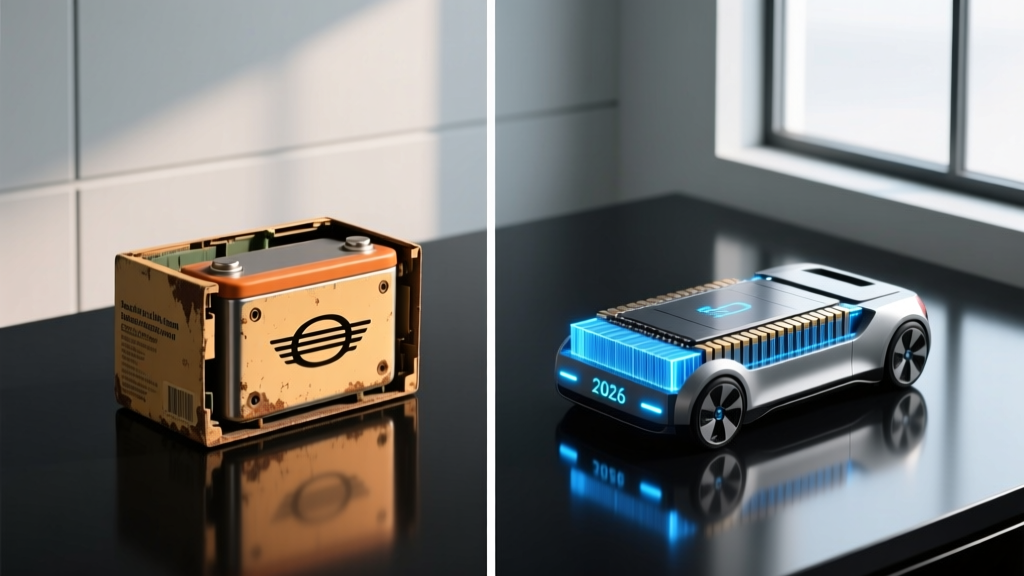
The 2011 Mini Cooper (hardtop, R56 generation) used a Group H5 or H6 12V battery producing roughly 55–70 Ah of capacity. Its job: start a 1.6L four-cylinder engine and run accessories. Replacement is trivial — pop the hood, swap the unit, and you're back on the road for under $200.
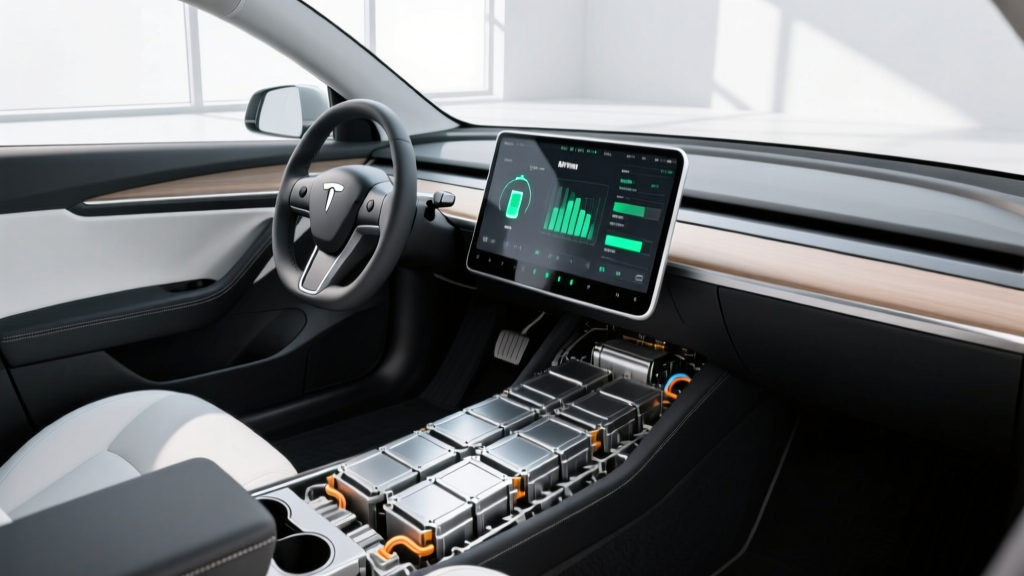
Compare that to a modern EV traction battery. The 2026 Mini Cooper SE, for example, packs a 54.2 kWh usable lithium-ion battery operating at roughly 350V nominal. It's not a single cell but a pack of hundreds of individually monitored cells with integrated thermal management. This isn't a battery you swap at an auto parts store — it's the structural and economic heart of the vehicle.
That distinction matters because many buyers coming from gas cars carry mental models from the 12V era. They assume a "battery replacement" is a minor maintenance item. For EVs, the traction battery is designed to last the life of the vehicle — but understanding what "life" means, and what protections exist, is where real purchase confidence comes from.
LFP vs. NMC/NCA: Choosing the Right Battery Chemistry
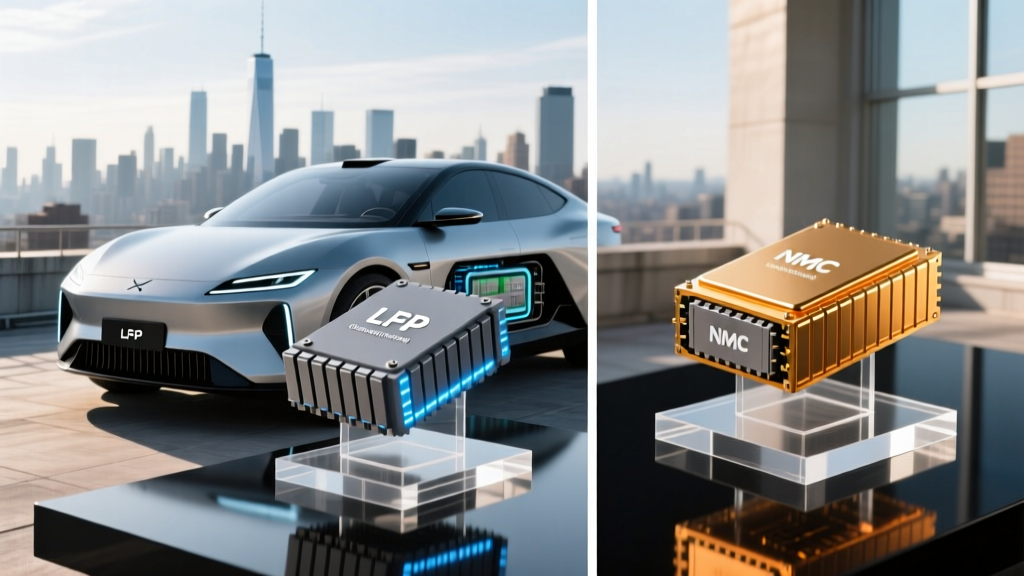
Modern EV batteries primarily use one of two cathode chemistries: LFP (lithium iron phosphate) or NMC/NCA (nickel manganese cobalt / nickel cobalt aluminum). The chemistry choice affects range, longevity, charging behavior, cold-weather performance, and cost.
| Attribute | LFP (Lithium Iron Phosphate) | NMC / NCA (Nickel-Based) |
|---|---|---|
| Energy Density | Lower (~160 Wh/kg cell-level) | Higher (~230–260 Wh/kg cell-level) |
| Cycle Life | 3,000–5,000+ cycles to 80% SoH | 1,500–2,500 cycles to 80% SoH |
| Cold Performance | Weaker — greater range loss below 32°F | Better low-temperature discharge capability |
| Charging to 100% | Recommended regularly for BMS calibration | Best kept at 80–90% daily; 100% for trips only |
| Cost per kWh | Lower — no cobalt or nickel | Higher — commodity metals pricing |
| Thermal Stability | Excellent — higher runaway threshold | Good but requires more active cooling |
| Notable 2026 Applications | Tesla Model 3/Y RWD, Ford Mustang Mach-E SR, BYD models | Hyundai Ioniq 5/6, BMW iX, Mini Cooper SE, Chevy Equinox EV |
Which is better? Neither is universally superior — it depends on your use case. If you charge at home nightly and want a battery that tolerates daily 100% fills with minimal degradation over 15+ years, LFP is the pragmatic choice. If you need maximum range in a smaller, lighter pack and can manage charge habits (80% daily, 100% before road trips), NMC delivers higher energy density and better cold-weather range.
The 2026 Mini Cooper SE uses NMC chemistry, consistent with BMW's platform strategy. Tesla's Standard Range models have shifted to LFP sourced from CATL, trading some energy density for dramatically improved cycle life and lower cost. According to fueleconomy.gov, chemistry choice is now one of the most consequential spec-sheet details buyers should evaluate.
How Long Do EV Batteries Actually Last? Real Degradation Data
The most persistent EV myth is that batteries need replacing every few years like laptop batteries. Real-world data tells a different story. Most modern EV batteries are engineered to retain 70–80% of their original capacity after 8–10 years or 100,000–150,000 miles — and many exceed those targets.
- Year 1 / 15,000 mi: ~2–4% capacity loss (initial formation loss)
- Year 3 / 45,000 mi: ~6–8% total loss
- Year 5 / 75,000 mi: ~8–12% total loss
- Year 8 / 120,000 mi: ~12–18% total loss
- Year 10 / 150,000 mi: ~15–22% total loss
Source: Aggregated fleet data from Recurrent Auto and Geotab; individual results vary by climate, charging habits, and chemistry. LFP packs typically show slower degradation, often under 10% at 100,000 miles.
Key takeaways from this data:
- Most degradation happens early. The first year sees the steepest drop, then the curve flattens considerably.
- A 15% loss at 100,000 miles is typical, not catastrophic. A 300-mile EPA-rated EV with 15% degradation still delivers ~255 miles — enough for most daily driving and road trips with minimal planning.
- LFP batteries degrade more slowly in calendar and cycle terms, making them attractive for high-mileage drivers and fleet use.
- Batteries rarely "die." They slowly lose capacity. A pack at 70% State of Health (SoH) still functions — it just offers reduced range.
For context, the average American driver covers roughly 13,500 miles per year (FHWA data). At that rate, reaching 150,000 miles takes about 11 years — well within the design life of modern EV battery packs.
EV Battery Warranty Coverage Explained
Federal law mandates that EV batteries carry a minimum warranty of 8 years or 100,000 miles (whichever comes first). In California Air Resources Board (CARB) states — which include California, Colorado, Connecticut, Maine, Massachusetts, New Jersey, New York, Oregon, Rhode Island, Vermont, Virginia, and Washington — that extends to 10 years or 150,000 miles.
| Manufacturer / Model | Warranty Period | Capacity Threshold | CARB-State Extension |
|---|---|---|---|
| Tesla Model 3/Y (LFP) | 8 yr / 120,000 mi | 70% retention | Not extended (exceeds federal min.) |
| Hyundai Ioniq 5 | 10 yr / 100,000 mi | 70% retention | 10 yr / 150,000 mi |
| BMW / Mini Cooper SE | 8 yr / 100,000 mi | 70% retention | 10 yr / 150,000 mi |
| Ford Mustang Mach-E | 8 yr / 100,000 mi | 70% retention | 10 yr / 150,000 mi |
| Chevy Equinox EV | 8 yr / 100,000 mi | 60% retention | 10 yr / 150,000 mi |
| Rivian R1T / R1S | 8 yr / 175,000 mi | 70% retention | Not extended |
What does the warranty actually cover? If your battery's State of Health drops below the stated threshold (typically 70% of original capacity) within the warranty period, the manufacturer will repair or replace the pack — or the defective modules within it — at no cost to you. Some manufacturers replace only the failed modules rather than the entire pack, which is functionally equivalent if the repair restores capacity above the threshold.
What voids the warranty? Physical damage (collision, flooding), unauthorized modifications, or using the vehicle for commercial ride-share without disclosing it. Normal charging — including DC fast charging — does not void the warranty, despite occasional internet rumors.
EV Battery Replacement Costs: What You'll Actually Pay
Here's where the 2011 Mini Cooper battery comparison becomes instructive. That $180 12V replacement is a rounding error next to an EV traction battery swap. But context matters enormously: most EV batteries never need replacement during typical ownership.
| Vehicle / Battery Size | Battery Capacity | Full Pack Replacement (Parts + Labor) | Typical Replacement Timeline |
|---|---|---|---|
| Mini Cooper SE | 54.2 kWh | $12,000 – $16,000 | Rarely needed under 150,000 mi |
| Tesla Model 3 RWD | 60 kWh (LFP) | $12,000 – $15,000 | Rarely needed under 200,000 mi |
| Hyundai Ioniq 5 | 77.4 kWh | $15,000 – $20,000 | Rarely needed under 150,000 mi |
| Ford F-150 Lightning Ext. Range | 131 kWh | $25,000 – $35,000 | Rarely needed under 150,000 mi |
| Chevy Bolt EV (older platform) | 65 kWh | $14,000 – $17,000 | Recall replacements completed; out-of-warranty TBD |
| BMW iX xDrive50 | 111.5 kWh | $22,000 – $30,000 | Rarely needed under 150,000 mi |
When is replacement typically needed? In practice, full pack replacements outside of warranty claims are rare. Data from warranty providers and fleet operators shows that fewer than 1.5% of EV battery packs require replacement due to degradation alone within the first 10 years. Most out-of-warranty replacements are due to collision damage or manufacturing defects that surface early (and are caught within warranty).
Costs have been declining steadily. In 2010, battery pack pricing averaged roughly $1,100/kWh. By 2025, BloombergNEF reported average pack prices at approximately $115/kWh, with LFP packs falling below $100/kWh at the cell level. This trend continues to compress replacement costs, though labor and dealer markup keep out-of-pocket prices higher than raw cell costs suggest.
Factors That Accelerate Battery Degradation
Not all EV batteries age equally. Your habits and environment significantly influence how quickly capacity declines.
- DC fast-charging frequency: Occasional fast charging (1–2 times per week) has minimal impact. Daily DCFC sessions at 150+ kW, especially without preconditioning, accelerate degradation by roughly 1–3% over the pack's life compared to Level 2 charging. The heat generated during high-C-rate charging stresses cell chemistry.
- Extreme temperatures: Sustained exposure to ambient temperatures above 95°F degrades NMC cells faster. Cold weather doesn't permanently damage batteries but reduces available range temporarily (expect 20–40% range loss below 20°F). Liquid-cooled packs, now standard on nearly all 2026 EVs, mitigate both extremes significantly.
- State of charge habits: For NMC batteries, regularly charging to 100% and letting the car sit at full charge for days accelerates calendar degradation. The sweet spot is 20–80% for daily use. LFP batteries are an exception — manufacturers recommend periodic 100% charges for accurate state-of-charge calibration.
- Deep discharges: Consistently running the battery below 10% SoC stresses cells. Most EVs have a buffer (typically 2–5 kWh below the displayed 0%) to prevent true deep discharge, but habitually arriving at 0% isn't ideal.
- Preconditioning: Using your EV's preconditioning feature before fast charging warms the battery to optimal temperature, improving charge speed and reducing thermal stress. This is one of the highest-impact habits for battery longevity.
How to Monitor and Maximize Battery Health (SoH)
State of Health (SoH) is the metric that matters most for long-term ownership. It represents your battery's current maximum capacity as a percentage of its original capacity when new.
How to check SoH:
- In-vehicle displays: Some manufacturers (BMW, Mercedes-Benz, Hyundai) provide a battery health indicator in the infotainment or driver display. This is often a simplified bar or percentage.
- Manufacturer apps: Tesla, Ford, and BMW apps include battery health data, though the granularity varies. Tesla's service mode (accessible via the touchscreen) shows detailed SoH percentage.
- OBD-II diagnostic tools: Third-party apps like LeafSpy (Nissan Leaf), ABRP's OBD dongle, or manufacturer-specific diagnostic software can read detailed SoH data from the battery management system (BMS).
- Dealership diagnostics: Any authorized dealer can pull a full battery health report during a service visit. Request this if you're evaluating a used EV purchase.
Maximizing SoH — practical checklist:
- Set your daily charge limit to 80% (NMC) or 100% (LFP).
- Use Level 2 home charging as your primary method; reserve DCFC for road trips.
- Enable preconditioning before fast charging and before departure in cold weather.
- Avoid leaving the car at 100% SoC for more than a few hours — schedule charging to finish just before you leave.
- Park in shade or a garage during hot summers; plug in during extreme cold so the thermal management system can operate.
- Drive moderately in the first few minutes after a cold start to let the battery warm naturally.
Emerging Battery Technology: What's Next (and When)
The battery landscape is evolving rapidly, but separating marketing promises from production reality is essential for buyers making decisions today.
Solid-state batteries: These replace the liquid electrolyte with a solid material, promising higher energy density (potentially 400+ Wh/kg at the cell level), faster charging, and improved safety. Toyota has announced solid-state EV prototypes and targets limited production around 2027–2028. Samsung SDI and QuantumScape are also advancing solid-state technology. However, manufacturing scale-up remains the primary bottleneck — expect solid-state EVs in limited, premium applications first, with mainstream availability unlikely before 2030.
Silicon-dominant anodes: Replacing graphite anodes with silicon can boost energy density by 20–40%. Companies like Sila Nanotechnologies and Group14 are already supplying silicon-blend anodes for 2025–2026 model-year vehicles. This is real, shipping technology — but it's an incremental improvement, not a revolution. Expect 5–15% range gains per cell generation.
Sodium-ion batteries: CATL and BYD have begun producing sodium-ion packs for lower-cost, shorter-range EVs in China. These trade energy density for dramatically lower material costs and better cold performance. U.S. market availability for sodium-ion EVs is not expected before 2028 at the earliest.
Structural battery packs: Tesla's 4680 cells and BMW's Neue Klasse platform (debuting 2026) integrate the battery pack into the vehicle's structural chassis, reducing weight and improving packaging efficiency. This is happening now — the BMW iX3 (Neue Klasse) will be one of the first production examples.
The practical takeaway: if you're buying in 2026, current NMC and LFP batteries are mature, well-understood technology with proven longevity. Waiting for solid-state means waiting 3–5+ years for limited availability at premium prices.
EV Battery FAQ
How long do EV batteries last in years and miles?
Most modern EV batteries retain 70–80% of original capacity after 8–10 years or 100,000–150,000 miles. Many exceed these benchmarks. LFP chemistry packs often last longer, with some fleet data showing under 10% degradation at 100,000 miles. Full pack failure is rare — gradual capacity loss is the norm, and the battery remains functional well below 80% SoH.
How much does an EV battery cost to replace?
Full pack replacement costs range from roughly $12,000 for smaller packs (Mini Cooper SE, Tesla Model 3 RWD) to $35,000+ for large packs (F-150 Lightning Extended Range). However, fewer than 2% of packs require replacement due to degradation within the first decade. Most replacements occur under warranty due to early manufacturing defects or collision damage.
What does the EV battery warranty cover?
Federal law requires a minimum 8-year/100,000-mile warranty guaranteeing at least 70% capacity retention (some manufacturers use 60%). In CARB states, coverage extends to 10 years/150,000 miles. The warranty covers degradation below the threshold and manufacturing defects. It does not cover collision damage, flooding, or unauthorized modifications.
How do I check my EV's battery health?
Check the in-vehicle battery health display, use the manufacturer's mobile app, connect an OBD-II diagnostic tool with EV-compatible software (LeafSpy, ABRP OBD dongle), or request a battery health report from your dealer. For used EV purchases, always get a dealer diagnostic before finalizing the transaction.
LFP vs NMC — which battery chemistry is better for me?
Choose LFP if you want maximum cycle life, plan to charge to 100% daily, live in a moderate climate, and prioritize long-term durability over maximum range. Choose NMC if you need the longest possible range in a lighter pack, live in a cold climate where low-temperature performance matters, and can manage daily charging to 80%. Both chemistries in 2026 vehicles are proven and reliable — the right choice depends on your driving and charging patterns.
Does fast charging damage my EV battery?
Occasional DC fast charging has minimal long-term impact. Daily high-power DCFC (150+ kW) without preconditioning can accelerate degradation by 1–3% over the battery's life. Modern thermal management systems and preconditioning features have significantly reduced this risk compared to early EVs. For daily charging, Level 2 (7–11 kW) at home remains the gold standard for battery longevity.
Can I still drive my EV if the battery degrades to 70%?
Yes. A battery at 70% State of Health still functions normally — it simply holds less energy. A 300-mile EPA-rated EV at 70% SoH delivers roughly 210 miles of range. For daily commuting and most errands, this remains practical. The 70% threshold triggers warranty coverage, not end-of-life.
The gap between a 2011 Mini Cooper's $180 starter battery and a 2026 Mini Cooper SE's $14,000 traction pack is vast — but so is the engineering sophistication, longevity, and warranty protection behind it. Modern EV batteries are designed to outlast the cars they power. With proper care, informed charging habits, and the safety net of 8-to-10-year warranties, battery replacement is a concern that rarely materializes into an actual bill. For the data-driven buyer, the numbers are reassuring: degradation is slow, predictable, and increasingly well-managed by chemistry choices and thermal systems that didn't exist when that 2011 Mini rolled off the line.