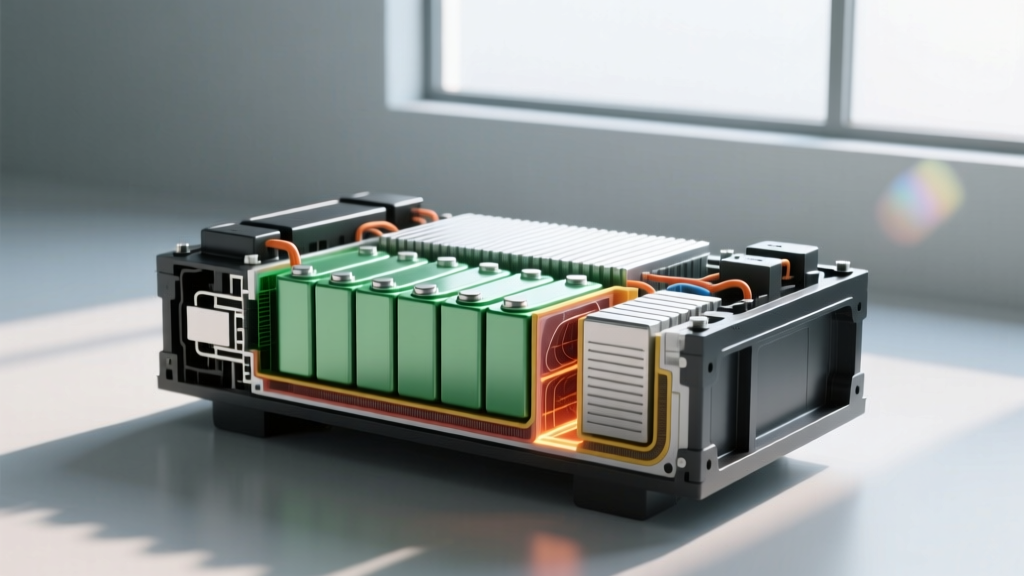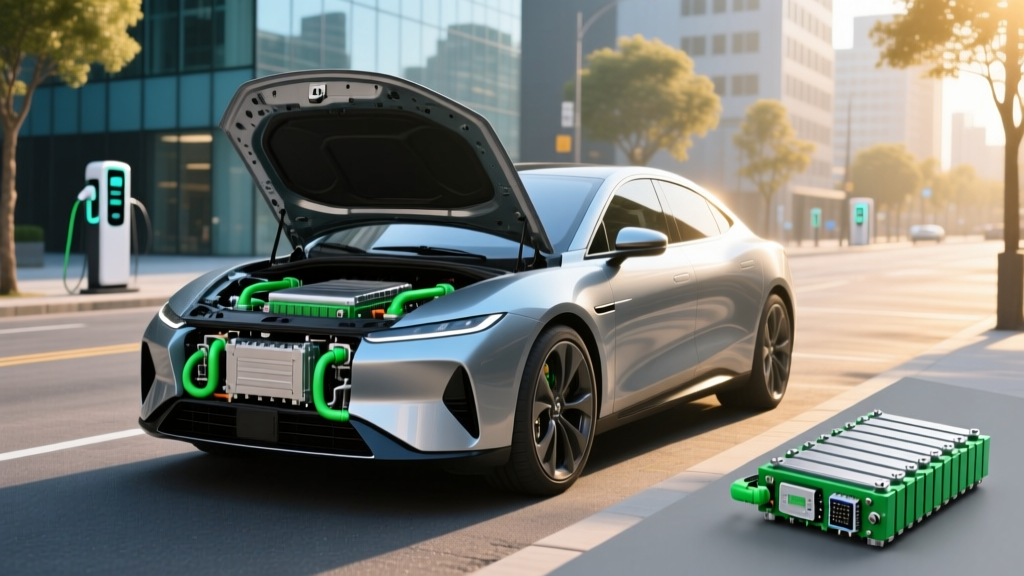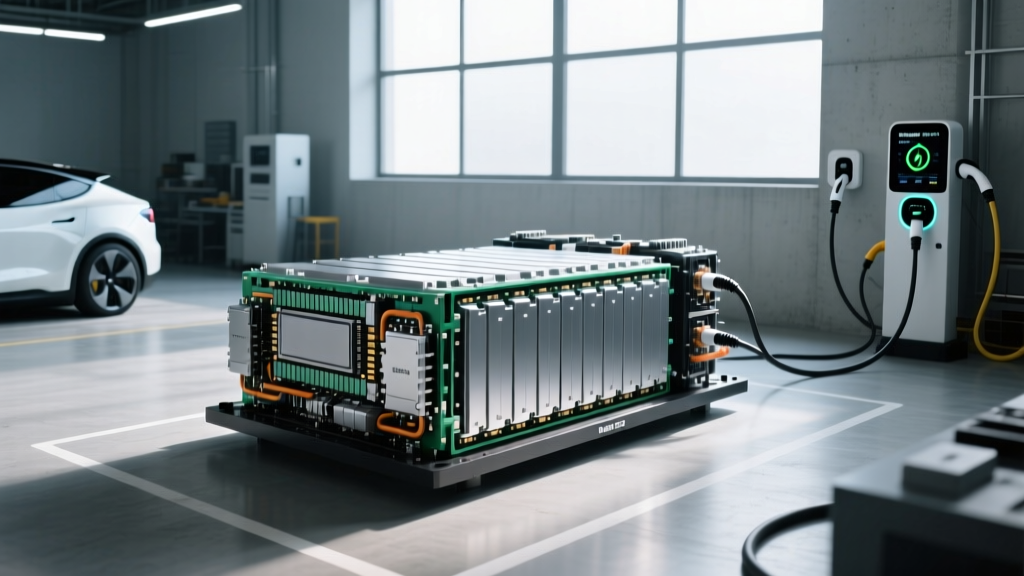
One of the most common questions from EV shoppers isn't about range or charging speed — it's about longevity. "How long to drive to charge battery?" is a phrase that bundles several real concerns: how many miles and years will the high-voltage traction battery last, what habits preserve its health, and what happens if it eventually needs replacement?
The short answer is that modern EV batteries routinely outlast 150,000–200,000 miles with gradual, manageable capacity loss. Most will never need a full replacement during typical ownership. But the details — chemistry choice, charging habits, climate exposure — matter enormously for how your pack ages. This guide breaks down the data behind battery longevity so you can buy and maintain an EV with confidence.
How Long Do EV Batteries Actually Last?
Federal law mandates that EV battery warranties cover a minimum of 8 years or 100,000 miles (whichever comes first), with California Air Resources Board (CARB) states extending that to 10 years or 150,000 miles. But warranties define the floor, not the ceiling, of battery life.
Real-world fleet data tells a more encouraging story. Tesla's 2024 Impact Report showed its Model 3 and Model Y packs retained approximately 88% of original capacity after 200,000 miles. Geotab's analysis of over 10,000 EVs across multiple brands found an average annual degradation rate of 1.8% per year, meaning a typical pack retains roughly 82% capacity after 10 years — well above the 70% threshold most warranties guarantee.
| Time / Mileage | Average Capacity Retained | Range Impact (300-mi EPA pack) |
|---|---|---|
| Year 1 / ~12,000 mi | ~97–98% | Loss of ~6–9 miles |
| Year 3 / ~36,000 mi | ~94–95% | Loss of ~15–18 miles |
| Year 5 / ~60,000 mi | ~90–92% | Loss of ~24–30 miles |
| Year 8 / ~100,000 mi | ~85–88% | Loss of ~36–45 miles |
| Year 10 / ~120,000 mi | ~82–85% | Loss of ~45–54 miles |
| Year 15 / ~180,000 mi | ~75–80% | Loss of ~60–75 miles |
Sources: Geotab fleet study, Tesla Impact Report, Recurrent Auto battery data. Individual results vary by chemistry, climate, and charging habits.
The critical insight: degradation is non-linear. Most packs experience a steeper drop in the first 1–2 years (roughly 2–5%) as the solid electrolyte interphase (SEI) layer stabilizes, then settle into a slow, linear decline. This means a battery that still shows 93% State of Health (SoH) at year 3 is likely on a trajectory to comfortably exceed 200,000 miles before hitting 70%.
LFP vs NMC vs NCA: Battery Chemistry Explained
The two dominant lithium-ion chemistries in today's EVs are LFP (lithium iron phosphate) and NMC/NCA (nickel manganese cobalt / nickel cobalt aluminum). Your choice of chemistry has outsized impact on longevity, cost, and daily usability.
| Attribute | LFP (LiFePO₄) | NMC / NCA |
|---|---|---|
| Energy density | Lower (~160 Wh/kg cell-level) | Higher (~220–260 Wh/kg cell-level) |
| Cycle life | 3,000–5,000+ cycles | 1,000–2,000 cycles |
| Calendar life | 15–20+ years projected | 10–15 years typical |
| Cold-weather performance | Weaker — slower charging below 32°F | Better low-temp charge acceptance |
| Cost per kWh | ~$80–100/kWh (2026 cell pricing) | ~$110–140/kWh (2026 cell pricing) |
| Recommended daily SoC | 100% — no penalty | 80% for daily; 100% for trips only |
| Thermal runaway risk | Very low | Low, but higher than LFP |
| Cobalt/critical minerals | None (iron + phosphate) | Contains cobalt, nickel |
| Common in (2026 models) | Tesla Model 3 RWD, Ford Mustang Mach-E Select, BYD, Rivian standard range | Tesla Long Range, Hyundai Ioniq 5, GM Ultium, Porsche Taycan |
Which is better? It depends on your use case. LFP is the longevity champion — if you plan to keep your EV for 10+ years and want the option to charge to 100% daily without guilt, LFP is the clear pick. Its weakness is cold-weather charging speed and lower energy density (meaning heavier packs or less range for the same weight). NMC/NCA delivers more range per pound and charges faster in winter, but demands more careful SoC management for maximum lifespan.
What Does the EV Battery Warranty Cover?
Understanding warranty terms is essential because they define your financial protection against abnormal degradation.
| Manufacturer | Warranty Period | Mileage Limit | Capacity Threshold | Coverage Type |
|---|---|---|---|---|
| Tesla (Model 3/Y LFP) | 8 years | 120,000 mi | 70% retention | Repair or replace |
| Tesla (Model 3/Y Long Range) | 8 years | 120,000 mi | 70% retention | Repair or replace |
| Hyundai / Kia | 10 years | 100,000 mi | 70% retention | Repair or replace |
| GM (Ultium platform) | 8 years | 100,000 mi | 70% retention (60% Bolt EUV) | Repair or replace |
| Ford | 8 years | 100,000 mi | 70% retention | Repair or replace |
| Rivian | 8 years | 175,000 mi | 70% retention | Repair or replace |
| BMW | 8 years | 100,000 mi | 70% retention | Repair or replace |
Source: Manufacturer warranty documentation. CARB states (CA, NY, MA, and others adopting CARB rules) may require 10 yr / 150,000 mi coverage. Always verify current terms at purchase.
The 70% capacity retention threshold is the industry standard trigger point. If your battery's State of Health drops below 70% within the warranty period, the manufacturer must repair or replace it — typically with a new or factory-remanufactured pack. Note that gradual degradation above 70% is considered normal wear and is not covered.
A critical nuance: warranties cover defects and abnormal degradation, not damage from accidents, flooding, or improper modifications. They also typically do not cover the 12V auxiliary battery (a separate, conventional battery that powers lights and electronics — not the traction pack).
EV Battery Replacement Cost: What to Expect
This is where fear-mongering runs rampant, so let's ground the discussion in real numbers. Yes, EV battery replacement is expensive. But it's also exceedingly rare during typical ownership — most packs outlive the vehicles they're installed in.
| Vehicle / Battery Size | Estimated Replacement Cost (2026) | When Typically Needed |
|---|---|---|
| Tesla Model 3 RWD (~60 kWh LFP) | $12,000–$15,000 | 200,000+ mi / 15+ years (if ever) |
| Tesla Model Y Long Range (~82 kWh NMC) | $15,000–$20,000 | 200,000+ mi / 15+ years (if ever) |
| Hyundai Ioniq 5 (~77.4 kWh) | $14,000–$18,000 | 200,000+ mi / 15+ years (if ever) |
| Ford F-150 Lightning Extended (~131 kWh) | $25,000–$35,000 | 200,000+ mi / 15+ years (if ever) |
| Chevrolet Silverado EV (~200 kWh) | $35,000–$45,000 | 200,000+ mi / 15+ years (if ever) |
| Porsche Taycan (~93.4 kWh) | $25,000–$30,000 | 150,000+ mi / 12+ years (if ever) |
Costs include parts and labor at OEM service centers. Third-party refurbishment and module-level repair can reduce costs by 30–50%. Prices expected to decline as cell costs continue falling.
The reality check: according to Recurrent Auto, fewer than 1.5% of EVs in their dataset of 15,000+ vehicles required a battery replacement outside of recall campaigns. When replacements do occur, they're most often due to manufacturing defects caught early under warranty — not end-of-life wear.
Cell pricing continues to fall. BloombergNEF reports lithium-ion pack prices dropped below $115/kWh in 2025, down from $1,200/kWh in 2010. By the time today's EVs actually need a replacement pack in the 2030s, costs will likely be substantially lower than current estimates.
Factors That Accelerate Battery Degradation
Not all miles are created equal. How you charge, drive, and store your EV has a measurable impact on how quickly the battery ages.
- ❌ Frequent DC fast charging: Daily use of 150+ kW DCFC accelerates degradation by an estimated 0.5–1.0% extra per year vs. Level 2 home charging. Reserve DCFC for road trips.
- ❌ Sustained 100% SoC (NMC/NCA): Storing an NMC pack at full charge for days causes electrolyte oxidation. Charge to 80% daily; 100% only when departing for a trip.
- ❌ Deep discharge below 10%: Regularly running the pack nearly empty stresses the cells. Plug in before dropping below 15–20%.
- ❌ Extreme heat exposure: Parking in direct sun in 100°F+ climates without thermal management active accelerates calendar aging. Garage or shade parking helps significantly.
- ❌ Extreme cold charging without preconditioning: Charging a frozen pack (below 20°F) at high rates causes lithium plating. Always precondition via the vehicle's navigation-to-charger feature.
- ✅ Level 2 home charging (7–11 kW): The gentlest charging method. Slow enough to minimize heat, fast enough for daily needs.
- ✅ 20–80% SoC window (NMC/NCA): The sweet spot for nickel-based chemistries. Many vehicles let you set charge limits in the app.
- ✅ LFP charged to 100% weekly: LFP chemistry benefits from regular full charges to calibrate the BMS (Battery Management System).
- ✅ Moderate driving habits: Aggressive acceleration generates more heat in the cells. Smooth driving is marginally better for longevity.
- ✅ Active thermal management: Vehicles with liquid-cooled packs (most modern EVs) age far better than passively cooled packs. Precondition before fast charging.
A practical note on fast charging: the charging curve matters. Most EVs peak at their maximum kW rate (e.g., 250 kW) only between roughly 10–40% SoC, then taper significantly. Charging from 80–100% on DCFC is both slow and stressful for the battery. The optimal road-trip strategy is to charge from 10–80% and drive on — which also happens to be the fastest approach.
How to Check and Monitor Battery Health (SoH)
State of Health (SoH) is the metric that tells you how much capacity your battery retains compared to its original specification. A new battery sits at 100% SoH; a degraded pack at 85% SoH holds 85% of its original kWh.
Built-in vehicle tools:
- Tesla: The Service menu in the vehicle's settings displays a battery health test result. You can also request a detailed health report via the app or service center.
- Hyundai/Kia: The EV-specific menu in the infotainment system shows battery condition. Dealers can run a full diagnostic.
- GM (Ultium): The myChevrolet/myCadillac app provides battery health metrics, and OnStar diagnostics include SoH estimates.
- Ford: The FordPass app includes battery health indicators. A full diagnostic requires a dealer visit.
- Nissan LEAF: The dashboard displays "battery bars" (out of 12). Each bar lost represents roughly 6–8% capacity loss.
Third-party tools:
- OBD-II scanners with EV support: Devices like the OBDLink MX+ paired with apps such as LeafSpy (Nissan), ABRP (multiple brands), or Car Scanner can read real-time SoH, cell voltages, and temperature data directly from the BMS.
- Recurrent Auto: A free service that connects to your EV's telematics and provides ongoing battery health reports with fleet comparisons.
- Dealer diagnostics: Any authorized service center can run a full battery health check, typically as part of routine service. Request this before purchasing a used EV.
For used EV buyers, SoH is the single most important data point. A 2022 Model 3 with 45,000 miles showing 94% SoH is in excellent shape; one at 88% SoH deserves scrutiny. Always request a battery health report before purchasing.
Emerging Battery Technology: What's Coming
While today's lithium-ion packs are mature and reliable, the next generation of battery technology promises step-change improvements. Here's a realistic assessment of what's on the horizon — and when.
Solid-state batteries: These replace the liquid electrolyte with a solid material, potentially doubling energy density and enabling 10-minute fast charges. Toyota has announced production intent for 2027–2028, with initial deployment likely in limited, premium models. Samsung SDI targets 2027 production. QuantumScape is shipping prototype cells to automotive partners. Realistic mass-market availability: 2029–2032. Do not delay a current EV purchase waiting for solid-state.
Silicon anode batteries: Replacing graphite anodes with silicon can boost energy density by 20–40%. Sila Nanotechnologies is already supplying silicon anode materials for the Mercedes G-Class EV (2025). GM's Ultium platform is designed to incorporate silicon anodes in future iterations. Expect broader adoption by 2027–2028.
Sodium-ion batteries: CATL has begun shipping sodium-ion packs for lower-cost Chinese EVs. These offer lower energy density but dramatically lower material costs and excellent cold performance. US-market adoption remains unannounced as of 2026 but could appear in budget-oriented models by 2028–2029.
LMFP (lithium manganese iron phosphate): An evolution of LFP that adds manganese for ~15–20% higher energy density while retaining LFP's safety and longevity advantages. Tesla and Ford are evaluating LMFP cells. Expected in production vehicles 2026–2027.
The honest takeaway: these technologies are real and progressing, but battery manufacturing scales slowly. Today's NMC and LFP packs are the proven, data-backed choice for buyers purchasing in 2026.
Frequently Asked Questions
How long do EV batteries last in years and miles?
Based on fleet data from Geotab and Recurrent Auto, the average EV battery retains 82–88% of its original capacity after 10 years or 150,000 miles. Most packs will provide usable service for 15–20 years before dropping below 70% capacity. Many EV batteries will outlast the vehicle's body, suspension, and interior.
How much does it cost to replace an EV battery?
Replacement costs range from approximately $12,000 for a smaller pack (60 kWh, like the Tesla Model 3 RWD) to $35,000–$45,000 for large truck packs (131–200 kWh). However, fewer than 2% of EVs require out-of-warranty replacement. Cell costs continue declining, so future replacements will likely cost less.
What does the federal battery warranty require?
Federal law (EPA/CARB regulations) mandates a minimum of 8 years/100,000 miles of battery warranty coverage. CARB-adopting states require 10 years/150,000 miles. The warranty triggers if capacity drops below 70% of original. It covers defects and abnormal degradation, not accident damage or the 12V auxiliary battery.
How do I maximize my EV battery's lifespan?
For NMC/NCA packs: charge to 80% daily, avoid sustained 100% SoC, minimize DC fast charging to road trips, precondition before cold-weather charging, and avoid deep discharges below 15%. For LFP packs: charge to 100% regularly (at least weekly) for BMS calibration, and follow the same cold-weather and DCFC moderation practices.
LFP vs NMC — which battery chemistry should I choose?
Choose LFP if you prioritize maximum longevity (3,000–5,000+ cycles), lower cost, and the convenience of daily 100% charging. Choose NMC/NCA if you need maximum range per pound, better cold-weather charging performance, or are buying a long-range AWD model. Both chemistries reliably deliver 150,000+ miles with proper care.
Does fast charging damage my EV battery?
Occasional DC fast charging (road trips, a few times per month) has minimal impact. However, daily DCFC use adds an estimated 0.5–1.0% extra annual degradation compared to Level 2 charging. The bigger risk is fast-charging a cold pack without preconditioning, which can cause lithium plating — permanent capacity loss. Always use your vehicle's preconditioning feature before fast charging.
Can I check my battery health myself?
Yes. Most modern EVs display battery health metrics in the vehicle settings or companion app. For more detailed data, an OBD-II scanner with EV-specific software (LeafSpy, Car Scanner, ABRP) can read real-time State of Health, individual cell voltages, and pack temperature. Always request a full battery health report when buying a used EV.
The bottom line: EV battery longevity is a solved problem in practical terms. With typical degradation rates of 1.5–2.0% per year, robust 8–10 year warranties, and replacement costs that continue to decline, the battery should be one of the least worrisome aspects of EV ownership. Focus on choosing the right chemistry for your needs, follow basic charging best practices, and let the data — not the fear — guide your decision.