If you've ever searched for a 2013 Hyundai Sonata battery, you probably found prices ranging from $150 to $300 for a standard 12V lead-acid replacement. That search is a useful starting point for understanding how far battery technology has come — and how differently modern electric vehicles approach energy storage. The 2013 Sonata was a conventional midsize sedan (with a hybrid variant) that relied on a small auxiliary battery for starting and accessories. Today's EVs carry high-voltage lithium-ion traction batteries with 60–100+ kWh of usable capacity, sophisticated thermal management, and chemistry engineered for a decade or more of daily driving.
This guide breaks down what actually determines EV battery longevity, what degradation looks like in real-world data, what warranties cover, what replacement costs, and how LFP and NMC chemistries compare. Whether you're cross-shopping a new EV or just trying to understand what happens to a battery pack at 100,000 miles, the numbers below will give you a clear picture.
How Long Do EV Batterices Actually Last?
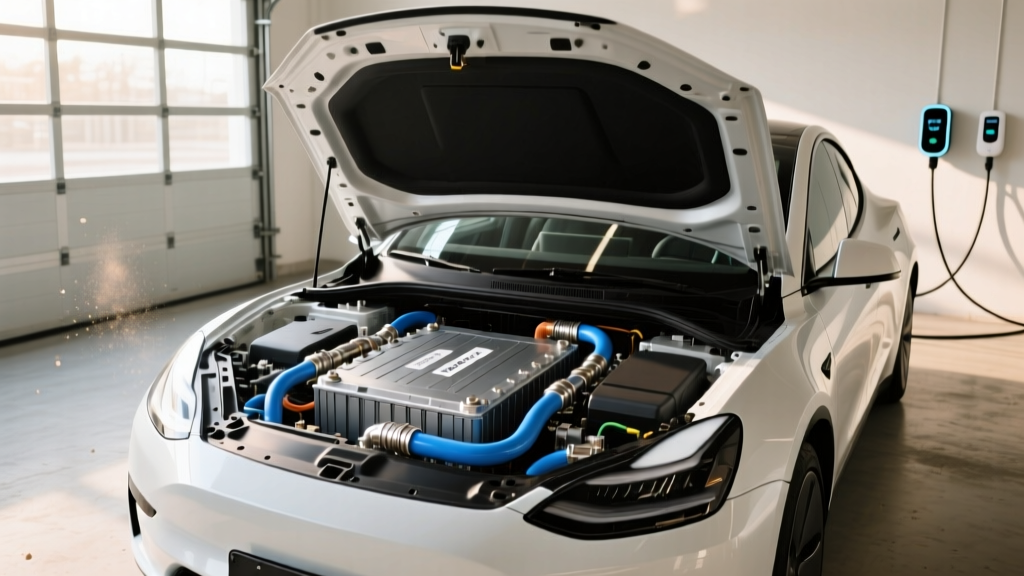
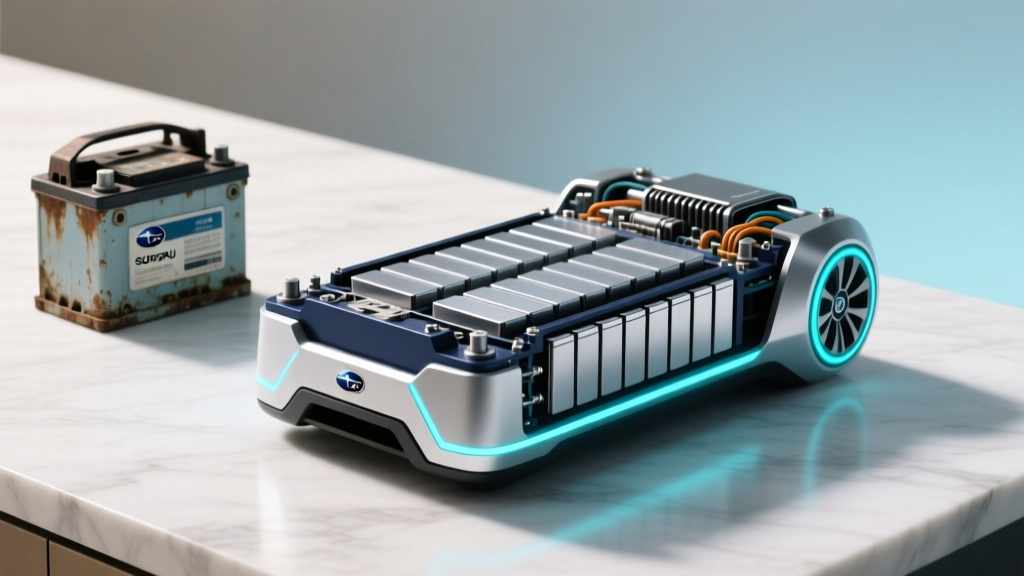
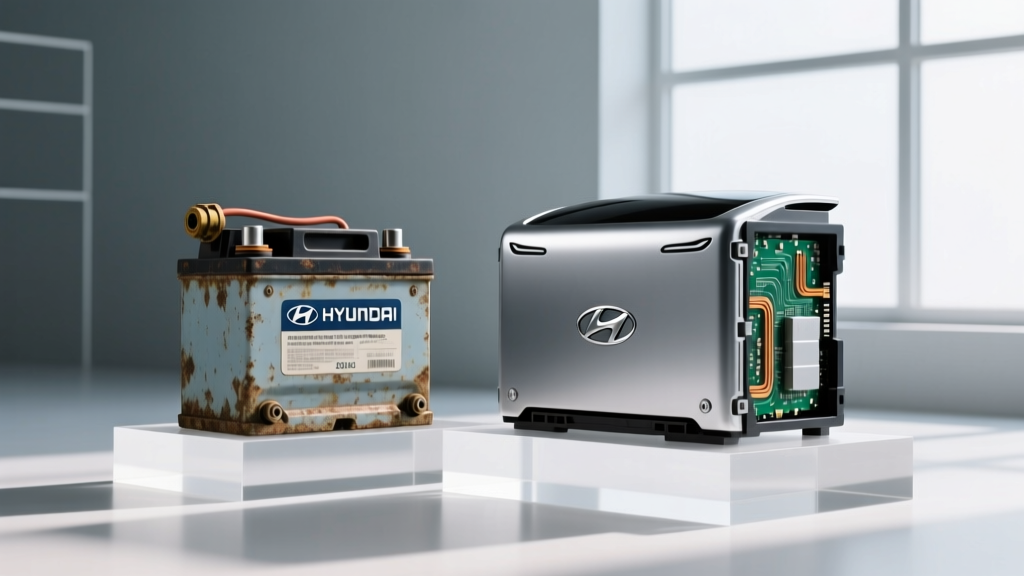
The short answer: most modern EV traction batteries are engineered to outlast the vehicles they power. That's a dramatic shift from the 12V lead-acid battery in a 2013 Hyundai Sonata, which typically needs replacement every 3–5 years at a cost of around $200. A high-voltage EV battery pack is a fundamentally different system — and it degrades very differently.
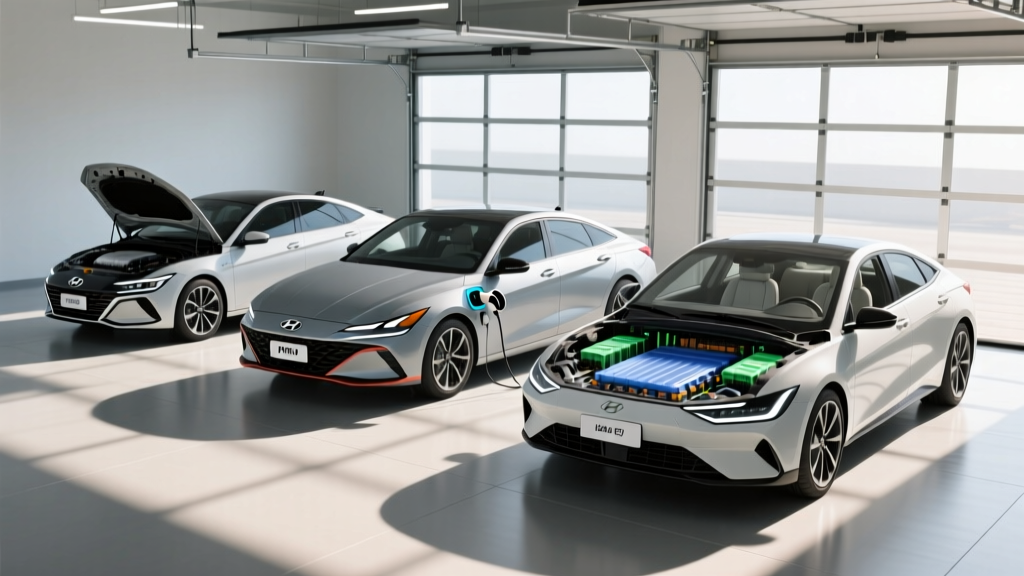
Industry data from multiple sources, including long-term fleet studies and manufacturer reports, shows that liquid-cooled lithium-ion EV batteries typically lose between 10% and 15% of their original capacity over 150,000 miles. Some packs perform even better. Tesla's 2023 Impact Report noted that its Model S and Model X batteries retained approximately 88% of original capacity at 200,000 miles. Hyundai and Kia have stated their Ioniq 5 and EV6 packs are designed for 80% capacity retention at 150,000 miles under normal use.
Typical EV Battery Degradation Curve (NMC/LFP, Liquid-Cooled):
- Year 1 (0–15,000 mi): ~2–3% loss (initial formation drop)
- Year 3 (45,000 mi): ~5–7% total loss
- Year 5 (75,000 mi): ~7–10% total loss
- Year 8 (120,000 mi): ~10–13% total loss
- Year 10 (150,000 mi): ~12–17% total loss
Sources: Tesla Impact Report 2023, Geotab fleet data, Recurrent Auto battery studies.
The critical insight here is that degradation is non-linear. Most capacity loss occurs in the first year or two as the battery's solid electrolyte interphase (SEI) layer stabilizes. After that, degradation slows considerably. A battery that has lost 8% in three years is very likely to lose only another 5–7% over the next five years — not another 8%.
For context, a 2013 Hyundai Sonata Hybrid used a relatively small 1.4 kWh lithium-polymer battery pack to assist its gasoline engine. That pack was covered under a 10-year/100,000-mile warranty (in California-emission states), and replacement cost hovered around $2,000–$3,500 if it failed outside warranty. Today's full EV packs are vastly larger, more complex, and paradoxically more durable per kWh of throughput.
LFP vs NMC: Which Battery Chemistry Is Better?
Not all lithium-ion batteries are the same. The two dominant chemistries in 2026 EVs are NMC (nickel manganese cobalt, sometimes NCA — nickel cobalt aluminum) and LFP (lithium iron phosphate). Each has distinct trade-offs that affect range, longevity, cold-weather performance, and cost.
| Attribute | LFP (Lithium Iron Phosphate) | NMC / NCA (Nickel-Based) |
|---|---|---|
| Energy Density | Lower (~160–180 Wh/kg cell-level) | Higher (~220–280 Wh/kg cell-level) |
| Cycle Life | Superior (3,000–5,000+ cycles to 80% SoH) | Good (1,500–2,500 cycles to 80% SoH) |
| Cold-Weather Performance | Weaker — more range loss below 32°F | Better — less range loss in freezing temps |
| Cost (per kWh) | Lower (~$80–$100/kWh at pack level) | Higher (~$110–$140/kWh at pack level) |
| Optimal Daily Charge | Can charge to 100% daily (recommended) | Best kept at 80% daily; 100% for trips only |
| Cobalt Content | None | Contains cobalt (supply-chain/ethics concern) |
| Common in (2026) | Tesla Model 3/Y RWD, Ford Mustang Mach-E Select, BYD models | Tesla Long Range, Hyundai Ioniq 5/6, Kia EV6/EV9, Rivian, BMW iX |
The practical takeaway: If you drive in a mild climate, mostly commute short-to-medium distances, and want maximum cycle life with the simplicity of charging to 100% every day, LFP is the stronger choice. If you need maximum range per charge, frequently drive in cold weather, or tow, NMC/NCA offers higher energy density and better low-temperature efficiency. Neither chemistry is universally "better" — the right choice depends on your driving profile.
What Does the EV Battery Warranty Actually Cover?
Federal law in the United States mandates that EV batteries carry a minimum warranty of 8 years or 100,000 miles (whichever comes first). In California Air Resources Board (CARB) states, that extends to 10 years or 150,000 miles. Most manufacturers meet or exceed these minimums.
The warranty typically guarantees that the battery will retain a minimum percentage of its original capacity — usually 70% — over the warranty period. If degradation exceeds that threshold, the manufacturer will repair or replace the battery (or individual modules) at no cost to the owner.
| Manufacturer | Warranty Period | Capacity Retention Threshold | Notes |
|---|---|---|---|
| Tesla (Model 3/Y) | 8 yr / 100,000 mi (120,000 mi for LR/AWD) | 70% | LFP packs on RWD; NMC on Long Range |
| Hyundai (Ioniq 5/6) | 10 yr / 100,000 mi | 70% | 10-yr applies nationwide (not just CARB states) |
| Kia (EV6/EV9) | 10 yr / 100,000 mi | 70% | Same generous terms as Hyundai |
| Ford (Mach-E, F-150 Lightning) | 8 yr / 100,000 mi | 70% | LFP on Select trims; NMC on extended-range |
| BMW (i4/iX) | 8 yr / 100,000 mi | 70% | NMC chemistry across lineup |
| Rivian (R1T/R1S) | 8 yr / 175,000 mi | 70% | Higher mileage threshold reflects truck use case |
Important nuance: Warranties cover defects and abnormal degradation. They do not cover damage from accidents, flooding, or unauthorized modifications. And the 70% threshold means you could lose up to 30% of capacity before a warranty claim is valid — though in practice, most packs lose far less than that within the warranty window. According to Recurrent Auto, fewer than 1.5% of EV batteries in their studied fleet required warranty replacement.
EV Battery Replacement Cost: What to Expect
This is where the comparison to a 2013 Hyundai Sonata battery becomes stark. A 12V lead-acid battery for that Sonata costs $150–$300 installed. A 1.4 kWh hybrid battery for the 2013 Sonata Hybrid ran $2,000–$3,500. A full EV traction battery replacement in 2026? Significantly more — but also far less likely to be needed.
| Vehicle / Pack Size | Battery Capacity | Estimated Replacement Cost (Out of Warranty) |
|---|---|---|
| Tesla Model 3 RWD (LFP) | ~60 kWh | $12,000–$16,000 |
| Tesla Model Y Long Range (NMC) | ~75 kWh | $15,000–$20,000 |
| Hyundai Ioniq 5 (NMC) | 77.4 kWh | $14,000–$18,000 |
| Ford F-150 Lightning Extended Range | ~131 kWh | $25,000–$35,000 |
| Chevrolet Bolt EV/EUV | 65 kWh | $14,000–$16,000 |
| BMW iX xDrive50 | ~105 kWh | $22,000–$30,000 |
These figures include the battery pack and labor but can vary significantly by dealer, region, and whether the pack is new, remanufactured, or repaired at the module level. Many manufacturers now offer module-level repair, where only the degraded or faulty modules are replaced rather than the entire pack — reducing cost to $3,000–$8,000 depending on the number of modules involved.
When is replacement typically needed? In most cases, it isn't — at least not during the vehicle's useful life. The average EV battery outlasts 150,000–200,000 miles with 70–85% capacity remaining. The vehicles most likely to need out-of-warranty replacement are high-mileage fleet vehicles, early-generation EVs with passive (air-cooled) battery systems (like the 2011–2017 Nissan Leaf), or vehicles with physical battery damage from collisions or flooding.
Factors That Accelerate (or Slow) Battery Degradation
Battery longevity isn't purely a function of time and mileage. How you charge, where you park, and how you drive all influence the rate of capacity loss. Here's what the data shows matters most:
Maximize Your EV Battery Life — Evidence-Based Practices:
- Avoid sustained high SoC (NMC): For NMC/NCA batteries, keeping daily charge at 80% instead of 100% can reduce degradation by 30–40% over 5 years. LFP batteries, by contrast, benefit from regular 100% charges for cell balancing.
- Minimize DC fast charging when possible: Frequent use of 150+ kW DC fast charging generates significant heat. A 2024 study by Geotab found that vehicles fast-charging more than 3 times per week showed slightly higher degradation rates (~2% more over 4 years) compared to those primarily using Level 2.
- Precondition before fast charging: Most modern EVs automatically precondition the battery when you navigate to a charger. This brings the pack to optimal temperature (typically 85–95°F), enabling faster charging and reducing thermal stress. Always use the vehicle's built-in navigation to chargers to trigger this.
- Avoid extreme SoC storage: Don't leave an EV sitting at 100% or below 10% for weeks. If storing for an extended period, aim for 50–60% SoC.
- Park in shade or a garage in hot climates: Sustained high ambient temperatures (above 95°F) accelerate electrolyte decomposition. Vehicles in Phoenix and Riyadh show measurably higher degradation than those in Seattle or Minneapolis.
- Use Level 2 for daily charging: A home Level 2 charger (7–11 kW) is the gentlest way to charge. It generates minimal heat and lets the battery management system (BMS) balance cells effectively.
How to Check and Monitor Battery Health (SoH)
State of Health (SoH) is the percentage of a battery's original capacity that remains usable. A new battery is at 100% SoH; one that has degraded to hold 85 kWh out of an original 100 kWh is at 85% SoH.
Most EVs don't display SoH directly on the dashboard, but there are several reliable ways to check it:
- Manufacturer apps: Tesla, Hyundai, Kia, and BMW provide battery health information through their connected-car apps. Tesla's service menu includes a battery health test accessible via the touchscreen.
- OBD-II diagnostic tools: Devices like the OBDeleven (for VW/Audi/BMW) or third-party apps that read the BMS CAN-bus data can report SoH percentage, cell voltage variance, and total energy throughput.
- Third-party services: Companies like Recurrent Auto offer free battery health reports by connecting to your vehicle's telematics data. They compare your pack's degradation against a fleet of identical vehicles.
- Manual calculation: Charge to 100%, note the displayed range, and compare it to the original EPA range. If your Ioniq 5 originally showed 303 miles at 100% and now shows 272, that's approximately 90% SoH. This method is approximate — displayed range is influenced by recent driving patterns — but it's a useful ballpark check.
For used-EV buyers, a battery health check should be a non-negotiable step before purchase, just as you'd check the engine compression on a used ICE vehicle. Ask the seller for a BMS readout or a third-party SoH report.
What's Next: Solid-State, Silicon Anode, and Future Battery Tech
The battery landscape is evolving rapidly, but it's critical to separate what's available now from what's still in development.
Silicon anode batteries are the nearest-term advancement. By replacing some or all of the graphite anode with silicon, manufacturers can increase energy density by 20–40%. Sila Nanotechnologies and Group14 Technologies are supplying silicon-dominant anode materials to automakers, with initial production vehicles expected in 2026–2027. These packs won't dramatically change battery lifespan, but they will enable more range in the same physical package — or the same range in a lighter, cheaper pack.
Solid-state batteries replace the liquid electrolyte with a solid material (ceramic, sulfide, or polymer), potentially offering higher energy density, faster charging, and improved safety (no flammable liquid). Toyota, Samsung SDI, and QuantumScape are leading development. Toyota has announced a target of 2027–2028 for initial production, but at very limited scale and likely in premium models first. Widespread, affordable solid-state EVs are not expected before 2030 at the earliest.
Sodium-ion batteries are emerging as a low-cost alternative for budget and city EVs. CATL has begun mass production for use in Chinese-market vehicles. They offer lower energy density than LFP but eliminate lithium entirely, reducing raw-material cost and supply-chain risk. Expect to see sodium-ion packs in entry-level EVs in the US market by 2028–2029.
None of these technologies are currently available in vehicles you can buy today. If you're shopping for an EV in 2026, LFP and NMC remain the proven, well-understood choices with extensive real-world longevity data.
Frequently Asked Questions
How is an EV traction battery different from the 12V battery in a 2013 Hyundai Sonata?
The 12V battery in a 2013 Sonata (or any conventional car) is a small lead-acid unit that powers the starter motor, lights, and electronics. It stores roughly 0.5–0.7 kWh and costs $150–$300 to replace. An EV's high-voltage traction battery stores 60–130+ kWh, powers the drive motor(s), uses lithium-ion chemistry with active thermal management, and costs $12,000–$35,000 to replace. Most EVs also carry a separate 12V or 16V auxiliary battery for accessories — that one is still inexpensive and straightforward to replace.
Can I extend my EV battery's life by only using Level 1 or Level 2 charging?
Yes, modestly. Level 2 (240V, 7–19 kW) charging generates far less heat than DC fast charging (50–350 kW). Since heat is the primary driver of lithium-ion degradation, primarily using Level 2 and reserving DC fast charging for road trips will slightly slow degradation. However, modern BMS and thermal management systems have made DC fast charging far less damaging than it was in early EVs like the 2011–2017 Nissan Leaf (which had no active cooling). The difference in degradation between exclusive Level 2 and mixed charging is typically 1–3% over 5 years.
Does cold weather permanently damage EV batteries?
No. Cold weather causes temporary range loss — typically 20–30% in sub-freezing temperatures — because the battery's internal resistance increases and energy is diverted to cabin and battery heating. This loss is fully recovered when temperatures rise. Cold weather does not cause permanent degradation. In fact, batteries in cold climates tend to degrade slightly less over time than those in hot climates, since heat accelerates chemical aging. The real enemy is sustained high heat, not cold.
What happens if my EV battery degrades to 70% capacity?
Your vehicle remains fully drivable — you simply have less range. A Tesla Model Y Long Range with an original EPA range of 330 miles would show approximately 231 miles at 70% SoH. For many drivers, this is still adequate for daily commuting. If degradation crosses the warranty threshold (usually 70%) within the warranty period, the manufacturer will repair or replace the battery. Out of warranty, you can continue driving with reduced range, opt for a module-level repair, or replace the full pack.
Are refurbished or remanufactured EV batteries a viable replacement option?
Yes, and they're becoming more common. Companies like EPA-listed independent shops and manufacturer-authorized refurbishers offer remanufactured packs at 40–60% of the cost of a new pack. These are typically rebuilt with tested, graded cells and come with 1–3 year warranties. For an older EV that's out of warranty and not worth a $20,000 new battery, a $8,000–$12,000 remanufactured pack can extend the vehicle's useful life by another 5–8 years.
Should I wait for solid-state batteries before buying an EV?
For most buyers, no. Solid-state batteries are not expected in mass-market vehicles before 2029–2030, and initial offerings will carry a significant price premium. Today's LFP and NMC batteries already offer 250–350 miles of range, 10–80% DC fast charging in 18–25 minutes, and demonstrated longevity exceeding 150,000 miles with minimal degradation. Waiting 4–5 years for solid-state means missing out on current §30D federal tax credits (up to $7,500 at point of sale, subject to IRS eligibility rules), fuel savings, and years of EV ownership experience.
Sources: Tesla Impact Report 2023, Recurrent Auto Battery Degradation Studies, Geotab EV Battery Health Research, fueleconomy.gov, IRS §30D Clean Vehicle Credits.