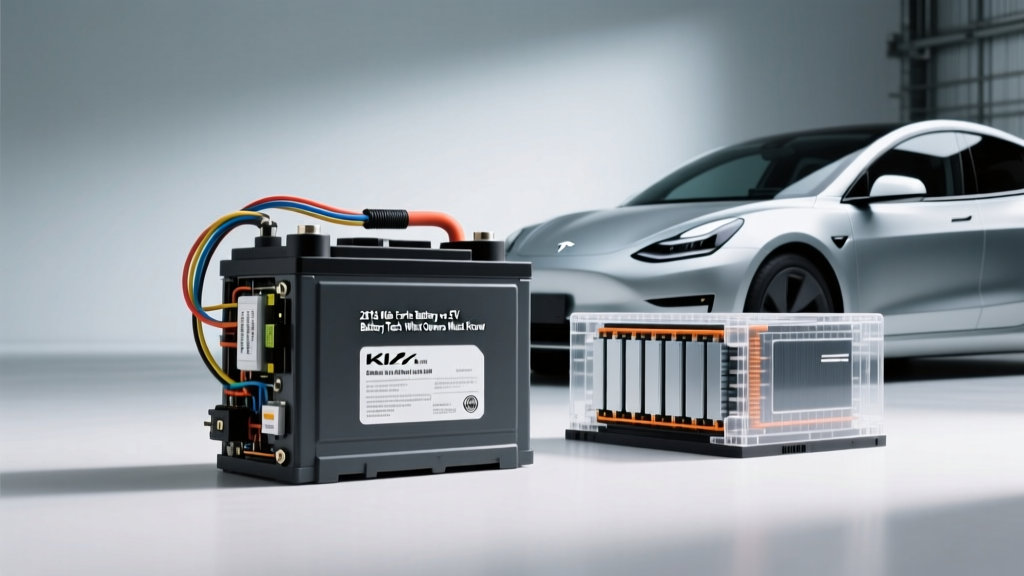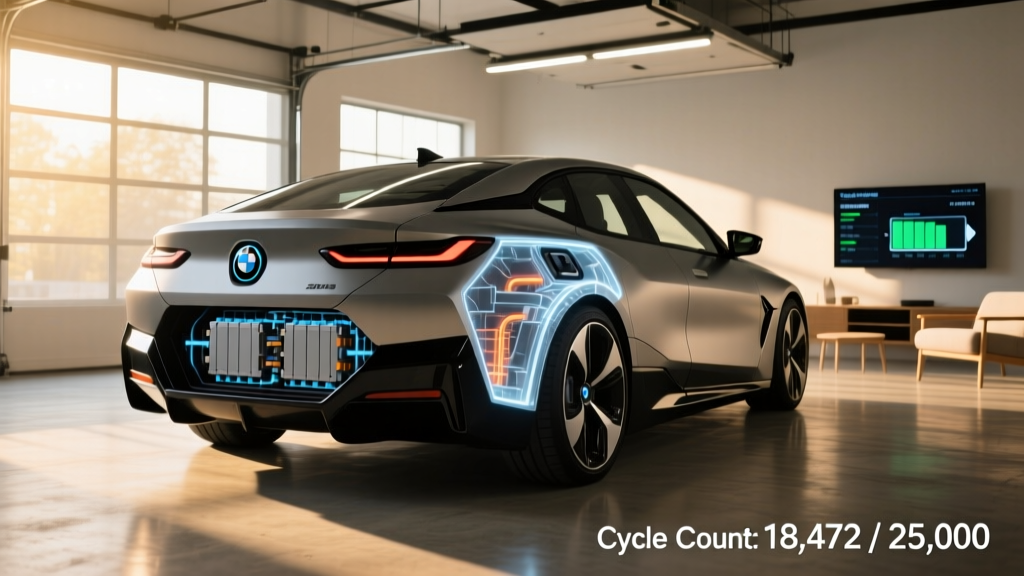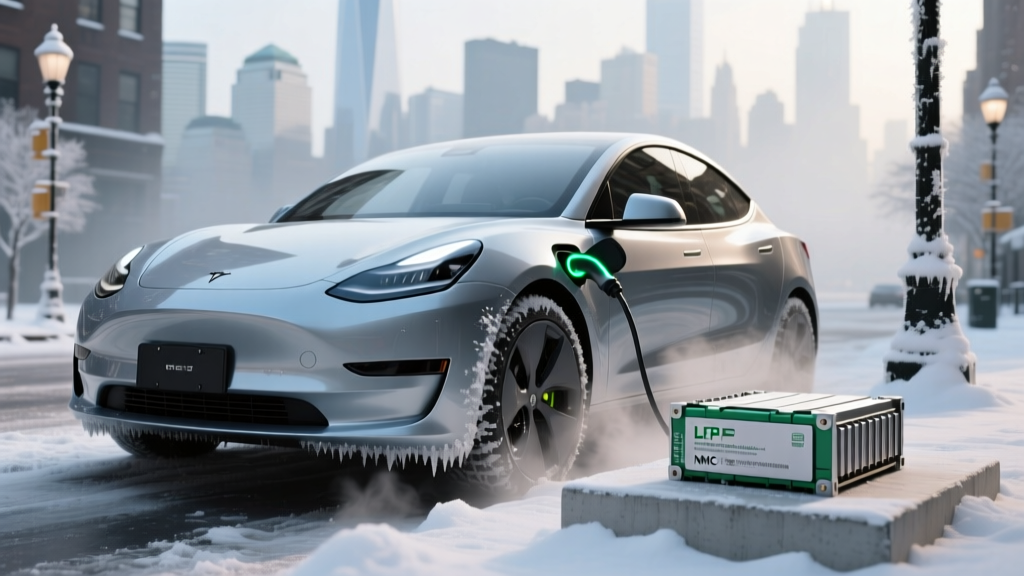
If you're evaluating the battery in New York — whether in a Tesla Model Y parked in Buffalo, a Hyundai Ioniq 5 commuting through Manhattan, or a Ford F-150 Lightning enduring an Adirondack winter — you're asking the right question. New York's climate is one of the most demanding environments for lithium-ion traction batteries in the United States. Sub-zero January mornings in the Hudson Valley, sweltering July gridlock on the BQE, and year-round reliance on DC fast charging for apartment dwellers all accelerate the chemical aging processes inside your battery pack.
This guide cuts through the marketing claims and fear-mongering. We'll walk through the chemistry trade-offs that matter most in the Northeast, real degradation data across chemistries, what warranties actually cover, replacement cost realities, and the daily habits that will keep your pack healthy past 200,000 miles.
LFP vs NMC vs NCA: Which Chemistry Handles New York Best?
Not all EV batteries are created equal. The three dominant cathode chemistries in 2026-model EVs each have distinct strengths and weaknesses — and the trade-offs shift significantly when you introduce New York's temperature extremes.
LFP (Lithium Iron Phosphate) batteries, found in the Tesla Model 3 Standard Range, Model Y Standard Range, and several BYD models, use an iron-phosphate cathode. They offer exceptional cycle life (3,000+ full charge cycles before significant degradation), tolerate daily charging to 100% SoC without penalty, and cost less to manufacture. The trade-off: lower energy density (meaning heavier packs for the same range) and noticeably worse performance in freezing temperatures.
NMC (Nickel Manganese Cobalt) batteries power most long-range EVs — the Hyundai Ioniq 5, Kia EV6, BMW i4, and Ford Mustang Mach-E Extended Range. Higher nickel content increases energy density, giving more range per kilogram. Cold-weather range retention is generally better than LFP. However, NMC degrades faster when routinely charged to 100% or exposed to high temperatures at high SoC.
NCA (Nickel Cobalt Aluminum), used primarily by Tesla in Long Range and Performance trims, offers the highest energy density of the three but shares NMC's sensitivity to high-SoC storage and extreme heat.
| Attribute | LFP | NMC | NCA |
|---|---|---|---|
| Energy Density | ~160 Wh/kg (lower) | ~220-260 Wh/kg | ~250-280 Wh/kg (highest) |
| Cycle Life | 3,000+ cycles | 1,000-2,000 cycles | 1,000-1,500 cycles |
| Cold Weather Performance | More range loss below freezing | Better cold retention | Better cold retention |
| Daily 100% Charging | Recommended by OEMs | Not recommended (80% daily) | Not recommended (80% daily) |
| Cost per kWh | Lowest (~$90-110/kWh pack) | Mid (~$120-145/kWh pack) | Highest (~$130-155/kWh pack) |
| Typical Models (2026) | Tesla Model 3/Y RWD, BYD | Ioniq 5, EV6, Mach-E, BMW i4 | Tesla LR/Performance, Rivian |
For New York specifically: If you have Level 2 home charging and can precondition your battery before winter drives, NMC/NCA offers better cold-weather range retention. If you're a high-mileage driver (rideshares, long commutes) who values pack longevity over maximum range, LFP's cycle-life advantage is substantial — just budget for 10-15% more winter range loss and precondition aggressively.
How Long Do EV Batteries Actually Last? Degradation Data
The short answer: most EV traction batteries outlast the vehicles they're installed in. But "last" needs defining — a battery doesn't suddenly die; it gradually loses capacity.
Data from fueleconomy.gov, Recurrent Auto's fleet studies, and OEM warranty claims paint a consistent picture across chemistries:
| Milestone | NMC/NCA Average SoH | LFP Average SoH | Notes |
|---|---|---|---|
| Year 1 / 15,000 mi | 96-98% | 98-99% | Initial calibration drop |
| Year 3 / 45,000 mi | 92-95% | 95-97% | Linear degradation phase |
| Year 5 / 75,000 mi | 88-92% | 92-95% | Most packs well above warranty threshold |
| Year 8 / 100,000 mi | 83-89% | 89-93% | Warranty period ends; some packs trigger replacement |
| Year 12 / 150,000 mi | 78-85% | 85-90% | Still drivable; range reduced but functional |
| Year 15 / 200,000 mi | 72-80% | 82-88% | Approaching warranty threshold for NMC |
A few critical nuances:
- Cold-climate acceleration: New York's winters don't just reduce range temporarily — repeated deep cold-soaks (battery sitting below 20°F for hours without preconditioning) can slightly accelerate calendar degradation. Data from Recurrent Auto shows Northern-state EVs degrade roughly 1-3% more over 5 years compared to temperate-climate fleets.
- DC fast-charging frequency: Packs that rely primarily on 150+ kW DC fast charging degrade faster than those charged predominantly on Level 2. Tesla's own data suggests exclusive Supercharging adds roughly 2-4% more degradation over 100,000 miles vs. home charging.
- The 80% rule is real: Storing an NMC/NCA pack at 100% SoC in summer heat is the single fastest way to degrade it. New York's July-August heat waves (95°F+ ambient, higher in parked sun-exposed cars) combined with 100% SoC storage can cause 2-3x normal calendar aging.
What Does the Battery Warranty Actually Cover?
Federal law mandates a minimum 8-year/100,000-mile warranty on EV battery packs for emissions-related compliance, and California Air Resources Board (CARB) states — which now includes New York — extend certain requirements. Most OEMs meet or exceed these baselines.
| Manufacturer | Warranty Period | Capacity Threshold | Notes |
|---|---|---|---|
| Tesla (Model 3/Y) | 8 yr / 120,000 mi (LR) or 100,000 mi (RWD) | 70% retention | Includes drive unit; LFP RWD is 8yr/100k |
| Hyundai / Kia | 10 yr / 100,000 mi | 70% retention | Among the longest in the industry |
| Ford (Mach-E, Lightning) | 8 yr / 100,000 mi | 70% retention | Covers battery and electric drivetrain components |
| BMW (i4, iX) | 8 yr / 100,000 mi | 70% retention | Transferable to second owner |
| Rivian (R1T, R1S) | 8 yr / 175,000 mi | 70% retention | Higher mileage cap for adventure-use vehicles |
| GM (Ultium platform) | 8 yr / 100,000 mi | 70% retention (some 60% on commercial) | Module-level replacement capability |
What "70% retention" means in practice: If your 82 kWh pack (usable) drops below 57.4 kWh of usable capacity within the warranty window, the OEM is obligated to repair or replace it — typically by swapping defective modules rather than the entire pack. The warranty covers defects and abnormal degradation; it does not cover damage from accidents, flooding, or unauthorized modifications.
New York-specific note: As a CARB-adopting state, New York's consumer protections around powertrain warranties are stronger than federal minimums. If you believe your battery has degraded abnormally, the New York State Attorney General's office and the state's Lemon Law provisions can provide additional recourse beyond the OEM warranty process.
EV Battery Replacement Costs: The Real Numbers
This is where misinformation runs rampant. Social media posts claiming "$25,000 battery replacements are routine" ignore two facts: (1) most packs never need full replacement, and (2) module-level repair has drastically reduced costs for partial failures.
| Vehicle | Battery Size (usable kWh) | Full Pack Replacement | Module Repair | Typical Replacement Timing |
|---|---|---|---|---|
| Tesla Model 3 RWD (LFP) | 57.5 kWh | $12,000 - $15,000 | $2,500 - $4,000 per module | Rarely before 200k+ mi |
| Tesla Model Y Long Range (NCA) | 75 kWh | $14,000 - $18,000 | $3,000 - $5,000 per module | Rarely before 150k mi |
| Hyundai Ioniq 5 (NMC) | 77.4 kWh | $13,000 - $17,000 | $2,800 - $4,500 per module | Rarely before 150k mi |
| Ford F-150 Lightning Ext. Range | 131 kWh | $20,000 - $28,000 | $3,500 - $6,000 per module | Rarely before 150k mi |
| Chevrolet Equinox EV (Ultium) | 85 kWh | $12,000 - $16,000 | $2,500 - $4,000 per module | Rarely before 150k mi |
Key context for New York buyers:
- Most owners never pay for a replacement. The pack will likely retain 75-85% capacity at 150,000 miles — still providing 200+ miles of real-world range on a 300-mile EPA vehicle.
- Module-level repair is the norm. Modern packs are divided into 4-16 modules. If one module develops a weak cell group, a qualified EV shop can replace that single module for a fraction of full-pack cost.
- Used/refurbished packs are increasingly available. Salvage yards and EV specialists now offer tested used packs at 40-60% below new OEM pricing for out-of-warranty vehicles.
- Costs are declining. Pack-level pricing has fallen from $200+/kWh in 2020 to roughly $120-150/kWh in 2026, and this trend continues.
Maximizing Battery Life in New York's Climate
New York's combination of cold winters, hot summers, and urban charging constraints requires a slightly different care regimen than temperate-climate EV ownership. Here's what actually moves the needle:
Daily & Weekly Habits
- Set charge limits correctly: 80% daily for NMC/NCA packs; 100% is fine for LFP. Use your car's scheduled charging feature to finish charging right before departure.
- Precondition before every winter drive: Use your EV's app to warm the battery 15-30 minutes before departure. This reduces cold-soak stress and enables regenerative braking immediately.
- Avoid letting SoC drop below 10% in winter: Cold temperatures combined with low SoC increase internal resistance and stress the cells. Plug in when you get home, even if you're at 30%.
- Garage parking matters enormously: A pack that sits at 40°F in a garage vs. 15°F on the street experiences measurably less calendar degradation over a New York winter.
Charging Strategy
- Prioritize Level 2 home charging: A 240V Level 2 charger (7-11 kW) is the single best investment for battery longevity. Slow, steady charging generates less heat and less cell stress.
- Limit DC fast charging to road trips: If you're an apartment dweller relying on public DC fast charging daily, your pack will degrade 2-4% faster over 5 years. Seek out Level 2 workplace or public chargers for routine top-ups.
- Don't fast-charge to 100%: Charge curves taper dramatically above 80% — the last 20% can take as long as the first 80%. Stop at 80-90% on road trips unless you absolutely need the range.
Seasonal Adjustments
- Summer: Avoid parking at 100% SoC in direct sun. If your car has a battery thermal management system (most 2024+ models do), ensure it's active — Tesla's "Cabin Overheat Protection" and similar features help.
- Winter: Plan for 25-35% range loss in sub-30°F conditions. This is temporary — capacity returns as temperatures rise. Preconditioning recovers roughly 10-15% of that loss.
How to Monitor Your Battery's State of Health (SoH)
Unlike the 12V auxiliary battery (which powers accessories and is a separate, inexpensive lead-acid or lithium unit), the high-voltage traction battery's health directly determines your range and vehicle value. Here's how to track it:
In-car displays: Tesla shows battery health indirectly through range estimates at 100% SoC. Hyundai/Kia provides a more explicit battery health readout in the EV settings menu. BMW and Mercedes include SoH percentage in their diagnostic menus.
OBD-II diagnostic tools: Devices like the OBDLink SX paired with apps such as EVNotify, Scan My Tesla, or LeafSpy (for Nissan) can read the BMS (Battery Management System) directly. These show cell voltage variance, pack impedance, and estimated SoH percentage — far more granular than dashboard displays.
Third-party services: Companies like Recurrent Auto offer free battery health reports that compare your pack's degradation curve against their fleet of 15,000+ EVs. You plug in an OBD-II dongle, and they track your SoH monthly. This is valuable documentation if you ever need a warranty claim.
Dealer diagnostic reports: Request a battery health report at any scheduled service visit. OEMs can pull detailed cell-balancing data that shows whether individual modules are drifting — an early indicator of future problems.
Red flags that warrant a service visit:
- Range at 100% SoC drops more than 5% in a single month
- The car refuses to charge to 100% or throws a battery warning light
- Cell voltage variance exceeds 100mV between modules (readable via OBD-II)
- Charging speed drops significantly below the pack's rated peak kW
Emerging Battery Tech: Solid-State and Silicon Anodes
Several next-generation battery technologies are in development that could shift the calculus for future EV buyers — but none are available in production vehicles as of 2026.
Solid-state batteries replace the liquid electrolyte with a solid ceramic or polymer layer, promising higher energy density (~400+ Wh/kg), faster charging, improved safety (no flammable electrolyte), and better cold-weather performance. Toyota has announced solid-state prototypes targeting 2027-2028 production, but these are limited to low-volume models initially. Samsung SDI and QuantumScape are also in pilot production phases. Realistic mass-market timeline: 2029-2032.
Silicon-dominant anodes replace graphite anodes with silicon, which can store roughly 10x more lithium ions per gram. This boosts energy density by 20-40% without changing the cathode chemistry. Sila Nanotechnologies and Group14 Technologies are supplying silicon-composite anodes to select 2026-2027 models (including the Mercedes G-Class EV), but these are incremental improvements rather than full silicon anodes. Realistic widespread adoption: 2027-2029.
Sodium-ion batteries use abundant sodium instead of lithium, dramatically reducing cost and eliminating cobalt/nickel supply chain concerns. CATL has begun production in China for lower-range city EVs, but energy density (~140 Wh/kg) limits them to budget/urban vehicles. US market availability: 2028+ at the earliest, likely in entry-level models.
For anyone buying an EV in New York today, current LFP and NMC/NCA chemistries are mature, well-understood, and backed by real-world fleet data spanning hundreds of millions of miles. Waiting for solid-state means waiting 3-6 years with no guarantee of initial affordability or availability.
Frequently Asked Questions
How long do EV batteries last in New York's cold climate?
Most NMC/NCA packs retain 83-89% capacity at 8 years / 100,000 miles in Northern states. LFP packs perform slightly better, retaining 89-93% over the same period. Cold weather causes temporary range loss (25-35% in deep cold) but only marginally accelerates permanent degradation — roughly 1-3% more over 5 years compared to warm-climate fleets. With proper care (preconditioning, garage parking, Level 2 charging), expect 150,000-200,000+ miles before capacity drops below 75%.
How much does it cost to replace an EV battery in New York?
Full pack replacements range from $12,000 to $28,000 depending on battery size — a 57.5 kWh Tesla Model 3 RWD pack costs roughly $12,000-$15,000, while a 131 kWh F-150 Lightning pack can reach $20,000-$28,000. However, most replacements are module-level repairs at $2,500-$6,000 per module. The vast majority of EV owners never pay for a battery replacement because the pack outlasts the vehicle or is covered under the 8-year/100,000-mile warranty.
What does the EV battery warranty actually cover?
Standard warranties cover battery capacity falling below 70% of original capacity within 8 years / 100,000 miles (Hyundai/Kia extend this to 10 years). This includes abnormal degradation and manufacturing defects. The warranty does not cover damage from collisions, flooding, improper charging equipment, or unauthorized modifications. Warranty service typically involves replacing defective modules rather than the entire pack. As a CARB state, New York offers additional consumer protections beyond federal minimums.
Is LFP or NMC better for a New York EV owner?
It depends on your priorities. Choose LFP if you want maximum cycle life (3,000+ cycles), can charge to 100% daily without worry, drive high annual mileage, and want the lowest long-term cost. Choose NMC/NCA if you prioritize maximum range, better cold-weather range retention (10-15% advantage in sub-freezing temps), and don't mind limiting daily charges to 80%. For New York apartment dwellers who rely on public charging and can't always control SoC, LFP's tolerance for varied charging habits is a practical advantage.
Does frequent DC fast charging damage my EV battery?
Exclusively relying on DC fast charging (150+ kW) adds roughly 2-4% more degradation over 100,000 miles compared to primarily Level 2 home charging, according to Tesla and Recurrent Auto data. The heat generated during high-power charging stresses cells more than slow charging. However, modern thermal management systems (liquid cooling) mitigate much of this. Occasional fast charging on road trips has negligible impact — it's daily fast-charging reliance, common among apartment dwellers without home charging, that accumulates measurable extra wear.
How do I check my EV battery health at home?
Three methods: (1) Check your car's built-in range estimate at 100% SoC and compare it to the original EPA rating — a significant drop indicates degradation. (2) Use an OBD-II scanner with an EV-specific app (EVNotify, Scan My Tesla, LeafSpy) to read the BMS directly for cell voltage variance and SoH percentage. (3) Enroll in a free service like Recurrent Auto, which provides monthly battery health reports benchmarked against their fleet database. Request a dealer diagnostic report at every service visit for the most detailed cell-level data.
For authoritative data on EV efficiency and range ratings, consult fueleconomy.gov. For current federal EV tax credit rules that may offset your purchase, review the IRS §30D Clean Vehicle Credit guidelines — eligibility depends on MSRP caps, buyer income limits, and battery component sourcing requirements that change annually.