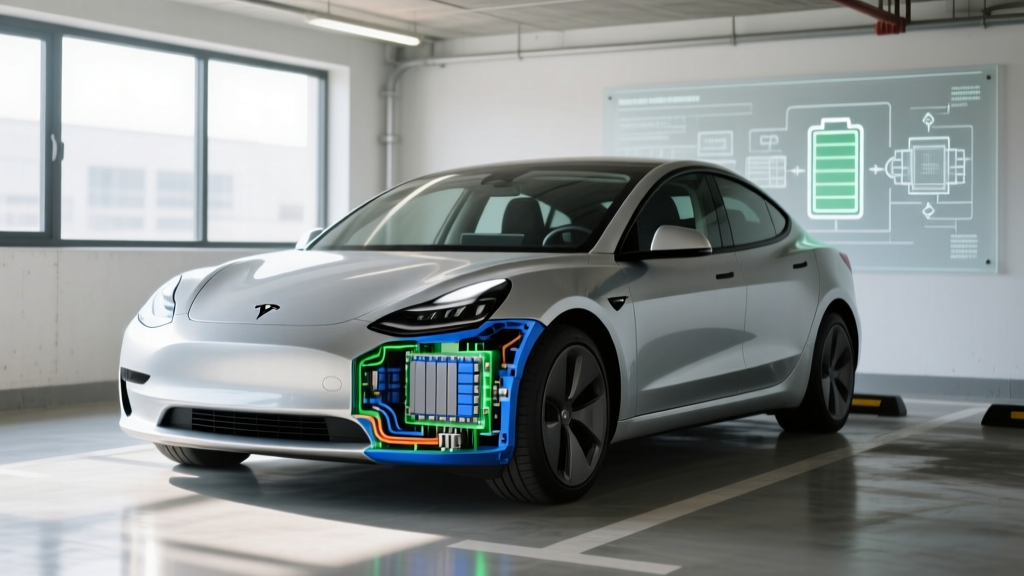
If you owned a 2007 Hyundai Santa Fe, you probably replaced its 12V lead-acid battery every three to five years — a routine $150 maintenance item. Modern electric vehicles use a fundamentally different high-voltage traction battery designed to last the lifetime of the car, but the chemistry, cost, and care requirements are far more complex. This guide breaks down exactly what powers today's EVs, how long those packs actually last, what replacement costs if it ever comes to that, and how battery technology is evolving through 2030.
LFP vs NMC/NCA: The Chemistry Decision Every EV Buyer Faces
Every battery-electric vehicle sold in the US in 2026 uses one of two dominant lithium-ion chemistries: LFP (lithium iron phosphate) or NMC/NCA (nickel manganese cobalt / nickel cobalt aluminum). The chemistry affects range, longevity, cold-weather behavior, and price — and manufacturers are increasingly choosing based on use case rather than defaulting to one.
| Attribute | LFP (LiFePO₄) | NMC / NCA |
|---|---|---|
| Energy Density | ~160–180 Wh/kg (lower) | ~230–300 Wh/kg (higher) |
| Typical Cycle Life | 3,000–5,000+ cycles | 1,000–2,000 cycles |
| Cold Performance (below 32°F) | Moderate — slower charging, ~15–20% range loss | Better — ~10–15% range loss |
| Thermal Stability | Excellent — very low thermal runaway risk | Good — requires active management |
| Cost per kWh (pack-level) | ~$80–$100 | ~$110–$140 |
| Recommended SoC for Daily Use | 100% (no penalty) | 80% (reduces degradation) |
| Notable 2026 Applications | Tesla Model 3 RWD, base Model Y, BYD, Ford Mustang Mach-E Select | Hyundai Ioniq 5/6, Kia EV6/EV9, Rivian, Lucid, Porsche Taycan |
Which is better? Neither is universally superior. LFP wins on longevity and cost — you can charge to 100% daily without accelerated degradation, making it ideal for commuters who need predictable range and plan to keep the car 8+ years. NMC/NCA wins on energy density and cold-weather usability, making it the choice for long-range models (300+ miles EPA) and buyers in northern climates. Tesla's split — LFP in base trims, NMC in Long Range — reflects this exact logic.
How Long Do EV Batteries Actually Last? Real Degradation Data
The most persistent myth in EV ownership is that batteries need frequent replacement, echoing the 3–5 year cycle of a conventional 12V battery (like the one in a 2007 Hyundai Santa Fe). The data tells a different story.
Typical EV Battery Degradation Curve (NMC and LFP, aggregated fleet data):
- Year 1 / 15,000 mi: ~2–3% capacity loss (initial formation loss)
- Year 3 / 45,000 mi: ~5–7% total loss
- Year 5 / 75,000 mi: ~8–10% total loss
- Year 8 / 120,000 mi: ~10–14% total loss
- Year 10 / 150,000 mi: ~12–18% total loss
These figures align with data from Geotab's fleet battery study, which tracked over 10,000 EVs across multiple model years. The key takeaway: degradation is steepest in the first year, then flattens into a slow, linear decline. Most modern EV batteries retain 85–90% of original capacity at the 8-year / 100,000-mile mark.
For context, a 2026 Hyundai Ioniq 5 with a 77.4 kWh (usable) NMC battery rated at 305 miles EPA would realistically deliver ~260–275 miles at year 8 — still entirely practical for daily driving and road trips.
Factors That Accelerate Degradation
- Frequent DC fast charging above 150 kW: Occasional use is fine; daily fast-charging at peak rates adds ~1–2% extra degradation per year vs. Level 2 home charging.
- Sustained high state of charge (NMC/NCA): Regularly sitting at 100% SoC stresses NMC cells. LFP chemistry tolerates 100% without penalty.
- Extreme heat exposure: Prolonged parking in 100°F+ ambient temps without thermal management accelerates electrolyte breakdown.
- Deep discharge cycles: Regularly draining below 10% SoC increases stress. Most BMS (battery management systems) include a buffer to prevent true 0%.
- Cold-weather fast charging without preconditioning: Charging a cold battery at high kW can cause lithium plating. Always use the vehicle's nav-based preconditioning feature.
What Does the EV Battery Warranty Actually Cover?
Federal law mandates a minimum 8-year / 100,000-mile warranty on EV battery packs for emissions-related compliance, and most manufacturers match or exceed this. However, the capacity retention threshold — the point at which the manufacturer must repair or replace — varies significantly.
| Manufacturer / Model | Warranty Period | Mileage Cap | Capacity Threshold |
|---|---|---|---|
| Hyundai (Ioniq 5/6) | 10 years | 100,000 mi | 70% of original capacity |
| Tesla (Model 3/Y LFP) | 8 years | 100,000 mi | 70% |
| Tesla (Model 3/Y LR NMC) | 8 years | 120,000 mi | 70% |
| Kia (EV6/EV9) | 10 years | 100,000 mi | 70% |
| Ford (Mach-E, F-150 Lightning) | 8 years | 100,000 mi | 70% |
| Rivian (R1T/R1S) | 8 years | 175,000 mi | 70% |
| BMW (i4/iX) | 8 years | 100,000 mi | 70% |
What's covered: Capacity loss below the stated threshold, manufacturing defects, and BMS failures. What's typically not covered: Damage from accidents, improper charging equipment, flooding, or modifications. Warranty claims require the battery to fall below the threshold as measured by dealer diagnostic tools — gradual range loss that stays above 70% is considered normal wear.
Hyundai's 10-year/100,000-mile coverage (applicable to models like the 2026 Ioniq 5) is among the strongest in the segment and reflects confidence in their battery management engineering. For comparison, that same Hyundai dealership would have offered a 3-year/36,000-mile bumper-to-bumper warranty on a 2007 Santa Fe — the traction battery warranties on modern EVs are fundamentally longer and more comprehensive.
EV Battery Replacement Cost: What It Actually Takes
Out-of-warranty battery replacement is the scenario that generates the most anxiety. Here are the real numbers as of 2026, based on manufacturer service bulletins and third-party repair data:
| Battery Size | Chemistry | Parts Cost | Labor (4–8 hrs) | Total Range |
|---|---|---|---|---|
| 50–60 kWh (compact) | LFP | $4,500–$7,000 | $600–$1,200 | $5,100–$8,200 |
| 70–85 kWh (mid-size) | NMC | $7,500–$12,000 | $800–$1,500 | $8,300–$13,500 |
| 90–110 kWh (large/truck) | NMC | $10,000–$18,000 | $1,000–$2,000 | $11,000–$20,000 |
| Module-level repair (partial) | Either | $1,500–$4,000 | $500–$1,000 | $2,000–$5,000 |
When is replacement typically needed? In most cases, it isn't. According to Consumer Reports, fewer than 5% of EVs require a full battery replacement within the first 10 years, and the vast majority of those are covered under warranty. The cars most likely to need out-of-warranty replacements are early-generation EVs (2011–2015 Nissan Leafs with passive air-cooled packs) that lacked modern thermal management.
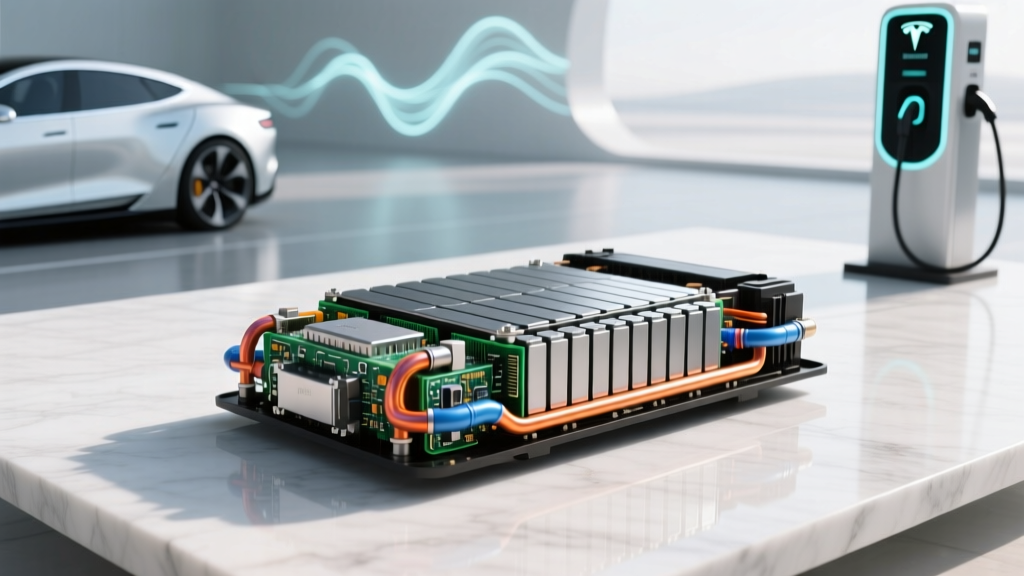
A growing trend in 2026 is module-level repair: instead of replacing the entire pack, specialized shops and dealers can identify and swap individual degraded modules, cutting costs by 60–70%. This is viable on packs with modular architecture (common in Hyundai/Kia, VW MEB, and older Teslas) but less so on structural battery packs (Tesla 4680, some BYD blade designs).
How to Check and Maximize Your EV Battery Health
Monitoring State of Health (SoH)
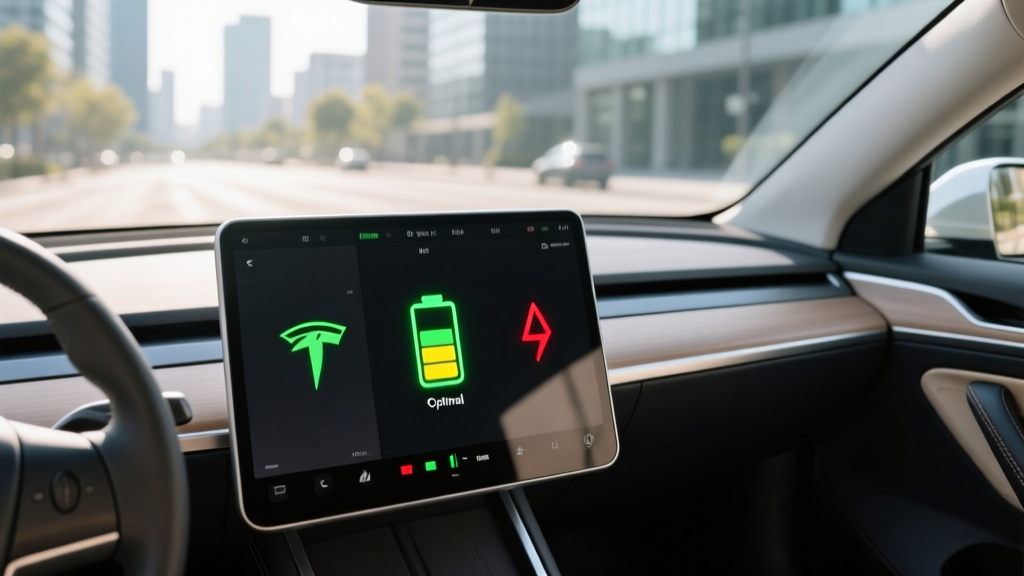
State of Health (SoH) is the percentage of original capacity your battery retains. Unlike the simple 12V battery in a 2007 Hyundai Santa Fe — where you'd notice slow cranking — EV battery health requires software tools:
- In-vehicle displays: Tesla, Hyundai, Kia, and BMW provide SoH or range-vs-original estimates in the settings menu. Tesla's service menu shows a degradation graph.
- OBD-II apps: Tools like Leaf Spy (Nissan), ABRP OBD, or Car Scanner can read raw SoH data from the BMS on most EVs.
- Dealer diagnostics: A service visit will produce a full battery health report with cell voltage variance — useful for warranty claims.
- Third-party services: Companies like Recurrent Auto provide fleet benchmarking so you can compare your pack's degradation against thousands of identical vehicles.
Best Practices for Maximizing Battery Longevity
- NMC/NCA owners: Set daily charge limit to 80%. Charge to 100% only before road trips. Avoid leaving the car at 100% SoC for more than a few hours.
- LFP owners: Charge to 100% at least once per week — this is required for accurate SoC calibration and does not harm the cells.
- All owners: Use Level 2 (7–11 kW) home charging as your primary method. Reserve DC fast charging for road trips or when genuinely needed.
- In extreme heat: Park in shade or a garage when possible. The vehicle's thermal management system draws power to cool the pack — leaving it plugged in allows grid power to handle this instead of the battery.
- In extreme cold: Use scheduled departure/preconditioning while plugged in. This warms the battery using grid power, improving efficiency and protecting against lithium plating during regenerative braking.
What's Next: Solid-State and Silicon Anode Batteries
Two technologies are poised to reshape EV batteries in the coming decade — but neither is available in a production vehicle you can buy today.
Solid-state batteries replace the liquid electrolyte with a solid ceramic or polymer, promising 30–50% higher energy density, faster charging, and improved safety. Toyota has announced a solid-state EV for 2027–2028 with a claimed 460-mile range and 10-minute fast-charge capability, but this remains preliminary and unverified in real-world conditions. Samsung SDI and QuantumScape are also in advanced testing phases. Realistic market availability for mainstream vehicles: 2028–2030.
Silicon anode batteries replace graphite anodes with silicon, increasing energy density by 20–40%. Companies like Sila Nanotechnologies and Group14 are supplying early production cells, with limited deployment in luxury and performance vehicles expected by 2027. The challenge — silicon expands ~300% during charging, requiring novel structural solutions — is being addressed but not fully solved at scale.
For buyers in 2026, today's LFP and NMC chemistries are mature, well-understood, and backed by extensive warranty coverage. Waiting for solid-state is not a practical purchase strategy unless your timeline extends well past 2029.
EV Battery FAQ
How long do EV batteries last in years and miles?
Most modern EV batteries (2020 and newer) are engineered for 15–20 years or 150,000–200,000+ miles before capacity drops below 80%. Fleet data from Geotab and Recurrent Auto shows median degradation of ~12–15% at the 150,000-mile mark for liquid-cooled NMC packs, and even less for LFP chemistry. Full failure requiring replacement within the warranty period is rare — under 5% of vehicles.
How much does an EV battery cost to replace in 2026?
Full pack replacement ranges from roughly $5,000 for a small LFP pack to $20,000 for a large NMC truck battery, including labor. However, most replacements are covered under the 8–10 year warranty. For out-of-warranty cases, module-level repair ($2,000–$5,000) is increasingly available and significantly cheaper.
What does the EV battery warranty cover and what does it exclude?
Federal minimum is 8 years / 100,000 miles at 70% capacity retention. Hyundai and Kia extend this to 10 years. Coverage includes capacity loss below threshold, cell defects, and BMS failures. Exclusions typically cover accident damage, flood, unauthorized modifications, and use of non-certified charging equipment. Always review your specific warranty booklet.
How do I check my EV's battery health at home?
Use your vehicle's built-in battery health display (available on most 2020+ EVs), an OBD-II Bluetooth adapter with a compatible app like Car Scanner or Leaf Spy, or visit your dealer for a diagnostic report. Third-party services like Recurrent Auto also offer benchmarking against fleet averages.
LFP vs NMC — which battery chemistry should I choose?
Choose LFP if you prioritize maximum cycle life, plan to keep the car 8+ years, want to charge to 100% daily without worry, and don't need 300+ miles of range. Choose NMC/NCA if you need long EPA range, live in a cold climate, or want the highest energy density for road trips. Both chemistries are proven and well-supported in 2026.
Does fast charging damage my EV battery?
Occasional DC fast charging (1–2 times per week) has minimal impact on modern batteries with active thermal management. Daily fast-charging at 150+ kW can add ~1–2% extra annual degradation compared to Level 2 charging. The bigger risk is fast-charging a cold battery without preconditioning, which can cause lithium plating — always use your car's navigation-based battery preconditioning when routing to a charger.
Is the EV battery the same as the 12V battery?
No. The high-voltage traction battery (50–110+ kWh) powers the motor and determines your range. The 12V auxiliary battery (typically 12V lead-acid or lithium) runs lights, infotainment, and computers — just like the 12V battery in a 2007 Hyundai Santa Fe. The 12V battery may need replacement every 3–5 years and costs $150–$400. It is not covered under the traction battery warranty.