Why EV Battery Chemistry Matters More Than You Think
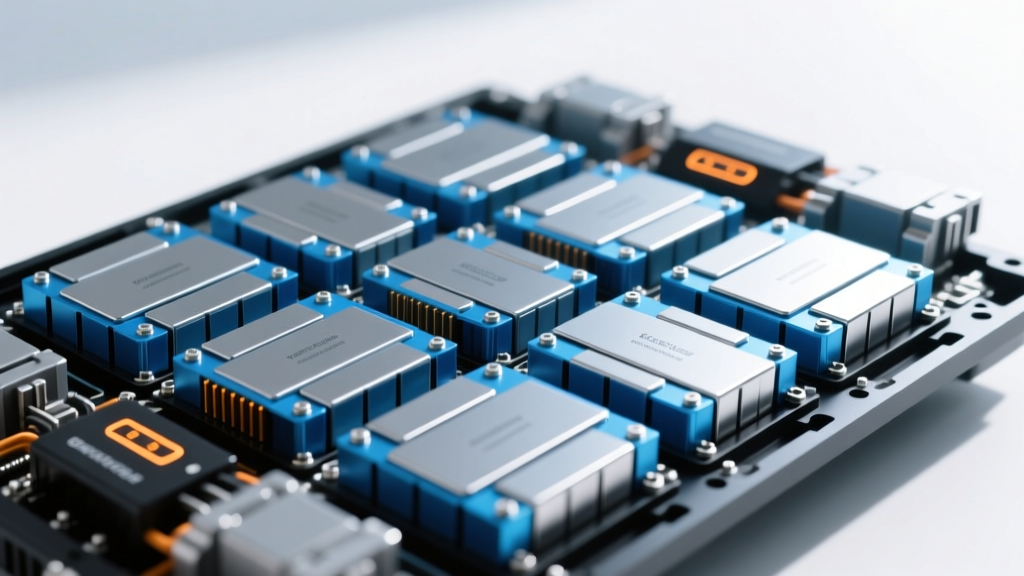
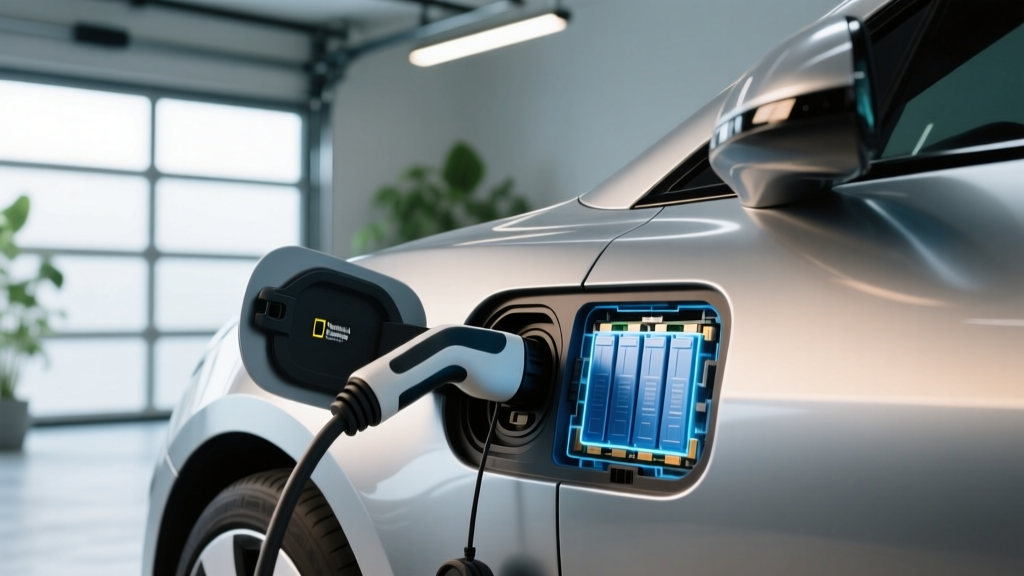
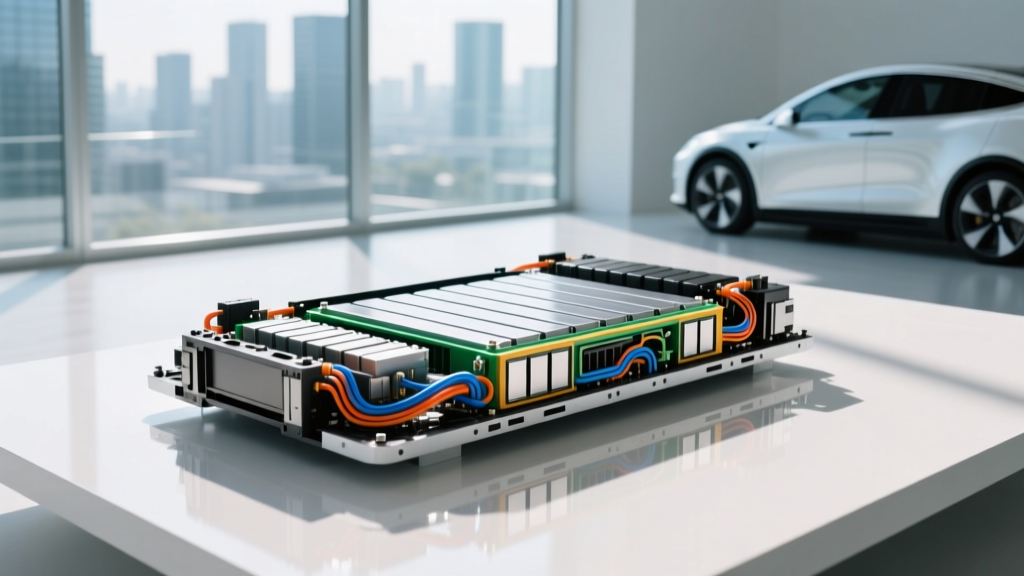
Whether you're evaluating a 2026 Tesla Model 3, a Ford F-150 Lightning, or even a battery-powered Bobcat compact loader, the lithium-ion cells underneath share more DNA than most buyers realize. The high-voltage traction battery is the single most expensive component in any electric vehicle or electric off-highway machine, and its chemistry dictates range, longevity, charging speed, and replacement economics.
This guide breaks down the two dominant chemistries — LFP (lithium iron phosphate) and NMC/NCA (nickel manganese cobalt / nickel cobalt aluminum) — with real degradation data, warranty benchmarks, and replacement cost ranges so you can make an informed decision.
LFP vs NMC/NCA: The Chemistry Showdown
Every modern EV and electric utility machine uses one of two primary cathode chemistries. The trade-offs are significant and affect your ownership experience from day one.
| Attribute | LFP (Lithium Iron Phosphate) | NMC / NCA (Nickel-Based) |
|---|---|---|
| Energy Density | ~160–180 Wh/kg (lower) | ~220–300 Wh/kg (higher) |
| Cycle Life | 3,000–5,000+ cycles | 1,000–2,500 cycles |
| Cold-Weather Performance | Moderate loss; slower charge acceptance below 32°F | Better low-temp charge/discharge |
| Thermal Stability | Excellent — less prone to thermal runaway | Good, but requires more active thermal management |
| Cost per kWh (cell level) | ~$80–$100 | ~$110–$140 |
| Cobalt / Nickel Content | Zero cobalt, zero nickel | Contains cobalt and/or nickel |
| Recommended SoC for Daily Use | 100% (no degradation penalty) | 80% for daily; 100% for trips only |
| Common in 2026 Models | Tesla Model 3 RWD, Model Y RWD, Ford Mustang Mach-E Select, BYD, battery-powered Bobcat E10e/E19e mini excavators | Tesla Long Range, Hyundai Ioniq 5/6, Rivian, GMC Hummer EV, Ford F-150 Lightning Extended Range |
The takeaway: LFP wins on longevity and cost; NMC wins on energy density and cold-weather range. If you charge at home nightly and don't need maximum range, LFP is the pragmatic choice. If you regularly road-trip 300+ miles or operate in sub-zero climates, NMC/NCA delivers more usable capacity per pound.
How Long Do EV Batteries Actually Last?
The persistent myth that EV batteries need replacement every 5–7 years is not supported by fleet data. According to analysis by Geotab's fleet study of over 10,000 EVs, the average lithium-ion EV battery loses roughly 1.8% of its capacity per year under typical use — meaning after 10 years, the average pack retains about 82% of its original capacity.
Typical Degradation Curve (Real-World Fleet Data)
| Timeframe | Average Capacity Retained | Notes |
|---|---|---|
| Year 1 | ~97–98% | Initial formation loss; steepest drop |
| Year 3 | ~94–95% | Curve flattens significantly |
| Year 5 | ~90–92% | Minimal perceptible range loss |
| Year 8 | ~85–88% | Approaching warranty threshold |
| Year 10 | ~80–84% | Still functional; reduced range |
| Year 15 | ~72–78% | Second-life territory; still drivable |
Source: Geotab fleet data, aggregated across multiple OEMs. Individual results vary by climate, charging habits, and chemistry.
Real-world context: A 2026 Tesla Model 3 Long Range with an EPA range of 363 miles and an NMC pack would realistically deliver roughly 310–330 highway miles when new. By year 10, that same vehicle might deliver ~285–305 highway miles — still entirely usable for most commutes. The battery doesn't "die"; it gradually holds less energy.
Battery Warranty Terms: What's Actually Covered
Federal regulations mandate a minimum 8-year / 100,000-mile warranty on EV batteries for emissions-related compliance in CARB states, and most manufacturers meet or exceed this baseline nationwide. The key metric is the capacity retention threshold — the percentage below which the manufacturer will repair or replace the pack.
| Manufacturer | Warranty Period | Mileage Cap | Capacity Threshold |
|---|---|---|---|
| Tesla (Model 3/Y LFP) | 8 years | 100,000 mi | 70% |
| Tesla (Model 3/Y LR NMC) | 8 years | 120,000 mi | 70% |
| Hyundai / Kia | 10 years | 100,000 mi | 70% |
| Ford (F-150 Lightning) | 8 years | 100,000 mi | 70% |
| GM (Ultium platform) | 8 years | 100,000 mi | 70% |
| Rivian | 8 years | 120,000 mi | 70% |
| BMW | 8 years | 100,000 mi | 70% |
Critical detail: Warranty coverage applies to defects and abnormal degradation below the threshold — not to gradual, normal capacity loss above 70%. If your 8-year-old EV still shows 74% capacity, that's considered normal wear. Always document your battery's State of Health (SoH) periodically in case you need a warranty claim.
EV Battery Replacement Cost: When and How Much
Most EV batteries outlive the vehicle's useful economic life. However, for buyers of used EVs, fleet operators, or owners of high-mileage vehicles, replacement cost is a legitimate consideration. Prices have dropped dramatically — from over $300/kWh in 2015 to roughly $110–$140/kWh at the cell level in 2026 — but labor, diagnostics, and pack integration add significantly to the final bill.
| Vehicle / Class | Battery Size (kWh) | Estimated Replacement Cost | Typical Need Window |
|---|---|---|---|
| Tesla Model 3 RWD (LFP) | ~60 kWh | $8,000–$12,000 | 15+ years / 200,000+ mi |
| Tesla Model Y Long Range | ~75 kWh | $12,000–$16,000 | 15+ years / 200,000+ mi |
| Hyundai Ioniq 5 | ~77.4 kWh | $11,000–$15,000 | 15+ years / 200,000+ mi |
| Ford F-150 Lightning Ext. Range | ~131 kWh | $18,000–$28,000 | 12–18 years / 180,000+ mi |
| GMC Hummer EV | ~212 kWh | $28,000–$40,000 | 12–18 years / 180,000+ mi |
| Battery-Powered Bobcat E19e (compact excavator) | ~43 kWh | $6,000–$10,000 | 5,000–8,000 operating hours |
The battery-powered Bobcat connection: Electric compact equipment like the Bobcat E10e and E19e mini excavators uses LFP chemistry for the same reasons passenger EVs do — long cycle life, safety in rugged environments, and zero-cobalt supply chains. The 43 kWh LFP pack in the E19e provides roughly 4–6 hours of continuous operation and is rated for 3,000+ charge cycles. Replacement economics follow a similar curve to passenger EVs, though the smaller pack keeps costs more manageable.
Factors That Accelerate (or Preserve) Battery Life
Not all miles are equal when it comes to battery wear. Research from the National Renewable Energy Laboratory (NREL) and real-world fleet data identify several key factors:
Battery Care Best Practices
- Limit DC fast charging to road trips. Frequent 150–350 kW DC sessions stress cells thermally. For daily use, Level 2 home charging at 7–11 kW is ideal. Occasional fast charging (1–2x per week) shows negligible degradation impact; daily fast charging can accelerate loss by 1–2% per year.
- Avoid extreme State of Charge storage. For NMC/NCA packs, don't sit at 100% SoC for days. Set your charge limit to 80% for daily driving and only charge to 100% when you're leaving within 24 hours. LFP packs are exempt — charge to 100% regularly; in fact, Tesla recommends periodic 100% charges for LFP to recalibrate the BMS.
- Precondition before fast charging. Battery preconditioning (available on Tesla, Hyundai, Ford, and most 2026 EVs) warms the pack to ~95–105°F, enabling faster charge acceptance and reducing lithium plating risk. Navigate to a charger using the car's built-in routing to trigger this automatically.
- Minimize exposure to extreme heat. Sustained ambient temperatures above 100°F accelerate electrolyte decomposition. Garage parking in hot climates measurably extends pack life.
- Don't baby it too much. Modern battery management systems (BMS) buffer the top and bottom of the pack — a "100%" charge is actually ~95% of true capacity, and "0%" leaves ~5% in reserve. Normal driving within the displayed range is fine.
How to Check and Monitor Your Battery's State of Health
State of Health (SoH) is the percentage of original capacity your battery can still hold. A new EV has 100% SoH; a well-maintained 5-year-old EV might show 92%.
Methods to Check SoH
- In-vehicle displays: Tesla shows battery health in the service menu (accessible via the touchscreen). Hyundai/Kia includes a battery health indicator in the EV settings. Ford's MyFordPass app provides estimated SoH.
- OBD-II diagnostic tools: Devices like the OBDLink SX paired with apps such as Leaf Spy (Nissan) or Scan My Tesla can read cell-level voltage, pack SoH, and individual module balance.
- Dealer diagnostics: Any authorized service center can run a full battery health report. Request this when purchasing a used EV — it's the most reliable verification.
- Third-party services: Companies like Recurrent Auto provide battery health reports for used EV transactions, aggregating data from connected vehicles.
For battery-powered Bobcat owners: Bobcat's Machine IQ telematics system tracks battery SoH, cycle count, and thermal history remotely. Fleet managers can monitor degradation trends and plan replacements proactively — similar to how Tesla's fleet data informs individual owners.
Emerging Battery Tech: Solid-State and Silicon Anodes
Next-generation battery technologies promise step-change improvements, but realistic timelines matter more than laboratory breakthroughs.
Solid-State Batteries
Solid-state cells replace the liquid electrolyte with a solid ceramic, polymer, or sulfide separator, enabling lithium-metal anodes that could double energy density to 400–500 Wh/kg. Toyota has announced a solid-state battery targeting 2027–2028 production in limited models. Samsung SDI and QuantumScape are also in late-stage validation. However, manufacturing scale-up remains the bottleneck — expect solid-state to reach mainstream volume (and affordable pricing) no earlier than 2030–2032.
Silicon Anode Technology
Silicon can store roughly 10x more lithium ions per gram than graphite, but it swells ~300% during charging, causing mechanical degradation. Companies like Sila Nanotechnologies and Group14 Technologies have begun commercial shipments of silicon-dominant anode materials for 2026–2027 model-year EVs. Expect modest energy density gains of 15–25% in near-term applications, with larger gains as the technology matures through 2030.
Bottom line: If you're buying an EV or electric equipment in 2026, today's LFP and NMC chemistries are mature, well-understood, and backed by extensive warranty coverage. Waiting for solid-state means waiting 4–6+ years for affordable, high-volume availability.
Frequently Asked Questions
How long do EV batteries last in years and miles?
Based on fleet data from Geotab, the average EV battery retains 80–85% of its original capacity after 10 years and 150,000 miles. Most packs remain functional for 15–20 years, though with reduced range. Catastrophic failure (sudden death) is rare — degradation is gradual and linear after the first year.
How much does an EV battery cost to replace in 2026?
Replacement costs range from ~$8,000 for a 60 kWh LFP pack (Tesla Model 3 RWD) to $28,000–$40,000 for a 200+ kWh pack (GMC Hummer EV). For battery-powered Bobcat compact equipment, expect $6,000–$10,000. Most owners never need a replacement — the battery typically outlasts the vehicle's economic value.
What does the EV battery warranty actually cover?
Federal law mandates a minimum 8-year/100,000-mile warranty. Most OEMs guarantee 70% capacity retention over that period. If your battery degrades below 70% within the warranty window, the manufacturer repairs or replaces it at no cost. Normal gradual loss above 70% is not covered.
How do I check and maximize my EV battery health?
Check SoH through your vehicle's settings menu, an OBD-II diagnostic tool, or a dealer service report. Maximize longevity by favoring Level 2 home charging over DC fast charging, keeping NMC packs between 20–80% SoC for daily use, preconditioning before fast charges, and avoiding prolonged storage at extreme temperatures.
LFP vs NMC — which battery chemistry is better for me?
Choose LFP if you want maximum cycle life (3,000–5,000+ cycles), lower cost, and the ability to charge to 100% daily without penalty. Choose NMC/NCA if you need maximum range per charge, better cold-weather performance, or operate in sub-freezing climates regularly. Both chemistries are proven and reliable — the "better" choice depends on your driving patterns and climate.
Does a battery-powered Bobcat use the same battery tech as EVs?
Yes. Bobcat's electric compact equipment (E10e, E19e) uses LFP lithium-ion cells — the same chemistry found in Tesla Model 3 RWD and Ford Mustang Mach-E Select. The shared supply chain means cost reductions in passenger EV batteries directly benefit electric off-highway equipment pricing.