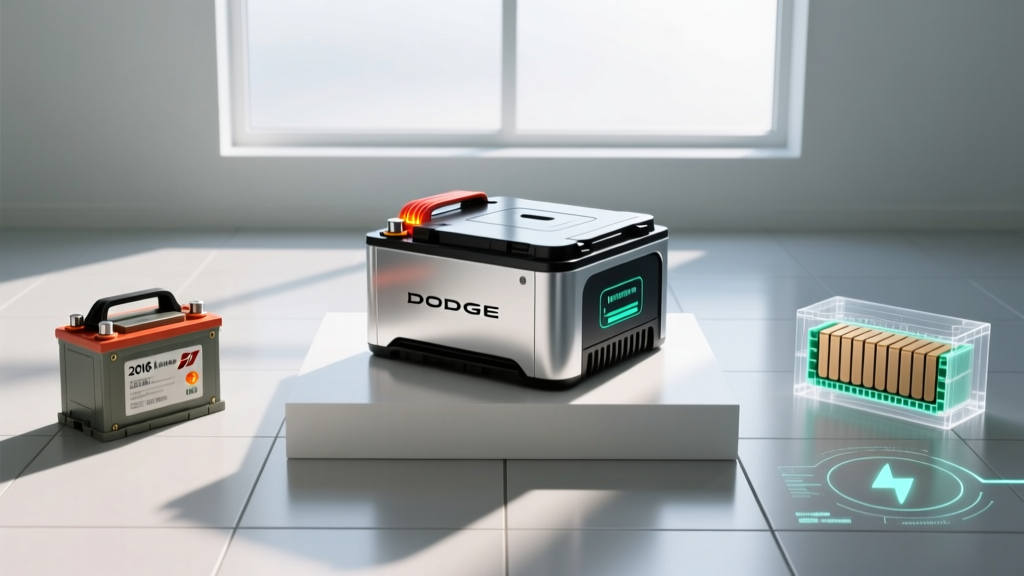
If you've landed here searching for an "04 Dodge Ram 1500 battery," you're likely looking for a replacement 12-volt lead-acid or AGM battery for a classic work truck — a Group 65 or Group 27 cell that costs $150–$250 at an auto parts store. That's a perfectly valid need, but it has nothing to do with the high-voltage traction batteries powering modern electric vehicles. The two technologies exist in completely different universes of engineering, cost, and lifespan.
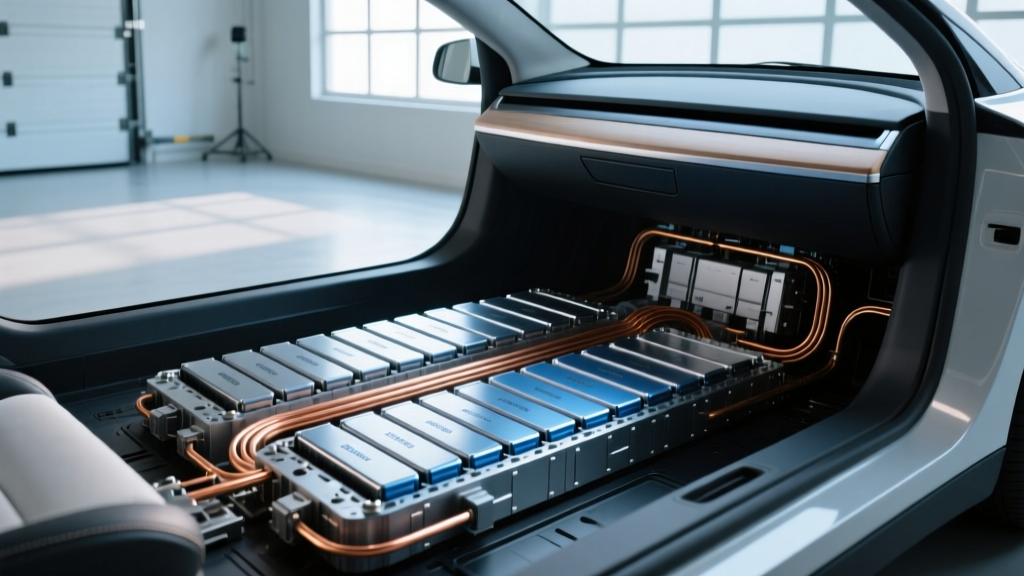
This guide is about the electric vehicle traction battery — the 60–130 kWh lithium-ion pack that actually propels an EV down the road, costs $8,000–$25,000 to replace, and is the single most expensive component in any battery-electric or plug-in hybrid vehicle. Whether you're evaluating a new EV purchase, monitoring your current pack's health, or trying to understand whether LFP or NMC chemistry is right for your driving patterns, this is the data-driven breakdown you need.
How Long Do EV Batteries Actually Last?
The short answer: almost certainly longer than you'll own the vehicle. The long answer requires looking at real degradation data rather than manufacturer marketing claims.
Modern EV battery packs are engineered for 1,500–3,000 full charge cycles before reaching 70–80% of their original capacity. For a vehicle with 300 miles of EPA-rated range, that translates to 450,000–900,000 miles of theoretical cycle life. In practice, most drivers never approach these limits because partial cycling (charging from 20% to 80%, for instance) is far gentler on cell chemistry than full 0–100% cycles.
Real-world fleet data tells a more grounded story. According to data aggregated by Recurrent Auto, which tracks over 15,000 EVs in daily use:
- Tesla Model 3/Y (NMC/NCA): Average capacity loss of 5–8% over the first 100,000 miles, with degradation slowing significantly after the initial 20,000-mile break-in period.
- Chevrolet Bolt EV (NMC): Approximately 7–10% loss at 100,000 miles, though early-model-year Bolts (2017–2018) saw higher degradation before GM's battery software updates.
- Nissan Leaf (NMC, passively cooled): Historically higher degradation — 15–25% at 100,000 miles — largely because the Leaf lacks active liquid thermal management, making it more susceptible to heat-related wear.
- Tesla Model 3 LFP (Standard Range): Minimal measurable degradation (3–5%) over 80,000+ miles in fleet data, demonstrating LFP's superior cycle longevity.
The critical takeaway: battery degradation is not linear. Most packs lose 2–5% capacity in the first year or two, then settle into a very gradual decline of roughly 0.5–1.5% per year under normal use. A well-maintained pack should retain 80–90% of its original capacity at 150,000 miles.
LFP vs NMC/NCA: The Chemistry Trade-Off Explained
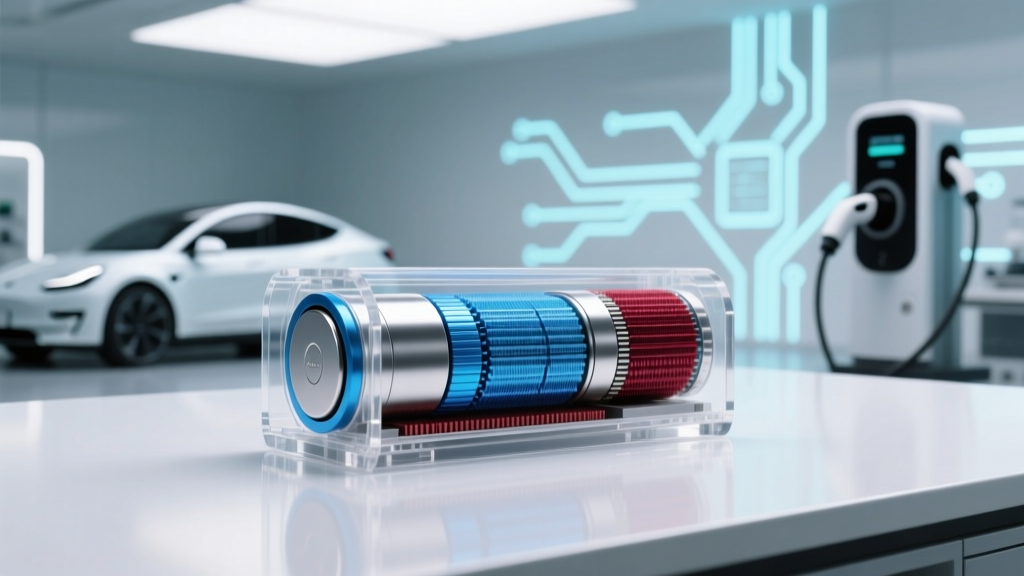
Not all lithium-ion batteries are the same. The cathode chemistry determines a pack's energy density, lifespan, cold-weather behavior, cost, and safety profile. In 2026, two chemistries dominate the consumer EV market:
NMC (Nickel Manganese Cobalt) and NCA (Nickel Cobalt Aluminum) are high-energy-density chemistries used in most long-range EVs — the Tesla Model Y Long Range, Hyundai Ioniq 5, Ford F-150 Lightning Extended Range, and BMW iX all use NMC or NCA variants. These packs pack more kWh into a smaller, lighter footprint, which is why they're preferred for vehicles targeting 300+ miles of range.
LFP (Lithium Iron Phosphate) trades some energy density for dramatically longer cycle life, lower cost, better thermal stability, and zero cobalt content. Tesla uses LFP in Model 3 and Model Y Standard Range variants. BYD's Blade Battery is LFP. The Ford Mustang Mach-E Select rear-wheel-drive and base Rivian R1S/R1T packs have moved to LFP for 2025–2026 model years.
| Attribute | LFP (Lithium Iron Phosphate) | NMC / NCA (Nickel-based) |
|---|---|---|
| Energy Density | ~160–180 Wh/kg (lower) | ~220–300 Wh/kg (higher) |
| Cycle Life | 3,000–5,000+ cycles to 80% SoH | 1,000–2,000 cycles to 80% SoH |
| Cold-Weather Performance | Moderate; loses ~30–40% range at 20°F | Better; loses ~20–30% range at 20°F |
| Thermal Stability / Safety | Excellent; higher runaway threshold | Good; requires robust BMS and cooling |
| Cost (per kWh, pack-level) | ~$90–$110/kWh (2026 est.) | ~$120–$150/kWh (2026 est.) |
| Recommended Charge Habit | Can charge to 100% daily; benefits from it | Best kept 20–80% daily; 100% for trips only |
| Cobalt Content | None | Yes (supply chain / ethical concerns) |
| Typical Use Case | Standard-range models, fleet vehicles, daily commuters | Long-range, performance, and towing-focused models |
Which is better? It depends on your driving pattern. If you commute 40–80 miles daily and can charge at home every night, LFP is arguably the superior choice — you'll never stress about charging to 100%, and the pack will likely outlast the vehicle's body. If you regularly drive 250+ miles between charges, tow frequently, or live in a sub-zero climate where every mile of range matters, NMC/NCA's higher energy density justifies the trade-off in cycle life.
What Does the EV Battery Warranty Actually Cover?
Federal law mandates that EV battery warranties cover a minimum of 8 years / 100,000 miles. In California and states that follow CARB (California Air Resources Board) emissions standards, that extends to 10 years / 150,000 miles. Most manufacturers exceed these minimums in their capacity-retention guarantees.
| Manufacturer | Warranty Period | Capacity Retention Threshold | Notes |
|---|---|---|---|
| Tesla (Model 3/Y LFP) | 8 yr / 120,000 mi | 70% | Long Range (NMC): 8 yr / 120,000 mi |
| Hyundai / Kia | 10 yr / 100,000 mi | 70% | Among the longest coverage in the industry |
| Ford (F-150 Lightning, Mach-E) | 8 yr / 100,000 mi | 70% | Covers battery and hybrid/electric components |
| GM (Ultium platform) | 8 yr / 100,000 mi | 70% (some models 60%+ for EREVs) | Covers capacity loss and defects |
| Rivian | 8 yr / 175,000 mi | 70% | Highest mileage threshold among major OEMs |
| BMW / Mercedes | 8 yr / 100,000 mi | 70% | Premium brands follow industry standard |
The critical detail most buyers miss: the warranty triggers only when capacity drops below the stated threshold (typically 70%). A pack that degrades from 100% to 72% over 8 years is functioning within warranty specifications, even though you've lost nearly a third of your original range. In practice, reaching the warranty threshold under normal use is rare — which is exactly why manufacturers offer these terms confidently.
Warranties cover defects and abnormal degradation, not damage from accidents, flooding, or improper modifications. They also typically do not cover gradual capacity loss that stays above the threshold. Always read the specific warranty booklet for your model year — terms change, and the fine print matters.
EV Battery Replacement Cost: What You'd Actually Pay
This is where the "04 Dodge Ram 1500 battery" comparison becomes instructive. A replacement 12V battery for that truck runs about $180. An EV traction battery replacement is a fundamentally different financial event — but it's also one that most owners will never face.
| Vehicle | Battery Capacity | Chemistry | Estimated Replacement Cost |
|---|---|---|---|
| Tesla Model 3 Standard Range | 60 kWh | LFP | $8,000–$12,000 |
| Tesla Model Y Long Range | 82 kWh | NMC | $12,000–$16,000 |
| Hyundai Ioniq 5 | 77.4 kWh | NMC | $10,000–$15,000 |
| Ford F-150 Lightning Extended Range | 131 kWh | NMC | $18,000–$25,000 |
| Chevrolet Bolt EV | 65 kWh | NMC | $9,000–$14,000 |
| BMW iX xDrive50 | 111.5 kWh | NMC | $18,000–$24,000 |
| Rivian R1T (Large Pack) | 135 kWh | NMC | $20,000–$28,000 |
These figures include the battery pack and labor but can vary significantly by region, service center, and whether OEM-new, remanufactured, or salvage units are used. The trend is clear: pack-level costs have dropped from over $1,000/kWh in 2010 to roughly $110–$150/kWh in 2026, according to BloombergNEF lithium-ion battery price surveys. By the time most current EVs need a replacement (if ever), costs will be meaningfully lower.
When is replacement typically needed? Almost never during the vehicle's first ownership cycle. Battery replacement becomes relevant at 200,000+ miles or 15+ years, and even then, many packs retain 70–80% capacity — reduced but functional. The more common scenario is individual module or cell replacement rather than a full pack swap, which costs a fraction of the figures above.
Factors That Accelerate (or Slow) Battery Degradation
Your battery's lifespan isn't predetermined — it's shaped by how you charge, drive, and store the vehicle. The physics is well understood:
Heat is the primary enemy. Sustained exposure to high temperatures accelerates electrolyte decomposition and cathode degradation. This is why liquid-cooled battery packs (standard on virtually every modern EV except the base Nissan Leaf) dramatically outlast passively cooled designs. Parking in shade, preconditioning while plugged in, and avoiding repeated high-speed driving in 100°F+ heat all help.
DC fast charging isn't the villain it's often made out to be — but frequency matters. Occasional road-trip fast charging has minimal impact. Daily reliance on 150+ kW DC charging, particularly without preconditioning, does measurably increase degradation rates. Tesla's own fleet data shows vehicles that Supercharge frequently have roughly 1–2% more degradation at 100,000 miles compared to home-charged vehicles — noticeable but not catastrophic.
State of Charge (SoC) habits matter significantly for NMC/NCA. Storing or regularly sitting at 100% SoC stresses nickel-based cathodes. The 20–80% daily window is the sweet spot. LFP chemistry is far more tolerant of 100% SoC — in fact, Tesla recommends periodic 100% charges for LFP packs to allow the BMS (Battery Management System) to recalibrate cell balancing.
Cold temperatures reduce range temporarily but don't cause permanent damage unless you're fast-charging a frozen pack without preconditioning. Modern EVs handle this automatically when you navigate to a charger — the thermal management system warms the pack before electrons flow.
Battery Longevity Checklist
- ✅ Set daily charge limit to 80% (NMC/NCA) or 100% (LFP — check your manual)
- ✅ Use Level 2 home charging as your primary method; reserve DCFC for road trips
- ✅ Precondition the battery before fast charging (use navigation to charger)
- ✅ Avoid leaving the vehicle at 0% or 100% SoC for extended periods (days/weeks)
- ✅ Park in shade or a garage in hot climates when possible
- ✅ Install manufacturer software updates — they often include BMS refinements
- ✅ If storing for 2+ weeks, leave plugged in with charge limit set to 50–60%
- ❌ Don't fast-charge daily unless your commute demands it
- ❌ Don't ignore thermal warnings or reduced charge-speed notifications
How to Check and Monitor Battery State of Health (SoH)
State of Health (SoH) is the percentage of original capacity your battery currently retains. A new pack is 100% SoH; a pack that held 80 kWh when new and now holds 72 kWh is at 90% SoH.
OEM methods: Most modern EVs display battery health information in the vehicle's infotainment or mobile app. Tesla shows estimated range at full charge, which you can compare to the original EPA figure. Hyundai/Kia's Bluelink app includes battery health metrics. BMW's iDrive system provides SoH percentage in the vehicle status menu on newer models.
Third-party diagnostics: Services like Recurrent offer ongoing battery health tracking by connecting to your vehicle's telematics data. Some independent EV shops can perform a controlled discharge test to measure actual usable capacity — this is the gold standard for SoH assessment and is particularly valuable when buying a used EV.
OBD-II readers: Tools like the OBDLink SX combined with apps such as Leaf Spy (for Nissan Leaf) or TeslaFi (for Tesla) can pull detailed cell-level voltage data, internal resistance readings, and degradation estimates. For most buyers, comparing the vehicle's displayed full-charge range against the original EPA estimate (adjusted for the known ~5% initial break-in loss) provides a reasonable SoH estimate.
If you're evaluating a used EV, request a battery health report from the seller or have one performed at a dealership or qualified EV service center before purchase. A pack below 85% SoH at under 80,000 miles may indicate abuse (repeated DC fast charging, chronic 100% storage, or heat exposure) and should factor into the price negotiation.
Emerging Battery Tech: Solid-State, Silicon Anodes, and What's Real
The battery technology landscape is evolving rapidly, but separating laboratory breakthroughs from showroom reality is essential for buyers making decisions today.
Silicon-dominant anodes: Companies like Sila Nanotechnologies and Group14 are already shipping silicon-enhanced anode materials that boost energy density by 10–20% over conventional graphite anodes. These are appearing in limited-production vehicles and are expected to become mainstream by 2027–2028. The benefit: more kWh in the same physical pack size, meaning more range without larger, heavier batteries.
Solid-state batteries: These replace the liquid electrolyte with a solid conductor, promising higher energy density (potentially 400+ Wh/kg at the cell level), faster charging, and improved safety. Toyota has announced a solid-state battery targeting 2027–2028 production vehicles with 750 km (~465 miles) of range and 10-minute fast charging. Samsung SDI, QuantumScape, and Solid Power are pursuing similar timelines. However, manufacturing at automotive scale remains the unresolved challenge. Expect limited, premium-vehicle deployment starting in 2028, with broad market availability not until 2030 or later.
Sodium-ion batteries: CATL and BYD are deploying sodium-ion cells in budget EVs in China. Sodium is abundant and cheap, but energy density is ~30% lower than LFP. These may appear in entry-level US-market EVs by 2028–2029, primarily in urban commuter vehicles where range demands are modest.
What this means for current buyers: Don't delay an EV purchase waiting for solid-state. The chemistries available today — LFP and NMC — are mature, well-understood, and backed by real-world durability data spanning hundreds of billions of miles globally. Future chemistries will be better, but today's batteries are already good enough for the vast majority of drivers.
Why the "04 Dodge Ram 1500 Battery" Search Misses the Bigger EV Story
The 2004 Dodge Ram 1500 is a conventional internal-combustion pickup with a 12-volt electrical system. Its battery is a lead-acid or AGM unit that starts the engine, powers accessories, and costs under $250 to replace. It typically lasts 3–5 years.
The contrast with EV traction batteries is stark — and illustrative. Modern electric pickups like the Ford F-150 Lightning, Rivian R1T, and Chevrolet Silverado EV carry 100–200+ kWh battery packs that weigh 1,200–2,000 pounds, cost $15,000–$25,000 to replace, and are engineered to last 15–20 years. These vehicles also still have a 12V auxiliary battery (often lithium-ion in newer models) that powers accessories and electronics — but that's a separate, small, inexpensive component, not the traction battery.
If you're considering converting a classic truck to electric or simply comparing the ownership economics of an aging ICE truck versus a new EV pickup, the battery is the central variable. The F-150 Lightning's 131 kWh Extended Range pack gives it an EPA-estimated range of 320 miles, can power your home during an outage via Ford Intelligent Backup Power (up to 9.6 kW continuous), and will likely retain 80%+ capacity at 150,000 miles. That's a fundamentally different value proposition than swapping a $180 lead-acid battery every four years — but the upfront cost difference is equally dramatic.
Frequently Asked Questions
How long do EV batteries last in years and miles?
Most modern EV battery packs retain 80–90% of their original capacity at 150,000 miles or 10–12 years of typical use. Full pack replacement before 200,000 miles is uncommon under normal driving and charging conditions. Federal warranty requirements mandate coverage for at least 8 years / 100,000 miles, and many manufacturers extend this further.
How much does it cost to replace an EV battery?
Out-of-warranty replacement costs range from approximately $8,000 for a 60 kWh LFP pack (Tesla Model 3 Standard Range) to $25,000+ for a 130+ kWh NMC pack (F-150 Lightning Extended Range, Rivian R1T). Costs are declining roughly 8–12% annually as cell manufacturing scales. Most owners never face this expense because the pack outlasts the vehicle's economic life, and warranty coverage protects against abnormal degradation.
What does the EV battery warranty actually cover?
Battery warranties cover capacity loss below a defined threshold (typically 70% of original capacity) and manufacturing defects for 8–10 years or 100,000–175,000 miles, depending on the manufacturer and state. They do not cover damage from accidents, modifications, or environmental events. Check your specific warranty booklet for exact terms, as they vary by model year and jurisdiction.
How do I check my EV battery's State of Health?
Compare your vehicle's displayed range at full charge against the original EPA-rated range. Most OEM apps and infotainment systems also show battery health metrics. For a precise measurement, a dealership or EV-specialized shop can perform a controlled capacity test. Third-party services like Recurrent provide ongoing SoH tracking via connected vehicle data.
Is LFP better than NMC for daily driving?
For daily commuting and home charging, LFP is generally the better choice. It tolerates 100% daily charging, offers 2–3× the cycle life of NMC, costs less, and contains no cobalt. The trade-off is lower energy density (meaning less range for a given pack size) and somewhat worse cold-weather performance. If you need maximum range for road trips or towing, NMC/NCA remains the better option.
Does fast charging damage my EV battery?
Occasional DC fast charging has minimal impact on battery health. Daily fast charging without preconditioning can add roughly 1–2% additional degradation over 100,000 miles compared to Level 2 home charging. Modern battery management systems actively protect the pack by tapering charge speed at high SoC and managing cell temperatures. Use fast charging for road trips; rely on Level 2 for daily needs.
Will solid-state batteries make current EVs obsolete?
Not anytime soon. Solid-state batteries are expected to enter limited production vehicles around 2027–2028, with broad availability not until 2030+. Current LFP and NMC chemistries are mature, reliable, and backed by extensive real-world data. If an EV meets your needs today, there is no practical reason to wait for solid-state technology to reach the market at scale.