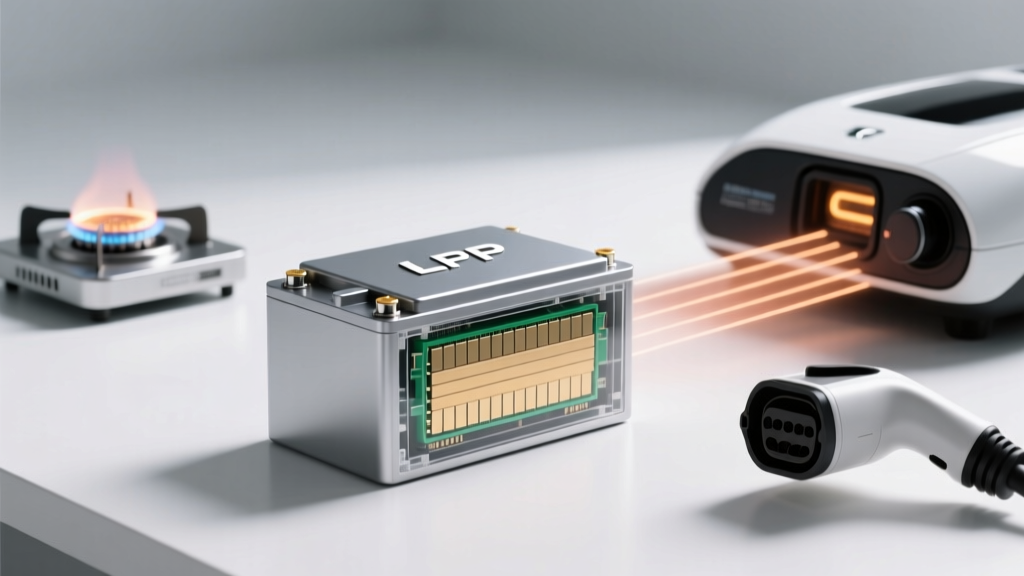
Search for "EV battery jumping" and you'll hit a wall of conflicting advice. Some results discuss jump-starting a dead 12V auxiliary battery; others conflate it with high-voltage traction-battery failure. For electric-vehicle owners, clarity on what can and cannot be "jumped" — and what actually happens when a traction battery ages — is essential to avoiding costly mistakes and unnecessary anxiety.
This guide separates the 12V auxiliary system from the high-voltage pack, then dives deep into the traction battery: chemistry trade-offs, real degradation data, warranty coverage, replacement economics, and the habits that extend (or shorten) pack life. All figures reflect 2026 model-year vehicles and current market pricing.
First: You Cannot Jump-Start a High-Voltage EV Traction Battery
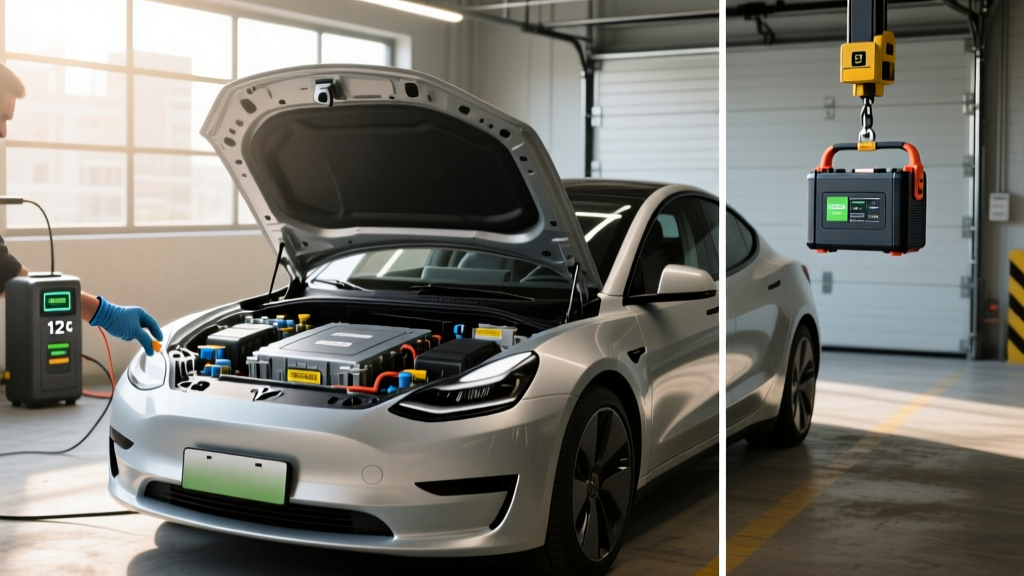
The single most important distinction in EV ownership is between the 12V auxiliary battery and the high-voltage (HV) traction battery. The 12V battery powers lights, infotainment, door locks, and — critically — the contactors that close the circuit to the main pack. If the 12V dies, the car won't start, and it can look like the entire EV is dead.
However, the HV traction battery (typically 400V–800V, 50–130 kWh) is a sealed, liquid-cooled system with no provision for external jump-starting. Attempting to apply jumper cables or a booster to HV components is extremely dangerous and will void your warranty. If your traction battery has genuinely failed, the only remedy is professional diagnosis and module or full-pack replacement at a certified service center.
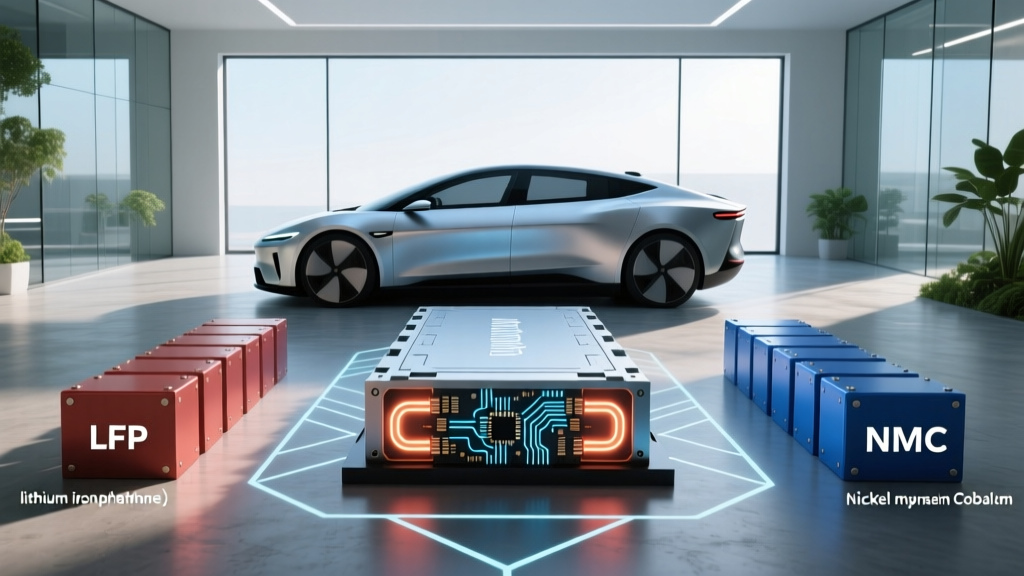
LFP vs NMC/NCA: Which Chemistry Powers Your EV?
Most 2026 EVs use one of two lithium-ion chemistries for their traction packs: LFP (lithium iron phosphate) or NMC/NCA (nickel manganese cobalt / nickel cobalt aluminum). The chemistry determines energy density, cycle life, cold-weather behavior, and cost — and it fundamentally shapes your ownership experience.
| Attribute | LFP (LiFePO₄) | NMC / NCA |
|---|---|---|
| Energy Density | Lower (~160–180 Wh/kg cell-level) | Higher (~230–300 Wh/kg cell-level) |
| Cycle Life | 3,000–6,000+ cycles to 80% SoH | 1,000–2,500 cycles to 80% SoH |
| Cold Performance | Weaker below 32°F; ~15–25% range loss in freezing temps | Better cold tolerance; ~10–20% range loss in freezing temps |
| 100% SoC Charging | Recommended regularly for cell balancing | Best kept 20–80% daily; 100% for trips only |
| Cost (per kWh) | Lower — ~$80–$100/kWh pack-level (2026) | Higher — ~$110–$140/kWh pack-level (2026) |
| Common In 2026 Models | Tesla Model 3/Y RWD, Ford Mustang Mach-E Select (base), BYD, Rivian Standard | Tesla Long Range, Hyundai Ioniq 5/6, BMW i4/iX, most luxury/performance EVs |
| Thermal Runaway Risk | Very low | Low (but higher than LFP) |
The practical takeaway: LFP packs trade range-per-pound for dramatically longer cycle life and tolerance for daily 100% charges. If you commute short distances and charge at home nightly, LFP is arguably the more durable choice. If you need maximum range in a single charge — especially in cold climates — NMC/NCA remains the better fit.
How Long Do EV Batteries Actually Last?
The question "how long do EV batteries last?" has a data-backed answer that surprises many first-time EV buyers: the vast majority of traction batteries outlast the vehicle they're installed in.
According to fueleconomy.gov, modern liquid-cooled EV battery packs are engineered for 200,000+ miles of service. Real-world fleet data from Tesla's 2025 Impact Report showed that Model 3/Y packs retained an average of 88% capacity at 200,000 miles. Hyundai and Kia report similar figures for their E-GMP platform vehicles, with most Ioniq 5 and EV6 packs showing 5–8% degradation at 100,000 miles under normal use.
- Year 1 / 15,000 mi: ~2–4% capacity loss (initial formation drop)
- Year 3 / 45,000 mi: ~5–8% total loss
- Year 5 / 75,000 mi: ~8–12% total loss
- Year 8 / 120,000 mi: ~10–15% total loss
- Year 10 / 150,000 mi: ~12–18% total loss
Note: Degradation is non-linear — it's steepest in the first year, then flattens significantly. LFP packs typically show slower degradation but start with lower total capacity. Data compiled from manufacturer fleet reports and Recurrent Auto battery health studies.
For context, a 2026 Tesla Model Y Long Range with a 75 kWh usable NMC pack and 320-mile EPA rating would realistically retain roughly 275–290 miles of range at 100,000 miles — still very livable. Full pack replacement is rare and usually triggered by a manufacturing defect or physical damage, not gradual wear.
What Does the EV Battery Warranty Actually Cover?
Federal law mandates that EV battery warranties cover a minimum of 8 years / 100,000 miles (10 years / 150,000 miles in California and states adopting CARB standards). But the details — particularly the capacity-retention threshold — vary significantly by manufacturer.
| Manufacturer | Duration | Mileage | Capacity Threshold |
|---|---|---|---|
| Tesla (Model 3/Y) | 8 years | 100,000–120,000 mi | 70% retention |
| Hyundai / Kia (E-GMP) | 10 years | 100,000 mi | 70% retention |
| Ford (Mach-E, F-150 Lightning) | 8 years | 100,000 mi | 70% retention |
| GM (Ultium platform) | 8 years | 100,000 mi | 70% retention (60% on Bolt EV/EUV) |
| BMW (i4, iX, i7) | 8 years | 100,000 mi | 70% retention |
| Rivian (R1T, R1S) | 8 years | 175,000 mi | 70% retention |
What "70% retention" means in practice: If your 75 kWh pack drops below 52.5 kWh of usable capacity within the warranty period, the manufacturer will repair or replace it (often with a refurbished pack of equivalent capacity). The warranty covers defects and abnormal degradation — it does not cover damage from accidents, flooding, improper modifications, or use of non-approved charging equipment.
How Much Does an EV Battery Replacement Cost?
Out-of-warranty battery replacement is the scenario that fuels EV anxiety — but it's also the least likely outcome for most owners. Still, understanding the cost range is essential for long-term planning, especially if you plan to keep your EV past the warranty period or buy used.
| Vehicle / Pack Size | Battery Capacity | Chemistry | Estimated Replacement Cost |
|---|---|---|---|
| Tesla Model 3 RWD | ~57 kWh | LFP | $7,000 – $10,000 |
| Tesla Model Y Long Range | ~75 kWh | NMC | $10,000 – $14,000 |
| Hyundai Ioniq 5 | ~77.4 kWh | NMC | $11,000 – $15,000 |
| Ford F-150 Lightning Ext. Range | ~131 kWh | NMC | $18,000 – $25,000 |
| Chevrolet Equinox EV | ~85 kWh | NMC (Ultium) | $12,000 – $16,000 |
| Rivian R1T (Max Pack) | ~149 kWh | NMC | $20,000 – $28,000 |
Several factors are pushing replacement costs downward. Pack-level pricing has fallen from ~$200/kWh in 2020 to roughly $100–$140/kWh in 2026 for NMC and $80–$100/kWh for LFP, per BloombergNEF battery price surveys. Additionally, a growing network of EV battery refurbishers now offers module-level replacement — swapping only the degraded modules rather than the entire pack — for $3,000–$8,000 depending on the vehicle.
When is replacement typically needed? In practice, almost never due to wear alone. Most replacements occur due to:
- Manufacturing defects caught within the warranty period
- Physical damage from collisions or road debris
- Water intrusion (flooding events)
- High-mileage fleet vehicles exceeding 250,000+ miles
Five Factors That Accelerate (or Preserve) Battery Health
Your daily habits have a measurable impact on long-term capacity retention. Here's what the data actually shows:
- Limit DC fast charging to road trips. Frequent use of 150+ kW DC fast charging accelerates degradation by ~1–2% over 100,000 miles compared to Level 2 home charging. The heat generated during high-C-rate charging stresses cell chemistry. Occasional fast charging is fine — daily fast charging is not.
- Avoid extreme States of Charge for storage. For NMC packs, storing at 100% SoC or below 10% SoC for extended periods (weeks) accelerates calendar aging. Aim for 50–60% if parking for a month or more. LFP packs tolerate 100% storage better but still prefer moderate temperatures.
- Use a Level 2 home charger for daily needs. A 7–11 kW Level 2 charger generates far less heat than DC fast charging and is the gentlest regular charging method. At 11 kW, most EVs add 25–40 miles of range per hour — more than enough for overnight replenishment.
- Precondition in extreme cold. Battery preconditioning (warming the pack before driving or charging) reduces the stress of drawing current from cold cells. Most 2026 EVs do this automatically when you set a departure time or navigate to a charger.
- Don't obsess over daily SoC micro-management. The difference between charging to 80% vs. 90% daily is marginal over a typical ownership period. The large degradation drivers are sustained extreme temperatures, repeated 0% or 100% storage, and constant DC fast charging.
How to Check Your EV's Battery State of Health (SoH)
State of Health (SoH) is the percentage of original capacity your battery retains. A new pack is 100% SoH; a pack that held 75 kWh when new but now holds 67.5 kWh is at 90% SoH.
Built-in methods:
- Tesla: Navigate to Service → Battery Health in the vehicle menu, or check the Tesla app. Tesla displays a degradation graph and current estimated range at 100% SoC, from which SoH can be calculated against the original EPA figure.
- Hyundai/Kia: The infotainment system's EV menu shows current max range and a battery health indicator. The dealer can pull a detailed SoH report via the KDS diagnostic tool.
- Ford: The FordPass app provides a battery health check; dealers can run a full SoH diagnostic.
- GM (Ultium): The myChevrolet/myCadillac app includes battery health status. OnStar can provide a detailed report.
Third-party tools: Services like Recurrent Auto connect to your vehicle's telematics (with permission) and provide ongoing SoH tracking, comparing your pack against a fleet of identical vehicles. Some OBD-II dongles and apps (such as LeafSpy for Nissan Leaf, or Scan My Tesla for Tesla owners) can read cell-level voltage data for a more granular picture.
Before buying a used EV: Request a battery health report from the selling dealer or have an independent EV-certified mechanic run a full diagnostic. Compare the vehicle's current max range at 100% SoC against its original EPA rating — a discrepancy of more than 15% on a vehicle under 80,000 miles warrants further investigation.
What's Next: Solid-State and Silicon-Anode Batteries
Two emerging technologies promise to reshape EV batteries in the coming years — but neither is available in production vehicles as of 2026.
Solid-state batteries replace the liquid electrolyte with a solid ceramic, polymer, or sulfide material. The theoretical benefits are substantial: 30–50% higher energy density, faster charging (potentially 10–80% in under 10 minutes), and improved safety (no flammable electrolyte). Toyota has announced a solid-state battery targeting 750 km (~466 miles) of range for a 2027–2028 production vehicle. Samsung SDI and QuantumScape are also in advanced testing phases. However, manufacturing scale-up and cost remain significant hurdles — expect solid-state packs to debut in premium/limited-production vehicles first, with mainstream availability not before 2029–2030.
Silicon-anode batteries replace (or supplement) the graphite anode with silicon, which can store roughly 10× more lithium ions per gram. Companies like Sila Nanotechnologies and Group14 are supplying silicon-anode materials to battery manufacturers now, and incremental silicon blending (5–10% silicon content) is already appearing in some 2026 cells for modest energy-density gains. Full silicon-anode packs with dramatic range improvements are still in development, with realistic consumer availability in the 2028–2030 timeframe.
Bottom line: If you're buying an EV in 2026, don't wait for solid-state. Today's lithium-ion packs — both LFP and NMC — offer proven durability, declining costs, and robust warranty coverage. The next-generation technologies will be meaningful when they arrive, but "waiting for the next battery breakthrough" has been the advice that keeps buyers on the sidelines for a decade.
Frequently Asked Questions
Can I jump-start my EV if the main battery is dead?
No. The high-voltage traction battery cannot be jump-started. If your EV won't power on, first try jump-starting or replacing the 12V auxiliary battery — this is the most common cause of a "dead" EV. If the 12V battery is healthy and the car still won't start, the HV system requires professional service.
How long do EV batteries last in years and miles?
Most modern liquid-cooled EV batteries are designed to last 200,000+ miles with 70–88% capacity retention. In calendar years, that typically translates to 15–20 years of normal use before the pack drops below 70% SoH. Many EVs will be retired for other reasons before the battery needs replacement.
How much does it cost to replace an EV battery?
Full pack replacement ranges from approximately $7,000 for a smaller LFP pack (Tesla Model 3 RWD) to $25,000+ for a large NMC pack (F-150 Lightning Extended Range, Rivian Max Pack). Module-level repairs are often available for $3,000–$8,000. However, most replacements are covered under the 8-year/100,000-mile minimum warranty.
Does frequent DC fast charging damage my battery?
Occasional DC fast charging (road trips, a few times per month) has minimal impact. Daily DC fast charging can accelerate degradation by 1–3% over 100,000 miles compared to Level 2 charging, primarily due to sustained high temperatures during high-power charging. If DC fast charging is your only option, preconditioning the battery and avoiding charging above 80% SoC when possible will help mitigate wear.
Is LFP better than NMC for longevity?
For pure cycle life and calendar life, yes — LFP cells typically endure 3,000–6,000+ cycles vs. 1,000–2,500 for NMC. LFP also tolerates daily 100% charging, which simplifies ownership. However, LFP has lower energy density (meaning less range for the same pack weight) and performs worse in cold weather. The "better" chemistry depends on your climate, commute distance, and charging habits.
Will my EV battery need to be replaced before I sell the car?
Statistically, very unlikely. Data from Recurrent Auto and manufacturer fleet reports consistently show that fewer than 2–3% of EV batteries require replacement due to degradation within the first 10 years of service. The most common battery-related service event is 12V auxiliary battery replacement — which costs $150–$300, the same as a conventional car.
Sources: U.S. Department of Energy / fueleconomy.gov, manufacturer warranty documentation (Tesla, Hyundai, Ford, GM, BMW, Rivian — 2026 model year), IRS §30D Clean Vehicle Credit guidelines, BloombergNEF Battery Price Survey 2025, Recurrent Auto battery health fleet data.