If you've ever searched for battery jumping cables while standing next to a dead electric vehicle, you're not alone — but the answer is more nuanced than with a gas car. EVs actually carry two batteries: a conventional 12V auxiliary battery that powers lights, infotainment, and computers, and a massive high-voltage traction battery (typically 50–120+ kWh) that drives the wheels. Understanding which one has failed, how long each lasts, and what you can safely do about it is critical to avoiding expensive mistakes and maximizing your EV's lifespan.
This guide walks through the chemistry, degradation data, warranty coverage, replacement economics, and daily habits that determine how long your EV battery will actually last — and clarifies exactly when (and when not) to reach for a set of jumper cables.
Jumping an EV: What Battery Jumping Cables Can and Cannot Do
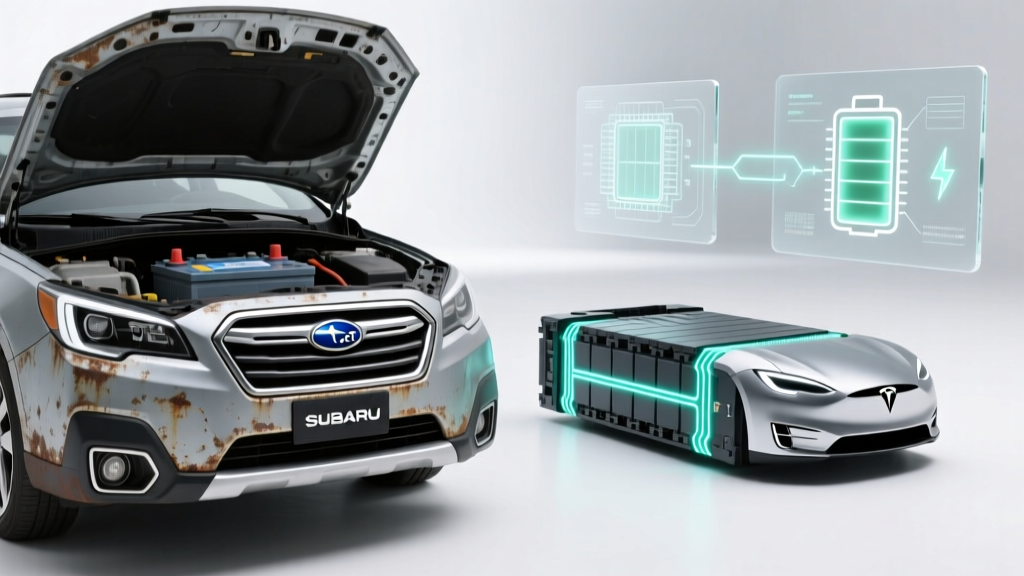
When an EV won't start, the culprit is almost always the 12V auxiliary battery, not the high-voltage traction pack. The 12V system wakes up the vehicle's computers, which then close the contactors that connect the main battery to the drivetrain. If the 12V battery is dead, the car is bricked — even if the main pack is at 100% State of Charge (SoC).
Most EV owner's manuals (including Tesla, Ford, and Hyundai) specify that a 12V jump is acceptable using standard 12V jumper cables connected to designated terminals. However, some manufacturers warn against using another running vehicle as the donor — a portable lithium jump pack is often the safer choice to avoid voltage spikes from a donor car's alternator.
If your 12V battery dies repeatedly, it may signal a parasitic drain, a failing DC-DC converter, or simply an aging lead-acid or lithium 12V unit that needs replacement (typically $150–$400 depending on the model).
LFP vs NMC: The Chemistry That Defines Your Battery's Life
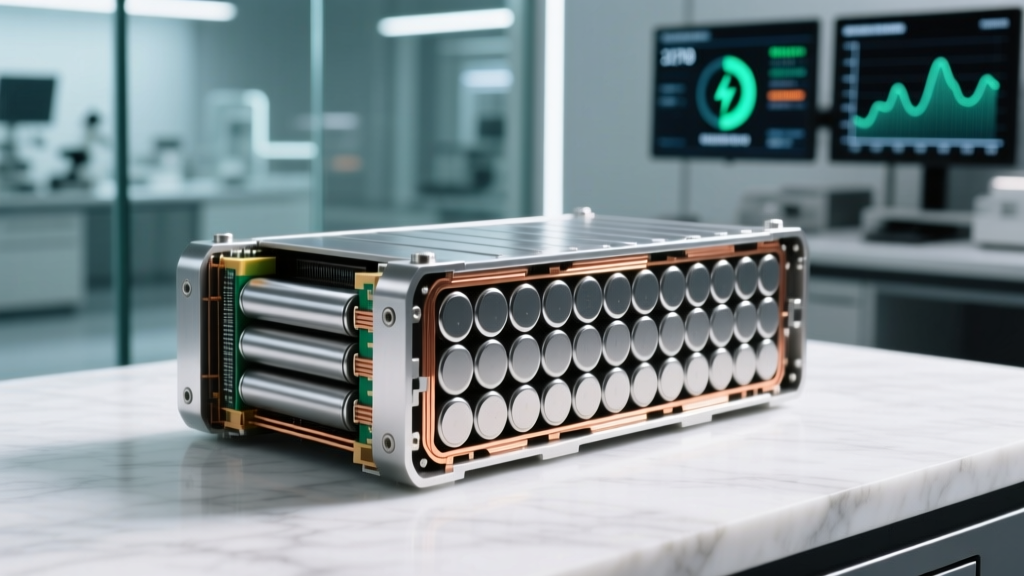
The high-voltage traction battery in your EV uses one of two dominant lithium-ion chemistries: LFP (Lithium Iron Phosphate) or NMC/NCA (Nickel Manganese Cobalt / Nickel Cobalt Aluminum). This choice affects range, longevity, charging behavior, and cold-weather performance.
| Attribute | LFP (LiFePO₄) | NMC / NCA |
|---|---|---|
| Energy Density | Lower (~160 Wh/kg cell-level) | Higher (~250–300 Wh/kg cell-level) |
| Typical Cycle Life | 3,000–5,000+ cycles to 80% SoH | 1,000–2,000 cycles to 80% SoH |
| Recommended Daily SoC | 100% (manufacturer-recommended) | 80% for daily; 100% for trips |
| Cold-Weather Performance | Weaker — greater range loss below freezing | Better cold tolerance with active thermal management |
| Cost per kWh | Lower — no cobalt or nickel | Higher — commodity metal exposure |
| Common Applications (2026) | Tesla Model 3/Y RWD, Ford Mustang Mach-E Select (LFP option), BYD models | Most long-range/AWD trims, Hyundai Ioniq 5/6, Rivian, GM Ultium |
The trade-off is straightforward: LFP batteries sacrifice some energy density (meaning slightly less range for a given pack weight) in exchange for dramatically longer cycle life, lower cost, and the convenience of daily 100% charging. NMC/NCA packs deliver more range per kilogram but degrade faster if routinely charged to 100% or exposed to sustained high temperatures.
According to data compiled by Recurrent Auto from over 15,000 EVs in real-world service, LFP-equipped vehicles show measurably slower capacity loss at high mileage compared to NMC equivalents, though the gap narrows with good thermal management.
How Long Do EV Batteries Actually Last?
The short answer: far longer than most buyers assume. The high-voltage traction battery in a modern EV is engineered to outlast the vehicle's economic life in most cases.
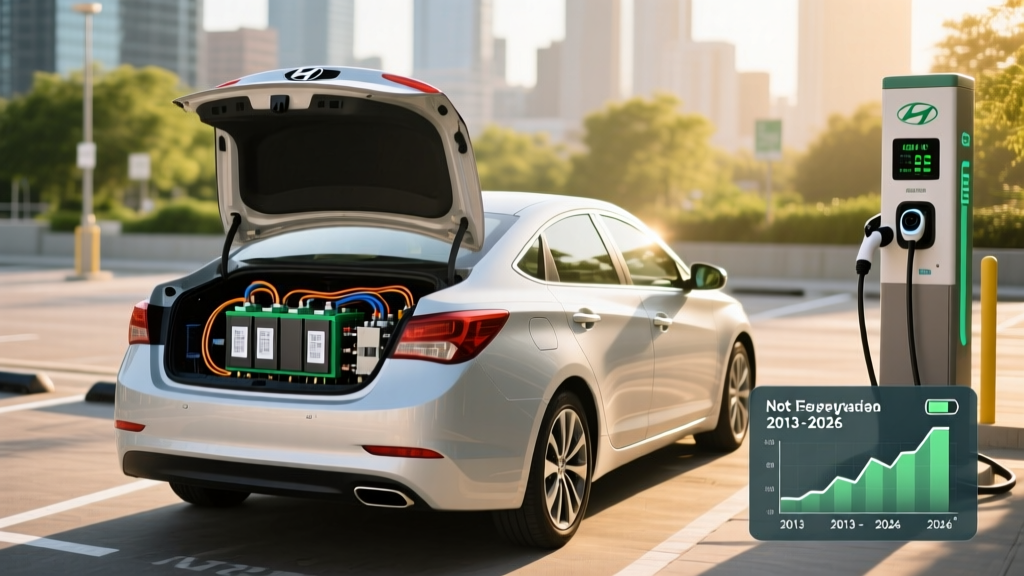
- Year 1 / ~12,000 miles: 2–5% capacity loss (initial settling)
- Year 4 / ~50,000 miles: 6–10% total loss
- Year 8 / ~100,000 miles: 10–15% total loss (most vehicles)
- Year 12+ / 150,000+ miles: 15–25% loss depending on chemistry and care
A Tesla Model 3 Long Range with an 82 kWh NMC pack, for example, might deliver ~325 miles EPA when new. After 100,000 miles, a realistic expectation is ~280–295 miles — still entirely practical for daily driving and road trips. The battery doesn't "fall off a cliff"; degradation follows a curve that flattens significantly after the initial 5–10% loss.
LFP batteries in vehicles like the Tesla Model 3 RWD (60 kWh LFP pack, EPA 272 miles) tend to retain 90%+ capacity even past 100,000 miles under normal use, making them compelling for high-mileage drivers and fleet applications.
Battery Warranty Coverage: What's Protected and for How Long
Federal law mandates that EV battery warranties cover a minimum of 8 years / 100,000 miles (in California Air Resources Board states, it's 10 years / 150,000 miles). Most manufacturers exceed these minimums.
| Manufacturer | Warranty Period | Capacity Retention Threshold |
|---|---|---|
| Tesla (Model 3/Y LWD) | 8 yr / 100,000 mi | 70% |
| Tesla (Model 3/Y LR & Performance) | 8 yr / 120,000 mi | 70% |
| Hyundai / Kia (E-GMP) | 10 yr / 100,000 mi | 70% |
| Ford (Mach-E, F-150 Lightning) | 8 yr / 100,000 mi | 70% |
| GM (Ultium-based) | 8 yr / 100,000 mi | 70% (60% on some commercial) |
| Rivian | 8 yr / 120,000 mi | 70% |
| BMW (i4, iX) | 8 yr / 100,000 mi | 70% |
The critical detail is the capacity retention threshold — typically 70%. If your battery's State of Health (SoH) drops below 70% of its original capacity within the warranty period, the manufacturer will repair or replace it at no cost. In practice, very few modern EVs breach this threshold within the warranty window. According to data from Geotab's fleet study of 6,300+ EVs, the average annual degradation rate is approximately 1.8%, meaning most vehicles retain well above 80% SoH at the 8-year mark.
EV Battery Replacement Cost: When and How Much
Battery replacement is the single largest fear among prospective EV buyers — and the most commonly overstated cost. Here's what the data actually shows.
| Vehicle / Pack Size | Battery Cost (Parts) | Labor + Total Estimate |
|---|---|---|
| Tesla Model 3 RWD (60 kWh LFP) | $8,000–$12,000 | $10,000–$15,000 |
| Tesla Model Y LR (82 kWh NMC) | $12,000–$16,000 | $14,000–$20,000 |
| Hyundai Ioniq 5 (77.4 kWh) | $10,000–$14,000 | $13,000–$18,000 |
| Ford F-150 Lightning Ext. Range (131 kWh) | $18,000–$25,000 | $22,000–$30,000 |
| Chevrolet Bolt EV (65 kWh) | $7,000–$10,000 | $9,000–$14,000 |
These figures sound alarming until you consider context: the vast majority of EV batteries never need replacement during the vehicle's usable life. Out-of-warranty replacements are typically needed only after 150,000–200,000+ miles, and by that point, many vehicles have been retired or traded. Battery costs per kWh have also fallen from over $1,000/kWh in 2010 to approximately $110–$130/kWh at the cell level in 2026, according to BloombergNEF, meaning future replacements will likely cost less than today's estimates.
Additionally, module-level repair is increasingly available. Rather than replacing the entire pack, specialized EV shops can identify and swap degraded modules for $2,000–$6,000, depending on the vehicle.
Factors That Accelerate or Slow Battery Degradation
Not all miles are equal when it comes to battery wear. The following factors have the most measurable impact on long-term State of Health:
- Avoid sustained 100% SoC: For NMC/NCA, set daily charge limit to 80%. LFP owners can charge to 100% daily (per manufacturer guidance).
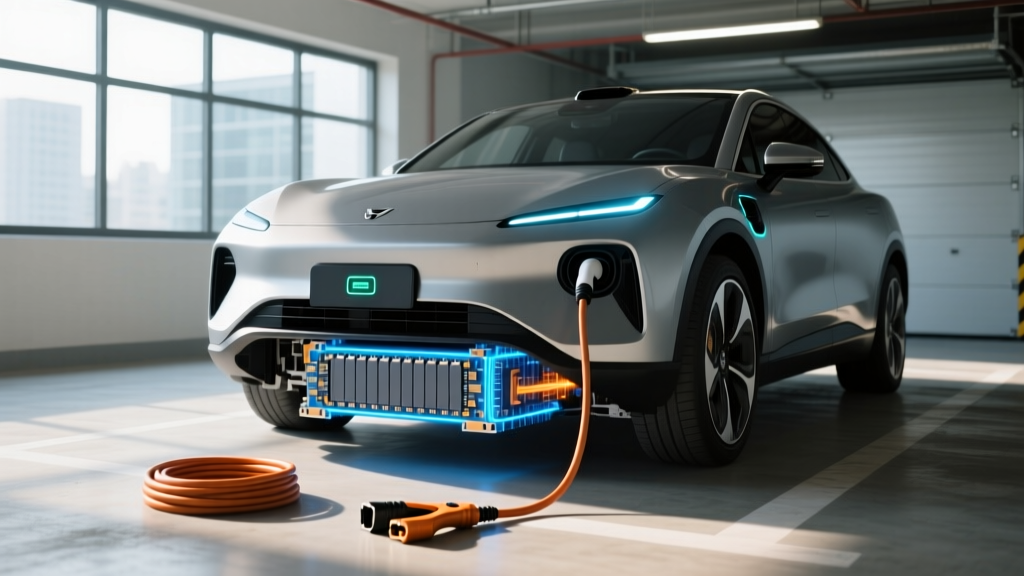
- Minimize DC fast charging: Frequent 150+ kW sessions generate heat stress. Use Level 2 (7–19 kW) for daily charging; reserve DCFC for road trips.
- Precondition before fast charging: Most EVs do this automatically when you navigate to a charger. A warm battery (30–40°C) accepts charge faster and with less stress.
- Avoid extreme SoC in extreme heat: Parking at 100% SoC in 100°F+ ambient temperature accelerates calendar degradation. If storing, leave at ~50% SoC.
- Don't baby it too much: Occasional 100% charges and fast-charging sessions cause negligible additional wear. The difference between careful and moderate habits is typically 2–5% SoH over 8 years.
The charging curve also matters. A battery's peak charge rate (e.g., 250 kW on a Tesla Model 3) is sustained only between roughly 10–40% SoC. Above 80%, the rate tapers dramatically — often to under 30 kW — to protect the cells. This is why manufacturers quote "10–80%" charge times rather than 0–100%.
Monitoring Your Battery's State of Health
Most modern EVs provide at least basic battery health information, though the depth varies by manufacturer:
- Tesla: No native SoH percentage in the app, but third-party tools like TeslaFi or Tessie can estimate SoH from charge logs. Service centers can run a health check on request.
- Hyundai/Kia (E-GMP): The infotainment system's EV diagnostics menu displays battery SoH as a percentage — one of the most transparent implementations available.
- Ford: The FordPass app shows estimated range and charging behavior; a dealer scan tool provides detailed SoH.
- GM (Ultium): OnStar diagnostics and the myChevrolet/myCadillac apps include battery condition reporting.
- OBD-II Tools: Devices like the OBDLink MX+ paired with apps such as ABRP (A Better Route Planner) or Car Scanner can read SoH data from the BMS (Battery Management System) on most brands.
Tracking SoH every 6–12 months gives you a clear degradation curve and early warning if something is abnormal. If your SoH drops more than 3–4% in a single year (after the first-year settling period), it's worth a dealer diagnostic to rule out a defective module.
Emerging Battery Technology: What's Next
Several next-generation battery technologies are in development, though none are yet available in production vehicles as of 2026:
- Solid-State Batteries: Replace the liquid electrolyte with a solid material, promising higher energy density (potentially 400+ Wh/kg), faster charging, and improved safety. Toyota has announced a solid-state EV for approximately 2027–2028, and Samsung SDI is targeting mass production by 2027. Realistic widespread availability is likely 2029+. Expect initial deployment in premium vehicles at high cost.
- Silicon Anode Batteries: Companies like Sila Nanotechnologies and Group14 are replacing graphite anodes with silicon-dominant materials, boosting energy density by 20–40%. The Mercedes-Benz G-Class electric (announced for 2025–2026) is among the first to use silicon-anode cells from Factorial Energy. This technology is nearer-term and more incremental than solid-state.
- Sodium-Ion Batteries: Lower cost and no lithium dependency, but significantly lower energy density. Best suited for urban EVs and stationary storage. CATL has begun production for the Chinese market; US availability remains limited.
These technologies will eventually extend range and reduce costs, but current LFP and NMC chemistries remain well-suited for the vehicles available today. There is no compelling reason to delay an EV purchase in anticipation of solid-state batteries, which will debut at premium prices and take years to reach mainstream models.
Frequently Asked Questions
Can I use battery jumping cables on an electric vehicle?
Yes — but only on the 12V auxiliary battery, not the high-voltage traction battery. Use standard 12V jumper cables or a portable lithium jump pack connected to the designated 12V terminals specified in your owner's manual. Never attempt to access or jump the main battery pack.
How long do EV batteries last in years and miles?
Most modern EV traction batteries retain 80–85% of original capacity at 100,000 miles and 75–85% at 150,000 miles. With proper care, they commonly last 15–20 years or 200,000+ miles before dropping to a point where replacement might be considered.
How much does it cost to replace an EV battery?
Full pack replacement ranges from approximately $9,000 for a Chevrolet Bolt EV to $22,000–$30,000 for a Ford F-150 Lightning extended-range pack, including labor. However, most batteries never need replacement during the vehicle's life, and module-level repairs can cost significantly less ($2,000–$6,000).
What does the EV battery warranty actually cover?
Federal law requires a minimum of 8 years / 100,000 miles of coverage (10 years / 150,000 miles in CARB states). If your battery's capacity drops below the manufacturer's threshold (typically 70% of original), the warranty covers repair or replacement. Some manufacturers also cover defects and abnormal degradation regardless of the percentage.
LFP vs NMC — which battery chemistry is better?
Neither is universally better. Choose LFP if you prioritize longevity, lower cost, and the convenience of daily 100% charging, and can accept slightly less range. Choose NMC/NCA if you need maximum range per charge, better cold-weather performance, and don't mind managing daily charge limits to 80%.
Does frequent DC fast charging damage my EV battery?
Exclusive DC fast charging accelerates degradation modestly — studies show roughly 1–3% additional capacity loss over 100,000 miles compared to primarily Level 2 charging. Modern thermal management systems mitigate much of this. For daily use, Level 2 home charging is optimal; DCFC is fine for road trips without significant concern.
For authoritative reference on EV efficiency and range data, consult the U.S. Department of Energy's fueleconomy.gov database, and for current federal EV tax credit eligibility, review the IRS §30D clean vehicle credit guidelines.