Searches for "how to connect jumper cables to battery" spike every winter — and a growing share of those searches come from EV owners staring at a dead screen in their driveway. The irony is thick: your electric vehicle has 75+ kWh of energy sitting under the floor, yet a tiny 12-volt auxiliary battery can strand you just as effectively as a dead gas-car battery. This guide untangles the two batteries in your EV, walks through the jumper-cable procedure safely, and then goes deep on the high-voltage traction battery — chemistry, degradation, warranties, replacement costs, and care habits that actually move the needle on longevity.
The Two Batteries in Every EV (and Why One Strands You)
Every mainstream EV — Tesla Model 3/Y, Hyundai Ioniq 5, Ford Mustang Mach-E, Chevrolet Equinox EV, Rivian R1T — carries two electrically separate batteries:
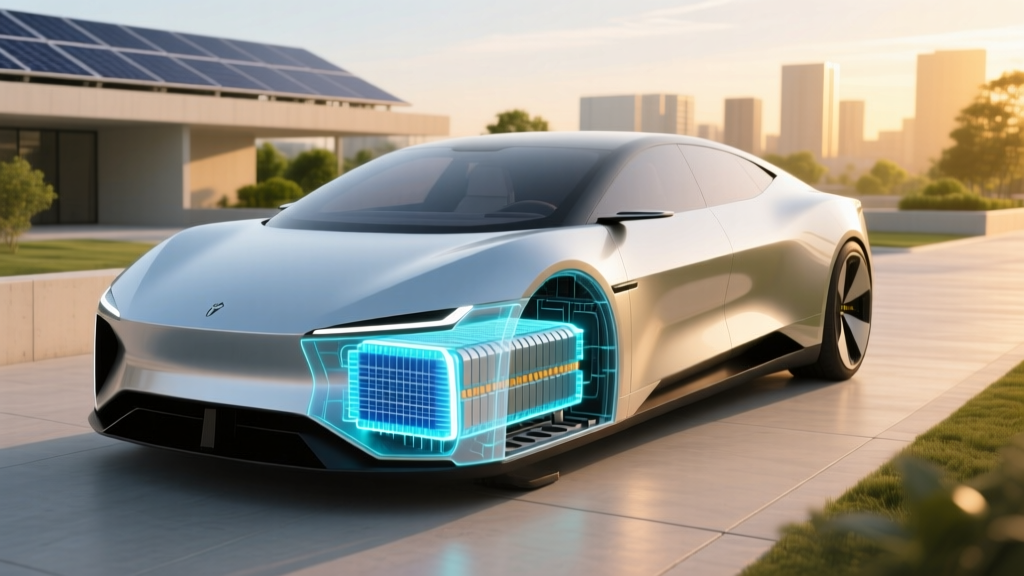
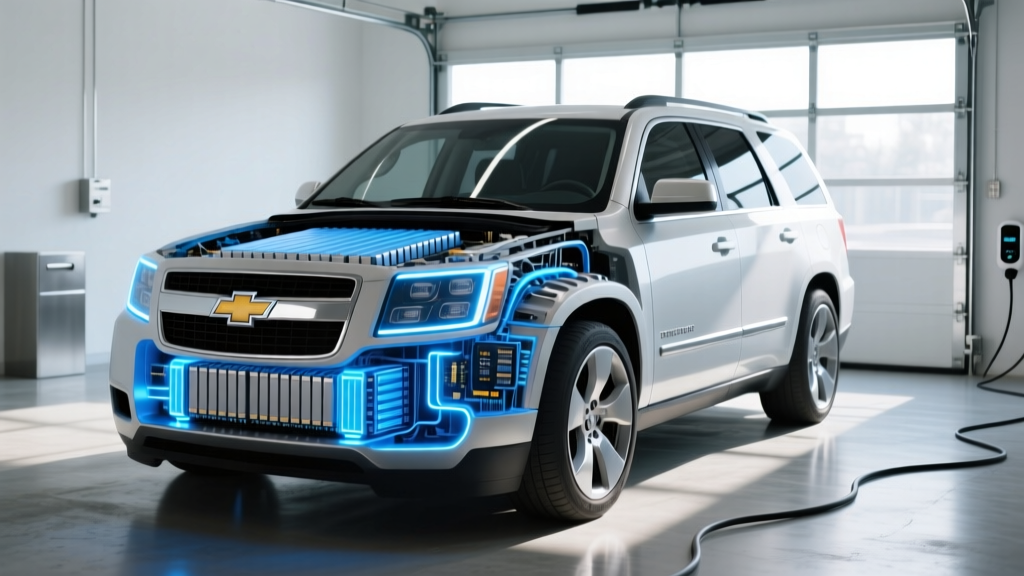
- High-voltage traction battery (400V or 800V): The large lithium-ion pack under the floor, typically 60–120 kWh, that powers the drive motors.
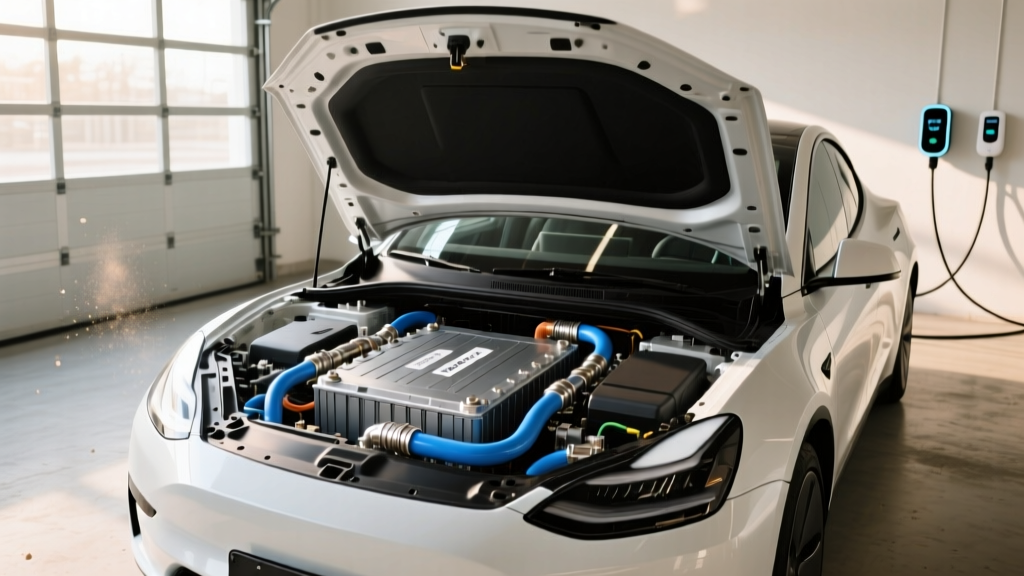
- 12V auxiliary battery: A small lead-acid or lithium-ion 12V battery that powers the vehicle's computers, door handles, infotainment, lighting, and — critically — the contactors that close the circuit between the traction pack and the rest of the car.
If the 12V battery dies, the car cannot "wake up" the high-voltage system. The traction pack may be 80% full, but the vehicle is a brick. This is the scenario that sends owners searching for jumper cables at 6 a.m. on a freezing morning.
How to Connect Jumper Cables to an EV's 12V Battery
The procedure is fundamentally the same as with a gasoline car, with a few EV-specific cautions. Consult your owner's manual for the exact terminal locations — on many EVs (Tesla Model 3/Y, for example), the 12V battery is buried behind trim panels in the frunk or rear cargo area, and manufacturers provide dedicated jump-start posts.
Step-by-Step Jumper Cable Procedure for EVs
- Locate the 12V battery or jump-start terminals. Check your owner's manual. Tesla provides red positive and black negative tow/jump posts in the front bumper area on Model 3/Y. The Hyundai Ioniq 5 and Kia EV6 place the 12V battery under the rear cargo floor. Many GM Ultium-platform vehicles locate it in the frunk.
- Ensure the EV is OFF (not in Drive or accessory mode). Key fob should be away from the vehicle if possible.
- Connect the RED (positive) clamp to the dead EV's positive terminal or dedicated positive jump post.
- Connect the other RED clamp to the donor vehicle's positive terminal (or a portable lithium jump-starter's positive lead).
- Connect the BLACK (negative) clamp to the donor vehicle's negative terminal (or jump-starter negative).
- Connect the other BLACK clamp to an unpainted metal ground point on the dead EV — not the 12V battery's negative terminal directly, to avoid spark ignition of any off-gassing. If the manufacturer specifies a dedicated negative post, use it.
- Start the donor vehicle (if using one) and let it run for 2–3 minutes. If using a portable jump-starter, simply turn it on.
- Power on the EV. The vehicle's computers should boot, and the DC-DC converter will begin recharging the 12V battery from the traction pack.
- Disconnect in reverse order: black from ground, black from donor, red from donor, red from EV.
- Leave the EV powered ON for at least 30 minutes to allow the DC-DC converter to recharge the 12V battery. If it dies again shortly after, the 12V battery likely needs replacement.
EV Traction Battery Chemistry: LFP vs NMC vs NCA
Once you've dealt with the 12V issue, the real long-term ownership question shifts to the high-voltage traction battery. The two dominant chemistries in 2026 EVs are LFP (lithium iron phosphate) and NMC/NCA (nickel manganese cobalt / nickel cobalt aluminum). Your EV's chemistry fundamentally shapes its range, longevity, charging behavior, and cold-weather performance.
| Attribute | LFP (Lithium Iron Phosphate) | NMC/NCA (Nickel-based) |
|---|---|---|
| Energy Density | Lower (~160–180 Wh/kg cell-level) | Higher (~220–260 Wh/kg cell-level) |
| Typical Use | Tesla Model 3/Y RWD, Ford Mustang Mach-E Select (2025+), many Chinese-market EVs | Tesla Long Range/Performance, Hyundai Ioniq 5/6, Rivian, GM Ultium, most AWD/long-range trims |
| Cycle Life | 3,000–5,000+ cycles to 80% capacity | 1,500–2,500 cycles to 80% capacity |
| Cold-Weather Performance | Weaker — greater range loss below 32°F; preconditioning critical | Better — still loses 20–30% in deep cold, but less than LFP |
| Charging to 100% | Recommended periodically (helps BMS calibration) | Not recommended daily; 80% daily limit advised |
| Cost (cell-level) | Lower (~$80–100/kWh in 2026) | Higher (~$110–140/kWh in 2026) |
| Thermal Stability | Excellent — less prone to thermal runaway | Good — requires robust BMS and cooling |
| Critical Minerals | No cobalt or nickel — easier §30D credit sourcing | Cobalt/nickel — sourcing scrutiny under §30D |
Which is better? There is no universal winner. LFP excels in longevity and cost — ideal for daily commuters who charge at home and don't need maximum range. NMC/NCA delivers more range per kilogram, making it the choice for long-range and performance trims, and it handles cold weather better. If you live in Minnesota and drive 60 miles round-trip in January, NMC is the pragmatic pick. If you're in Southern California doing 30-mile commutes with home Level 2 charging, LFP will likely outlast the car.
How Long Do EV Batteries Last? Degradation Data
The single most common fear among prospective EV buyers is catastrophic battery failure. The data tells a reassuring story: modern EV batteries are outperforming early projections, and most will retain usable capacity well beyond the typical ownership period.
Typical Degradation Milestones (Aggregated Fleet Data)
| Age / Mileage | Avg. Capacity Retained | What This Means (84 kWh pack example) |
|---|---|---|
| Year 1 / ~12,000 mi | 96–98% | ~81–82 kWh usable (1–2 mi range loss) |
| Year 3 / ~36,000 mi | 92–95% | ~77–80 kWh usable |
| Year 5 / ~60,000 mi | 89–92% | ~75–77 kWh usable |
| Year 8 / ~100,000 mi | 83–88% | ~70–74 kWh usable |
| Year 10 / ~120,000 mi | 80–85% | ~67–71 kWh usable |
At 80% capacity retention — the industry-standard warranty threshold — an EV with an original EPA range of 310 miles still delivers roughly 248 miles. For most daily drivers, that's still entirely functional. Outright battery failure (requiring replacement before 100,000 miles) occurs in well under 2% of modern EVs, according to warranty claim data from major automakers.
Factors That Accelerate Degradation
- Frequent DC fast charging above 150 kW: Occasional road-trip fast charging is fine. Daily reliance on 250–350 kW DCFC without preconditioning stresses cells thermally. Sustained use correlates with 1–3% additional loss over 5 years vs. Level 2 charging (Argonne National Lab research).
- Consistently charging to 100% on NMC/NCA: Sitting at full state of charge accelerates electrolyte decomposition. Tesla, Hyundai, and Ford all recommend 80% daily limits for NMC packs.
- Deep discharges (below 10% SoC): Regularly running the pack to near-zero stresses the anode. The buffer helps, but habitually arriving at 0% is not ideal.
- Extreme heat exposure: Prolonged parking in 110°F+ ambient temperatures (Phoenix, Death Valley) without thermal management active. Most EVs run cooling while plugged in, so plug in during heat waves.
- High-performance driving in heat: Repeated hard acceleration and regen in hot conditions generates internal cell heat beyond what cooling systems can fully dissipate.
What Does the EV Battery Warranty Actually Cover?
Federal law mandates that EV battery warranties cover a minimum of 8 years / 100,000 miles. In California and states that have adopted CARB emissions standards (covering roughly 40% of US EV sales), the requirement extends to 10 years / 150,000 miles. Most automakers meet or exceed these minimums.
| Manufacturer | Duration | Mileage | Capacity Threshold |
|---|---|---|---|
| Tesla (Model 3/Y) | 8 years | 100,000 mi (RWD) / 120,000 mi (LR/Perf) | 70% retention |
| Hyundai / Kia (Ioniq 5/6, EV6/EV9) | 10 years | 100,000 mi | 70% retention |
| GM (Ultium: Equinox EV, Blazer EV, Silverado EV) | 8 years | 100,000 mi | 70% retention (60% for fleet/commercial) |
| Ford (Mach-E, F-150 Lightning) | 8 years | 100,000 mi | 70% retention |
| Rivian (R1T, R1S) | 8 years | 175,000 mi (Max Pack) / 120,000 mi (Standard/Large) | 70% retention |
| BMW (i4, iX, i5) | 8 years | 100,000 mi | 70% retention |
What triggers a warranty claim? If your battery's State of Health (SoH) drops below the threshold — typically 70% of original capacity — within the warranty period, the manufacturer must repair or replace the pack at no cost. Some automakers replace individual modules rather than the full pack, which is faster and less invasive. Note that the warranty covers capacity degradation and defects, not damage from accidents, flooding, or aftermarket modifications.
EV Battery Replacement Cost: What to Budget (and When)
Here's where honest context matters. Battery replacement costs are real and significant — but they are rarely needed during the vehicle's practical lifespan. The vast majority of EVs sold in 2020–2026 will be retired, traded, or scrapped for non-battery reasons before their packs fall below 70% capacity.
| Vehicle / Pack Size | Battery (kWh) | Chemistry | Estimated Replacement Cost |
|---|---|---|---|
| Tesla Model 3 RWD | ~60 kWh | LFP | $10,000–$13,000 |
| Tesla Model Y Long Range | ~75 kWh | NMC | $13,000–$16,000 |
| Hyundai Ioniq 5 | 77.4 kWh | NMC | $14,000–$18,000 |
| Ford F-150 Lightning (Extended Range) | ~131 kWh | NMC | $22,000–$28,000 |
| Chevrolet Equinox EV | ~85 kWh | NMC (Ultium) | $14,000–$17,000 |
| Rivian R1T (Max Pack) | ~149 kWh | NMC | $25,000–$32,000 |
These costs are trending downward. Cell-level pricing has fallen from $1,200/kWh in 2010 to roughly $90–130/kWh in 2026 (source: BloombergNEF). By the time a 2026 EV actually needs a replacement pack in 2035–2038, prices will likely be 30–50% lower. Additionally, a growing aftermarket for refurbished and remanufactured packs offers savings of 30–40% versus new OEM packs.
How to Check and Maximize Your EV Battery's State of Health
Monitoring your battery's State of Health (SoH) and adopting smart habits can meaningfully extend its useful life. Here's how to stay ahead of degradation.
How to Check Battery State of Health
- In-vehicle menus: Tesla offers battery health estimates via the service menu (or through the Tesla app on newer software). Hyundai/Kia provides SoH readouts in the EV settings. Not all manufacturers expose this natively.
- OBD-II diagnostics: Apps like Leaf Spy (Nissan Leaf), OBDeleven (VW Group), or Scan My Tesla can read SoH, cell voltage deltas, and pack temperature via an OBD-II dongle ($30–$60).
- Third-party services: Companies like Recurrent Auto offer free battery health reports that benchmark your pack against a fleet of identical vehicles — useful for spotting abnormal degradation.
- Dealer diagnostic: Request a battery health report at any scheduled service visit. Most dealers can print a detailed cell-balance and capacity report in minutes.
Battery Care Checklist for Maximum Longevity
- ✅ Set daily charge limit to 80% for NMC/NCA packs. For LFP, charge to 100% at least once per week for BMS calibration.
- ✅ Use Level 2 home charging as your primary method. Reserve DC fast charging for road trips.
- ✅ Precondition the battery before DC fast charging (most EVs do this automatically when you navigate to a charger).
- ✅ Plug in during extreme heat or cold. Thermal management systems run more effectively when grid-powered.
- ✅ Avoid leaving the car at 0% or 100% SoC for extended periods. If storing for 2+ weeks, set to ~50%.
- ✅ Keep tire pressures at spec. Under-inflated tires increase rolling resistance and energy consumption, leading to more frequent charging cycles.
- ❌ Don't DC fast-charge daily unless your commute demands it. The heat from sustained high-C-rate charging accumulates over time.
- ❌ Don't ignore coolant service intervals. Battery thermal management fluid should be flushed per the manufacturer's schedule (typically every 4–5 years).
What's Next: Solid-State, Silicon Anode, and Beyond
Next-generation battery technologies are in active development but remain pre-commercialization for consumer vehicles as of 2026. Here's a grounded look at timelines:
- Solid-state batteries: Toyota and Samsung SDI have demonstrated prototypes with 400+ Wh/kg energy density and 10-minute fast-charge capability. Toyota has announced limited production for select models around 2027–2028, but widespread availability in affordable EVs is realistically a 2030+ prospect. Cost remains the primary barrier — current solid-state cells are 3–5× more expensive than liquid-electrolyte equivalents.
- Silicon-dominant anodes: Companies like Sila Nanotechnologies and Group14 are replacing graphite anodes with silicon composites, boosting energy density by 15–25%. Early deployments are appearing in premium models (Mercedes EQG has announced silicon-anode availability). Expect broader adoption by 2027–2028.
- Sodium-ion batteries: CATL and BYD have begun shipping sodium-ion packs in Chinese-market EVs. These offer lower energy density but dramatically lower cost and no lithium, cobalt, or nickel. US-market availability is uncertain and likely 2028+ at earliest.
None of these technologies are currently available in any US-spec 2026 EV. Buyers should make purchase decisions based on today's proven LFP and NMC/NMC chemistries, which are already delivering 200,000+ mile lifespans in real-world use.
Frequently Asked Questions
Can I jump-start another car from my EV?
Generally, no. Your EV's 12V system is not designed to supply the sustained cranking amps a gas engine needs. Attempting to jump-start a gas car from your EV can blow fuses, damage the DC-DC converter, or trigger fault codes. Use your EV's 12V battery only to revive the EV itself, or invest in a standalone lithium jump-starter for helping others.
Does fast charging really hurt my battery?
Occasional DC fast charging (road trips, a few times per month) causes negligible additional degradation. The risk comes from daily reliance on high-power DCFC (150+ kW) without preconditioning, which thermally stresses cells over years. A 2023 Argonne National Laboratory study found that vehicles fast-charging 3+ times per week showed approximately 2–4% more degradation at 50,000 miles compared to Level 2-only charging. For daily use, a home Level 2 charger at 7–11 kW remains the gold standard.
My 12V battery keeps dying — is my EV defective?
Not necessarily. EV 12V batteries typically last 3–5 years, similar to gas-car batteries. However, some EVs have software bugs that prevent the DC-DC converter from maintaining the 12V battery during long park periods. Tesla, Ford, and Hyundai have all issued OTA updates addressing this. Check for pending software updates, and if the issue persists, have the dealer inspect the DC-DC converter and 12V battery health. Upgrading to a lithium 12V replacement (like the Ohmmu brand for Teslas) can extend service life to 8–10 years.
Will my EV battery need replacing before 100,000 miles?
Statistically, very unlikely. Fleet data from Recurrent Auto and manufacturer warranty claim rates indicate that fewer than 1.5% of EV batteries require replacement before 100,000 miles. Most degradation-related claims occur between 100,000 and 150,000 miles, and even then, many packs remain above the 70% warranty threshold. The more common scenario is that the EV is traded, sold, or retired for other reasons (body damage, technology obsolescence, owner preference) while the battery is still functional.
How does cold weather affect my EV battery long-term?
Cold weather causes temporary range loss (20–40% at 20°F) due to increased internal resistance and energy used for cabin/battery heating. This is not degradation — range returns when temperatures rise. However, charging a cold battery without preconditioning can cause lithium plating on the anode, which is permanent damage. Always precondition before charging in freezing temperatures. Most EVs do this automatically when you navigate to a charger via the infotainment system.
Whether you're troubleshooting a dead 12V battery on a cold morning or planning a decade of ownership, understanding your EV's dual-battery system and traction-pack chemistry is the single highest-leverage knowledge you can have as an owner. Keep a lithium jump-starter in the frunk, charge on Level 2 at 80% daily, precondition before fast charges, and let the data — not the fear — guide your expectations.