If you've searched "how to start a battery with jumper cables" on an electric vehicle, you're likely staring at a dead EV that won't power on — and wondering whether the massive high-voltage traction battery is the problem. In nearly every case, it isn't. The culprit is the small 12-volt auxiliary battery, and yes, you can jump-start it. But understanding why an EV has two batteries, what each one does, and how to protect the expensive high-voltage pack over the long haul is essential for every EV owner or buyer.
This guide starts with the jumper-cable fix you need right now, then covers the EV traction battery in depth: LFP versus NMC chemistry, real-world degradation data, warranty coverage, replacement costs, and how to maximize battery health over 150,000+ miles.
Why Jumper Cables Fix an EV — But Not the Way You Think
Every modern EV — from a Tesla Model Y to a Chevrolet Equinox EV to a Hyundai Ioniq 5 — carries two separate batteries:
- High-voltage traction battery (400V or 800V architecture, typically 60–100+ kWh): This powers the electric motor(s) and is the "fuel tank" of the EV.
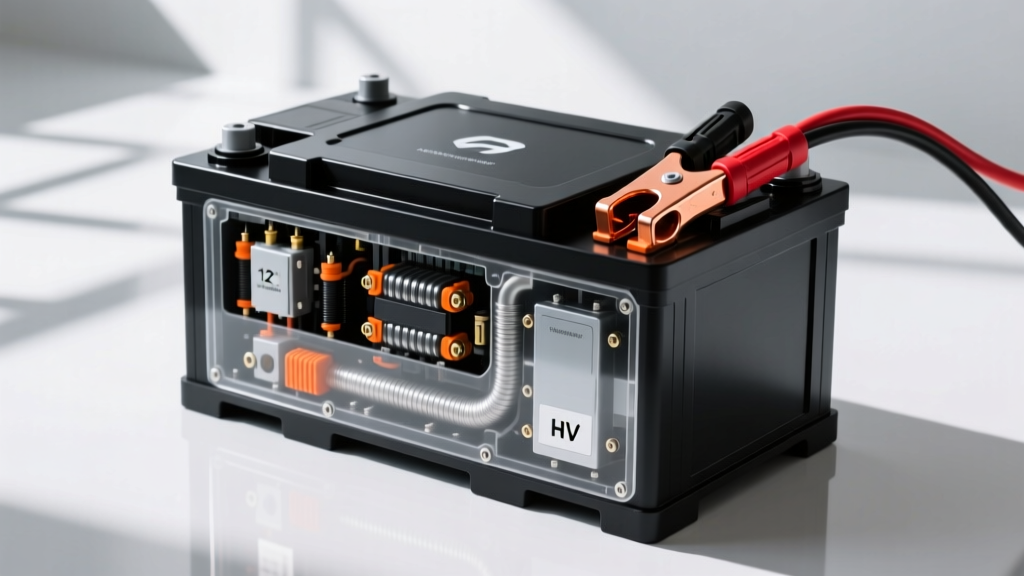
- 12V auxiliary battery (a small lead-acid or lithium-ion 12V unit, usually under 1 kWh): This powers the vehicle's computers, door locks, infotainment, lights, and — critically — the contactors that connect the high-voltage battery to the drivetrain.
When the 12V battery dies, the EV's systems cannot close the high-voltage contactors. The car appears completely dead even if the main traction battery is fully charged. This is the scenario where jumper cables help.
How to Jump-Start an EV's 12V Battery
- Locate the 12V battery. In most EVs, it's under the hood (frunk area) or sometimes in the rear cargo area. Consult your owner's manual for exact location and jump-start terminal positions.
- Use a donor vehicle or portable lithium jump pack. Connect positive (red) to positive, negative (black) to a grounded metal point on the EV's chassis — just as you would with a gas car.
- Wait 2–3 minutes to let the 12V battery gain enough charge to power the vehicle's computers.
- Turn the EV on. Once the 12V system boots, the high-voltage contactors will close and the car will become drivable using the traction battery.
- Let the EV run for at least 30 minutes. The DC-DC converter will recharge the 12V battery from the high-voltage pack while the car is in "Ready" mode.
LFP vs NMC: Understanding Your EV's Battery Chemistry
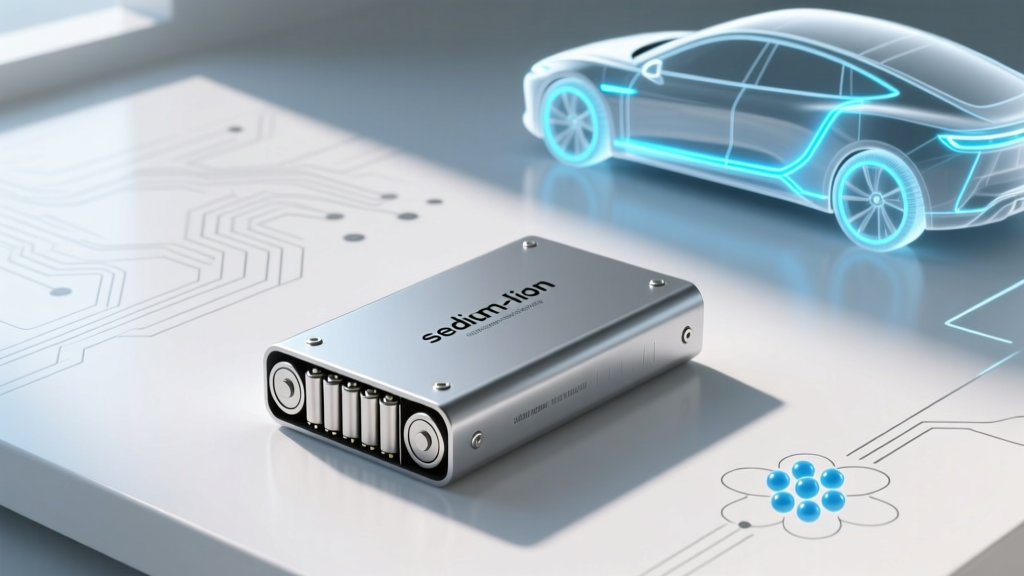
The high-voltage traction battery is the single most expensive component in an EV. Its chemistry determines range, charging behavior, longevity, and cost. In 2026, two lithium-ion chemistries dominate the US market:
| Attribute | LFP (Lithium Iron Phosphate) | NMC / NCA (Nickel Manganese Cobalt / Nickel Cobalt Aluminum) |
|---|---|---|
| Energy density | Lower (~160 Wh/kg cell-level) | Higher (~250–300 Wh/kg cell-level) |
| Cycle life | 3,000–5,000+ cycles | 1,000–2,500 cycles |
| Cold-weather performance | Weaker; more range loss below freezing | Better low-temp discharge capability |
| Recommended daily SoC | 100% (LFP benefits from full charges) | 80% for daily; 100% only for trips |
| Thermal stability / safety | Excellent; very resistant to thermal runaway | Good, but requires more active thermal management |
| Cost | Lower (no cobalt or nickel) | Higher (nickel/cobalt supply chain cost) |
| Common in (2026 models) | Tesla Model 3/Y RWD, Ford Mustang Mach-E Select (some), Rivian Standard | Tesla Long Range, Hyundai Ioniq 5/6, Kia EV6/EV9, Chevy Silverado EV, BMW iX |
Which is better? It depends on your use case. LFP is ideal for drivers who want maximum longevity, can charge at home daily to 100%, and don't regularly face sub-freezing temperatures. NMC/NCA delivers more range per kilogram, making it the choice for Long Range and Performance trims where maximizing EPA range in a given pack size matters. Neither is universally superior — they're engineering trade-offs.
How Long Do EV Batteries Actually Last?
The short answer: longer than most buyers expect. Data from fleet operators, manufacturer reports, and independent testing consistently show that modern EV traction batteries retain the vast majority of their capacity well past 100,000 miles.
- Tesla Impact Report (2023–2025 data): Model 3/Y batteries retain approximately 85–88% capacity at 150,000 miles. (Tesla Impact Report)
- Geotab fleet study (2024 update, 10,000+ EVs): Average annual degradation of ~1.8% across all chemistries, meaning ~82% capacity at 10 years under typical use. (Geotab EV Battery Health)
- Recurrent Auto data (2025): Chevy Bolt EV owners report ~90% SoH at 60,000 miles; LFP-equipped Tesla Model 3 RWD shows less than 5% loss at 50,000 miles.
Most EV batteries will outlast the vehicle's economic life. Catastrophic failure (sudden total loss) is extremely rare in liquid-cooled packs from major manufacturers. Gradual capacity loss — typically 1–2% per year — is the norm.
Factors That Accelerate Degradation
- Frequent DC fast charging above 150 kW: High charge rates generate heat. Occasional road-trip fast charging is fine, but daily reliance on 250–350 kW chargers accelerates wear versus Level 2 home charging.
- Sustained high State of Charge (NMC/NCA): Storing an NMC battery at 100% SoC for days or weeks stresses the cathode. LFP batteries tolerate 100% SoC storage much better.
- Extreme temperatures without preconditioning: Charging a cold battery (below 32°F/0°C) without thermal preconditioning can cause lithium plating. Most modern EVs precondition automatically when a charger is set in the navigation, but aftermarket or basic Level 2 chargers may not trigger this.
- Deep discharge to 0%: Letting the battery sit at or near 0% for extended periods causes copper dissolution in the anode current collector. Keep storage SoC between 20–50%.
What Does the EV Battery Warranty Actually Cover?
Federal law (EPA emissions warranty requirements) effectively mandates that manufacturers warranty EV batteries for at least 8 years or 100,000 miles (whichever comes first). California Air Resources Board (CARB) states extend this to 10 years or 150,000 miles. Most manufacturers meet or exceed these minimums across all 50 states.
| Manufacturer | Warranty Period | Capacity Retention Threshold |
|---|---|---|
| Tesla (Model 3/Y RWD — LFP) | 8 years / 100,000 miles | 70% |
| Tesla (Model 3/Y Long Range — NMC) | 8 years / 120,000 miles | 70% |
| Hyundai / Kia (Ioniq 5, EV6, EV9) | 10 years / 100,000 miles | 70% |
| General Motors (Equinox EV, Blazer EV, Silverado EV) | 8 years / 100,000 miles | 70% (some trims 60%) |
| Ford (Mustang Mach-E, F-150 Lightning) | 8 years / 100,000 miles | 70% |
| Rivian (R1T, R1S) | 8 years / 175,000 miles | 70% |
| BMW (iX, i4, i7) | 8 years / 100,000 miles | 70% |
What triggers a warranty claim? If your battery's State of Health (SoH) drops below the stated threshold within the warranty period, the manufacturer must repair or replace the battery at no cost to bring it above the threshold. This does not mean you get a brand-new battery — it may be a refurbished pack or individual module replacement. The key metric is capacity retention, not a specific replacement method.
EV Battery Replacement Cost: What You'd Actually Pay
Out-of-warranty battery replacement is the number-one fear for prospective EV buyers. Here's what the data shows for 2026:
| Vehicle / Pack Size | Battery Chemistry | Estimated Replacement Cost |
|---|---|---|
| Tesla Model 3 RWD (~60 kWh) | LFP | $8,000 – $12,000 |
| Tesla Model Y Long Range (~75 kWh) | NMC | $12,000 – $16,000 |
| Hyundai Ioniq 5 (~77.4 kWh) | NMC | $14,000 – $18,000 |
| Ford F-150 Lightning Extended (~131 kWh) | NMC | $20,000 – $28,000 |
| Chevrolet Bolt EV (~65 kWh) | NMC | $9,000 – $14,000 |
| Rivian R1T Large Pack (~128 kWh) | NMC | $18,000 – $25,000 |
These figures include the battery pack and labor but can vary significantly by region, dealer, and whether the replacement uses new or remanufactured modules. Importantly, most EV owners never pay this cost. Data from Consumer Reports and fleet analyses indicate that fewer than 5% of EV batteries require replacement during the vehicle's typical 15-year lifespan — and the majority of those failures occur within the warranty period.
How to Check and Maximize Your EV Battery's Health
Monitoring your battery's State of Health (SoH) is straightforward in 2026, with multiple tools available:
How to Check Battery Health
- In-vehicle displays: Many EVs (Tesla, Rivian, BMW) show estimated range vs. original range, which gives an approximate SoH. Tesla's service mode can display more detailed battery metrics.
- OBD-II diagnostic apps: Tools like OBDeleven, Leaf Spy (Nissan), or manufacturer-specific apps can read the Battery Management System (BMS) directly for precise SoH percentages.
- Third-party services: Companies like Recurrent Auto provide free battery health reports by connecting to your EV's telematics data over time.
- Dealer diagnostic: Any authorized service center can pull a full battery health report showing individual module voltage balance, internal resistance, and capacity tests.
Battery Care Checklist for Maximum Longevity
- ✅ Daily charging to 80% for NMC/NCA; 100% is fine for LFP
- ✅ Use Level 2 home charging as your primary method; reserve DC fast charging for road trips
- ✅ Precondition before fast charging — set the charger as your navigation destination so the BMS warms the pack
- ✅ Store at 20–50% SoC if the vehicle will sit unused for more than 2 weeks
- ✅ Avoid charging below freezing without preconditioning active
- ✅ Keep tires properly inflated — reduces energy draw and unnecessary battery cycling
- ❌ Don't leave at 100% SoC for days (NMC/NCA only)
- ❌ Don't let the battery sit at 0% — charge to at least 20% if storing
- ❌ Don't rely exclusively on 350 kW chargers for daily charging needs
What's Next: Solid-State and Silicon-Anode Batteries
The next major leap in EV battery technology involves solid-state batteries (replacing the liquid electrolyte with a solid material) and silicon-dominant anodes (replacing graphite for higher energy density). Here's where these technologies stand as of 2026:
- Toyota has announced a solid-state battery targeting 2027–2028 production with a claimed 460+ mile range and 10-minute fast-charge capability. This remains in pilot production and is not yet available in any consumer vehicle.
- Samsung SDI is producing solid-state prototype cells for potential 2028 deployment in Hyundai Motor Group vehicles.
- Sila Nanotechnologies (silicon anode) is in early commercial production for the Mercedes G-Class electric (2025–2026), offering ~20% higher energy density than conventional graphite anodes.
- QuantumScape continues testing with Volkswagen Group, but consumer availability is projected for 2028–2030 at the earliest.
These technologies are real and progressing, but they are not yet available in any vehicle you can buy today. For 2026 buyers, LFP and NMC/NCA remain the proven, well-understood options with extensive real-world longevity data behind them.
EV Battery FAQ
Can I use jumper cables on an EV's main battery?
No. Jumper cables are only for the 12V auxiliary battery. The high-voltage traction battery (400–800V) should never be externally jumped — it's recharged by plugging into a charger or via the vehicle's DC-DC converter once the 12V system is restored.
How long do EV batteries last in years and miles?
Real-world fleet data shows modern EV batteries retain 80–88% capacity at 150,000 miles (roughly 10–12 years of average driving). Most batteries will function adequately for the vehicle's entire usable life. The 8-year/100,000-mile federal warranty minimum provides a baseline safety net.
How much does it cost to replace an EV battery?
Out-of-warranty replacement costs range from approximately $8,000 (smaller LFP packs) to $28,000 (large NMC packs in trucks). However, fewer than 5% of EV batteries ever require full replacement, and most failures occur within the warranty period at no cost to the owner.
Does fast charging damage the battery?
Occasional DC fast charging (road trips, a few times per month) has minimal impact on modern batteries with active liquid cooling. Daily reliance on 250–350 kW chargers does accelerate degradation slightly compared to Level 2 charging. The heat generated at high charge rates is the primary stressor — preconditioning and moderate ambient temperatures help mitigate this.
LFP or NMC — which should I choose?
Choose LFP if you prioritize longevity, charge at home daily, and want a lower-cost vehicle (typically found in base/RWD trims). Choose NMC/NCA if you need maximum range per charge, live in a cold climate where LFP's winter performance drops more noticeably, or want AWD/Performance trims that require higher energy density.
Will my EV battery need replacing before the car wears out?
Statistically unlikely. With degradation averaging 1–2% per year, a battery starting at 300 miles of EPA range will still offer approximately 240–260 miles after 15 years. Most EVs are retired for reasons unrelated to battery failure — accident damage, body corrosion, or simply upgrading to newer technology.