If you've searched for an EV "battery jump" and landed here, you're likely dealing with one of two scenarios: your electric vehicle won't power on and you're wondering if you can jump-start it like a gas car, or you're shopping for an EV and want to understand what happens when the big battery ages out. Both questions deserve precise answers — and the confusion between an EV's two battery systems causes more owner anxiety than almost any other topic.
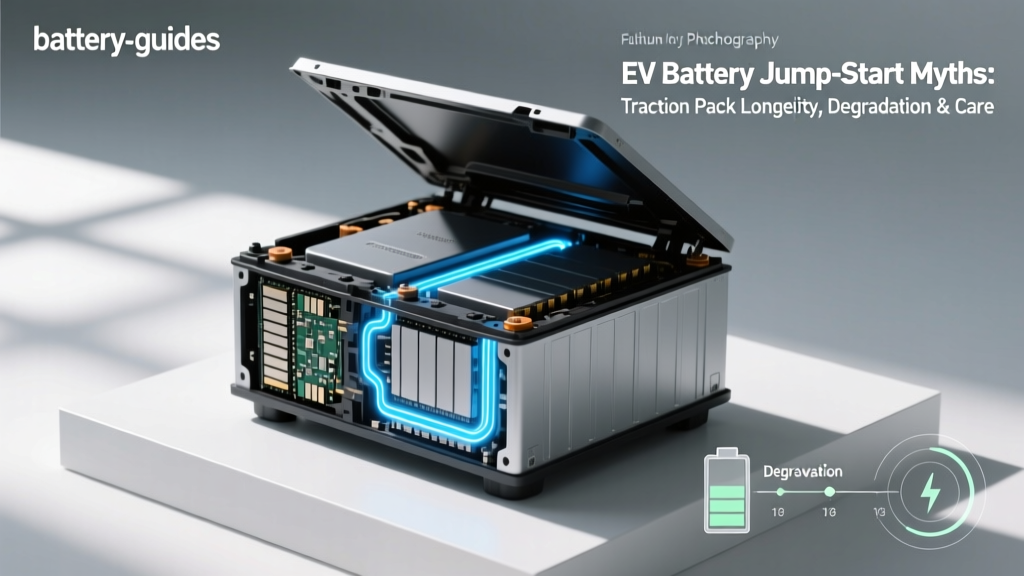
Every modern EV carries two completely separate batteries. The high-voltage traction battery (typically 50–120 kWh) powers the electric motors and determines your range. The 12V auxiliary battery (a small lead-acid or lithium unit) runs the computers, lights, door locks, and — critically — the contactors that close the circuit to the main pack. When an EV "dies" and won't start, it's almost always the 12V battery that's flat, not the traction pack. Jump-starting or replacing the 12V unit is a routine fix. The traction battery is an entirely different engineering system with its own longevity profile, which is what the rest of this guide covers in depth.
The 12V vs. Traction Battery: What You Can and Cannot Jump
Let's clear this up first because the terminology matters for your safety and your wallet.
12V auxiliary battery: Yes, this can be jump-started using a portable lithium jump pack or jumper cables from another vehicle, exactly like a conventional car. Tesla, Hyundai, Ford, BMW, and most other EV makers outline this procedure in the owner's manual. A dead 12V battery will prevent the car from booting its power electronics, even if the main pack is at 80% State of Charge (SoC). Many 2024–2026 models (Tesla Model 3 Highland, Rivian R1T Gen 2, newer Hyundai Ioniq variants) have migrated to 16V lithium-iron-phosphate auxiliary batteries that rarely need replacement for 8+ years, but legacy lead-acill units in older EVs typically last 3–5 years.
High-voltage traction battery: You cannot and must not attempt to jump-start, externally charge, or bridge the traction pack. These operate at 400V (most vehicles) or 800V (Hyundai Ioniq 5/6, Kia EV6, Porsche Taycan, Genesis GV60). Contact with these terminals is lethal. If your traction battery is genuinely depleted — 0% SoC — the only remedy is a flatbed tow to a charger. Fortunately, EVs provide extensive low-SoC warnings and will enter a "turtle mode" limiting power well before the pack reaches zero.
With that safety-critical distinction established, let's focus on what actually determines traction battery longevity.
LFP vs. NMC vs. NCA: Chemistry Trade-Offs That Matter
Not all EV batteries are built alike. The cathode chemistry dictates energy density, cycle life, cold-weather behavior, and cost. As of 2026, three chemistries dominate the US market.
| Attribute | LFP (Lithium Iron Phosphate) | NMC (Nickel Manganese Cobalt) | NCA (Nickel Cobalt Aluminum) |
|---|---|---|---|
| Energy Density | Lower (~160 Wh/kg cell-level) | Higher (~220–260 Wh/kg) | Highest (~260–280 Wh/kg) |
| Cycle Life | 3,000–5,000+ cycles to 80% SoH | 1,000–2,000 cycles to 80% SoH | 1,000–1,500 cycles to 80% SoH |
| Cold Performance | Weaker below 32°F; greater range loss | Better low-temp conductivity | Best low-temp performance |
| Daily Charging | Can charge to 100% daily safely | Best kept 20–80% for longevity | Best kept 20–80% for longevity |
| Cost | ~15–20% cheaper per kWh | Mid-range | Premium |
| Typical Vehicles (2026) | Tesla Model 3/Y RWD, base Ford Mustang Mach-E, Rivian Standard | Hyundai Ioniq 5, Kia EV6, VW ID.4, Ford Mach-E Extended | Tesla Model S/X, Lucid Air, Rivian Max pack |
Which is better? It depends on your use case. LFP is the durability and value champion — ideal for commuters who charge at home daily and don't need maximum range. NMC and NCA deliver the range and cold-weather performance road-trippers and northern-climate drivers need. Per Argonne National Laboratory's battery research, the industry trend is toward LFP for standard-range trims and NMC/NCA for long-range and performance variants, a split you'll see across most 2026 model lineups.
Real Degradation Data: What Actually Happens Over Time
EV batteries don't "die" suddenly like a phone battery might. They gradually lose capacity — a process measured as declining State of Health (SoH). A pack at 90% SoH holds 90% of its original kWh, translating directly to 90% of its original EPA-rated range.
Here's what real-world fleet data shows, drawing on Geotab's analysis of over 10,000 EVs and manufacturer-reported figures:
Typical Degradation Curve (NMC/NCA, average US climate):
- Year 1: 1–3% loss (initial "break-in" drop, then stabilizes)
- Years 2–4: ~0.5–1.0% per year (linear slow decline)
- Years 5–8: ~0.5–1.5% per year (depends heavily on charging habits and climate)
- Year 10 median: ~85–90% SoH across well-maintained packs
LFP packs typically show even slower decline, with many fleet samples above 92% SoH at year 5.
Outliers: Vehicles used extensively for DC fast charging in hot climates (Arizona, Texas fleet vehicles, rideshare) may see 15–20% loss by year 6. Conversely, garage-kept, Level-2-charged vehicles in moderate climates routinely exceed 90% SoH at 100,000+ miles.
The critical insight: for the vast majority of private owners driving 10,000–15,000 miles annually, the traction battery will outlast the vehicle's economic life. The fear of a catastrophic mid-life battery failure is not supported by fleet data.
EV Battery Warranty Terms: What's Actually Covered
Federal law mandates a minimum 8-year/100,000-mile warranty on EV battery packs (10 years/150,000 miles in CARB states including California, New York, Massachusetts, and others). But the details of what triggers a claim vary significantly.
| Vehicle | Warranty Term | Capacity Threshold | Notes |
|---|---|---|---|
| Tesla Model 3/Y (LFP RWD) | 8 yr / 100,000 mi | 70% retention | Standard federal term |
| Tesla Model 3/Y Long Range | 8 yr / 120,000 mi | 70% retention | Extended mileage |
| Hyundai Ioniq 5 / Kia EV6 | 10 yr / 100,000 mi | 70% retention | Industry-leading term |
| Ford Mustang Mach-E | 8 yr / 100,000 mi | 70% retention | Includes battery management components |
| Rivian R1T / R1S | 8 yr / 175,000 mi | 70% retention | Highest mileage cap in segment |
| BMW i4 / iX | 8 yr / 100,000 mi | 70% retention | Transferable to second owner |
| Chevrolet Equinox EV / Blazer EV | 8 yr / 100,000 mi | 60–70% retention (varies) | Check specific trim terms |
What's covered: Capacity loss below the stated threshold, cell/module defects, battery management system (BMS) failures, and thermal management system defects that degrade the pack.
What's typically excluded: Damage from accidents, flooding, improper charging equipment, or unauthorized modifications. Cosmetic corrosion that doesn't affect function. Gradual loss above the threshold (a pack at 72% SoH at year 9 won't qualify even though range has noticeably declined).
Keep your charging records and service history — they're your evidence if a warranty claim arises.
Battery Replacement Cost: When, Why, and How Much
Let's address the elephant in the room with actual numbers rather than speculation. Out-of-warranty traction battery replacement is expensive, but it's also rare for private-owner vehicles.
| Vehicle / Pack Size | Battery Cost (Parts) | Labor | Total Estimate | Typical Replacement Trigger |
|---|---|---|---|---|
| Nissan Leaf 40 kWh | $6,500–$9,000 | $1,500–$2,500 | $8,000–$11,500 | Capacity loss below ~60% SoH, common at 10–12 yr in hot climates (passive cooling) |
| Chevy Bolt EV 65 kWh | $14,000–$16,000 | $2,000–$3,000 | $16,000–$19,000 | Rare; recall-replaced packs are performing well |
| Tesla Model 3/Y 60–82 kWh | $12,000–$16,000 | $1,500–$2,500 | $13,500–$18,500 | Very rare before 200k mi; module-level repair sometimes possible |
| Hyundai Ioniq 5 77 kWh | $15,000–$20,000 | $2,000–$3,500 | $17,000–$23,500 | Extremely rare under current data |
| Ford F-150 Lightning 131 kWh | $25,000–$35,000 | $3,000–$5,000 | $28,000–$40,000 | Insufficient long-term data; largest packs cost most |
| Lucid Air 112 kWh | $25,000–$32,000 | $2,500–$4,000 | $27,500–$36,000 | Low production volume = higher parts cost |
Important nuance: Many independent EV shops and mobile technicians now perform module-level repairs rather than full-pack swaps. A pack with one or two degraded modules (out of 12–24) can often be refurbished for $3,000–$8,000, restoring most of the lost capacity. This is a growing service category that wasn't widely available five years ago.
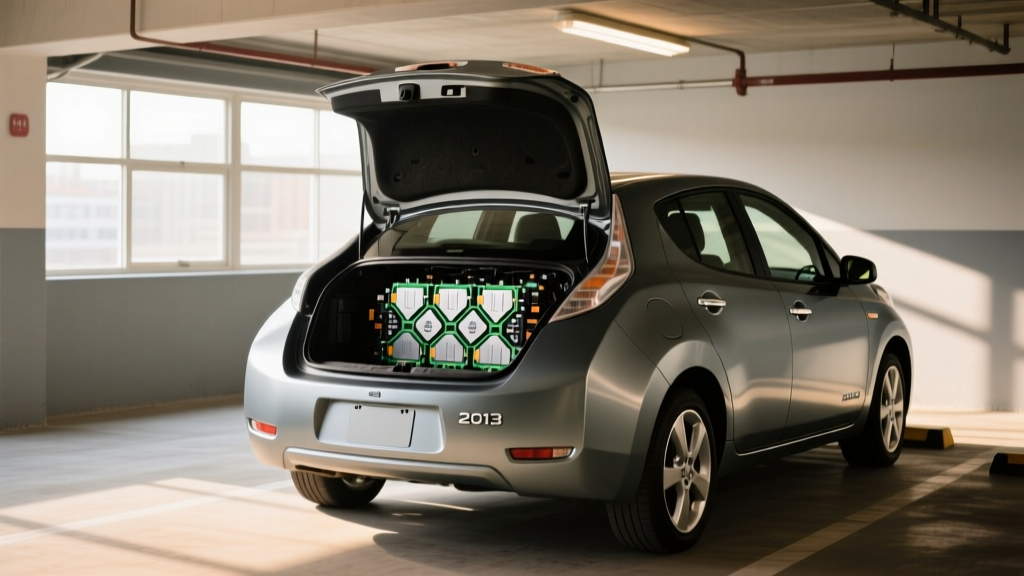
When is replacement actually needed? Based on current data, most EVs will reach end-of-life (totaling, accident, rust, electronics failure) before the traction battery requires replacement. The vehicles most at risk are early-generation passively-cooled packs (2011–2017 Nissan Leaf, early Fiat 500e) in hot climates. Modern liquid-cooled packs from 2019 onward are tracking far better.
Five Factors That Actually Accelerate Battery Degradation
Your charging habits and environment matter more than mileage alone. Here are the degradation accelerators, ranked by impact based on battery research from the National Renewable Energy Laboratory (NREL):
- Extreme heat exposure (highest impact): Sustained pack temperatures above 95°F accelerate electrolyte decomposition. Garage parking and preconditioning while plugged in are your best defenses. Liquid-cooled packs handle this far better than passive air-cooled designs.
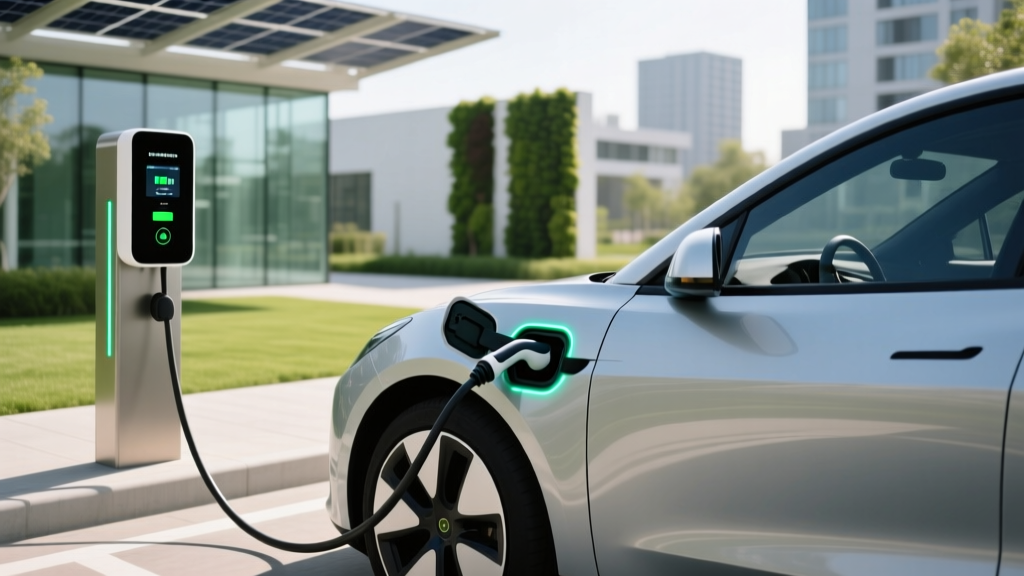
- Frequent DC fast charging at high power: Daily 150–350 kW DCFC sessions stress cells through high C-rates and heat generation. Occasional road-trip fast charging is fine; making it your daily routine adds measurable degradation. Aim for Level 2 (7–19 kW) home charging as your primary routine.
- Sustained high State of Charge: Storing an NMC/NCA pack at 100% SoC for days or weeks accelerates calendar aging. For daily driving, set your charge limit to 80% (or 90% in cold weather). LFP packs are the exception — they tolerate and even benefit from periodic 100% charges to recalibrate the BMS.
- Deep discharges to 0% SoC: Regularly running the pack to near-empty stresses the anode. Try to keep the floor around 10–15% for daily use.
- Extreme cold without preconditioning: Charging a cold pack (below 32°F) at high power can cause lithium plating on the anode, a permanent degradation mechanism. Always precondition the battery before DC fast charging in winter — most EVs do this automatically when you navigate to a charger.
Monitoring Battery Health: How to Check Your SoH
Unlike a gas car's compression test, battery health monitoring is mostly software-based. Here's how to assess your pack's State of Health (SoH):
OEM apps and in-car displays: Tesla offers a battery health metric in the service menu (added in 2024 software updates). Hyundai, Kia, BMW, and Mercedes-Benz provide SoH readouts through dealer diagnostic tools, requestable during service visits. Ford's Pass app shows estimated range trends that serve as a proxy.
OBD-II diagnostic tools: Devices like the OBDLink SX paired with apps such as EV-BatMon or LeafSpy (for Nissan) read the BMS directly and report SoH percentage, cell voltage variance, and pack temperature. These $50–$120 tools are essential for used-EV buyers.
Third-party certifications: Companies like Geotab and Recurrent offer battery health reports that are increasingly accepted by dealers and insurers for used-EV valuation. A Recurrent report showing 94% SoH at 45,000 miles is a strong buy signal.
DIY range test: Charge to 100% (on an LFP pack or occasionally on NMC), reset the trip meter, drive a consistent mixed route until 10% SoC, and compare actual miles to the original EPA rating adjusted for the 90% usable window. Significant deviation (>15%) from expected warrants a dealer diagnostic.
What's Next: Solid-State, Silicon Anode, and Realistic Timelines
Next-generation battery tech is real but not yet in your driveway. Here's the grounded outlook:
Silicon-dominant anodes (from companies like Sila Nanotechnologies and Group14) are entering production in 2025–2026, offering 10–20% energy density gains over graphite anodes. Expect these in premium 2027–2028 model-year vehicles first. This is incremental improvement, not revolution.
Solid-state batteries — using a solid electrolyte instead of liquid — promise faster charging, higher energy density, and improved safety. Toyota, Nissan, and Samsung SDI have announced pilot production, with limited vehicle integration targeted for 2027–2029. However, manufacturing scale-up and cost reduction remain unsolved challenges. Per the US Department of Energy's National Blueprint for Lithium Batteries, solid-state packs are unlikely to reach price parity with current liquid-electrolyte cells before 2030 at the earliest.
Sodium-ion batteries are emerging as an LFP alternative for budget and stationary-storage applications, with lower material costs but lower energy density. CATL has begun volume production in China; US-market vehicle integration is not yet announced for 2026 models.
For buyers today: current lithium-ion technology is mature, well-warrantied, and demonstrably durable. Waiting for solid-state means waiting 4+ years for broad availability and paying early-adopter premiums when it arrives.
Frequently Asked Questions
How long do EV batteries actually last in miles and years?
Based on fleet data through 2026, the median EV traction battery retains 85–90% of its original capacity at 10 years / 150,000 miles when properly maintained. Many packs exceed 200,000 miles before dropping below the 70% warranty threshold. The battery will typically outlast the rest of the vehicle.
How much does it cost to replace an EV battery out of warranty?
Full pack replacement ranges from approximately $8,000 (small packs like the Nissan Leaf) to $35,000+ (large packs like the F-150 Lightning or Lucid Air). Module-level repairs at independent shops can reduce this to $3,000–$8,000 for localized cell failures. However, the need for out-of-warranty replacement is statistically rare for modern liquid-cooled packs.
What does the federal battery warranty actually cover?
By federal mandate, EV batteries carry at minimum 8 years / 100,000 miles of coverage (10/150k in CARB states). Coverage triggers when capacity drops below a stated threshold — typically 70% of original capacity. Defects in cells, modules, the battery management system, and thermal management are included. Damage from accidents, misuse, or unauthorized modifications is excluded.
Can I jump-start an EV if the main battery is dead?
No. You can jump-start the 12V auxiliary battery (which is usually the culprit when an EV won't power on), but the high-voltage traction battery cannot and must not be jump-started. A fully depleted traction pack requires towing to a charger. In practice, EVs warn you extensively before reaching 0% and will limit power to preserve a small buffer.
Is LFP or NMC better for my situation?
Choose LFP if: you charge at home daily, want maximum cycle life, live in a moderate-to-warm climate, and don't need the longest possible range. Choose NMC or NCA if: you need 300+ miles of range, regularly drive in freezing temperatures, take frequent road trips requiring fast charging, or need maximum performance. Both chemistries are proven and well-warrantied.
Does frequent DC fast charging really hurt the battery?
Yes, but the impact is proportional to frequency. A road-trip DCFC session once a week has negligible long-term effect. Daily 150–350 kW fast charging (as in rideshare or fleet use) measurably accelerates degradation over years. For daily use, Level 2 home charging at 7–19 kW is the longevity-friendly choice.
How do I maximize my EV battery's lifespan?
Five rules: (1) Use Level 2 home charging as your primary routine. (2) Set charge limits to 80% for NMC/NCA, 100% is fine for LFP. (3) Avoid leaving the car at 0% or 100% SoC for extended periods. (4) Precondition the battery before DC fast charging in cold weather. (5) Park in shade or a garage when possible in hot climates. Follow these and your pack will likely outlast the car.