The State of EV Batteries in 2026
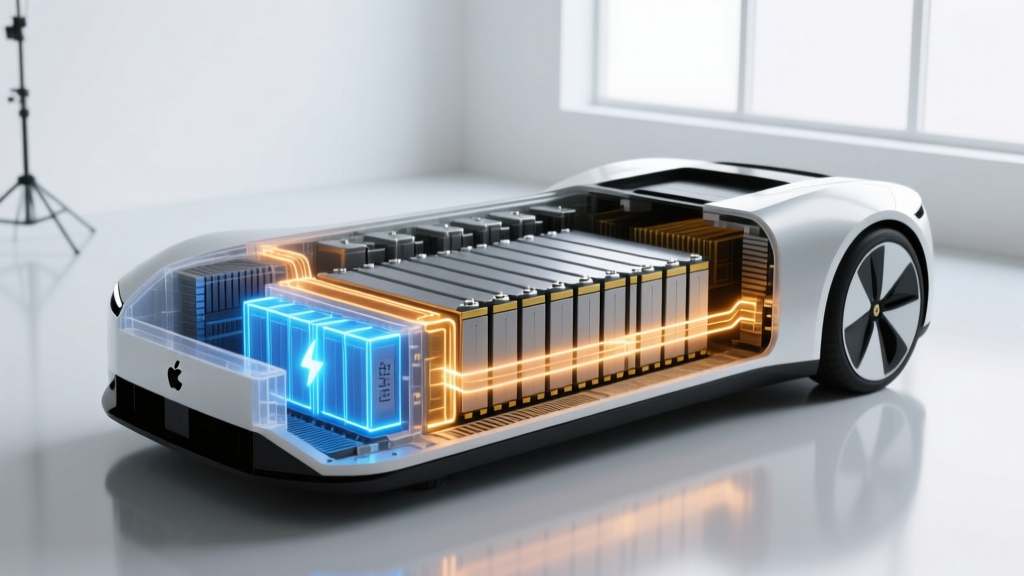
Modern EV batteries are lasting longer, charging faster, and costing less per kWh than at any point in the industry's history. But "better" doesn't mean "identical." The battery pack in a Tesla Model 3 Standard Range behaves fundamentally differently from the one in a Ford F-150 Lightning Extended Range — not just in capacity, but in chemistry, degradation profile, charging tolerance, and replacement economics.
This guide cuts through the marketing to give you the exact numbers behind today's EV battery improvements: what chemistries are in production vehicles right now, how much capacity loss to expect over 100,000 miles, what the warranty actually covers, and what next-generation technologies are realistically timelines versus vaporware.
LFP vs NMC vs NCA: The Chemistry Breakdown
Every EV sold in the US today uses a lithium-ion variant, but the cathode chemistry determines the pack's personality. Three chemistries dominate:
- NMC (Nickel Manganese Cobalt) — High energy density, used in most long-range and performance models.
- NCA (Nickel Cobalt Aluminum) — Tesla's long-standing chemistry, similar profile to NMC with slightly higher energy density.
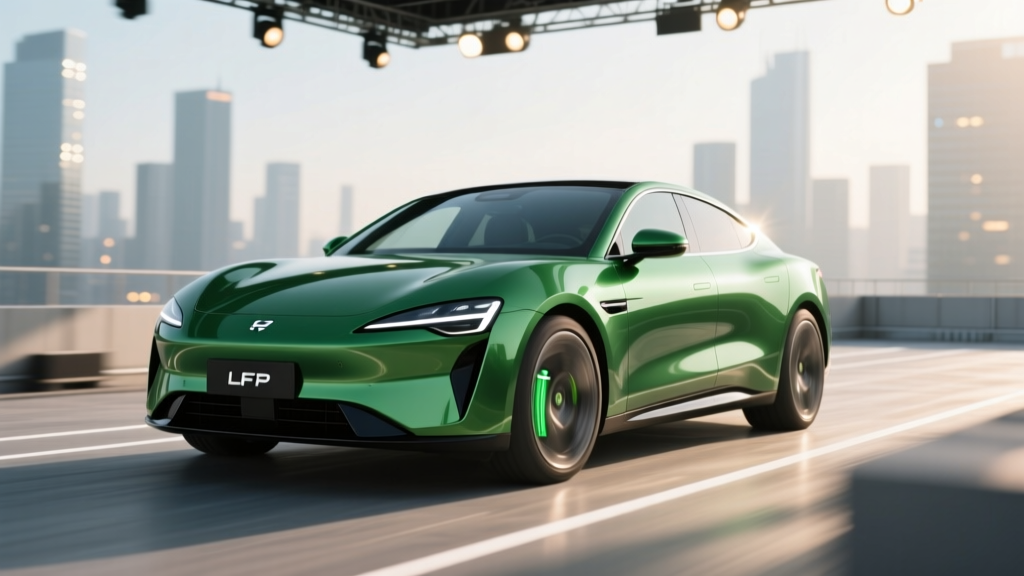
- LFP (Lithium Iron Phosphate) — Lower energy density but dramatically longer cycle life, no cobalt, and tolerant of 100% daily charging.
| Attribute | LFP | NMC / NCA |
|---|---|---|
| Energy Density | ~160-180 Wh/kg (cell level) | ~220-260 Wh/kg (cell level) |
| Typical Cycle Life | 3,000-5,000+ cycles to 80% SoH | 1,000-2,000 cycles to 80% SoH |
| Cold-Weather Performance | Greater range loss below 32°F; slower cold charging | Better low-temp conductivity and charge acceptance |
| Daily Charging Recommendation | 100% SoC is fine; BMS calibration benefits | 80% SoC daily; 100% only for trips |
| Cost per kWh (pack level, 2026) | ~$95-$115 | ~$120-$150 |
| Cobalt Content | None | Varies; trend toward low-cobalt formulations |
| Common In 2026 Models | Tesla Model 3/Y RWD, Ford Mustang Mach-E Select, Rivian Standard | Hyundai Ioniq 5/6 Long Range, Chevy Equinox EV, BMW iX, most PHEVs |
The practical implication: if you drive fewer than 30 miles daily and can charge at home, an LFP pack is arguably the smarter buy — it'll outlast the vehicle's body. If you need maximum range in a single charge or regularly operate in sub-freezing climates, NMC/NCA still wins on energy density and cold-weather usability.
How Long Do EV Batteries Actually Last?
The short answer: longer than most buyers assume. The high-voltage traction battery in a 2026 EV is engineered to outlast the vehicle's useful economic life in the vast majority of cases.
Real-World Degradation Data Points:
- Tesla fleet data (2025 Impact Report): Model 3/Y packs retain approximately 85% of original capacity at 150,000 miles. Degradation is steepest in the first 20,000 miles (~5-7% loss), then flattens to roughly 1% per 15,000-20,000 miles thereafter.
- Geotab fleet analysis (2025): Across 10,000+ EVs monitored, average annual degradation was 1.8% per year — meaning a typical pack retains ~82% capacity after 10 years.
- Hyundai/Kia E-GMP platform: Early Ioniq 5 owner reports show 3-5% loss over the first 30,000 miles with mixed DC fast-charging and Level 2 home charging.
- LFP advantage: Tesla's LFP Model 3 RWD packs show measurably slower degradation curves, with some high-mileage examples retaining 90%+ SoH at 80,000 miles when charged primarily at home.
For context, the average American drives ~13,500 miles per year (FHWA data). At 1.8% annual degradation, a 10-year-old EV with 135,000 miles would still retain roughly 82% of its original range — a 310-mile EPA vehicle would still deliver ~254 miles. That's meaningful reduction, but not obsolescence.
What the Battery Warranty Actually Covers
Federal law mandates a minimum 8-year / 100,000-mile battery warranty for EVs sold in the US (10 years / 150,000 miles in California and states adopting CARB standards). But the details matter enormously.
| Manufacturer | Warranty Period | Capacity Threshold | Notes |
|---|---|---|---|
| Tesla | 8 yr / 120,000 mi (Model 3/Y); 8 yr / 150,000 mi (S/X) | 70% retention | Covers defects and excessive degradation below threshold |
| Hyundai / Kia | 10 yr / 100,000 mi | 70% retention | Among the longest coverage periods in the industry |
| Ford | 8 yr / 100,000 mi | 70% retention | Applies to Mustang Mach-E, F-150 Lightning |
| General Motors (Ultium) | 8 yr / 100,000 mi | 70% retention | Covers Equinox EV, Blazer EV, Silverado EV |
| BMW | 8 yr / 100,000 mi | 70% retention | Transferable to second owner |
| Rivian | 8 yr / 175,000 mi (Max pack); 8 yr / 120,000 mi (Standard) | 70% retention | Higher mileage cap on larger packs |
The critical detail: "70% retention" means the manufacturer will repair or replace modules (not necessarily the full pack) only if your State of Health drops below 70% within the warranty window. A pack at 72% SoH at 95,000 miles — noticeably degraded but above threshold — is not a warranty claim. Most manufacturers now replace individual modules rather than full packs, reducing cost and waste.
Also note: the warranty covers defects and abnormal degradation, not damage from accidents, flooding, or unauthorized modifications. Always read the specific warranty booklet for your model year — terms can shift annually.
EV Battery Replacement Cost: What to Expect
This is the question that generates the most anxiety — and the most misinformation. Here's the grounded reality:
| Vehicle / Pack Size | Battery Capacity | Full Pack Replacement (Parts + Labor) | Module-Level Repair |
|---|---|---|---|
| Tesla Model 3 RWD (LFP) | ~60 kWh | $12,000 - $16,000 | $2,500 - $5,000 per module section |
| Hyundai Ioniq 5 Long Range | 77.4 kWh | $16,000 - $22,000 | $3,000 - $6,000 per module |
| Ford F-150 Lightning Extended Range | ~131 kWh | $25,000 - $35,000 | $4,000 - $8,000 per module |
| Chevrolet Equinox EV | ~85 kWh | $15,000 - $20,000 | $3,000 - $5,500 per module |
| BMW iX xDrive50 | ~111.5 kWh | $22,000 - $30,000 | $4,500 - $7,500 per module |
Three things to keep in mind:
- Most EVs never need a full pack replacement. Catastrophic failure is rare. When degradation becomes noticeable (typically 10+ years), module-level repair addresses the weakest cells at a fraction of full-pack cost.
- Pack prices continue falling. Battery pack costs have dropped from over $1,200/kWh in 2010 to approximately $110-$140/kWh in 2026 (BloombergNEF). A replacement in 2035 will cost substantially less than today's prices.
- Refurbished packs are increasingly available. Third-party EV shops and manufacturer-certified programs now offer remanufactured packs at 40-60% of new-pack cost for popular models.
Factors That Accelerate (or Preserve) Battery Life
Not all miles are equal. How you charge and drive has a measurable impact on long-term State of Health.
What Degrades a Battery Faster:
- Frequent DC fast charging above 150 kW — Occasional road-trip use is fine, but daily reliance on 250+ kW chargers accelerates degradation by an estimated 1-3% over the pack's life compared to Level 2 charging. The heat generated during high-C-rate charging stresses cell chemistry.
- Sustained high State of Charge — Leaving an NMC/NCA pack at 100% SoC for days or weeks (especially in hot weather) promotes electrolyte decomposition. LFP is more tolerant of 100% storage.
- Extreme heat exposure — Ambient temperatures above 95°F combined with high SoC is the worst-case scenario. Packs in Phoenix degrade measurably faster than identical packs in Seattle, all else being equal.
- Deep discharge cycles — Regularly driving to 0% or near-0% SoC stresses the cells. The BMS maintains a buffer (typically 2-5% below displayed 0%), but repeated deep cycles still accelerate wear.
- High-performance driving in extreme temps — Hard acceleration draws high current; doing so when the battery is very cold or very hot compounds stress.
What Preserves Battery Health:
- Level 2 home charging as primary — 7-11 kW charging generates minimal heat and is the gentlest routine for any chemistry.
- 20-80% SoC window for NMC/NCA — Setting your charge limit to 80% for daily use and 100% only before road trips is the single most impactful habit.
- Preconditioning before DC fast charging — Most 2026 EVs automatically precondition the pack when a DCFC station is navigated to. This warms or cools the cells to the optimal charge-acceptance temperature, reducing stress and improving charge speed. Always use the car's navigation to route to a charger rather than just driving up.
- Moderate climates or garage parking — Thermal management systems work less hard, and the pack spends less time at temperature extremes.
- Regular driving — Batteries prefer use. A pack that sits at 50% SoC for months degrades differently (and often worse) than one cycled regularly between 20-80%.
Monitoring Your Battery's State of Health
State of Health (SoH) is the percentage of original capacity your pack currently holds. A new battery is 100% SoH; one that holds 75 kWh of its original 82 kWh is at ~91.5% SoH.
In 2026, most EVs surface SoH data through one of these channels:
- In-vehicle menu — Tesla, Hyundai/Kia, BMW, and Rivian now include a battery health percentage in the service or energy menu. It's typically a BMS-calculated estimate, not a lab measurement, but it's directionally accurate.
- Third-party apps via OBD-II or API — Tools like Tessie (Tesla), OBDeleven (VW Group), and Torque Pro (with EV PIDs) can read detailed BMS data including SoH, cell voltage variance, and pack temperature.
- Dealer diagnostic scan — A service center can pull a full battery health report. Request this during routine service or before a warranty claim.
- Charging data analysis — If your pack used to accept 75 kWh from 10-90% and now only accepts 68 kWh under the same conditions, you can calculate approximate SoH: 68/75 = ~90.7%. Track this over time using your home charger's app or the vehicle's charging logs.
For used-EV buyers: always request a battery health report before purchase. A 2022 model with 89% SoH is a very different value proposition than one at 78%, even at the same odometer reading.
Emerging Battery Tech: Solid-State, Silicon Anodes, and Realistic Timelines
The EV battery improvements pipeline is real, but timelines consistently slip. Here's where next-gen technologies actually stand:
Solid-State Batteries
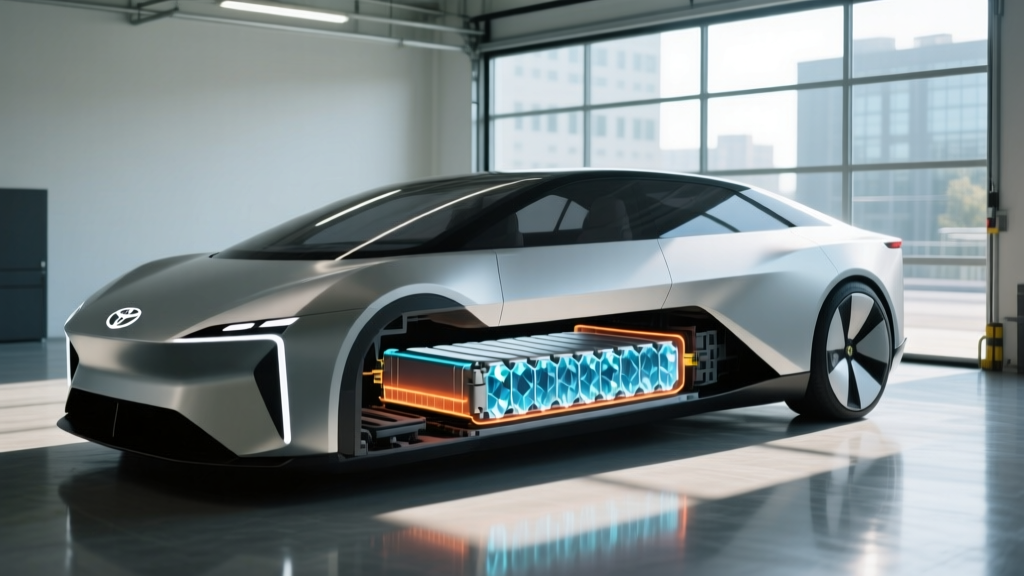
Solid-state cells replace the liquid electrolyte with a solid material, promising higher energy density (~350-400 Wh/kg at cell level), faster charging, and improved safety. Toyota, Samsung SDI, and QuantumScape are the most advanced developers.
Reality check: Toyota has announced a solid-state EV for limited production in 2027-2028, but volume availability remains uncertain. QuantumScape's cells are in prototype validation with Volkswagen. Expect solid-state to appear first in premium, low-volume applications before reaching mainstream pricing — likely 2029-2032 for broad availability.
Silicon Anode Technology
Replacing graphite anodes with silicon increases energy density by 20-40%. Sila Nanotechnologies and Group14 are supplying early production cells.
Reality check: Silicon-blend anodes (not pure silicon) are already appearing in some 2025-2026 model-year packs at limited scale. Expect broader adoption by 2027-2028, primarily boosting range in existing pack form factors rather than enabling entirely new vehicle categories.
Sodium-Ion Batteries
CATL and BYD have begun production of sodium-ion cells for lower-cost, shorter-range applications. No sodium-ion EVs are currently sold in the US, and the chemistry's lower energy density (~120-140 Wh/kg) limits it to urban and fleet vehicles. A potential US market entry is 2027+ at the earliest.
None of these technologies invalidate current EV purchases. Today's lithium-ion packs are mature, well-understood, and backed by real degradation data and warranty infrastructure. The improvements coming are incremental enhancements to an already durable system.
Frequently Asked Questions
How long do EV batteries last in years and miles?
Based on fleet data, the average EV battery retains approximately 80-85% of its original capacity at 150,000 miles or 10-12 years. Most packs will function adequately for 200,000+ miles before degradation makes the vehicle impractical for its original use case. The battery typically outlasts the vehicle's economic value.
How much does an EV battery cost to replace?
Full pack replacement ranges from approximately $12,000 for a 60 kWh LFP pack (Tesla Model 3 RWD) to $35,000 for a 131 kWh NMC pack (F-150 Lightning Extended Range). However, full replacements are rare — most degradation issues are addressed through module-level repair at $2,500-$8,000. Costs continue to decline as pack-level pricing falls.
What does the EV battery warranty cover?
Federal minimum is 8 years / 100,000 miles (10/150k in CARB states). Coverage applies to manufacturing defects and capacity loss below a threshold — typically 70% State of Health. If your pack drops below 70% within the warranty window, the manufacturer will repair or replace modules to bring it above threshold. The warranty does not cover accident damage, misuse, or unauthorized modifications.
How do I check and maximize my EV battery health?
Check SoH through your vehicle's energy menu, a third-party OBD-II app, or a dealer diagnostic scan. To maximize longevity: charge primarily on Level 2 at home, set NMC/NCA charge limits to 80% for daily use, minimize DC fast charging frequency, precondition before fast charging, avoid prolonged storage at 100% or near 0%, and park in shade or a garage in hot climates.
LFP vs NMC — which battery chemistry is better?
Neither is universally better; they serve different needs. LFP wins on cycle life (3,000-5,000 cycles vs 1,000-2,000), cost ($95-$115/kWh vs $120-$150), and daily charging convenience (100% SoC is acceptable). NMC wins on energy density (~220-260 vs ~160-180 Wh/kg), cold-weather performance, and suitability for long-range vehicles. Choose LFP for daily commuting and maximum longevity; choose NMC/NCA for maximum range and cold-climate driving.
Does DC fast charging damage the battery?
Occasional DC fast charging — road trips, a few times per month — has minimal measurable impact on long-term health. Daily reliance on 250+ kW chargers does accelerate degradation slightly (estimated 1-3% additional loss over the pack's life). The key factor is heat: preconditioning the battery before charging and avoiding back-to-back fast charges in hot weather minimizes stress.
Will solid-state batteries make current EVs obsolete?
Not in the near term. Solid-state technology is expected to reach limited production in 2027-2028, with broad mainstream availability not until 2029-2032 at the earliest. Current lithium-ion packs are mature and durable. Buying an EV now does not mean accepting obsolescence — today's packs are engineered for 15+ year service lives.
Sources: fueleconomy.gov (EPA range and efficiency data), manufacturer warranty documentation (Tesla, Hyundai, Ford, GM), IRS.gov (§30D clean vehicle credit rules). Battery degradation data from Tesla Impact Reports, Geotab fleet analytics, and BloombergNEF battery price surveys. Tax credit eligibility varies by buyer income, vehicle MSRP, and battery sourcing — consult a tax professional for personal eligibility.