What "Good" Actually Means for an EV Battery
When EV shoppers ask "how can I tell if a battery is good," they are usually asking three different questions at once: Is this battery healthy right now? Will it last as long as I need it to? And what happens if it doesn't? These are legitimate concerns, but they need data — not marketing reassurance — to answer properly.
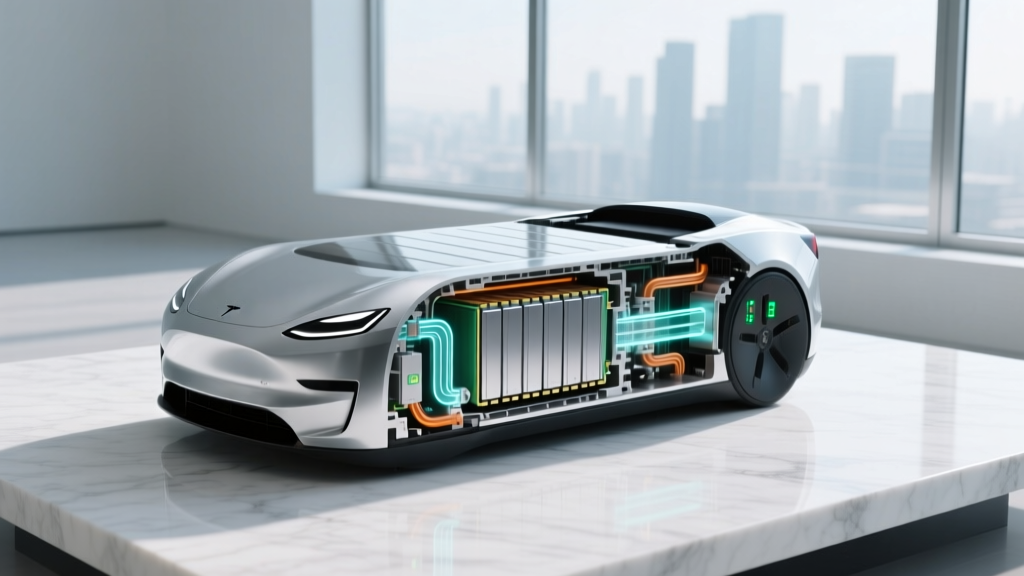
A "good" EV traction battery (the high-voltage pack that propels the car, not the 12V auxiliary battery that runs the electronics) is one that retains enough usable capacity to meet your daily driving needs while still falling within its manufacturer warranty coverage. In practical terms, most modern lithium-ion EV batteries are considered acceptable if they hold 70–80% of their original capacity after eight years or 100,000 miles. That threshold is not arbitrary — it is the warranty floor that nearly every major automaker guarantees.
This guide breaks down exactly how to assess battery health, what degradation looks like in real data, how chemistry choice (LFP vs. NMC/NCA) affects longevity, and what replacement actually costs if you ever need it.
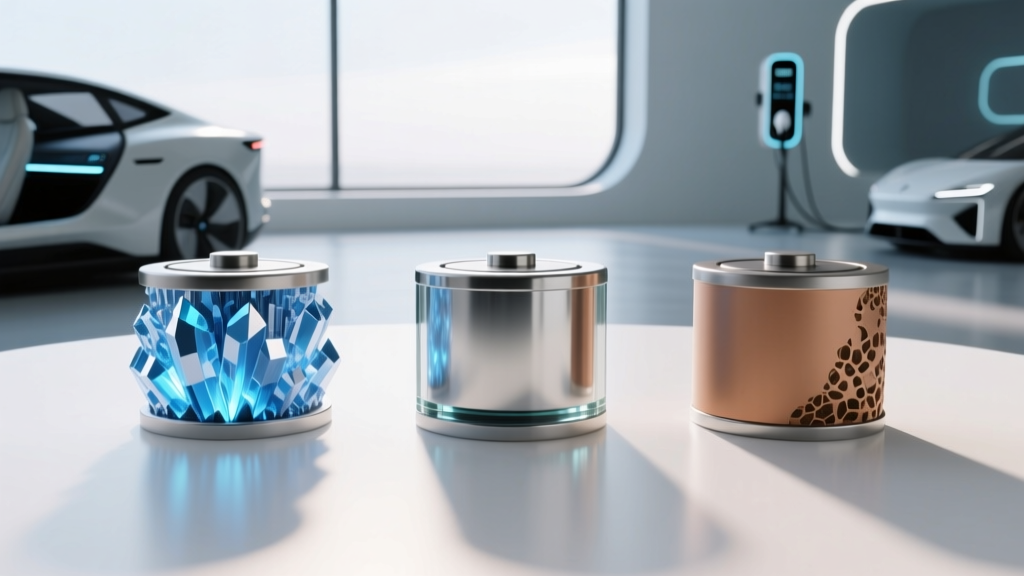
LFP vs. NMC/NCA: Chemistry Determines Longevity Behavior
The single biggest factor shaping how your EV battery ages is its cell chemistry. Two dominant chemistries power nearly every EV sold in the US market today, and they degrade differently.
| Attribute | LFP (Lithium Iron Phosphate) | NMC/NCA (Nickel Manganese Cobalt / Nickel Cobalt Aluminum) |
|---|---|---|
| Energy Density | Lower (~160–180 Wh/kg cell-level) | Higher (~220–300 Wh/kg cell-level) |
| Cycle Life | 3,000–5,000+ cycles to 80% SoH | 1,000–2,500 cycles to 80% SoH |
| Cold-Weather Performance | Weaker — greater range loss below 32°F | Better low-temp conductivity |
| Cost per kWh | ~$80–100/kWh (cell level, 2026) | ~$110–140/kWh (cell level, 2026) |
| Charging to 100% Regularly | Recommended — BMS needs full-charge calibration | Discouraged — accelerates degradation above 80% |
| Typical Applications | Tesla Model 3/Y RWD, Ford Mustang Mach-E Select (LFP trims), BYD models | Long-range AWD trims, Hyundai Ioniq 5/6, Rivian, most premium EVs |
| Cobalt Content | None | Present — supply-chain and ethical considerations |
The trade-off in plain terms: LFP batteries last longer (more charge cycles) and cost less, but they are heavier for the same energy capacity and suffer more range loss in freezing weather. NMC/NCA packs deliver more range per pound and perform better in cold climates, but they degrade faster if you habitually charge to 100% or frequently use DC fast charging at high power levels.
If longevity is your top priority and you do not need maximum range, LFP is the stronger choice. If you need 300+ miles of EPA range and drive in cold climates, NMC/NCA remains the better fit — with the understanding that you will need to be more deliberate about charging habits.
Real Degradation Data: What the Numbers Actually Show
Battery degradation is not linear. Most EV packs experience a steeper capacity drop in the first 1–2 years (typically 2–5%), then the curve flattens significantly. This pattern holds across chemistries, though the absolute numbers differ.
Observed Degradation Benchmarks
Based on fleet data, owner surveys, and third-party testing compiled through 2025–2026:
- Tesla Model 3/Y (NMC/NCA, 2019–2023): Average ~5% capacity loss at 50,000 miles, ~8–10% at 100,000 miles. Tesla's own 2024 Impact Report cited an average of ~12% degradation at 200,000 miles across its fleet.
- Tesla Model 3 RWD (LFP, 2021–2025): Slower degradation observed — typically 3–5% loss at 60,000 miles, with many packs retaining 90%+ capacity at 100,000 miles.
- Hyundai Ioniq 5 (NMC, 2022–2025): Early owner data from fueleconomy.gov listings and community tracking suggests ~4–6% loss at 50,000 miles under mixed driving and Level 2 home charging.
- Chevrolet Bolt EV/EUV (NMC, 2017–2023): After the battery recall and replacement program, replacement packs show minimal degradation. Original pre-recall packs averaged ~8–10% loss at 80,000 miles before the recall addressed defect-related failures.
- Nissan Leaf (LMO/NMC, passively cooled): Historically the worst performer in degradation due to lack of active thermal management — 15–25% capacity loss at 60,000–80,000 miles in hot climates. This is an outlier and a cautionary example of why thermal management matters.
These numbers describe the high-voltage traction battery only. They do not apply to the 12V auxiliary battery, which follows conventional lead-acon or lithium-iron replacement cycles (typically 3–5 years) and is unrelated to your EV's driving range.
Battery Warranty Terms: Your Safety Net, Explained
Federal law in the United States mandates that EV battery warranties cover a minimum of 8 years or 100,000 miles (whichever comes first). In California and states that follow CARB emissions rules, that minimum extends to 10 years or 150,000 miles. Most automakers meet or exceed these floors.
| Manufacturer | Warranty Term | Capacity Retention Threshold | Notes |
|---|---|---|---|
| Tesla (Model 3/Y LWD) | 8 yr / 100,000 mi | 70% | LFP packs covered under same terms |
| Tesla (Model 3/Y LR & Performance) | 8 yr / 120,000 mi | 70% | Longer mileage coverage for LR trims |
| Hyundai / Kia | 10 yr / 100,000 mi | 70% | Among the longest terms in the US market |
| Ford (Mustang Mach-E, F-150 Lightning) | 8 yr / 100,000 mi | 70% | Transferable to second owner |
| General Motors (Ultium-based) | 8 yr / 100,000 mi | 70% | Covers battery and electric propulsion components |
| Rivian | 8 yr / 175,000 mi | 70% | Highest mileage threshold among major OEMs |
| BMW (i4, iX, i7) | 8 yr / 100,000 mi | 70% | BMW also offers optional extended battery coverage |
What the warranty actually covers: If your battery's usable capacity drops below the stated threshold (typically 70% of original) within the warranty period, the manufacturer will repair or replace the pack at no cost to you. This covers abnormal degradation — it does not cover damage from accidents, flooding, or aftermarket modifications.
What it does not cover: Gradual capacity loss that stays above the threshold. If your battery retains 72% capacity at year 8, that is considered normal wear, and you are responsible for any future replacement. This is why monitoring your State of Health (SoH) matters — you want to catch abnormal drops early, while the warranty is still active.
How to Check Your EV Battery's State of Health (SoH)
State of Health (SoH) is a percentage that tells you how much usable capacity your battery currently holds compared to its original factory capacity. A brand-new EV has 100% SoH. A battery at 85% SoH has lost 15% of its original capacity.
Method 1: In-Vehicle Battery Health Display
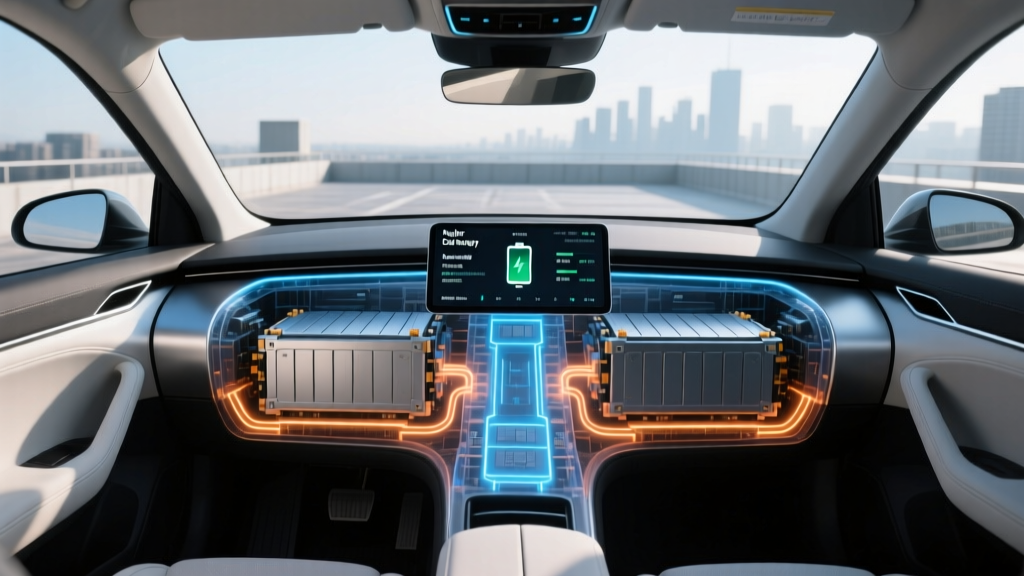
Some manufacturers build SoH readouts directly into the infotainment or driver display. Hyundai and Kia, for example, show a battery health indicator in the EV settings menu on the Ioniq 5, Ioniq 6, and EV6. BMW provides a battery health percentage in the iDrive system. Tesla does not natively display SoH in the vehicle — you need to use third-party tools or calculate it manually.
Method 2: OBD-II Dongle + App
The most accurate consumer-accessible method involves plugging an OBD-II Bluetooth adapter (such as an OBDLink SX or vLinker BM+) into your EV's diagnostic port and using an app like Car Scanner, Leaf Spy (Nissan Leaf), or Scan My Tesla (Tesla models). These apps read the Battery Management System (BMS) directly and report SoH, cell voltage imbalance, battery temperature, and cycle count.
Method 3: Manual Calculation (Charge-to-Full Test)
If your vehicle lacks a SoH display and you do not have an OBD-II reader, you can estimate SoH manually:
- Drive the battery down to 5% State of Charge (SoC).
- Charge on Level 2 to 100% (or the vehicle's maximum charge limit).
- Record the total kWh delivered (shown on your charger's app or display).
- Divide that number by the battery's original usable capacity (in kWh) and multiply by 100.
For example: If your 77.4 kWh (usable) Hyundai Ioniq 5 accepts 66 kWh from 5% to 100%, your estimated SoH is roughly (66 ÷ 77.4) × 100 = ~87% (adjusted slightly because you started at 5%, not 0%).
Method 4: Dealership Diagnostic
Any authorized dealer can run a battery health diagnostic. Request a printed SoH report — this is especially important when buying a used EV. Ask for the report before purchase, just as you would request a vehicle history report from Carfax or AutoCheck.
Factors That Accelerate (or Preserve) Battery Life
Not all miles are equal when it comes to battery wear. The following factors have the largest measurable impact on long-term SoH:
Battery Care Checklist: Maximize Longevity
- Limit DC fast charging frequency. Occasional road-trip fast charging is fine, but daily 150–350 kW DC sessions accelerate degradation. Studies from NREL (National Renewable Energy Laboratory) show that exclusive DC fast charging can increase capacity loss by 5–10% over 100,000 miles compared to Level 2 charging.
- Avoid extreme State of Charge for NMC/NCA. For nickel-based chemistries, keep daily charging between 20–80%. Charge to 100% only when you need full range for a trip. LFP batteries are an exception — manufacturers like Tesla recommend charging LFP packs to 100% at least weekly for BMS calibration.
- Minimize exposure to extreme heat. Battery degradation accelerates significantly above 95°F ambient, especially when combined with high SoC. If you live in Arizona or Texas, prioritize vehicles with active liquid thermal management (most modern EVs have this; the pre-2023 Nissan Leaf did not).
- Precondition the battery before fast charging. Most EVs precondition automatically when you navigate to a DC fast charger. A cold battery (below 50°F) that is fast-charged without preconditioning charges slower and experiences more stress. Enable preconditioning in your vehicle settings.
- Do not store the vehicle at 100% or 0% SoC. If your EV will sit unused for more than a week, aim for ~50% SoC. Long-term storage at full charge or near-empty accelerates calendar degradation.
- Use regenerative braking moderately in extreme cold. Aggressive regen on a freezing battery can stress cells. Many EVs automatically limit regen when the battery is cold — let the system manage this.
EV Battery Replacement Cost: When and How Much
Here is the reassurance backed by data: the vast majority of EV batteries outlast the vehicle itself. Based on current degradation curves, a well-maintained NMC pack will retain 75–85% capacity at 150,000 miles, and an LFP pack may retain 85–90%+ at the same mileage. Most EVs are scrapped for unrelated reasons (collision, rust, electronics failure) before the battery becomes unusable.
That said, if you plan to keep your EV for 15+ years or drive exceptionally high annual mileage, replacement may eventually be necessary. Here is what it costs in 2026:
| Vehicle / Battery Size | Battery Capacity (Usable) | Replacement Cost Range (Parts + Labor) | Typical Replacement Trigger |
|---|---|---|---|
| Tesla Model 3 RWD (LFP) | ~57.5 kWh | $10,000 – $14,000 | Post-warranty, 200,000+ mi |
| Tesla Model Y Long Range (NMC) | ~75 kWh | $13,000 – $18,000 | Post-warranty, 180,000+ mi |
| Hyundai Ioniq 5 (NMC) | ~77.4 kWh | $14,000 – $20,000 | Post-warranty, 180,000+ mi |
| Ford F-150 Lightning Extended Range | ~131 kWh | $25,000 – $35,000 | Post-warranty, 150,000+ mi |
| Chevrolet Silverado EV (Ultium, large pack) | ~200 kWh | $35,000 – $45,000 | Post-warranty, 150,000+ mi |
| Nissan Leaf (40 kWh pack) | ~38 kWh usable | $6,500 – $9,000 | Often needed at 80,000–120,000 mi (passive cooling) |
Costs are trending downward. Battery cell prices have fallen from ~$140/kWh in 2022 to roughly $90–110/kWh in 2026 for NMC, and $70–90/kWh for LFP, according to BloombergNEF tracking. Labor accounts for roughly 20–30% of the total replacement invoice. Independent EV shops are increasingly offering module-level repairs (replacing only degraded cell modules rather than the entire pack) for $3,000–$8,000, which can be a cost-effective alternative for out-of-warranty vehicles.
Emerging Battery Technology: What Is Coming (and When)
Several next-generation battery technologies are in development, but none are commercially available in US-market EVs as of 2026. Here is a realistic timeline based on current manufacturer announcements and production roadmaps:
- Solid-state batteries: Toyota has announced limited production of solid-state-equipped EVs for 2027–2028, targeting 450+ mile range and 10-minute fast charging. Samsung SDI and QuantumScape are also advancing solid-state cells, but mass-market availability at scale is not expected before 2029–2030. These promise higher energy density and improved safety (no liquid electrolyte) but face manufacturing cost challenges.
- Silicon-dominant anodes: Companies like Sila Nanotechnologies and Group14 are supplying silicon-anode materials to battery manufacturers, enabling 10–20% energy density improvements. Early adoption is appearing in premium applications, with broader EV integration expected by 2027–2028.
- Sodium-ion batteries: CATL and BYD have begun producing sodium-ion cells for lower-cost, shorter-range EVs in China. US-market adoption for entry-level EVs or energy storage is possible by 2027–2028, but these offer lower energy density than LFP.
These are forward-looking developments. If you are buying an EV in 2026, you are choosing between LFP and NMC/NCA — both proven, well-understood chemistries with extensive real-world track records.
Frequently Asked Questions
How long do EV batteries last in years and miles?
Most modern EV batteries (2020 and newer) are designed to retain 70–80% of their original capacity at 150,000–200,000 miles, which typically translates to 12–15+ years of average driving (12,000–15,000 miles/year). LFP chemistries generally outlast NMC/NCA in cycle life. The battery is typically the longest-lasting major component in an EV.
How much does an EV battery cost to replace?
Full pack replacement ranges from ~$6,500 for a small pack (Nissan Leaf 40 kWh) to $35,000–$45,000 for large truck packs (Ford F-150 Lightning Extended Range, Chevy Silverado EV). Most mainstream EVs (Tesla Model 3/Y, Hyundai Ioniq 5) fall in the $10,000–$20,000 range. However, replacement is rarely needed within the first 150,000 miles, and most batteries outlive the vehicle.
What does the EV battery warranty cover?
Federal minimum is 8 years / 100,000 miles (10 years / 150,000 miles in CARB states). The warranty guarantees that your battery will retain at least 70% of its original usable capacity. If it drops below that threshold within the warranty period, the manufacturer repairs or replaces it at no cost. The warranty covers abnormal degradation but not accident damage or misuse.
How do I check my EV battery's State of Health?
The most accurate consumer method is using an OBD-II Bluetooth adapter with a compatible app (Car Scanner, Scan My Tesla, Leaf Spy) to read the BMS directly. Some vehicles (Hyundai, Kia, BMW) display SoH in the infotainment system. You can also request a battery health report from your dealer or estimate SoH manually by measuring kWh accepted during a full charge cycle.
LFP vs. NMC — which battery chemistry is better?
Neither is universally better — they serve different priorities. Choose LFP if you want maximum cycle life, lower cost, and do not mind slightly less range or reduced cold-weather performance. Choose NMC/NCA if you need maximum range per charge, better cold-weather efficiency, and are willing to follow stricter charging habits (20–80% daily, limit fast charging). Both chemistries are proven and will reliably serve a typical EV owner for 10+ years.
Does frequent DC fast charging damage the battery?
Exclusive reliance on DC fast charging (150–350 kW) measurably increases degradation compared to Level 2 home charging — studies suggest 5–10% additional capacity loss over 100,000 miles. However, occasional fast charging on road trips has minimal impact. The biggest risk factors are repeated high-power charging combined with high ambient temperatures and high State of Charge. If you fast-charge daily, consider an LFP-equipped vehicle, which tolerates frequent full charges better.
Should I be worried about buying a used EV with an older battery?
Not if you verify the SoH before purchase. A 4-year-old EV with 50,000 miles and 92% SoH is an excellent value. Request a dealer diagnostic report or use an OBD-II reader to check capacity. Also confirm the remaining warranty coverage — many EV batteries have 6+ years of warranty remaining at the typical used-car purchase point. Per IRS §30D rules, note that the federal new-vehicle tax credit does not apply to used EV purchases, though a separate used clean vehicle credit (up to $4,000) may be available for qualifying used EVs under $25,000.
Assessing whether an EV battery is "good" comes down to three verifiable data points: its current State of Health percentage, the remaining warranty coverage, and the chemistry-specific degradation pattern you should expect going forward. With the tools and benchmarks above, you can evaluate any EV battery — new or used — with confidence and precision.