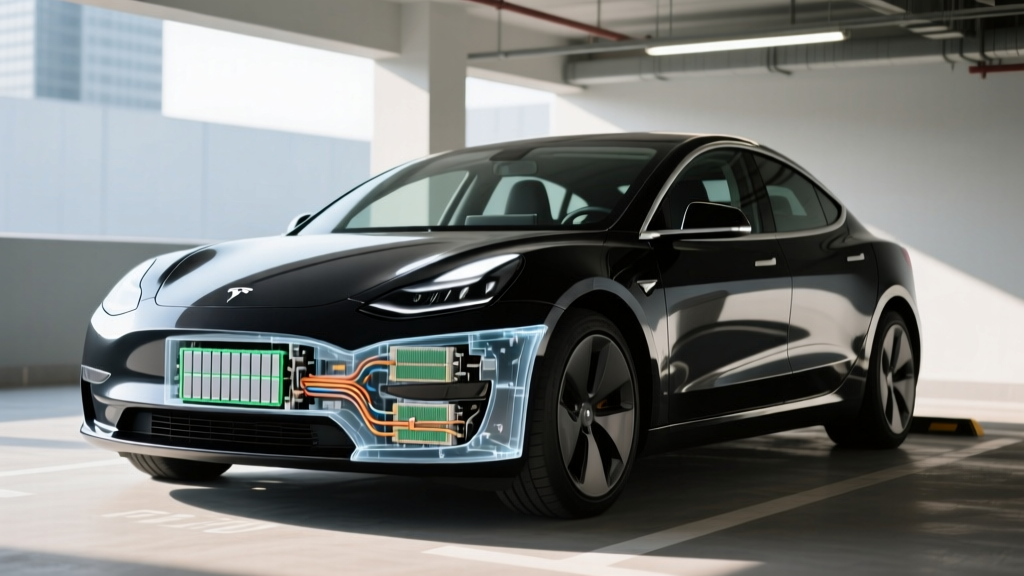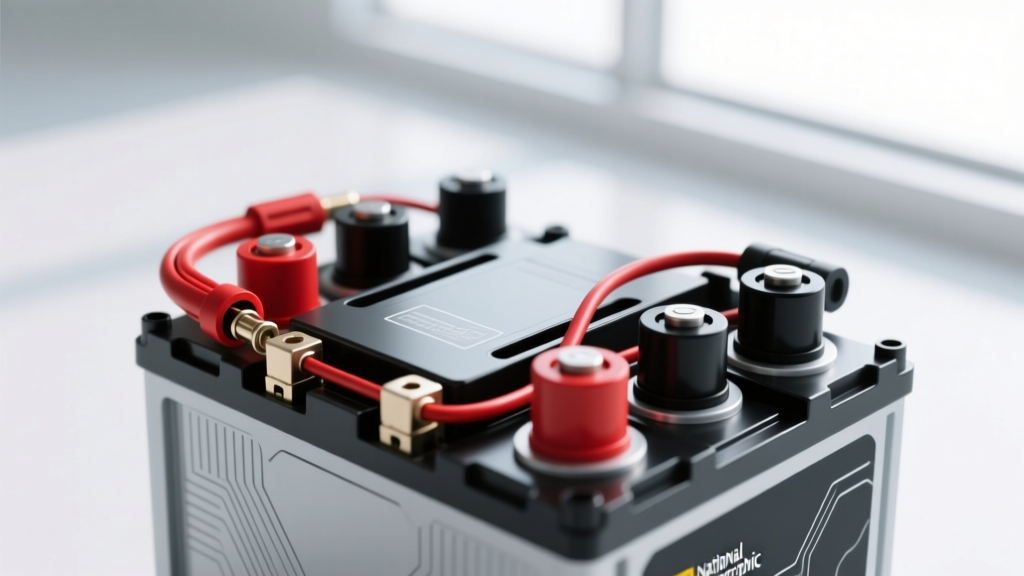
Search for "battery red to positive" and you'll mostly find advice about jump-starting a conventional 12V car battery — connecting the red clamp to the positive terminal. But if you own or are shopping for an electric vehicle, that 12V auxiliary battery is just a small accessory unit. The real heart of your EV is the high-voltage traction battery: a 50-100+ kWh pack that costs thousands to replace and determines your vehicle's range, performance, and resale value.
This guide covers what actually matters for EV owners and buyers: the chemistry inside your pack, how much capacity you'll lose over time, what the warranty really covers, what a replacement costs in 2026, and the habits that extend — or destroy — battery life. Every claim here is backed by data, not marketing.
LFP vs NMC/NCA: The Chemistry Decision That Shapes Your Ownership
Not all EV batteries are the same. The two dominant chemistries in 2026 passenger EVs are NMC/NCA (nickel manganese cobalt / nickel cobalt aluminum) and LFP (lithium iron phosphate). Your vehicle's chemistry affects range, longevity, cold-weather behavior, and even how you should charge it daily.
| Attribute | LFP (Lithium Iron Phosphate) | NMC / NCA (Nickel-Based) |
|---|---|---|
| Energy Density | Lower (~160-180 Wh/kg cell-level) | Higher (~220-260 Wh/kg cell-level) |
| Cycle Life | 3,000-5,000+ cycles to 80% SoH | 1,000-2,000 cycles to 80% SoH |
| Cold-Weather Performance | Weaker; greater range loss below 32°F | Better low-temp conductivity |
| Daily Charging to 100% | Recommended (BMS calibration needs full charges) | Not recommended; 80% daily limit advised |
| Cost per kWh (2026) | ~$70-90/kWh at pack level | ~$100-130/kWh at pack level |
| Thermal Stability | Higher; less prone to thermal runaway | Lower; requires more robust BMS cooling |
| Notable 2026 Applications | Tesla Model 3/Y RWD, standard Ford Mustang Mach-E Select, BYD models | Tesla Long Range, Hyundai Ioniq 5/6, Kia EV6/EV9, Rivian, BMW iX |
The practical takeaway: If you plan to keep a car 10+ years and mostly drive in moderate climates, LFP's superior cycle life and lower cost make it a strong choice — and you can charge it to 100% daily without guilt. If you need maximum range per charge, frequently drive in sub-freezing weather, or tow regularly, NMC/NCA's higher energy density and better cold performance justify the higher cost and more careful charging habits.
How Long Do EV Batteries Actually Last? Degradation Data
The short answer: far longer than most buyers fear. The vast majority of EV traction batteries outlast the vehicles they're installed in. But degradation is real, measurable, and nonlinear.
Typical Degradation Curve (NMC packs, averaged across multiple fleet studies):
- Year 1 / ~15,000 miles: 2-5% capacity loss (initial steeper drop as the solid electrolyte interphase layer stabilizes)
- Years 2-5 / ~75,000 miles: Gradual linear decline, reaching roughly 88-92% State of Health (SoH)
- Years 6-10 / ~150,000 miles: Continued slow decline to approximately 82-88% SoH
- Years 10-15 / 200,000+ miles: Many packs still above 75-80% SoH, depending on usage patterns
Real-world data points reinforce this. According to a Geotab fleet study tracking over 10,000 EVs, the average annual degradation rate across models was approximately 2.3% per year, with significant variation by model and climate. Tesla's own 2024 Impact Report (the most recent multi-year data published) showed Model 3/Y packs retaining roughly 85% capacity at 200,000 miles. Hyundai/Kia's E-GMP platform vehicles have shown similar trajectories in owner-reported data.
What this means practically: A vehicle with a 300-mile EPA range when new will typically still deliver 255-270 miles of range at 100,000 miles. That's a noticeable reduction, but not a crisis — and it's still adequate for most daily driving and moderate road trips.
What the Battery Warranty Actually Covers
Federal law mandates a minimum 8-year / 100,000-mile warranty on EV traction batteries (10 years / 150,000 miles in California and states adopting CARB standards). But the details matter enormously.
| Manufacturer | Warranty Period | Capacity Threshold | Notes |
|---|---|---|---|
| Tesla (Model 3/Y RWD, LFP) | 8 yr / 100,000 mi | 70% retention | Standard range models |
| Tesla (Model 3/Y Long Range, NMC) | 8 yr / 120,000 mi | 70% retention | Long range / Performance |
| Hyundai / Kia (E-GMP) | 10 yr / 100,000 mi | 70% retention | Ioniq 5/6, EV6/EV9; 10-year term is a standout |
| Ford (Mach-E, F-150 Lightning) | 8 yr / 100,000 mi | 70% retention | Standard across BEV lineup |
| GM (Ultium-based: Equinox EV, Blazer EV, Silverado EV) | 8 yr / 100,000 mi | 70% retention (some trims 60% for commercial) | Verify trim-specific terms |
| Rivian (R1T/R1S) | 8 yr / 175,000 mi | 70% retention | Higher mileage cap reflects truck use case |
| BMW (i4/iX/i7) | 8 yr / 100,000 mi | 70% retention | Standard BMW HV battery warranty |
Critical fine print: Warranties cover degradation below the stated threshold — typically 70% of original capacity — not just outright failure. If your 300-mile EV drops to 205 miles of range (roughly 68% SoH) at year 7, you'd be covered for a battery repair or replacement. But a drop from 300 to 240 miles (80% SoH) at the same age, while annoying, is considered normal and is not warrantable. Always read the specific warranty booklet for your model year; terms do shift.
EV Battery Replacement Costs: What You'd Actually Pay
This is the number that generates the most anxiety — and the most misinformation. Yes, a full pack replacement is expensive. But context is essential: most packs never need replacing during the vehicle's useful life.
| Vehicle / Pack Size | Battery Cost (Parts) | Labor | Estimated Total |
|---|---|---|---|
| Tesla Model 3 RWD (~60 kWh, LFP) | $6,000-$8,000 | $1,500-$2,500 | $7,500-$10,500 |
| Tesla Model Y Long Range (~75 kWh, NMC) | $9,000-$12,000 | $1,500-$2,500 | $10,500-$14,500 |
| Hyundai Ioniq 5 (~77.4 kWh, NMC) | $10,000-$14,000 | $2,000-$3,000 | $12,000-$17,000 |
| Ford F-150 Lightning Extended (~131 kWh, NMC) | $18,000-$24,000 | $3,000-$4,500 | $21,000-$28,500 |
| Chevy Silverado EV (~200 kWh, Ultium NMC) | $25,000-$35,000 | $3,500-$5,000 | $28,500-$40,000 |
| BMW iX xDrive50 (~111.5 kWh, NMC) | $16,000-$22,000 | $3,000-$4,500 | $19,000-$26,500 |
When is replacement actually needed? In practice, full pack replacements are rare. Most out-of-warranty issues involve individual module or cell failures, which independent EV shops can increasingly repair for $1,500-$4,000 by replacing specific modules rather than the entire pack. Complete replacements typically occur only after collision damage, manufacturing defects that surface late, or extreme degradation well beyond 200,000 miles. Pack-level costs continue to decline — BloombergNEF's 2025 battery price survey placed average pack prices at approximately $115/kWh, down from $140/kWh in 2023, and this trend is expected to continue.
Factors That Accelerate (or Slow) Battery Degradation
Your habits matter. Two identical EVs driven differently for five years can show a 5-10 percentage-point gap in State of Health. Here's what the data shows:
Habits that accelerate degradation:
- Frequent DC fast charging above 150 kW without preconditioning: High-current charging generates heat, and heat is the primary enemy of lithium-ion cells. Occasional fast charging is fine; making it your daily routine without preconditioning the battery (warming it to optimal temperature first) adds up.
- Routinely storing at 100% SoC in hot weather: A fully charged NMC pack sitting in a 95°F driveway for days undergoes accelerated calendar aging. LFP is more tolerant of this, but it's still not ideal.
- Deep discharges to 0%: Letting the pack sit at or near empty stresses the chemistry. Most BMS systems maintain a small bottom buffer, but repeatedly running to near-zero is avoidable wear.
- Extreme ambient temperatures without garage/thermal management: Sustained exposure to 100°F+ or -10°F and below, especially while parked at high SoC, accelerates calendar degradation.
Habits that maximize longevity:
- Daily charging to 80% (NMC) or 100% (LFP): Follow your manufacturer's recommendation. Tesla's app lets you set charge limits; most EV apps do the same.
- Use scheduled charging / preconditioning: Set your car to finish charging just before departure. This avoids the pack sitting at high SoC for hours and ensures optimal temperature for your commute.
- Precondition before DC fast charging: Navigate to a fast charger using the vehicle's built-in navigation (most EVs will automatically precondition the battery en route), or manually activate preconditioning 15-30 minutes before arrival.
- Keep the pack between 20-80% SoC when possible (NMC): This is the sweet spot for nickel-based chemistry longevity. LFP owners should still charge to 100% periodically for BMS calibration.
- Garage parking in extreme climates: Even an unheated garage moderates temperature extremes significantly.
How to Check Your Battery's State of Health (SoH)
Unlike a gas car's compression test, EV battery health monitoring is mostly software-based and increasingly accessible.
Manufacturer apps and in-car displays: Tesla provides a battery health estimate in the service menu (though it's not always prominently displayed). Hyundai/Kia's Bluelink/Uvo connected services can report SoH. BMW's iDrive includes battery diagnostics accessible through the service menu. Not all manufacturers expose this data directly to owners — some require a dealer visit.
OBD-II dongles and third-party apps: Devices like the OBDLink SX/MX+ paired with apps such as EV Battery Health (Android) or LeafSpy (originally for Nissan Leaf, now broader) can read the BMS-reported SoH, individual cell voltages, and temperature data. For Tesla owners, TeslaFi or Stats (open-source) provide detailed battery analytics from the vehicle's API.
Dealer diagnostic reports: Any authorized service center can pull a full battery health report. Request one during routine service or before a warranty claim. This report shows pack-level capacity, module-level voltage balance, and historical charge/discharge patterns.
What to look for: A healthy pack shows cell voltages within 20-30 millivolts of each other at rest. Wider spreads indicate module imbalance, which may signal a degrading cell group. Track SoH quarterly — a sudden drop (more than 2-3% in a month) warrants a dealer visit.
Looking Ahead: Solid-State, Silicon Anodes, and What's Real
The battery technology pipeline is genuinely exciting, but separating announcement from availability is essential for buyers making decisions today.
Solid-state batteries promise higher energy density (potentially 400+ Wh/kg at the cell level), faster charging, and improved safety by replacing the liquid electrolyte with a solid conductor. Toyota has announced a 2027-2028 production timeline for solid-state EVs with a claimed 750 km (~465 mile) range and 10-minute fast charging. Samsung SDI and QuantumScape (backed by Volkswagen) are targeting similar timelines. However, as of early 2026, no solid-state EV battery is in mass production for passenger vehicles. Manufacturing yield, cost, and scalability remain unsolved challenges at the gigawatt-hour scale. Expect limited, premium-segment availability no earlier than 2028-2029, with mainstream adoption likely in the 2030s.
Silicon-dominant anodes are closer to reality. Companies like Sila Nanotechnologies and Group14 are supplying silicon-carbon composite anode materials that boost energy density by 10-20% over conventional graphite anodes. These are already appearing in some 2025-2026 model-year cells (notably in certain Mercedes-Benz EQ and Panasonic/Tesla supply chains) and represent a genuine near-term improvement, not vaporware.
Sodium-ion batteries from CATL and BYD are entering production for lower-cost, shorter-range EVs — primarily in China and emerging markets. They offer lower energy density but dramatically reduced material costs and no lithium, cobalt, or nickel. Don't expect these in US-market long-range vehicles soon, but they may appear in budget urban EVs within 2-3 years.
The practical advice: don't delay a 2026 EV purchase waiting for solid-state. Today's lithium-ion packs, properly cared for, will serve reliably for 15+ years and 200,000+ miles.
Frequently Asked Questions
How long do EV batteries last in years and miles?
Based on fleet data from Geotab and manufacturer reports, most modern EV traction batteries retain 80-88% of original capacity at 150,000 miles (roughly 10 years of average driving). Complete failure before 200,000 miles is rare. The battery will typically outlast other major vehicle components like suspension, interior trim, and infotainment hardware.
How much does it cost to replace an EV battery out of warranty?
Full pack replacement ranges from approximately $7,500 for a smaller LFP pack (e.g., Tesla Model 3 RWD) to $28,500-$40,000 for large truck packs (e.g., F-150 Lightning Extended Range, Silverado EV). However, most out-of-warranty battery issues involve individual module failures repairable for $1,500-$4,000. Complete pack replacements are uncommon and typically tied to collision damage or extreme late-life degradation.
What does the federal EV battery warranty cover?
US federal law requires a minimum 8-year/100,000-mile warranty on EV traction batteries. CARB-adopting states (including California, New York, Washington, and others) require 10 years/150,000 miles. Coverage applies when capacity drops below the manufacturer's stated threshold (typically 70% of original capacity) or in cases of defect. Normal degradation above the threshold is not covered. Always check your specific model-year warranty booklet for exact terms.
How do I check and maximize my EV battery health?
Check SoH through your vehicle's service menu, manufacturer app, or an OBD-II diagnostic tool with EV battery support. To maximize longevity: charge NMC packs to 80% daily (LFP to 100%), use scheduled/preconditioned charging, avoid frequent DC fast charging without preconditioning, keep SoC between 20-80% when practical (NMC), garage-park in extreme climates, and avoid letting the pack sit at 0% or 100% for extended periods.
LFP vs NMC — which battery chemistry is better for me?
Neither is universally better. Choose LFP if you want maximum cycle life (3,000-5,000+ cycles), lower replacement cost, the ability to charge to 100% daily without concern, and you drive mostly in moderate climates. Choose NMC/NCA if you need maximum range per charge, frequently drive in cold weather, tow heavy loads, or prioritize the highest energy density for road trips. Both chemistries are proven and reliable — the right choice depends on your driving patterns and climate.
Does DC fast charging damage my EV battery?
Occasional DC fast charging (1-3 times per week) has minimal measurable impact on modern packs with active thermal management. The risk comes from frequent high-power DC charging (daily or multiple times daily) without battery preconditioning, which generates sustained heat. Most 2026 EVs precondition automatically when you navigate to a charger. If your routine requires daily fast charging, expect slightly higher long-term degradation — perhaps 1-2 additional percentage points of capacity loss over 100,000 miles compared to predominantly Level 2 home charging.
What's the difference between the 12V battery and the EV traction battery?
The 12V auxiliary battery (the one you'd connect "red to positive" when jump-starting) powers the vehicle's electronics, lights, and computers. It's a small, conventional lead-acid or lithium 12V unit that costs $100-$300 to replace. The high-voltage traction battery (typically 400V or 800V) is the large pack under the floor that stores 50-200+ kWh of energy and powers the drive motors. This guide focuses on the traction battery — the expensive, critical component that determines your EV's range and longevity.
Sources: EPA fuel economy data via fueleconomy.gov; manufacturer warranty documentation; Geotab EV Battery Health Study; IRS §30D clean vehicle credit guidelines for current incentive eligibility.