The Real Question Behind Battery Anxiety
When EV shoppers ask "how do you know if a battery is good," they're really asking three things: Will it last as long as the car? How much range will I lose over time? And if it fails, what will it cost me? These are fair questions, and unlike the early days of the Nissan Leaf's passive-air-cooled packs, today's answers are reassuring — provided you know what data to look at and what habits actually matter.
This guide breaks down the chemistry, the degradation curves, the warranty fine print, and the tools you can use to monitor State of Health (SoH) yourself. Whether you're buying new, evaluating a used EV, or trying to squeeze maximum life out of your current pack, the numbers below will tell you exactly where you stand.
LFP vs NMC vs NCA: Chemistry Determines Longevity
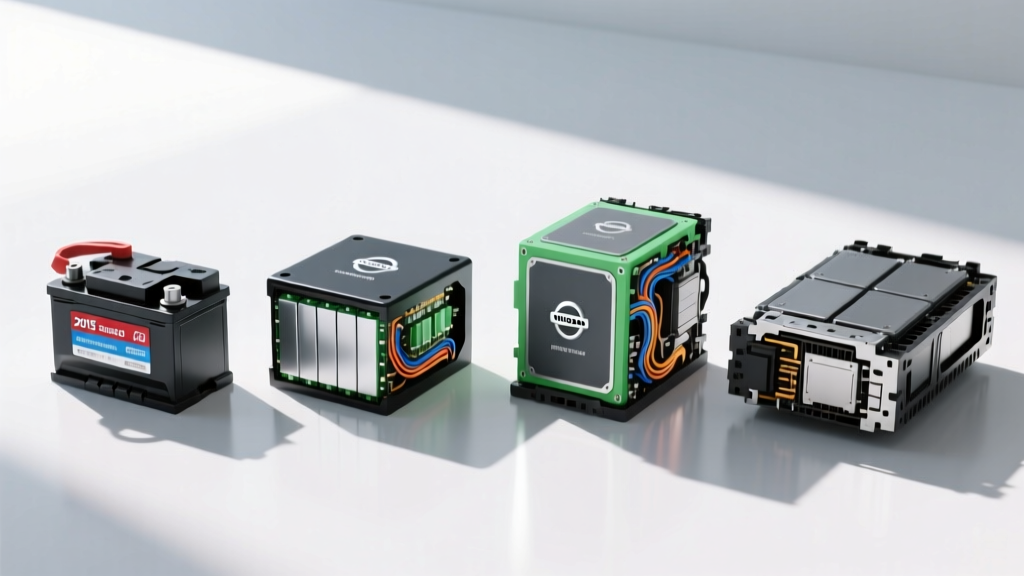
The single biggest predictor of how long your battery will retain capacity is its cell chemistry. In 2026, virtually every mainstream EV uses one of three lithium-ion variants, and each trades off energy density against cycle life and cost.
| Attribute | LFP (Lithium Iron Phosphate) | NMC (Nickel Manganese Cobalt) | NCA (Nickel Cobalt Aluminum) |
|---|---|---|---|
| Typical Use | Tesla Model 3 RWD, Model Y Standard, BYD, base trims | Hyundai Ioniq 5/6, Kia EV6/9, Ford F-150 Lightning Extended | Tesla Long Range/Performance, Rivian, Lucid |
| Energy Density | Lower (~160-180 Wh/kg cell) | Higher (~220-260 Wh/kg cell) | Highest (~260-300 Wh/kg cell) |
| Cycle Life (to 80% SoH) | 3,000-5,000+ cycles | 1,500-2,500 cycles | 1,500-2,000 cycles |
| Cold-Weather Performance | Moderate range loss; preconditioning essential | Better low-temp output; heat-pump paired | Similar to NMC |
| Charging to 100% Tolerance | Recommended periodically for BMS calibration | 80% daily limit advised; 100% for trips only | 80% daily limit advised; 100% for trips only |
| Cost per kWh (pack-level, 2026 est.) | ~$95-$110 | ~$115-$140 | ~$120-$150 |
| Cobalt Content | None | Low to moderate | Low |
The practical takeaway: LFP packs are heavier and offer less range per kWh, but their cycle life is roughly double that of NMC/NCA. A Tesla Model 3 RWD owner who charges to 100% nightly will likely see less degradation at 150,000 miles than an NMC owner doing the same. Conversely, if you need 320+ miles of EPA range and tow frequently, NMC or NCA's energy density is the reason those Long Range trims exist.
How Long Do EV Batteries Actually Last?
The short answer: most modern traction batteries will outlast the rest of the car. The long answer requires looking at fleet data rather than anecdotes.
Tesla's 2024 Impact Report (the most recent comprehensive OEM dataset) showed its Model 3/Y fleet retaining roughly 85% of original capacity at 200,000 miles. Recurrent's independent analysis of over 15,000 vehicles across multiple brands found similar results: median degradation of 5-8% over the first five years, with the curve flattening significantly after year three.
Typical Degradation Curve (NMC, liquid-cooled, moderate climate):
- Year 1 / 15k mi: 2-4% loss (initial "break-in" drop)
- Year 3 / 45k mi: 6-9% total loss
- Year 5 / 75k mi: 8-12% total loss
- Year 8 / 120k mi: 12-16% total loss
- Year 10 / 150k mi: 15-20% total loss (varies widely by use pattern)
LFP packs typically run 3-5 percentage points better at each milestone. Hot-climate owners who DC fast-charge daily can expect to be on the higher-loss end of these ranges.
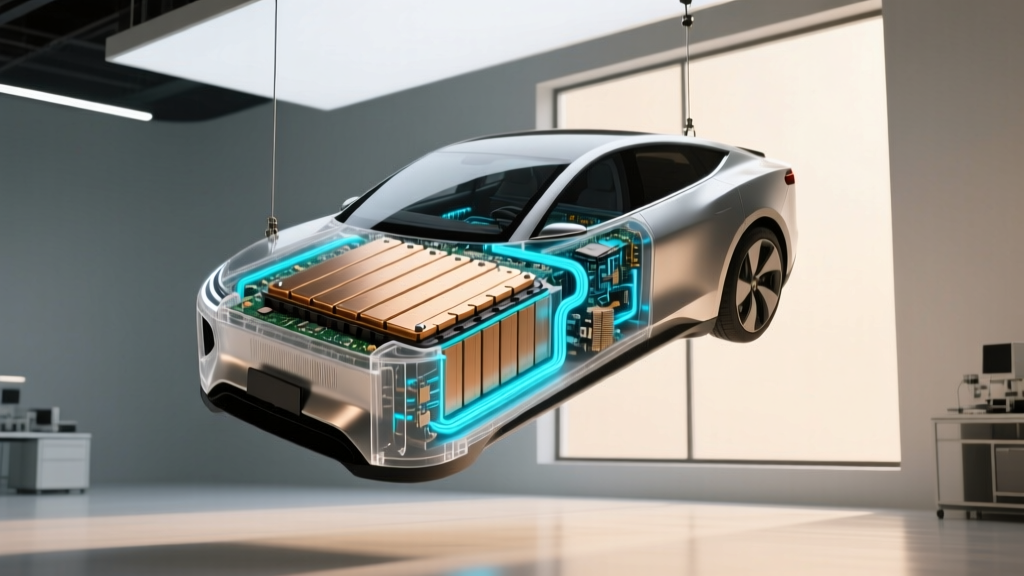
The physics behind this: lithium-ion degradation is driven primarily by calendar aging (time at elevated state of charge and temperature) and cycle aging (lithium plating, SEI layer growth). Modern thermal management — liquid cooling with active heating and cooling — has dramatically reduced both compared to the passively cooled packs of 2012-2016.
What Does the Battery Warranty Actually Cover?
Federal law mandates a minimum 8-year / 100,000-mile warranty on EV battery packs (10 years / 150,000 miles in California and states adopting CARB rules). But the fine print matters enormously.
| Manufacturer (2026 Models) | Warranty Term | Capacity Threshold | What Triggers a Claim |
|---|---|---|---|
| Tesla (Model 3/Y) | 8 yr / 120,000 mi (LR/AWD); 8 yr / 100,000 mi (RWD) | 70% retention | Measured SoH below 70% via Tesla diagnostic |
| Hyundai / Kia | 10 yr / 100,000 mi | 70% retention | Dealer diagnostic scan confirms below threshold |
| Ford (Mach-E, F-150 Lightning) | 8 yr / 100,000 mi | 70% retention | OBD-II verified capacity drop |
| GM (Ultium-based: Equinox EV, Blazer EV, Silverado EV) | 8 yr / 100,000 mi | 70% retention (60% on commercial) | OnStar / dealer telematics verification |
| Rivian | 8 yr / 175,000 mi (Max pack) | 70% retention | Rivian service center assessment |
| Volkswagen (ID.4) | 8 yr / 100,000 mi | 70% retention | Dealer diagnostic |
Two critical caveats. First, the 70% threshold means a pack that has degraded to 71% of original capacity is not considered "failed" — you'll notice the range loss, but the warranty won't replace it. Second, most warranties exclude damage from collisions, flooding, improper charging equipment, or unauthorized modifications. Always keep receipts for any home charger installation (a licensed electrician should pull permits) to avoid denial disputes.
How Much Does It Cost to Replace an EV Battery?
This is where fear-mongering usually kicks in, so let's ground the numbers in reality. Out-of-warranty replacement is expensive — but it's also rare within the first 15 years of ownership for liquid-cooled packs.
| Vehicle Class | Example Models | Pack Size | Replacement Cost Range (2026, parts + labor) |
|---|---|---|---|
| Compact / Sedan | Tesla Model 3, Chevy Equinox EV, Hyundai Ioniq 6 | 58-82 kWh | $12,000 - $18,000 |
| Midsize SUV / Crossover | Tesla Model Y, Ford Mach-E, VW ID.4, Kia EV9 | 77-100 kWh | $15,000 - $22,000 |
| Full-Size Truck / Large SUV | F-150 Lightning Extended, Silverado EV, Rivian R1T Max | 131-149 kWh | $22,000 - $35,000 |
| Luxury / Performance | Lucid Air, Porsche Taycan, Mercedes EQS | 93-118 kWh | $25,000 - $40,000+ |
Context that matters: according to fueleconomy.gov and long-term fleet studies, fewer than 5% of modern liquid-cooled EV battery packs require full replacement before 150,000 miles. Most degradation is gradual, not catastrophic. And by the time a 2026 EV genuinely needs a new pack at, say, year 18, refurbished and aftermarket packs will likely cost 40-60% less than today's OEM pricing. Module-level repair (replacing individual bad cells or modules rather than the entire pack) is also becoming standard practice at specialist shops, cutting costs to $3,000-$8,000 in many cases.
Factors That Actually Accelerate Battery Degradation
Not all miles are equal. A 100,000-mile battery can look very different depending on how those miles were accumulated. Here's what the data shows matters most, ranked by impact:
- Chronic 100% state of charge: Sitting at full SoH, especially in heat, accelerates electrolyte oxidation. NMC/NCA owners should set daily charge limits to 80% and reserve 100% for road trips.
- Frequent DC fast charging above 150 kW: High C-rates generate heat and promote lithium plating. Occasional Supercharging is fine; daily 250 kW sessions will measurably increase degradation (1-3% extra over 5 years per Recurrent data).
- Extreme ambient heat without preconditioning: Battery temps above 95°F (35°C) sustained for weeks — think Phoenix or Houston summers — compound calendar aging. Garage parking and preconditioning help significantly.
- Deep discharge cycles (below 10% SoC): Letting the pack sit near-empty stresses the anode. Charge soon after hitting low SoC.
- Cold charging without preconditioning: Plugging into DCFC with a cold-soaked battery forces the BMS to limit charge rate and can cause lithium plating. Always precondition via the car's nav-routed warm-up.
Practical Battery Care Checklist:
- Set daily charge limit to 80% (NMC/NCA) or 100% (LFP, per manufacturer guidance)
- Use Level 2 home charging as your primary routine; DCFC for road trips
- Precondition before every DC fast charge session
- Avoid letting SoC sit below 15% or above 90% for more than 24 hours
- Park in shade or a garage during summer; plug in during extreme cold for thermal management
- Update BMS firmware when OTA prompts appear — manufacturers refine charge algorithms regularly
How to Check Your Battery's State of Health (SoH)
State of Health (SoH) is expressed as a percentage: a pack at 92% SoH holds 92% of its original usable kWh. Here's how to actually measure it:
In-car displays: Tesla shows a "Battery Health" percentage in the service menu on 2024+ software. Hyundai/Kia's infotainment includes an EV battery status screen showing SoH. Ford's SYNC 4 provides a battery health indicator under EV settings. These readings are BMS-estimated and can be off by 2-4 percentage points, but they're a solid trend indicator.
OBD-II dongles + apps: Tools like OBDLink MX+ paired with apps such as Car Scanner or ABRP can read actual pack capacity, cell voltage variance, and calculated SoH from the BMS CAN bus. This is more accurate than the dash display and takes about 10 minutes.
Dealer diagnostic scan: Request a battery health report during routine service. Most OEMs will print a SoH certificate showing measured capacity vs. nameplate. This is the document you want for resale or a warranty claim.
Third-party services: Companies like Recurrent and geotab-fleet providers offer SoH reports based on telematics, useful for used-EV purchases. When buying used, insist on a recent SoH reading before closing the deal.
What's Coming: Solid-State and Silicon Anodes (2027-2032 Timeline)
Solid-state batteries — replacing the liquid electrolyte with a ceramic or polymer solid — promise higher energy density (potentially 400+ Wh/kg at the cell level), faster charging, and dramatically reduced fire risk. Toyota, Samsung SDI, and QuantumScape have all announced pilot production, but as of 2026, no mass-production EV ships with a full solid-state pack. Realistic availability in consumer vehicles: 2028-2030 for premium models, 2031+ for mainstream pricing.
Silicon-dominant anodes (replacing graphite) are closer. They boost energy density 10-20% and are already appearing in limited form (GM's Ultium cells use a silicon-blend anode). Expect broader adoption by 2027-2028.
Neither technology changes today's buying decision. Current LFP and NMC packs, properly cared for, will serve 15+ years — which is longer than most owners keep a vehicle. The IRS §30D tax credit rules (with MSRP caps of $55,000 for cars and $80,000 for trucks/SUVs, plus income and critical-mineral sourcing requirements) apply to today's chemistries, not tomorrow's lab prototypes.
Frequently Asked Questions
How do you know if a battery is good when buying a used EV?
Request a State of Health (SoH) reading from the seller — ideally a dealer diagnostic printout or OBD-II scan showing capacity percentage. Anything above 85% SoH at under 80,000 miles is excellent. Cross-check by fully charging the car and comparing the displayed range to the original EPA sticker; a 310-mile EPA vehicle showing 270+ miles at 100% SoC is in good shape.
Is LFP or NMC better for battery longevity?
LFP wins on pure cycle life — 3,000-5,000 cycles to 80% SoH versus 1,500-2,500 for NMC. If you plan to keep the car 12+ years and charge daily, LFP is the longevity choice. NMC offers more range per pound and better cold-weather performance, making it preferable for long-distance drivers and colder climates.
Does fast charging ruin EV batteries?
Not in moderation. Modern BMS and liquid cooling handle 150-250 kW sessions well. The data shows that owners who DC fast-charge more than 80% of the time see roughly 1-3% additional capacity loss over five years compared to Level 2-predominant charging. Road-trip Supercharging is not a concern; daily DCFC commuting without Level 2 access will accelerate wear slightly.
Should I charge my EV to 100% every night?
If your EV has an LFP battery (Tesla Model 3 RWD, some BYD models), yes — manufacturers actually recommend periodic 100% charges to calibrate the BMS. For NMC or NCA batteries, set the daily limit to 80% and charge to 100% only before long trips. Sitting at 100% SoC for hours in heat is the single worst thing you can do for NMC longevity.
What happens when an EV battery degrades to 70%?
At 70% SoH, a 300-mile EPA vehicle effectively becomes a ~210-mile vehicle. It's still fully drivable and safe — just with reduced range. This is the threshold where most OEM warranties trigger a replacement or repair. Many owners continue driving degraded packs well below 70% for city commuting where full range isn't needed.
Are EV batteries covered if I crash?
Collision damage to the battery pack is handled by your auto insurance, not the battery warranty. Comprehensive/collision coverage applies. If the pack is punctured, the vehicle is typically totaled due to repair complexity and safety protocols. Ensure your insurance policy explicitly covers EV battery replacement at OEM-spec cost.