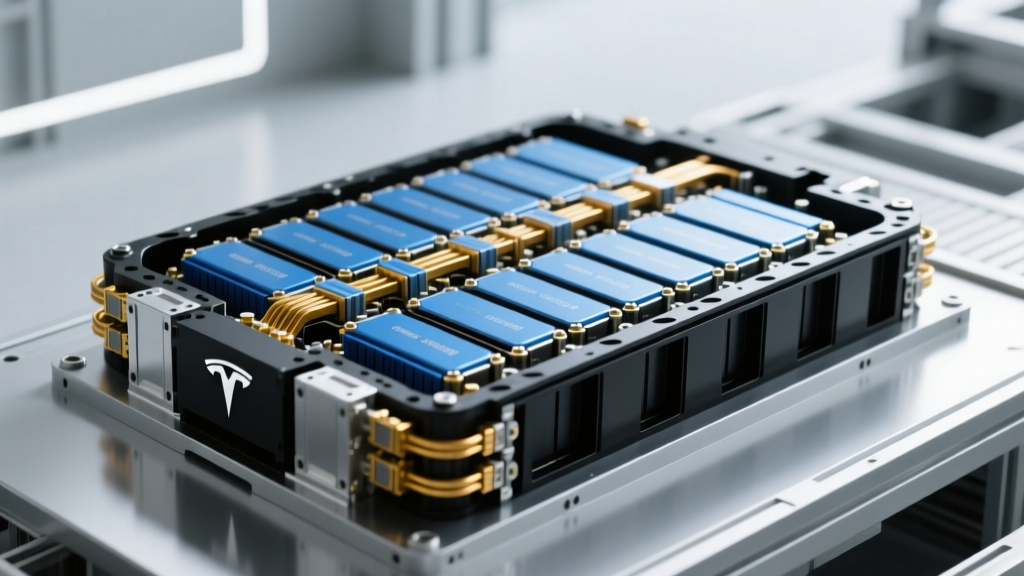
Most EV owners never think about the individual cells inside their high-voltage traction battery — until something goes wrong. Yet understanding how your battery is built, how it degrades, and how to care for it is the single most impactful thing you can do to protect the most expensive component in your vehicle. Whether you drive a Tesla Model 3 with an NMC pack or a base-model Ford Mustang Mach-E with LFP chemistry, the principles of battery health management are universal.
This guide covers the full picture: chemistry trade-offs, real-world degradation data, warranty specifics, replacement costs, and the monitoring habits that keep your State of Health (SoH) above 90% for years. We'll also address a niche but increasingly relevant topic — charging 8-volt battery modules — which matters for owners of certain EV platforms that use 8V sub-modules within their larger pack architecture, as well as DIYers and technicians performing cell-level balancing.
LFP vs NMC/NCA: Which Battery Chemistry Powers Your EV?
The two dominant lithium-ion chemistries in 2026-model EVs are LFP (lithium iron phosphate) and NMC/NCA (nickel manganese cobalt / nickel cobalt aluminum). Your vehicle's chemistry determines its energy density, cycle life, cold-weather behavior, and even how you should charge it daily.
| Attribute | LFP (LiFePO₄) | NMC / NCA |
|---|---|---|
| Energy Density | ~160–180 Wh/kg (lower) | ~220–260 Wh/kg (higher) |
| Cycle Life | 3,000–5,000+ cycles | 1,500–2,500 cycles |
| Cold Performance | Moderate loss (~15–20% at 32°F) | Better low-temp discharge (~10–15% loss) |
| Daily Charging | Can charge to 100% daily | Recommended 80% daily limit |
| Cost | ~$100–120/kWh (pack level) | ~$130–160/kWh (pack level) |
| Thermal Stability | Excellent (less prone to thermal runaway) | Good (requires robust BMS) |
| Common In | Tesla Model 3 RWD, Ford Mach-E Select (base), BYD models | Tesla Long Range, Hyundai Ioniq 5, Rivian, most AWD/LR trims |
The bottom line: LFP wins on longevity and cost but sacrifices range-per-kilogram, making it ideal for standard-range models. NMC/NCA delivers more range in the same weight, suited for long-range and performance trims. Neither is universally "better" — the right choice depends on your driving patterns and ownership timeline.
If you plan to keep your EV for 10+ years and 150,000+ miles, LFP's superior cycle life is a meaningful advantage. If you need maximum range for frequent road trips and live in a cold climate, NMC's energy density and cold-weather edge matter more.
How Long Do EV Batteries Actually Last?
The short answer: far longer than most buyers fear. According to fueleconomy.gov, modern EV batteries are designed to last the usable life of the vehicle. Real-world fleet data supports this.
Typical Degradation Curve (NMC/NCA Packs — Fleet Averages):
- Year 1 / 15,000 mi: ~2–4% capacity loss (initial formation loss)
- Year 3 / 45,000 mi: ~6–8% total loss
- Year 5 / 75,000 mi: ~8–12% total loss
- Year 8 / 120,000 mi: ~10–15% total loss
- Year 10+ / 150,000+ mi: ~12–20% total loss (varies widely by usage)
LFP packs typically show slower degradation: ~5–8% loss at Year 8 / 120,000 miles, owing to their higher cycle-life tolerance.
Tesla's 2025 Impact Report noted that Model 3/Y batteries retained an average of 85% capacity at 200,000 miles. Hyundai reports similar figures for the Ioniq 5 platform. These are fleet averages — individual results depend heavily on charging habits, climate, and fast-charging frequency.
The key insight is that degradation is non-linear. Most capacity loss occurs in the first 20,000–30,000 miles (the "formation" period), after which the curve flattens considerably. A battery that has lost 8% at 50,000 miles is not on track to lose 16% at 100,000 miles — it will likely lose only 3–5% more over the next 50k miles.
What Does the Battery Warranty Actually Cover?
Federal law mandates a minimum 8-year / 100,000-mile warranty on EV battery packs for emissions-related compliance, and most manufacturers meet or exceed this. However, the specifics — particularly the capacity retention threshold — vary significantly.
| Manufacturer | Warranty Term | Capacity Threshold | Notes |
|---|---|---|---|
| Tesla (Model 3/Y LFP) | 8 yr / 120,000 mi | 70% retention | Covers defects + degradation below threshold |
| Tesla (Model 3/Y LR NMC) | 8 yr / 120,000 mi | 70% retention | Long Range/Performance trims |
| Hyundai / Kia | 10 yr / 100,000 mi | 70% retention | Among the longest terms in the industry |
| Ford (Mach-E) | 8 yr / 100,000 mi | 70% retention | Covers battery components + capacity |
| GM (Ultium platform) | 8 yr / 100,000 mi | 70% retention | Applies to Blazer EV, Equinox EV, Silverado EV |
| Rivian | 8 yr / 120,000 mi | 70% retention | R1T and R1S |
| BMW (iX / i4) | 8 yr / 100,000 mi | 70% retention | Includes thermal management system |
Critical distinction: These warranties cover capacity loss below the stated threshold — not normal degradation above it. If your battery retains 72% at 95,000 miles, you're within spec and the warranty does not trigger. Only if SoH drops below 70% within the warranty period will the manufacturer repair, replace, or remanufacture the pack.
Most warranties also exclude damage from accidents, improper charging equipment, unauthorized modifications, or extreme neglect (e.g., leaving the vehicle at 0% SoC for extended periods in high heat). Always read the specific warranty booklet for your model year.
How Much Does an EV Battery Replacement Cost?
This is the question that generates the most anxiety — and the most misinformation. Here's what the data actually shows for 2026:
| Vehicle | Battery Size (kWh) | New OEM Pack | Remanufactured / Refurb | Typical Need Timeline |
|---|---|---|---|---|
| Tesla Model 3 RWD (LFP) | ~57.5 usable | $12,000–$15,000 | $7,000–$10,000 | Rarely needed before 200k+ mi |
| Tesla Model Y LR (NMC) | ~75 usable | $14,000–$18,000 | $9,000–$13,000 | Rarely needed before 180k+ mi |
| Hyundai Ioniq 5 | ~77.4 usable | $14,000–$17,000 | $8,500–$12,000 | Rarely needed before 180k+ mi |
| Ford Mustang Mach-E ER | ~91 usable | $16,000–$20,000 | $10,000–$14,000 | Rarely needed before 160k+ mi |
| Chevrolet Equinox EV | ~85 usable | $13,000–$16,000 | $8,000–$11,000 | Rarely needed before 170k+ mi |
| Rivian R1T (Large Pack) | ~128 usable | $20,000–$26,000 | $14,000–$18,000 | Rarely needed before 160k+ mi |
The reality check: Full pack replacements are rare. Most EVs will be retired, sold, or totaled in an accident before the battery needs replacement. When replacements do occur, they're typically due to manufacturing defects (covered under warranty) or individual module failures — not wholesale end-of-life degradation.
Module-level repair is increasingly common. Many shops can identify and replace a single degraded or failed module for $1,500–$4,000 rather than replacing the entire pack. This is where understanding sub-module architecture — including the charging 8-volt battery modules within a larger series/parallel configuration — becomes relevant for technicians and advanced owners.
Charging 8-Volt Battery Modules: What EV Owners Should Know
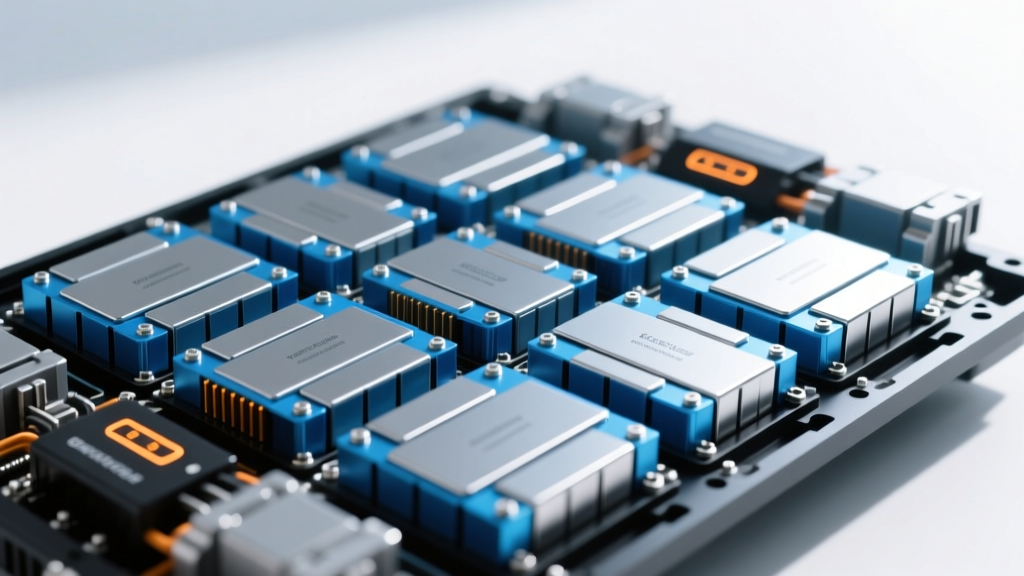
Inside a typical EV battery pack, hundreds of individual cells are grouped into modules, and those modules are wired in series and parallel to achieve the pack's total voltage (typically 350–800V nominal). In some pack architectures — notably certain GM Ultium configurations and older Nissan LEAF designs — sub-modules or cell groups operate at approximately 8 volts nominal (e.g., two NMC cells in series at ~3.7V each ≈ 7.4V nominal, rounded to 8V in service documentation).
Why does charging an 8-volt battery module matter?
- Cell balancing: When a module falls out of voltage balance with its neighbors, the Battery Management System (BMS) may flag a fault code. Technicians sometimes need to individually charge or discharge 8V modules to bring them back into balance before reassembly.
- Diagnostic testing: Measuring capacity at the module level requires controlled charge/discharge cycles at the 8V level to identify weak modules without replacing the entire pack.
- DIY and refurbishment: Independent EV repair shops and battery refurbishers routinely charge 8-volt battery modules individually to test capacity, internal resistance, and self-discharge rates before reassembling a pack.
Safety warning: Even at 8V, these modules can deliver extremely high currents (hundreds of amps) if shorted. Always use a properly rated power supply with current limiting, and follow the manufacturer's service manual procedures. This is not consumer-level work — it requires training, insulated tools, and appropriate PPE.
For the typical EV owner, you will never need to interact with individual 8V modules. But understanding that your pack is composed of these sub-units helps explain why module-level repair is possible and why a single bad module doesn't necessarily mean a $15,000 pack replacement.
Factors That Accelerate Battery Degradation
Not all miles are equal when it comes to battery wear. Research from the National Renewable Energy Laboratory (NREL) and fleet data from Recurrent Auto identify these primary degradation accelerators:
Battery Care Best Practices:
- Limit DC fast charging to road trips. Frequent use of 150+ kW DC fast chargers generates significant heat. Aim for Level 2 home charging as your daily routine and use DCFC only when needed. Studies show vehicles that DC fast-charge more than 3x/week show ~1–3% additional degradation over 100k miles compared to primarily L2 charging.
- Avoid extreme State of Charge (SoC) storage. For NMC/NCA: don't store above 80% or below 20% for more than a few days. For LFP: periodic 100% charges are recommended for BMS calibration, but avoid sitting at 100% in hot weather.
- Use preconditioning. When navigating to a DC fast charger, your EV's thermal management system will warm or cool the battery to the optimal temperature (~77–95°F / 25–35°C). This protects the cells and enables faster charging. Always precondition in cold weather.
- Park in shade or a garage when possible. Sustained high battery temperatures (above 104°F / 40°C ambient, which can mean higher cell temps) accelerate chemical degradation. A garage in summer or a shaded spot makes a measurable difference over years.
- Don't let the battery sit at 0%. Deep discharge can cause copper dissolution in the anode current collector. If you must store the vehicle, leave it at ~50% SoC.
- Minimize repeated 0–100% swings. Shallow cycles (e.g., 30–80%) cause less stress than full-depth cycles. Every full cycle isn't "bad," but habitual shallow cycling extends life.
How to Check and Monitor Your Battery's State of Health
State of Health (SoH) is expressed as a percentage of the battery's original usable capacity. A new battery is 100% SoH; one that holds only 60 kWh of its original 75 kWh is at 80% SoH.
Methods to check SoH in 2026:
- In-vehicle display: Tesla shows battery health percentage in the Service menu (added via software update in late 2024). Hyundai/Kia displays SoH via the infotainment system's EV diagnostics screen. GM's Ultium vehicles show estimated range vs. original, from which you can infer SoH.
- OBD-II diagnostic tools: Devices like the OBDLink SX paired with apps such as EV Battery Health or Car Scanner can read the BMS-reported SoH directly. This works on most 2020+ EVs.
- Manufacturer service center: Any authorized dealer can run a full battery health report, typically including per-module voltage deviation, internal resistance, and capacity test results. Request this during routine service visits.
- Third-party services: Companies like Recurrent Auto offer free battery health reports by connecting to your vehicle's telematics data. Their fleet-level data also provides benchmark comparisons against similar vehicles.
What to watch for: A sudden drop in SoH (e.g., 3% loss in a single month) usually indicates a module imbalance or BMS sensor issue rather than true chemical degradation. Gradual, steady loss of 1–2% per year is normal and expected.
Emerging Battery Technology: Solid-State and Silicon Anodes
Several next-generation battery technologies are in development, though none are available in production consumer EVs as of 2026:
Solid-state batteries replace the liquid electrolyte with a solid ceramic or polymer separator, promising higher energy density (~350–400 Wh/kg), faster charging, and improved safety. Toyota has announced a solid-state battery targeting 2027–2028 production vehicles with an estimated 750 km (WLTP) range, but this remains announced and preliminary. Samsung SDI and QuantumScape are also in advanced testing phases, with limited production expected no earlier than 2028.
Silicon anode technology increases the proportion of silicon in the anode (replacing graphite), boosting energy density by 20–40%. Companies like Sila Nanotechnologies and Group14 are supplying early silicon-dominant anode materials, and partial silicon anodes are already in use in some 2026 cells. Full silicon anodes face cycle-life challenges and are expected in production vehicles no earlier than 2028–2030.
Sodium-ion batteries are entering the market for lower-cost, shorter-range applications. CATL has begun shipping sodium-ion packs for certain Chinese-market EVs, and the technology may reach US-market city cars or fleet vehicles by 2027–2028. Sodium-ion offers lower energy density but excellent cycle life and no critical-mineral supply chain concerns.
For current buyers: today's lithium-ion batteries (both LFP and NMC) are mature, reliable, and well-understood. Waiting for solid-state is not a practical strategy — the technology is still 2–4 years from meaningful consumer availability, and early implementations will likely be limited to premium models at high prices.
Frequently Asked Questions
How long do EV batteries last in years and miles?
Most modern EV batteries (2022+) retain 75–85% of original capacity at 150,000 miles and 10+ years of typical use. Many will outlast the vehicle itself. Fleet data from Tesla, Hyundai, and independent analysts like Recurrent Auto consistently shows that catastrophic battery failure is rare, and gradual degradation is slow enough that most owners never experience range loss significant enough to warrant replacement.
How much does it cost to replace an EV battery?
Full pack replacement costs range from approximately $12,000 for smaller LFP packs (Tesla Model 3 RWD) to $26,000 for large packs (Rivian R1T Max). However, full replacements are uncommon — most degradation-related issues are covered under the 8–10 year warranty, and module-level repairs cost $1,500–$4,000. The vast majority of EVs are retired or sold before needing any battery work.
What does the EV battery warranty cover?
Standard warranties cover defects in materials/workmanship and capacity loss below a stated threshold (typically 70% retention) for 8 years / 100,000–120,000 miles, depending on the manufacturer. They do not cover normal degradation above the threshold, accident damage, or damage from unauthorized modifications. See the IRS clean vehicle credit page for related purchase incentive information.
LFP vs NMC — which battery chemistry is better for me?
Choose LFP if you prioritize longevity, plan to keep the vehicle 8+ years, primarily drive in moderate climates, and don't need maximum range. Choose NMC/NCA if you need long range (300+ miles EPA), drive frequently in cold weather, or want the lightest possible pack for performance. Both chemistries are proven and reliable — the choice is about use-case fit, not quality.
Can I charge an 8-volt battery module from my EV at home?
No. Individual 8V sub-modules within an EV battery pack are not accessible or serviceable by consumers. Module-level charging and balancing requires the pack to be removed, opened, and serviced by a qualified technician using specialized equipment. This work is performed only during diagnostic procedures or module-level repairs at EV service centers.
How do I maximize my EV battery's lifespan?
Use Level 2 home charging as your primary method. Set your daily charge limit to 80% for NMC/NCA (or 100% for LFP). Avoid frequent DC fast charging. Precondition before fast charging. Park in shade or a garage in hot weather. Don't store the vehicle at very high or very low SoC for extended periods. These habits, practiced consistently, can add years and tens of thousands of miles to your battery's useful life.
For more information on EV efficiency ratings and battery technology, visit fueleconomy.gov's EV technology page. For safety ratings and crash-test data relevant to EV battery enclosure integrity, check NHTSA safety ratings.