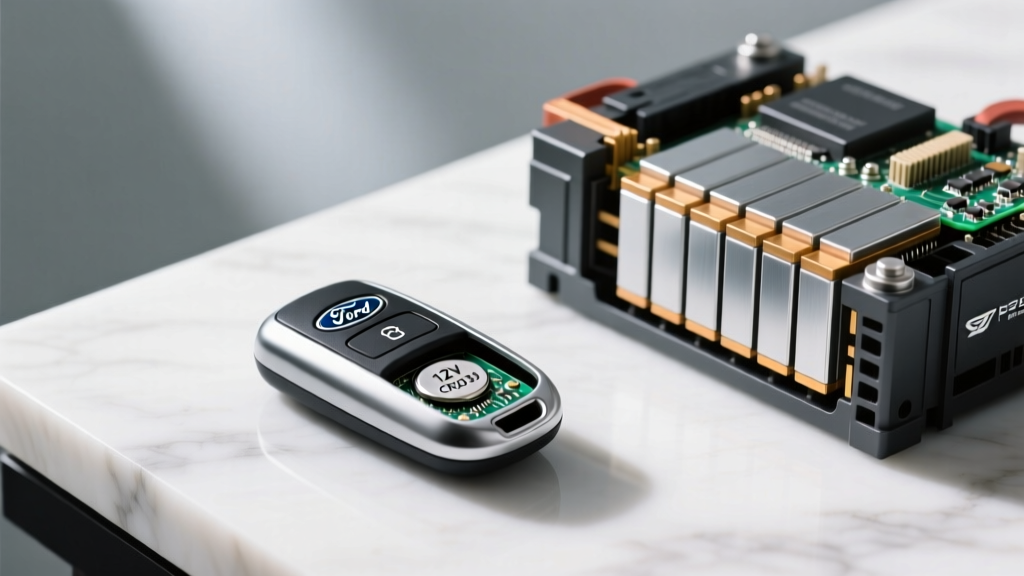
If you've ever looked up a 2019 Ford Escape key fob battery replacement, you already know the drill: pop the shell, swap a CR2032 coin cell, and you're back in business for about five dollars. That tiny 3V lithium cell is a perfect on-ramp to a much bigger question for EV shoppers and owners: how do the high-voltage traction batteries that actually propel an electric vehicle compare, how long do they last, what do warranties really cover, and what does replacement cost if something goes wrong? This guide walks the full stack — from the 12V accessories and key fobs you'll service yourself, to the 60–120 kWh packs that define an EV's range, efficiency, and long-term ownership cost.
Two Very Different Batteries in Your Driveway
Every modern EV actually carries at least two batteries, and confusing them is the single most common mistake new owners make:
- 12V auxiliary battery — powers lights, infotainment, door locks, and the computers that close the high-voltage contactors. It's a small lead-acid or lithium-12V unit, similar to what a gas car uses. This is the same family of battery your key fob, tire-pressure sensors, and garage-door openers draw from (though at very different form factors).
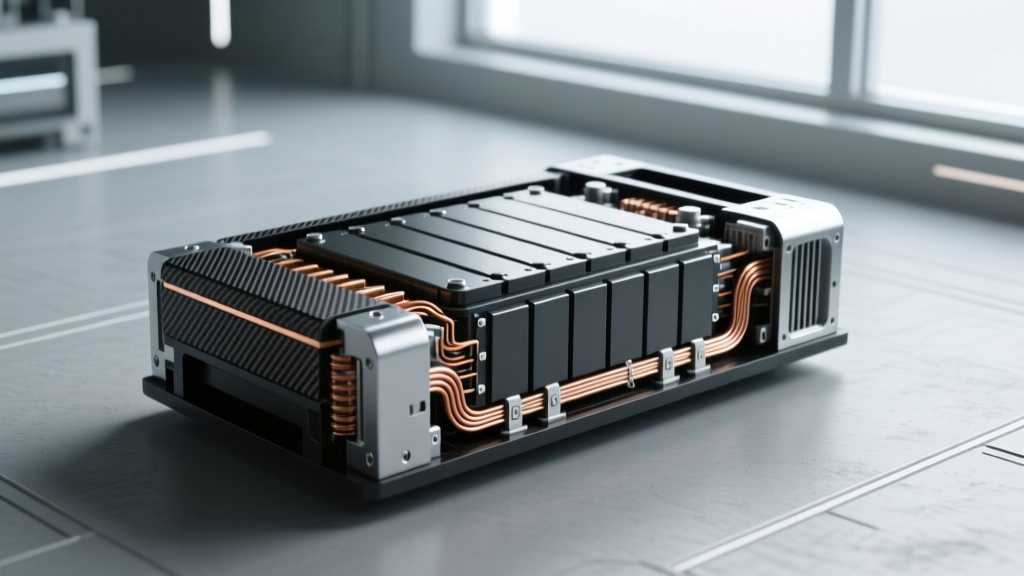
- High-voltage traction battery — the large lithium-ion pack (typically 400V or 800V architecture) that stores the energy the motors use to move the car. Capacity is measured in kWh (energy), while charge rate is measured in kW (power). These are not interchangeable.
A 2019 Ford Escape key fob battery replacement is a CR2032 coin cell — roughly 0.6 Wh of energy. A 2026 Ford Mustang Mach-E Extended Range, by contrast, carries about 91 kWh usable. That's on the order of 150,000 times more stored energy, managed by a battery management system (BMS) that actively balances cells, controls temperature, and buffers the top and bottom of the state-of-charge window to protect longevity.
LFP vs NMC vs NCA: The Chemistry Decision
Not all EV batteries are built the same. The two dominant cathode chemistries in 2026 passenger EVs are LFP (lithium iron phosphate) and NMC/NCA (nickel-rich chemistries). Tesla's standard-range models, many BYD vehicles, and the base Ford Mustang Mach-E Select use LFP; most long-range and performance trims use NMC or NCA. Here's how they compare on the metrics that actually affect ownership:
| Attribute | LFP (LiFePO4) | NMC / NCA (Nickel-rich) |
|---|---|---|
| Energy density (cell-level) | ~160–190 Wh/kg | ~230–300 Wh/kg |
| Typical cycle life to 80% SoH | 2,500–4,000+ cycles | 1,000–2,000 cycles |
| Cold-weather performance | Weaker — range loss and charge-rate limits below freezing | Better low-temp power and charge acceptance |
| Cost per kWh (pack-level, 2026) | ~$90–$110 | ~$120–$150 |
| Recommended daily SoC | 100% OK; BMS actually benefits from periodic full charges for cell balancing | ~80% daily, 100% for trips |
| Thermal runaway risk | Very low | Low, but higher than LFP |
| Common in | Tesla Model 3/Y RWD, BYD Dolphin/Atto 3, base Mach-E Select, many China-market EVs | Long-range/performance trims, Hyundai Ioniq 5/6, Rivian, Lucid, Porsche Taycan |
Which is better? It depends on your use case. If you commute short distances, charge at home nightly, live in a mild climate, and want maximum cycle life, LFP is the pragmatic choice. If you need maximum range per charge, tow, regularly drive in sub-freezing weather, or care deeply about minimizing pack weight, NMC/NCA still has the edge. Neither is "better" universally — they're engineering trade-offs, and the BMS matters as much as the chemistry.
How Long Do EV Batteries Actually Last?
The fear that EV batteries need replacement like smartphone batteries is not supported by fleet data. Recurrent's ongoing analysis of tens of thousands of EVs, alongside data from Geotab and manufacturer warranty claims, shows a consistent pattern: most modern packs lose roughly 5–10% of original capacity in the first 2–3 years, then settle into a very slow linear decline of about 1–2% per year afterward. Catastrophic failure before 150,000 miles is rare.
Typical degradation curve (illustrative, NMC pack, mixed use):
- Year 1 / ~12,000 mi: ~95% State of Health (SoH)
- Year 3 / ~36,000 mi: ~91% SoH
- Year 5 / ~60,000 mi: ~88% SoH
- Year 8 / ~96,000 mi: ~84–86% SoH
- Year 10 / ~120,000 mi: ~80–83% SoH
LFP packs in similar duty cycles tend to flatten even earlier and hold ~90% SoH longer, at the cost of a slightly less linear curve. Tesla's 2025 Impact Report reported its Model 3/Y fleet retaining roughly 85% of original range at 200,000 miles — well past the point most first owners have sold the car.
Translation: for a 300-mile EPA-rated EV, expect roughly 255–270 real-world miles at year eight, depending on climate and charging habits. That's still more range than most drivers use in a day.
What the Battery Warranty Actually Covers
Federal regulation in the U.S. effectively mandates a minimum battery warranty floor, and most manufacturers meet or exceed it. Under the EPA/CARB framework, emissions-related components on PHEVs and EVs carry 8 years / 80,000 miles minimum coverage; California and states adopting CARB rules push that to 10 years / 150,000 miles. Manufacturers typically mirror these terms for the traction battery.
| Vehicle | Warranty Term | Capacity-Retention Threshold |
|---|---|---|
| Tesla Model 3 / Y (Long Range, NMC) | 8 yr / 120,000 mi | ≥ 70% SoH |
| Tesla Model 3 / Y RWD (LFP) | 8 yr / 100,000 mi | ≥ 70% SoH |
| Ford Mustang Mach-E | 8 yr / 100,000 mi | ≥ 70% SoH |
| Hyundai Ioniq 5 / Kia EV6 | 10 yr / 100,000 mi | ≥ 70% SoH |
| Rivian R1T / R1S | 8 yr / 175,000 mi | ≥ 70% SoH |
| Chevrolet Equinox EV / Blazer EV | 8 yr / 100,000 mi | ≥ 60–70% SoH (varies by pack) |
The key phrase is "capacity-retention threshold" — typically 70% of original usable capacity. A warranty claim isn't triggered by normal gradual loss; it's triggered when measured SoH falls below that threshold inside the term. Most owners never approach it. Note that warranties cover defects and abnormal degradation; they generally exclude damage from accidents, flooding, improper modifications, or unauthorized charging equipment.
What It Costs to Replace an EV Traction Battery
Out-of-warranty replacement is the number EV shoppers ask about, and the honest answer is: it's expensive, but it's also uncommon. Pack prices have fallen from roughly $1,200/kWh in 2010 to around $110–$140/kWh at the pack level in 2026 (BloombergNEF), but retail replacement includes labor, diagnostics, core handling, and dealer markup. Realistic out-of-pocket ranges:
| Pack Size / Segment | Example Models | Typical Total Cost |
|---|---|---|
| 40–60 kWh (compact) | Nissan Leaf, base Chevy Bolt EV | $7,000 – $11,000 |
| 70–90 kWh (mid-size sedan/SUV) | Tesla Model 3/Y, Mach-E, Ioniq 5 | $12,000 – $18,000 |
| 100–120 kWh (large/truck) | F-150 Lightning Ext., Rivian, GMC Hummer EV | $18,000 – $28,000+ |
| Luxury / low-volume | Lucid Air, Porsche Taycan, Mercedes EQS | $22,000 – $35,000+ |
When is replacement actually needed? Most often after high-mileage fleet use (150,000+ miles, ride-share, delivery), after collision or flood damage, or on early-generation packs (pre-2018) with less sophisticated thermal management. For a 2026-model EV driven an average 12,000–15,000 miles per year, the pack will very likely outlast the rest of the car's useful life. That context matters — fear-mongering on replacement cost without lifespan framing is misleading.
Five Factors That Actually Drive Degradation
- Extreme state of charge. Sitting at 100% for days, or regularly draining below 10%, accelerates calendar aging — especially on NMC/NCA. LFP tolerates 100% far better and actually benefits from periodic full charges for top-balancing.
- High DC fast-charge frequency. Occasional road-trip fast charging is fine. Daily 150–350 kW sessions, especially without preconditioning, raise average cell temperature and stress the anode. Prefer Level 2 (7–19 kW) for daily use; save DCFC for trips.
- Thermal extremes. Sustained heat is worse than cold for long-term health. Parking in shade or a garage in summer, and using the car's preconditioning in winter, meaningfully extends pack life. Liquid-cooled packs (nearly universal in 2026 EVs) handle this far better than the passive-air-cooled packs on early Leafs.
- High discharge loads. Repeated hard launches and frequent track use generate heat and lithium plating risk. Occasional spirited driving is not a problem; daily drag-strip starts are.
- Storage conditions. A car left at 100% SoC in a 95°F driveway for a month will age faster than one stored at ~50% SoC in a cool garage. For long-term storage, target 40–60% SoC and a moderate temperature.
How to Monitor Battery Health (SoH) Yourself
State of Health isn't usually displayed on the dash, but you can track it with reasonable accuracy:
- OEM apps. Tesla, Hyundai/Kia, Ford, and Rivian expose varying levels of battery-health data in their companion apps or service menus.
- OBD-II + third-party apps. Tools like Scan My Tesla, Car Scanner, or Leaf Spy (for Nissan) read BMS-reported SoH, cell imbalance, and cycle counts via a Bluetooth OBD dongle.
- Manual tracking. Charge to 100% occasionally (especially useful on LFP), note the displayed range, and compare to the original EPA sticker adjusted for conditions. A 300-mile-new car showing 260 miles at 100% after 60,000 miles is tracking normally.
- Independent testing. Services like Recurrent and some dealerships can generate a certified battery-health report — useful when selling or buying used.
What's Next: Solid-State and Silicon-Anode Batteries
Two technologies are frequently cited as "the next big thing." Here's where they actually stand as of 2026:
- Silicon-dominant anodes. Already shipping in limited form (notably Amprius cells in niche applications, and partial-silicon blends in several OEM packs). They boost energy density 20–40% at the cell level. Expect broader adoption in performance and luxury EVs through 2027–2029, with mainstream rollout to follow.
- Solid-state batteries. Toyota, Nissan, Samsung SDI, and QuantumScape have announced pilot production and limited-vehicle deployments, mostly in Japan and China, targeting 2027–2029. Promised benefits: ~500+ mile range, 10-minute fast charges, improved safety. Realistic volume production for U.S. consumer EVs remains 2029 or later. Treat any claim of "solid-state EVs on sale now" with skepticism — none are in mainstream U.S. showrooms as of this writing.
Both are forward-looking and announced; neither is a reason to delay a 2026 EV purchase. Today's liquid-cooled lithium-ion packs, managed by modern BMS software, are already delivering 200,000+ mile service lives in fleet data.
And the Key Fob? A Quick Reality Check
Bringing it full circle to that 2019 Ford Escape key fob battery replacement: the CR2032 in your fob is a non-rechargeable lithium coin cell rated for roughly 225 mAh at 3V — about 0.675 Wh. It powers a low-energy RF transmitter for 2–5 years before voltage sags below the fob's threshold. Replace it with a fresh name-brand cell (Panasonic, Duracell, Energizer), seat the O-ring properly to keep moisture out, and you're set for $3–$8. EV key fobs use the same cells; the car's traction battery has zero interaction with the fob's power source.
Frequently Asked Questions
How long do EV batteries last in years and miles?
Most 2026-era EV traction batteries are engineered to retain 70–85% of original capacity after 8–10 years or 150,000–200,000 miles of typical use. Fleet data from Recurrent and OEM impact reports support this. Many packs outlast the vehicle itself.
How much does it cost to replace an EV battery?
Out-of-warranty replacement typically runs $7,000–$18,000 for mainstream sedans and SUVs, and $18,000–$35,000+ for large trucks and luxury models. In practice, most owners never pay this — the pack lasts the life of the car, and anything that fails inside the warranty window (usually 8 yr / 100,000 mi minimum) is covered.
What does the EV battery warranty actually cover?
Manufacturer warranties cover defects and abnormal degradation below a stated threshold (typically 70% of original capacity) for the warranty term. They generally do not cover accident damage, flood, unauthorized modifications, or cosmetic issues. See the EPA's emissions warranty guidance for the regulatory floor.
How do I check and maximize my EV battery's health?
Track displayed range at 100% SoC over time, use OEM apps or OBD-II tools to read BMS-reported SoH, and follow a simple care pattern: favor Level 2 home charging, keep NMC/NCA packs between ~20–80% for daily use (LFP can sit at 100%), precondition before DC fast charging, and avoid prolonged storage at extreme SoC or in high heat.
LFP vs NMC — which chemistry should I pick?
Choose LFP if you prioritize longevity, lower cost, and daily home charging at 100% in a mild climate. Choose NMC/NCA if you need maximum range per charge, tow regularly, or operate in frequent sub-freezing temperatures. Neither is universally superior — match chemistry to your driving pattern.
Does fast charging ruin the battery?
Occasional DC fast charging does not meaningfully harm a modern, liquid-cooled pack. Daily high-power (150–350 kW) fast charging without preconditioning will accelerate wear modestly. For daily use, Level 2 at 7–19 kW is the sweet spot for both convenience and longevity.
For official warranty and safety details, consult your owner's manual, fueleconomy.gov for EPA-rated range, and the NHTSA for recall and safety information. Tax-credit eligibility for new EVs (up to $7,500 under IRS §30D, subject to MSRP, income, and battery-sourcing rules) is separate from battery coverage and changes frequently — verify current rules at irs.gov before purchase.