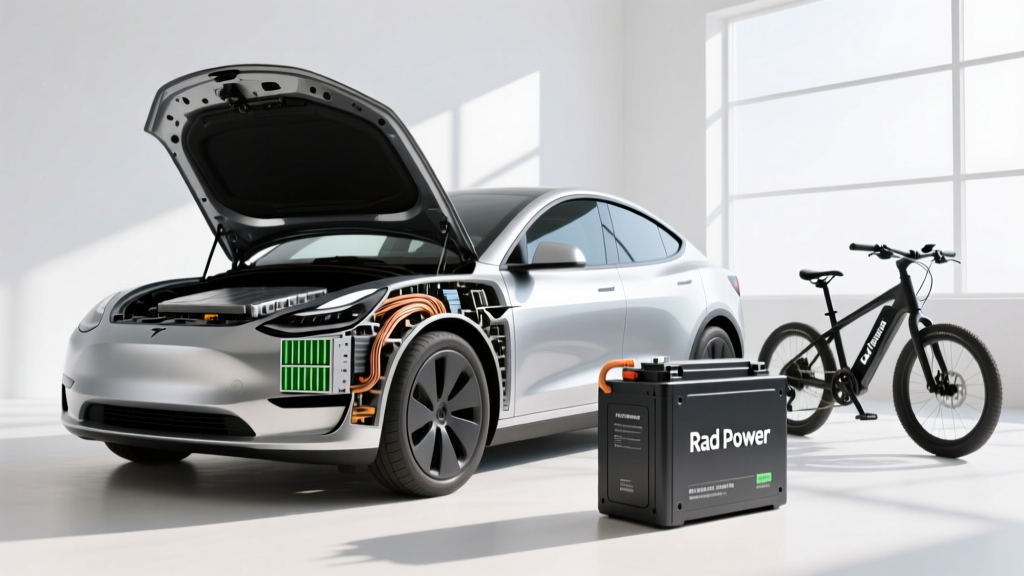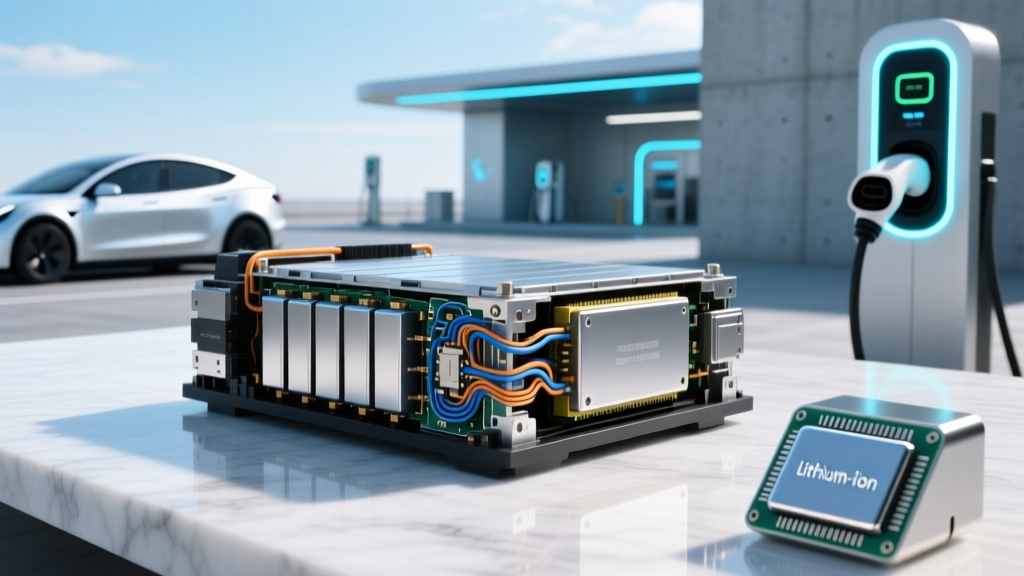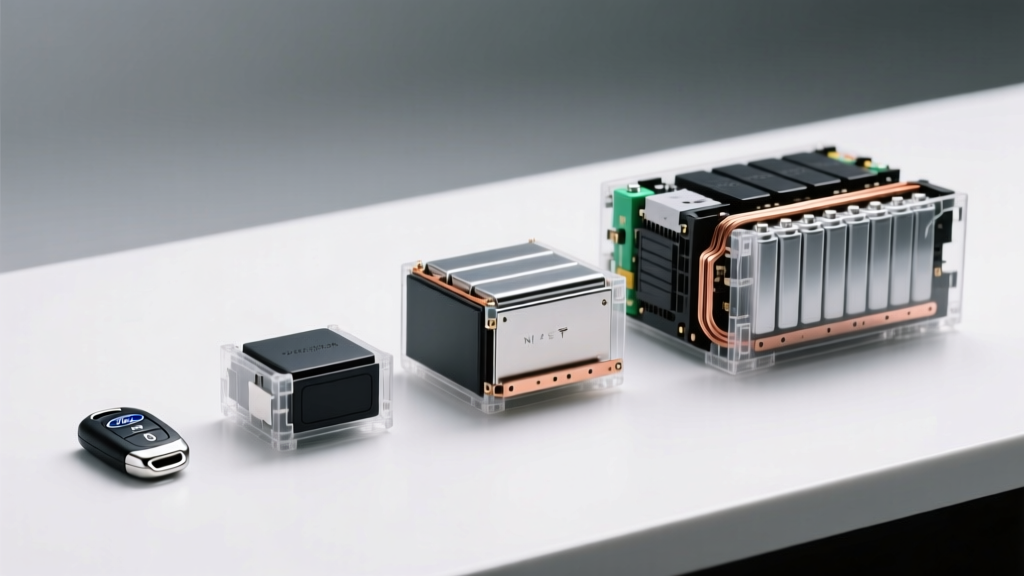
If you've ever searched for a 2015 Ford Fusion key fob battery, you probably found yourself swapping a tiny CR2032 coin cell in about thirty seconds. That small lithium battery shares basic electrochemistry principles with the massive 60–120 kWh high-voltage traction packs powering today's electric vehicles — but the scale, engineering, and ownership implications are worlds apart. This guide bridges that gap, giving EV shoppers and owners the exact numbers on chemistry, degradation, warranty coverage, and replacement costs you need to make informed decisions.
The Coin Cell vs. the Traction Pack: Why Chemistry Matters at Every Scale
The 2015 Ford Fusion key fob uses a 3V lithium manganese dioxide (Li-MnO₂) coin cell — a primary (non-rechargeable) battery designed for ultra-low drain over 3–5 years. An EV traction battery, by contrast, is a secondary (rechargeable) lithium-ion pack engineered to deliver hundreds of kilowatts of power and endure thousands of charge cycles. Both rely on lithium-ion movement between electrodes, but the cathode chemistry defines an EV battery's personality.
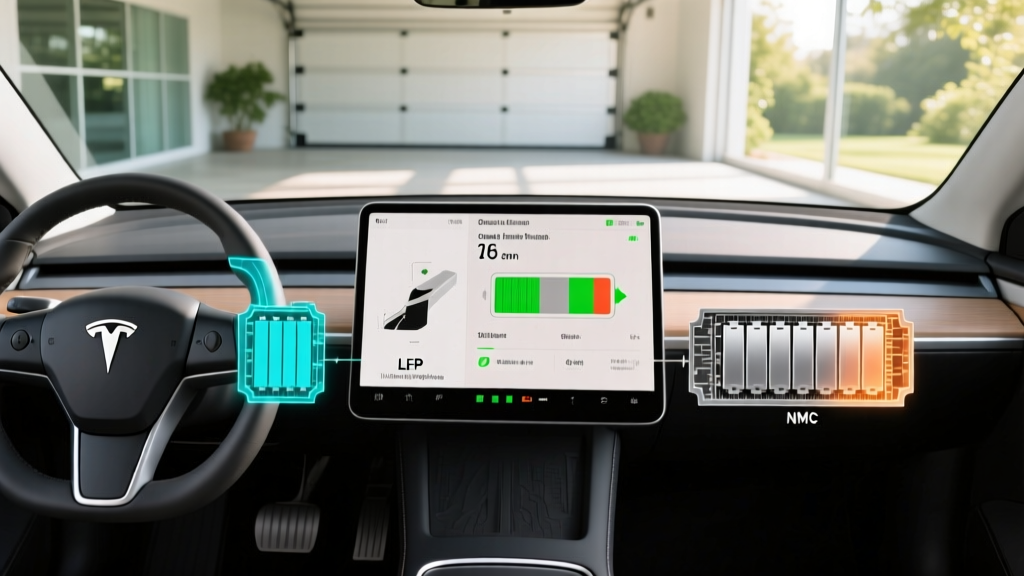
In the current market, two chemistries dominate passenger EVs: NMC/NCA (nickel manganese cobalt / nickel cobalt aluminum) and LFP (lithium iron phosphate). Understanding the trade-offs is essential before you buy.
| Attribute | LFP (Lithium Iron Phosphate) | NMC / NCA (Nickel-Based) |
|---|---|---|
| Energy Density | ~160–180 Wh/kg (lower) | ~220–300 Wh/kg (higher) |
| Cycle Life | 3,000–5,000+ cycles | 1,000–2,000 cycles |
| Cold Performance | Weaker below 32°F; slower charging | Better low-temp discharge & charge acceptance |
| Thermal Stability | Excellent; higher runaway threshold (~518°F) | Good; lower runaway threshold (~410°F) |
| Cost (per kWh) | ~$90–$110 (no cobalt/nickel) | ~$120–$150 |
| State of Charge Accuracy | Flat voltage curve; harder for BMS to estimate | Linear curve; accurate SoC readout |
| Recommended Daily SoC | 100% OK (periodic full charge actually helps) | 80% for daily; 100% only before trips |
| Common In 2025–2026 Models | Tesla Model 3/Y RWD, Ford Mustang Mach-E Select (LFP option), BYD, Rivian standard range | Hyundai Ioniq 5/6, Chevy Equinox EV, Tesla Long Range, Porsche Taycan, most luxury EVs |
The verdict: NMC/NCA wins on range-per-pound and cold-weather usability. LFP wins on longevity, cost, and daily-charging convenience. For a commuter who charges at home nightly and rarely faces sub-freezing mornings, LFP is arguably the better long-term bet. For road-trippers and cold-climate drivers, NMC's energy density and cold performance justify the higher cost and slightly faster degradation.
How Long Do EV Batteries Actually Last? Real-World Degradation Data
The short answer: far longer than most buyers fear. Data aggregated from fleet operators, owner surveys, and manufacturer telematics consistently shows that modern liquid-cooled EV batteries lose roughly 5–10% of total capacity in the first 100,000 miles, then degrade more slowly for the remainder of their life.
| Mileage | Avg. Capacity Retained (NMC) | Avg. Capacity Retained (LFP) | Source Context |
|---|---|---|---|
| 25,000 mi | ~95–97% | ~97–98% | Early settling; most loss is calendar aging |
| 50,000 mi | ~92–95% | ~95–97% | Recurrent Auto fleet data, 2024–2025 reports |
| 100,000 mi | ~88–92% | ~92–96% | Tesla Impact Report; Geotab fleet analysis |
| 150,000 mi | ~84–90% | ~90–94% | High-mileage owner cohorts; taxi/rideshare |
| 200,000 mi | ~80–87% | ~87–92% | Limited data; mostly Tesla Model S/X, Nissan Leaf |
A few nuances matter. First, degradation is not linear — the steepest drop occurs in the first 10,000–20,000 miles as the solid electrolyte interface (SEI) layer stabilizes, then the curve flattens. Second, calendar aging (time, not miles) accounts for a meaningful share of loss; a garage-kept EV driven 6,000 miles/year still degrades 1–2% annually from chemical side reactions. Third, LFP batteries degrade measurably less per cycle but can suffer from SoC estimation drift if never charged to 100%.
For context, the average US driver covers about 14,000 miles/year (FHWA data), meaning a 200,000-mile battery lifespan represents roughly 14 years of typical use. Most EV batteries will outlast the vehicle's body, suspension, and interior.
What Does the Battery Warranty Actually Cover?
Federal law mandates that EV battery warranties cover a minimum of 8 years / 100,000 miles (10 years / 150,000 miles in California and states adopting CARB standards). But the details vary significantly by manufacturer, and the fine print matters.
| Manufacturer | Warranty Term | Capacity Threshold | Notes |
|---|---|---|---|
| Tesla (Model 3/Y RWD, LFP) | 8 yr / 120,000 mi | 70% retention | Long Range/Performance: 8 yr / 120,000 mi |
| Hyundai / Kia (Ioniq 5/6, EV6) | 10 yr / 100,000 mi | 70% retention | Among the longest terms in the industry |
| Ford (Mustang Mach-E, F-150 Lightning) | 8 yr / 100,000 mi | 70% retention | Covers battery and high-voltage components |
| GM (Chevy Equinox EV, Blazer EV, Cadillac Lyriq) | 8 yr / 100,000 mi | 60–70% retention (varies) | Ultium platform; check specific model terms |
| Rivian (R1T, R1S) | 8 yr / 175,000 mi | 70% retention | Higher mileage cap reflects adventure-use intent |
| BMW (i4, iX, i7) | 8 yr / 100,000 mi | 70% retention | Includes high-voltage battery and modules |
Critical detail: The warranty triggers only if capacity drops below the threshold — typically 70%. A battery at 71% capacity at 99,000 miles is not a warranty claim, even though you've lost nearly a third of your original range. Most degradation claims that succeed involve premature cell failure or module imbalance, not gradual capacity fade. Keep records of your State of Health readings (more on that below) to build a case if you suspect abnormal degradation.
How Much Does an EV Battery Replacement Cost — and When Is It Needed?
Full traction battery replacement remains rare for vehicles under 150,000 miles, but it's a legitimate concern for high-mileage owners, second-hand buyers, and anyone planning to keep an EV for 15+ years. Costs depend heavily on pack size, chemistry, and whether the manufacturer offers module-level repair.
| Vehicle / Pack Size | Chemistry | Full Pack Replacement (Parts + Labor) | Module Repair (if available) |
|---|---|---|---|
| Tesla Model 3 RWD (~60 kWh) | LFP | $12,000–$16,000 | Not typically offered; full pack swap |
| Tesla Model Y Long Range (~82 kWh) | NMC | $15,000–$20,000 | Limited module service at some centers |
| Hyundai Ioniq 5 (~77.4 kWh) | NMC | $14,000–$18,000 | Module-level repair available at select dealers |
| Ford F-150 Lightning Ext. Range (~131 kWh) | NMC | $22,000–$30,000 | Module replacement possible; labor-intensive |
| Chevy Bolt EV (~65 kWh) | NMC | $14,000–$16,000 (post-recall) | GM replaced many under recall; new packs available |
| Nissan Leaf (40–62 kWh) | NMC (passive cooling) | $8,000–$12,000 | Aftermarket refurbished packs available from ~$5,500 |
A few important caveats. These are out-of-warranty costs; if degradation falls below the warranty threshold within the covered period, replacement is free. Second, module-level repair — replacing only the degraded cell modules rather than the full pack — is becoming more common and can cut costs by 50–70%. Third, third-party refurbishers and salvaged packs from wrecked EVs are creating a growing aftermarket, particularly for older models like the Nissan Leaf and early Tesla Model S.
For perspective, a $15,000 battery replacement at year 12 is roughly equivalent to what a gas-car owner spends on engine and transmission repairs over the same period. The fear of a $20,000 surprise bill is real but statistically unlikely within the first decade of ownership.
Factors That Accelerate (or Preserve) Battery Life
Battery longevity is not purely a function of time and miles. How you charge, drive, and store your EV has a measurable impact on capacity retention.
Battery Care Best Practices
- Avoid chronic DC fast charging. Occasional road-trip fast charging is fine, but daily 150+ kW sessions stress cells through heat and lithium plating. Studies from Geotab show vehicles that fast-charge more than 3x/week degrade roughly 1–2% faster over 4 years than those primarily using Level 2.
- Keep daily SoC between 20–80% for NMC/NCA. Storing a nickel-based battery at 100% accelerates electrolyte oxidation. LFP owners can (and should) charge to 100% at least weekly for BMS calibration.
- Precondition before fast charging. A cold battery charged at high power suffers lithium plating on the anode. Most EVs auto-precondition when you navigate to a charger; use this feature.
- Park in shade or a garage when possible. Sustained battery temperatures above 95°F accelerate calendar aging. In hot climates, a garage can add years to pack life.
- Don't let SoC sit at 0% or 100% for days. If you're leaving for a week, set charge limit to ~50% and leave it plugged in so the thermal management system can operate.
- Use regenerative braking on moderate settings. Aggressive regen in cold weather can push charge current into a cold battery, causing stress. Many EVs auto-limit regen when cold — let them.
The single highest-impact habit is charging primarily on a home Level 2 station (7–11 kW) and reserving DC fast charging for road trips. A 240V Level 2 charger generates minimal heat compared to a 150–350 kW DC fast charger, and the slower charge rate is gentler on cell chemistry.
How to Check and Monitor Your Battery's State of Health
State of Health (SoH) is the percentage of your battery's original usable capacity that remains. A new EV with 80 kWh usable that degrades to 72 kWh has an SoH of 90%. Monitoring this number helps you track degradation trends and detect anomalies early.
Methods for Checking SoH
- In-vehicle display: Some EVs (Tesla via the service menu, Hyundai/Kia via the infotainment diagnostics page, Nissan Leaf via Leaf Spy) show SoH or available kWh directly. Tesla's 2024+ software includes a battery health percentage under Service > Battery Health.
- OBD-II dongle + app: Tools like Leaf Spy Pro (Nissan), Scan My Tesla, or ABRP OBD can read the BMS (Battery Management System) directly and report SoH, cell voltage variance, and pack temperature.
- Dealer diagnostic: Request a battery health report during service visits. Most manufacturers can print a detailed SoH certificate showing per-module voltage and impedance.
- Manual calculation: Charge to 100%, note the displayed range, and compare to the original EPA-rated range adjusted for conditions. This is imprecise (displayed range is an estimate) but useful for trend tracking.
Track your SoH every 6–12 months. If you observe a sudden drop of 3%+ in a short period, or if individual cell voltage variance exceeds 100 mV (readable via OBD tools), schedule a dealer diagnostic — this may indicate a failing module rather than normal degradation.
What's Next: Solid-State, Silicon Anode, and Beyond
Several next-generation battery technologies are in development, but buyers should understand the realistic timelines before factoring them into purchase decisions.
Solid-state batteries replace the liquid electrolyte with a solid ceramic, sulfide, or polymer layer, promising higher energy density (~400+ Wh/kg), faster charging, and improved safety. Toyota has announced a solid-state EV targeted for 2027–2028 with ~600 miles of range, though initial production volumes will be extremely limited and pricing will be premium. Samsung SDI and QuantumScape are also advancing solid-state cells, with pilot production underway but mass manufacturing not expected before 2028 at the earliest.
Silicon-anode batteries (used in limited form in the Porsche Taycan and Mercedes EQG) boost energy density by 10–20% by replacing graphite anodes with silicon-dominant composites. These are already in production for select high-performance models and will gradually expand to mainstream vehicles through 2026–2028.
Sodium-ion batteries offer lower cost and no critical minerals but significantly lower energy density (~120–150 Wh/kg). CATL and BYD are deploying these in Chinese-market city cars and fleet vehicles. US availability is uncertain and likely limited to low-range, budget-oriented models if it arrives before 2030.
Bottom line: None of these technologies are available in a vehicle you can buy today in the US. If you need an EV now, current-generation LFP and NMC packs are mature, well-understood, and backed by robust warranties. Waiting for solid-state means waiting at minimum 2–3 years for limited, expensive early offerings.
Frequently Asked Questions
How long do EV batteries last in years and miles?
Most modern liquid-cooled EV batteries retain 85–92% of original capacity at 100,000 miles (roughly 7 years of average driving). Based on current degradation curves, reaching 70% capacity — the typical warranty threshold — takes 150,000–250,000+ miles for most NMC packs and 200,000–300,000+ miles for LFP. In years, expect 12–20 years of usable service before the pack drops below 70% SoH.
How much does an EV battery cost to replace?
Out-of-warranty full pack replacement ranges from roughly $8,000 (Nissan Leaf, smaller packs) to $30,000 (Ford F-150 Lightning extended range). The typical mid-size EV (Tesla Model 3/Y, Hyundai Ioniq 5) falls in the $12,000–$18,000 range including labor. Module-level repairs, where available, can reduce this to $3,000–$7,000. Most owners never need a replacement within the warranty period.
What does the EV battery warranty cover?
Federal minimum is 8 years / 100,000 miles (10/150,000 in CARB states). Coverage applies when capacity drops below a stated threshold — typically 70% of original. The warranty covers defects and abnormal degradation but not damage from accidents, flooding, or unauthorized modifications. Some manufacturers (Hyundai, Rivian) offer longer terms. Check your specific owner's manual for exact terms.
How do I maximize my EV battery's lifespan?
Charge primarily on Level 2 at home. Limit NMC batteries to 80% for daily use; charge LFP to 100% weekly for calibration. Minimize DC fast charging to road trips. Avoid letting the battery sit at extreme SoC (0% or 100%) for extended periods. Park in shade in hot climates. Precondition the battery before fast charging. These habits collectively can add 3–5% capacity retention over 100,000 miles.
LFP vs NMC — which battery chemistry is better for me?
Choose LFP if you charge at home daily, drive under 250 miles/day, live in a mild climate, and prioritize longevity and lower cost. Choose NMC/NCA if you need maximum range, regularly drive in cold weather (below 32°F), take frequent road trips, or buy a performance/luxury model where energy density matters. Neither is universally "better" — the right choice depends on your driving pattern and climate.
Does the 2015 Ford Fusion key fob battery have anything to do with an EV battery?
Only in the broadest sense — both use lithium-based chemistry. The CR2032 coin cell in a 2015 Fusion key fob is a 3V, 225 mAh non-rechargeable primary cell costing about $3. An EV traction battery is a 400–800V, 60–130 kWh rechargeable pack costing $12,000–$30,000. The Fusion Energi plug-in hybrid does have a 7.6 kWh lithium-ion traction battery, but that's entirely separate from the key fob cell.
Understanding EV battery technology doesn't require a chemistry degree — it requires the right data. Current-generation packs from major manufacturers are lasting longer, degrading less, and costing less per kWh than at any point in EV history. Pair that with 8–10 year warranties and the practical reality is that battery replacement should be a distant concern, not a purchase-blocking fear.