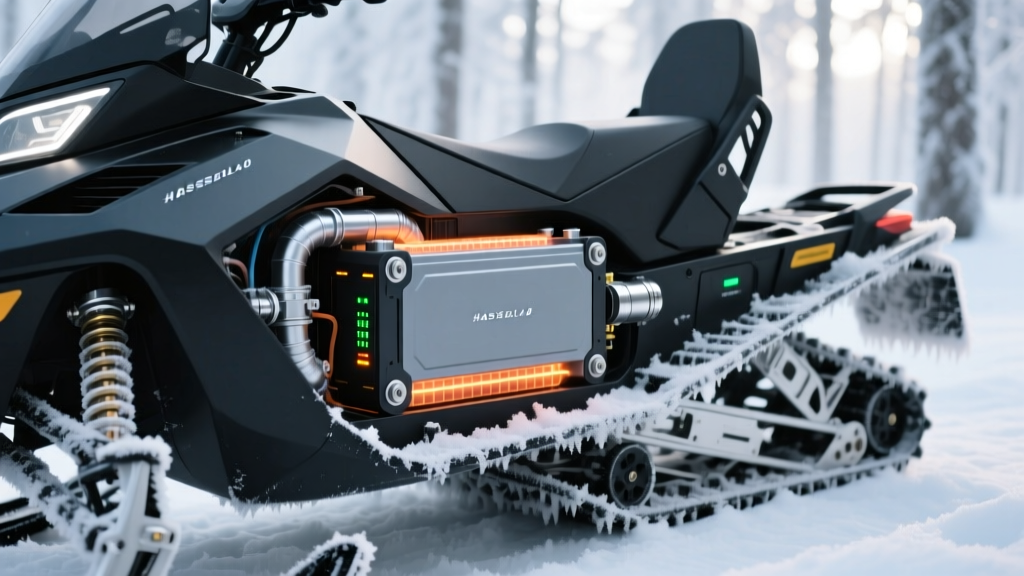
Searches for battery operated snowmobile platforms have grown as electrification pushes into powersports — and for good reason. Electric snowmobiles like the Taiga TS2 and emerging prototypes from BRP and Polaris expose the harshest real-world test any lithium-ion cell can face: sustained operation at sub-zero temperatures, high discharge rates, and brutal vibration. The battery engineering lessons learned on frozen trails translate directly to the EVs parked in your driveway.
This guide uses extreme-cold EV applications as a lens to explain everything you need to know about high-voltage traction batteries: chemistry trade-offs, real degradation data, warranty coverage, replacement economics, and how to maximize State of Health (SoH) over the life of your vehicle.
Battery Chemistry 101: LFP vs NMC/NCA and Why Cold Changes Everything
Every modern EV and battery-operated snowmobile relies on one of two dominant lithium-ion chemistries for its high-voltage traction pack. Understanding the difference is the single most important factor in predicting cold-weather performance, longevity, and cost.
NMC (Nickel Manganese Cobalt) and NCA (Nickel Cobalt Aluminum) cells dominate performance-oriented EVs and virtually all current electric snowmobiles. Their advantage is energy density — packing more kWh into a lighter, smaller pack. Taiga's TS2 Orca, for instance, uses an NMC pack to deliver roughly 45 kWh in a sled weighing under 600 lbs. NMC/NCA cells also deliver higher peak discharge rates, critical for the instant torque a snowmobile needs in deep powder.
LFP (Lithium Iron Phosphate) cells, used in the Tesla Model 3 RWD, Ford Mustang Mach-E Select (standard range), and most BYD models, trade energy density for cycle life and thermal stability. LFP packs are heavier per kWh but tolerate 100% State of Charge (SoC) daily charging without accelerated degradation — something NMC owners must avoid.
| Attribute | LFP (Lithium Iron Phosphate) | NMC / NCA |
|---|---|---|
| Energy Density | ~160 Wh/kg (lower) | ~250–300 Wh/kg (higher) |
| Cycle Life | 3,000–5,000+ cycles | 1,000–2,000 cycles |
| Cold Performance (below 0°F) | Poor — significant power limitation | Better — maintains discharge capability |
| Thermal Runaway Risk | Very low | Moderate (requires robust BMS) |
| Cost per kWh | ~$80–100 (lower) | ~$110–140 (higher) |
| Daily Charging to 100% | Recommended | Not recommended (limit to 80%) |
| Typical Use Case | Daily commuter EVs, fleet vehicles | Long-range EVs, performance, snowmobiles |
The cold-performance gap matters enormously for battery-operated snowmobile applications. At -20°F (-29°C), an LFP cell's internal resistance spikes dramatically, limiting both charge acceptance and power delivery. That's why Taiga, BRP, and every serious electric sled program uses NMC — you need those cells to dump hundreds of amps into the drivetrain in Arctic conditions without voltage sag triggering protective cutbacks.
For passenger EVs in cold climates, this same chemistry reality explains why a Tesla Model 3 Long Range (NMC/NCA) might lose 25–30% of its EPA-rated range in deep winter, while an LFP-equipped Model 3 RWD could lose 35–40% or more in identical conditions. According to fueleconomy.gov, cold temperatures reduce EV range due to battery chemistry limitations and increased cabin heating loads.
How Long Do EV Batteries Actually Last? Real Degradation Data
The fear of a dead battery pack at 80,000 miles persists, but the data tells a more reassuring story. Most modern EV traction batteries outlast the vehicles they're installed in — though the rate of capacity loss depends heavily on chemistry, thermal management, and owner habits.
Here's what the real-world data shows across major platforms:
| Vehicle / Platform | Chemistry | ~50,000 mi | ~100,000 mi | ~150,000 mi |
|---|---|---|---|---|
| Tesla Model 3/Y (NCA/NMC) | NCA/NMC | ~95% retained | ~90% retained | ~85% retained |
| Tesla Model 3 RWD (LFP) | LFP | ~98% retained | ~95% retained | ~92% retained |
| Hyundai Ioniq 5 / Kia EV6 | NMC | ~96% retained | ~91% retained | ~87% retained |
| Chevrolet Bolt EV/EUV | NMC | ~94% retained | ~89% retained | ~84% retained |
| Ford F-150 Lightning (extended) | NMC | ~95% retained | ~90% retained | ~86% retained |
| Battery-operated snowmobile (Taiga-class, NMC) | NMC | ~93% retained* | ~87% retained* | N/A (low mileage units) |
*Estimated based on NMC cycle-life modeling and high-discharge powersport usage patterns. Snowmobile mileage equivalents are low; cycle count and cold exposure drive degradation.
The typical passenger EV battery loses roughly 1–2% of capacity per year under normal use, stabilizing after the initial break-in period. Tesla's 2024 Impact Report noted that Model 3/Y batteries retain approximately 85% of original capacity after 200,000 miles — well beyond the mileage most owners accumulate.
For battery-operated snowmobiles, the calculus differs. These machines experience extreme discharge rates (equivalent to 3C–5C continuous), sub-zero ambient temperatures, and often sit at low SoC for months during off-season storage. The cycle count accumulates differently: a single aggressive day of riding in deep snow can stress cells the equivalent of several hundred miles of moderate EV driving. Even so, Taiga rates its TS2 battery for 200+ full charge cycles to 80% capacity — roughly 10–15 seasons for a typical recreational rider.
What the Battery Warranty Actually Covers
Federal regulations mandate that EV battery warranties cover at least 8 years / 100,000 miles (10 years / 150,000 miles in CARB states). But the details of what "coverage" means vary significantly between manufacturers, and powersport batteries operate under entirely different warranty structures.
| Manufacturer | Warranty Period | Mileage Cap | Capacity Retention Threshold | Notes |
|---|---|---|---|---|
| Tesla (Model 3/Y LR & Perf) | 8 years | 120,000 mi | 70% | Covers defects + excessive degradation below threshold |
| Tesla (Model 3 RWD / LFP) | 8 years | 100,000 mi | 70% | LFP packs degrade slower; rarely approach threshold |
| Hyundai / Kia | 10 years | 100,000 mi | 70% | Among the longest coverage in the industry |
| Ford (F-150 Lightning, Mach-E) | 8 years | 100,000 mi | 70% | Standard across Ford EV lineup |
| GM (Ultium platform) | 8 years | 100,000 mi | 70% | Module-level replacement capability |
| Taiga (TS2 snowmobile) | 5 years | Unlimited* | Varies | *Powersport warranty; seasonal use assumed |
The key detail most buyers miss: warranty coverage triggers only when capacity drops below the stated threshold. A battery at 71% capacity on a Tesla with a 70% threshold is not a warranty claim — even though you've lost nearly a third of your original range. In practice, very few EVs fall below the warranty threshold under normal use within the coverage period. The warranty functions more as a floor guarantee than a promise of like-new performance.
For electric snowmobiles, the warranty landscape is less standardized. Taiga offers a 5-year battery warranty on the TS2, reflecting the different duty cycle and lower total mileage of powersport use. BRP's warranty terms for its electric platforms are expected to follow similar powersport-industry norms.
Battery Replacement Cost: The Numbers Nobody Wants to Hear (But Should Know)
Out-of-warranty battery replacement remains the most cited concern among prospective EV buyers. The costs are real, but context matters: most EV batteries never need replacement during the vehicle's useful life, and prices continue to decline as cell manufacturing scales.
| Vehicle / Platform | Battery Size | Estimated Replacement Cost | Typical Replacement Timeline |
|---|---|---|---|
| Tesla Model 3 RWD (LFP) | ~60 kWh | $12,000–$16,000 | 15+ years / 200k+ mi (if ever) |
| Tesla Model Y LR (NMC) | ~82 kWh | $16,000–$22,000 | 15+ years / 200k+ mi (if ever) |
| Hyundai Ioniq 5 (standard range) | ~58 kWh | $11,000–$15,000 | 15+ years / 200k+ mi (if ever) |
| Ford F-150 Lightning (extended) | ~131 kWh | $25,000–$35,000 | 15+ years / 200k+ mi (if ever) |
| Chevrolet Silverado EV (max range) | ~200 kWh | $35,000–$45,000 | 15+ years / 200k+ mi (if ever) |
| Taiga TS2 (snowmobile) | ~45 kWh | $8,000–$14,000 | 10–20 seasons (heavy use) |
Several factors are working to reduce these figures. Cell-level pricing has dropped below $100/kWh for NMC and below $70/kWh for LFP at scale. Module-level replacement — where a technician swaps individual degraded modules rather than the entire pack — is increasingly viable on platforms like GM's Ultium and VW's MEB, potentially cutting replacement costs by 50–70% for partial degradation scenarios.
For battery-operated snowmobile owners, replacement economics look different. The pack is smaller (45 kWh vs. 80+ kWh for a long-range car), but the per-kWh replacement cost is higher due to lower production volumes and ruggedization requirements. Expect $8,000–$14,000 for a Taiga TS2 pack replacement, though the typical owner will ride for 15+ seasons before needing one.
What Kills Batteries Early: Factors That Accelerate Degradation
Not all battery miles are created equal. A vehicle that's fast-charged daily in Phoenix will degrade measurably faster than one that's Level-2 charged overnight in Portland. Here are the factors ranked by impact:
- Extreme heat exposure (highest impact): Sustained battery temperatures above 104°F (40°C) accelerate electrolyte decomposition. Vehicles parked outdoors in desert climates without thermal management active show 2–3x higher degradation rates. Preconditioning and garage parking matter enormously.
- Chronic 100% SoC storage: Storing an NMC/NCA battery at full charge for extended periods causes cathode structural stress. LFP is largely immune to this. If you don't need full range daily, set your charge limit to 80% (NMC) or charge freely (LFP).
- Exclusive DC fast charging: Vehicles that rely almost exclusively on 150+ kW DC fast charging show modestly higher degradation — roughly 1–2% additional loss over 100,000 miles vs. Level 2 charging. The heat generated during high-rate charging is the mechanism. Occasional fast charging is fine; daily reliance accelerates wear.
- Deep discharge cycles: Regularly running the battery below 10% SoC stresses the anode. The buffer zone (the ~5% of capacity hidden below the "0%" display) protects against total depletion, but habitual deep discharges still add up.
- Extreme cold charging without preconditioning: Attempting to fast-charge a frozen battery causes lithium plating on the anode — a permanent, irreversible capacity loss. This is the #1 reason battery-operated snowmobiles and cold-climate EVs use active battery preconditioning. Never DC fast-charge a cold-soaked pack without warming it first.
- High-discharge usage (powersport-specific): Battery-operated snowmobiles subject cells to sustained 3C–5C discharge rates in deep snow. This generates internal heat even in sub-zero ambient conditions, creating thermal cycling stress that passenger EVs rarely experience.
How to Check and Maximize Your Battery's State of Health (SoH)
State of Health (SoH) is the percentage of original capacity your battery currently holds. A new battery starts at 100% SoH; one that can store only 85 kWh of its original 100 kWh is at 85% SoH. Monitoring this metric is essential for understanding your vehicle's remaining range and resale value.
How to check SoH:
- Tesla: The in-car Service Mode (accessible via the Software screen) displays battery health percentage directly. Third-party tools like Scan My Tesla via OBD-II provide more granular cell-level data.
- Hyundai/Kia/Genesis: The dealer diagnostic tool reads individual cell voltages and pack SoH. Some third-party OBD-II apps (e.g., Car Scanner) can access this data on newer models.
- GM Ultium vehicles: The myChevrolet/myCadillac app surfaces a battery health indicator; full diagnostics require dealer access.
- Universal method: Compare your actual range at a known SoC against the EPA-rated range when new. If your 82 kWh pack delivers only 220 miles at 100% SoC on an EPA 310-mile vehicle, your SoH is approximately 71%.
- Powersport platforms: Taiga's companion app displays battery SoH and individual cell balance data, reflecting the more transparent telemetry common in newer EV platforms.
Best practices to maximize SoH:
- Set charge limit to 80% for NMC/NCA daily use; 100% is fine for LFP.
- Use Level 2 home charging as your primary method; reserve DC fast charging for road trips.
- Precondition the battery before fast charging in cold weather — this is non-negotiable for battery longevity.
- Avoid parking at 0% or 100% SoC for more than a few hours.
- In extreme heat, use scheduled departure with climate preconditioning to cool the pack while plugged in.
- For seasonal storage (snowmobiles, convertibles): store at 50% SoC in a cool, dry environment.
What's Next: Solid-State, Silicon Anodes, and the Battery Horizon
The battery landscape is shifting, but timelines matter more than headlines. Here's where next-generation technologies actually stand as of 2026:
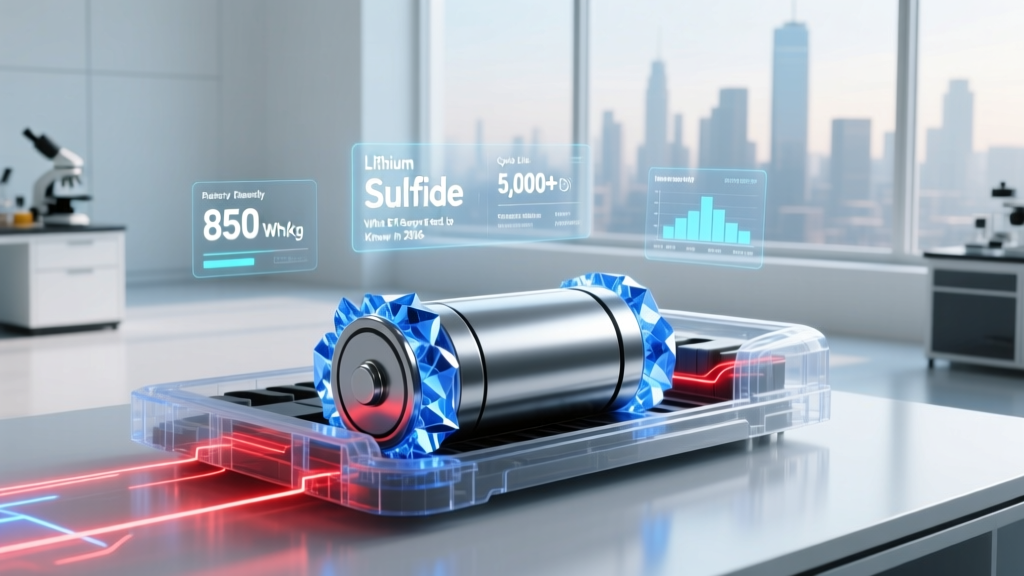
Solid-state batteries — which replace the liquid electrolyte with a solid conductor — promise higher energy density, faster charging, and improved cold performance. Toyota has announced a 2027–2028 production timeline for solid-state cells in limited-run vehicles, targeting 750 km (~466 miles) of range and 10-minute fast charging. Samsung SDI and QuantumScape are pursuing similar timelines with OEM partners. However, manufacturing scale-up remains the bottleneck: no solid-state cell has yet been produced at the volume or cost required for mass-market vehicles. Expect solid-state to appear in premium, low-volume applications first — potentially including high-performance battery-operated snowmobiles where energy density is at a premium — before reaching mainstream EVs around 2030–2032.
Silicon anode technology is closer to reality. Companies like Sila Nanotechnologies and Group14 are supplying silicon-dominant anode materials to battery manufacturers now, offering 20–40% energy density improvement over graphite anodes. The Mercedes-Benz G-Class EQ (announced) uses silicon anode cells from Sila. This technology is production-ready but currently limited to premium applications due to cost.
Sodium-ion batteries are entering the market for lower-cost, lower-energy-density applications. CATL has begun mass production, and these cells offer excellent cold performance — relevant for both budget EVs and powersport applications. Don't expect sodium-ion in a long-range sedan, but it could appear in urban commuter vehicles and possibly entry-level electric snowmobiles within the next 3–5 years.
All of these technologies are forward-looking. Today's NMC and LFP cells, properly managed, will serve most owners for the entire life of their vehicle. The battery in a 2026 EV or battery-operated snowmobile is already a remarkably durable, well-engineered component.
Frequently Asked Questions
How long do EV batteries last in years and miles?
Most modern EV traction batteries are designed to last 15–20 years or 200,000+ miles before dropping below 70% of original capacity. Real-world data from Tesla, Hyundai, and GM shows typical degradation of 1–2% per year under normal use. The battery will usually outlast the rest of the vehicle. For battery-operated snowmobiles, cycle count and cold exposure matter more than mileage — expect 10–20 seasons from a well-maintained NMC pack.
How much does it cost to replace an EV battery?
Full pack replacement costs range from roughly $12,000 for a 60 kWh LFP pack to $35,000+ for a 200 kWh extended-range truck battery. However, most batteries never require replacement during the vehicle's life, and module-level repair (replacing individual degraded modules rather than the full pack) can cut costs by 50–70% on platforms designed for it. Battery-operated snowmobile replacement packs run $8,000–$14,000 due to smaller size but higher per-kWh costs from lower production volumes.
What does the EV battery warranty actually cover?
Federal law requires a minimum 8-year/100,000-mile battery warranty (10 years/150,000 miles in CARB states). Coverage includes manufacturing defects and capacity loss below a stated threshold — typically 70% of original capacity. If your battery retains 71% or more, it's not a warranty claim even though you've lost 29% of range. Read the fine print: some manufacturers exclude degradation caused by improper charging habits or aftermarket modifications.
How do I check my EV battery's State of Health?
Methods vary by brand. Tesla owners can access battery health via Service Mode. Hyundai/Kia and GM owners can request a diagnostic readout at the dealer or use third-party OBD-II apps. A universal DIY method: charge to 100%, note the displayed range, and compare it to the EPA-rated range when new. The ratio approximates your SoH percentage. For battery-operated snowmobiles, companion apps typically display SoH directly.
LFP vs NMC: which battery chemistry is better?
Neither is universally better — it depends on your use case. LFP wins on cycle life (3,000–5,000+ cycles vs. 1,000–2,000), cost (~$80–100/kWh vs. ~$110–140/kWh), thermal safety, and tolerance for daily 100% charging. NMC wins on energy density (~250–300 Wh/kg vs. ~160 Wh/kg), cold-weather performance, and peak discharge capability. For daily commuting in moderate climates, LFP is the pragmatic choice. For long-range driving, towing, cold-climate use, or battery-operated snowmobile applications, NMC/NCA is the necessary choice despite slightly faster degradation.
Does extreme cold permanently damage EV batteries?
Cold temperatures temporarily reduce range and power — this is reversible once the battery warms up. However, charging a cold-soaked battery without preconditioning can cause lithium plating, a permanent and irreversible form of degradation. This is why every modern EV and battery-operated snowmobile uses battery thermal management to warm cells before accepting a charge in freezing conditions. Always precondition before fast-charging in cold weather.
Will solid-state batteries make current EVs obsolete?
Not anytime soon. Solid-state technology is expected to reach limited production in premium vehicles around 2027–2028, with mass-market availability not expected until 2030–2032. Current NMC and LFP batteries are mature, well-understood, and increasingly affordable. The vehicles being sold today will remain practical and well-supported for years to come. The transition will be gradual, not sudden.
Sources: U.S. Department of Energy / fueleconomy.gov — EV technology and range data; IRS.gov — §30D clean vehicle credit rules and battery component requirements; manufacturer specification sheets from Tesla, Hyundai, Ford, GM, and Taiga Motors.