Every kilowatt-hour you drive begins as a chemical reaction. Unlike a gasoline tank that stores fuel in liquid form, an electric vehicle stores energy in chemical bonds within its battery cells — specifically, in the arrangement of lithium ions between two electrodes. Understanding this fundamental reality is the key to making smarter decisions about which EV to buy, how to charge it, and how to maximize its lifespan over a decade or more of ownership.
This guide breaks down exactly how EV batteries store and release energy, the two dominant chemistries on the market in 2026 (LFP and NMC/NCA), what degradation actually looks like in real-world data, and what you'll pay if a replacement is ever needed.
How Energy Is Stored: The Chemistry Inside an EV Battery
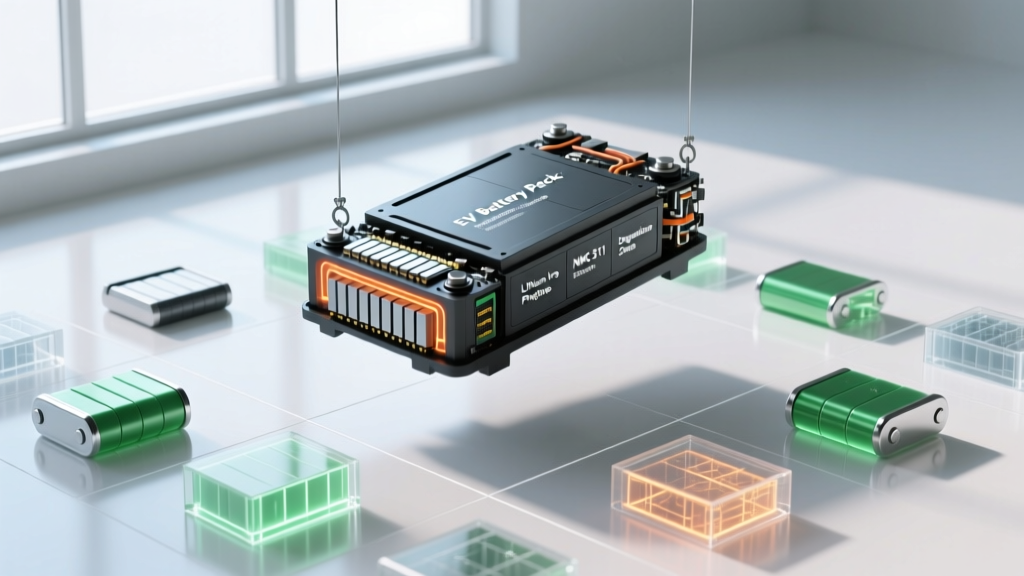
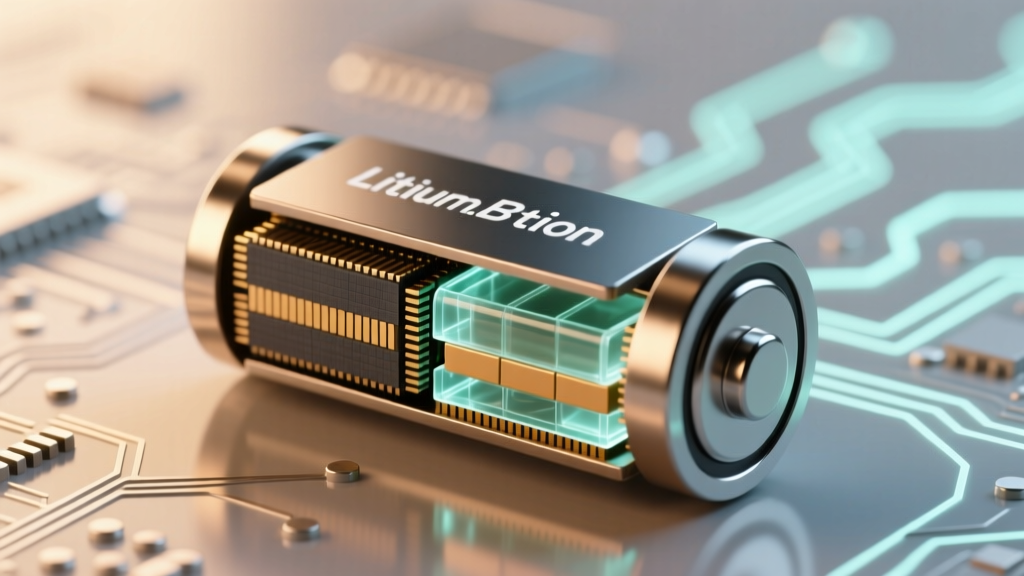
An EV's high-voltage traction battery stores energy in electrochemical form. Inside each lithium-ion cell, energy exists as a difference in chemical potential between two electrodes: a cathode (positive) and an anode (negative), separated by a porous membrane soaked in liquid electrolyte.
When you charge, lithium ions are pushed from the cathode through the electrolyte and into the anode, where they are intercalated — physically embedded — into the anode material (typically graphite). This process stores electrical energy from the grid as chemical potential energy. When you drive, the process reverses: ions flow back to the cathode, releasing electrons through an external circuit to power the electric motor.
The specific materials used for the cathode define the battery's chemistry, and that chemistry determines energy density, cycle life, cost, thermal stability, and cold-weather performance. In 2026, two families dominate the EV market:
- NMC (Nickel Manganese Cobalt) / NCA (Nickel Cobalt Aluminum): Higher energy density, favored for long-range vehicles. Used in most Hyundai, Kia, BMW, Rivian, and many Tesla Long Range models.
- LFP (Lithium Iron Phosphate): Lower energy density but superior cycle life, thermal stability, and lower cost. Standard in Tesla Model 3/Y RWD, Ford Mustang Mach-E Select (2025+), and many entry-level EVs from Chinese manufacturers now entering global markets.
| Attribute | LFP (Lithium Iron Phosphate) | NMC / NCA (Nickel-based) |
|---|---|---|
| Energy Density | ~160–180 Wh/kg (cell level) | ~220–300 Wh/kg (cell level) |
| Cycle Life (to 80% capacity) | 3,000–5,000+ cycles | 1,000–2,000 cycles |
| Thermal Stability | Excellent — resistant to thermal runaway | Good — requires active thermal management |
| Cold-Weather Performance | Moderate — greater range loss below 32°F | Better — retains more capacity in cold |
| Cost per kWh (pack level) | ~$90–$110/kWh | ~$120–$145/kWh |
| Cobalt Content | None | Yes (reduced in newer formulations) |
| Recommended Charge Habit | Can charge to 100% regularly | Best kept 20–80% daily; 100% for trips only |
| Typical Use Case | Standard-range / RWD models | Long-range / AWD / performance models |
LFP vs. NMC: Which Battery Chemistry Is Better for You?
Neither chemistry is universally superior — the right choice depends on your driving pattern, climate, and budget.
Choose LFP if: You want the longest possible battery lifespan, you mostly drive within 150 miles of home, you live in a mild climate, and you prefer the simplicity of charging to 100% daily without degradation worry. Tesla's Model 3 RWD with its ~57 kWh (usable) LFP pack is a prime example — EPA-rated at 272 miles and priced around $38,990 before incentives, it trades some range for exceptional longevity.
Choose NMC/NCA if: You need maximum range per charge (300+ miles EPA), you regularly drive in sub-freezing temperatures, or you tow. The Hyundai Ioniq 5 Long Range AWD uses an 84 kWh (usable) NMC pack delivering 305 miles EPA and peaks at 240 kW DC fast charging — 10–80% in roughly 18 minutes when preconditioned. That energy density advantage matters on road trips.
One nuance often overlooked: LFP's lower energy density means a larger, heavier pack is needed for equivalent range. That added weight slightly reduces efficiency (mi/kWh) and can affect handling dynamics. For a commuter car, this is negligible. For a performance sedan, it matters.
How Long Do EV Batteries Actually Last?
The short answer: most EV batteries will outlast the vehicle itself. The long answer requires looking at real-world degradation data rather than worst-case internet anecdotes.
Data aggregated from fleet studies and owner-reported telemetry (including Geotab's large-scale battery health study) shows the following typical degradation pattern for modern liquid-cooled lithium-ion packs:
| Age / Mileage | Average Capacity Retained | Notes |
|---|---|---|
| Year 1 / ~12,000 mi | 96–98% | Initial "break-in" loss; steepest early drop |
| Year 3 / ~36,000 mi | 92–95% | Curve flattens significantly |
| Year 5 / ~60,000 mi | 89–93% | Most owners notice minimal daily impact |
| Year 8 / ~100,000 mi | 85–90% | Within warranty threshold for most brands |
| Year 10 / ~120,000 mi | 82–88% | Still functional; reduced range noticeable on long trips |
| Year 12+ / ~150,000+ mi | 78–85% | Approaching practical end-of-life for some drivers |
Key observations from this data:
- Degradation is non-linear. The biggest capacity loss occurs in the first year or two (2–4%), then slows dramatically. This is because a stable solid-electrolyte interphase (SEI) layer forms on the anode, protecting it from further significant reactions.
- LFP packs degrade more slowly than NMC in cycle-count terms. Tesla's LFP Model 3 packs have shown <5% loss at 100,000 miles in multiple fleet datasets.
- Heat is the primary enemy. Vehicles in hot climates (Phoenix, Riyadh) without active liquid cooling degrade faster. Every modern mainstream EV in 2026 uses liquid thermal management, which has dramatically improved longevity versus early air-cooled packs (like the first-generation Nissan Leaf).
What Does the EV Battery Warranty Actually Cover?
Federal law in the United States mandates that EV battery warranties cover a minimum of 8 years or 100,000 miles (whichever comes first). In California Air Resources Board (CARB) states, that extends to 10 years or 150,000 miles. But the details vary significantly by manufacturer, and understanding the fine print is critical.
| Manufacturer | Duration | Mileage | Capacity Threshold | Notes |
|---|---|---|---|---|
| Tesla (Model 3/Y RWD — LFP) | 8 years | 100,000 mi | 70% retention | Long Range/Performance: 8 yr / 120,000 mi |
| Hyundai / Kia | 10 years | 100,000 mi | 70% retention | Among the longest coverage; CARB states same terms |
| Ford (Mustang Mach-E, F-150 Lightning) | 8 years | 100,000 mi | 70% retention | Covers battery and hybrid/electric components |
| BMW (i4, iX, i7) | 8 years | 100,000 mi | 70% retention | BMW also offers extended battery certificate programs |
| Rivian (R1T, R1S) | 8 years | 175,000 mi | 70% retention | Highest mileage cap among mainstream brands |
| Chevrolet (Equinox EV, Blazer EV) | 8 years | 100,000 mi | 60% retention | Note: lower threshold than most competitors |
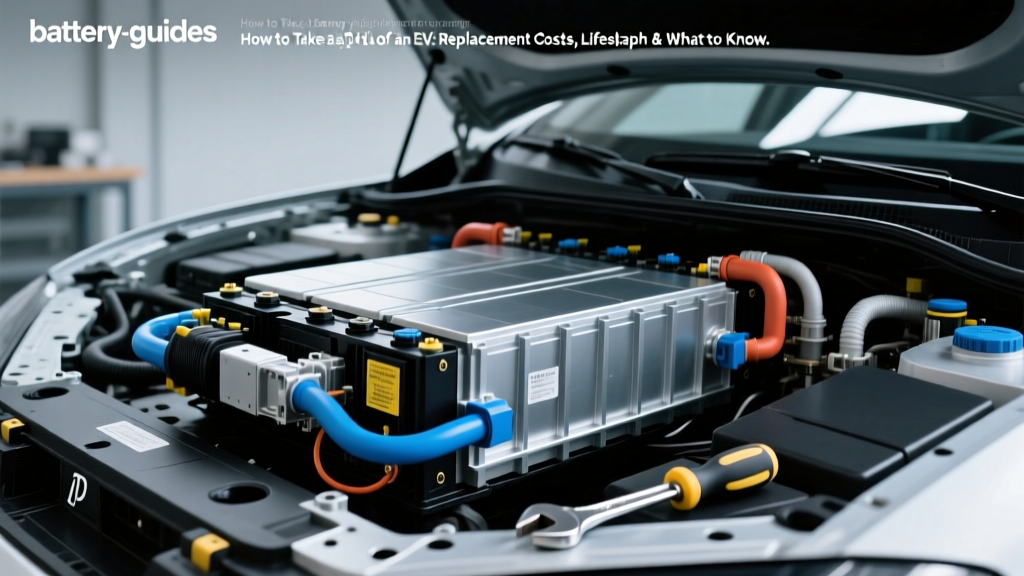
What the warranty covers: If your battery's usable capacity drops below the stated threshold (typically 70% of original) within the warranty period, the manufacturer will repair or replace the pack — or individual modules — at no cost to you. Some brands replace only the failed modules rather than the entire pack, which is often sufficient.
What it doesn't cover: Damage from accidents, flooding, improper modifications, or use outside manufacturer guidelines. Gradual degradation that stays above the threshold is considered normal wear, not a warranty claim.
How Much Does It Cost to Replace an EV Battery?
This is the question that generates the most anxiety — and the most misinformation. Let's ground it in actual numbers.
| Vehicle / Pack Size | Battery Chemistry | Approximate Replacement Cost |
|---|---|---|
| Tesla Model 3 RWD (~57 kWh) | LFP | $10,000 – $14,000 |
| Hyundai Ioniq 5 (~84 kWh) | NMC | $14,000 – $18,000 |
| Ford F-150 Lightning Ext. Range (~131 kWh) | NMC | $20,000 – $28,000 |
| Chevrolet Bolt EV (~65 kWh) | NMC | $9,000 – $13,000 |
| BMW iX xDrive50 (~111 kWh) | NMC | $22,000 – $30,000 |
Context that matters: According to data from Consumer Reports and warranty claim rates published by manufacturers, fewer than 2–3% of EV batteries require full replacement within the warranty period. The vast majority of packs retain 80%+ capacity well past 150,000 miles. For most owners, the battery will never need replacement during their ownership.
When replacements are needed, it's often module-level repair rather than a full pack swap. A single failed module might cost $1,500–$3,500 to replace, restoring the pack to near-original capacity.
Costs are also declining. Battery pack prices have fallen from over $1,000/kWh in 2010 to approximately $110–$135/kWh in 2026, per BloombergNEF data. By 2030, further declines to $80–$100/kWh are projected, meaning replacement costs will continue to drop.
Factors That Affect EV Battery Lifespan
Battery degradation is not random — it's driven by specific, controllable factors. Understanding these lets you add years and thousands of miles to your pack's useful life.
Do: Best Practices for Longevity
- Keep daily charge between 20–80% (NMC/NCA). Storing a battery at 100% accelerates electrolyte decomposition. Reserve full charges for road-trip departure days.
- Charge LFP to 100% at least weekly. LFP chemistry benefits from periodic full charges for cell balancing and accurate state-of-charge calibration. Tesla explicitly recommends this.
- Use Level 2 (home) charging as your primary method. Slow, steady charging generates less heat and stress than DC fast charging.
- Precondition the battery before DC fast charging. Most EVs do this automatically when you navigate to a charger. A warm battery (ideally 70–95°F / 21–35°C) charges faster and with less degradation.
- Park in shade or a garage during extreme heat. Sustained high temperatures (above 95°F / 35°C) are the single biggest degradation accelerator.
- Drive it regularly. Batteries prefer moderate, regular cycling over sitting idle for weeks at high or low SoC.
Avoid: Common Mistakes
- Don't rely exclusively on DC fast charging. Occasional fast charging is fine, but daily 150+ kW sessions accelerate wear. Studies show packs that fast-charge more than 3x per week degrade 1–2% faster over 5 years versus those primarily Level-2 charged.
- Don't leave the car at 0% or 100% SoC for extended periods. If storing for a vacation, set charge to ~50%.
- Don't ignore thermal warnings. If the car limits power due to battery temperature, let it cool before pushing hard.
How to Monitor Your Battery's State of Health (SoH)
State of Health (SoH) is the percentage of your battery's original capacity that remains usable. A brand-new pack is 100% SoH; a pack with 12% degradation is at 88% SoH. Monitoring this helps you track long-term trends and identify potential warranty claims.
Built-in tools: Most 2026 EVs display battery health information in the infotainment system or mobile app. Tesla shows estimated range at 100% charge, which you can compare to the original EPA figure. Hyundai's Bluelink and Kia Connect provide battery diagnostics. BMW's iDrive includes a battery health screen showing current usable capacity.
OBD-II diagnostic tools: Third-party apps like OBDeleven, LeafSpy (for Nissan), or Scan My Tesla can read detailed battery telemetry — individual cell voltages, pack temperature, cycle count, and precise SoH percentage — through the OBD-II port. These tools typically cost $30–$80 for the hardware plus a small app fee.
Dealer diagnostics: Any authorized service center can run a full battery health report. Request one during routine service visits, especially as you approach the warranty mileage threshold. If SoH is near the warranty floor (e.g., 72% at 95,000 miles), having documentation on record helps if a claim becomes necessary.
What to watch for: A sudden drop in range (more than 5% in a single month) or significant cell-to-cell voltage imbalance (visible via OBD tools) can indicate a failing module. This is a warranty-covered issue in most cases.
What's Next: Solid-State and Silicon-Anode Batteries
Two technologies are generating significant attention as potential successors to current lithium-ion designs:
Solid-state batteries replace the liquid electrolyte with a solid ceramic, polymer, or sulfide-based material. The theoretical advantages are substantial: 30–50% higher energy density, faster charging (potentially 10–80% in under 10 minutes), improved safety (no flammable liquid), and longer cycle life. Toyota has announced plans for limited solid-state production vehicles by 2027–2028, and Samsung SDI is targeting 2027 for mass production. However, manufacturing scalability and cost remain unsolved challenges. As of 2026, no solid-state EV is available for purchase anywhere in the world.
Silicon-anode batteries replace or supplement the graphite anode with silicon, which can hold roughly 10x more lithium ions per unit mass. This boosts energy density by 20–40% without changing the cathode chemistry. Companies like Sila Nanotechnologies and Group14 Technologies are supplying silicon-dominant anode materials to automakers. Mercedes-Benz's next-generation EQ models (announced for 2027) are expected to use silicon-anode cells from Factorial Energy. Early production applications are appearing in limited volumes, but broad market availability remains 2027–2029.
Both technologies are real and progressing — but neither changes the buying decision you face today. Current LFP and NMC packs, properly cared for, will deliver 150,000–200,000+ miles of reliable service.
Frequently Asked Questions
In what form is energy stored in EV batteries?
Energy is stored in chemical form — specifically, as chemical potential energy in the arrangement of lithium ions between the cathode and anode of each cell. When charging, electrical energy from the grid is converted into chemical energy by forcing lithium ions into the anode. When driving, the reverse reaction converts that chemical energy back into electrical energy to power the motor. No energy is stored as electricity itself (unlike a capacitor); it is always held as a chemical state.
How long do EV batteries last in years and miles?
Modern liquid-cooled EV batteries typically retain 85–90% of their original capacity at 100,000 miles (roughly 8 years of average driving). Many packs reach 150,000–200,000 miles before dropping to 80% capacity, which is generally considered the practical end-of-life threshold. LFP chemistries often exceed these figures, with some fleet data showing 90%+ retention at 150,000 miles.
How much does an EV battery cost to replace?
Full pack replacement costs range from approximately $9,000 for a smaller pack (Chevrolet Bolt, ~65 kWh) to $28,000+ for large packs (Ford F-150 Lightning Extended Range, ~131 kWh). However, fewer than 3% of EV batteries require full replacement under normal ownership. Module-level repairs, when needed, typically cost $1,500–$3,500. Costs are declining as battery manufacturing scales.
What does the battery warranty cover?
Federal minimum is 8 years / 100,000 miles, with some brands (Hyundai, Kia, Rivian) offering up to 10 years or 175,000 miles. The warranty guarantees the battery will retain a minimum percentage of its original capacity — usually 70% (Chevrolet uses 60%). If capacity drops below the threshold within the warranty period, the manufacturer repairs or replaces the battery at no cost. Damage from accidents, misuse, or unauthorized modifications is excluded.
How do I check my EV battery's health?
Start with your car's built-in battery health display in the infotainment system or companion app. For deeper data, use an OBD-II diagnostic tool (OBDeleven, Scan My Tesla) to read precise SoH percentage, cell voltages, and cycle count. Request a battery health report from your dealer during routine service visits, especially as you approach the warranty mileage limit.
Is LFP better than NMC for battery longevity?
For pure cycle life and calendar life, yes — LFP chemistries typically endure 3,000–5,000+ charge cycles before reaching 80% capacity, compared to 1,000–2,000 for NMC. LFP is also more thermally stable and contains no cobalt. However, NMC offers higher energy density (more range per pound), better cold-weather performance, and is the preferred choice for long-range and performance EVs. The "better" chemistry depends on your priorities: maximum lifespan (LFP) or maximum range (NMC).
Does fast charging damage my EV battery?
Occasional DC fast charging has minimal impact. However, frequent fast charging (3+ times per week) at high power (150+ kW) accelerates degradation by approximately 1–2% over 5 years compared to primarily Level 2 charging. The heat generated during high-power charging is the primary stressor. Modern EVs mitigate this with active liquid cooling and preconditioning routines. For daily use, Level 2 home charging (7–11 kW) is gentler on the pack.
When will solid-state batteries be available in EVs?
As of 2026, no solid-state EV is available for consumer purchase. Toyota, Samsung SDI, and several startups target limited production beginning in 2027–2028, with broader availability expected in the 2029–2030 timeframe. Manufacturing cost and scalability remain the primary barriers. Current LFP and NMC batteries are mature, reliable, and will remain the standard for most EVs through at least 2029.