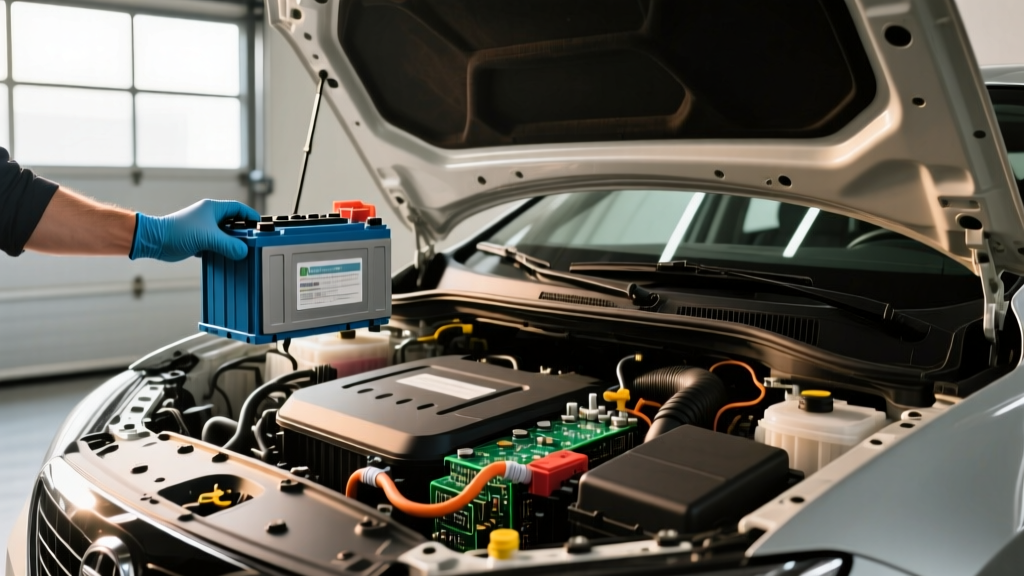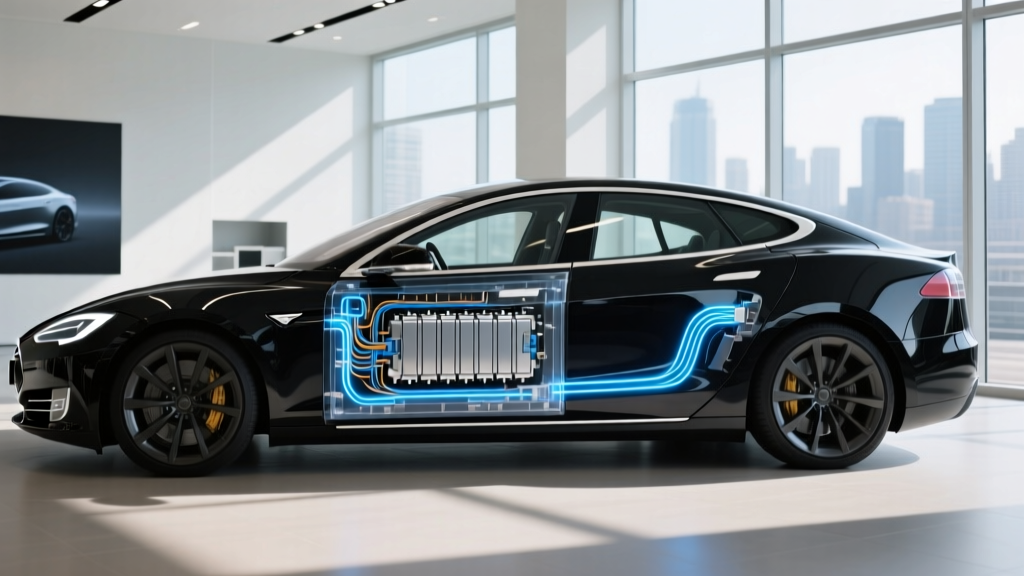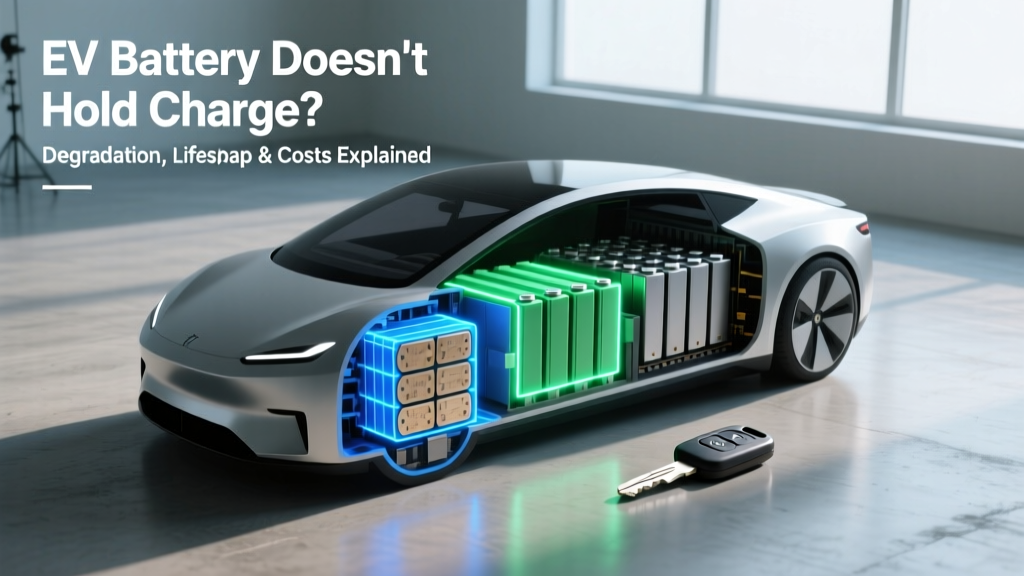
If your electric vehicle's battery doesn't hold charge the way it did when you drove it off the lot, you're experiencing degradation — and it's completely normal. Every lithium-ion battery loses capacity over time and use, just like a smartphone. But unlike a phone, an EV's high-voltage traction battery is engineered to outlast the vehicle itself, with degradation curves that flatten after the first year or two. This guide breaks down exactly how much capacity you should expect to lose, what your warranty actually covers, what a replacement costs if you ever need one, and the daily habits that slow the clock.
How Long Do EV Batteries Last? Real-World Degradation Data
The short answer: most modern EV batteries are designed to retain 70–80% of their original capacity after 150,000 to 200,000 miles. Many will outlast the car they're installed in. But "how long" depends on chemistry, climate, charging habits, and how the vehicle's thermal management system does its job.
Here's what the data shows across popular platforms:
Typical Capacity Retention Over Time
| Milestone | Average Capacity Retained | Notes |
|---|---|---|
| Year 1 / ~15,000 mi | 94–97% | Initial steeper drop as SEI layer forms |
| Year 3 / ~45,000 mi | 90–94% | Curve flattens significantly |
| Year 5 / ~75,000 mi | 87–92% | LFP packs often outperform NMC here |
| Year 8 / ~100,000 mi | 83–90% | Warranty threshold period (typically 70%) |
| Year 10+ / ~150,000 mi | 78–87% | Many packs still well above warranty floor |
Sources: Recurrent Auto battery health data (2025), manufacturer warranty disclosures, fleet telematics reports. Individual results vary by climate, DC fast-charging frequency, and SoC habits.
A few important takeaways from this data:
- The first year sees the largest drop — typically 3–6%. This is the solid electrolyte interphase (SEI) layer stabilizing on the anode. After that, degradation slows to roughly 1–2% per year for NMC and even less for LFP.
- Tesla's fleet data (published in impact reports) shows Model 3/Y packs retaining approximately 85% capacity at 150,000 miles, with LFP-equipped Standard Range variants showing flatter curves.
- Nissan Leaf (passively cooled, older NMC) historically degraded faster — a cautionary tale for why active liquid cooling matters.
LFP vs. NMC/NCA: Which Battery Chemistry Is Better?
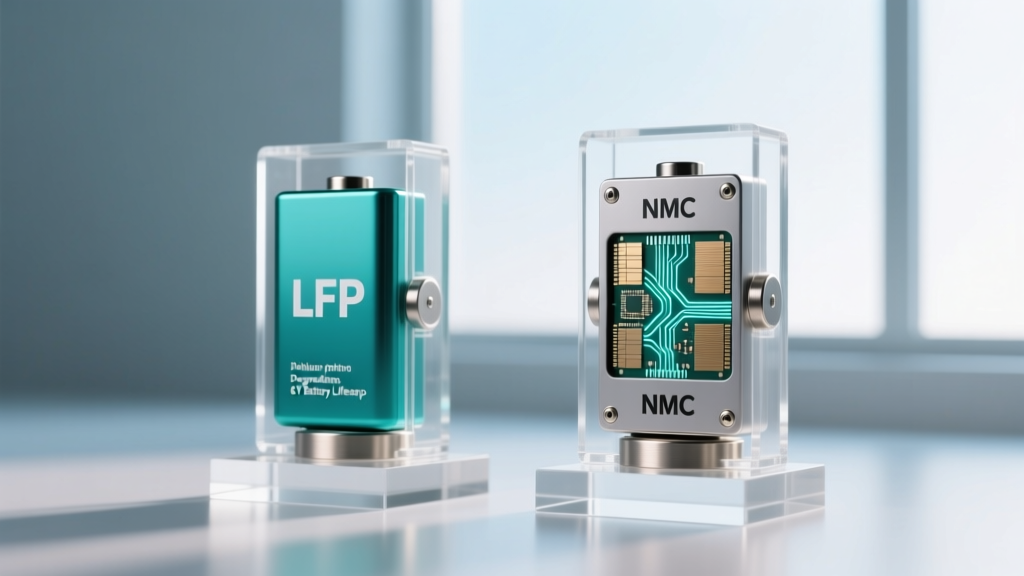
If your EV's battery doesn't hold charge as well as you'd hoped, chemistry plays a major role. The two dominant chemistries in 2026 production EVs are lithium iron phosphate (LFP) and nickel manganese cobalt (NMC) or nickel cobalt aluminum (NCA). Each has distinct trade-offs:
| Factor | LFP (LiFePO₄) | NMC / NCA |
|---|---|---|
| Energy Density | Lower (~160 Wh/kg cell-level) | Higher (~250–300 Wh/kg cell-level) |
| Cycle Life | 3,000–5,000+ cycles | 1,000–2,000 cycles |
| Cold-Weather Performance | More range loss in freezing temps; slower cold charging | Better low-temp conductivity |
| Cost per kWh | Lower (no cobalt/nickel) | Higher (commodity-priced metals) |
| Usable SoC Window | Can charge to 100% daily without penalty | Best kept 20–80% for longevity |
| Typical Applications | Standard-range trims (Tesla Model 3 RWD, BYD, base Ford Mustang Mach-E) | Long-range/performance trims (Model Y LR, Hyundai Ioniq 5 LR, Rivian) |
| Thermal Stability | Excellent — higher runaway threshold | Good but requires more active management |
Bottom line: If you prioritize range above all else and drive in cold climates, NMC/NCA gives you more miles per kWh and charges faster in winter. If you want maximum longevity and plan to keep the car 10+ years, LFP's superior cycle life and tolerance for 100% daily charging make it the durability winner — at the cost of ~15–20% less range for the same battery weight.
What Does the EV Battery Warranty Actually Cover?
Federal law in the United States mandates that EV battery warranties cover a minimum of 8 years or 100,000 miles (10 years/150,000 miles in California Air Resources Board states). But the details matter enormously — especially the capacity retention threshold.
| Manufacturer | Warranty Term | Capacity Threshold | Notes |
|---|---|---|---|
| Tesla | 8 yr / 120,000 mi (LR) | 70% | Model 3 RWD LFP: 8 yr / 100,000 mi, 70% |
| Hyundai / Kia | 10 yr / 100,000 mi | 70% | Among the longest calendar terms |
| Ford | 8 yr / 100,000 mi | 70% | Mustang Mach-E, F-150 Lightning |
| GM (Chevrolet, Cadillac) | 8 yr / 100,000 mi | 70% (60% Bolt EUV) | Ultium platform |
| BMW | 8 yr / 100,000 mi | 70% | i4, iX, i7 |
| Rivian | 8 yr / 120,000 mi (Max Pack) | 70% | Standard: 8 yr / 100,000 mi |
Source: Manufacturer warranty documentation, 2025–2026 model year. Always verify current terms on the manufacturer's site, as warranty details can change mid-year.
Critical warranty nuances:
- The warranty covers defect AND excessive degradation — if your battery drops below the stated threshold within the term, the manufacturer must repair or replace it to bring it back above that threshold (not necessarily to 100%).
- Opening the pack at an unauthorized shop voids coverage. Always use manufacturer-authorized service for battery-related issues.
- Warranty doesn't cover damage from accidents, flooding, improper charging equipment, or modifications. It covers manufacturing defects and abnormal capacity loss.
- The U.S. Department of Energy's fueleconomy.gov site maintains a useful summary of federal requirements for battery warranty minimums.
How Much Does an EV Battery Replacement Cost?
This is the question that keeps prospective EV buyers up at night. Here's the honest picture: most EV owners will never need a full battery replacement. The pack will outlast the car's economic life. But if you do need one — due to damage, defect outside warranty, or extreme high-mileage use — costs are substantial but declining.
| Vehicle / Battery Size | Battery Capacity | Replacement Cost (Parts + Labor) | When Typically Needed |
|---|---|---|---|
| Tesla Model 3 (LFP, Standard Range) | ~60 kWh | $10,000–$14,000 | Rarely before 250,000+ mi |
| Tesla Model Y (Long Range, NMC) | ~75–82 kWh | $13,000–$18,000 | Rarely before 200,000+ mi |
| Hyundai Ioniq 5 (Long Range) | 77.4 kWh | $14,000–$20,000 | Extremely rare under 200,000 mi |
| Ford F-150 Lightning (Extended Range) | ~131 kWh | $22,000–$32,000 | Large pack; replacement uncommon |
| Chevrolet Bolt EV/EUV (older NMC) | 65 kWh | $14,000–$16,000 | Recall-replaced packs; newer Ultium packs TBD |
| Rivian R1T / R1S (Max Pack) | ~149 kWh | $25,000–$35,000 | Very large pack; early in lifecycle |
Cost ranges reflect 2025–2026 service estimates including labor. Module-level repair (replacing individual cell modules rather than the full pack) can reduce costs by 40–60% on some platforms.
Context that matters: a $15,000 battery replacement on a 10-year-old EV with 180,000 miles may not make economic sense — at that point, the vehicle's residual value may be lower than the repair cost. This is the same calculus as replacing a transmission on an aging gas car. The battery isn't a unique risk; it's a large-ticket component with a very long but finite life.
Why Your Battery Doesn't Hold Charge: Factors That Accelerate Degradation
Not all degradation is created equal. Some of it is calendar aging (unavoidable chemistry), but much of it is driven by how you use and charge the vehicle. Here are the biggest factors, ranked by impact:
1. Frequent DC Fast Charging at High Power
Occasional DC fast charging (say, on road trips) has minimal impact. But daily reliance on 150–350 kW DC fast chargers generates sustained heat inside the cells, accelerating electrolyte decomposition and SEI growth. Studies from the Idaho National Laboratory found that vehicles fast-charged exclusively showed ~5–8% more degradation over 100,000 miles compared to vehicles charged primarily on Level 2.
2. Extreme State of Charge Habits
For NMC/NCA batteries, routinely sitting at 100% SoC or dropping below 10% stresses the cathode and anode. The ideal daily range is 20–80%. LFP batteries are an exception — manufacturers like Tesla and BYD recommend charging to 100% at least weekly to allow the battery management system (BMS) to calibrate cell voltages.
3. Temperature Extremes
Prolonged exposure to ambient heat above 95°F (35°C) — especially at high SoC — is the single worst environmental factor for lithium-ion longevity. Cold weather doesn't degrade the battery permanently, but it does temporarily reduce available capacity (expect 15–30% range loss at 20°F / -7°C) and slows regenerative braking until the pack warms.
4. High-Discharge Driving
Repeated hard acceleration and sustained high-speed driving (80+ mph) draw high C-rates from the pack, generating internal heat. Performance-oriented driving daily will age a pack faster than moderate commuting.
Battery Longevity Checklist
- ✅ Set daily charge limit to 80% (NMC/NCA) or 100% (LFP — check your owner's manual)
- ✅ Use Level 2 home charging as your primary routine; reserve DCFC for road trips
- ✅ Enable preconditioning before fast charging — most EVs warm the pack to ~95°F for optimal charge acceptance and reduced stress
- ✅ Park in shade or a garage during summer months when possible
- ✅ Avoid leaving the car at 100% SoC for extended periods (more than 24 hours)
- ✅ Don't let the car sit below 10% SoC for days — plug in when you get home
- ✅ Use the manufacturer's scheduled battery health check (many run diagnostics during service visits)
How to Check Your EV's Battery Health (State of Health)
State of Health (SoH) is the percentage of original capacity your battery currently holds. If your EV battery doesn't hold charge like it used to, SoH tells you exactly how much you've lost. Here's how to check it:
- In-vehicle display: Some manufacturers (BMW iX, Mercedes EQS, newer Hyundai/Kia models) show a SoH percentage or bar graph in the infotainment system under battery settings.
- OBD-II diagnostic tools: Devices like the OBDeleven (for VW Group), Scan My Tesla (community-built), or general EV OBD readers can pull SoH data from the BMS via the CAN bus. Expect to pay $40–$150 for a capable adapter plus a free or low-cost app.
- Dealer diagnostic report: Any authorized service center can pull a full battery health report showing SoH, individual cell/module voltage variance, and cooling system performance. Request this during routine service — it's often free.
- Third-party services: Companies like Recurrent Auto offer free battery health reports if you connect your vehicle's telematics. This also gives you benchmarking against similar vehicles in your climate zone.
- The manual method: Fully charge to 100%, note the displayed range, and compare it to the original EPA-rated range. If your Model 3 LR originally showed 358 miles at 100% and now shows 310, that's roughly 87% SoH. This is approximate (the BMS estimate can drift), but it's a useful sanity check.
If your SoH drops below 70% within the warranty period, contact your dealer immediately — you're likely entitled to a repair or replacement under the terms listed above.
What's Next? Solid-State, Silicon Anodes, and Future Battery Tech
Looking forward, several next-generation technologies promise to reshape the degradation equation — but none are available in production EVs as of early 2026:
- Solid-state batteries: Toyota, Samsung SDI, and QuantumScape are targeting 2027–2029 production timelines. Solid electrolytes eliminate flammable liquid electrolyte, potentially enabling 500+ mile ranges, 10-minute fast charging, and dramatically longer cycle life (5,000+ cycles with minimal degradation). These are announced and in pilot production but not yet in any vehicle you can buy today.
- Silicon-dominant anodes: Companies like Sila Nanotechnologies and Group14 are replacing graphite anodes with silicon composites, boosting energy density by 20–40%. Early versions are appearing in limited applications (Mercedes G-Class EV uses a silicon-anode variant). Expect wider adoption by 2027–2028.
- Sodium-ion batteries: CATL and BYD are producing sodium-ion cells for budget EVs in China. Lower energy density but far cheaper raw materials and excellent cold performance. Possible in entry-level US-market EVs by 2028.
These technologies are promising, but if you're buying an EV in 2026, today's LFP and NMC chemistries — paired with the care habits outlined above — will reliably serve you for 150,000+ miles with manageable degradation. Waiting for solid-state means waiting at least 2–4 more years for meaningful production volume.
EV Battery Health FAQ
My EV battery doesn't hold charge like it used to — is it defective?
Almost certainly not. Gradual capacity loss of 2–5% per year is normal for all lithium-ion batteries. If you're losing more than 5% per year or your State of Health has dropped below 70% within the warranty period (typically 8 years/100,000 miles), that may indicate a defect covered under warranty. Check your SoH using the methods described above and consult your dealer.
Does fast charging ruin my EV battery?
Occasional DC fast charging on road trips has negligible long-term impact. Daily fast charging at 150+ kW does accelerate degradation by roughly 5–8% over 100,000 miles compared to Level 2 charging, per Idaho National Laboratory research. If you can install a Level 2 home charger, use it as your primary charging method and save DCFC for trips.
Should I charge my EV to 100% every night?
It depends on your chemistry. For NMC/NCA batteries (most Long Range, Performance, and AWD trims), set your daily limit to 80% and only charge to 100% before long trips. For LFP batteries (Tesla Model 3 RWD, base Mach-E, many BYD models), manufacturers actually recommend charging to 100% at least once a week for BMS calibration. Check your owner's manual for your specific recommendation.
How much range will I lose in cold weather?
Expect 15–30% range reduction at 20°F (-7°C) compared to the EPA sticker, depending on whether your EV has a heat pump (less loss) or resistive heating (more loss). This is temporary — the battery isn't permanently degraded. Preconditioning the battery while plugged in recovers much of this loss. See fueleconomy.gov for EPA-rated ranges to use as your baseline.
Is it worth buying a used EV with battery degradation?
Yes, if the SoH is above 85% and the price reflects the vehicle's age. A 5-year-old EV with 90% SoH has decades of useful life remaining. Always request a battery health report before purchase. Avoid used EVs with SoH below 80% unless the price is heavily discounted — you may face a warranty claim or replacement cost sooner.
Can I replace individual battery modules instead of the whole pack?
On some platforms, yes. Tesla, BMW, and Hyundai/Kia service centers can replace individual modules (sections of the pack containing 12–24 cells) rather than the entire battery. This can cut replacement costs by 40–60%. Not all platforms support this — Rivian and GM's Ultium, for example, are more modular by design, while some older packs require full replacement.