Why Would You Need to Unhook an EV Battery?
Unlike a conventional gas car where popping the hood and pulling a 12V terminal is routine, disconnecting the high-voltage traction battery in an electric vehicle is a fundamentally different operation. The traction battery in a modern EV operates between 400V and 900V — enough to cause severe injury or death if mishandled. For most owners, "unhooking the battery" really means one of three things: performing a proper 12V auxiliary battery disconnect for storage, triggering the high-voltage service disconnect before major repairs, or understanding what happens during a professional battery replacement. This guide covers the safety-critical distinctions, then goes deep on the battery technology itself — chemistry, degradation, warranties, and costs — so you know exactly what you're working with.
The Two Batteries in Your EV: 12V vs. High-Voltage Traction Pack
Every road-legal EV sold in the US contains two separate battery systems, and confusing them is the single most common mistake new EV owners make:
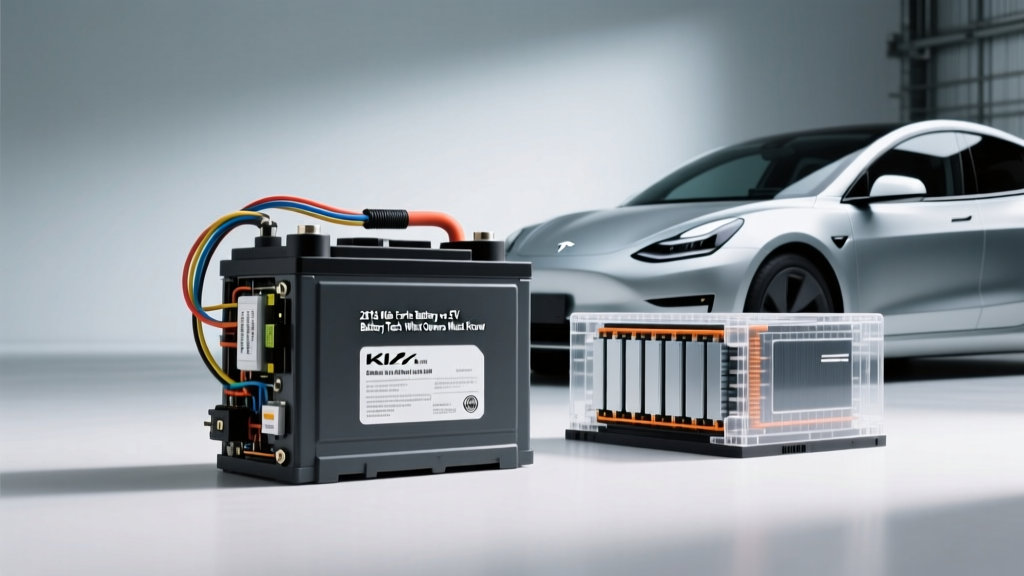
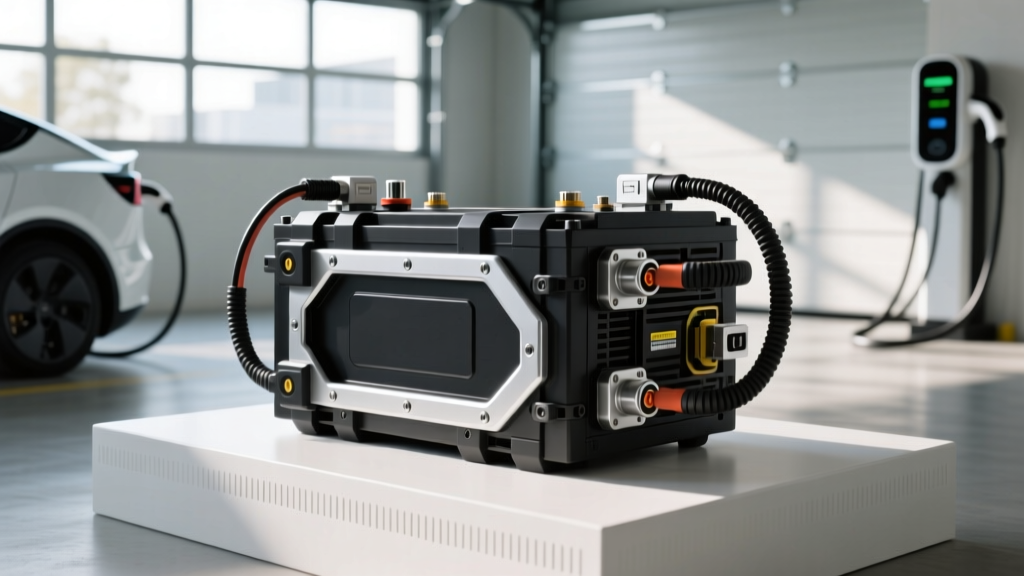
- 12V auxiliary battery: A small lead-acid or lithium 12V battery that powers the vehicle's computers, lights, infotainment, door locks, and — critically — the contactors that close to connect the high-voltage pack to the drivetrain. If this battery dies, the car won't start, even though the main pack may be fully charged.
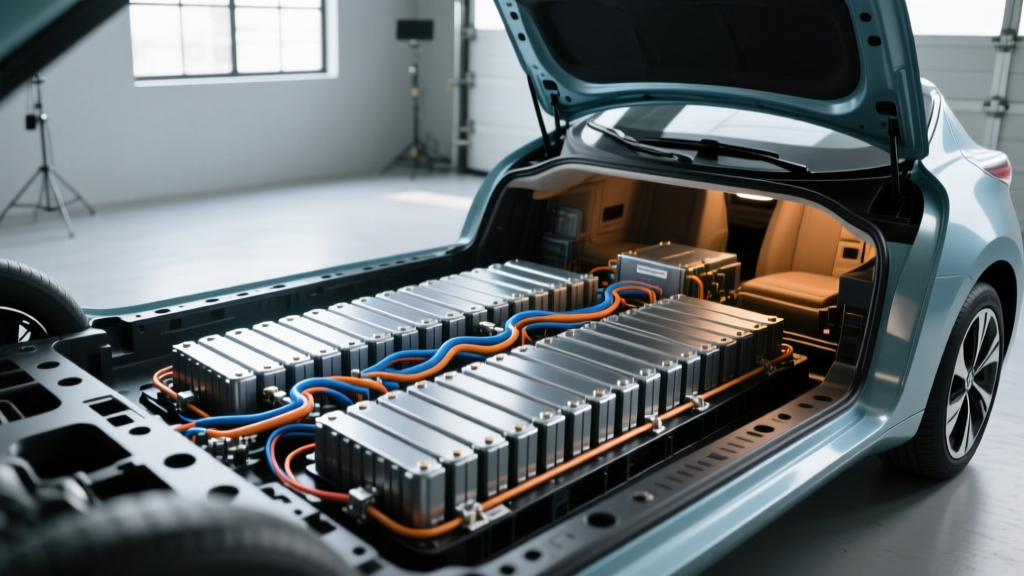
- High-voltage traction battery: The large lithium-ion pack (typically 50–120 kWh) mounted under the floor that powers the electric motors and determines your range. This is the battery we discuss when talking about degradation, warranty, and replacement.
When owners search for "how to unhook a battery" in an EV context, they usually need to disconnect the 12V system — for long-term storage, before body-shop work, or to reset electronics. The high-voltage pack should only be isolated via the manufacturer-specified service disconnect procedure by qualified technicians.
Safe 12V Disconnect Procedure (Owner-Level)
For storage or accessory-level service, disconnecting the 12V auxiliary battery follows a familiar sequence, with EV-specific caveats:
- Power the vehicle fully off — not sleep mode, not accessory mode. Confirm the instrument cluster is dark.
- Locate the 12V battery — in many EVs (Tesla Model 3/Y, Hyundai Ioniq 5, Ford Mustang Mach-E) it's under the front trunk liner or behind an access panel in the frunk area, not under a traditional hood.
- Disconnect the negative (–) terminal first using a 10mm wrench, then the positive (+). This prevents short circuits.
- Wait 15–30 minutes before touching any HV-related components. This allows high-voltage capacitors in the inverter to discharge.
- Reconnect positive first, then negative when restoring power. Expect a brief system initialization sequence on startup.
Some newer EVs (2024+ Tesla models, certain GM Ultium vehicles) use a lithium 12V battery that is not user-serviceable and requires diagnostic-tool resets after disconnection. Always consult your owner's manual before proceeding.
High-Voltage Service Disconnect (Technician-Only)
The high-voltage service disconnect plug (sometimes called the "fireman's switch" or MSD — Manual Service Disconnect) is typically located under a rear seat, inside the battery tunnel, or behind a locked panel requiring an insulated glove and specific tool. This is not an owner-serviceable item. Pulling the MSD physically breaks the circuit between battery cell modules and the vehicle's HV bus, but residual charge in the pack and capacitors remains dangerous. Only ASE L3-certified or manufacturer-trained HV technicians should perform this step.
EV Battery Chemistry: LFP vs. NMC vs. NCA
The traction battery's cell chemistry determines your EV's range, charging speed, longevity, cold-weather performance, and eventually its replacement cost. Two families dominate the 2026 market:
| Attribute | LFP (Lithium Iron Phosphate) | NMC / NCA (Nickel-based) |
|---|---|---|
| Energy density (Wh/kg) | 160–180 | 220–270 |
| Cycle life (to 80% SoH) | 3,000–6,000+ | 1,000–2,500 |
| Cold-weather range retention | Lower — more loss below 32°F | Better in freezing conditions |
| Recommended daily SoC | 100% (periodic full charge encouraged) | 80–90% daily; 100% for trips only |
| Thermal stability / fire risk | Higher — no thermal runaway oxygen release | Lower — requires more active cooling |
| Cost per kWh (cell level) | Lower (~$80–$100) | Higher (~$110–$140) |
| Notable 2026 vehicles | Tesla Model 3 RWD, Model Y RWD, Ford Mustang Mach-E Select (base) | Tesla Long Range, Hyundai Ioniq 5, Chevy Equinox EV, Rivian R1T |
Which is better? There is no universal winner. LFP excels in longevity, safety, and cost — ideal for daily commuters who charge at home and rarely need maximum range. NMC/NCA delivers more range per pound and performs better in cold climates, making it the choice for long-range trims and northern-state drivers. If you plan to keep your EV for 10+ years and 150,000+ miles, LFP's superior cycle life is a compelling advantage.
How Long Do EV Batteries Last? Degradation Data
EV battery degradation is not a cliff — it's a gradual, non-linear curve. Most packs lose capacity quickly in the first 1–2 years (roughly 2–5%), then settle into a slow, steady decline. According to long-term fleet data compiled by Recurrent Auto and real-world owner tracking, here's what the data shows:
- Year 1–2: 2–5% capacity loss (initial SEI layer formation)
- Year 3–5: ~1–2% per year
- Year 5: Total ~8–12% loss (88–92% State of Health)
- Year 8: Total ~12–18% loss (82–88% State of Health)
- Year 10: Total ~15–25% loss (75–85% State of Health)
LFP packs typically show even slower degradation, with many fleet vehicles retaining 90%+ SoH at 100,000 miles.
At 70–80% State of Health, a battery still functions but range is noticeably reduced. A vehicle originally rated at 300 miles EPA would deliver roughly 210–240 miles — still usable for most daily driving but potentially frustrating for road trips. This is the threshold where most warranty claims trigger.
Real-world context: data from fueleconomy.gov and owner forums consistently show that a 2020 Tesla Model 3 Long Range (NMC, 75 kWh usable) averages roughly 88–92% SoH at 60,000 miles. Early Nissan LEAF models (passive air cooling, NMC) degraded far faster — some hitting 70% SoH by 50,000 miles in hot climates — underscoring how thermal management design matters as much as chemistry.
What Does the EV Battery Warranty Actually Cover?
Federal law (EPA emissions warranty provisions) and California Air Resources Board (CARB) rules effectively mandate that automakers warranty the traction battery for at least 8 years / 100,000 miles. Most manufacturers meet or exceed this baseline:
| Manufacturer | Duration | Capacity Threshold | Notes |
|---|---|---|---|
| Tesla (Model 3/Y) | 8 yr / 120,000 mi (LR) or 100,000 mi (RWD) | 70% retention | Transferable to second owner |
| Hyundai / Kia | 10 yr / 100,000 mi | 70% retention | Among the longest coverage periods |
| GM (Chevy, Cadillac) | 8 yr / 100,000 mi | 70% retention (60% on some commercial) | Ultium packs modular — partial replacement possible |
| Ford | 8 yr / 100,000 mi | 70% retention | Covers battery and HV components |
| Rivian | 8 yr / 175,000 mi | 70% retention | Higher mileage cap reflects truck use case |
Key warranty details buyers miss:
- Capacity threshold matters: A 70% threshold means you must lose more than 30% of original capacity before a claim is valid. A pack at 72% SoH is technically "within spec" even though range is noticeably reduced.
- Warranty covers defects AND excessive degradation — not just sudden failures. If your SoH drops below the threshold within the warranty window due to normal use, you're covered.
- Exclusions typically include: damage from accidents, flooding, improper charging equipment, or unauthorized modifications. Using a non-certified DC fast charger that damages the BMS could void coverage.
- Transferability varies — Tesla and most major brands transfer to second owners, which supports resale value.
EV Battery Replacement Cost: What to Expect
Battery replacement is the most expensive single repair an EV can require — but it's also increasingly rare. The vast majority of EV batteries outlast the vehicle's useful economic life. When replacement is needed (typically after a collision, flood, or extreme degradation beyond warranty), here's the current cost landscape:
| Vehicle / Pack Size | Battery Capacity | Chemistry | Replacement Cost Range |
|---|---|---|---|
| Tesla Model 3 RWD | 60 kWh | LFP | $8,000–$12,000 |
| Tesla Model Y Long Range | 75 kWh | NMC | $12,000–$16,000 |
| Hyundai Ioniq 5 | 77.4 kWh | NMC | $11,000–$15,000 |
| Ford F-150 Lightning (Extended) | 131 kWh | NMC | $20,000–$28,000 |
| Chevy Equinox EV | 85 kWh | NMC (Ultium) | $12,000–$18,000 |
These figures include the battery pack and labor but may not cover ancillary components (coolant, HV cables, BMS reprogramming). Costs have been declining roughly 8–12% per year as cell prices fall and refurbished packs become more available. By comparison, a full engine or transmission replacement on a gas vehicle often costs $4,000–$8,000 — the gap is narrower than many buyers assume, especially when you factor in the EV's dramatically lower maintenance costs over its life.
When is replacement actually needed? Based on warranty claim data and fleet studies, fewer than 1–2% of EV batteries require replacement within the first 8 years. The most common causes are physical damage (collision, underbody impact), manufacturing defects caught early, and — in older passively-cooled designs like early LEAFs — heat-accelerated degradation in hot climates.
Maximizing Battery Health: A Practical Care Checklist
Battery longevity is heavily influenced by daily habits. Here's a data-backed checklist for maximizing your pack's State of Health over 10+ years of ownership:
Daily & Weekly Habits
- NMC/NCA packs: Set daily charge limit to 80–90%. Only charge to 100% when departing on a trip within 24 hours.
- LFP packs: Charge to 100% at least once per week — LFP chemistry benefits from periodic full charge for cell balancing and accurate SoC calibration.
- Avoid sitting at extreme SoC: Don't leave the car at 100% or below 10% for more than a few days. For storage, aim for 50–60%.
- Use Level 2 (home) charging as your primary method. Occasional DC fast charging is fine, but daily DCFC use accelerates degradation — studies show ~2–4% additional loss over 100,000 miles compared to L2-only charging.
Seasonal & Climate Considerations
- Precondition the battery before DC fast charging, especially below 50°F. Most EVs do this automatically when you navigate to a charger; confirm it's active.
- In extreme heat (>95°F): Park in shade or a garage when possible. Active thermal management handles most scenarios, but reducing heat soak helps.
- In extreme cold (<20°F): Expect 20–35% temporary range loss. This is not degradation — capacity returns when temperatures rise. Plug in and precondition before driving to minimize energy used on cabin and battery heating.
Long-Term Monitoring
- Check State of Health every 6–12 months (see next section).
- Keep firmware updated — manufacturers regularly refine BMS algorithms to improve longevity.
- Maintain the cooling system per the service schedule. Coolant degradation or low levels impair thermal management.
How to Check Your EV Battery's State of Health
State of Health (SoH) represents your battery's current maximum capacity as a percentage of its original factory capacity. There are several ways to check it:
- In-vehicle displays: Some EVs (notably Tesla via the service menu, Hyundai/Kia via the infotainment diagnostics page) show SoH or remaining capacity directly. Access methods vary by model year.
- OBD-II diagnostic apps: Tools like LeafSpy (Nissan), OBDeleven (VW group), or manufacturer-specific apps can read detailed cell-level data from the BMS. A Bluetooth OBD-II dongle ($30–$60) paired with the right app gives granular insight.
- Dealer diagnostic check: Any authorized service center can pull a full battery health report. Request this during routine service — most will provide it at no charge.
- Third-party services: Companies like Recurrent and Aviloo offer remote battery health assessments using telematics data, often free for participating owners.
Track SoH over time rather than fixating on a single reading. A gradual, linear decline is normal. A sudden drop of 3–5% in a short period warrants a dealer visit — it may indicate a failing cell module that can be replaced individually on modular platforms (GM Ultium, some VW MEB vehicles) without replacing the entire pack.
Emerging Battery Technology: What's Next
Several next-generation battery technologies are in development, but none are available in consumer vehicles as of 2026:
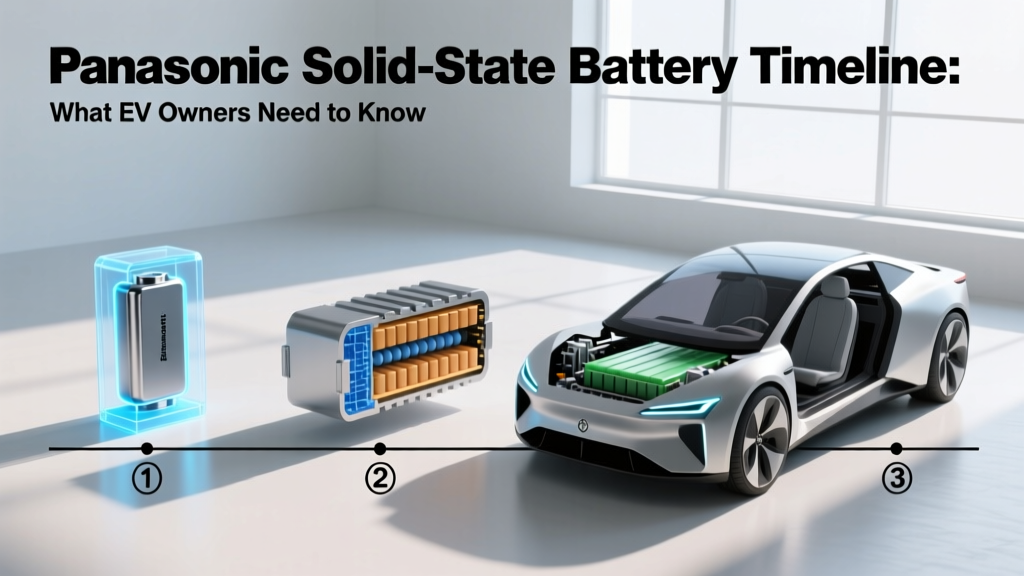
- Solid-state batteries: Toyota, Samsung SDI, and QuantumScape are targeting 2027–2029 production timelines for limited-volume solid-state packs. These promise 30–50% higher energy density, faster charging (10–80% in under 10 minutes), and improved safety. Expect initial deployment in premium vehicles at significant cost premiums.
- Silicon-dominant anodes: Companies like Sila Nanotechnologies and Group14 are scaling silicon-anode cells that boost energy density 15–25% over current graphite anodes. Mercedes-Benz's next-generation EQ lineup is expected to adopt this technology by 2027–2028.
- Sodium-ion batteries: CATL and BYD have begun deploying sodium-ion cells in Chinese-market budget EVs. Lower energy density than LFP but cheaper and free of lithium/cobalt. US-market adoption is not expected before 2028 at the earliest, likely in entry-level models.
These technologies are promising but remain pre-production. If you're buying an EV in 2026, today's LFP and NMC packs — with their proven track records and declining costs — are the practical choice.
Frequently Asked Questions
Can I unhook my EV's high-voltage battery myself?
No. The high-voltage traction battery (400V–900V) requires certified HV technicians with insulated tools and PPE. Only the 12V auxiliary battery is owner-serviceable, and even that requires care to avoid triggering HV system faults. For any work involving the traction pack, contact a dealer or ASE L3-certified shop.
How long do EV batteries last in real-world use?
Most modern EV batteries (2020+) are designed to retain 70–80% of original capacity after 150,000–200,000 miles or 10–15 years. LFP packs in moderate climates often exceed this. The battery typically outlasts the vehicle's economic life.
Does fast charging damage my EV battery?
Occasional DC fast charging has minimal impact. However, daily DCFC use — particularly at high-power (150+ kW) chargers — accelerates degradation by roughly 2–4% over 100,000 miles compared to Level 2 home charging. Preconditioning the battery before fast charging significantly mitigates this effect.
Is an LFP battery better than NMC for daily driving?
For daily commuting with home charging, LFP is often the better choice. You can charge to 100% daily without harm, cycle life is 2–3x longer, and replacement cost is lower. NMC is preferable if you need maximum range, drive in very cold climates, or take frequent long road trips.
Will my EV battery warranty cover normal degradation?
Yes, if degradation drops your battery below the warranty's capacity threshold (typically 70% SoH) within the warranty period (usually 8 years / 100,000 miles). The warranty covers both defects and excessive capacity loss from normal use. Check your specific warranty document for exact terms, as thresholds and durations vary by manufacturer.
What should I do if my EV will sit unused for weeks or months?
Set the charge level to 50–60%, plug into a Level 2 charger with a scheduled maintenance charge if possible, and disable energy-draining features like Sentry Mode or cabin overheat protection. If unplugged storage is unavoidable, check the 12V battery monthly — a dead 12V battery is the most common cause of a "bricked" EV after long storage.