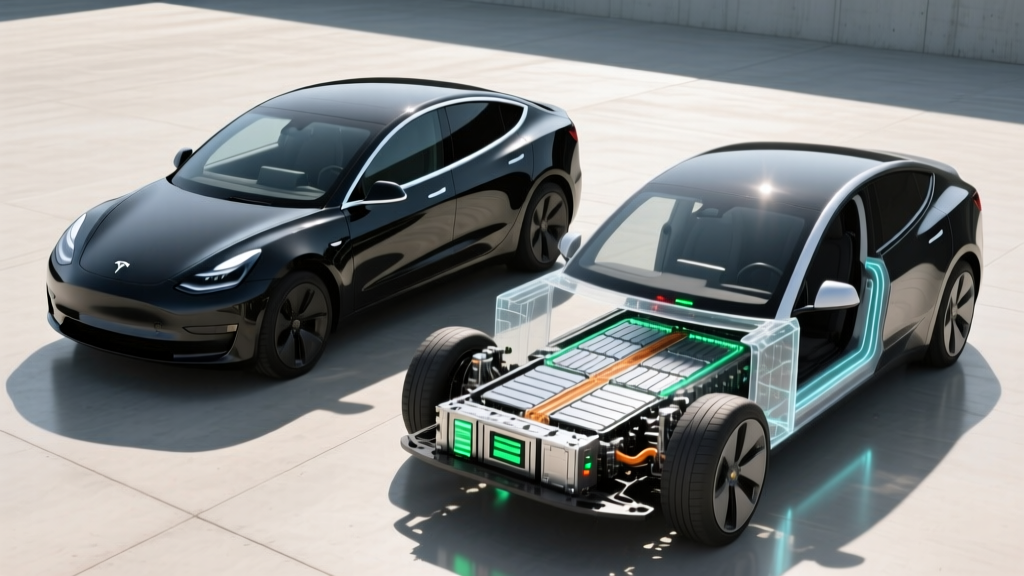
The single most expensive component in any electric vehicle isn't the motor, the infotainment system, or the chassis — it's the high-voltage traction battery. At 84 to 118 kWh in most modern EVs, the battery pack can represent 25–40% of the vehicle's total manufacturing cost. Understanding how battery development has progressed, where degradation actually stands in 2026, and what next-generation chemistries promise is essential for any EV buyer or owner making a five- to fifteen-year commitment.
This guide breaks down current battery chemistries, real-world degradation data, federal warranty requirements, replacement economics, and the emerging technologies reshaping EV battery development — all with the exact numbers you need to evaluate your purchase or optimize your ownership.
LFP vs NMC vs NCA: Current Battery Chemistries Explained
In 2026, nearly every mass-market EV uses one of three lithium-ion cathode chemistries: Lithium Iron Phosphate (LFP), Nickel Manganese Cobalt (NMC), or Nickel Cobalt Aluminum (NCA). Each has distinct trade-offs in energy density, cycle life, cold-weather performance, and cost — and battery development has narrowed the gaps significantly over the past five years.
LFP (Lithium Iron Phosphate) uses no nickel or cobalt, making it cheaper and more ethically straightforward to source. LFP cells tolerate deeper cycling — routinely 3,000–5,000+ full charge cycles before reaching 80% capacity — and can safely be charged to 100% daily without accelerating degradation. The trade-off: lower energy density (roughly 160–180 Wh/kg at the cell level versus 250–300 Wh/kg for NMC), which means heavier packs for the same range. LFP also suffers more capacity loss in freezing temperatures, sometimes losing 30–40% of available range in sub-20°F conditions due to higher internal resistance.
NMC (Nickel Manganese Cobalt) and NCA (Nickel Cobalt Aluminum) offer superior energy density, enabling longer range in lighter packages — critical for larger vehicles like the Ford F-150 Lightning or Rivian R1S. Modern high-nickel NMC 811 formulations (8 parts nickel, 1 part manganese, 1 part cobalt) have pushed cell-level energy density above 280 Wh/kg. However, these chemistries degrade faster if routinely charged to 100% or deeply discharged; most manufacturers recommend a daily charge limit of 80–90% for NMC/NCA packs. Cycle life typically ranges from 1,000–2,000 cycles to 80% capacity.
| Attribute | LFP | NMC 811 | NCA |
|---|---|---|---|
| Energy density (cell-level) | 160–180 Wh/kg | 250–300 Wh/kg | 260–300 Wh/kg |
| Cycle life to 80% SoH | 3,000–5,000+ | 1,000–2,000 | 1,000–1,500 |
| Daily 100% charge OK? | Yes — recommended | No — limit to 80–90% | No — limit to 80–90% |
| Cold-weather range loss (0°F) | 30–40% | 20–30% | 20–30% |
| Cobalt/nickel content | None | High nickel, low cobalt | High nickel, low cobalt |
| Cost per kWh (pack-level, 2026) | ~$95–$110 | ~$120–$140 | ~$120–$140 |
| Common 2026 applications | Tesla Model 3/Y RWD, BYD, base Ford Mustang Mach-E | Hyundai Ioniq 5/6, VW ID.4, Chevy Equinox EV | Tesla Model S/X, Rivian R1T/R1S |
Which is better? There is no universal winner. If you charge at home daily and prioritize longevity over maximum range, LFP is the superior choice — Tesla's Model 3 RWD with its ~60 kWh LFP pack at $38,990 MSRP is a prime example. If you need 300+ miles of EPA range in a midsize SUV or frequently road-trip in cold climates, NMC/NCA delivers the energy density required. Battery development in 2026 has also brought LMP (lithium manganese phosphate) into limited production, offering a middle ground, but it remains niche.
How Long Do EV Batteries Actually Last?
The short answer: longer than most buyers expect. Data aggregated from fleet operators, manufacturer reports, and independent testing shows that the median EV battery in 2026 retains approximately 88–92% of its original capacity after 100,000 miles and 8 years of typical use. Catastrophic failure — requiring full pack replacement — remains rare, affecting well under 2% of vehicles within the warranty period.
Here's what real-world degradation data looks like across major platforms:
- Tesla Model 3/Y (NMC/LFP): Tesla's 2025 Impact Report states average degradation of ~12% at 200,000 miles across the fleet, with LFP variants showing slower fade.
- Nissan LEAF (passive air-cooled NMC): Older 40/62 kWh LEAF packs showed 15–25% loss at 100,000 miles due to lack of active thermal management — a cautionary tale for battery development.
- Hyundai/Kia E-GMP platform (Ioniq 5, EV6): Fleet data indicates ~8–10% degradation at 100,000 miles with the 77.4 kWh NMC pack and active liquid cooling.
- Chevrolet Bolt EV/EUV (NMC, 65 kWh): Post-recall replacement packs show ~7–9% degradation at 80,000 miles — among the best in class, aided by conservative buffer management.
- Ford F-150 Lightning (extended range, 131 kWh NMC): Early fleet data suggests ~10–12% loss at 100,000 miles, with heavier vehicles and frequent DC fast charging showing slightly higher fade.
The key takeaway: modern liquid-cooled battery packs with sophisticated Battery Management Systems (BMS) are designed to outlast the vehicle's economic life. A 2026 EV with 300 miles of EPA range will likely still deliver 250–270 miles after a decade of ownership. The days of the early Nissan LEAF losing 30%+ capacity within five years are largely behind the industry, thanks to advances in thermal management and cell chemistry.
Federal Battery Warranty Requirements and What They Cover
Every EV sold in the United States carries a federally mandated minimum battery warranty of 8 years or 100,000 miles (whichever comes first). In California and states that have adopted CARB (California Air Resources Board) emissions standards — including Colorado, Maine, Massachusetts, New York, Oregon, Vermont, and Washington as of 2026 — that requirement extends to 10 years or 150,000 miles.
The warranty guarantees that the battery will retain a minimum percentage of its original capacity. The industry-standard threshold is 70% capacity retention, though some manufacturers set it at 65% or 75%. If your battery falls below that threshold within the warranty period, the manufacturer must repair or replace it at no cost to you.
| Manufacturer | Warranty Period | Mileage Limit | Capacity Retention Threshold |
|---|---|---|---|
| Tesla (Model 3/Y LFP) | 8 years | 100,000 mi | 70% |
| Tesla (Model S/X, LR/AWD) | 8 years | 120,000–150,000 mi | 70% |
| Hyundai / Kia | 10 years | 100,000 mi | 70% |
| Ford | 8 years | 100,000 mi | 70% |
| General Motors (Chevy/GMC/Cadillac) | 8 years | 100,000 mi | 70% (Ultium platform) |
| Volkswagen | 8 years | 100,000 mi | 70% |
| Rivian | 8 years | 175,000 mi | 70% |
| BMW | 8 years | 100,000 mi | 70% |
What the warranty does NOT cover: Damage from accidents, flooding, unauthorized modifications, or using non-approved charging equipment. Capacity loss from normal degradation that remains above the threshold is also not covered. If your 77.4 kWh Ioniq 5 pack measures 58 kWh after seven years (75% retention), it's above the 70% line and won't trigger a warranty claim — even though you've lost ~80 miles of range.
For full details on your specific vehicle's warranty, consult the manufacturer's warranty booklet and the EPA's fueleconomy.gov database for model-specific efficiency data.
EV Battery Replacement Costs: What You'll Actually Pay
Battery replacement is the scenario that dominates headlines, but context matters enormously. The vast majority of EV batteries never need full replacement during the vehicle's useful life. When replacement is required — typically due to a manufacturing defect, cell imbalance beyond BMS correction, or physical damage — costs vary widely by pack size, chemistry, and vehicle platform.
| Vehicle | Battery Size / Chemistry | Replacement Cost Range |
|---|---|---|
| Tesla Model 3 RWD | ~60 kWh / LFP | $8,000–$12,000 |
| Tesla Model Y Long Range | ~75 kWh / NMC | $12,000–$16,000 |
| Hyundai Ioniq 5 | 77.4 kWh / NMC | $10,000–$15,000 |
| Chevrolet Equinox EV | ~85 kWh / NMC (Ultium) | $12,000–$16,000 |
| Ford F-150 Lightning Ext. Range | 131 kWh / NMC | $18,000–$25,000 |
| Rivian R1T (Large Pack) | ~128 kWh / NMC | $18,000–$22,000 |
| BMW i4 eDrive40 | 81.5 kWh / NMC | $14,000–$18,000 |
These figures include the battery pack and labor but may not cover ancillary components like cooling lines, contactors, or BMS modules if they also require service. Costs have declined roughly 50% since 2015 as battery development has driven pack-level prices from ~$250/kWh to approximately $110–$140/kWh in 2026, according to BloombergNEF's annual battery price survey.
When is replacement typically needed? Full pack replacement is almost always during the warranty period due to a defect. Out-of-warranty replacements are uncommon before 200,000+ miles. Module-level repair — replacing individual faulty modules within the pack rather than the entire assembly — is increasingly available and costs $2,000–$6,000 depending on the platform.
Factors That Accelerate (or Preserve) Battery Life
Battery degradation is not a single-variable equation. How you charge, what temperatures you expose the pack to, and your driving habits all influence the rate of capacity loss. Here's what the data shows:
Charging Habits
For NMC and NCA packs, the single most impactful habit is avoiding sustained high State of Charge (SoC). Keeping your battery between 20% and 80% for daily use — and only charging to 100% when you need the full range for a trip — can reduce long-term degradation by 30–50% compared to always charging to 100%. LFP packs are the exception: manufacturers like Tesla and BYD actually recommend charging to 100% at least weekly to allow the BMS to recalibrate cell balancing.
DC Fast Charging Frequency
Exclusive reliance on DC fast charging (50–350 kW) does accelerate degradation, but the effect is smaller than commonly feared. A study by the Idaho National Laboratory found that vehicles charged exclusively on DC fast chargers showed only ~5% additional degradation over 50,000 miles compared to Level 2-only charging. Modern BMS systems actively manage charge rates and temperatures during fast charging to mitigate stress. That said, if you have home Level 2 access, using it for daily charging and reserving DCFC for road trips is the optimal strategy.
Temperature Extremes
Heat is the primary enemy of lithium-ion longevity. Sustained exposure to ambient temperatures above 95°F — particularly at high SoC — accelerates electrolyte decomposition and cathode degradation. Vehicles with active liquid cooling (standard on nearly all 2026 EVs except the base Nissan LEAF) handle this far better than passively cooled packs. Cold temperatures primarily cause temporary range loss rather than permanent damage, though charging a frozen battery without preconditioning can cause lithium plating — a form of irreversible degradation. Most 2026 EVs automatically precondition the battery when a charge session is scheduled or when navigating to a fast charger.
- ✅ NMC/NCA: Set daily charge limit to 80%; charge to 100% only before trips
- ✅ LFP: Charge to 100% at least once per week for BMS calibration
- ✅ Use Level 2 home charging for daily needs; reserve DCFC for road trips
- ✅ Precondition the battery before fast charging in cold weather (use scheduled departure or nav-to-charger)
- ✅ Avoid leaving the vehicle at 100% SoC in extreme heat for extended periods
- ✅ Don't let SoC drop below 10% for prolonged periods — charge promptly
- ✅ Enable battery preconditioning features in your vehicle's app or settings
How to Check and Monitor Your Battery's State of Health
State of Health (SoH) is the percentage of your battery's current maximum capacity compared to its original capacity when new. A brand-new 77.4 kWh Ioniq 5 pack at 100% SoH holds 77.4 kWh; at 90% SoH, it holds ~69.7 kWh — translating to roughly 30 fewer miles of EPA range.
OEM methods: Some manufacturers provide SoH readouts directly in the vehicle's infotainment system or companion app. Tesla displays battery health percentage in the Service menu (Software → Service → Battery Health). Hyundai/Kia includes a battery health indicator in the EV menu of newer models. BMW provides SoH through the iDrive system on i4/iX models.
OBD-II diagnostic tools: For vehicles without a native SoH display, an OBD-II dongle paired with apps like Car Scanner, ABRP (A Better Route Planner), or LeafSpy (for Nissan LEAF) can read the BMS-reported SoH directly. These tools access the same data the manufacturer's service technicians use and typically cost $20–$50 for the hardware.
Manual calculation: You can estimate SoH by fully charging to 100%, noting the displayed range, and comparing it to the original EPA range adjusted for the vehicle's efficiency. This method is less precise because displayed range estimates fluctuate based on recent driving patterns, but it provides a useful ballpark. For the most accurate assessment, request a battery health report during your next scheduled service visit.
Emerging Battery Technologies: Solid-State, Silicon Anodes, and Beyond
Battery development in 2026 is advancing on multiple fronts beyond traditional cathode chemistry. Here's where the most promising technologies stand — with realistic timelines, not hype:
Solid-State Batteries
Solid-state batteries replace the liquid electrolyte in current lithium-ion cells with a solid material (ceramic, sulfide, or polymer), enabling the use of lithium-metal anodes for dramatically higher energy density — potentially 400–500 Wh/kg at the cell level, roughly double today's best NMC. They also promise faster charging (10–80% in under 10 minutes) and improved safety due to the non-flammable electrolyte.
Current status: Toyota has announced solid-state battery production for a limited-run EV expected in 2027–2028, with a targeted 750 km (~466 miles) WLTP range. Samsung SDI and QuantumScape are supplying prototype cells to select OEMs for testing. However, manufacturing yield, cost (currently 3–5x that of conventional lithium-ion), and scalability challenges remain significant. Expect solid-state batteries to reach meaningful production volumes in passenger EVs no earlier than 2029–2031, initially in premium vehicles priced above $80,000.
Silicon Anode Technology
Replacing graphite anodes with silicon can increase cell energy density by 20–40% because silicon stores roughly 10x more lithium ions per unit mass. The challenge has been silicon's tendency to swell ~300% during charging, causing mechanical degradation. Companies like Sila Nanotechnologies and Group14 Technologies have developed silicon-carbon composite anodes that mitigate this swelling.
Current status: Mercedes-Benz's 2026 G 580 (electric G-Wagen) uses silicon-anode cells from Sila, achieving a pack energy density of ~235 Wh/kg at the pack level — a meaningful improvement. GM has announced silicon-anode adoption for select Ultium-based vehicles starting in 2027. This technology is the most likely near-term improvement to reach mainstream EVs, with broader adoption expected by 2027–2029.
Sodium-Ion Batteries
Sodium-ion chemistry eliminates lithium entirely, using abundant and cheap sodium instead. Energy density is lower (~120–160 Wh/kg), making sodium-ion best suited for shorter-range, budget-focused EVs and stationary storage. CATL and BYD have begun mass production of sodium-ion cells in China, with the first vehicles (sub-200-mile range city cars) hitting Chinese roads in 2025–2026. U.S. market availability is not expected before 2028, pending supply chain development.
- 2026–2027: Silicon anode adoption in premium EVs; LFP energy density improvements to ~190 Wh/kg
- 2027–2029: Silicon anode reaches mainstream vehicles; semi-solid-state cells in limited production
- 2029–2031: True solid-state batteries in premium production EVs; pack-level cost approaching $80/kWh
- 2030+: Sodium-ion in budget U.S. EVs; solid-state scaling to mid-market vehicles
Note: All timelines are estimates based on announced OEM roadmaps and industry analysis. Delays are common in battery manufacturing scale-up.
Frequently Asked Questions
How long do EV batteries last in years and miles?
Most modern liquid-cooled EV batteries retain 85–92% of their original capacity after 10 years or 150,000 miles. With proper care (avoiding extreme SoC, using Level 2 for daily charging), many packs will deliver 200,000+ miles before dropping below 80% capacity. The vehicle's body, suspension, or electronics are more likely to reach end-of-life before the battery does.
How much does it cost to replace an EV battery?
Out-of-warranty replacement costs range from approximately $8,000 for a ~60 kWh LFP pack (Tesla Model 3 RWD) to $25,000 for a 131 kWh NMC pack (F-150 Lightning Extended Range). However, the vast majority of replacements occur under the 8-year/100,000-mile federal warranty at no cost to the owner. Module-level repairs, when available, cost $2,000–$6,000.
What does the EV battery warranty cover?
Federal law mandates a minimum 8-year/100,000-mile warranty guaranteeing at least 70% capacity retention. CARB states extend this to 10 years/150,000 miles. The warranty covers defects and excessive degradation below the threshold but does not cover accident damage, misuse, or normal degradation above the retention floor.
How do I check my EV battery's health?
Check your vehicle's native battery health display (available on Tesla, newer Hyundai/Kia, and BMW models), use an OBD-II dongle with apps like Car Scanner or LeafSpy, or request a battery health report from your dealer during service. Comparing your current full-charge range to the original EPA rating gives a rough estimate.
LFP vs NMC — which battery chemistry is better for me?
Choose LFP if you charge at home daily, want maximum cycle life (3,000–5,000+ cycles), don't mind slightly less range, and live in a moderate climate. Choose NMC/NCA if you need 300+ miles of EPA range, frequently drive in cold weather, or need the lightest possible pack for towing or performance. Neither is universally superior — the right choice depends on your driving patterns and priorities.
Does frequent DC fast charging damage my battery?
Exclusive DC fast charging adds roughly 3–5% more degradation over 50,000 miles compared to Level 2 charging, based on Idaho National Laboratory testing. Modern thermal management systems actively protect the battery during fast charging. If you have home Level 2 access, use it for daily charging and save DCFC for road trips — but don't avoid fast charging when you need it.
Will solid-state batteries make current EVs obsolete?
Not in the near term. Solid-state batteries won't reach meaningful production volumes until 2029–2031 and will debut in vehicles priced above $80,000. Current LFP and NMC chemistries, combined with ongoing battery development in silicon anodes and cell packaging, will remain the mainstream standard through at least 2030. Today's EVs will not become obsolete — they'll simply coexist with next-generation options as costs decline.