What Is a Battery Core, and Why Does It Matter?
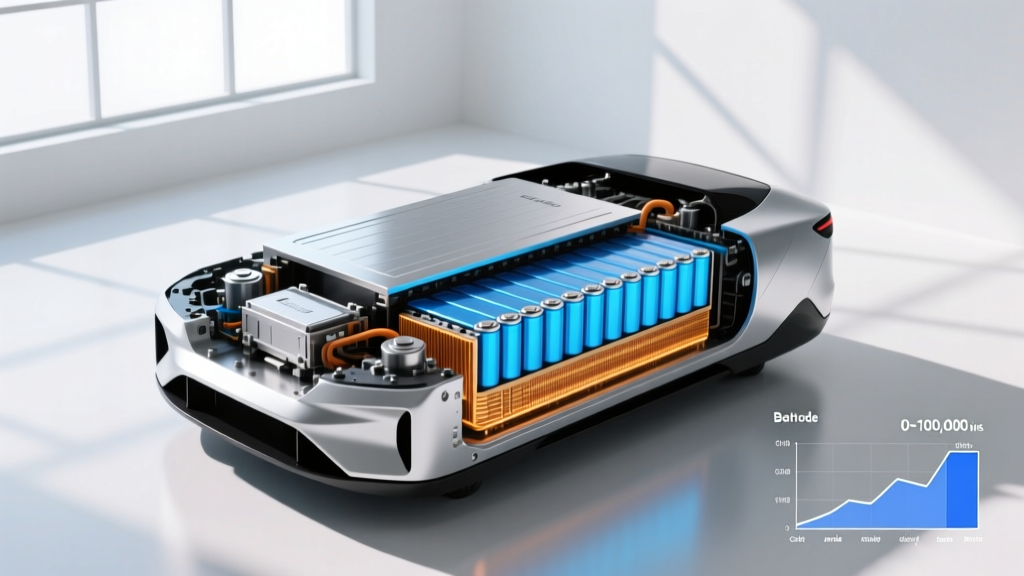
When EV owners and technicians talk about a battery core, they're referring to the high-voltage traction battery pack — the large lithium-ion energy storage unit that powers the electric motor and determines your vehicle's range, charging speed, and long-term value. This is not the small 12V auxiliary battery that runs your infotainment and lights; the traction battery core is the single most expensive component in any electric vehicle, typically representing 25–40% of the vehicle's total manufacturing cost.
Understanding what sits inside that core — the cell chemistry, thermal management architecture, and module configuration — directly explains why a Tesla Model 3 Standard Range behaves differently from a Ford F-150 Lightning Extended Range, and why one might outlast the other in a decade of daily driving. Let's unpack the engineering, the real-world data, and the ownership economics.
Inside the Core: LFP vs. NMC/NCA Battery Chemistry
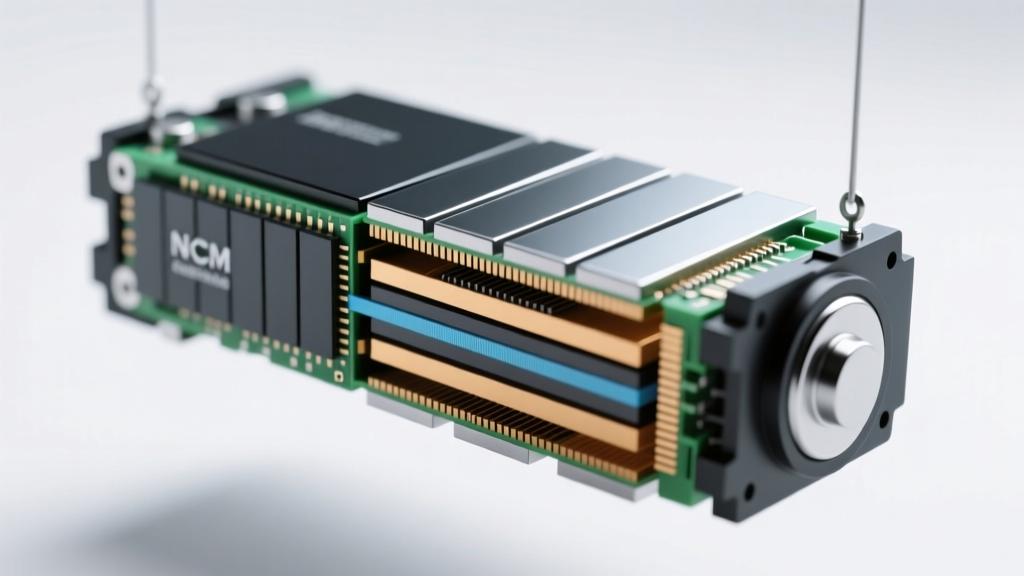
Every EV battery core is built from hundreds or thousands of individual lithium-ion cells wired in series and parallel. The cathode chemistry of those cells defines the pack's fundamental trade-offs. In 2026, two chemistries dominate the US market:
- NMC (Nickel Manganese Cobalt) / NCA (Nickel Cobalt Aluminum): Higher energy density, better cold-weather performance, but more expensive and shorter cycle life. Used in most long-range and performance EVs.
- LFP (Lithium Iron Phosphate): Lower energy density, heavier for the same capacity, but cheaper, longer-lasting, and free of cobalt and nickel. Increasingly used in standard-range models.
| Attribute | LFP (LiFePO₄) | NMC / NCA |
|---|---|---|
| Energy Density (cell-level) | ~160–180 Wh/kg | ~220–300 Wh/kg |
| Typical Cycle Life | 3,000–5,000+ cycles | 1,000–2,000 cycles |
| Cold-Weather Performance | Moderate — more range loss below 32°F | Stronger — better low-temp discharge |
| Cost per kWh (pack-level, 2026) | ~$90–$110 | ~$120–$150 |
| Recommended Daily SoC | Can charge to 100% daily | Best kept 20–80% for longevity |
| Thermal Stability | Excellent — higher runaway threshold | Good — requires active thermal mgmt |
| Common Applications (2026) | Tesla Model 3 RWD, Model Y RWD, Ford Mustang Mach-E Select SR, Rivian Standard | Tesla LR/Performance, Hyundai Ioniq 5 LR, BMW iX, Ford F-150 Lightning Ext. Range |
Which is better? There is no universal winner. If you want maximum range in the smallest, lightest package and regularly face sub-freezing winters, NMC/NCA is the practical choice. If you prioritize long-term durability, lower cost, and plan to keep the vehicle 10+ years, LFP's cycle-life advantage is substantial. LFP owners can also charge to 100% daily without accelerated degradation — a meaningful convenience benefit for commuters who need every mile of range each morning.
How Long Do EV Batteries Actually Last?
The short answer, backed by fleet data: most EV battery cores will outlast the vehicle they're installed in. The fear of a $20,000 battery swap at 80,000 miles is not supported by real-world evidence from manufacturers, fleet operators, or independent testing bodies.
Here's what the data actually shows:
Typical Degradation Curve (NMC packs, moderate climate, mixed charging):
- Year 1 / 15,000 mi: ~2–4% capacity loss (initial formation loss)
- Year 3 / 45,000 mi: ~6–9% total loss
- Year 5 / 75,000 mi: ~9–12% total loss
- Year 8 / 120,000 mi: ~12–17% total loss
- Year 10 / 150,000 mi: ~15–22% total loss (modeling based on Geotab fleet data)
LFP packs typically show slower degradation: ~8–14% loss at the 8-year / 120,000-mile mark under similar use. Tesla's 2025 Impact Report noted that Model 3/Y batteries retained approximately 85% of original capacity at 200,000 miles — well beyond the warranty period.
These figures assume normal use — a mix of Level 2 home charging, occasional DC fast charging, and moderate SoC habits. Abuse patterns (daily 100% charges on NMC, frequent 250 kW+ fast charging from low SoC, sustained operation in extreme desert heat without preconditioning) can accelerate loss by several percentage points over the same period.
What Does the Battery Warranty Actually Cover?
Federal law mandates a minimum EV battery warranty of 8 years / 100,000 miles (in California Air Resources Board states, it extends to 10 years / 150,000 miles for vehicles certified to CARB standards). But the critical detail is the capacity retention threshold — the point at which the manufacturer is obligated to repair or replace the pack.
| Manufacturer | Warranty Period | Capacity Threshold | Notes |
|---|---|---|---|
| Tesla (Model 3/Y RWD — LFP) | 8 yr / 100,000 mi | 70% | LFP packs have lower threshold due to chemistry |
| Tesla (Model 3/Y LR — NMC) | 8 yr / 120,000 mi | 70% | Higher mileage coverage on LR/Performance |
| Hyundai / Kia | 10 yr / 100,000 mi | 70% | Among the longest duration in the industry |
| Ford (Mach-E, F-150 Lightning) | 8 yr / 100,000 mi | 70% | Covers battery and electric powertrain components |
| BMW (iX, i4) | 8 yr / 100,000 mi | 70% | Includes battery conditioning system |
| GM (Ultium-based) | 8 yr / 100,000 mi | 70% (60% for commercial) | Modular pack allows partial replacement |
| Rivian | 8 yr / 120,000 mi | 70% | Covers Standard and Max packs |
Key warranty caveats: Warranties cover defects and abnormal degradation — not gradual, expected capacity loss above the threshold. If your 6-year-old NMC pack shows 74% State of Health (SoH), you're above the 70% line and the manufacturer has no obligation. The warranty also typically excludes damage from accidents, flooding, unauthorized modifications, or use as a stationary power source (V2H/V2G) unless the manufacturer explicitly supports it. Always check your owner's manual for specific exclusions.
EV Battery Replacement Cost: What to Expect in 2026
Replacement is rare during normal ownership — but it's a legitimate concern for second- and third-owner buyers, high-mileage fleet vehicles, or anyone planning to keep an EV past the 15-year mark. Costs have dropped significantly as cell prices have fallen and modular pack designs allow partial repairs rather than full-pack swaps.
| Vehicle / Pack Size | Battery Capacity | Chemistry | Estimated Replacement Cost |
|---|---|---|---|
| Tesla Model 3 RWD | 60 kWh (LFP) | LFP | $8,000–$11,000 |
| Tesla Model Y Long Range | 75 kWh (NMC) | NMC | $12,000–$16,000 |
| Hyundai Ioniq 5 Long Range | 77.4 kWh (NMC) | NMC | $13,000–$17,000 |
| Ford F-150 Lightning Ext. Range | 131 kWh (NMC) | NMC | $20,000–$28,000 |
| Chevrolet Silverado EV (Max Pack) | 200 kWh (NMC) | NMC (Ultium) | $28,000–$38,000 |
| BMW iX xDrive50 | 105.2 kWh (NMC) | NMC | $18,000–$24,000 |
These figures include the battery pack and labor but can vary by region, dealer vs. independent shop, and whether the pack is replaced as a single unit or repaired module-by-module. GM's Ultium platform, for example, allows individual module replacement — a single failed module might cost $2,000–$4,000 rather than a full pack swap. Tesla's structural battery packs are more integrated, making partial repair harder but full-pack replacement more straightforward.
When is replacement actually needed? In practice, most battery cores reach end-of-automotive-life (below 70% SoH) at 200,000–300,000+ miles for NMC and 300,000–500,000+ miles for LFP. By that point, the vehicle's resale value, other mechanical wear, and technology obsolescence typically make replacement uneconomical — the pack gets recycled or repurposed for stationary storage. The scenario most buyers should actually plan for is never needing a replacement during their ownership.
Factors That Accelerate Battery Degradation
Not all miles are equal when it comes to battery wear. Understanding the stressors helps you protect your core's long-term health:
Battery Care Checklist — Maximize Your Core's Lifespan
- Limit DC fast charging frequency. Occasional road-trip fast charging is fine, but daily reliance on 150–350 kW DCFC accelerates degradation. A 2024 study by Idaho National Laboratory found that packs charged exclusively via DCFC showed ~5% more capacity loss over 40,000 miles compared to Level 2-only charging. Use Level 2 at home as your daily baseline.
- Avoid extreme SoC on NMC packs. For NMC/NCA chemistry, sustained storage at 100% SoC or below 10% SoC stresses the cathode. Set your charge limit to 80% for daily use; charge to 100% only when you'll drive immediately. LFP owners can skip this — charge to 100% regularly for best cell-balancing results.
- Precondition before fast charging. Cold batteries resist charge and generate excess heat during DCFC. Use your EV's navigation-based preconditioning (Tesla, Hyundai, Ford, BMW all offer this) to warm the pack to optimal temperature before arriving at a fast charger. This protects the cells and delivers faster charge speeds.
- Minimize prolonged exposure to extreme heat. Battery degradation accelerates above ~95°F ambient, especially at high SoC. If you live in Phoenix or Las Vegas, park in shade when possible, avoid leaving the car at 100% SoC in summer heat, and ensure your vehicle's thermal management system is functioning (coolant flushes per maintenance schedule).
- Don't let the pack sit empty. If storing the EV for weeks, set SoC to ~50% and plug into Level 1 or Level 2 to maintain it. A pack that drops to 0% and sits can suffer copper-shunt degradation that is irreversible.
How to Monitor Your Battery's State of Health (SoH)
State of Health is the percentage of your battery's original usable capacity that remains. A new pack is 100% SoH; a pack that has degraded to hold only 72 kWh out of an original 80 kWh is at 90% SoH. Monitoring this metric helps you track degradation trends, plan for warranty claims, and assess value when buying or selling a used EV.
How to check SoH:
- In-vehicle diagnostics: Some manufacturers display SoH or a battery health bar directly in the infotainment system. Nissan Leaf has long shown a 12-bar health indicator; Hyundai/Kia provides a battery health percentage in the EV menu on newer models. Tesla does not natively display SoH, but the service menu (accessible via the software screen with a long press) shows estimated degradation.
- OBD-II apps: Third-party tools like Leaf Spy (Nissan), TeslaFi, or ABRP (A Better Route Planner) with OBD-II dongles can read SoH, cell voltage spread, and pack temperature data. This is the most detailed consumer-accessible method.
- Dealer diagnostic reports: Request a battery health report during service visits. Most manufacturers can pull a full SoH assessment, cell balance data, and fault history. This is essential documentation for a warranty claim if degradation crosses the threshold.
- Charging data analysis: Track your kWh delivered vs. miles driven over time. If your 75 kWh pack consistently accepts only 63 kWh from 0–100% on Level 2 (after accounting for ~5% charging losses), your SoH is approximately 88%.
For used-EV buyers, a pre-purchase SoH check is as important as a compression test was for gas cars. A 5-year-old EV at 92% SoH is an excellent prospect; one at 78% SoH may be approaching warranty territory or indicate a history of abuse.
Emerging Battery Technology: What's on the Horizon
While today's lithium-ion cores are mature and reliable, several next-generation technologies are in advanced development. These are not yet available in production vehicles as of 2026, but they represent the likely evolution of the battery core over the next decade:
- Solid-state batteries: Replace the liquid electrolyte with a solid ceramic or polymer, promising higher energy density (potentially 400+ Wh/kg at the cell level), faster charging, and improved safety. Toyota has announced pilot production for limited model integration by 2027–2028, with broader availability expected in the early 2030s. Samsung SDI, QuantumScape, and Solid Power are also advancing prototypes. Realistic timeline for mainstream US-market vehicles: 2029–2032.
- Silicon-dominant anodes: Current lithium-ion cells use graphite anodes; replacing them with silicon can boost energy density by 20–40%. Companies like Sila Nanotechnologies and Group14 are already supplying silicon-composite anodes for limited applications. Expect incremental adoption in premium EVs starting 2027–2028, with meaningful range gains (30–50 extra miles per pack) before full solid-state arrives.
- Sodium-ion batteries: Use abundant sodium instead of lithium, offering lower cost and excellent cold-weather performance at the expense of energy density. CATL has begun production in China for small urban EVs. US-market adoption is likely limited to budget city cars or stationary storage through the late 2020s.
For buyers making decisions today, these technologies are forward-looking context — not reasons to delay a purchase. Current LFP and NMC packs already deliver 250,000+ miles of usable life, and today's EVs are the most capable and affordable they've ever been.
Frequently Asked Questions
How long do EV batteries last in years and miles?
Based on fleet data from Geotab, manufacturer reports, and real-world owner tracking, most NMC battery cores retain 78–85% of original capacity at 150,000 miles (roughly 10 years of average US driving). LFP packs typically retain 85–90%+ over the same period. Full replacement is rarely needed before 200,000+ miles, and many packs reach 300,000+ miles before dropping below the 70% automotive-use threshold.
How much does an EV battery cost to replace?
Out-of-warranty replacement costs range from approximately $8,000 for a smaller LFP pack (e.g., Tesla Model 3 RWD, 60 kWh) to $28,000–$38,000 for large NMC packs (e.g., Chevrolet Silverado EV Max Pack, 200 kWh). Most mid-size SUVs fall in the $12,000–$18,000 range. However, the vast majority of EV owners never need a replacement — the pack outlasts the vehicle's economic life.
What does the EV battery warranty cover?
All 2026-model EVs sold in the US include a minimum 8-year / 100,000-mile battery warranty (10 yr / 150,000 mi in CARB states) that covers defects and capacity loss below a defined threshold — typically 70% of original capacity. The warranty covers the battery core, associated power electronics, and thermal management system. It does not cover damage from accidents, misuse, unauthorized modifications, or normal gradual loss above the threshold. Always review your specific warranty booklet for exclusions.
How do I check and maximize my battery's health?
Check SoH via your vehicle's built-in diagnostics, an OBD-II app (TeslaFi, Leaf Spy, ABRP), or a dealer diagnostic report. To maximize health: rely on Level 2 home charging for daily use, limit DC fast charging to road trips, keep NMC packs between 20–80% SoC for daily driving (LFP can charge to 100%), precondition the battery before fast charging in cold weather, and avoid leaving the pack at extreme SoC in high heat.
LFP vs. NMC — which battery chemistry is better for me?
Choose LFP if: you want the longest possible cycle life, plan to keep the EV 10+ years, prefer the convenience of daily 100% charging, and don't need the absolute maximum range. Choose NMC/NCA if: you need the longest range per charge (e.g., frequent road trips), regularly drive in sub-freezing climates where NMC's cold-weather advantage matters, or prioritize lighter vehicle weight. Neither is universally superior — the right choice depends on your driving pattern, climate, and ownership timeline.