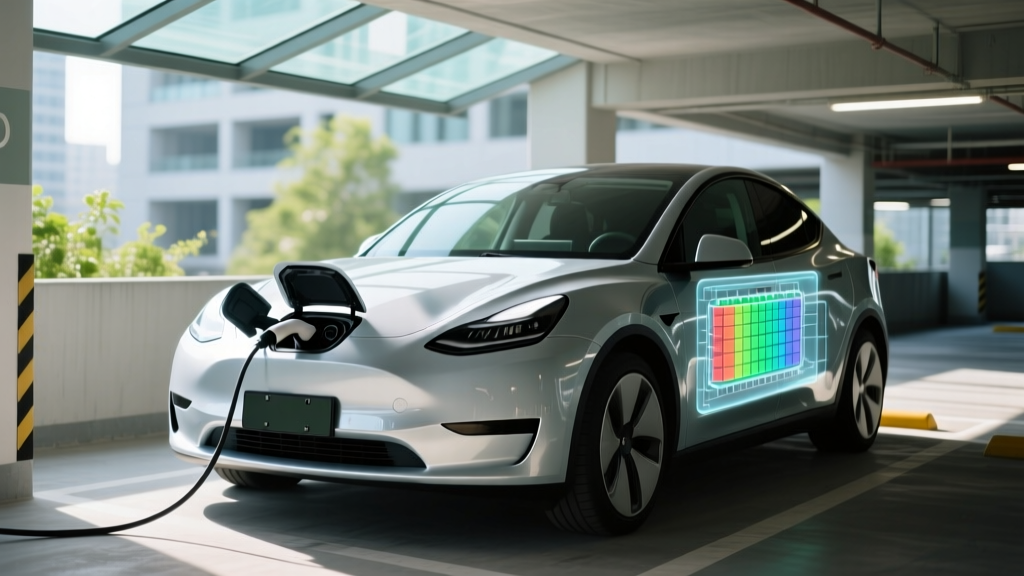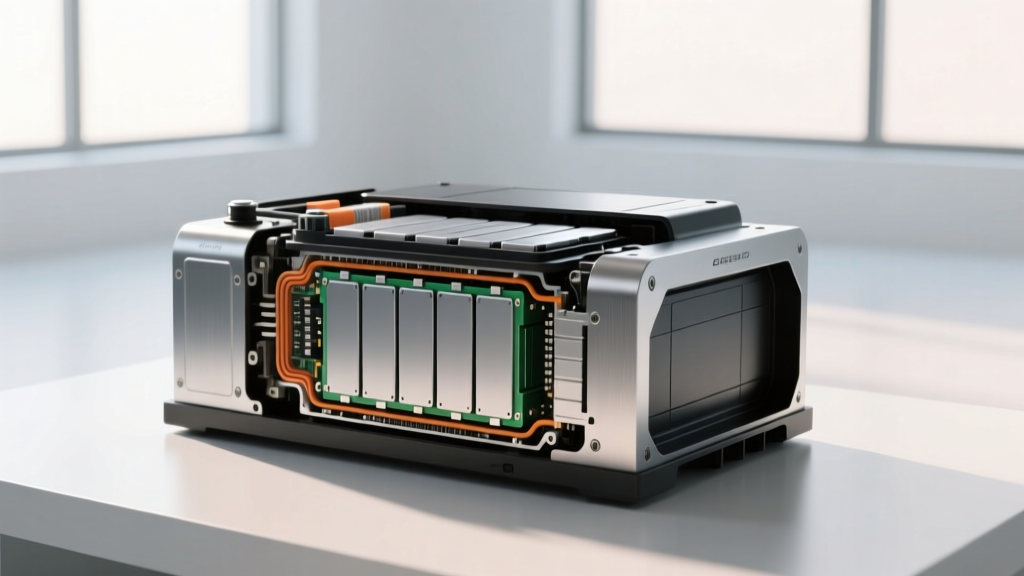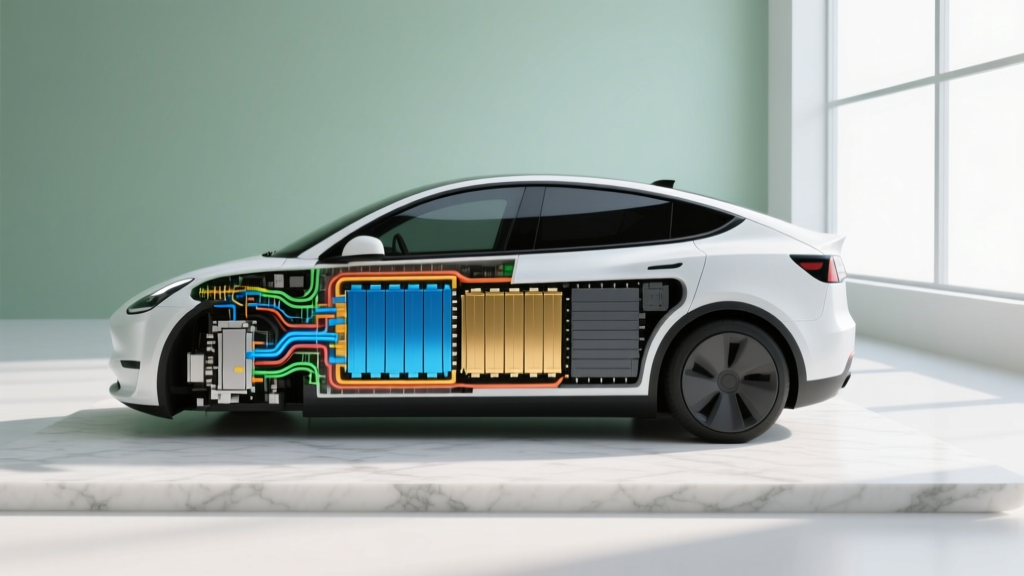
Every electric vehicle lives and dies by one component: the high-voltage traction pack. It's the single most expensive part of the car, the heaviest, and the one buyers worry about most. Yet the core for battery longevity isn't a mystery — it comes down to chemistry selection, thermal management, and daily charging habits. This guide breaks down the exact numbers behind degradation, warranty coverage, replacement economics, and the emerging technologies reshaping the landscape.
LFP vs NMC vs NCA: Choosing the Right Battery Chemistry
Not all lithium-ion cells are built the same. The cathode material determines energy density, cycle life, cost, and cold-weather behavior. In the 2026 model year, three chemistries dominate the US market:
- LFP (Lithium Iron Phosphate): Used in standard-range Tesla Model 3/Y, base Ford Mustang Mach-E Select, and many Chinese-market imports. Lower energy density but exceptional cycle life and thermal stability.
- NMC (Nickel Manganese Cobalt): Found in Hyundai Ioniq 5/6, Kia EV6/EV9, BMW iX, Rivian, and most long-range European/Korean EVs. Balances energy density with longevity.
- NCA (Nickel Cobalt Aluminum): Primarily Tesla's long-range packs and some Panasonic-supplied vehicles. Highest energy density, slightly lower cycle life than LFP.
| Attribute | LFP | NMC | NCA |
|---|---|---|---|
| Energy Density | ~160-180 Wh/kg | ~200-260 Wh/kg | ~250-280 Wh/kg |
| Cycle Life (to 80% SoH) | 3,000-5,000+ | 1,500-2,500 | 1,000-2,000 |
| Cold Performance (-10°C) | Moderate loss (~15-20%) | Better retention (~10-15%) | Good retention (~10-15%) |
| Cost per kWh (pack level) | ~$90-$110 | ~$120-$145 | ~$115-$140 |
| Recommended Daily SoC | 100% (no penalty) | 80-90% for daily | 80-90% for daily |
| Thermal Runaway Risk | Very low | Moderate | Moderate-High |
| Common Vehicles (2026) | Tesla Model 3 RWD, Mach-E Select | Ioniq 5, EV6, iX, Rivian R1T | Tesla Model S/X LR, Model 3 LR |
The trade-off is straightforward: LFP gives you a pack you can charge to 100% every night and forget about, at the cost of range (heavier for the same kWh). NMC/NCA give you more range in a lighter, more compact pack, but require more mindful charging habits. Neither is objectively "better" — the right core for battery selection depends on your driving pattern.
Real-World Degradation: What the Data Actually Shows
Battery degradation follows a nonlinear curve: a steeper drop in the first 1-2 years (typically 2-5%), followed by a long, slow decline. Here's what aggregated fleet data from sources like Recurrent Auto and manufacturer warranty claims reveal:
| Milestone | Typical Capacity Retained (NMC/NCA) | Typical Capacity Retained (LFP) |
|---|---|---|
| Year 1 / 15,000 mi | 95-98% | 97-99% |
| Year 3 / 45,000 mi | 90-94% | 94-97% |
| Year 5 / 75,000 mi | 86-92% | 92-96% |
| Year 8 / 120,000 mi | 80-88% | 88-94% |
| Year 10 / 150,000 mi | 76-85% | 85-92% |
These figures assume mixed driving with a combination of Level 2 home charging and occasional DC fast charging. Vehicles that rely heavily on DC fast charging (3+ times per week) or are routinely parked at 100% SoC in hot climates can see degradation 3-5 percentage points worse than the median.
For context, a 2026 Tesla Model Y Long Range with its 75 kWh usable NCA pack losing 12% over 8 years still delivers roughly 280 miles of EPA range from its original 320 — hardly a crippled vehicle. Most EV batteries outlast the car's body, suspension, and interior.
EV Battery Warranty Coverage: What's Protected
Federal law mandates a minimum 8-year / 100,000-mile warranty on EV battery packs (10 years / 150,000 miles in California Air Resources Board states). Most automakers meet or exceed this baseline:
| Manufacturer | Warranty Period | Capacity Threshold |
|---|---|---|
| Tesla | 8 yr / 120,000 mi (Model S/X: 8/150,000) | 70% retention |
| Hyundai / Kia | 10 yr / 100,000 mi | 70% retention |
| Ford | 8 yr / 100,000 mi | 70% retention |
| BMW | 8 yr / 100,000 mi | 70% retention |
| Rivian | 8 yr / 175,000 mi | 70% retention |
| GM (Ultium) | 8 yr / 100,000 mi | 70% retention |
What triggers a warranty claim? If your pack's State of Health drops below the stated threshold (almost universally 70%) within the warranty window, the manufacturer must repair or replace the pack at no cost. In practice, most claims involve defective modules or BMS (battery management system) faults rather than pure degradation — because normal degradation rarely dips below 70% within 8 years.
Warranty does not cover damage from accidents, flooding, improper modifications, or use outside manufacturer guidelines. It also doesn't cover the 12V auxiliary battery, which is a separate, conventional lead-acid or lithium unit that powers accessories and computers.
EV Battery Replacement Costs: Numbers and Timing
If your pack fails outside warranty, replacement costs depend on pack size, chemistry, and whether the manufacturer offers refurbished or module-level repairs:
| Vehicle Class / Example | Pack Size | Full Replacement Cost (2026) | Module Repair Option |
|---|---|---|---|
| Compact (Chevy Bolt EV, base Model 3) | 60-65 kWh | $8,000 - $12,000 | Rare — mostly full swap |
| Midsize (Model Y LR, Ioniq 5, EV6) | 72-84 kWh | $12,000 - $18,000 | Some OEMs offer module service |
| Large SUV / Truck (F-150 Lightning, Rivian R1T, Hummer EV) | 100-215 kWh | $18,000 - $35,000 | Module repair increasingly common |
| Luxury (Model S, Taycan, iX) | 85-100 kWh | $15,000 - $25,000 | Varies by OEM |
When is replacement actually needed? Almost never during the vehicle's useful life. Data from fueleconomy.gov and fleet operators shows that the vast majority of EV packs retain above 75% capacity at 200,000 miles. Replacement typically becomes relevant only after 15+ years, when the vehicle's residual value is minimal. For most owners, the battery will outlast the car's trade-in cycle.
Factors That Accelerate or Slow Battery Degradation
Not all miles are equal when it comes to pack wear. The core for battery health comes down to managing three stressors:
✅ Habits That Maximize Longevity
- Daily charging to 80% (NMC/NCA) or 100% (LFP): Storing a battery at high SoC accelerates electrolyte decomposition. LFP's flat voltage curve means 100% storage causes minimal stress.
- Level 2 home charging as primary: Slow charging generates less heat. A 7-11 kW Level 2 charger is the ideal daily method.
- Preconditioning before DC fast charging: Warming the pack to 25-35°C before a fast-charge session reduces lithium plating risk. Most EVs do this automatically when you navigate to a charger.
- Avoiding prolonged storage at 0% or 100%: If leaving the car for weeks, aim for 50% SoC.
- Garage parking in extreme climates: Keeping the pack between 15-30°C when parked slows calendar aging.
⚠️ Habits That Accelerate Wear
- Frequent DC fast charging (3+ sessions/week): High C-rates generate internal heat. Tesla's own data shows vehicles that Supercharge >90% of the time see ~2-3% additional degradation over 100k miles vs. primarily L2-charged vehicles.
- Routinely draining below 10%: Deep discharges stress the anode.
- Parking at 100% SoC in hot weather: The combination of high SoC and high ambient temperature is the worst-case scenario for calendar aging.
- Ignoring thermal preconditioning: Plugging into a 150+ kW charger with a cold-soaked pack (below 10°C) forces the BMS to restrict power, which can stress cells unevenly.
Monitoring Your Battery's State of Health (SoH)
State of Health is the percentage of original capacity your pack can still hold. Here's how to track it:
- In-vehicle displays: Tesla shows estimated range at 100% (compare to original EPA). Hyundai/Kia's infotainment includes an EV battery health screen. BMW's iDrive displays a battery health percentage.
- OBD-II diagnostics: Apps like Scan My Tesla, Leaf Spy (Nissan), or ABRP OBD can read the BMS directly for precise SoH, cell voltage variance, and cycle count.
- Third-party services: Recurrent Auto offers a free battery health report by connecting to your vehicle's telematics. Some dealerships can pull a detailed battery health certificate during service visits.
- Manual calculation: Charge to 100%, note the displayed kWh added from a known low SoC, and compare to the pack's original usable capacity. Example: if you add 62 kWh from 10% to 100% on a 75 kWh pack, your SoH is roughly (62 / (75 × 0.9)) = ~92%.
A healthy pack should show cell voltage variance under 20-30 mV at rest. Variance above 50 mV may indicate a weak module, which a dealer can often replace individually rather than swapping the entire pack.
Emerging Battery Technologies: What's Next
Several next-generation technologies are moving from lab to production, though timelines remain fluid:
- Solid-state batteries: Toyota, Samsung SDI, and QuantumScape are targeting limited production in 2027-2029. Promises include 50%+ more energy density, 10-minute fast charging, and improved safety. Reality check: initial deployment will be in low-volume, premium vehicles. Mass-market solid-state is unlikely before 2030.
- Silicon-dominant anodes: Companies like Sila Nanotechnologies and Group14 are replacing graphite anodes with silicon composites, boosting energy density 20-40%. The 2026 Mercedes G-Class EV uses a silicon-anode pack. Expect broader adoption by 2028-2029.
- Sodium-ion batteries: CATL and BYD are producing sodium-ion cells for budget EVs in China. Lower energy density (~140 Wh/kg) but no lithium or cobalt. Potential US market entry in affordable compact EVs by 2028.
- LMFP (Lithium Manganese Iron Phosphate): An evolution of LFP with 15-20% more energy density while retaining LFP's safety and cycle-life advantages. CATL and Gotion are in early production; expect US-market vehicles by 2027-2028.
None of these are available in mainstream 2026 US-market EVs. For buyers shopping today, current LFP and NMC/NCA chemistries are mature, well-understood, and backed by extensive real-world data.
Frequently Asked Questions
How long do EV batteries last in years and miles?
Most modern EV battery packs retain 80%+ capacity at 150,000-200,000 miles and 10-15 years. LFP packs often exceed 90% at 150,000 miles. The pack will typically outlast the vehicle's body and chassis components. According to data from Recurrent Auto, fewer than 2% of EV batteries require replacement due to degradation within the first 10 years.
How much does an EV battery cost to replace?
Full pack replacement ranges from $8,000 for compact EVs to $35,000 for large trucks with 200+ kWh packs. However, most out-of-warranty failures involve individual modules ($1,500-$4,000 per module) rather than full packs. Most owners will never need a replacement during typical ownership.
What does the EV battery warranty actually cover?
Federal law requires 8 years / 100,000 miles (10/150,000 in CARB states). The warranty covers the pack dropping below ~70% capacity, as well as manufacturing defects, BMS failures, and module faults. It does not cover accident damage, flooding, or the 12V auxiliary battery.
How do I check and maximize my battery's health?
Check SoH via your vehicle's infotainment screen, an OBD-II app, or a service-department diagnostic. Maximize longevity by charging primarily on Level 2, limiting DC fast charging to road trips, avoiding storage at extreme SoC levels, and preconditioning the pack before fast charging in cold weather.
LFP vs NMC — which battery chemistry is better for me?
Choose LFP if you want hassle-free daily charging to 100%, plan to keep the car 10+ years, and don't need maximum range. Choose NMC/NCA if you need 300+ miles of range, regularly drive in cold climates, or prioritize a lighter vehicle. Both chemistries will reliably last the life of the car with basic care.
The core for battery confidence isn't marketing — it's understanding your chemistry, monitoring your SoH, and charging smartly. Modern EV packs are engineered to outlast the cars they power, and the data proves it.