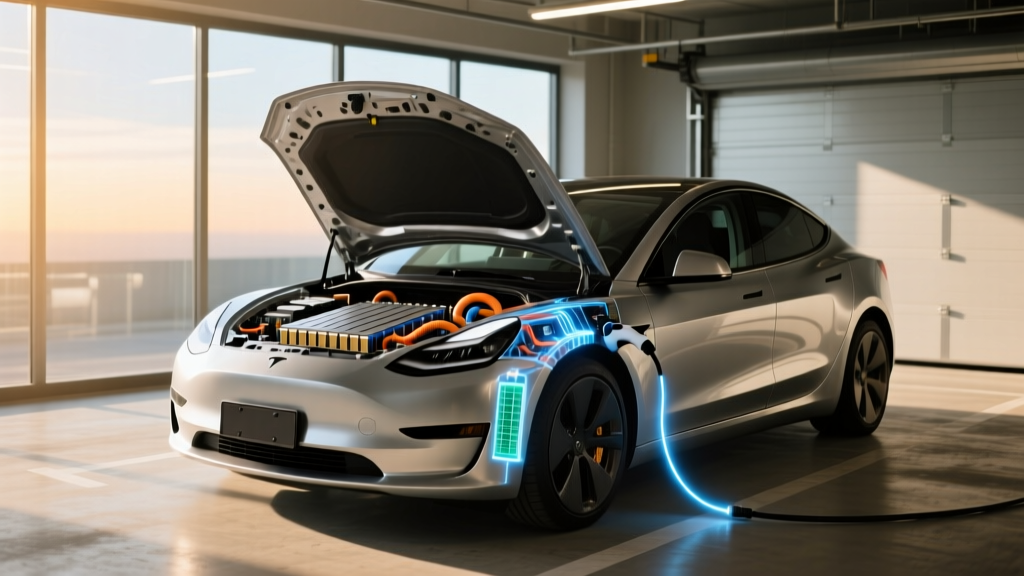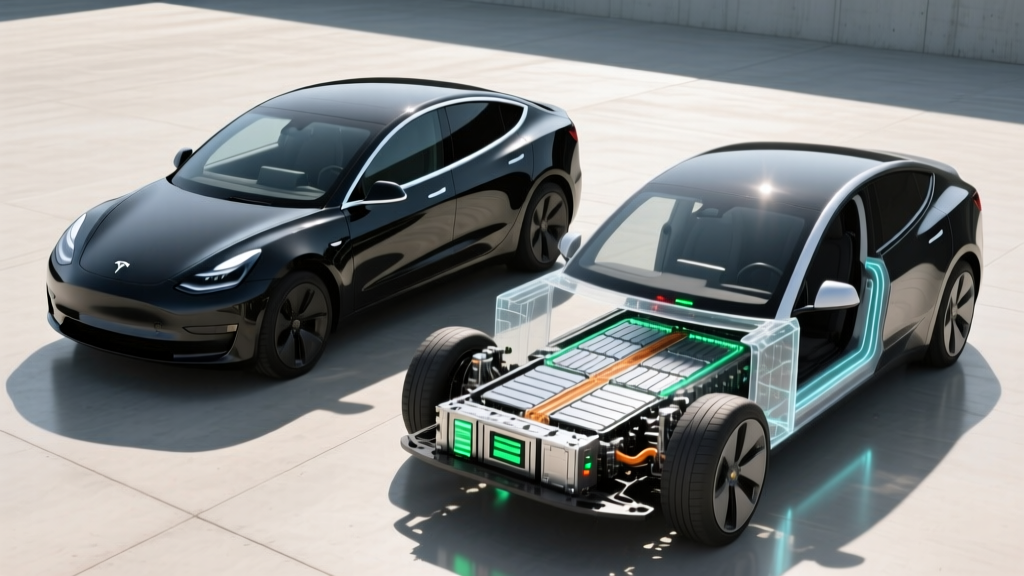
The high-voltage traction battery is the single most expensive component in any electric vehicle — and the companies that manufacture these cells wield enormous influence over your EV's range, charging speed, longevity, and resale value. Yet most buyers focus on the badge on the hood while barely glancing at who built the battery pack underneath the floor.
As of 2026, the global EV battery supply chain is dominated by a handful of cell manufacturers — CATL, BYD, LG Energy Solution, Panasonic, SK On, and Samsung SDI — each with distinct chemistry strategies, energy-density targets, and automaker partnerships. Understanding which company supplies your prospective EV's battery, and what chemistry they use, is one of the most consequential research steps you can take before buying.
This guide breaks down the major EV battery companies, the LFP and NMC/NCA chemistries they produce, real-world degradation data, warranty coverage, replacement costs, and the emerging technologies on the horizon.
The Major EV Battery Companies Supplying Automakers in 2026
The EV battery market is consolidated among a few massive cell producers. Here's who supplies whom, and what chemistries they primarily manufacture:
| Battery Company | Headquarters | Primary Chemistries | Key Automaker Partners (2025–2026) |
|---|---|---|---|
| CATL | China | LFP, NMC, sodium-ion | Tesla (Model 3/Y Standard Range), Ford, BMW, Stellantis, Hyundai |
| BYD (FinDreams) | China | LFP (Blade Battery) | BYD (vertical integration), Tesla (some markets), Toyota |
| LG Energy Solution | South Korea | NMC, NCMA | GM (Ultium), Ford, Hyundai, Stellantis, Volvo/Polestar |
| Panasonic | Japan | NCA, NMC | Tesla (Model 3/Y Long Range, Cybertruck), Toyota |
| SK On | South Korea | NMC, NCA | Ford (F-150 Lightning), Hyundai/Kia (E-GMP platform) |
| Samsung SDI | South Korea | NMC, NCA | BMW, Stellantis, Hyundai, Rivian |
Several automakers are also pursuing vertical integration. Tesla manufactures its own 4680-format cells in-house at its Texas Gigafactory alongside Panasonic-supplied cells. GM co-owns Ultium Cells LLC with LG Energy Solution and Samsung SDI, operating plants in Ohio, Tennessee, and Michigan. BYD is fully vertically integrated — it builds its own LFP Blade cells, packs them, and installs them in its own vehicles.
The trend toward localized production is accelerating, driven partly by the IRS §30D federal tax credit battery-sourcing requirements, which mandate that a growing percentage of critical minerals and battery components originate from the U.S. or free-trade-agreement partners to qualify for the full credit.
LFP vs NMC/NCA: Chemistry Trade-Offs Explained
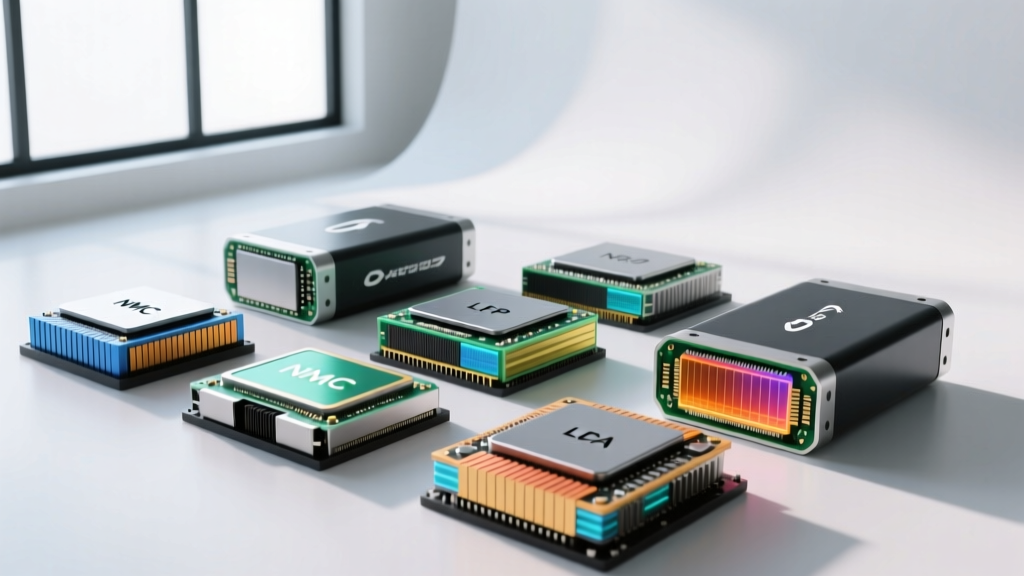
The two dominant lithium-ion chemistries in today's EVs are LFP (lithium iron phosphate) and NMC/NCA (nickel manganese cobalt / nickel cobalt aluminum). Each involves fundamental engineering trade-offs between energy density, cycle life, thermal stability, and cost.
| Attribute | LFP (Lithium Iron Phosphate) | NMC / NCA (Nickel-Based) |
|---|---|---|
| Energy Density | Lower (~160–180 Wh/kg cell-level) | Higher (~230–300 Wh/kg cell-level) |
| Typical EV Range | Shorter for same pack weight/size | Longer range per kWh of pack mass |
| Cycle Life | 3,000–5,000+ cycles to 80% capacity | 1,000–2,000 cycles to 80% capacity |
| Calendar Life | Excellent; slower degradation over time | Good; slightly faster calendar aging |
| Cold-Weather Performance | More range loss in freezing temps (poorer low-temp conductivity) | Better cold-weather range retention |
| Thermal Stability | Superior; higher thermal runaway threshold | Good but requires more active thermal management |
| Cost | Lower (no nickel or cobalt) | Higher (nickel and cobalt commodity exposure) |
| SoC Recommendation | Can charge to 100% daily; BMS calibration benefits | Best kept at 80% daily; 100% for trips only |
| Key Suppliers | CATL, BYD | LG Energy Solution, Panasonic, SK On, Samsung SDI |
The buyer's takeaway: If your daily commute is under 50 miles and you want maximum longevity with minimal babysitting, LFP is the pragmatic choice — charge it to 100%, don't worry about it, and expect slower degradation. If you need maximum range for road trips or live in a cold climate, NMC/NCA delivers more miles per pound and better winter performance, but you'll want to follow the 80% daily charge guideline.
Real-world examples: The 2026 Tesla Model 3 Rear-Wheel Drive uses a ~60 kWh CATL LFP pack and achieves an EPA-estimated 272 miles of range. The Model 3 Long Range AWD uses an NMC-based pack (~82 kWh usable) from Panasonic and achieves an EPA-estimated 363 miles. Same vehicle platform, dramatically different range profiles driven largely by chemistry and pack size.
How Long Do EV Batteries Actually Last? Real Degradation Data
The most persistent fear among prospective EV buyers is that the battery will die prematurely and cost a fortune to replace. The data tells a more reassuring story — but with important caveats.
Typical EV Battery Degradation Curve (Aggregate Industry Data)
| Vehicle Age / Mileage | Average Capacity Retained (NMC/NCA) | Average Capacity Retained (LFP) |
|---|---|---|
| Year 1 / ~12,000 mi | 95–97% | 97–99% |
| Year 2 / ~24,000 mi | 93–95% | 95–97% |
| Year 3 / ~36,000 mi | 91–94% | 94–96% |
| Year 5 / ~60,000 mi | 88–92% | 91–95% |
| Year 8 / ~100,000 mi | 82–88% | 87–93% |
| Year 10 / ~120,000 mi | 78–85% | 84–91% |
Sources: Geotab fleet data (2024), Recurrent Auto battery health reports, manufacturer warranty thresholds. Individual results vary based on climate, charging habits, and thermal management system quality.
Several patterns emerge from this data:
- The steepest degradation occurs in the first year or two — typically 3–5% loss — as the solid electrolyte interphase (SEI) layer forms on the anode. After this initial period, the curve flattens considerably.
- LFP cells degrade more slowly than NMC/NCA cells under equivalent conditions, largely due to the inherent stability of the iron-phosphate cathode structure.
- Most EV batteries outlive their vehicles. A battery retaining 80–85% capacity at 150,000 miles still provides meaningful range. A 300-mile EPA vehicle at 85% capacity still delivers ~255 miles — adequate for the vast majority of daily driving.
- Catastrophic failure (total battery death) is rare. When individual cells or modules fail, they can often be replaced individually rather than swapping the entire pack, depending on the manufacturer's service approach.
According to fueleconomy.gov, modern EV battery packs are engineered to retain at least 70–80% of their original capacity over the warranty period, and real-world fleet data from companies like Geotab confirms that most packs exceed these thresholds comfortably.
What Does the EV Battery Warranty Actually Cover?
Federal law in the United States mandates that EV battery warranties last a minimum of 8 years or 100,000 miles (whichever comes first). In California Air Resources Board (CARB) states — which include California, Colorado, Connecticut, Maine, Maryland, Massachusetts, New Jersey, New York, Oregon, Rhode Island, Vermont, Virginia, and Washington — the mandate extends to 10 years or 150,000 miles.
However, warranty terms vary significantly in what they actually guarantee:
| Automaker (2026 Models) | Battery Warranty Term | Capacity Retention Threshold | Notes |
|---|---|---|---|
| Tesla (Model 3/Y) | 8 yr / 120,000 mi (Long Range, AWD); 8 yr / 100,000 mi (RWD) | 70% | Covers defects + capacity below threshold |
| Hyundai / Kia (E-GMP) | 10 yr / 100,000 mi | 70% | Among the longest terms in the industry |
| GM (Ultium-based) | 8 yr / 100,000 mi | 70% | Covers battery pack + related components |
| Ford (F-150 Lightning, Mach-E) | 8 yr / 100,000 mi | 70% | Module-level repair where possible |
| BMW (iX, i4, i7) | 8 yr / 100,000 mi | 70% | Modular pack design supports cell/module swaps |
| Rivian (R1T, R1S) | 8 yr / 175,000 mi | 70% | Highest mileage threshold among major OEMs |
Critical fine print: The 70% threshold means the manufacturer will only replace or repair the battery if its capacity drops below 70% of its original value during the warranty period. A battery at 71% capacity — while noticeably degraded — does not trigger a warranty claim. Most batteries never reach this threshold within the warranty window, based on current fleet data.
Warranties typically cover manufacturing defects, cell failures, and capacity loss below the stated threshold. They generally do not cover damage from accidents, flooding, improper modifications, or use outside the vehicle's designed parameters.
EV Battery Replacement Cost: What You'd Actually Pay
If your battery does fall below the warranty threshold outside the coverage window — or if it's damaged in an accident — replacement is expensive. But context matters enormously.
| Vehicle / Pack Size | Battery Capacity | Estimated Full Pack Replacement Cost (2025–2026) | Cost per kWh |
|---|---|---|---|
| Tesla Model 3 RWD (LFP) | ~60 kWh | $10,000 – $14,000 | ~$170–$230 |
| Hyundai Ioniq 5 / Kia EV6 | ~77.4 kWh | $14,000 – $18,000 | ~$180–$230 |
| Tesla Model Y Long Range | ~82 kWh | $14,000 – $18,000 | ~$170–$220 |
| Ford F-150 Lightning (Extended Range) | ~131 kWh | $22,000 – $30,000 | ~$170–$230 |
| GMC Hummer EV | ~212 kWh (Dual Layer) | $35,000 – $42,000 | ~$165–$200 |
| Chevrolet Bolt EV/EUV (older platform) | ~65 kWh | $12,000 – $16,000 | ~$185–$245 |
Several important context points:
- Pack-level replacement costs have declined steadily. Battery pack prices fell from roughly $400/kWh in 2015 to an industry average of approximately $130–$180/kWh at the cell level in 2025, though installed-pack costs (including labor, BMS, cooling systems, and dealer markup) remain higher at the consumer level.
- Module-level repair is increasingly common. Many modern packs — particularly those from GM (Ultium), BMW, and Hyundai — are designed with modular architectures. If a subset of cells fails, a technician can replace individual modules rather than the entire pack, reducing costs to $2,000–$6,000 in many cases.
- Full replacements are rare. Based on fleet data, fewer than 1–2% of EV batteries require full replacement due to degradation alone within the first 10 years. Most replacements result from collision damage or manufacturing defects covered under warranty.
- Aftermarket and refurbished packs are emerging. Third-party companies are beginning to offer remanufactured packs at 30–50% lower cost than OEM replacements, though availability remains limited as of 2026.
Factors That Accelerate (or Preserve) Battery Health
Not all EV batteries age equally. The same pack in two different vehicles — driven by two different owners in two different climates — can show dramatically different degradation curves. Here's what actually matters:
Factors That Accelerate Degradation
- Frequent DC fast charging above 150 kW: High-power DC charging generates significant heat inside the cells. Occasional fast charging is fine — the battery management system (BMS) and thermal conditioning handle it — but daily reliance on 250–350 kW chargers without preconditioning accelerates SEI growth and lithium plating.
- Sustained high State of Charge (NMC/NCA only): Storing an NMC battery at 100% SoC for extended periods stresses the cathode. LFP batteries tolerate 100% SoC far better and actually benefit from periodic full charges for BMS cell-balancing calibration.
- Extreme heat exposure: Ambient temperatures above 95°F (35°C) — particularly when combined with high SoC — accelerate calendar aging. Vehicles parked outdoors in Phoenix or Miami without thermal management active will degrade faster than garage-kept counterparts.
- Deep discharge cycles: Regularly driving below 10% SoC stresses the anode. The BMS maintains a bottom buffer (typically 2–5 kWh that's inaccessible to the driver), but habitually arriving at 0% displayed is still suboptimal.
- Aggressive driving and high-current discharge: Repeated hard acceleration and high-speed sustained driving draw high current from the pack, generating internal heat.
Habits That Maximize Battery Longevity
- Charge primarily at home on Level 2 (7–11 kW): Slower charging generates far less heat and is gentler on cell chemistry over thousands of cycles.
- Set daily charge limit to 80% (NMC/NCA) or 100% (LFP): Follow your manufacturer's specific guidance — Tesla recommends 100% for LFP Model 3 RWD, but 80% for Long Range models.
- Use preconditioning before DC fast charging: Most modern EVs (Tesla, Hyundai E-GMP, GM Ultium, BMW) automatically precondition the battery when you navigate to a charger via the built-in nav. This brings the pack to optimal temperature (~95–104°F / 35–40°C) for faster, healthier charging.
- Park in shade or a garage in hot climates: Reducing thermal soak when parked makes a measurable difference in calendar aging over years.
- Keep the vehicle plugged in when possible: This allows the thermal management system to maintain optimal pack temperature using grid power rather than battery energy.
How to Check Your EV's Battery State of Health (SoH)
State of Health (SoH) is the metric that tells you what percentage of the battery's original capacity remains usable. Monitoring it over time gives you an early warning of abnormal degradation and documentation for warranty claims.
In-vehicle methods:
- Tesla: The Service menu (accessed via the touchscreen) displays battery health information. Tesla also provides a Battery Health Test that can be initiated from the service screen.
- Hyundai/Kia: The EV-specific menu in the instrument cluster or infotainment system shows battery state information. The Bluelink/Kia Connect app also provides battery health summaries.
- GM (Ultium vehicles): The myChevrolet/myCadillac app includes a battery health indicator, and dealers can pull detailed diagnostics.
- BMW: The iDrive system and My BMW app provide battery condition reports. BMW also offers a certified Battery Health Certificate for resale.
OBD-II diagnostic tools and third-party apps:
- Devices like the OBDLink MX+ paired with apps such as EV Health or Car Scanner can read the BMS-reported SoH percentage directly from the CAN bus on most EVs.
- Recurrent Auto (now part of Cox Automotive) offers a free battery health report based on connected-car data for participating vehicles.
- Some dealerships can print a full battery health certificate showing per-module voltage deviation and total capacity — valuable documentation for private-party sales.
What constitutes a concern: If your SoH drops more than ~3% per year after the initial break-in period, or if individual module voltage deviation exceeds 200 mV, it's worth scheduling a dealer diagnostic. These can be early indicators of a failing cell or module that may be covered under warranty.
Emerging Battery Technology: Solid-State and Beyond
Several next-generation battery technologies are in active development, though none are yet available in production consumer EVs as of 2026:
Solid-state batteries: These replace the liquid electrolyte with a solid ceramic, polymer, or sulfide-based material, promising higher energy density (potentially 400–500 Wh/kg at the cell level), faster charging, and improved safety due to the elimination of flammable liquid electrolyte. Toyota has announced a solid-state battery target for limited production in 2027–2028, while Samsung SDI has begun pilot-line production of all-solid-state cells. QuantumScape (backed by Volkswagen) continues to validate its solid-state cells with OEM partners.
Silicon-dominant anodes: Replacing graphite anodes with silicon can theoretically increase energy density by 20–40%. Companies like Sila Nanotechnologies (partnered with Mercedes-Benz for the upcoming G-Class EV) and Group14 (partnered with Porsche) are bringing silicon-carbon composite anodes to production vehicles, with initial deployments expected in 2026–2027 models.
Sodium-ion batteries: CATL has begun mass-producing sodium-ion cells, which use abundant sodium instead of lithium. Energy density is lower (~120–160 Wh/kg), making them best suited for budget city EVs and energy storage. They're appearing in Chinese-market vehicles from BYD and Chery, with potential U.S. market entry pending cost and supply-chain development.
Realistic timeline: Expect solid-state batteries to appear in limited, premium vehicles by 2028–2030, with meaningful volume production and cost parity with current lithium-ion likely not arriving until the early 2030s. Silicon anode technology will arrive sooner, incrementally improving existing lithium-ion cells rather than replacing them entirely.
Frequently Asked Questions
How long do EV batteries last in years and miles?
Based on fleet data from Geotab, Recurrent, and manufacturer reports, most modern EV batteries retain 80–90% of their original capacity at 100,000 miles and 8 years of age. Many packs are projected to remain functional (above 70% capacity) for 200,000+ miles or 15+ years. Catastrophic failure is rare — fewer than 1–2% of packs require full replacement due to degradation within the first decade.
How much does an EV battery cost to replace in 2026?
Full pack replacement costs range from approximately $10,000 for a ~60 kWh pack (e.g., Tesla Model 3 RWD) to $35,000–$42,000 for a ~212 kWh pack (e.g., GMC Hummer EV). However, module-level repairs — increasingly common on modular platforms like GM Ultium and BMW — can cost $2,000–$6,000. Most batteries never require replacement within the warranty period, and the vast majority outlive the vehicle itself.
What does the EV battery warranty cover?
Federal law mandates a minimum of 8 years / 100,000 miles (10 years / 150,000 miles in CARB states). Coverage includes manufacturing defects, cell/module failures, and capacity loss below a specified threshold — typically 70% of original capacity. Warranties generally exclude accident damage, improper modifications, and environmental damage. Check your specific manufacturer's warranty document for exact terms.
How do I check and maximize my EV's battery health?
Check SoH through your vehicle's built-in diagnostics menu, the manufacturer's connected-car app, or an OBD-II scanner paired with an EV-specific app. To maximize longevity: charge primarily on Level 2, set daily limits to 80% (NMC/NCA) or 100% (LFP), use preconditioning before DC fast charging, avoid prolonged exposure to extreme heat, and keep the vehicle plugged in when possible to enable thermal management.
LFP vs NMC — which battery chemistry is better for me?
Neither is universally better — it depends on your use case. Choose LFP if you want maximum cycle life, lower cost, the ability to charge to 100% daily, and your range needs are moderate (under ~270 miles EPA). Choose NMC/NCA if you need maximum range (300+ miles), better cold-weather performance, or regularly take long road trips. LFP is the longevity champion; NMC/NCA is the range and performance champion.
Which EV battery companies are most reliable?
All major suppliers — CATL, BYD, LG Energy Solution, Panasonic, SK On, and Samsung SDI — produce cells that meet or exceed OEM warranty thresholds in fleet data. Panasonic and CATL have the longest track records in high-volume production. LG Energy Solution faced quality issues with certain GM Bolt battery lots in 2021–2022 (leading to a recall), but subsequent manufacturing process changes have addressed those root causes. Reliability is ultimately more dependent on pack design, thermal management, and owner habits than on cell brand alone.
Understanding the companies behind your EV's battery — and the chemistry, degradation patterns, and care requirements that come with their products — is one of the highest-leverage things you can do as an EV buyer or owner. The battery isn't just a component; it's the heart of the vehicle's value proposition for the next decade or more.