First Things First: Can You Eat an EV Battery?
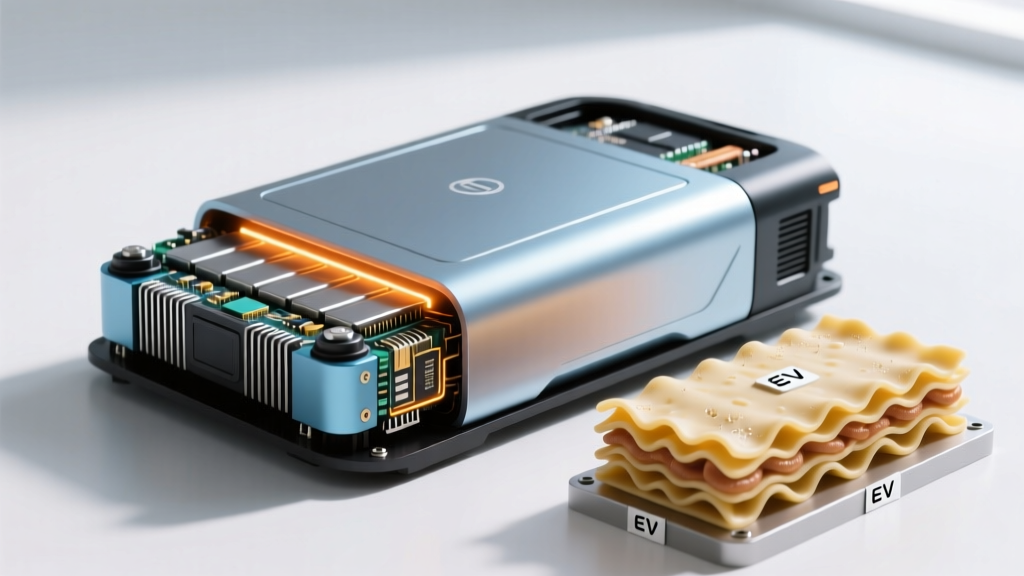
If you've stumbled across the search "lasagna battery safe to eat" and ended up here, let's clear this up immediately: no lithium-ion EV battery is safe to eat, touch directly, or repurpose as a kitchen item. The term "lasagna battery" is an internet meme referencing a viral science-experiment video where layered metallic materials (resembling lasagna sheets) generate a small voltage through galvanic reaction. It has nothing to do with food, and nothing to do with the high-voltage traction batteries in electric vehicles.
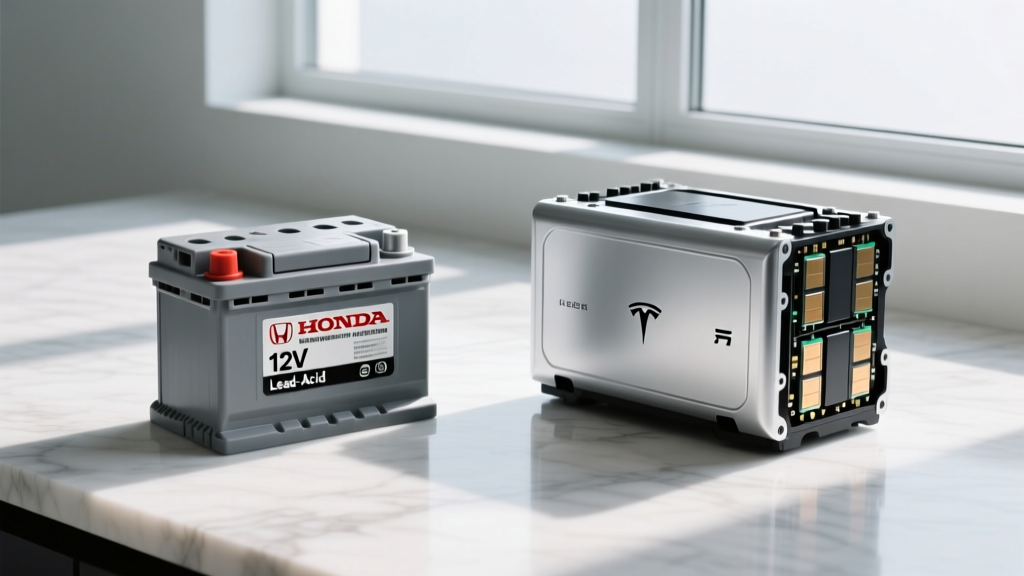
What is safe — and what we'll actually cover here — is understanding the real chemistry inside your EV's battery pack. Whether you're shopping for a 2026 Tesla Model 3 with an LFP pack or a Hyundai Ioniq 5 with NMC cells, knowing what's under the floor determines your range, charging habits, longevity, and eventual replacement cost. Let's dig into the data.
LFP vs NMC/NCA: The Two Battery Chemistries Powering 2026 EVs
Nearly every EV sold in the US today uses one of two lithium-ion chemistries: LFP (Lithium Iron Phosphate) or NMC/NCA (Nickel Manganese Cobalt / Nickel Cobalt Aluminum). Each has distinct trade-offs in energy density, lifespan, cold-weather performance, and cost.
| Attribute | LFP (Lithium Iron Phosphate) | NMC / NCA |
|---|---|---|
| Energy Density | Lower (~160–180 Wh/kg cell-level) | Higher (~220–260 Wh/kg cell-level) |
| Cycle Life | 3,000–5,000+ cycles to 80% SoH | 1,000–2,000 cycles to 80% SoH |
| Cold-Weather Performance | Weaker; ~25–35% range loss below 32°F | Better; ~15–25% range loss below 32°F |
| Recommended Daily SoC | 100% (regular full charges are fine) | 80% daily; 100% only for trips |
| Thermal Stability / Safety | Excellent; higher thermal runaway threshold | Good; requires more active thermal management |
| Cost (2026 pack-level) | ~$90–110/kWh | ~$120–145/kWh |
| Notable 2026 US Vehicles | Tesla Model 3 RWD, Model Y RWD, Ford Mustang Mach-E Select (LFP option) | Hyundai Ioniq 5, Kia EV6, Chevrolet Equinox EV, BMW iX, Rivian R1S |
The bottom line: LFP is cheaper, lasts longer in cycles, and tolerates 100% SoC daily — but it's heavier and suffers more in cold climates. NMC gives you more range per pound and better winter efficiency, but you should avoid parking at 100% SoC for extended periods. If you live in Phoenix and charge at home every night, LFP is arguably the better long-term ownership choice. If you're in Minnesota and need every mile of EPA range in January, NMC is your pick.
How Long Do EV Batteries Actually Last?
The short answer: most EV batteries outlast the cars they're installed in. Data from fleet operators, manufacturer reports, and independent testing consistently shows modern lithium-ion packs losing roughly 10–15% capacity over the first 100,000 miles, with degradation slowing significantly after the initial break-in period.
Typical Degradation Curve (NMC & LFP, Combined Fleet Data)
- Year 1 / 15,000 mi: ~2–4% capacity loss (initial drop)
- Year 3 / 45,000 mi: ~6–9% total loss
- Year 5 / 75,000 mi: ~8–12% total loss
- Year 8 / 120,000 mi: ~12–17% total loss
- Year 10 / 150,000 mi: ~15–20% total loss (LFP often lower)
Source: Geotab fleet battery health study, aggregated across 10,000+ EVs.
Real-world examples support this. Tesla's 2025 Impact Report noted their Model 3/S fleets retain an average of ~88% capacity at 150,000 miles. Hyundai's Ioniq 5 owners report roughly 90% State of Health (SoH) at 60,000 miles in temperate climates. These numbers represent usable capacity — meaning a 77.4 kWh Ioniq 5 battery (EPA 303 mi) might deliver ~270 mi at 60K miles. Still very functional.
What Does the Battery Warranty Actually Cover?
Federal law mandates that all EV manufacturers provide a minimum 8-year / 100,000-mile battery warranty (10 years / 150,000 miles in California and states adopting CARB standards). Here's how major 2026 warranties break down:
| Manufacturer | Warranty Term | Capacity Retention Threshold | Notes |
|---|---|---|---|
| Tesla (Model 3/Y RWD, LFP) | 8 yr / 100,000 mi | 70% | Standard for RWD; Long Range gets 8yr/120K |
| Hyundai / Kia | 10 yr / 100,000 mi | 70% | Among the longest terms in the US market |
| Ford (Mach-E, F-150 Lightning) | 8 yr / 100,000 mi | 70% | Covers battery and high-voltage components |
| General Motors (Equinox EV, Blazer EV) | 8 yr / 100,000 mi | 70% (estimated, varies by model) | Ultium platform; covers modules and management system |
| Rivian (R1S / R1T) | 8 yr / 175,000 mi | 70% | Higher mileage cap reflects adventure-use positioning |
The critical detail: warranty replacement is triggered only when capacity drops below the stated threshold (typically 70%). A battery at 72% SoH is not warrantable, even if you've noticed meaningful range reduction. Most manufacturers will replace individual modules rather than the entire pack, minimizing cost and downtime. Per fueleconomy.gov, modern EV battery packs rarely require full replacement under normal ownership conditions.
How Much Does an EV Battery Cost to Replace?
This is the question that drives the most anxiety — and the most misinformation. Here are realistic 2026 out-of-warranty replacement costs based on pack size, chemistry, and manufacturer pricing:
| Vehicle (2026 MY) | Pack Size / Chemistry | Estimated Full-Pack Cost | Module-Level Repair |
|---|---|---|---|
| Tesla Model 3 RWD | ~60 kWh / LFP | $10,000 – $13,000 | $2,500 – $5,000 |
| Hyundai Ioniq 5 | 77.4 kWh / NMC | $14,000 – $18,000 | $3,000 – $6,000 |
| Ford F-150 Lightning (Extended Range) | ~131 kWh / NMC | $22,000 – $28,000 | $4,000 – $9,000 |
| Chevrolet Equinox EV | ~85 kWh / NMC (Ultium) | $13,000 – $17,000 | $3,000 – $5,500 |
| Rivian R1S (Max Pack) | ~149 kWh / NMC | $25,000 – $32,000 | $5,000 – $10,000 |
Context that matters: Battery replacement is rarely needed before 200,000+ miles in modern EVs. Most packs are designed for the vehicle's structural lifetime. Module-level repairs — replacing a single degraded cell group rather than the full pack — are increasingly common and dramatically cheaper. Pack costs have dropped roughly 14% since 2023 and continue declining as manufacturing scales.
Five Factors That Actually Kill Your Battery (and Five That Don't)
Separating internet myths from electrochemistry facts is critical for long-term ownership. Here's what the data shows:
What genuinely accelerates degradation:
- Exclusive DC fast charging: Daily 150+ kW sessions generate sustained heat, accelerating electrolyte breakdown. Fleets using >80% DCFC show ~3–5% additional loss over 100K miles vs. L2-dominated charging.
- Parking at 100% SoC in heat: High voltage + high ambient temperature is the worst combination for NMC cells. A week at 100% SoC in 95°F Phoenix summer does measurable damage.
- Deep discharge (below 5%): Letting the battery sit near 0% for extended periods stresses cell chemistry and can cause copper dissolution in the anode.
- Extreme cold fast charging without preconditioning: Charging a frozen NMC pack at high kW without warming it first can cause lithium plating — permanent capacity loss.
- Ignoring thermal management faults: If your EV's cooling system has a leak or pump failure, continued driving/cooking the pack is genuinely harmful.
What does NOT significantly harm your battery:
- Occasional 100% charges (NMC): Charging to 100% before a road trip, then driving away within a few hours, is perfectly fine.
- L2 home charging every night: Slow 7–11 kW charging generates minimal heat and is actually ideal for battery longevity.
- Regenerative braking: The charge pulses from regen are well within cell tolerance and don't meaningfully affect lifespan.
- Driving in cold weather: Range drops are temporary, not permanent degradation. Capacity returns when temperatures normalize.
- Using third-party chargers: As long as the charger follows proper CCS/NACS communication protocols, the brand doesn't matter.
How to Check and Monitor Your Battery's State of Health
State of Health (SoH) is the percentage of original capacity your pack currently holds. A new EV has 100% SoH; a pack at 85% SoH delivers 85% of its original range. Here's how to monitor it in 2026:
- In-vehicle diagnostics: Tesla, Hyundai/Kia, BMW, and Rivian now include SoH readouts in the service or battery menu. Tesla's is accessible via the "Service" menu → "Battery Health."
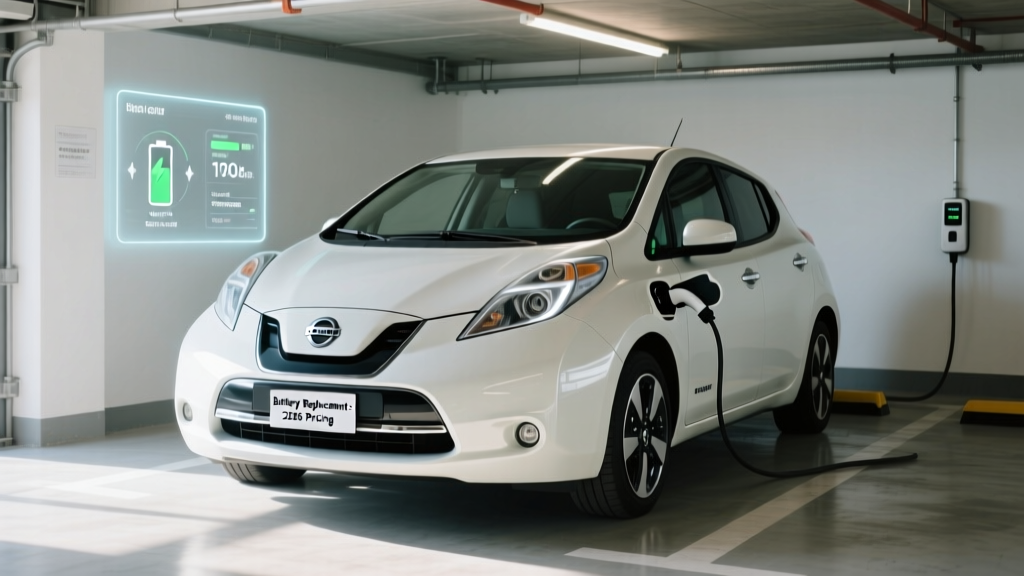
- OBD-II dongles + apps: Tools like OBDLink MX+ paired with apps such as EV Health or LeafSpy (Nissan-specific) can pull SoH from the BMS (Battery Management System) on most EVs.
- Dealer diagnostic reports: Request a battery health printout during any service visit. Dealerships can pull detailed cell-balance data showing individual module voltage spread.
- Manual estimation: Charge to 100%, note the displayed range, and compare to the original EPA sticker. A 303-mi Ioniq 5 showing 270 mi at full charge suggests ~89% SoH (accounting for temperature and driving-style variance).
For buyers evaluating a used EV, always request the SoH reading before purchase. A 2022 Model 3 at 92% SoH with 40,000 miles is in excellent shape; one at 83% SoH warrants investigation into its charging history.
What's Next: Solid-State, Silicon Anode, and Beyond
Emerging battery technologies are frequently hyped, so let's ground expectations in realistic timelines as of 2026:
- Silicon-dominant anodes: Already in limited production (GM's Ultium uses a silicon-blend anode). Expect broader adoption by 2028–2029, offering ~10–20% energy density improvement over graphite.
- Semi-solid-state: Companies like QuantumScape and Samsung SDI have demonstrated prototype cells, but mass automotive production remains announced for 2028–2030 — not available in any 2026 production vehicle.
- Full solid-state: Toyota has announced a 2027–2028 target for limited production, but this remains preliminary. Expect real-world availability in US-market vehicles no earlier than 2030.
- Sodium-ion: CATL has begun mass production for Chinese-market vehicles. US adoption is possible by 2028 for budget segments, trading energy density for lower cost and better cold performance than LFP.
None of these technologies should delay a 2026 EV purchase. Today's LFP and NMC packs are mature, well-warranted, and demonstrably lasting 150,000–200,000+ miles with proper care. The next-generation chemistries will be incremental improvements, not overnight revolutions.
Frequently Asked Questions
Is a "lasagna battery" safe to eat or handle?
No. The "lasagna battery" is a viral internet experiment involving layered metals generating trace voltage through galvanic reaction. It has no connection to food safety or EV technology. No component of a lithium-ion EV battery — cathode, anode, electrolyte, or separator — is safe to ingest or handle without proper PPE and training.
How long do EV batteries last in years and miles?
Most modern EV batteries retain 80–88% capacity at 150,000 miles (roughly 10–12 years of average driving). LFP chemistries often exceed this. Full replacement before 200,000 miles is uncommon under normal use.
How much does an EV battery cost to replace?
Full-pack replacement ranges from ~$10,000 (smaller LFP packs) to ~$32,000 (large NMC packs like the Rivian Max Pack) out of warranty. Module-level repairs cost $2,500–$10,000. Most owners never need either within typical ownership periods.
What does the battery warranty cover?
Federal minimum is 8 years / 100,000 miles (10yr/150K in CARB states), guaranteeing at least 70% capacity retention. Coverage includes cells, modules, and the battery management system. Cosmetic issues and 12V auxiliary batteries are excluded.
LFP vs NMC — which is better and why?
Neither is universally better. LFP wins on cycle life, safety, cost, and tolerance for daily 100% charging — ideal for warm-climate commuters with home charging. NMC wins on energy density, cold-weather range retention, and fast-charge acceptance — ideal for long-range needs and northern climates.
How do I maximize my EV battery's lifespan?
For NMC: charge to 80% daily, precondition before DC fast charging, avoid parking at 100% SoC in heat. For LFP: charge to 100% regularly (it helps cell balancing), but still avoid extreme heat exposure at full charge. For both: use L2 home charging as your primary method, and never let the pack sit below 5% for extended periods.