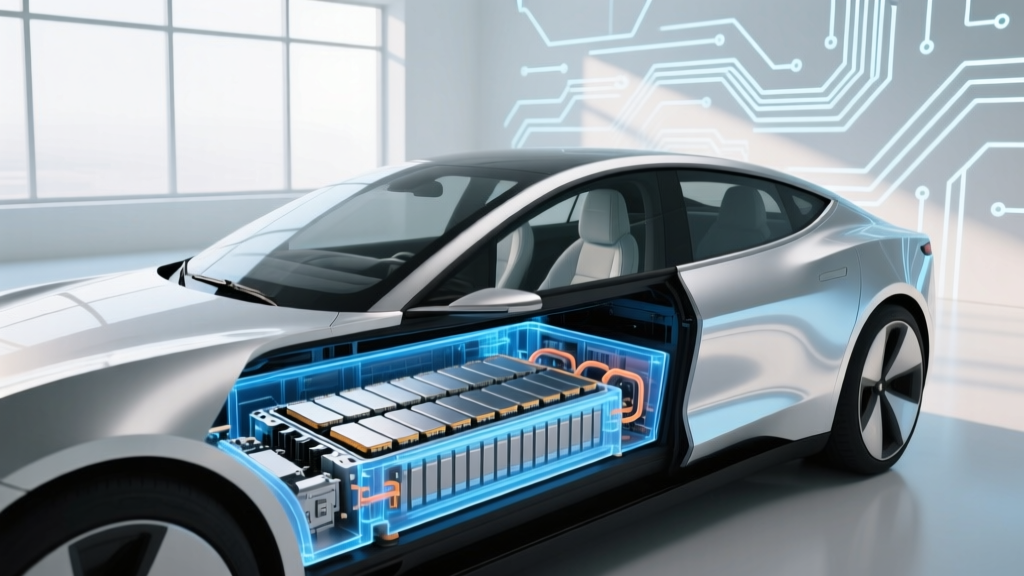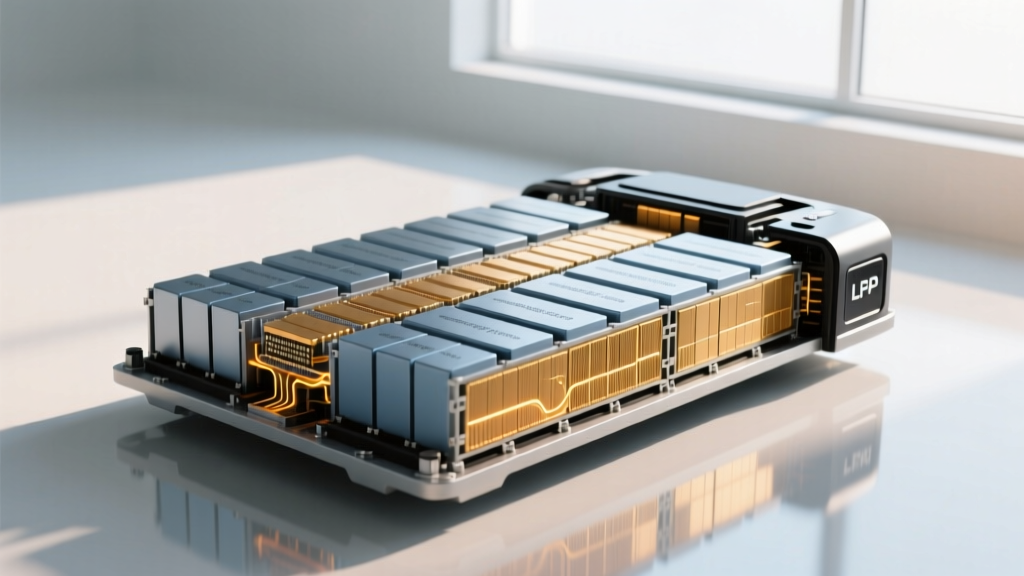
If you've ever wondered what is the battery made of in a modern electric vehicle, the answer goes far beyond "lithium." Today's EV traction batteries are complex electrochemical systems built from specific cathode chemistries, anode materials, electrolytes, and thermal-management hardware — and the exact recipe dramatically affects your vehicle's range, charging speed, longevity, and price.
This guide breaks down the materials inside the high-voltage traction battery (not the small 12V auxiliary battery that runs your lights and infotainment), compares the two dominant chemistries on the market in 2026, and gives you real degradation data, warranty details, and replacement cost figures so you can buy and own an EV with confidence.
Inside the Pack: What EV Batteries Are Actually Made Of
Every EV traction battery is a lithium-ion cell pack composed of four core components:
- Cathode (positive electrode): This is where the chemistry name comes from. It's typically a lithium-metal-oxide compound — either lithium iron phosphate (LFP) or a nickel-manganese-cobalt (NMC) / nickel-cobalt-aluminum (NCA) blend. The cathode determines energy density, cycle life, and thermal stability.
- Anode (negative electrode): Almost universally graphite in current production EVs, though silicon-blend anodes are entering limited production. The anode stores lithium ions during charging.
- Electrolyte: A liquid lithium-salt solution that shuttles ions between cathode and anode. It's flammable in conventional cells, which is why thermal management is critical.
- Separator: A microporous polymer membrane that keeps the cathode and anode from touching (which would cause a short circuit) while allowing ions to pass through.
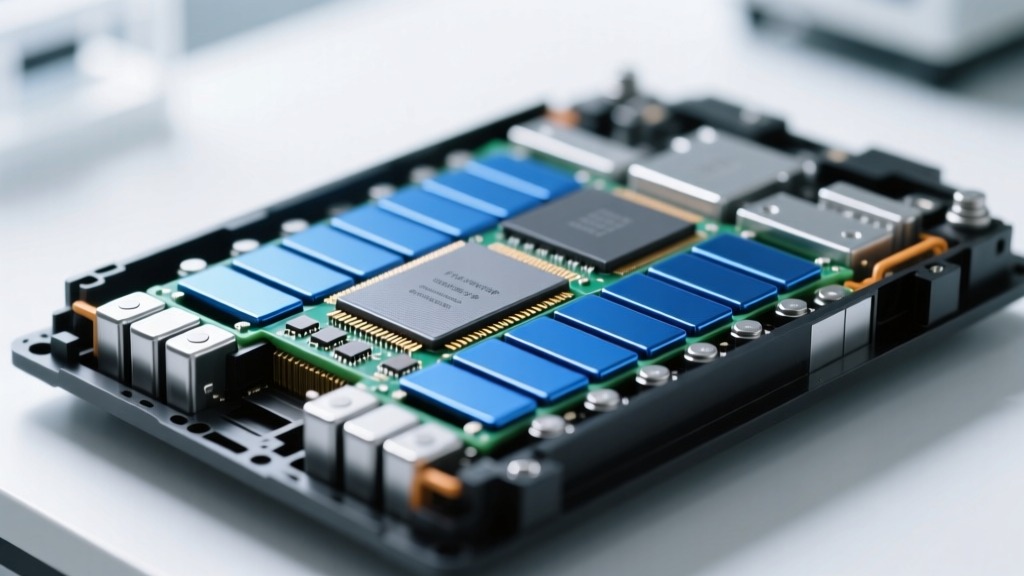
These cells — typically pouch, cylindrical (like Tesla's 4680), or prismatic formats — are wired in series and parallel into modules, then integrated into a pack with a battery management system (BMS), liquid cooling/heating loops, and structural housing. A typical EV pack contains between 3,000 and 9,000 individual cells depending on the format and vehicle.
| Attribute | LFP (Lithium Iron Phosphate) | NMC / NCA (Nickel-based) |
|---|---|---|
| Energy Density (cell-level) | ~160–180 Wh/kg | ~220–300 Wh/kg |
| Typical Cycle Life | 3,000–5,000+ cycles | 1,000–2,000 cycles |
| Cold-Weather Performance | Weaker — greater range loss below freezing | Better low-temperature discharge |
| Thermal Stability / Safety | Excellent — higher thermal runaway threshold | Good, but requires more active management |
| Cobalt Content | Zero | Varies (NCA low, NMC moderate) |
| Cost per kWh (pack-level) | ~$95–$115 | ~$120–$145 |
| Recommended Daily Charge Limit | 100% SoC is fine | 80% SoC for daily use |
| Common In 2026 Models | Tesla Model 3/Y RWD, Ford Mustang Mach-E Select (LFP option), BYD, Rivian Standard | Tesla Long Range/Performance, Hyundai Ioniq 5/6, BMW iX, VW ID.4, most luxury EVs |
LFP vs. NMC: Which Battery Chemistry Is Better for You?
Neither chemistry is universally "better" — the right choice depends on how you drive, where you live, and what you prioritize.
Choose LFP if: You want maximum cycle life, lower cost, and plan to keep the vehicle well past 150,000 miles. LFP's ability to be charged to 100% daily without accelerated degradation makes it practical for commuters who need the full range every day. The trade-off is lower energy density (meaning a heavier or smaller pack for a given range) and reduced cold-weather performance — expect 25–35% range loss in sub-freezing temperatures versus 15–25% for NMC.
Choose NMC/NCA if: You prioritize maximum range per charge, faster DC fast-charging speeds in cold weather, or need the lightest possible pack (important for performance vehicles and long-range road trippers). NMC packs do prefer to sit at 80% SoC for daily use, so you'll want to set a charge limit and only go to 100% before long trips. Most 300+ mile EPA-rated EVs use NMC or NCA.
A practical note: Tesla's standard-range Model 3 and Model Y (RWD trims) use LFP, while Long Range and Performance variants use NCA/NMC. Rivian introduced LFP packs in its Standard battery R1S and R1T in 2025. Ford offers LFP in base Mach-E trims. Always check the specific trim's chemistry before purchase — it's not always listed prominently, but the EPA fueleconomy.gov database and manufacturer spec sheets note it.
How Long Do EV Batteries Actually Last?
The short answer: most EV batteries will outlast the vehicle they're installed in. The fear of needing a $20,000 replacement at 80,000 miles is not supported by fleet data.
Real-world degradation data points (sourced from fleet studies and owner reporting through 2025–2026):
- Geotab fleet study (2024 update, 10,000+ EVs): Average capacity loss of ~1.8% per year across all chemistries, with most vehicles retaining 88–92% State of Health (SoH) at 5 years / 75,000 miles.
- Tesla Impact Report (2024): Model 3/Y packs retain approximately 85% capacity at 200,000 miles. LFP packs in the fleet showed slightly slower degradation curves in the first 50,000 miles.
- Recurrent Auto data (2025): Analyzed 15,000+ vehicles; found median degradation of ~12% at 100,000 miles for NMC packs, ~9% for LFP. Degradation is non-linear — steeper in the first 10,000–20,000 miles, then flattening significantly.
- Taxi/rideshare high-mileage examples: Multiple Tesla Model 3 and Hyundai Kona Electric fleet vehicles have passed 200,000–300,000 miles on original packs with 75–82% SoH.
Translation: if you buy a new EV today and drive the US average of ~13,500 miles per year, you can reasonably expect the battery to retain 85–92% of its original capacity after 8 years. The pack doesn't "die" at a certain mileage — it gradually holds less energy, which means less range. A 300-mile EPA vehicle at 85% SoH still gives you 255 miles, which is still highly usable for most drivers.
Battery Warranty Coverage: What's Protected and for How Long
Federal law mandates that EV batteries carry a minimum warranty of 8 years or 100,000 miles (whichever comes first). In California and states that follow CARB emissions rules (known as CARB states), that extends to 10 years or 150,000 miles. Most manufacturers exceed the minimum.
| Manufacturer / Model | Warranty Period | Mileage Limit | Capacity Threshold |
|---|---|---|---|
| Tesla Model 3/Y (all trims) | 8 years | 100,000–120,000 mi (trim-dependent) | 70% retention |
| Hyundai Ioniq 5 / Ioniq 6 | 10 years | 100,000 mi | 70% retention |
| Ford Mustang Mach-E / F-150 Lightning | 8 years | 100,000 mi | 70% retention |
| BMW i4 / iX | 8 years | 100,000 mi | 70% retention |
| Rivian R1T / R1S | 8 years | 175,000 mi | 70% retention |
| Volkswagen ID.4 | 8 years | 100,000 mi | 70% retention |
| Chevrolet Equinox EV / Blazer EV | 8 years | 100,000 mi | 60% retention (some trims 70%) |
What triggers a warranty claim? If your battery's State of Health drops below the stated threshold (usually 70% of original capacity) within the warranty period, the manufacturer will repair or replace the pack — typically with a new or remanufactured unit — at no cost to you. Note that the warranty covers capacity degradation, not range complaints caused by driving style, extreme weather, or tire changes.
Also important: the warranty covers the traction battery only. The 12V auxiliary battery (which powers electronics when the car is off) has a separate, shorter warranty — usually 3 years / 36,000 miles — and is a standard consumable item, just like in a gas car.
EV Battery Replacement Cost: When and How Much
Full battery replacement is rare. Based on warranty claim data and fleet studies, fewer than 1–2% of EV batteries require replacement under normal ownership. When it does happen, it's usually due to a manufacturing defect (covered by warranty) or physical damage from a collision or flood.
If you're out of warranty and need a replacement, here's what the market looks like in 2026:
| Vehicle | Battery Size (kWh) | Chemistry | Replacement Cost (parts + labor) |
|---|---|---|---|
| Tesla Model 3 Standard Range | ~57–60 kWh | LFP | $8,000–$12,000 |
| Tesla Model Y Long Range | ~75–82 kWh | NCA | $12,000–$16,000 |
| Hyundai Ioniq 5 | 77.4 kWh | NMC | $12,000–$18,000 |
| Ford F-150 Lightning Extended Range | ~131 kWh | NMC | $20,000–$28,000 |
| Chevrolet Bolt EV/EUV | 65 kWh | NMC | $10,000–$14,000 |
| BMW iX xDrive50 | ~105 kWh (usable) | NMC | $18,000–$25,000 |
| Rivian R1T Max Pack | ~149 kWh | NMC | $22,000–$30,000 |
Two important caveats: First, pack-level prices have been declining roughly 5–8% per year through manufacturing scale and chemistry improvements. By the time most current EVs need an out-of-warranty replacement (if ever), costs will likely be significantly lower. Second, many replacements involve module-level repair rather than a full pack swap — a single degraded or failed module can often be replaced for $1,500–$4,000, depending on the pack architecture.
What Affects Battery Life — and How to Maximize It
EV batteries degrade from two primary mechanisms: calendar aging (time and temperature, regardless of use) and cycle aging (charge-discharge wear). You can't stop calendar aging, but you can significantly slow cycle aging with smart habits.
Battery Longevity Checklist
- Avoid sustained 100% SoC (NMC/NCA only): Set your daily charge limit to 80%. Charge to 100% only when you need the full range for a trip, and try to start driving shortly after reaching 100%. LFP owners can charge to 100% daily — this actually helps the BMS calibrate cell balancing.
- Don't let the battery sit at very low SoC: Storing an EV below 10% SoC for days or weeks accelerates degradation. If leaving the car for an extended period, leave it plugged in at 50% SoC.
- Minimize DC fast-charging frequency: Occasional road-trip fast charging is perfectly fine. But daily use of 150+ kW DC fast chargers adds wear — the high current and heat stress the cells. If you have home Level 2 charging, use it as your primary method.
- Precondition in extreme temperatures: Use your EV's preconditioning feature (most have it via the app) before driving and before fast charging in cold weather. This brings the battery to its optimal operating temperature (~70–95°F / 20–35°C), improving both efficiency and charge speed.
- Avoid repeated deep discharges: Shallow cycles (e.g., 30%–80%) are easier on NMC cells than full 0%–100% swings. You don't need to obsess over this, but habitual deep cycling accelerates wear.
- Park in shade or a garage when possible: Sustained high ambient temperatures (above 95°F / 35°C) accelerate calendar aging. A garage or shaded spot meaningfully reduces thermal stress on the pack.
How to Check Your Battery's State of Health (SoH)
State of Health (SoH) is the percentage of original capacity your battery currently holds. A new EV has 100% SoH; a battery at 85% SoH holds 85% of its original kWh.
Built-in methods:
- Tesla: The mobile app and in-car service menu display battery health estimates. Tesla's 2025 software updates added a more granular SoH percentage readout.
- Hyundai/Kia: The EV-specific menu in the infotainment system shows battery condition. The Bluelink/Uvo connected app also reports SoH.
- Ford: The FordPass app provides a battery health indicator, and dealerships can pull a detailed SoH report via the diagnostic port.
- BMW, VW, Rivian, GM: SoH data is available through the connected app or by request at a service center.
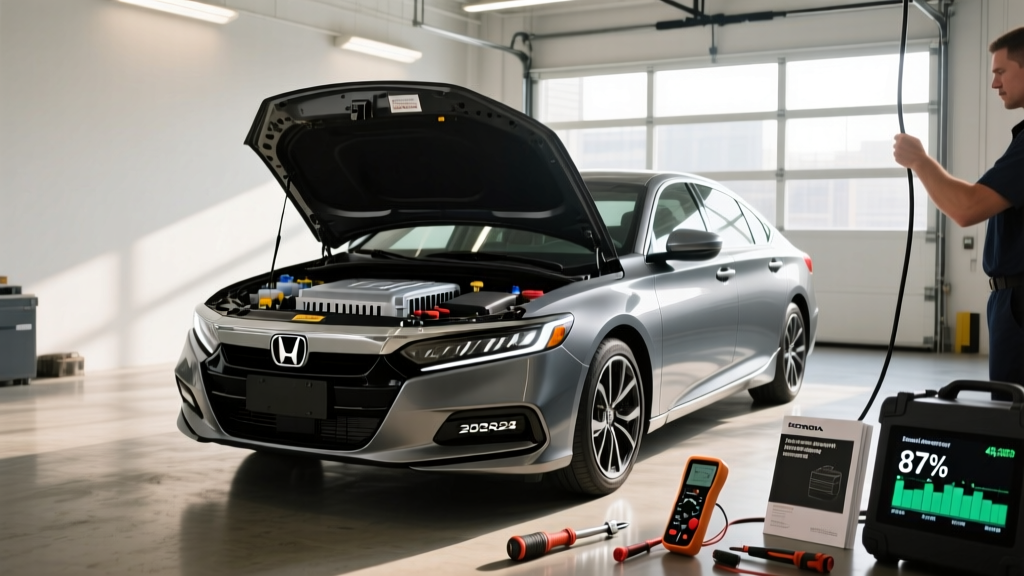
Third-party tools: Apps like Recurrent, Tessie (Tesla-specific), and OBD-II dongles paired with apps such as EV Health Check or Scan My Tesla can pull real-time cell voltage data, pack temperature, and SoH estimates. For a pre-purchase inspection on a used EV, a dealership diagnostic report is the gold standard — it gives a manufacturer-verified SoH number that you can compare against the warranty threshold.
One practical tip: check SoH at the same SoC and temperature each time for consistency. Battery voltage curves are non-linear, and comparing a reading at 30% SoC on a cold morning to one at 80% SoC on a warm afternoon will give you misleading results.
What's Next: Solid-State, Silicon Anodes, and Future Battery Tech
Several next-generation technologies are in development, but none are widely available in consumer EVs as of 2026:
Solid-state batteries: These replace the liquid electrolyte with a solid ceramic, polymer, or sulfide material, promising higher energy density (~400+ Wh/kg at the cell level), faster charging, and improved safety (no flammable electrolyte). Toyota has announced limited production of solid-state-equipped vehicles for 2027–2028, and Samsung SDI and QuantumScape continue pilot production. However, manufacturing cost and scalability remain significant hurdles. Expect solid-state to appear in limited, premium models first, likely post-2028, with mainstream adoption not until the early 2030s.
Silicon-dominant anodes: Companies like Sila Nanotechnologies and Group14 are producing silicon-blend anode materials that increase energy density by 20–40% compared to graphite. These are beginning to appear in limited production cells (notably in some Mercedes-Benz EQG applications and Porsche prototypes). Wider adoption is expected from 2027 onward as manufacturing scales.
Sodium-ion batteries: Using abundant sodium instead of lithium, these offer lower cost and excellent cycle life but significantly lower energy density. CATL has begun production for use in budget Chinese-market EVs. US-market availability is uncertain and likely limited to low-range, low-cost vehicles if it arrives.
For buyers today, LFP and NMC are mature, proven technologies with extensive real-world data. Waiting for solid-state is not a practical strategy unless your purchase timeline extends to 2030 or beyond.
FAQ: EV Battery Questions Answered
How long do EV batteries last in years and miles?
Based on fleet data, most EV batteries retain 85–92% of original capacity at 8 years / 100,000 miles. Many packs reach 200,000+ miles while still holding 75–85% capacity. The battery doesn't "die" — it gradually loses capacity, reducing range. With proper care, the pack should last the functional life of the vehicle.
How much does it cost to replace an EV battery?
Out-of-warranty replacement costs range from approximately $8,000 to $30,000 depending on pack size and vehicle, with most mainstream EVs falling in the $10,000–$18,000 range (parts and labor). However, fewer than 1–2% of packs require replacement, and most are covered by the 8-year / 100,000-mile warranty. Module-level repairs cost significantly less ($1,500–$4,000).
What does the EV battery warranty cover?
The battery warranty guarantees that the pack will retain a minimum percentage of its original capacity (typically 70%) for the warranty period (8 years / 100,000 miles federally; 10 years / 150,000 miles in CARB states). If capacity drops below the threshold, the manufacturer repairs or replaces the pack at no cost. It does not cover damage from accidents, flooding, or unauthorized modifications.
How do I check and maximize my EV battery health?
Check SoH through your vehicle's connected app, infotainment system, or a dealership diagnostic report. To maximize longevity: set daily charge limits to 80% (NMC/NCA) or 100% (LFP), avoid frequent DC fast charging, precondition in extreme temperatures, don't store the vehicle at very low or very high SoC, and park in shade or a garage when possible in hot climates.
LFP vs. NMC — which is better and why?
LFP offers longer cycle life (3,000–5,000+ cycles), lower cost, zero cobalt, and the ability to charge to 100% daily — making it ideal for commuters and long-term owners. NMC/NCA offers higher energy density (more range per kWh), better cold-weather performance, and faster DC charging in cold conditions — making it better for long-range road trippers and cold-climate drivers. Neither is universally superior; the right choice depends on your driving patterns and priorities.
Does fast charging damage the battery?
Occasional DC fast charging (road trips, a few times per month) has minimal impact on battery health. Daily reliance on 150+ kW fast charging does accelerate degradation due to sustained high current and heat. Modern BMS systems actively manage charge rates and temperatures to mitigate damage, but if you have access to home Level 2 charging, it should be your primary charging method for long-term pack health.
Can extreme weather permanently damage my EV battery?
Extreme cold temporarily reduces range and charge speed but does not cause permanent damage — the battery recovers as it warms. Sustained extreme heat (above 95°F / 35°C for weeks or months) does accelerate calendar aging. Preconditioning, garage parking, and using the vehicle's thermal management system (most EVs pre-cool or pre-heat the pack automatically when plugged in) mitigate both effects.
For current tax-credit eligibility on new EV purchases — which can offset up to $7,500 depending on your income, the vehicle's MSRP, and battery sourcing requirements — consult the IRS §30D clean vehicle credit page or a qualified tax professional, as rules are subject to change.