Every electric vehicle hinges on one component: the high-voltage traction battery. It's the single most expensive part of the car, the primary determinant of range, and the source of the most common buyer hesitation. Yet most shoppers never look past the total kWh number on the spec sheet. Understanding what EV batteries are actually made of — the specific chemistries, raw materials, and engineering trade-offs — is essential for choosing the right vehicle and protecting your investment over a decade or more of ownership.
This guide dissects the two dominant lithium-ion chemistries in today's EV market, examines real-world degradation data from vehicles now surpassing 200,000 miles, explains exactly what battery warranties cover (and what they don't), and provides a practical framework for monitoring and maximizing your battery's State of Health (SoH).
The Core Ingredients: Lithium-Ion Cell Chemistry
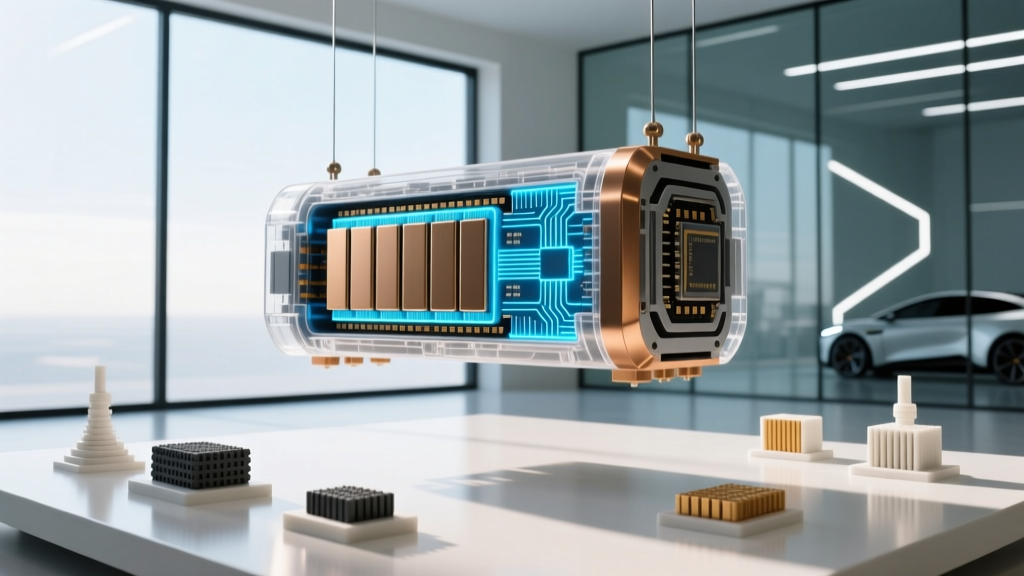
At the most fundamental level, nearly every EV battery on the road in 2026 is a lithium-ion cell. The name refers to the movement of lithium ions between two electrodes — a cathode (positive) and an anode (typically graphite or a graphite-silicon blend) — through a liquid electrolyte. What differentiates one EV battery from another is primarily the cathode chemistry, which dictates energy density, cost, thermal stability, and cycle life.
Two cathode families dominate the current market: NMC/NCA (nickel-based) and LFP (lithium iron phosphate). Each has distinct strengths and limitations that affect real-world ownership.
NMC and NCA: The Nickel-Based Cathodes
Nickel Manganese Cobalt (NMC) and Nickel Cobalt Aluminum (NCA) chemistries have been the workhorses of long-range EVs for the past decade. The high nickel content delivers superior energy density — more kWh packed into a given physical volume and weight — which translates directly to longer EPA-rated range without making the battery pack prohibitively heavy.
Vehicles like the Tesla Model 3 Long Range, Hyundai Ioniq 5 (77.4 kWh pack), BMW i4, and Ford Mustang Mach-E Extended Range all use NMC or NCA cells. These packs typically deliver between 75 and 100+ kWh of usable capacity, enabling EPA ranges from 270 to over 350 miles.
The trade-offs are meaningful: nickel-based cathodes rely on cobalt and nickel — both subject to volatile commodity pricing and supply-chain scrutiny. They also experience faster capacity loss over time compared to LFP, particularly when routinely charged to 100% or exposed to sustained high temperatures.
LFP: Lithium Iron Phosphate
LFP chemistry uses iron and phosphate in the cathode, eliminating nickel and cobalt entirely. The result is a cell that is cheaper to manufacture, more thermally stable, and dramatically longer-lasting in terms of cycle life — but with roughly 15-25% lower energy density than NMC at the cell level.
That energy-density gap means LFP packs are either heavier or offer less range for a given pack size. This is why LFP has historically been used in standard-range models: the Tesla Model 3 RWD, Model Y RWD, and the base Ford Mustang Mach-E Select all use LFP packs. However, advances in cell packaging (notably cell-to-pack designs from CATL and BYD) have narrowed the practical gap considerably.
| Attribute | LFP (Lithium Iron Phosphate) | NMC / NCA (Nickel-Based) |
|---|---|---|
| Energy Density (cell-level) | ~160-180 Wh/kg | ~220-300 Wh/kg |
| Cycle Life (to 80% capacity) | 3,000-6,000+ cycles | 1,000-2,000 cycles |
| Cold-Weather Performance | Moderate loss; less efficient below 32°F | Better low-temp discharge; heat pump helps |
| Recommended Daily SoC | 100% (no penalty for full charge) | 80% (100% only for trips) |
| Thermal Stability | Excellent — less prone to thermal runaway | Good — requires more active management |
| Cobalt / Nickel Content | None | Yes (varies by formulation) |
| Cost per kWh (pack-level) | ~$90-$110 (2026 est.) | ~$120-$150 (2026 est.) |
| Typical Use Case | Standard-range, fleet, daily commuters | Long-range, performance, AWD models |
Which Chemistry Is Better for You?
There is no universally "better" chemistry — only the right chemistry for your driving pattern.
Choose LFP if: You can charge at home nightly, your daily commute is under 150 miles round-trip, you plan to keep the vehicle 8+ years, you want the lowest degradation over time, and you prefer the simplicity of charging to 100% without worry.
Choose NMC/NCA if: You need maximum range for frequent road trips (300+ miles), you live in a region with sparse DC fast-charging infrastructure, you need AWD or performance trims (which typically pair with larger nickel-based packs), or you regularly drive in extreme cold where energy density matters more.
One nuance often overlooked: because LFP owners are encouraged to charge to 100% daily while NMC owners target 80%, the usable daily range gap between the two chemistries is smaller than the raw pack-size numbers suggest. A 60 kWh LFP pack charged to 100% gives you 60 kWh. A 77 kWh NMC pack charged to 80% gives you roughly 62 kWh of daily usable energy.
How Long Do EV Batteries Actually Last?
The short answer: far longer than most buyers expect. Data from Tesla's 2024 Impact Report (the most recent comprehensive fleet data publicly available) showed that Model S and Model X vehicles retained approximately 85% of their original battery capacity after 200,000 miles. Model 3/Y vehicles with LFP chemistry are tracking even better in early fleet data.
For context, the average American drives roughly 14,000 miles per year according to the Federal Highway Administration. At that rate, reaching 200,000 miles takes over 14 years. Most EV batteries will outlast the vehicle's body, interior, and suspension components.
Real-World Degradation Data Points
Degradation is not linear. Most lithium-ion batteries experience a steeper capacity drop in the first 1-2 years (roughly 2-5%), after which the curve flattens considerably. Here are representative figures from fleet and owner-reported data as of early 2026:
| Mileage / Time | NMC/NCA (Typical) | LFP (Typical) |
|---|---|---|
| 1 year / ~14,000 mi | 95-97% retained | 97-99% retained |
| 3 years / ~42,000 mi | 91-94% retained | 95-97% retained |
| 5 years / ~70,000 mi | 88-92% retained | 93-96% retained |
| 8 years / ~112,000 mi | 83-89% retained | 90-95% retained |
| 10 years / ~140,000 mi | 80-87% retained | 88-93% retained |
| 15 years / ~210,000 mi | 74-83% retained | 84-90% retained |
Note: Figures represent fleet medians. Individual results vary based on climate, charging habits, and thermal management system quality. Sources: Tesla Impact Report, Recurrent Auto fleet data, owner-reported databases.
The critical insight: a battery does not "die" at 70% capacity. It simply has reduced range. An EV with 300 miles of EPA range that degrades to 85% still delivers 255 miles — more than sufficient for the vast majority of daily driving.
What Does the Battery Warranty Actually Cover?
Federal law mandates that EV batteries carry a minimum warranty of 8 years or 100,000 miles (whichever comes first). In California and states that have adopted CARB emissions standards, the mandate extends to 10 years or 150,000 miles. Most manufacturers meet or exceed these minimums.
The warranty typically guarantees that the battery will retain a specified percentage of its original capacity — most commonly 70% — over the warranty period. If capacity drops below that threshold under normal use, the manufacturer will repair or replace the battery (or individual modules) at no cost.
| Manufacturer | Warranty Period | Capacity Threshold | Notes |
|---|---|---|---|
| Tesla (Model 3/Y RWD — LFP) | 8 yr / 100,000 mi | 70% | Covers defects + capacity below threshold |
| Tesla (Model 3/Y LR, Model S/X) | 8 yr / 120,000-150,000 mi | 70% | Varies by model; 150k for S/X |
| Hyundai / Kia | 10 yr / 100,000 mi | 70% | Among the longest coverage in the industry |
| Ford (Mach-E, F-150 Lightning) | 8 yr / 100,000 mi | 70% | Component-level replacement when possible |
| GM (Ultium-based) | 8 yr / 100,000 mi | 70% | Modular pack allows partial replacement |
| BMW | 8 yr / 100,000 mi | 70% | Transferable to second owner |
| Volkswagen (ID.4) | 8 yr / 100,000 mi | 70% | Net capacity basis |
Always verify current warranty terms with the manufacturer, as they can change by model year. Source: Manufacturer press sites and fueleconomy.gov.
What's NOT covered: Gradual capacity loss above the threshold (e.g., dropping from 100% to 75% is normal and not a warranty claim), damage from accidents, flooding, or improper modifications, and in some cases, damage from using non-approved charging equipment.
How Much Does an EV Battery Cost to Replace?
This is the question that dominates EV anxiety, and it deserves a nuanced answer. Out-of-warranty battery replacement is expensive — but it's also rare. The vast majority of EV batteries never need a full replacement during the vehicle's usable life.
That said, here are current replacement cost ranges for out-of-warranty scenarios in 2026:
| Vehicle / Pack Size | Battery Cost (Parts) | Labor | Total Estimate |
|---|---|---|---|
| Tesla Model 3 RWD (~60 kWh LFP) | $7,000-$9,000 | $1,500-$2,500 | $8,500-$11,500 |
| Tesla Model Y LR (~75 kWh NMC) | $10,000-$14,000 | $1,500-$2,500 | $11,500-$16,500 |
| Hyundai Ioniq 5 (~77.4 kWh) | $11,000-$15,000 | $2,000-$3,000 | $13,000-$18,000 |
| Ford F-150 Lightning Ext. (~131 kWh) | $18,000-$25,000 | $3,000-$4,500 | $21,000-$29,500 |
| Chevy Bolt EV (~65 kWh) | $8,000-$11,000 | $1,500-$2,500 | $9,500-$13,500 |
| BMW i4 eDrive40 (~81.5 kWh) | $14,000-$18,000 | $2,500-$4,000 | $16,500-$22,000 |
Costs are estimates based on industry reporting and service-center data as of early 2026. Actual costs vary by region, dealer, and whether modules (rather than the full pack) can be replaced. Prices have been declining roughly 8-12% per year.
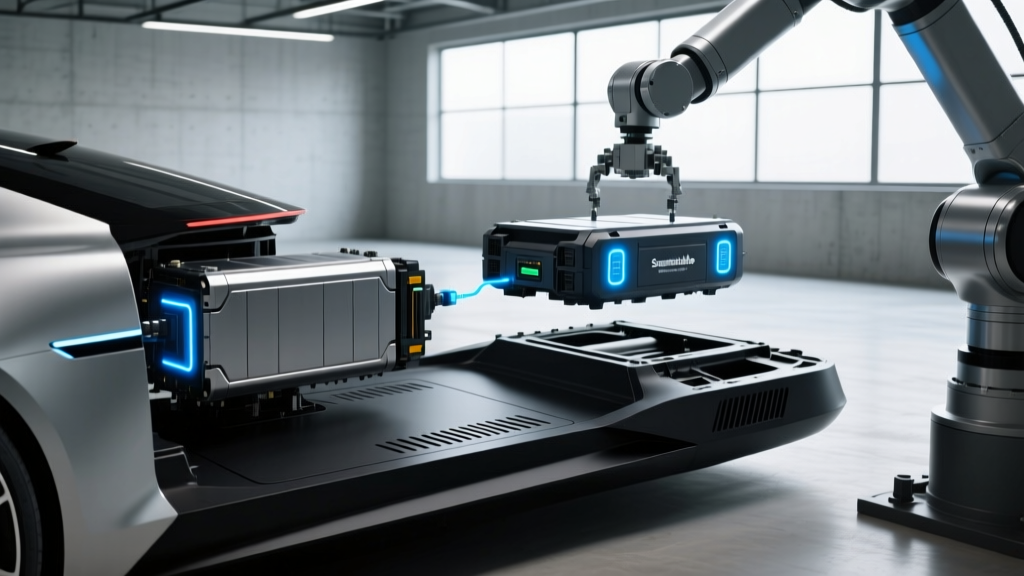
Two critical context points. First, module-level repair is increasingly common: many modern packs (GM's Ultium, BMW's Gen5, Hyundai's E-GMP) are designed with replaceable modules, meaning a single degraded or failed module can be swapped for $2,000-$5,000 rather than replacing the entire pack. Second, pack-level costs continue to fall. Bloomberg NEF's 2025 battery price survey reported average pack prices at roughly $115/kWh — down from $140/kWh just two years prior — and the trend continues as manufacturing scales.
What Kills an EV Battery Early? Six Factors That Accelerate Degradation
While modern battery management systems (BMS) are remarkably sophisticated at protecting cells, owner behavior still matters. Here are the factors with the greatest measurable impact on long-term capacity retention:
Battery Care Checklist: Maximize Your Battery's Life
- Avoid sustained 100% SoC (NMC/NCA only): If you drive an NMC or NCA vehicle, set your daily charge limit to 80%. Reserve 100% for road trips and charge to full just before departure. LFP owners can ignore this — charge to 100% daily.
- Minimize DC fast charging when possible: Occasional DCFC (150-350 kW) is fine and will not meaningfully harm your battery. But daily reliance on high-power DC fast charging — especially at rates above 1C (e.g., charging a 75 kWh pack at 150+ kW regularly) — accelerates degradation. Home Level 2 charging at 7-11 kW is gentler and should be your primary method.
- Avoid extreme SoC storage: Don't leave your EV sitting at 100% or below 10% for extended periods (weeks). If storing for a vacation, aim for 50-60% SoC.
- Use preconditioning: Most modern EVs allow you to precondition (warm or cool) the battery before driving or charging. This is especially critical in cold weather — charging a frozen battery at high power causes lithium plating, a form of permanent degradation. Always precondition before DC fast charging in winter.
- Park in shade or a garage when possible: Sustained exposure to ambient temperatures above 95°F accelerates calendar degradation. A garage or shaded spot meaningfully reduces thermal stress.
- Don't obsess over regen settings: While aggressive regenerative braking charges the battery at higher C-rates momentarily, the energy involved is small relative to total capacity. The degradation impact is negligible compared to SoC and temperature factors.
How to Check Your Battery's State of Health (SoH)
State of Health (SoH) is a percentage representing your battery's current maximum capacity relative to its original capacity when new. A new battery is 100% SoH; one that has degraded to hold only 90% of its original energy is at 90% SoH.
Monitoring SoH is straightforward, though methods vary by manufacturer:
In-Vehicle Displays
Some manufacturers provide a battery health indicator directly in the infotainment system. Hyundai and Kia include a battery health readout in their EV menus. Tesla does not display SoH directly in the vehicle, but the car's estimated range at 100% SoC (visible on the charging screen) serves as a practical proxy — compare it to the original EPA range to estimate degradation.
OBD-II Dongles and Third-Party Apps
For vehicles that don't expose SoH natively, an OBD-II Bluetooth dongle paired with an app like Scan My Tesla, Leaf Spy (for Nissan Leaf), or Car Scanner can read the BMS-reported capacity figure. These tools access the same data the manufacturer's service center uses.
Dealer Diagnostics
Any authorized service center can run a full battery health report. This is especially useful when buying a used EV — request a battery health printout before purchase. Some services, like Recurrent, provide battery health reports based on connected-vehicle data.
The Manual Calculation Method
Charge your vehicle to 100% (or as close as your charge limit allows), note the displayed estimated range, and divide it by the original EPA-rated range. For example, if your Ioniq 5 originally rated 303 miles EPA and now shows 272 miles at 100%, your estimated SoH is roughly 90%. This method isn't perfectly precise (displayed range estimates can vary with driving conditions), but it's a reliable trend indicator over time.
What's Next: Solid-State, Silicon Anodes, and Beyond
The next generation of battery technology is heavily discussed but not yet commercially available at scale for consumer EVs. Here's a realistic assessment of the timeline:
Solid-state batteries replace the liquid electrolyte with a solid material (ceramic, sulfide, or polymer), promising higher energy density (potentially 400+ Wh/kg at the cell level), faster charging, and improved safety. Toyota has announced a solid-state EV for 2027-2028, and Samsung SDI targets 2027 production. However, these are announced timelines — history shows repeated delays in solid-state commercialization. Expect limited availability in premium models no earlier than 2028, with mainstream adoption likely in the early 2030s.
Silicon-dominant anodes (replacing graphite with silicon to increase lithium storage capacity) are closer to reality. Companies like Sila Nanotechnologies and Group14 are already shipping silicon-anode materials to battery manufacturers, and incremental silicon blends (5-10% silicon content) are in production cells today. Expect meaningful silicon-anode adoption in 2027-2029 model-year vehicles.
Sodium-ion batteries are entering production in China (CATL, BYD) for low-cost, shorter-range EVs. They eliminate lithium entirely but have lower energy density (~120-150 Wh/kg). They may appear in US-market budget EVs or as grid-storage solutions in the late 2020s.
None of these technologies should influence a 2026 purchase decision. Today's lithium-ion batteries — both LFP and NMC — are mature, well-understood, and demonstrably long-lasting.
Frequently Asked Questions
Do EV batteries contain cobalt, and is that a concern?
NMC and NCA batteries contain cobalt (typically 5-10% of the cathode by weight in modern formulations — significantly reduced from earlier generations). LFP batteries contain zero cobalt. If ethical sourcing of cobalt is a priority, LFP vehicles eliminate the concern entirely. For NMC vehicles, major manufacturers now source cobalt under audited supply-chain agreements, and the industry continues to reduce cobalt content with each cell generation.
How does cold weather affect my EV battery?
Cold temperatures reduce battery efficiency and available capacity. At 20°F, expect a range reduction of 20-30% compared to EPA estimates, primarily due to energy used for cabin heating and reduced regenerative braking efficiency. The battery itself isn't permanently damaged by cold — the loss is temporary and recovers as temperatures rise. Preconditioning the battery before driving mitigates much of the performance loss.
Will my EV battery need to be replaced before I sell the car?
Statistically, no. The median EV battery retains 85-90% of its capacity at the 10-year mark based on current fleet data. Most owners sell or trade their vehicles before meaningful degradation occurs. Out of millions of EVs on US roads, full battery replacements outside of warranty claims remain rare.
Can I upgrade my EV battery to a larger capacity later?
In nearly all cases, no. EV battery packs are vehicle-specific in physical dimensions, voltage architecture, and software integration. Unlike a laptop battery swap, there is no upgrade path to a larger or newer-chemistry pack. Buy the range you need at the time of purchase.
Does fast charging really damage the battery?
Occasional DC fast charging has a minimal impact on battery life. Studies from Idaho National Laboratory found that vehicles fast-charged exclusively showed only marginally more degradation than those charged exclusively on Level 2 after 50,000 miles — roughly 2-3 percentage points of additional capacity loss. Modern BMS and thermal management systems actively protect the cells during fast charging. The real risk is sustained high-power charging combined with high ambient temperatures and high SoC — the combination, not any single factor.
What happens to EV batteries when they're retired from vehicles?
Retired EV batteries typically retain 70-80% of their original capacity — far too useful to discard. Most enter "second-life" applications: stationary energy storage for solar installations, grid frequency regulation, or commercial backup power. Companies like Redwood Materials and Li-Cycle then recover 95%+ of the critical minerals (lithium, nickel, cobalt) through hydrometallurgical recycling, feeding them back into new battery production.