Every electric vehicle lives and dies by the pack beneath its floor. Yet most buyers focus on range and horsepower while glossing over the single most expensive component in the car: the high-voltage traction battery. Understanding the chemistry inside it, how it ages, and what's coming next is the difference between a confident purchase and a decade of second-guessing.
This guide breaks down the battery chemistries powering 2026's EVs, what real-world degradation actually looks like, what warranties cover (and don't), and the emerging technologies — from solid-state to silicon anodes — that will reshape the next generation of electric cars.
LFP vs NMC vs NCA: The Chemistry Landscape in 2026
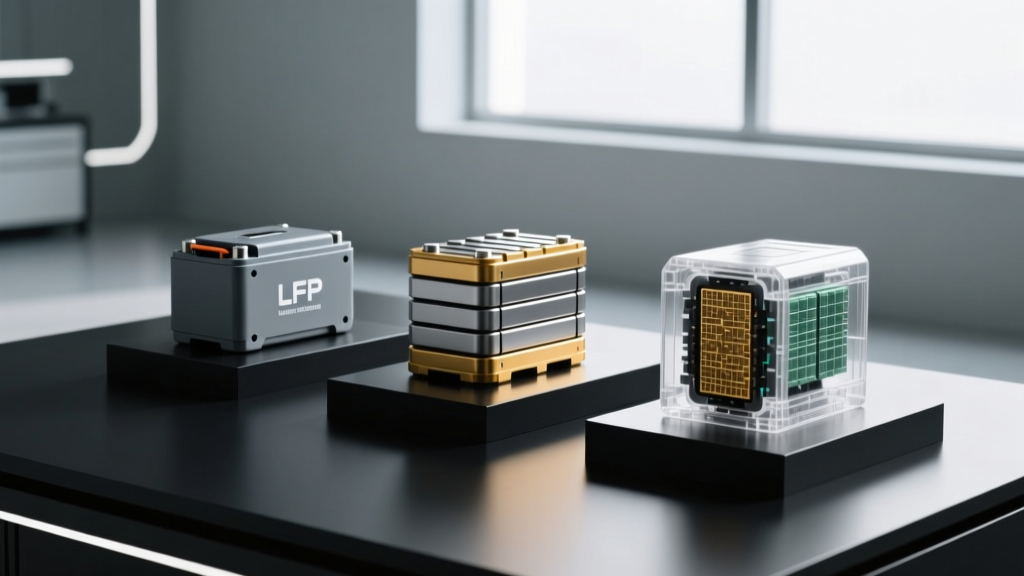
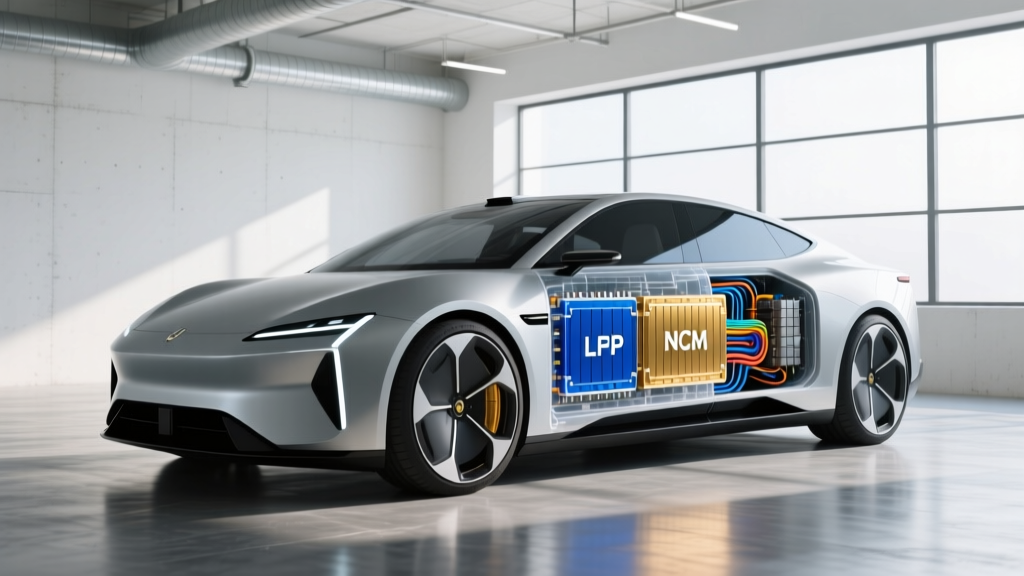
Not all lithium-ion batteries are created equal. The cathode chemistry determines energy density, cycle life, thermal stability, cold-weather performance, and ultimately cost. In 2026, three chemistries dominate the EV market:
- NMC (Nickel Manganese Cobalt): The long-range standard. Found in most Hyundai, Kia, BMW, Mercedes, and Ford EVs.
- NCA (Nickel Cobalt Aluminum): Tesla's traditional chemistry for Model S, Model X, and Long Range variants of Model 3/Y.
- LFP (Lithium Iron Phosphate): The budget and durability champion, now standard in Tesla's rear-wheel-drive Model 3 and Model Y, BYD's full lineup, and several base trims from legacy automakers.
Here's how they stack up head to head:
| Attribute | LFP | NMC | NCA |
|---|---|---|---|
| Energy Density (Wh/kg, cell-level) | 160–180 | 220–260 | 240–270 |
| Typical Cycle Life | 3,000–5,000+ | 1,000–2,000 | 1,000–1,500 |
| Cold-Weather Range Loss (20°F) | ~30–40% | ~25–35% | ~25–35% |
| Thermal Runaway Risk | Very low | Moderate | Moderate |
| Cobalt Content | None | Yes (reduced in newer gens) | Yes (minimal) |
| Cost per kWh (pack-level, 2026 est.) | ~$90–110 | ~$120–145 | ~$125–150 |
| Optimal Daily Charge Limit | 100% (recommended) | 80–90% | 80–90% |
| Best For | Daily commuting, fleet, budget trims | Long-range, performance, cold climates | Long-range, Tesla ecosystem |
Which is better — LFP or NMC?
Neither is universally superior; the answer depends on your driving pattern. If you commute 40 miles round-trip, charge at home nightly, and live in a temperate climate, LFP is the smarter pick — it's cheaper, lasts longer by cycle count, and tolerates daily 100% charges without accelerated degradation. If you regularly road-trip 300+ miles, need maximum range in a single charge, or live where winters are brutal, NMC/NCA's higher energy density gives you more usable miles from a smaller, lighter pack.
The real-world implication: a Tesla Model 3 RWD with its ~60 kWh LFP pack gets an EPA-estimated 272 miles but can be charged to 100% daily without guilt. A Model 3 Long Range AWD with ~82 kWh NCA achieves 341 miles EPA but should sit at 80% most days. Over 10 years of daily charging, the LFP pack will likely retain more of its original capacity.
How Long Do EV Batteries Actually Last?
The short answer: almost certainly longer than you'll own the car. The long answer requires separating calendar aging from cycle aging, and understanding what "end of life" actually means.
An EV battery doesn't die the way a phone battery does. It gradually loses capacity — a process measured as State of Health (SoH), where 100% is brand-new and anything above 70–80% is generally considered functional for automotive use. Most automakers define end-of-life as falling below 70% capacity retention, at which point the pack still holds enough energy to serve as stationary storage or be refurbished.
Real-World Degradation Data
Aggregated fleet data from sources like Recurrent Auto and Tesla's own impact reports paint a consistent picture:
Typical Capacity Retention by Mileage (NMC/NCA packs, 2020–2026 models):
- Year 1 / ~15,000 mi: 95–97% SoH (initial drop as SEI layer forms)
- Year 3 / ~45,000 mi: 92–95% SoH
- Year 5 / ~75,000 mi: 89–93% SoH
- Year 8 / ~120,000 mi: 85–90% SoH
- Year 10 / ~150,000 mi: 82–88% SoH
LFP packs tend to lose capacity more slowly after the initial formation period, with many fleet vehicles showing 90%+ SoH at 100,000 miles. Tesla's 2025 Impact Report noted that Model 3/Y packs retained an average of 85% capacity at 200,000 miles.
The critical insight: degradation is not linear. The biggest drop occurs in the first 10,000–20,000 miles as the solid electrolyte interphase (SEI) layer stabilizes on the anode. After that, the curve flattens considerably. A well-maintained pack at 80,000 miles showing 92% SoH is likely to still be at 85%+ at 150,000 miles.
What Does the Battery Warranty Actually Cover?
Federal law mandates a minimum 8-year/100,000-mile warranty on EV battery packs for emissions-related components, and most automakers extend this to cover the full high-voltage battery. Here's what the major manufacturers offer in 2026:
| Manufacturer | Warranty Period | Mileage Cap | Capacity Retention Threshold |
|---|---|---|---|
| Tesla (Model 3/Y RWD — LFP) | 8 years | 100,000 mi | 70% |
| Tesla (Model 3/Y LR, S, X) | 8 years | 120,000 mi | 70% |
| Hyundai / Kia (EVs) | 10 years | 100,000 mi | 70% |
| Ford (Mustang Mach-E, F-150 Lightning) | 8 years | 100,000 mi | 70% |
| GM (Chevrolet, Cadillac EVs) | 8 years | 100,000 mi | 70% |
| BMW | 8 years | 100,000 mi | 70% |
| Rivian | 8 years | 175,000 mi | 70% |
| BYD | 8 years | 100,000 mi (varies by market) | 70% |
What's covered: Capacity loss below the stated threshold (typically 70%), manufacturing defects, and cell/module failures that cause voltage imbalance or fault codes.
What's typically NOT covered: Damage from accidents, flooding, improper charging equipment, aftermarket modifications, or cosmetic issues that don't affect function. Some warranties also exclude capacity loss from consistently charging to 100% on NMC packs, though this is rarely enforced.
The practical takeaway: if your 5-year-old EV with 65,000 miles shows 68% SoH on a diagnostic scan, the manufacturer owes you a battery repair or replacement — usually through module swaps rather than a full pack replacement. Contact the dealer's EV service department with your SoH reading documented.
EV Battery Replacement Costs: The Real Numbers
This is the question that haunts prospective EV buyers. The honest answer is that most EV batteries never need full replacement during the vehicle's useful life. But if you buy a used EV out of warranty, or keep a car past 200,000 miles, here's what you're looking at:
| Vehicle / Pack Size | Full Pack Cost (Parts + Labor, 2026) | Module-Level Repair | Typical Need Trigger |
|---|---|---|---|
| Tesla Model 3 RWD (~60 kWh, LFP) | $12,000–$16,000 | $2,500–$4,500 per module | Post-warranty, 180,000+ mi |
| Tesla Model Y LR (~82 kWh, NCA) | $15,000–$20,000 | $3,000–$5,500 per module | Post-warranty, 180,000+ mi |
| Hyundai Ioniq 5 (~77.4 kWh, NMC) | $14,000–$18,000 | $2,800–$4,800 per module | Post-warranty, 160,000+ mi |
| Ford F-150 Lightning (~131 kWh ext.) | $22,000–$30,000 | $3,500–$6,000 per module | Post-warranty, 150,000+ mi |
| Chevrolet Bolt EV (~65 kWh, NMC) | $10,000–$14,000 | $2,000–$3,500 per module | Post-warranty or recall-related |
| BMW iX (~111.5 kWh, NMC) | $20,000–$28,000 | $3,500–$6,500 per module | Post-warranty, 160,000+ mi |
Several factors are working in your favor. First, module-level repairs are increasingly common — a single weak module can be swapped without replacing the entire pack, cutting costs by 60–75%. Second, the growing third-party EV repair market and refurbished pack availability are driving prices down. Third, pack costs continue to fall: BloombergNEF reported average lithium-ion pack prices at roughly $115/kWh in 2025, down from $140/kWh in 2023, with further declines expected as LFP adoption grows and manufacturing scales.
For context: the average age of a scrapped vehicle in the US is 15+ years. An EV battery retaining 82% capacity at 150,000 miles still provides meaningful range and may never justify the cost of replacement — especially as the vehicle's residual value approaches the repair cost.
What Kills an EV Battery (And How to Prevent It)
While modern battery management systems (BMS) are remarkably good at protecting the pack, certain habits accelerate degradation. Here are the factors ranked by impact, along with practical mitigations:
Battery Care Best Practices
- Avoid sustained high State of Charge (NMC/NCA): Don't leave an NMC or NCA pack at 100% for days. Set your daily charge limit to 80–90% and only charge to 100% when you'll drive immediately. LFP packs are the exception — charge to 100% regularly, as the BMS needs full-charge calibration for accurate SoC estimation.
- Minimize DC fast charging frequency: Occasional road-trip fast charging is fine. But if your daily routine relies on 150+ kW DC fast charging instead of Level 2 home charging, expect 2–4% additional degradation over 5 years. The heat generated during high-C-rate charging stresses cells. When fast-charging, precondition the battery (most EVs do this automatically when you navigate to a charger).
- Extreme heat is worse than extreme cold: Sustained exposure to ambient temperatures above 95°F accelerates electrolyte decomposition. If you live in Phoenix or Houston, park in shade or a garage when possible. Cold temperatures temporarily reduce range but don't cause permanent damage — the BMS limits charge/discharge rates to protect cells.
- Don't store at 0% or 100%: If leaving your EV for more than two weeks, set SoC to 50–60%. Prolonged storage at either extreme accelerates calendar aging.
- Use regenerative braking wisely: Aggressive regen settings don't harm the battery, but they do generate higher charge currents during deceleration. In cold weather, the BMS may temporarily limit regen to protect a cold pack — this is normal and protective, not a fault.
- Keep software updated: OEMs regularly refine BMS algorithms via OTA updates to improve thermal management and charging profiles. These updates can meaningfully extend pack life.
How to Check Your Battery's State of Health
State of Health (SoH) is the percentage of original capacity your pack currently holds. Unlike your phone, most EVs don't display SoH prominently on the dashboard — but there are several ways to check it:
OBD-II diagnostic apps: Tools like OBDLink MX+ paired with apps such as EVNotify, LeafSpy (for Nissan Leaf), or manufacturer-specific diagnostic software can read SoH directly from the BMS. This is the most accurate consumer-accessible method.
Dealer diagnostic scan: Any authorized service center can pull a battery health report. Request this during routine service or before a warranty claim. Ask for the printed report showing SoH percentage and individual module voltage deltas.
Range-based estimation: If your car showed 280 miles at 100% SoC when new and now shows 252 miles under identical conditions (temperature, tire pressure, driving mode), your SoH is approximately 90%. This method is imprecise — range estimates vary with temperature and driving style — but it's directionally useful.
Third-party battery health reports: Companies like Recurrent offer battery health assessments based on connected-car data, which can be valuable when buying or selling a used EV.
When to be concerned: If SoH drops more than 3% in a single year after the initial formation period, or if you notice individual module voltage imbalances exceeding 200 mV, schedule a service visit. Sudden range drops (not explained by cold weather) can indicate a failing module that may be covered under warranty.
Emerging Battery Technologies: What's Coming and When
The laboratory pipeline is full of promising chemistries, but the gap between a peer-reviewed paper and a production EV pack is typically 7–12 years. Here's where the most talked-about technologies actually stand:
Solid-State Batteries
Solid-state batteries replace the liquid electrolyte with a solid ceramic, glass, or polymer material. The theoretical advantages are substantial: higher energy density (potentially 400+ Wh/kg at the cell level), faster charging without lithium plating risk, and dramatically reduced fire risk.
Current status (2026): Toyota has announced a solid-state battery targeting limited production in 2027–2028, claiming 750 km (~466 miles) of range and a 10-minute 10–80% charge. Samsung SDI and QuantumScape are also advancing prototypes. However, manufacturing yield, cost (currently 3–5x conventional lithium-ion per kWh), and scalability remain unsolved for mass production.
Realistic timeline for mainstream adoption: 2030–2033 for premium vehicles; 2035+ for affordable models. Early implementations will likely be in limited-run, high-price vehicles.
Silicon Anode Batteries
Replacing the graphite anode with silicon can theoretically increase energy density by 20–40%. The challenge is that silicon expands up to 300% during lithiation, causing mechanical stress and rapid degradation.
Current status (2026): Companies like Sila Nanotechnologies and Group14 Technologies are supplying silicon-dominant anode materials to battery manufacturers. Mercedes-Benz has partnered with Sila for the upcoming G-Class EV. These are incremental improvements — silicon-graphite composites with 5–15% silicon content — not full silicon anodes.
Realistic timeline: Silicon-composite anodes are already in limited production. Higher-silicon-content anodes (30%+) are expected in premium EVs by 2028–2030.
Sodium-Ion Batteries
Sodium is abundant and cheap, making sodium-ion (Na-ion) batteries attractive for budget EVs and stationary storage. The trade-off is lower energy density (~120–160 Wh/kg) and heavier packs.
Current status (2026): BYD and CATL have begun shipping Na-ion packs in small, affordable Chinese-market EVs. No US-market vehicles currently use Na-ion, but it's a strong candidate for future entry-level models and fleet vehicles where range requirements are modest.
Realistic timeline for US market: 2028–2030 for budget-oriented compact EVs or as a supplementary pack in hybrid configurations.
Frequently Asked Questions
How long do EV batteries last in years and miles?
Based on aggregated fleet data, most modern EV batteries retain 82–90% of original capacity at 150,000 miles and 10 years of use. With proper care, many packs will exceed 200,000 miles before falling below the 70% threshold that manufacturers consider end-of-life. LFP chemistries tend to outlast NMC/NCA by a significant margin in cycle count.
How much does it cost to replace an EV battery?
Full pack replacements range from roughly $10,000 for a smaller pack (Chevrolet Bolt, ~65 kWh) to $30,000 for a large pack (F-150 Lightning extended range, ~131 kWh), including parts and labor. However, most out-of-warranty repairs are module-level, costing $2,000–$6,500 per module. The vast majority of EV batteries never require full replacement during the vehicle's life.
What does the battery warranty cover?
Most manufacturers guarantee at least 70% capacity retention for 8 years or 100,000 miles (Hyundai/Kia extend this to 10 years). The warranty covers degradation below the threshold, manufacturing defects, and cell failures. It typically excludes physical damage, flooding, and improper modifications. Check your specific owner's manual for exact terms, as they vary by model and trim.
How do I check and maximize my EV battery health?
Check SoH via OBD-II diagnostic apps, dealer scans, or third-party services like Recurrent. To maximize longevity: set daily charge limits to 80–90% for NMC/NCA (100% is fine for LFP), minimize daily DC fast charging, avoid prolonged storage at extreme SoC levels, park in shade in hot climates, and keep your vehicle's software updated for the latest BMS optimizations.
Is LFP better than NMC for my daily driving?
If your daily round-trip is under 80 miles, you charge at home, and you don't regularly face sub-freezing temperatures, LFP is likely the better choice — it's cheaper, tolerates 100% daily charges, and offers superior cycle life. If you need 300+ miles per charge, frequently road-trip, or live in a cold climate where range loss matters, NMC/NCA's higher energy density is worth the trade-off in cycle life and charging-limit sensitivity.
Will solid-state batteries make my current EV obsolete?
Not for at least 5–8 years. Solid-state technology faces significant manufacturing and cost hurdles before reaching mainstream price points. Your current EV's battery will likely serve you well through its full useful life. When solid-state does arrive, it will debut in premium vehicles at high prices before filtering down to affordable segments over the following decade.
The battery is the heart of every electric vehicle, and the technology powering it has matured far beyond the early fears of rapid degradation and crippling replacement costs. Whether you choose LFP for its durability and daily-charge freedom, or NMC/NCA for its range and cold-weather capability, the data shows that modern EV packs are built to outlast the cars they power. The next decade will bring solid-state, silicon anodes, and sodium-ion into the mix — but the batteries on sale today are already more than up to the task.