The Short Answer: Your EV Battery Isn't One-Size-Fits-All
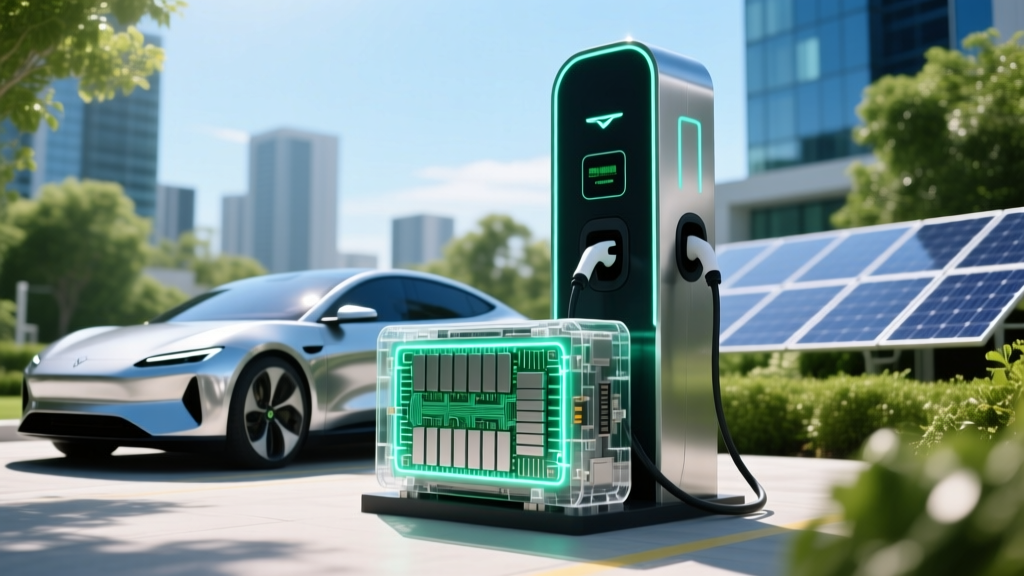
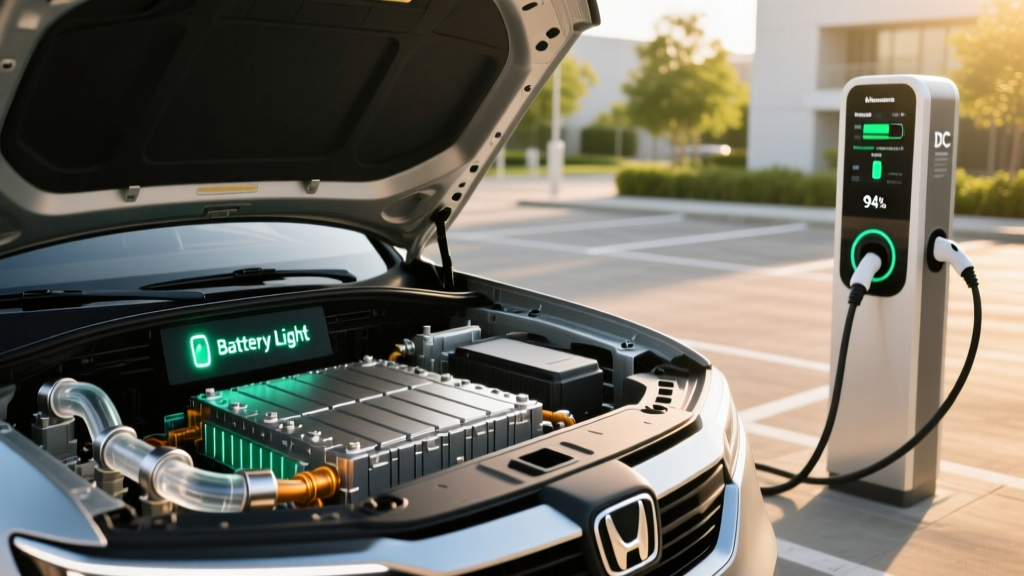
If you're asking "what kind of battery does my car need?" for an electric vehicle, the answer hinges on two lithium-ion chemistries dominating the 2026 market: LFP (lithium iron phosphate) and NMC/NCA (nickel manganese cobalt / nickel cobalt aluminum). Unlike the 12V auxiliary battery under your hood — which powers lights and electronics and is a separate, inexpensive replacement — the high-voltage traction battery is the core of your EV's powertrain, storing between 40 and 130+ kWh of energy depending on the model.
You don't choose your EV's battery chemistry the way you'd pick a battery at an auto parts store. It's baked into the vehicle at purchase. But understanding which chemistry your EV uses — or which to prioritize when shopping — directly affects your real-world range, charging habits, long-term degradation, and eventual resale value.
This guide breaks down the two chemistries with hard data, explains what degradation actually looks like at 100,000 miles, decodes warranty fine print, and gives you a practical framework for maximizing battery health over a decade of ownership.
LFP vs NMC/NCA: The Chemistry Comparison That Matters
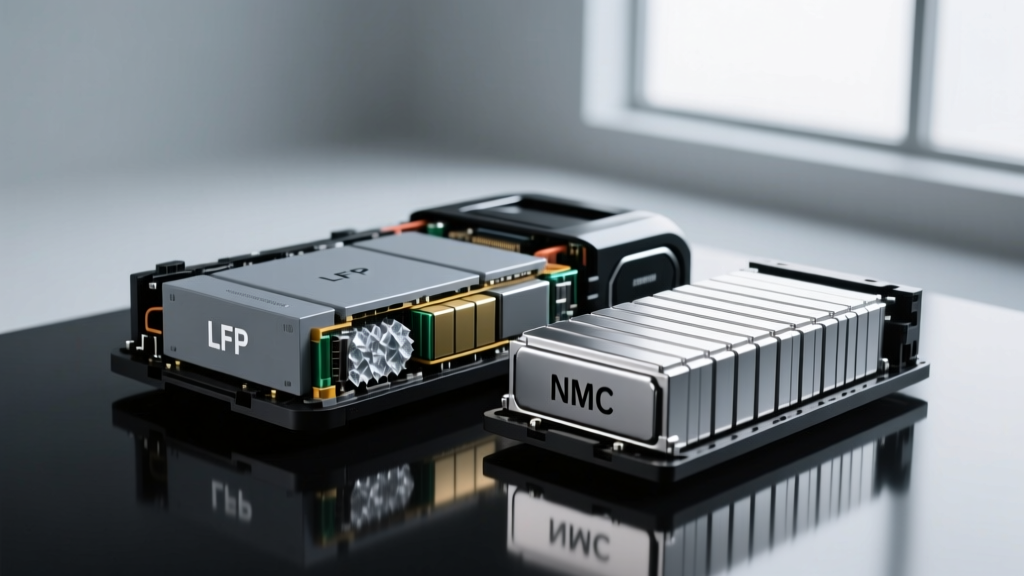
Every mainstream EV sold in the US in 2026 uses one of two cathode chemistries. Here's how they stack up across the metrics that affect your ownership experience:
| Attribute | LFP (Lithium Iron Phosphate) | NMC / NCA (Nickel-Based) |
|---|---|---|
| Energy Density | Lower (~160 Wh/kg cell-level) | Higher (~220-260 Wh/kg cell-level) |
| Typical EPA Range | 240-330 mi (standard-range trims) | 280-400+ mi (long-range trims) |
| Cycle Life | 3,000-5,000+ full cycles | 1,000-2,000 full cycles |
| Cold-Weather Performance | Weaker — greater range loss below 32°F | Better — more resilient in freezing temps |
| Charging to 100% Daily | Recommended — no degradation penalty | Not recommended — accelerates wear above 80-90% |
| Cobalt/Nickel Content | Zero cobalt, zero nickel | Contains cobalt and/or nickel |
| Cost (per kWh, pack-level) | ~$90-110/kWh | ~$120-150/kWh |
| Common In 2026 Models | Tesla Model 3/Y RWD, Ford Mustang Mach-E Select (base), BYD, Rivian standard | Tesla Long Range, Hyundai Ioniq 5/6, BMW iX, GM Ultium-based models, Porsche Taycan |
The practical takeaway: LFP wins on longevity and cost. NMC wins on range per pound and cold-weather efficiency. If you commute 40 miles daily, charge at home, and live in a moderate climate, LFP is arguably the better long-term ownership bet. If you regularly road-trip 300+ miles or endure harsh winters, NMC's energy density and cold resilience matter more.
How Long Do EV Batteries Actually Last?
The fear that EV batteries need replacing like phone batteries after two years is not supported by fleet data. Most modern EV traction batteries are engineered to outlast the vehicle's economic life.
Here's what real-world degradation data shows, drawing on studies from Geotab's analysis of over 10,000 EVs and manufacturer-reported figures:
Typical Capacity Retention Over Time (Average Across Models):
- Year 1 (~15,000 mi): 97-98% capacity retained (initial drop is normal)
- Year 3 (~45,000 mi): 93-96% retained
- Year 5 (~75,000 mi): 90-94% retained
- Year 8 (~120,000 mi): 85-91% retained
- Year 10 (~150,000 mi): 80-88% retained
Loss is not linear. Most degradation occurs in the first 20,000-30,000 miles (the "break-in" period), then the curve flattens significantly. A 2026 Tesla Model 3 RWD with its LFP pack, for example, is projected to retain 90%+ capacity at 150,000 miles based on current fleet telemetry.
When is replacement actually needed? Almost never during typical first- or second-owner lifespans. A battery is considered "failed" in warranty terms when it drops below 70% of original capacity. At 85-90% retention after a decade, your EV still has 250+ miles of range on a long-range NMC pack — perfectly usable.
What Does the EV Battery Warranty Actually Cover?
Federal law mandates a minimum battery warranty of 8 years / 100,000 miles for EVs sold in the US (10 years / 150,000 miles in California and states adopting CARB standards). But the details matter:
| Manufacturer | Battery Warranty | Capacity Threshold | What's Covered |
|---|---|---|---|
| Tesla (Model 3/Y RWD — LFP) | 8 yr / 100,000 mi | 70% retention | Defects + excessive degradation |
| Tesla (Long Range — NMC) | 8 yr / 120,000 mi | 70% retention | Defects + excessive degradation |
| Hyundai / Kia (E-GMP platform) | 10 yr / 100,000 mi | 70% retention | Defects + excessive degradation |
| GM (Ultium-based: Equinox EV, Blazer EV, Silverado EV) | 8 yr / 100,000 mi | 70% retention (some trims 60%) | Defects + excessive degradation |
| Ford (Mach-E, F-150 Lightning) | 8 yr / 100,000 mi | 70% retention | Defects + excessive degradation |
| Rivian (R1T / R1S) | 8 yr / 175,000 mi | 70% retention | Defects + excessive degradation |
| BMW (i4, iX, i7) | 8 yr / 100,000 mi | 70% retention | Defects + excessive degradation |
Critical fine print: Warranty coverage applies to capacity loss below the stated threshold under normal use. Damage from accidents, flooding, unauthorized modifications, or using non-approved charging equipment is excluded. The warranty covers repair or replacement of enough modules to bring the pack back above the threshold — not necessarily a brand-new full pack. Per fueleconomy.gov, most manufacturers will replace individual modules rather than the entire battery, which keeps repair complexity lower.
EV Battery Replacement Cost: The Real Numbers
This is where fear-mongering runs rampant. Let's ground the conversation in actual figures:
| Battery Size / Vehicle Class | Estimated Full-Pack Replacement Cost (2026) | Typical When Needed |
|---|---|---|
| 40-60 kWh (compact EVs: Chevy Bolt, Nissan LEAF) | $6,000 - $10,000 | Rarely within 15 years |
| 70-85 kWh (midsize: Tesla Model 3, Ioniq 5, Mach-E) | $10,000 - $16,000 | Rarely within 15 years |
| 90-110 kWh (large: Tesla Model S/X, F-150 Lightning Extended, BMW iX) | $15,000 - $22,000 | Rarely within 15 years |
| 115-135+ kWh (heavy-duty: Silverado EV Max, Hummer EV, Rivian Max Pack) | $20,000 - $30,000+ | Rarely within 15 years |
Context that matters: These are full-pack replacement costs at current 2026 pricing. In practice, most out-of-warranty battery repairs involve replacing individual modules ($500-$2,000 per module, depending on the pack architecture), not the entire pack. And pack-level costs continue to decline — BloombergNEF data shows lithium-ion pack prices have fallen from over $1,200/kWh in 2010 to roughly $110-130/kWh in 2025, with further declines expected.
For perspective: a 2013 Tesla Model S with over 200,000 miles on its original pack has been documented by multiple owners. Complete battery replacements under warranty have been rare, and when they occur, they're usually due to manufacturing defects in early production, not wear-out.
Five Factors That Actually Determine Your Battery's Lifespan
Chemistry sets the ceiling, but your habits determine where you land on the degradation curve. Here are the factors ranked by impact:
1. State of Charge (SoC) Habits — Highest Impact
- NMC/NCA: Avoid routinely charging above 80% or below 10%. Daily driving on a 20-80% window can double cycle life versus 0-100% cycling. Tesla's in-car charge limit setting exists for this reason.
- LFP: Manufacturers (Tesla, Ford, BYD) explicitly recommend charging to 100% at least once weekly. LFP's voltage curve is so flat that the BMS needs a full charge to recalibrate. Not doing so causes range estimation errors, not battery damage.
2. Temperature Exposure — High Impact
- Sustained exposure to ambient temperatures above 95°F accelerates electrolyte decomposition. Garage parking in Arizona summers measurably helps.
- Extreme cold doesn't degrade the battery permanently but temporarily reduces capacity and slows charging. Preconditioning (warming the pack before driving or charging) mitigates this.
- Most 2026 EVs have active liquid thermal management — far superior to the passive air-cooling in early Nissan LEAFs that suffered accelerated degradation in hot climates.
3. DC Fast Charging Frequency — Moderate Impact
- Exclusive DC fast charging (150-350 kW) does increase degradation versus Level 2 home charging, but the effect is smaller than commonly believed. Tesla's own fleet data showed only ~2% additional capacity loss over 150,000 miles for vehicles that primarily Supercharged versus those that primarily used Level 2.
- The real risk is high-frequency fast charging combined with high SoC in hot weather. If you fast-charge daily, try to charge to 80%, not 100%.
4. Depth of Discharge — Moderate Impact
- Shallow cycling (using 20-30% of the battery per day and recharging) is gentler than deep cycling (using 80-90% in one go). This favors daily commuters with home charging over drivers who drain the pack to near-zero between charges.
5. Calendar Aging — Low but Unavoidable Impact
- Even a parked EV battery degrades over time. Storing at ~50% SoC in a cool environment minimizes calendar aging. A car sitting at 100% SoC in a hot garage for weeks will lose more capacity than one stored at 50%.
How to Check Your EV's Battery Health (State of Health)
State of Health (SoH) is expressed as a percentage: a new battery is 100% SoH, and a battery that holds 88 kWh out of its original 100 kWh is at 88% SoH. Here's how to monitor it:
Built-in vehicle tools:
- Tesla: The service menu (accessed by holding the model name on the software screen for 3 seconds, entering "service" as the access code) shows estimated battery capacity. Third-party apps like Tessie or TeslaFi log this data over time.
- Hyundai/Kia: The EV app and infotainment system display battery health estimates. The Bluelink/UVO connected services provide periodic SoH reports.
- GM (Ultium): The myChevrolet/myCadillac app includes battery health status. OnStar diagnostics can pull detailed SoH data.
- BMW: The iDrive system and BMW Connected app show battery condition reports. A dealer can run a full capacity test.
- Ford: FordPass provides battery health status. A dealer scan tool gives the most precise SoH reading.
OBD-II diagnostic tools: Devices like the OBDLink MX+ paired with apps such as Car Scanner or ABRP (A Better Route Planner) can pull battery SoH data directly from the BMS on most EVs. This is the most reliable DIY method for used-EV buyers evaluating a vehicle before purchase.
Dealer capacity test: Any authorized service center can perform a controlled discharge test that gives the most accurate SoH reading. This typically takes 1-2 hours and may be free during routine service visits. Request this if you're approaching a warranty threshold or evaluating a used EV.
What's Next: Solid-State and Silicon-Anode Batteries
Several next-generation battery technologies are in development, but it's important to separate announcements from availability:
Solid-state batteries replace the liquid electrolyte with a solid material, promising higher energy density (~400+ Wh/kg cell-level), faster charging, and improved safety (no flammable electrolyte). Toyota has announced solid-state battery production for select models by 2027-2028, while Samsung SDI targets 2027. QuantumScape's solid-state cells are undergoing validation with Volkswagen. No solid-state EV is currently available for purchase in 2026.
Silicon-anode batteries (from companies like Sila Nanotechnologies and Group14) replace graphite anodes with silicon-dominant materials, boosting energy density by 20-40%. These are closer to market — limited deployments are appearing in premium vehicles (Mercedes-Benz has partnered with Sila for the G-Class electric SUV, expected 2027). Some 2026 models use silicon-blend anodes (a small percentage of silicon mixed with graphite) already.
Sodium-ion batteries are emerging as a low-cost alternative for budget EVs, particularly from Chinese manufacturers like BYD and CATL. Energy density is lower than LFP, but raw material costs are dramatically cheaper. US-market availability remains limited as of 2026.
For buyers making a decision today: current LFP and NMC chemistries are mature, well-understood, and backed by extensive fleet data. Waiting for solid-state means waiting at least 2-4 years for limited availability at premium pricing.
Frequently Asked Questions
How long do EV batteries last in years and miles?
Based on fleet data from Geotab and manufacturer reports, most modern EV batteries retain 80-90% of original capacity after 10 years or 150,000 miles. The battery doesn't "die" at a specific point — it gradually loses capacity, meaning your 310-mile EPA range might become 270 miles after a decade. Full failure requiring replacement within the first 15 years is uncommon and typically covered by the 8-year/100,000-mile federal minimum warranty.
How much does an EV battery cost to replace?
Full pack replacement costs range from roughly $6,000 for a small 40-60 kWh pack (Chevy Bolt class) to $20,000-$30,000+ for large 115+ kWh packs (Hummer EV, Rivian Max Pack). However, most repairs involve individual module replacement at $500-$2,000 per module. Pack prices continue declining, and the need for full replacement within a typical ownership period is rare.
What does the battery warranty cover?
Federal law requires at minimum 8 years / 100,000 miles of coverage (10 years / 150,000 miles in CARB states like California). The warranty covers manufacturing defects and capacity loss below a stated threshold — typically 70% of original capacity. If your 82 kWh battery drops below ~57 kWh usable within the warranty period, the manufacturer must repair or replace modules to restore capacity above the threshold. Physical damage, misuse, and unauthorized modifications are excluded.
How do I check and maximize my EV battery health?
Monitor SoH through your vehicle's app, built-in diagnostics, or an OBD-II scanner with EV-compatible software. To maximize longevity: keep NMC batteries between 20-80% SoC for daily use (charge to 100% only before road trips); charge LFP batteries to 100% weekly; use Level 2 home charging as your primary method; precondition the battery in cold weather; avoid leaving the car at 100% SoC in extreme heat for extended periods; and don't panic about occasional DC fast charging — the impact is smaller than commonly claimed.
LFP vs NMC — which is better and why?
Neither is universally better. LFP offers superior cycle life (3,000-5,000+ cycles vs 1,000-2,000), lower cost, no cobalt, and the convenience of daily 100% charging — making it ideal for commuters, fleet vehicles, and owners who prioritize longevity over maximum range. NMC delivers higher energy density (more range in a lighter, smaller pack) and better cold-weather performance — making it the right choice for long-range road trippers, cold-climate drivers, and performance-oriented models. Your use case determines the answer.
Does fast charging damage my EV battery?
Exclusively using DC fast charging adds roughly 1-3% additional degradation over 150,000 miles compared to primarily Level 2 charging, based on Tesla fleet data. It's not zero impact, but it's far less dramatic than internet forums suggest. The bigger risk factors are sustained high SoC in hot weather and deep discharge cycles. If fast charging is your primary option (apartment dwellers, rideshare drivers), your battery will still last well beyond 150,000 miles.
Can I upgrade my EV's battery to a larger one later?
In almost all cases, no. Battery packs are vehicle-specific in physical dimensions, voltage architecture, and software integration. Unlike swapping a laptop battery, EV packs are structural components (especially in cell-to-chassis designs like Tesla's structural pack or GM's Ultium). Some early Renault Zoe models offered battery upgrades, but this is the exception. Plan for the range you need at purchase.