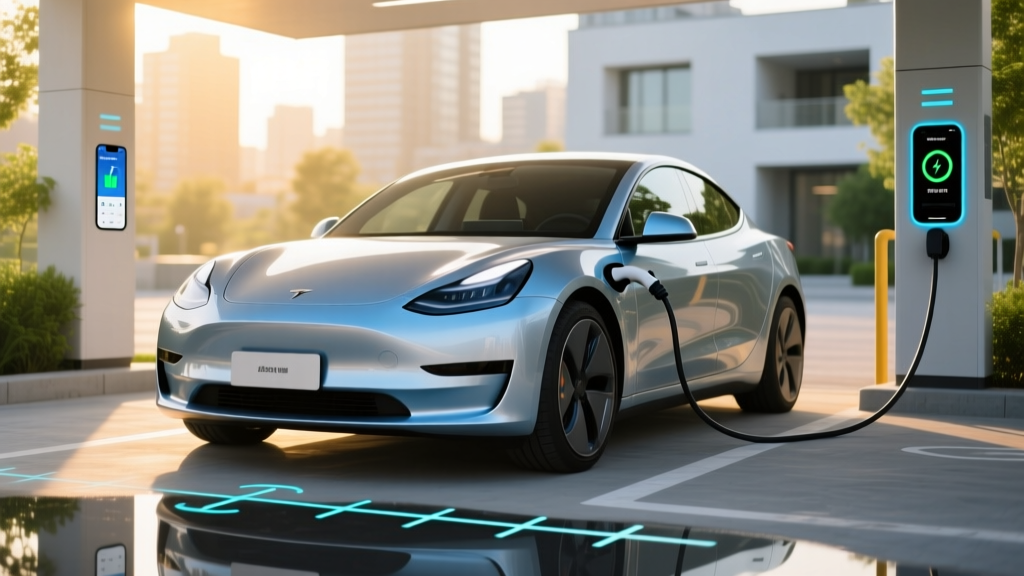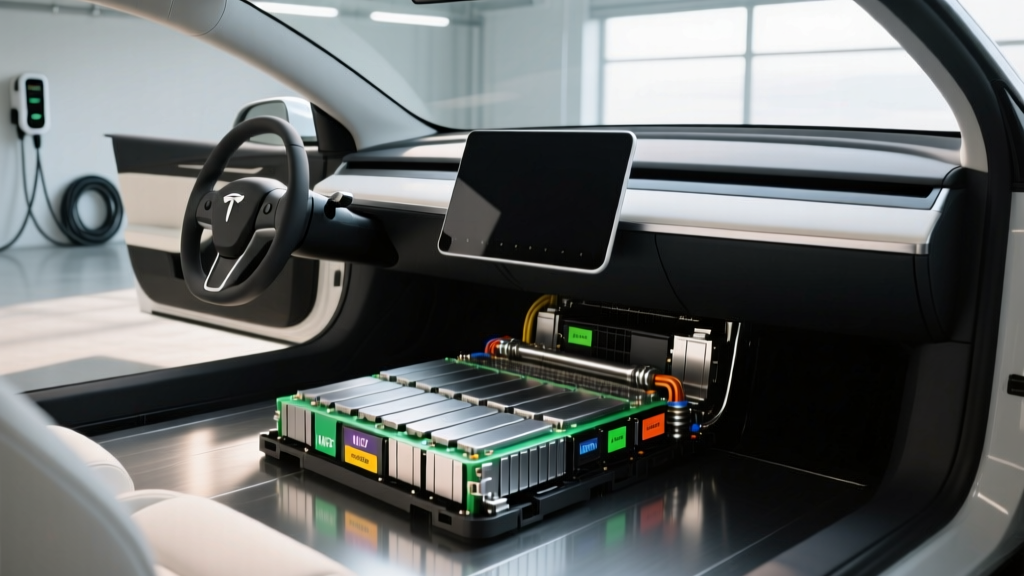
Understanding Your EV's High-Voltage Battery
The traction battery is the single most expensive component in any electric vehicle. It's also the one buyers worry about most. Will it degrade? How much will replacement cost? Which chemistry is right for your driving pattern? These are the right questions, and the answers are more nuanced than most manufacturer brochures suggest.
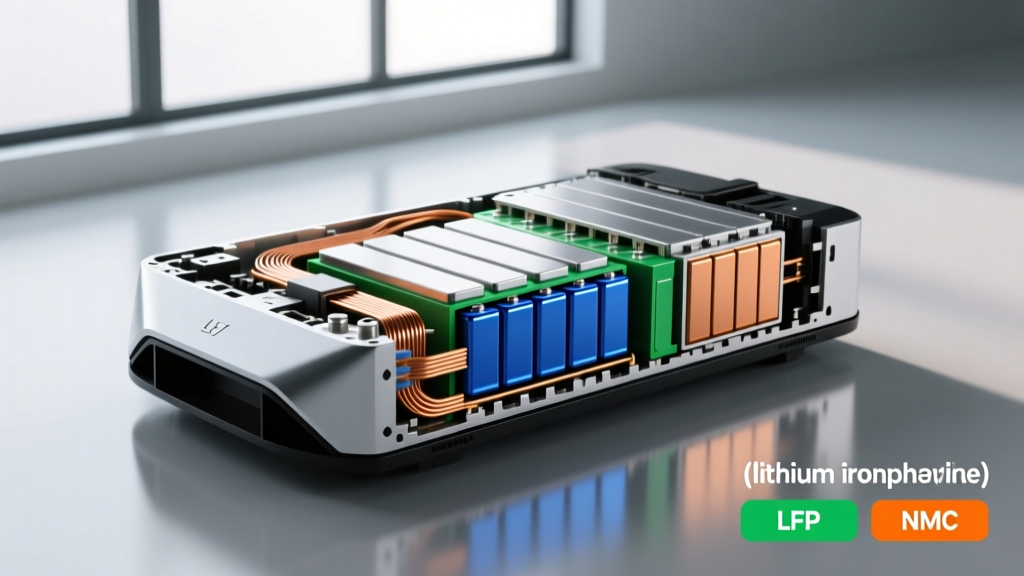
This guide covers the battery chemistries in production EVs today — lithium iron phosphate (LFP) and nickel manganese cobalt (NMC) or nickel cobalt aluminum (NCA) — along with real-world degradation data, warranty structures, replacement economics, and what you can actually do to maximize your pack's lifespan. We'll also touch on what's coming next, with realistic timelines rather than hype.
First, a critical distinction: everything here refers to the high-voltage traction battery (typically 400V or 800V architecture, 50-130+ kWh capacity) that powers the drive motors. The 12V auxiliary battery that runs accessories and electronics is a separate, conventional component with its own maintenance cycle.
LFP vs. NMC/NCA: Chemistry Trade-Offs Explained
Every EV sold in the US today uses one of two dominant lithium-ion cathode chemistries, and the choice affects range, charging behavior, longevity, and cost. Neither is universally "better" — the right answer depends on your driving habits, climate, and budget.
| Attribute | LFP (Lithium Iron Phosphate) | NMC / NCA (Nickel-based) |
|---|---|---|
| Energy density | Lower (~160 Wh/kg cell-level) | Higher (~220-300 Wh/kg cell-level) |
| Typical vehicle range | 240-330 mi EPA (heavier pack for same kWh) | 280-400+ mi EPA (lighter, denser pack) |
| Cycle life | 3,000-5,000+ full cycles to 80% SoH | 1,000-2,000 full cycles to 80% SoH |
| Calendar life | Excellent — less capacity fade over time | Good — degrades faster at high SoC and heat |
| Cold-weather performance | Poor — significant range loss below 20°F, slower charging | Better — retains more range and charges faster in cold |
| Charging to 100% | Recommended regularly for BMS calibration | Discouraged — 80% daily limit extends life |
| Cost (cell-level) | Lower — no cobalt or nickel | Higher — commodity-sensitive metals |
| Thermal stability | Superior — very low thermal runaway risk | Good — requires more robust thermal management |
| SoC estimation accuracy | Flat voltage curve makes estimation harder | Steeper voltage curve — easier to estimate |
| Notable 2026 US vehicles | Tesla Model 3/Y RWD, Ford Mustang Mach-E Select (LFP option), Chevrolet Equinox EV (some trims), Rivian Standard pack | Tesla Model 3/Y Long Range, Hyundai Ioniq 5/6, Kia EV6/EV9, BMW iX, Ford F-150 Lightning Extended, Porsche Taycan |
The practical decision: If you drive under 250 miles per day, can charge at home, live in a moderate or warm climate, and want maximum battery longevity with lower replacement risk, LFP is the stronger choice. If you need 300+ miles of range, frequently drive in freezing temperatures, or need faster DC charging in winter, NMC/NCA better serves those needs — but you should follow stricter charging habits (80% daily ceiling) to protect cycle life.
How Long Do EV Batteries Actually Last?
The short answer: longer than most buyers assume, and typically longer than the rest of the vehicle remains economically viable. But "battery life" means different things depending on chemistry, usage, and environment.
Real-World Degradation Data
Battery degradation follows a nonlinear curve: a relatively steep drop in the first 1-2 years (typically 2-5%), then a long, slow linear decline. Most modern packs lose roughly 1-2% of total capacity per year after the initial settling period.
Typical Degradation Trajectory (NMC, temperate climate, mixed charging):
- Year 1 / 15,000 mi: ~3-5% loss (initial settling)
- Year 3 / 45,000 mi: ~7-10% total loss
- Year 5 / 75,000 mi: ~10-14% total loss
- Year 8 / 120,000 mi: ~12-18% total loss
- Year 10 / 150,000 mi: ~15-22% total loss
LFP packs typically degrade 2-4% less over the same period, particularly in calendar aging. Data aggregated from fleet studies and owner-reported State of Health measurements via Recurrent Auto and Geotab fleet analytics.
Several factors accelerate degradation beyond these baselines:
- Frequent DC fast charging above 150 kW — especially without battery preconditioning. Occasional fast charging is fine; daily 350 kW sessions add measurable wear.
- Sustained high State of Charge — storing an NMC pack at 100% for days or weeks in hot weather is the single most damaging habit.
- Extreme heat exposure — ambient temperatures consistently above 95°F with packs held at high SoC drive calendar aging.
- Deep discharges to 0% — running the pack to zero repeatedly stresses cell chemistry, though modern BMS buffers protect against catastrophic damage.
- High-mileage ride-share or fleet use — 300+ miles daily with multiple fast charges compounds thermal stress.
When Do Batteries Actually Need Replacement?
Most EV batteries do not "die" in the way a phone battery does after two years. A pack at 75% State of Health (SoH) still delivers meaningful range — a 300-mile EPA vehicle at 75% SoH still provides ~225 miles, adequate for most daily driving. The EPA's data shows that the average American drives ~37 miles per day, meaning even significantly degraded packs remain functional for daily use.
Full battery replacement is typically needed only when:
- A manufacturing defect causes premature cell failure (covered under warranty)
- Physical damage from a collision compromises the pack
- The vehicle exceeds 200,000+ miles and degradation drops range below the owner's practical minimum
The vast majority of EVs sold since 2018 will reach end-of-vehicle life (scrapped for non-battery reasons) before their traction battery requires replacement.
Battery Warranty Terms: What's Actually Covered
Federal law mandates a minimum 8-year / 100,000-mile warranty on EV traction batteries for emissions-related compliance, and nearly every manufacturer meets or exceeds this baseline. But the details matter enormously.
| Manufacturer | Duration | Mileage | Capacity Retention Threshold | Notes |
|---|---|---|---|---|
| Tesla (Model 3/Y RWD — LFP) | 8 years | 100,000 mi | 70% | Standard warranty; LFP packs typically exceed this threshold |
| Tesla (Model 3/Y LR — NMC) | 8 years | 120,000 mi | 70% | Higher mileage cap on Long Range variants |
| Hyundai / Kia | 10 years | 100,000 mi | 70% | Among the longest duration; applies to Ioniq 5, EV6, EV9 |
| Ford (Mach-E, F-150 Lightning) | 8 years | 100,000 mi | 70% | Applies to both LFP and NMC packs |
| GM (Ultium-based: Equinox EV, Blazer EV, Silverado EV) | 8 years | 100,000 mi | 70% | Modular pack allows individual module replacement |
| Rivian | 8 years | 175,000 mi | 70% | Highest mileage cap in the market — reflects adventure/fleet use |
| BMW (iX, i4) | 8 years | 100,000 mi | 70% | Modular architecture supports partial pack replacement |
Critical warranty nuance: The 70% threshold means a manufacturer is only obligated to replace or repair the battery if capacity drops below 70% of original within the warranty period. A pack at 72% SoH at year 8 is technically within spec, even though the owner has lost 28% of their original range. This is why choosing a vehicle with generous EPA range to begin with provides a longer usable runway.
Warranty claims for total battery failure due to manufacturing defects are covered regardless of the degradation threshold — if cells fail catastrophically, that's a warranty repair even at year 2. The 70% clause specifically addresses gradual capacity loss.
EV Battery Replacement Costs: The Real Numbers
This is where fear-mongering runs rampant. Let's ground the discussion in actual data.
| Vehicle / Pack Size | Battery Capacity | Full Pack Replacement | Module-Level Repair (if available) |
|---|---|---|---|
| Tesla Model 3 RWD (LFP) | ~60 kWh | $8,000 - $12,000 | N/A — structural pack |
| Tesla Model Y Long Range (NMC) | ~75 kWh | $12,000 - $16,000 | N/A — structural pack |
| Hyundai Ioniq 5 (NMC) | 77.4 kWh | $14,000 - $18,000 | Module replacement possible (~$3,000-$5,000 per module) |
| Ford F-150 Lightning Extended Range | 131 kWh | $18,000 - $25,000+ | Limited module service |
| Chevrolet Equinox EV (Ultium) | 85 kWh | $12,000 - $16,000 | Ultium modules replaceable (~$2,500-$4,000 per module) |
| BMW iX xDrive50 | 111.5 kWh | $18,000 - $22,000 | Module replacement supported |
| Rivian R1T / R1S (Large Pack) | ~135 kWh | $18,000 - $24,000 | Module-level service available |
| Porsche Taycan (Performance Battery Plus) | 93.4 kWh | $20,000 - $28,000 | Module replacement possible |
Context that matters: Battery cell prices have fallen roughly 80% since 2013, according to BloombergNEF tracking, and continue declining toward $80/kWh at the pack level by 2027-2028. A replacement pack purchased in 2034 for a vehicle bought in 2026 will almost certainly cost significantly less than today's estimates.
Additionally, manufacturers with modular architectures (GM's Ultium, BMW, Hyundai/Kia) can replace individual failed modules rather than the entire pack, reducing out-of-warranty costs from $15,000+ to $3,000-$5,000 for a single module swap. Tesla's structural battery pack design, while excellent for vehicle rigidity and weight, does not support module-level repair — it's full-pack replacement or nothing.
Factors That Accelerate or Slow Battery Degradation
Your habits directly influence how quickly your pack loses capacity. Here's the hierarchy of impact, from most to least significant:
Battery Care Best Practices
- Daily charge limit (NMC/NCA): Set to 80% for daily driving. Reserve 100% for road trips. LFP owners: charge to 100% at least once weekly for BMS calibration.
- Avoid prolonged storage at extremes: Don't leave the car at 100% or below 10% for more than a few days. If storing for weeks, target 50% SoC.
- Use DC fast charging strategically: It's fine for road trips and occasional use. Daily 350 kW charging without preconditioning adds wear. Use Level 2 home charging as your primary method.
- Precondition before fast charging: Navigate to a DC charger using the vehicle's built-in routing (Tesla, Hyundai, BMW) to activate battery thermal preconditioning. This warms the pack to optimal charging temperature, reducing lithium plating risk.
- Park in shade or garages in extreme heat: Sustained 100°F+ ambient temperatures at high SoC accelerate calendar aging. A garage makes a measurable difference in hot climates.
- Don't baby it excessively: Modern BMS systems include substantial top and bottom buffers (typically 5-10% of gross capacity is hidden). Driving normally and charging to 80-90% is fine — you don't need to keep the pack between 40-60% to achieve good longevity.
- Cold-weather charging: Expect 20-40% range reduction below 20°F. Plug in when possible to use grid power for battery heating rather than draining the pack. Precondition while plugged in before departure.
Monitoring Your Battery's State of Health
State of Health (SoH) represents your battery's current maximum capacity as a percentage of its original capacity. A new pack is 100% SoH; a pack that originally held 75 kWh and now holds 67.5 kWh is at 90% SoH.
How to Check SoH
In-vehicle displays: Some manufacturers provide a battery health indicator in the infotainment system. Hyundai/Kia includes a battery health percentage in the EV settings menu on 2024+ models. Tesla does not natively display SoH percentage, though third-party tools can extract it.
OBD-II diagnostic tools: Devices like the OBDLink MX+ paired with apps such as ABRP (A Better Routeplanner) or Car Scanner can read battery SoH, cell voltage deltas, and pack temperature directly from the vehicle's CAN bus. This is the most accurate method available to consumers.
Third-party services: Companies like Recurrent offer battery health reports that compare your pack's degradation against a fleet of identical vehicles, providing percentile ranking and projected future capacity.
The manual method: Charge to 100% (or your known maximum), note the displayed range, and compare it to the EPA-rated range when new. Account for temperature — a 270-mile display at 40°F doesn't mean 10% degradation; it means cold weather. Compare in similar temperatures for accuracy.
What Cell Voltage Delta Tells You
Beyond overall SoH, the voltage spread between individual cell groups (cell delta) reveals pack balance health. A healthy pack shows cell deltas under 20-30 millivolts at rest. Deltas exceeding 50-100 mV suggest one or more cell groups are degrading faster than others, which may trigger a warranty claim even if overall SoH appears acceptable. OBD-II tools can surface this data.
What's Next: Solid-State, Silicon Anodes, and Realistic Timelines
Several next-generation battery technologies are in development, but production timelines remain stubbornly further out than press releases suggest.
Solid-state batteries replace the liquid electrolyte with a solid material, promising higher energy density (potentially 400+ Wh/kg at cell level), faster charging, and improved safety. Toyota has announced a 2027-2028 limited production target for solid-state EVs, and QuantumScape continues testing with Volkswagen. However, manufacturing yield, cost, and scale remain unsolved challenges. Realistic mass-market availability: 2029-2032 at the earliest, with initial deployment in premium vehicles only.
Silicon anode technology replaces or supplements graphite anodes with silicon, which can store roughly 10x more lithium ions per gram. Companies like Sila Nanotechnologies (partnered with Mercedes-Benz and Panasonic) and Group14 (partnered with Porsche) are bringing silicon-dominant anodes to production. Mercedes-Benz's next-generation EQ models and the Porsche Cayenne EV are expected to incorporate high-silicon anodes by 2027-2028, offering 15-25% energy density improvements without a full chemistry overhaul. This is the most likely near-term advancement to reach consumers.
Sodium-ion batteries eliminate lithium entirely, using abundant sodium instead. CATL has begun production in China for lower-range urban EVs. Energy density remains too low for the US market's range expectations (currently ~120-140 Wh/kg at pack level vs. 180-250 for LFP), but cost advantages could make sodium-ion viable for entry-level EVs or stationary storage by 2028-2030.
None of these technologies are available in production vehicles you can buy today. If you're purchasing an EV in 2026, you're choosing between LFP and NMC/NCA — and both are mature, well-understood chemistries with strong track records.
Frequently Asked Questions
How long do EV batteries last in years and miles?
Most modern EV batteries retain 75-85% of original capacity at 10 years or 150,000 miles under normal use. LFP packs often exceed 85% at that mark. Full failure before 200,000 miles is uncommon outside manufacturing defects (which are warranty-covered). The vehicle itself is more likely to be retired for non-battery reasons than for the battery becoming unusable.
How much does an EV battery cost to replace out of warranty?
Full pack replacement ranges from roughly $8,000 for a smaller LFP pack (Tesla Model 3 RWD) to $25,000+ for a large NMC pack (Ford F-150 Lightning Extended Range). Vehicles with modular architectures (GM Ultium, BMW, Hyundai) can have individual modules replaced for $2,500-$5,000 per module. Battery costs continue declining, so a replacement in 2034 will likely cost less than today's prices.
What does the EV battery warranty actually cover?
Federal law requires a minimum 8-year/100,000-mile warranty (California-emissions states may require 10 years/150,000 miles). Coverage includes manufacturing defects and capacity loss below a threshold — typically 70% of original capacity. If your battery drops to 68% SoH at year 6, the manufacturer must repair or replace it. Gradual degradation above 70% is considered normal wear and is not covered.
How do I check my EV battery health?
Use the vehicle's built-in battery health display (available on Hyundai/Kia, some others), an OBD-II diagnostic tool with EV-compatible software (OBDLink MX+ with Car Scanner or ABRP), or a third-party service like Recurrent Auto. The manual method — comparing displayed range at full charge to the original EPA rating in similar temperatures — provides a rough estimate but lacks precision.
LFP vs NMC — which battery chemistry is better for me?
Choose LFP if: you drive under 250 miles daily, charge at home, live in a moderate or warm climate, want maximum cycle life, and prefer charging to 100% without worry. Choose NMC/NCA if: you need 300+ miles of range, frequently drive in freezing temperatures, need faster DC charging in cold weather, or regularly take long road trips. Both chemistries are proven and reliable — the right choice depends on your specific driving pattern.
Does fast charging damage my EV battery?
Occasional DC fast charging (road trips, a few times per month) causes negligible additional degradation with modern thermal management systems. Daily fast charging at 150-350 kW, especially without preconditioning the battery first, does accelerate wear measurably over time. For daily charging, a Level 2 home charger (7-19 kW) is gentler on the pack and dramatically cheaper per kWh than public DC fast charging networks.